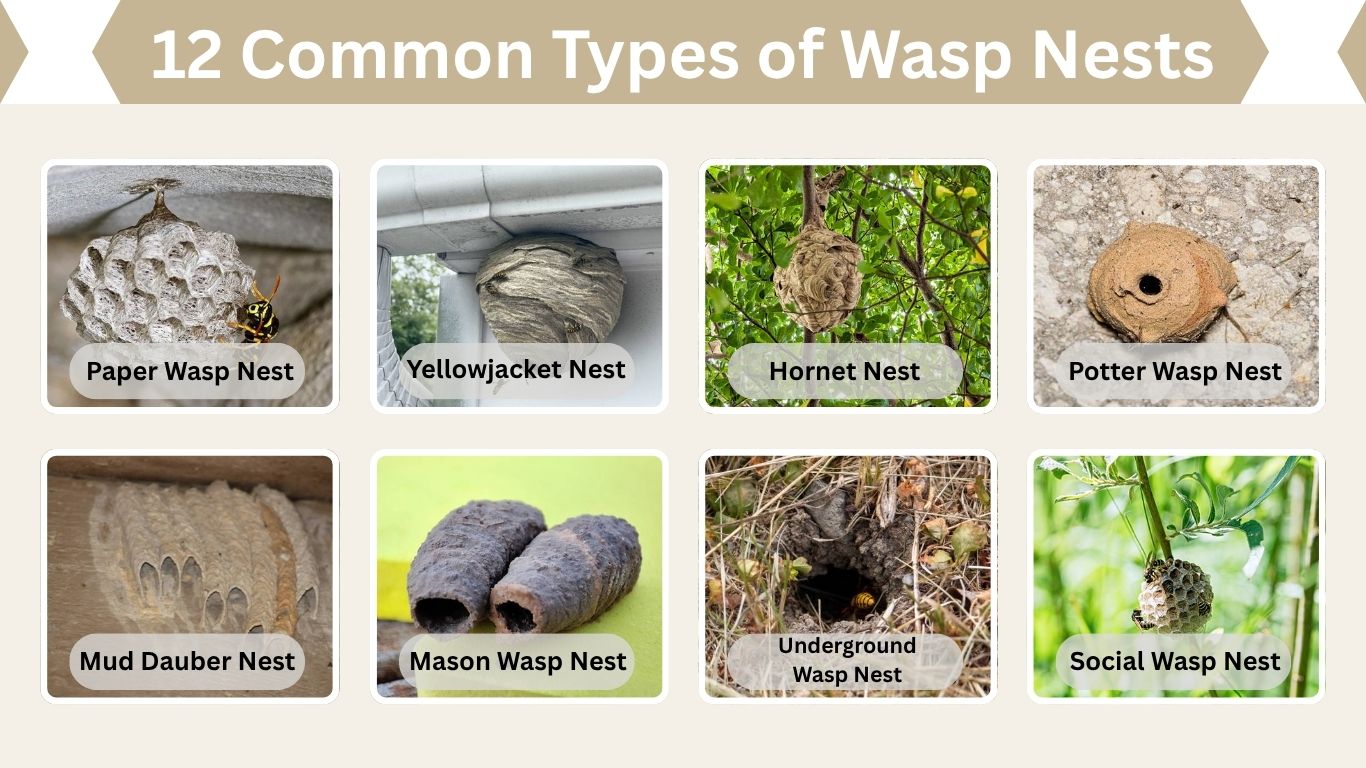
Wasp nests come in a wide variety of shapes, sizes, and structures, depending on the species and their behavior. Some nests hang openly from trees or buildings, while others remain hidden underground or inside cavities. Understanding these different types helps you identify wasp activity more easily and recognize how their nesting habits vary.
In this guide, you will explore 12 common types of wasp nests, each with distinct characteristics, materials, and behaviors. This knowledge can be useful for awareness, safety, and general identification in both natural and urban environments.
1. Paper Wasp Nest
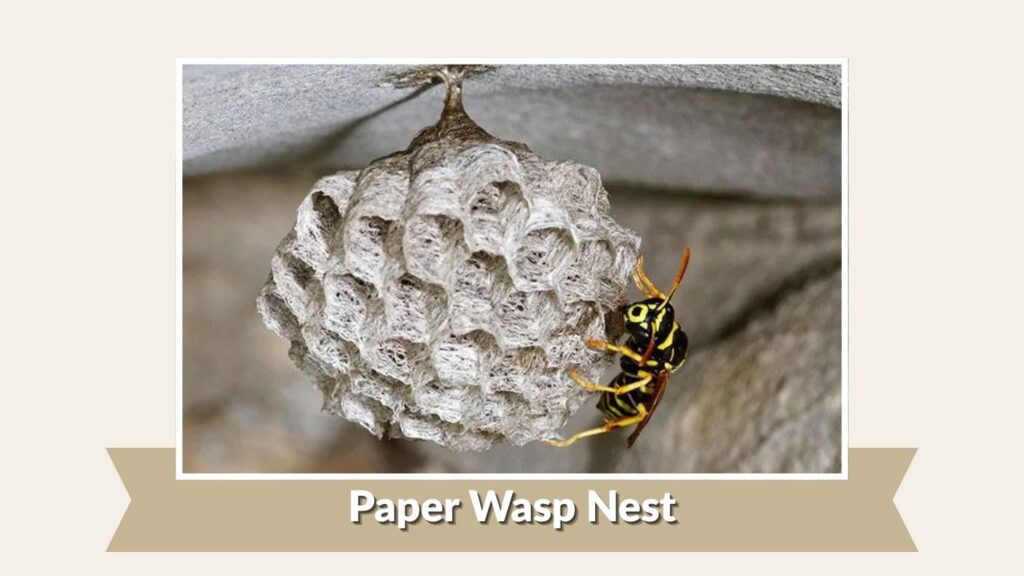
Paper wasp nests are among the most recognizable types of wasp nests. They are commonly found hanging from eaves, branches, or sheltered structures. These nests are open-combed and typically house small colonies, making them less aggressive than some other wasp species unless disturbed.
Nest Structure
A paper wasp nest has a distinctive umbrella-shaped design with visible hexagonal cells. Unlike enclosed nests, the comb remains exposed, allowing wasps to easily access and defend it. The nest is usually supported by a single thin stalk attached to a surface.
Materials Used
- Chewed wood fibers
- Plant stems
- Saliva (used as a binding agent)
- Weathered wood particles
Common Locations
Paper wasps prefer sheltered and elevated areas for building nests. You will often find them under roof edges, porch ceilings, tree branches, and window frames. These locations provide protection from rain and predators while allowing easy access to food sources.
Colony Behavior
Paper wasp colonies are relatively small compared to other wasps. They operate with a single queen and a group of worker wasps. While they are not overly aggressive, they will defend their nest if they sense a threat nearby.
2. Yellowjacket Nest
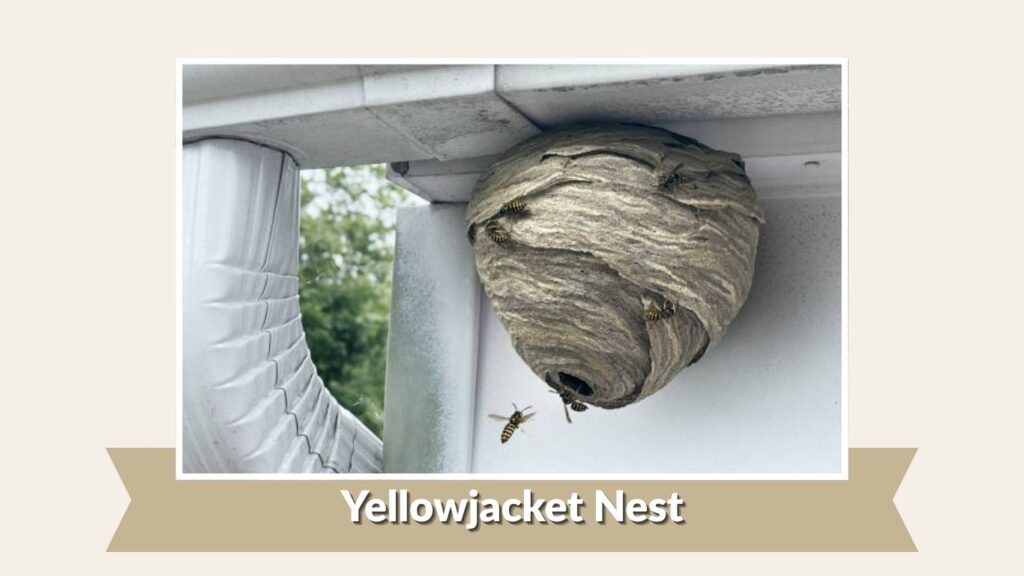
Yellowjacket nests are more concealed and complex compared to paper wasp nests. These wasps are known for their aggressive behavior, especially when their nest is disturbed. Their colonies can grow large, making them one of the most noticeable and problematic nest types.
Nest Structure
Yellowjacket nests are enclosed and layered, forming a rounded or oval shape. Inside, multiple tiers of combs are stacked horizontally. The outer covering acts as a protective shell, hiding the internal structure from view.
Materials Used
- Chewed wood pulp
- Plant fibers
- Saliva for binding
- Soft organic debris
Common Locations
These nests are often built underground in abandoned rodent burrows, wall cavities, or dense vegetation. In some cases, they may also appear in attics or inside hollow structures, making them harder to detect early.
Colony Behavior
Yellowjackets live in large colonies with thousands of workers. They are highly defensive and can become aggressive quickly, especially if their nest is threatened. Their strong defense instincts make them more dangerous than many other wasp species.
3. Hornet Nest
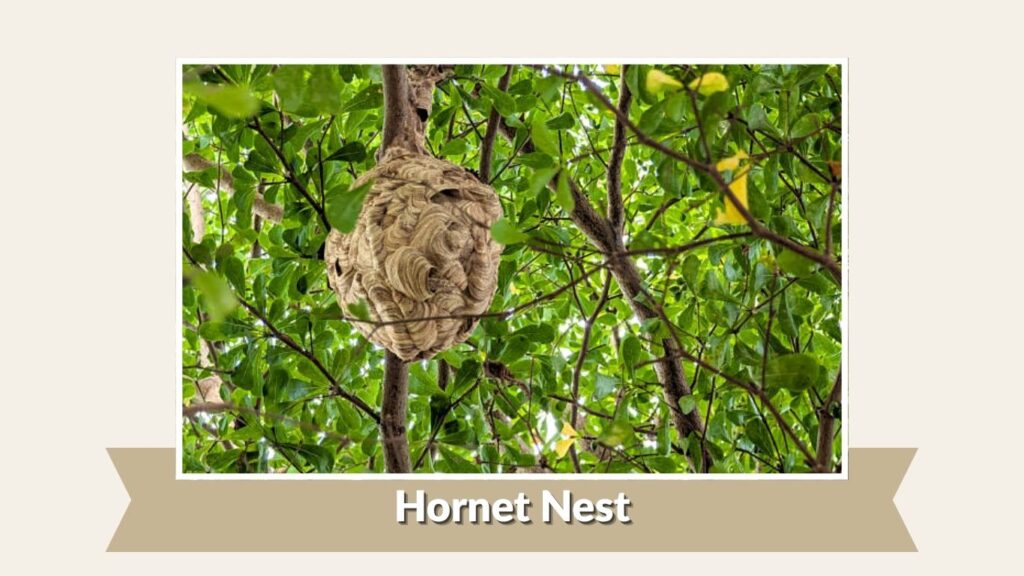
Hornet nests are large, enclosed structures that are often seen hanging in open spaces. Hornets are a type of social wasp known for their size and strong defensive behavior. Their nests are usually more developed and prominent than other types.
Nest Structure
Hornet nests are spherical or oval with a smooth outer layer. Inside, they contain multiple stacked combs protected by a thick, papery envelope. A single entrance hole allows controlled access in and out of the nest.
Materials Used
- Chewed bark fibers
- Wood pulp
- Saliva adhesive
- Plant materials
Common Locations
Hornets typically build nests in trees, shrubs, or on building overhangs. They prefer elevated and open areas that allow them to monitor surroundings and defend the colony effectively.
Colony Behavior
Hornet colonies can grow quite large and are highly organized. They are more aggressive than paper wasps and will actively defend their nest if approached. Their stings are potent, making them a species people generally avoid.
4. Mud Dauber Nest
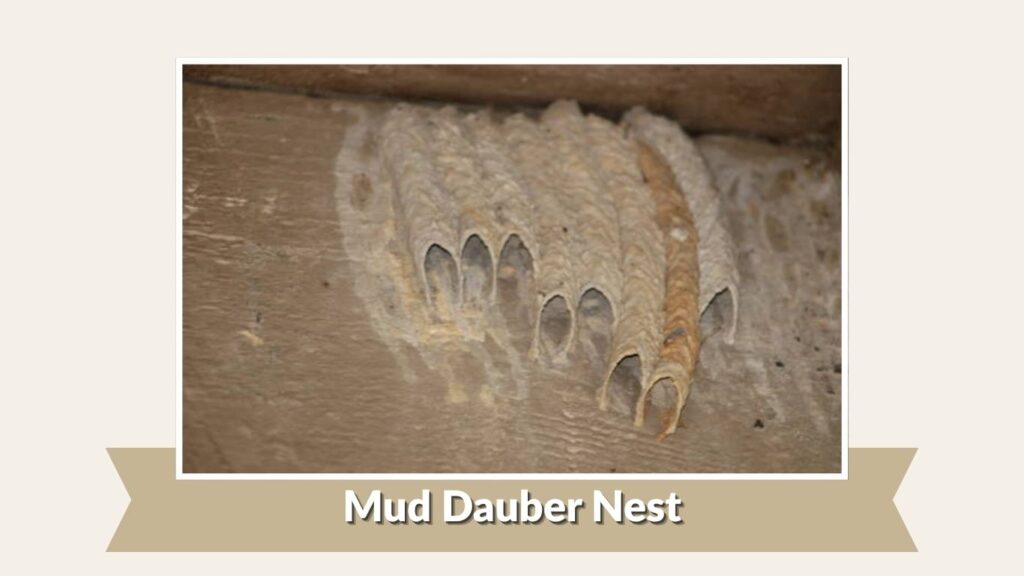
Mud dauber nests are quite different from typical wasp nests. These wasps are solitary and non-aggressive, and their nests are made from mud rather than paper-like material. They are often overlooked because of their simple and tube-like appearance.
Nest Structure
Mud dauber nests consist of narrow, cylindrical tubes that are clustered together. Each tube serves as an individual chamber for larvae. The structure may appear rough or uneven, depending on how the mud is applied and dried.
Materials Used
- Wet mud
- Clay-rich soil
- Water for shaping
- Small debris particles
Common Locations
These nests are usually found on walls, ceilings, bridges, or sheltered outdoor surfaces. Mud daubers prefer quiet, undisturbed areas where the mud can dry and harden without interference.
Colony Behavior
Mud daubers are solitary, meaning each female builds and manages her own nest. They rarely sting and are not aggressive, even when their nest is nearby. Their behavior makes them less of a concern compared to social wasps.
5. Potter Wasp Nest
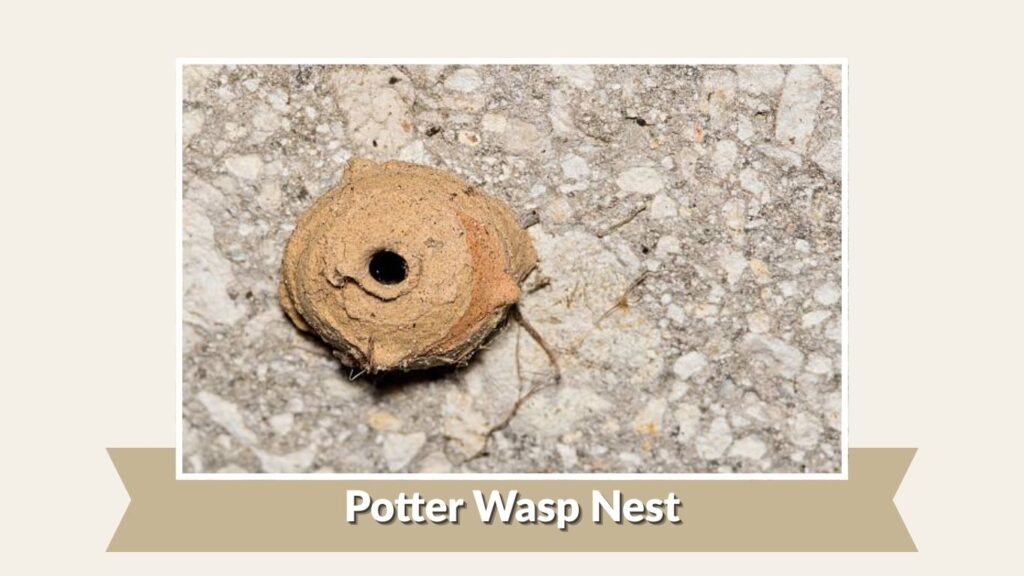
Potter wasp nests are known for their unique, artistic appearance. These solitary wasps create small, pot-shaped nests that resemble miniature clay jars. Their nests are often admired for their craftsmanship.
Nest Structure
The nest has a rounded, vase-like shape with a small opening at the top. Each structure is carefully formed and sealed after the wasp lays eggs inside. The design is compact and typically built individually rather than in clusters.
Materials Used
- Mud or clay
- Moist soil
- Water for molding
- Fine mineral particles
Common Locations
Potter wasps build their nests on twigs, walls, rocks, or man-made structures. They prefer stable surfaces where the pot-shaped nest can remain intact until the larvae develop.
Colony Behavior
Like mud daubers, potter wasps are solitary and non-aggressive. Each wasp works independently to build and maintain its nest. They are unlikely to sting unless directly handled, making them relatively harmless around humans.
6. Mason Wasp Nest
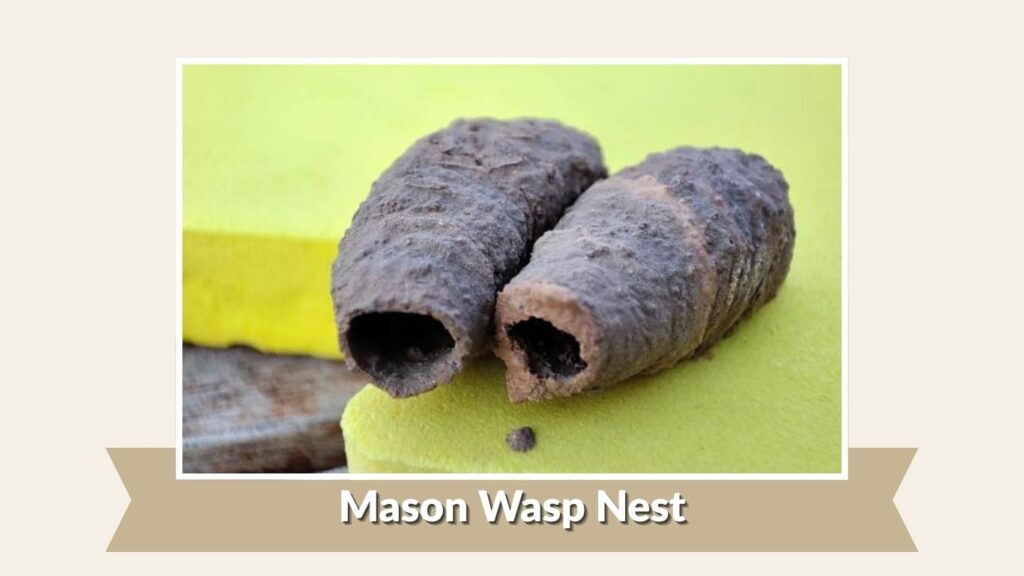
Mason wasp nests are simple yet durable structures made primarily from mud. These wasps are solitary and known for using existing holes or cavities rather than building fully exposed nests. Their nesting style makes them less noticeable in many environments.
Nest Structure
Mason wasp nests are usually hidden inside small cavities such as cracks, hollow stems, or holes in wood. The wasp divides the space into separate chambers using mud partitions, where each chamber holds a single egg.
Materials Used
- Mud or clay
- Soil particles
- Water for shaping
- Natural cavity surfaces
Common Locations
These nests are commonly found in wall crevices, wooden structures, hollow plant stems, and even man-made holes. Mason wasps prefer pre-existing spaces that provide natural protection and require minimal construction effort.
Colony Behavior
Mason wasps are solitary and non-aggressive. Each female independently builds and provisions her nest. They rarely interact with humans and are unlikely to sting unless directly threatened.
7. Aerial Wasp Nest
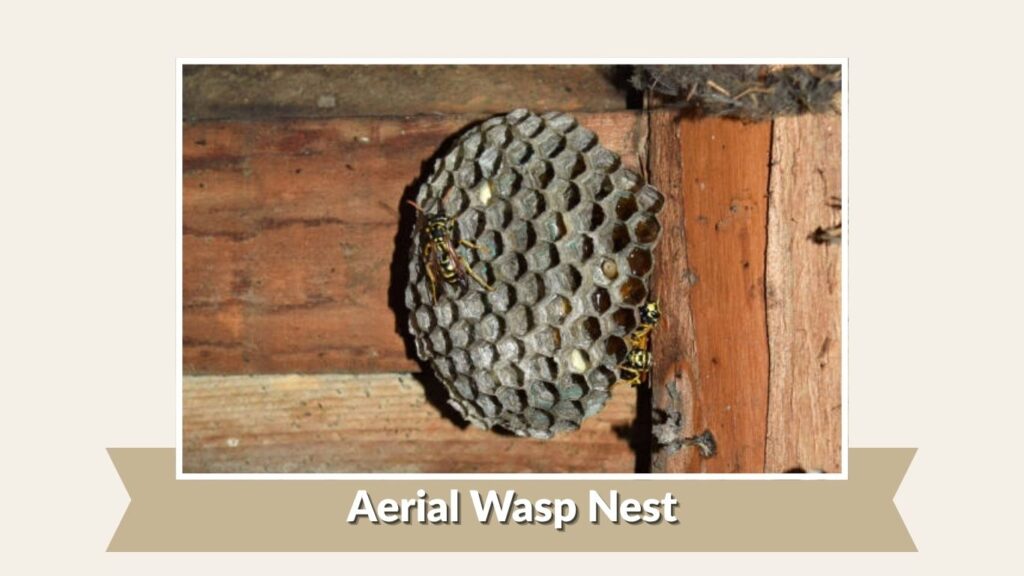
Aerial wasp nests are built above ground and are often visible hanging from structures or vegetation. These nests are typically associated with social wasps and can vary in size depending on the colony.
Nest Structure
Aerial nests are usually rounded or oval and enclosed with a papery outer layer. Inside, multiple comb layers are arranged to support a growing colony. The nest often has one or more small entrance openings.
Materials Used
- Chewed wood fibers
- Plant pulp
- Saliva adhesive
- Organic fibers
Common Locations
These nests are commonly found hanging from tree branches, roof eaves, fences, or utility structures. Elevated placement helps protect the colony from ground predators and environmental disturbances.
Colony Behavior
Aerial nest builders are social wasps that live in organized colonies. They can become defensive if their nest is disturbed, especially as the colony grows larger. Their activity increases during warmer seasons when the nest expands.
8. Underground Wasp Nest
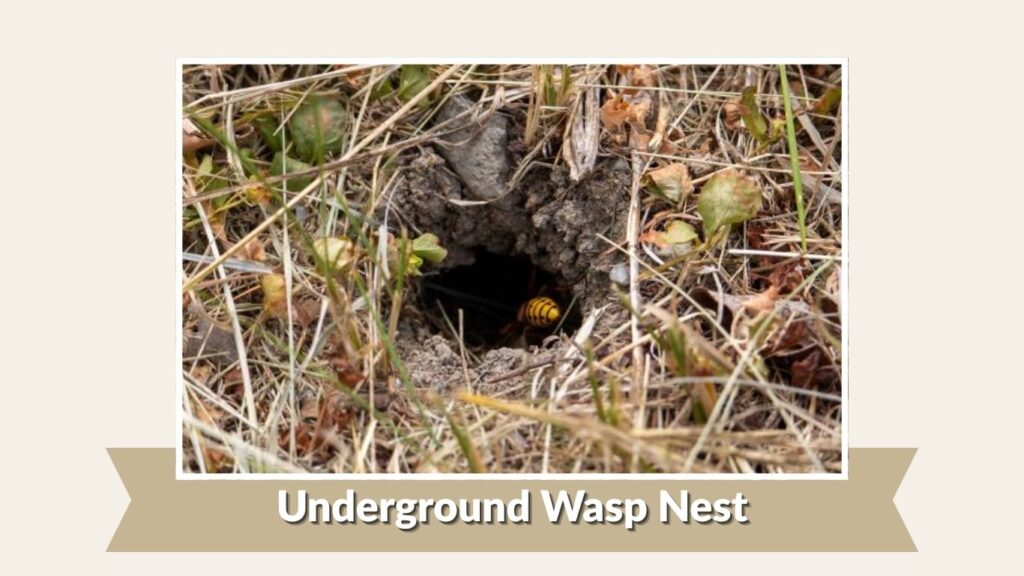
Underground wasp nests are hidden below the surface, making them difficult to detect until activity increases. These nests are commonly associated with highly defensive wasp species that prefer concealed environments for protection.
Nest Structure
The nest is built in a network of tunnels and chambers beneath the ground. Inside, layered combs are arranged in protected spaces. A small entrance hole at the surface serves as the main access point for the colony.
Materials Used
- Soil and dirt
- Chewed plant fibers
- Saliva for binding
- Organic underground material
Common Locations
These nests are often found in gardens, lawns, forest floors, or abandoned animal burrows. They may also appear in loose soil areas where digging is easier for the wasps.
Colony Behavior
Underground wasps are typically social and can be very aggressive when their nest is disturbed. Because the nest is hidden, accidental encounters are common, leading to sudden defensive swarming.
9. Cavity Wasp Nest
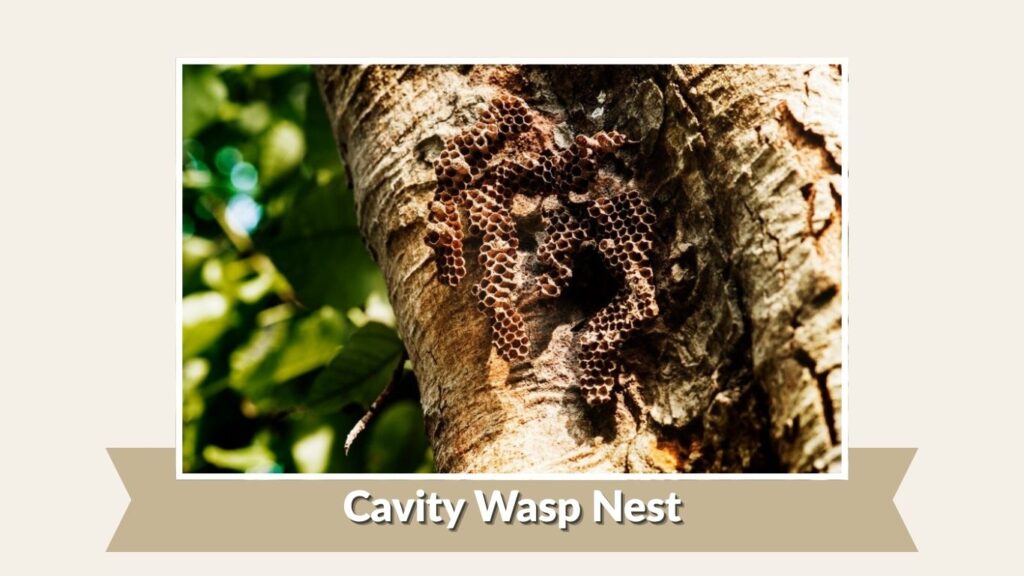
Cavity wasp nests are built inside enclosed spaces rather than in open areas. These nests are usually well-protected and often go unnoticed until wasp activity becomes visible around the entrance.
Nest Structure
The nest is constructed within a hollow space such as a wall void or tree cavity. Inside, combs or chambers are arranged depending on the species. The outer structure is hidden, with only a small entry point visible.
Materials Used
- Wood fibers
- Plant material
- Mud (in some species)
- Saliva adhesive
Common Locations
Cavity nests are commonly found inside walls, attics, hollow trees, or gaps in buildings. These locations provide shelter from weather and predators, making them ideal for long-term nesting.
Colony Behavior
Depending on the species, cavity nests may house either solitary or social wasps. Social species can become defensive if the nest is threatened, while solitary ones tend to remain non-aggressive and avoid human interaction.
10. Social Wasp Nest
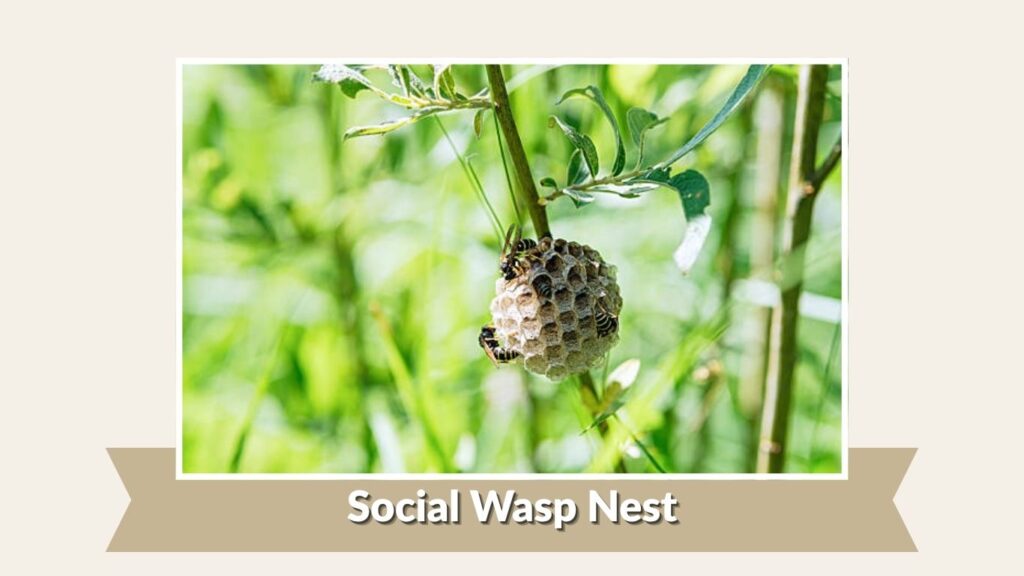
Social wasp nests are built by species that live in organized colonies. These nests can grow quite large over time and are designed to support thousands of individuals working together for survival and expansion.
Nest Structure
The nest usually consists of multiple layered combs enclosed within a protective outer covering. It may be round, oval, or irregular in shape depending on the species and location. One or more entry points allow controlled movement.
Materials Used
- Chewed wood pulp
- Plant fibers
- Saliva as adhesive
- Organic debris
Common Locations
Social wasp nests can be found in trees, under roof eaves, inside wall cavities, or even underground. Their adaptability allows them to thrive in both natural and urban environments.
Colony Behavior
These wasps live in large, cooperative groups led by a queen. Workers handle nest building, feeding, and defense. They are highly protective and may become aggressive if their colony is disturbed.
11. Solitary Wasp Nest
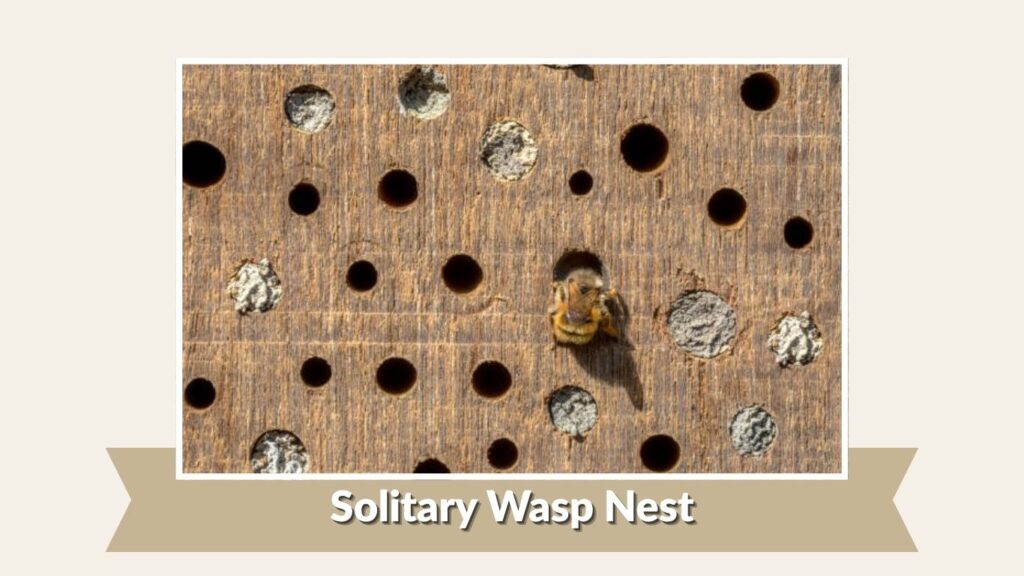
Solitary wasp nests are created by individual wasps rather than colonies. Each nest is managed by a single female, making these nests smaller and less complex compared to social wasp nests.
Nest Structure
The structure varies widely depending on the species. It may be a small burrow in the ground, a mud chamber, or a cavity divided into sections. Each section typically holds one egg and food supply.
Materials Used
- Mud or soil
- Plant material
- Sand particles
- Natural cavities
Common Locations
Solitary wasp nests are often found in soil, wood holes, plant stems, or cracks in walls. They prefer quiet, undisturbed areas where they can safely raise their offspring.
Colony Behavior
Solitary wasps do not form colonies and do not share nests. They are generally non-aggressive and rarely sting. Their focus is on building, provisioning, and protecting their individual nest rather than defending a group.
12. Tree Wasp Nest
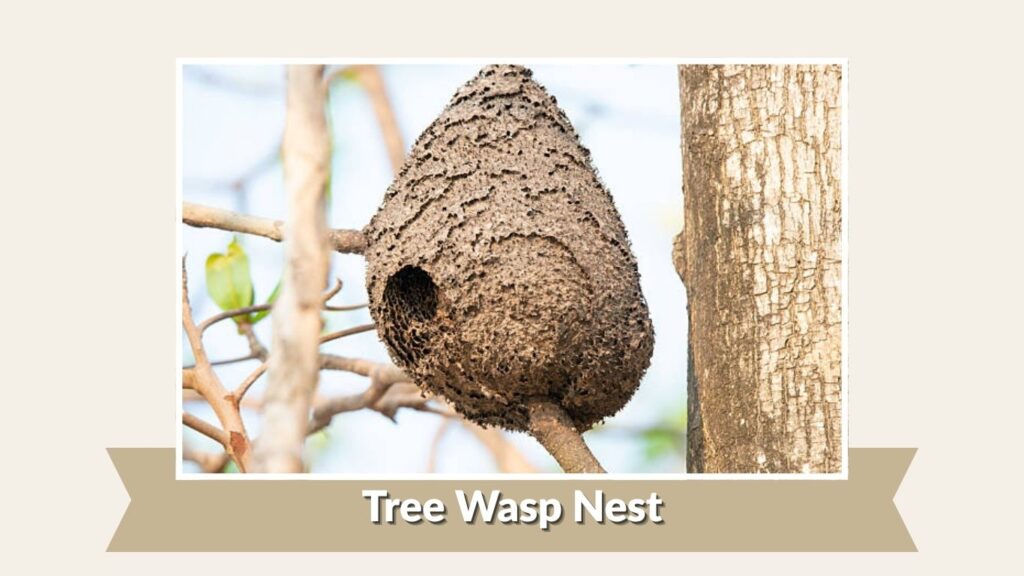
Tree wasp nests are typically built by social wasps that prefer natural outdoor environments. These nests are often visible on branches or within dense foliage, blending with the surroundings for protection.
Nest Structure
The nest is usually rounded or oval and enclosed with a papery outer layer. Inside, multiple comb layers are arranged to support the colony. A small entrance hole allows wasps to move in and out efficiently.
Materials Used
- Chewed wood fibers
- Bark particles
- Plant pulp
- Saliva adhesive
Common Locations
Tree wasp nests are commonly found attached to tree branches, shrubs, or within thick vegetation. These locations provide natural cover and help shield the nest from weather and predators.
Colony Behavior
Tree wasps live in social colonies that can grow moderately large. They are protective of their nest and may become defensive if approached too closely. However, they generally avoid conflict unless they feel threatened.
FAQs
What is the most common type of wasp nest?
The paper wasp nest is one of the most common types. It is easily recognized by its open, umbrella-shaped structure and visible hexagonal cells. These nests are often found under eaves, branches, or sheltered areas around homes.
Which wasp nests are the most dangerous?
Yellowjacket and hornet nests are considered the most dangerous. These wasps are highly defensive and can become aggressive quickly if their nest is disturbed. Their colonies are also larger, increasing the risk of multiple stings.
Where are wasp nests usually found?
Wasp nests can be found in a variety of places, including trees, roofs, walls, underground burrows, and garden areas. The exact location depends on the species, as some prefer open spaces while others choose hidden or enclosed areas.
Do all wasps live in large nests?
No, not all wasps live in large nests. Social wasps build large colonies, but many species, like mud daubers and potter wasps, are solitary. These solitary wasps create small, individual nests and do not form groups.
Should you remove a wasp nest yourself?
Removing a wasp nest yourself can be risky, especially if it belongs to an aggressive species. Wasps may attack if they feel threatened. It is usually safer to contact a professional pest control service for proper and safe removal.