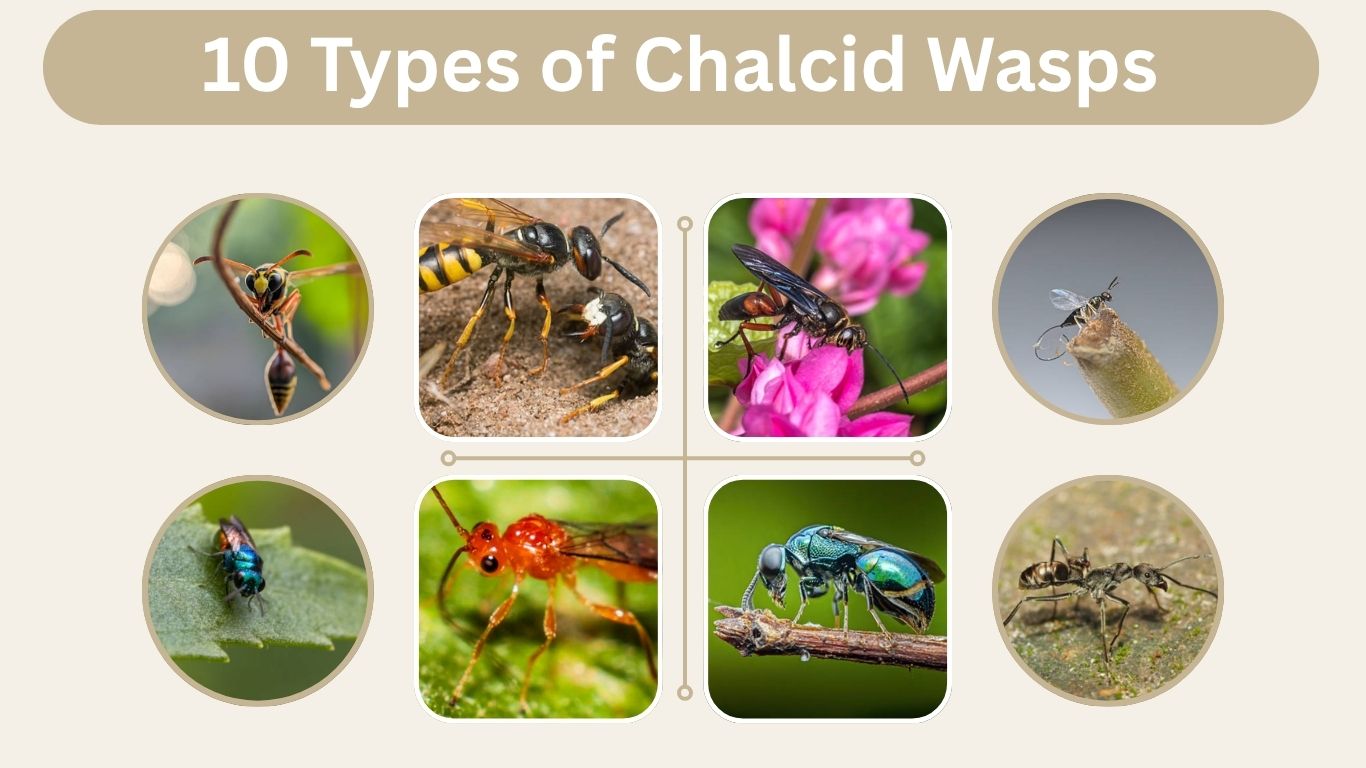
Chalcid-related wasps are a fascinating group of tiny insects that play a vital role in maintaining ecological balance. From parasitizing pest insects to pollinating plants, these wasps contribute significantly to natural pest control and plant reproduction. Despite their small size, they exhibit diverse behaviors, unique body structures, and specialized lifestyles. This article explores 10 prominent types of Chalcid-related wasps, providing details on their identification, habitat, behavior, diet, and lifecycle, offering both enthusiasts and gardeners valuable insights into these remarkable insects.
1. Cuckoo Wasp
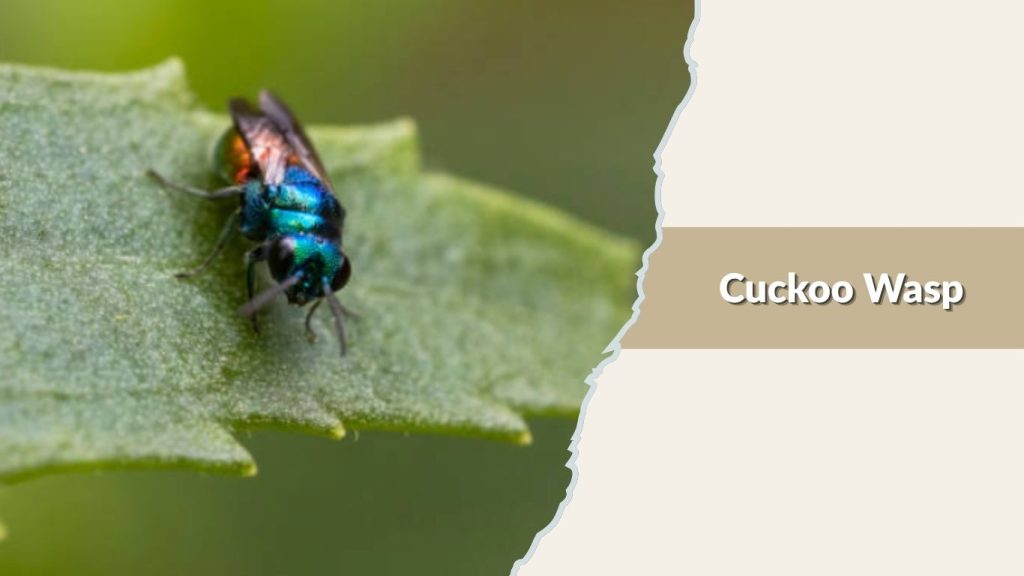
Cuckoo wasps, belonging to the family Chrysididae, are brilliantly colored metallic wasps known for their kleptoparasitic behavior. They often lay eggs in the nests of other solitary wasps or bees. Their vibrant, metallic exoskeletons help them avoid predators and blend into flowers and nesting sites.
Identification
- Metallic green, blue, or red coloration
- Small size, typically 3–10 mm
- Ridged or pitted exoskeleton
- Strong, sculptured body for protection
Habitat and Distribution
Found worldwide, especially in temperate and tropical regions, cuckoo wasps inhabit areas where their host insects build nests, including sandy soils, dead wood, and stems of plants.
Behavior and Diet
They are kleptoparasites; females invade nests of host insects, laying eggs that consume the host larvae or their provisions. Adults feed on nectar, honeydew, and sometimes host secretions.
Lifecycle
Eggs hatch inside host nests, and larvae feed on host eggs, larvae, or stored food. After pupation, adult wasps emerge to continue the parasitic cycle, typically completing one or more generations per year depending on the climate.
2. Gall Wasp
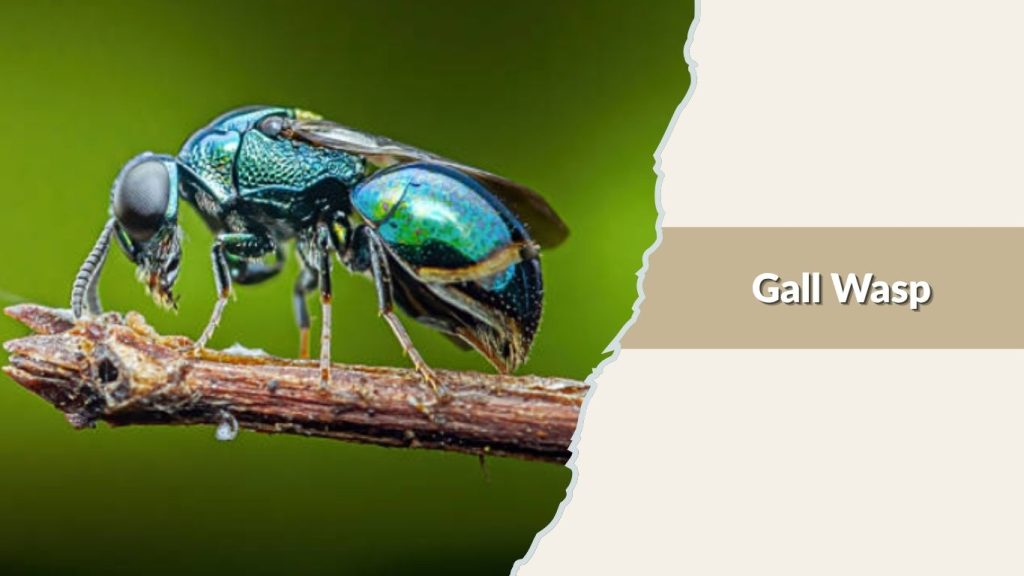
Gall wasps (family Cynipidae) are small parasitoid wasps best known for inducing galls—abnormal plant growths—on oaks and other plants. These galls provide shelter and food for the developing larvae. Gall wasps play an important ecological role in shaping plant structures and serving as hosts for other parasitoids.
Identification
- Tiny, usually 3–8 mm in length
- Often brown, black, or metallic-colored
- Smooth or slightly textured body
- Short antennae and well-developed wings
Habitat and Distribution
Gall wasps are found mainly in temperate regions, especially where oak trees and other suitable host plants grow. They typically inhabit forests, woodlands, and urban parks with host vegetation.
Behavior and Diet
Adult gall wasps feed on nectar and honeydew. Females lay eggs in plant tissues, causing the plant to form galls. Larvae develop inside these galls, which serve as both protection and a food source.
Lifecycle
The lifecycle includes egg, larva, pupa, and adult stages. Larvae induce gall formation, feeding inside until ready to pupate. Adults emerge from the galls to mate and continue the cycle, with some species producing multiple generations per year.
3. Fig Wasp
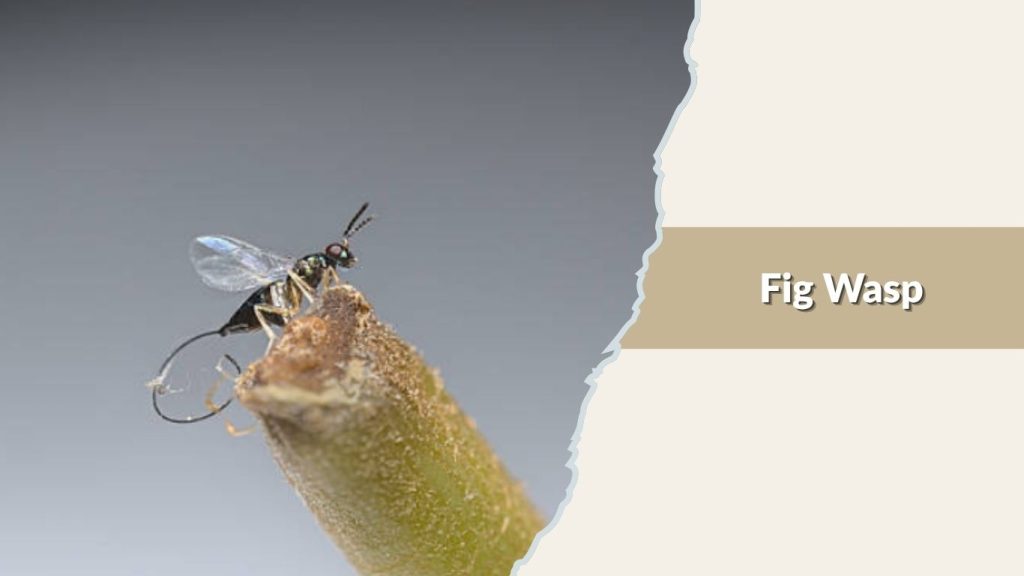
Fig wasps (family Agaonidae) are tiny insects intricately linked with fig trees, forming a classic example of coevolution. They are the primary pollinators of figs, entering the fig’s unique inflorescence to lay eggs while simultaneously transferring pollen, making them essential for the tree’s reproduction.
Identification
- Extremely small, usually 1–3 mm in length
- Often dark brown or black in color
- Compact body with reduced wing venation
- Elbowed antennae and short legs
Habitat and Distribution
Fig wasps are found in tropical and subtropical regions where fig trees grow. They inhabit the interior of fig fruits, as well as surrounding foliage, often in dense forested areas.
Behavior and Diet
Adults feed on nectar, and females enter fig flowers to deposit eggs. While doing so, they pollinate the flowers, creating a mutualistic relationship. Males often remain inside the fig to mate and assist in larval development.
Lifecycle
The lifecycle is closely tied to fig development. Eggs hatch inside the fig, larvae grow and pupate within the fruit, and adults emerge to continue pollination and reproduction. The timing is synchronized with the fig’s flowering cycles.
4. Parasitoid Micro-Wasp
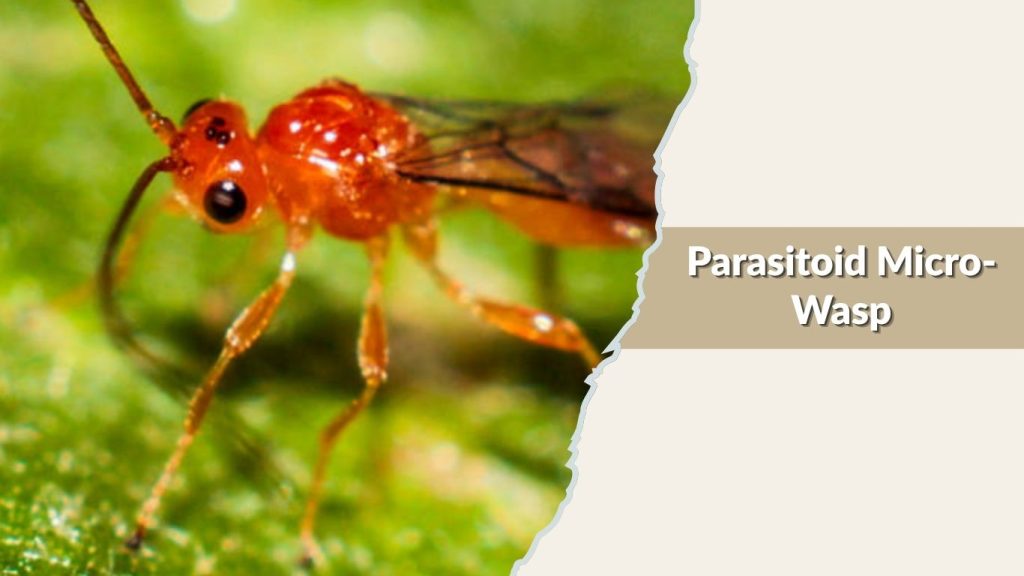
Parasitoid micro-wasps are a diverse group of very small wasps that play a crucial role in controlling pest insect populations. They lay their eggs inside or on the bodies of host insects, and the developing larvae consume the host, often leading to its death. These wasps are widely used in biological pest control programs.
Identification
- Extremely small, often less than 2 mm in length
- Usually dark brown, black, or metallic
- Slender body with minimal wing venation
- Short, elbowed antennae
Habitat and Distribution
Found globally in habitats where host insects are abundant, including agricultural fields, forests, and urban gardens. They thrive wherever potential host insects such as aphids, caterpillars, or beetle larvae are present.
Behavior and Diet
Adults feed on nectar, honeydew, or pollen, while females lay eggs in or on host insects. The larvae develop as internal or external parasitoids, effectively controlling host populations naturally.
Lifecycle
The lifecycle includes egg, larva, pupa, and adult stages. The larval stage occurs within or on the host, which is eventually consumed. Pupation leads to adult emergence, with some species completing multiple generations per year depending on environmental conditions.
5. Braconid Wasp
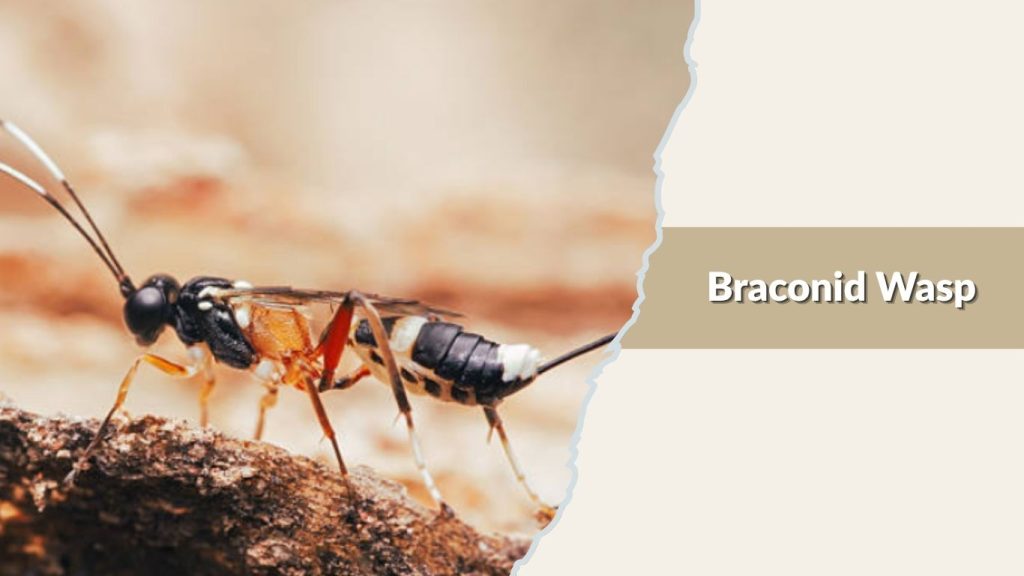
Braconid wasps (family Braconidae) are a large group of parasitoid wasps known for their role in biological control of crop pests. They lay eggs inside or on host insects, particularly caterpillars and beetle larvae, and the developing larvae consume the host, often preventing further crop damage.
Identification
- Small to medium-sized, typically 2–15 mm
- Usually brown or black, sometimes metallic
- Slender body with long ovipositor in females
- Well-developed wings with characteristic venation
Habitat and Distribution
Braconid wasps are found worldwide, especially in forests, grasslands, and agricultural fields where their host insects occur. They are highly adaptable and can be found in urban gardens as well.
Behavior and Diet
Adults feed on nectar, honeydew, or pollen. Females parasitize host insects by laying eggs inside or on them. The larvae consume the host internally or externally, often leading to its death, making them valuable for natural pest control.
Lifecycle
The lifecycle includes egg, larva, pupa, and adult stages. Larvae grow inside or on the host, eventually killing it. Adults emerge to mate and continue the cycle, with some species producing several generations per year depending on climate and host availability.
6. Ichneumon Wasp
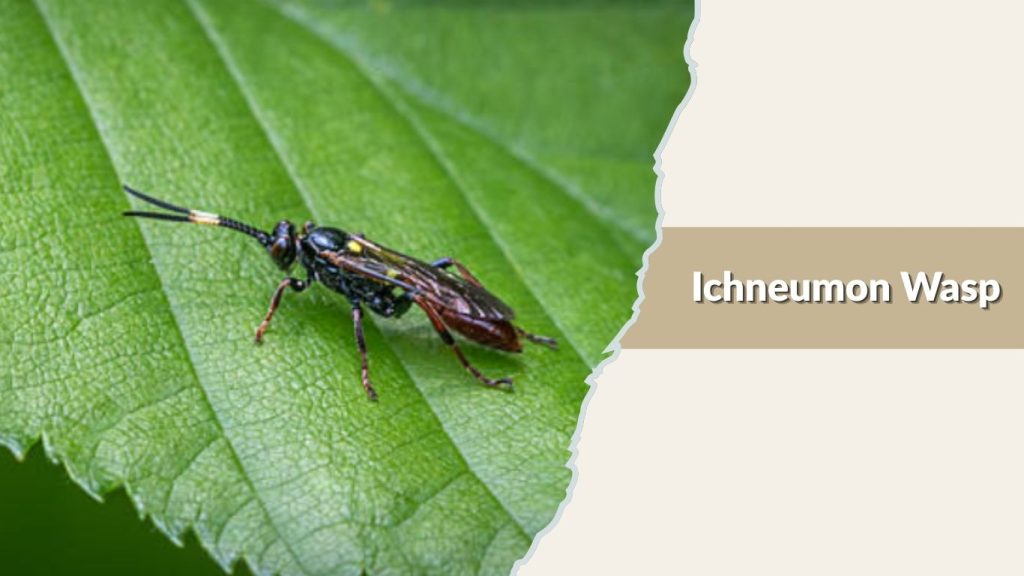
Ichneumon wasps (family Ichneumonidae) are a large and diverse group of parasitoid wasps. They play a critical role in regulating populations of other insects, especially caterpillars and beetle larvae. Many species have extremely long ovipositors, which allow them to reach hosts hidden inside wood or plant tissue.
Identification
- Medium to large-sized, typically 5–40 mm
- Slender body, usually brown, black, or orange
- Long ovipositor in females
- Transparent wings with distinct venation patterns
Habitat and Distribution
Ichneumon wasps are found worldwide, primarily in forests, grasslands, and gardens. They are abundant where host insects are present, often near trees or shrubs harboring larvae.
Behavior and Diet
Adults feed on nectar and honeydew, while females lay eggs in or on host insects. The larvae feed internally on the host, eventually killing it. Many species are highly specialized to specific host species.
Lifecycle
The lifecycle includes egg, larva, pupa, and adult stages. Development often depends on the host’s growth, with some species having multiple generations per year. Pupation occurs either inside the host or nearby, and adults emerge to mate and continue the cycle.
7. Velvet Ant (Wasp Relative)
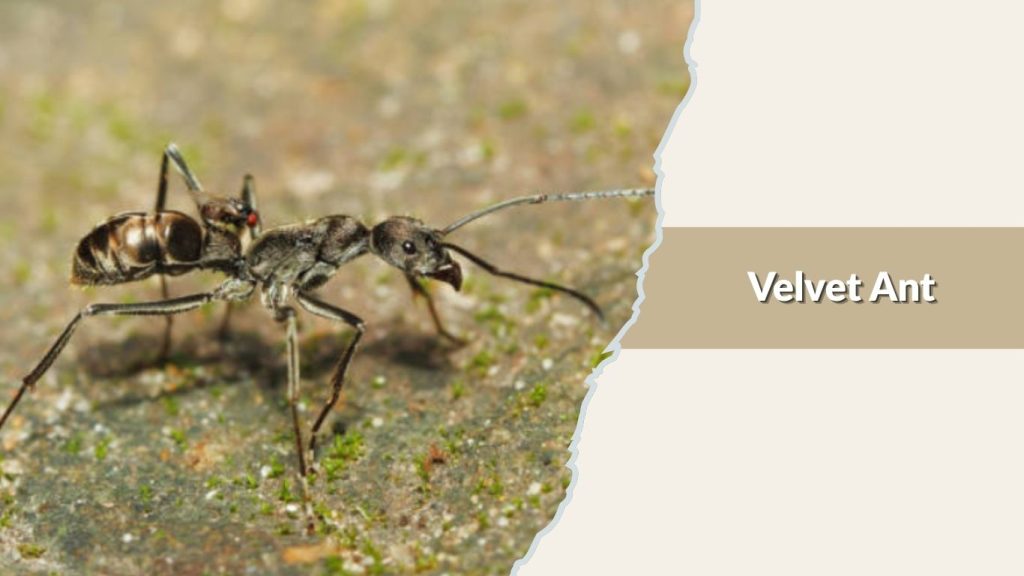
Velvet ants, despite their name, are actually solitary wasps (family Mutillidae). They are known for their bright, dense, velvet-like hair covering and extremely painful sting. Females are wingless and often mistaken for ants, while males are winged. They are parasitoids, primarily targeting the larvae of other ground-nesting bees and wasps.
Identification
- Brightly colored, often red, orange, or yellow with black markings
- Dense, velvety hair covering the body
- Females are wingless; males have wings
- Robust body with powerful sting
Habitat and Distribution
Velvet ants are commonly found in dry, sandy, or open habitats where host nests occur, such as grasslands, deserts, and woodland edges. They are widespread in North America, Central America, and parts of Asia.
Behavior and Diet
Adult females seek out host nests to lay eggs. Larvae feed on the host’s larvae or pupae. Adults primarily feed on nectar. They are solitary and do not form colonies, relying on stealth and speed to avoid predators.
Lifecycle
The lifecycle includes egg, larva, pupa, and adult stages. Larvae develop inside the host nest, consuming the host larvae. After pupation, adults emerge, with females remaining wingless and males dispersing to find mates.
8. Thread-Waisted Wasp
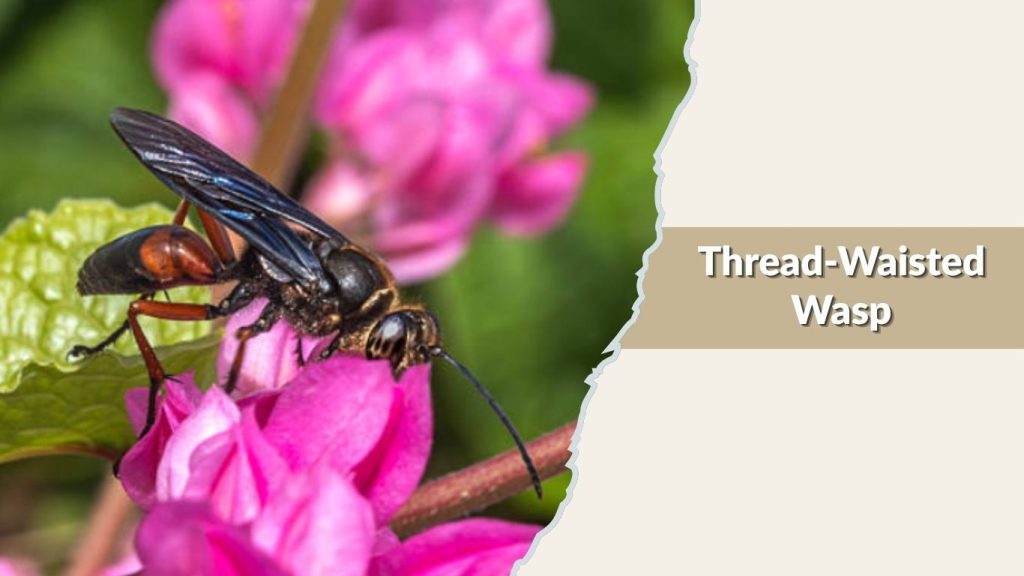
Thread-waisted wasps (family Sphecidae) are slender-bodied wasps known for their narrow “waist” connecting the thorax and abdomen. They are solitary hunters, often provisioning nests with paralyzed insects or spiders to feed their larvae. Their striking body shape and hunting behavior make them easily recognizable.
Identification
- Slender body with very narrow waist
- Size ranges from 10–30 mm
- Usually black, brown, or metallic in color
- Long legs and transparent wings
Habitat and Distribution
Thread-waisted wasps inhabit open areas such as grasslands, meadows, and gardens. They are widely distributed across North America, Europe, and Asia, favoring sandy or loose soil for nesting.
Behavior and Diet
Females hunt insects or spiders, paralyzing them to provision nests. Adults feed on nectar and sometimes honeydew. They are solitary and non-aggressive to humans, focusing on hunting for their offspring.
Lifecycle
The lifecycle includes egg, larva, pupa, and adult stages. Eggs are laid in burrows stocked with paralyzed prey. Larvae feed on the prey, pupate, and emerge as adults. Some species produce one generation per year, while others may have multiple depending on climate.
9. Potter Wasp
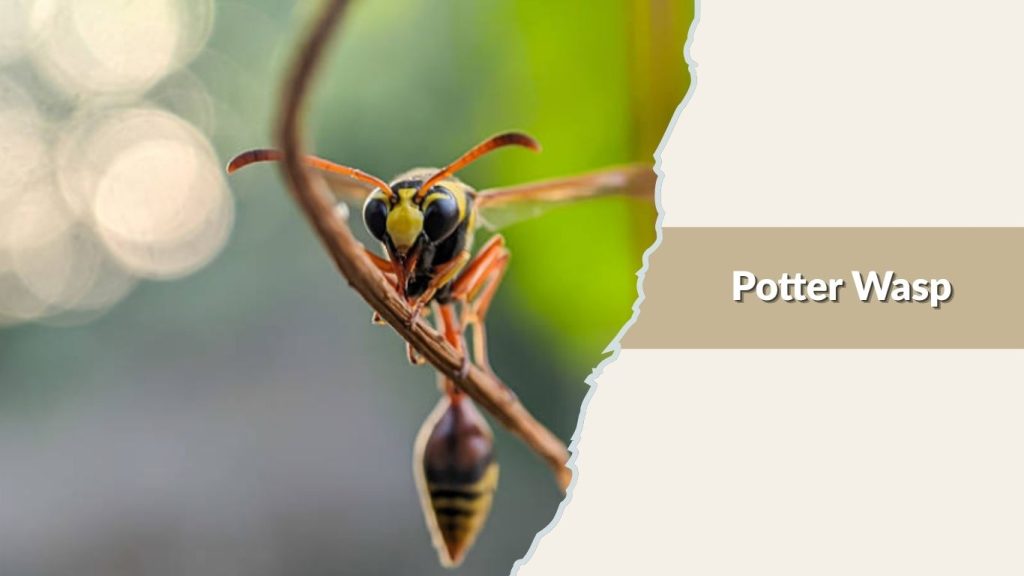
Potter wasps (family Vespidae, subfamily Eumeninae) are solitary wasps known for constructing small, jug-shaped mud nests. They provision these nests with paralyzed caterpillars or insects for their larvae. Their unique nest architecture and solitary behavior distinguish them from social wasps.
Identification
- Small to medium-sized, 7–20 mm
- Usually brown, black, or metallic
- Smooth, slender body with narrow waist
- Wings folded longitudinally at rest
Habitat and Distribution
Potter wasps are found in gardens, forests, grasslands, and urban areas. They are widely distributed globally, especially in temperate and tropical regions where mud and host insects are abundant.
Behavior and Diet
Adults feed on nectar, while females build mud nests and provision them with paralyzed prey for their larvae. They are solitary and non-aggressive, focusing on nesting and hunting for offspring development.
Lifecycle
The lifecycle includes egg, larva, pupa, and adult stages. Eggs are laid in mud cells with paralyzed prey. Larvae consume the prey, pupate inside the mud cell, and emerge as adults ready to repeat the cycle.
10. Sand Wasp
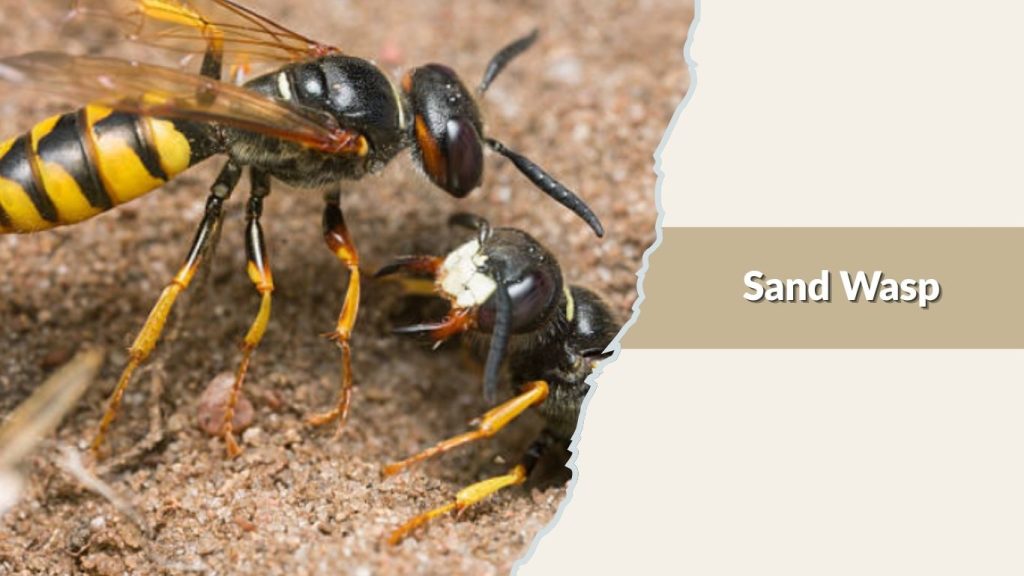
Sand wasps (family Crabronidae) are solitary, ground-nesting wasps that dig burrows in sandy or loose soil. They are skilled hunters, capturing insects or spiders to provision their nests for their larvae. These wasps play an important role in controlling pest insect populations.
Identification
- Medium-sized, typically 10–25 mm
- Slender body, usually black, brown, or yellow
- Narrow waist with long legs for digging
- Transparent wings and strong mandibles
Habitat and Distribution
Sand wasps are commonly found in sandy soils, dunes, grasslands, and open fields. They are widespread in temperate and tropical regions where their prey and suitable nesting sites are abundant.
Behavior and Diet
Adults feed on nectar, while females hunt and paralyze insects or spiders to stock their underground nests. They are solitary and highly territorial around their nesting sites.
Lifecycle
The lifecycle includes egg, larva, pupa, and adult stages. Eggs are laid on the paralyzed prey inside the burrow. Larvae feed on the prey, pupate within the nest, and emerge as adults, ready to hunt and reproduce in the next season.
FAQs
What do Chalcid wasps feed on?
Adult Chalcid wasps primarily feed on nectar and honeydew. Their larvae are parasitoids and feed on the bodies or eggs of host insects, depending on the species. This makes them effective natural pest controllers.
Are Chalcid wasps dangerous to humans?
No, Chalcid wasps are generally harmless to humans. They are very small and rarely sting, and their primary focus is on laying eggs in host insects rather than interacting with people.
Where can I find these wasps?
These wasps are found worldwide, in forests, grasslands, gardens, and agricultural areas. Their presence depends on the availability of host insects or suitable nesting sites, such as sand, soil, or plant tissues.
How do Chalcid wasps help the environment?
Chalcid wasps are natural biological control agents. They reduce pest insect populations by parasitizing them, which helps maintain ecological balance and protects crops and plants without the need for chemical pesticides.
What is the lifecycle of a Chalcid-related wasp?
Their lifecycle includes egg, larva, pupa, and adult stages. Larvae develop inside or on host insects, consuming them, then pupate and emerge as adults. The cycle repeats, often with multiple generations per year depending on climate and host availability.