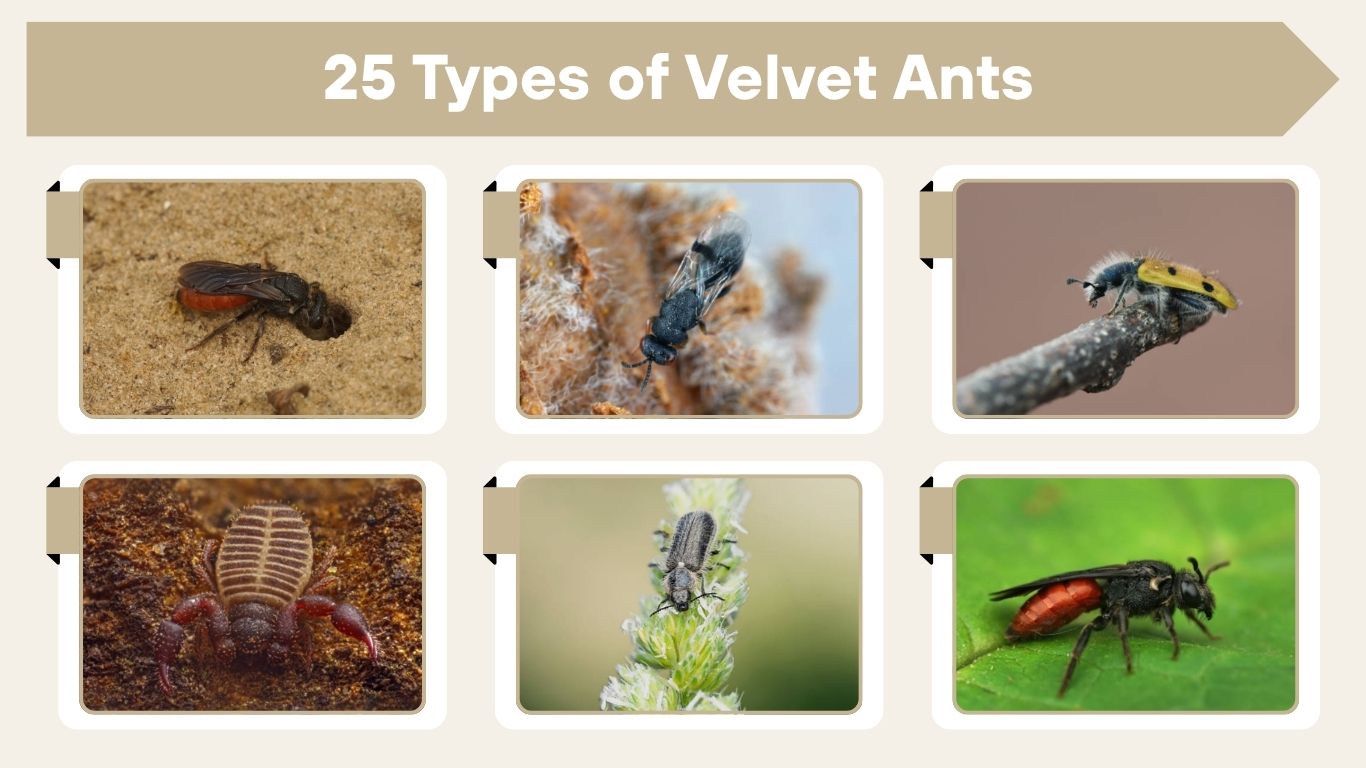
Velvet ants are fascinating insects that are actually wasps, not true ants. They are famous for their bright colors, dense hair-like bodies, and extremely painful sting. These insects are mostly solitary and are commonly found in dry, sandy, and open habitats where they search for underground nests of other insects.
Despite their small size, velvet ants play an important ecological role as parasitoids, helping control populations of ground-nesting bees and wasps. In this guide, you’ll explore 25 different types of velvet ants, along with their identification features, habitats, and behaviors.
1. Cow Killer Velvet Ant
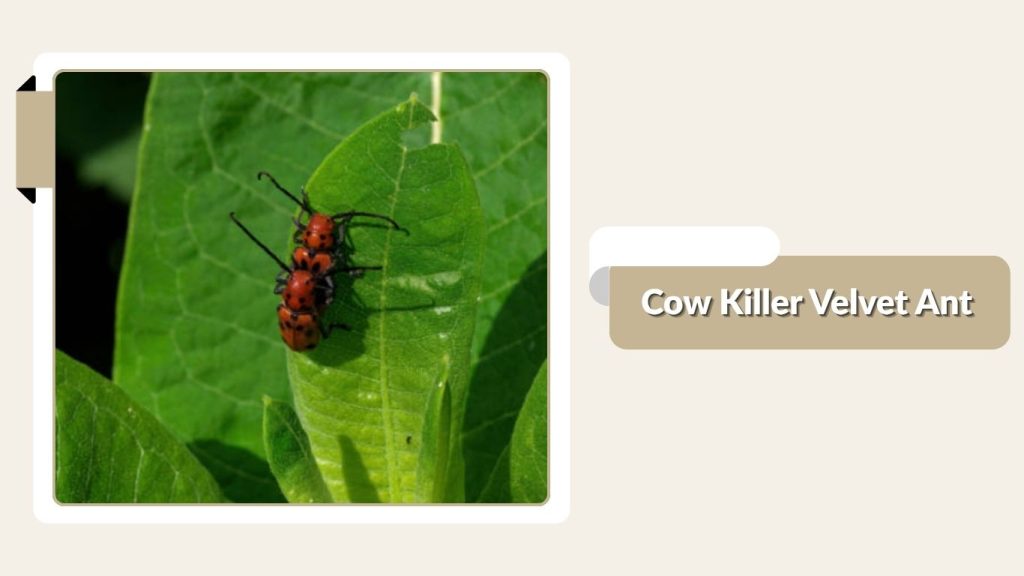
The Cow Killer Velvet Ant is one of the most famous and intimidating-looking members of the velvet ant group. Despite its name, it is actually a wasp, not an ant. It is known for its extremely painful sting, which has earned it the nickname “cow killer,” although it does not actually kill cattle.
These insects are covered in dense, brightly colored hairs that act as a warning signal to predators. They are mostly solitary and are commonly found in sandy or dry habitats where they search for the nests of other insects.
Physical Appearance
Cow Killer Velvet Ants have a striking red and black body covered in soft, velvety hair. Females are wingless and resemble large ants, while males have wings and look more like typical wasps. Their tough exoskeleton helps protect them from attacks by predators and host insects.
Characteristics
- Actually a type of parasitic wasp
- Wingless females resemble large ants
- Covered in dense red and black hairs
- Extremely painful sting (females only)
- Solitary lifestyle, not social insects
- Strong exoskeleton for protection
- Bright warning colors to deter predators
Habitat and Distribution
Cow Killer Velvet Ants are commonly found in the United States, especially in sandy fields, grasslands, and dry open areas. They prefer warm climates where ground-nesting bees and wasps—used as hosts for their larvae—are abundant.
Behavior and Diet
Adult Cow Killer Velvet Ants feed mainly on nectar, while their larvae develop as parasites inside the nests of other insects. The female lays her eggs in the host nest, and the larvae consume the host’s immature stages as food.
2. Red Velvet Ant
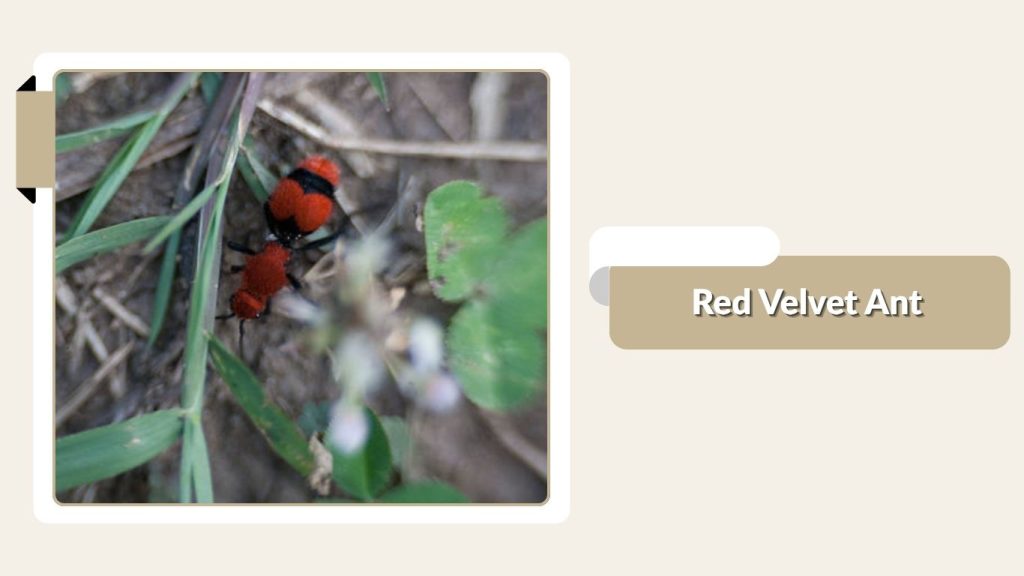
The Red Velvet Ant is one of the most eye-catching species in the velvet ant group. Like other velvet ants, it is actually a wasp, not a true ant. It is best known for its bright red coloration and extremely painful sting, which serves as a strong defense against predators.
These insects are mostly solitary and are often seen moving quickly across sandy soil or dry grasslands in search of host insect nests where they lay their eggs.
Physical Appearance
Red Velvet Ants have a fuzzy, bright red body with black markings on the abdomen. Females are wingless and ant-like, while males have wings and a slimmer body. Their thick exoskeleton provides strong protection against attacks.
Characteristics
- A wingless parasitic wasp species
- Bright red and black fuzzy body
- Females have a very painful sting
- Solitary and fast-moving insect
- Strong exoskeleton for defense
- Mimics ants in appearance
- Uses warning colors to avoid predators
Habitat and Distribution
Red Velvet Ants are commonly found in North America, especially in dry fields, sandy areas, and grasslands. They prefer warm environments where ground-nesting bees and wasps are available for their reproductive cycle.
Behavior and Diet
Adult Red Velvet Ants feed on nectar and plant sugars, while their larvae develop as parasites inside the nests of other insects. The female lays eggs in host nests, and the larvae consume the host’s immature insects as food.
3. Black Velvet Ant
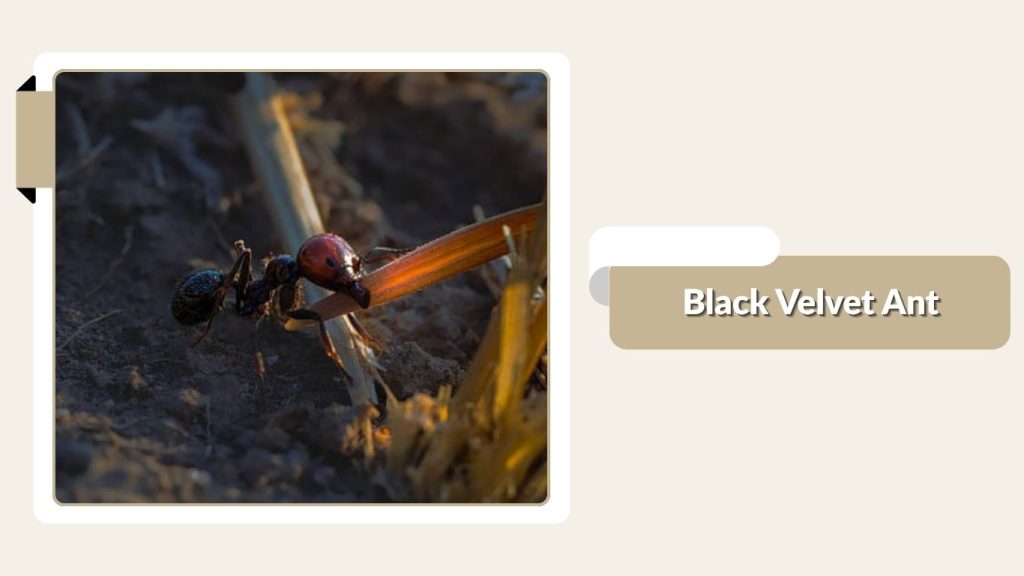
The Black Velvet Ant is another well-known member of the velvet ant group, recognized for its bold black coloration and extremely painful sting. Despite its name, it is a wasp, not an ant. It uses its appearance and sting as strong defense mechanisms against predators.
These insects are solitary and often found running quickly across open, dry habitats while searching for insect nests to parasitize.
Physical Appearance
Black Velvet Ants have a dense covering of black or dark brown velvety hair. Females are wingless and resemble large ants, while males have wings and a more wasp-like appearance. Their tough body helps protect them from attacks.
Characteristics
- Actually a wingless wasp species
- Covered in black velvety hairs
- Females deliver a very painful sting
- Solitary and fast-moving behavior
- Strong and hardened exoskeleton
- Mimics ants for protection
- Uses warning coloration and sound
Habitat and Distribution
Black Velvet Ants are found in North America, especially in dry grasslands, sandy soils, and open fields. They prefer warm, sunny environments where host insects are available for reproduction.
Behavior and Diet
Adult Black Velvet Ants feed on nectar, while their larvae develop inside the nests of ground-nesting bees or wasps. The female lays eggs in host nests, and the developing larvae consume the host’s immature stages as their food source.
4. Eastern Velvet Ant
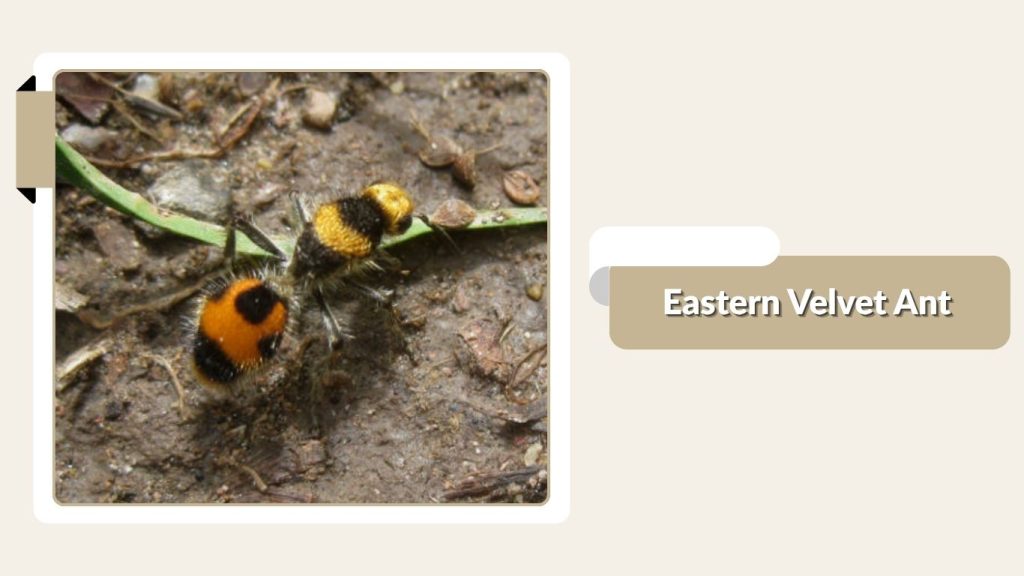
The Eastern Velvet Ant is a well-known species of velvet ant found mainly in the eastern regions of North America. Despite its common name, it is actually a wingless wasp. It is famous for its bright coloration and extremely painful sting, which it uses only for defense.
These insects are solitary and are often seen moving quickly across sandy soil, grasslands, and open forest edges while searching for suitable host nests.
Physical Appearance
Eastern Velvet Ants have a dense covering of red, orange, or rusty-colored hairs over a dark body. Females are wingless and resemble large ants, while males have wings and look more like typical wasps. Their tough exoskeleton helps protect them from predators.
Characteristics
- Wingless parasitic wasp species
- Bright red or orange fuzzy body
- Females have a very painful sting
- Solitary and fast-moving behavior
- Strong, hardened exoskeleton
- Ant-like appearance for protection
- Uses warning colors to deter predators
Habitat and Distribution
Eastern Velvet Ants are found across the eastern United States, especially in grasslands, open woods, sandy fields, and areas with loose soil. They prefer warm, dry environments where ground-nesting bees and wasps are common.
Behavior and Diet
Adult Eastern Velvet Ants feed on nectar and plant sugars, while their larvae develop as parasites inside the nests of other insects. The female lays her eggs in host nests, and the larvae consume the host’s developing insects as food.
5. Dasymutilla occidentalis
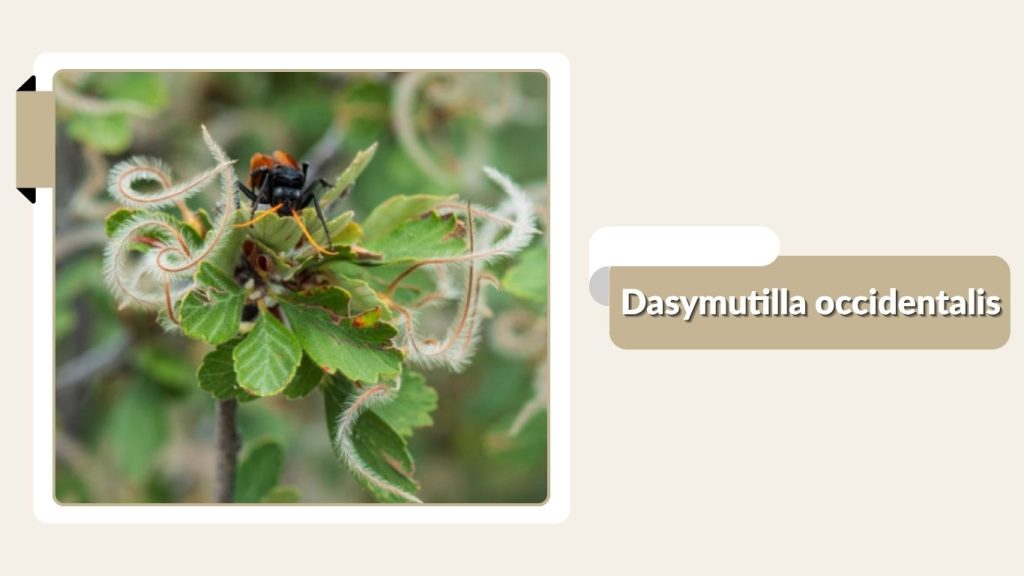
The Dasymutilla occidentalis is one of the most widely recognized velvet ant species in North America and is often called the “cow killer” due to the intense pain of its sting. Despite this fearsome reputation, it is actually a solitary parasitic wasp, not a true ant.
These insects are commonly seen in dry, sandy environments where they actively search for the nests of ground-dwelling bees and wasps. Their bright colors serve as a warning to predators.
Physical Appearance
Dasymutilla occidentalis has a striking red-orange and black fuzzy body. Females are wingless and ant-like, while males are winged and resemble typical wasps. The body is covered in dense hair, and the exoskeleton is extremely hard and protective.
Characteristics
- Wingless female parasitic wasp
- Bright red-orange and black coloration
- Extremely painful sting in females
- Solitary lifestyle, not a social insect
- Strong, armor-like exoskeleton
- Mimics ants for protection
- Uses aposematic (warning) coloration
Habitat and Distribution
This species is found in the southern and eastern United States. It prefers dry grasslands, sandy soils, open fields, and areas where host insects such as bees and wasps build their nests underground.
Behavior and Diet
Adult Dasymutilla occidentalis feed on nectar and plant fluids. The larvae, however, develop as parasites inside the nests of other insects. The female lays eggs in host nests, and the larvae consume the developing host larvae as their food source.
6. Dasymutilla gloriosa
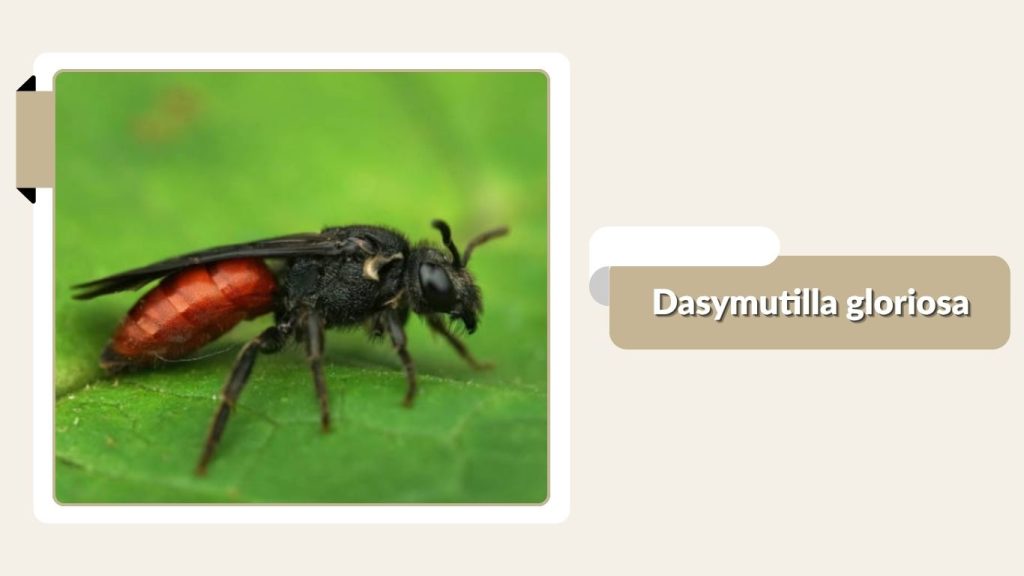
Dasymutilla gloriosa is a unique and visually distinctive velvet ant species found in desert regions. Unlike many brightly colored velvet ants, this species often has a pale or silvery appearance, helping it blend into sandy environments. Like others in its group, it is a parasitic wasp with a very painful sting.
This species is adapted to extreme desert conditions and is often seen moving across hot sand while searching for host nests.
Physical Appearance
Dasymutilla gloriosa has a pale white to silver-gray fuzzy body, which helps it camouflage in desert sand. Females are wingless and ant-like, while males have wings and a more typical wasp shape. Its thick hair helps reduce heat absorption.
Characteristics
- Wingless parasitic wasp species
- Pale white or silvery body coloration
- Extremely painful sting (female only)
- Desert-adapted insect
- Solitary lifestyle
- Strong protective exoskeleton
- Camouflage-based survival strategy
Habitat and Distribution
This species is primarily found in desert regions of the southwestern United States and northern Mexico. It thrives in hot, dry environments with sandy soil where ground-nesting bees and wasps are available.
Behavior and Diet
Adult Dasymutilla gloriosa feed on nectar from desert flowers. The larvae develop as parasites inside the nests of other insects. Females lay eggs in host nests, and the developing larvae consume the host’s immature stages for nourishment.
7. Dasymutilla bioculata
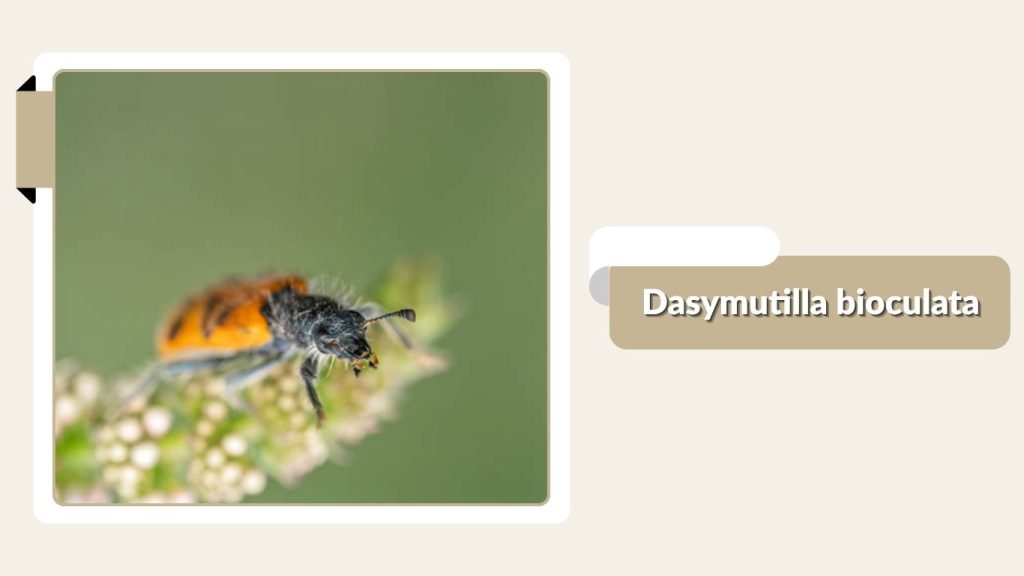
Dasymutilla bioculata is a striking velvet ant species known for its bright coloration and strong defensive sting. Like all velvet ants, it is actually a wasp, with females being wingless and highly armored. It is commonly found in dry habitats where it searches for underground insect nests.
This species is solitary and relies heavily on its warning colors and painful sting to avoid predators rather than forming colonies or using group defense.
Physical Appearance
Dasymutilla bioculata has a dense covering of red, orange, and black hairs across its body. Females are wingless and resemble large ants, while males have wings and a slimmer wasp-like body. The exoskeleton is extremely hard, helping it survive attacks.
Characteristics
- Wingless parasitic wasp species
- Bright red and black coloration
- Females have a very painful sting
- Solitary and fast-moving insect
- Strong protective exoskeleton
- Ant-like appearance for defense
- Uses warning coloration (aposematism)
Habitat and Distribution
This species is found in parts of North America, especially in dry grasslands, sandy soils, and open scrub areas. It prefers warm climates where host insects like ground-nesting bees are available.
Behavior and Diet
Adults feed on nectar and plant juices, while the larvae develop as parasites inside the nests of other insects. The female lays eggs in host nests, and the larvae consume the developing host larvae as food.
8. Dasymutilla klugii
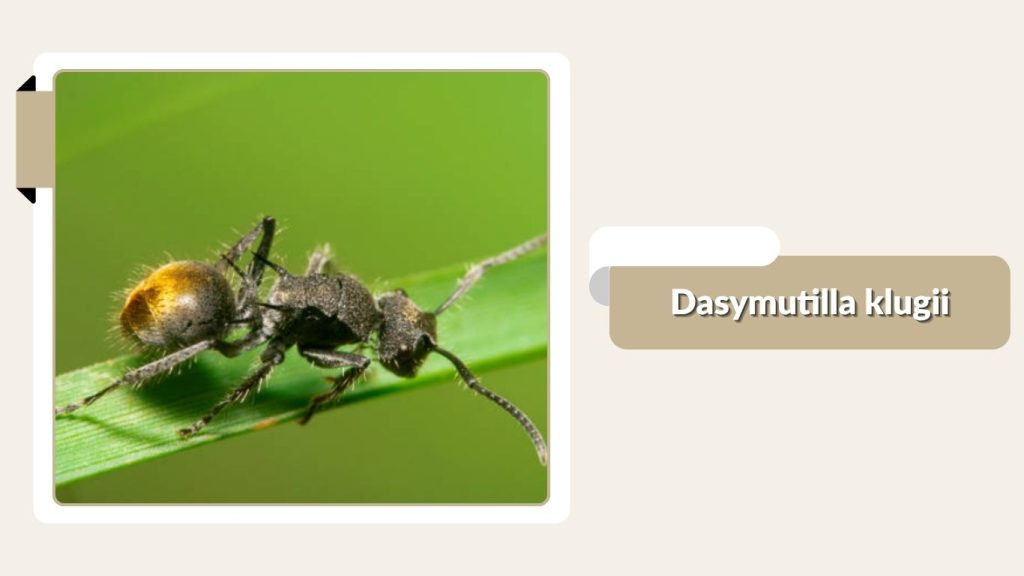
Dasymutilla klugii is a well-known velvet ant species recognized for its bold colors and powerful sting. It is a solitary parasitic wasp that does not form colonies like true ants. Instead, it survives alone and relies on stealth and defense mechanisms.
This species is commonly seen in desert and semi-arid environments where it actively searches for the nests of other ground-dwelling insects.
Physical Appearance
Dasymutilla klugii has a fuzzy body with contrasting red, orange, and black patterns. Females are wingless and resemble ants, while males are winged and more slender. Its body is covered in dense hair that helps with protection and temperature control.
Characteristics
- Solitary parasitic wasp
- Brightly colored red and black body
- Females possess a painful sting
- Wingless female form resembles ants
- Strong, thick exoskeleton
- Highly defensive species
- Uses warning coloration to deter predators
Habitat and Distribution
This species is found in the southwestern United States and parts of Mexico. It prefers dry deserts, sandy flats, and scrublands where host insects are abundant.
Behavior and Diet
Adult Dasymutilla klugii feed on nectar, while their larvae develop inside the nests of other insects. The female lays eggs in host nests, and the larvae consume the host’s immature stages, completing their parasitic life cycle.
9. Dasymutilla magnifica
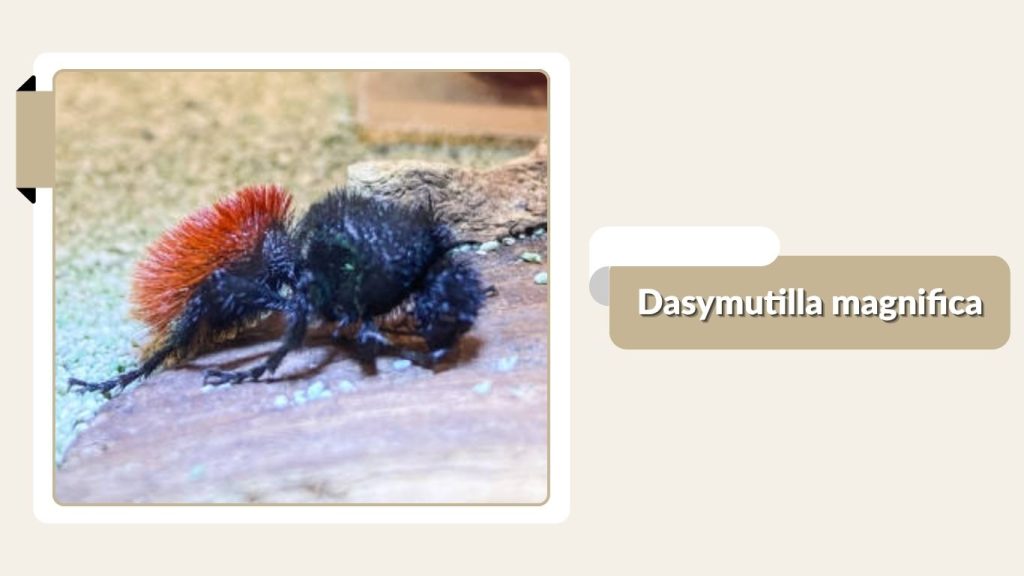
Dasymutilla magnifica is a visually impressive velvet ant species known for its striking coloration and strong defensive abilities. Like all velvet ants, it is actually a solitary wasp, not a true ant. It is best known for its painful sting and bright warning colors that help deter predators.
This species is typically found in dry, open habitats where it actively searches for underground nests of other insects to complete its life cycle.
Physical Appearance
Dasymutilla magnifica has a dense covering of vivid red, orange, and black hairs that give it a “velvet” look. Females are wingless and ant-like in shape, while males have wings and resemble typical wasps. Its body is heavily armored for protection.
Characteristics
- Solitary parasitic wasp species
- Bright red and black fuzzy body
- Females have a very painful sting
- Wingless female resembles ants
- Strong, hardened exoskeleton
- Uses warning coloration for defense
- Highly mobile ground-dwelling insect
Habitat and Distribution
This species is found in parts of the southern United States and northern Mexico. It prefers warm, dry environments such as deserts, sandy fields, and scrublands where host insects are available.
Behavior and Diet
Adult Dasymutilla magnifica feed on nectar and plant fluids. The larvae develop as parasites inside the nests of ground-nesting bees and wasps. The female lays eggs in host nests, and the larvae consume the host’s developing young.
10. Dasymutilla aureola
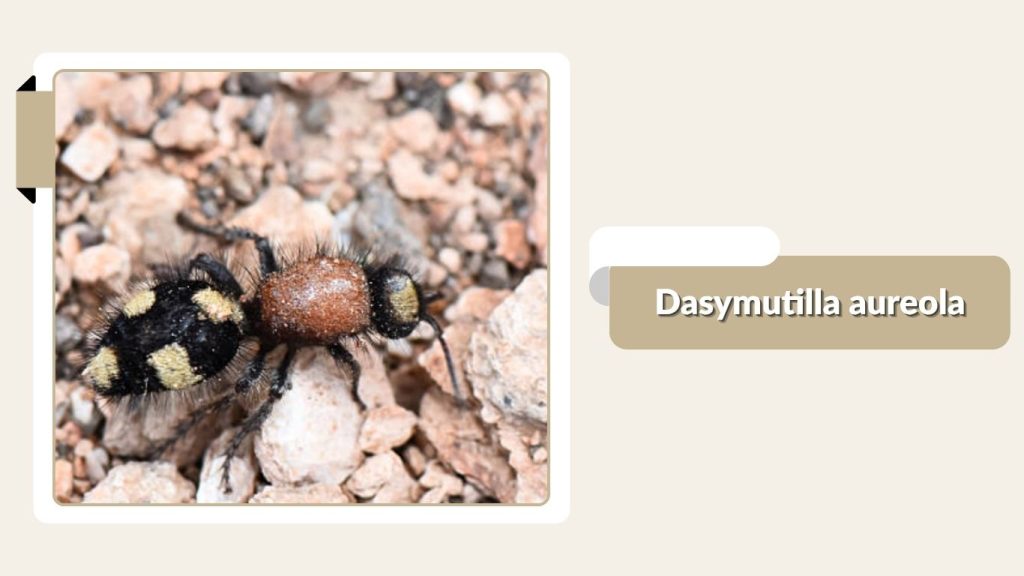
Dasymutilla aureola is a colorful velvet ant species known for its golden-red appearance and extremely painful sting. It is a solitary parasitic wasp that does not form colonies and depends on stealth and defense rather than group behavior.
This species is commonly found in dry, open environments where it searches for suitable host nests underground.
Physical Appearance
Dasymutilla aureola has a golden to reddish-orange fuzzy body with black markings. Females are wingless and resemble ants, while males are winged and more slender. Its thick hair and strong exoskeleton provide protection from predators.
Characteristics
- Wingless parasitic wasp species
- Golden-red and black coloration
- Females deliver a very painful sting
- Solitary and fast-moving insect
- Strong protective exoskeleton
- Ant-like appearance in females
- Uses bright colors as warning signals
Habitat and Distribution
This species is found in the southwestern United States and parts of Mexico. It inhabits deserts, grasslands, and sandy soils where host insects such as bees and wasps nest underground.
Behavior and Diet
Adults feed on nectar from flowers, while larvae develop as parasites inside the nests of other insects. The female lays eggs in host nests, and the larvae consume the host’s immature stages as their primary food source.
11. Dasymutilla vesta
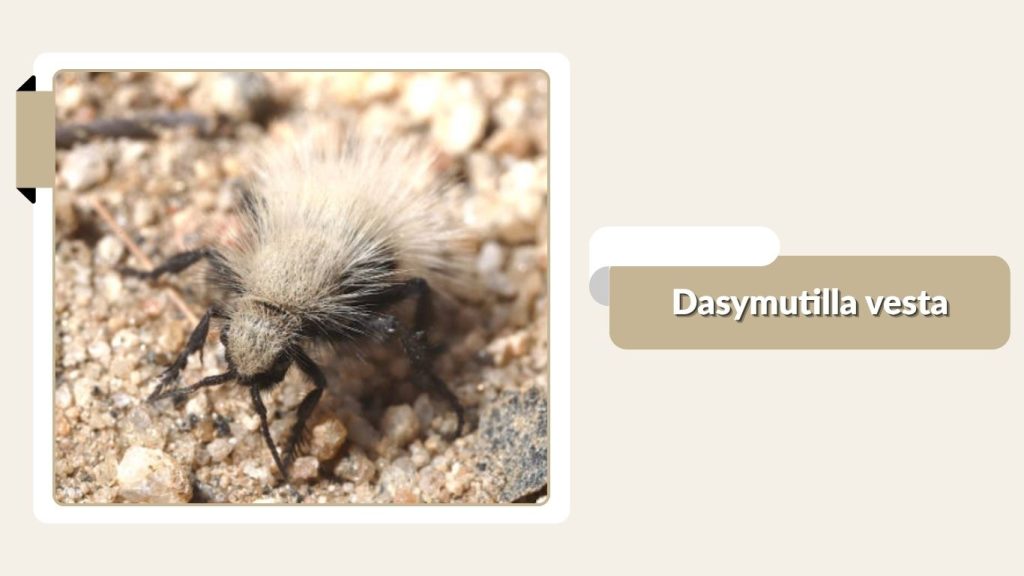
Dasymutilla vesta is a striking velvet ant species known for its bright coloration and powerful defensive sting. Despite its common name, it is actually a solitary parasitic wasp. It is often seen moving quickly across dry ground in search of host insect nests.
This species is well adapted to hot, open environments and relies heavily on its warning colors and strong exoskeleton for survival.
Physical Appearance
Dasymutilla vesta has a dense covering of red, orange, and black velvety hairs. Females are wingless and ant-like in appearance, while males are winged and resemble typical wasps. Its body is compact and heavily armored.
Characteristics
- Solitary parasitic wasp species
- Bright red and black coloration
- Females have a very painful sting
- Wingless female resembles ants
- Strong, hardened exoskeleton
- Highly defensive insect
- Uses warning colors to deter predators
Habitat and Distribution
This species is found in parts of North America, especially in dry grasslands, sandy deserts, and open scrub areas. It prefers warm climates where ground-nesting bees and wasps are available.
Behavior and Diet
Adult Dasymutilla vesta feed on nectar and plant fluids. The larvae develop as parasites inside the nests of other insects. The female lays eggs in host nests, and the larvae consume the host’s developing larvae as food.
12. Timulla vagans
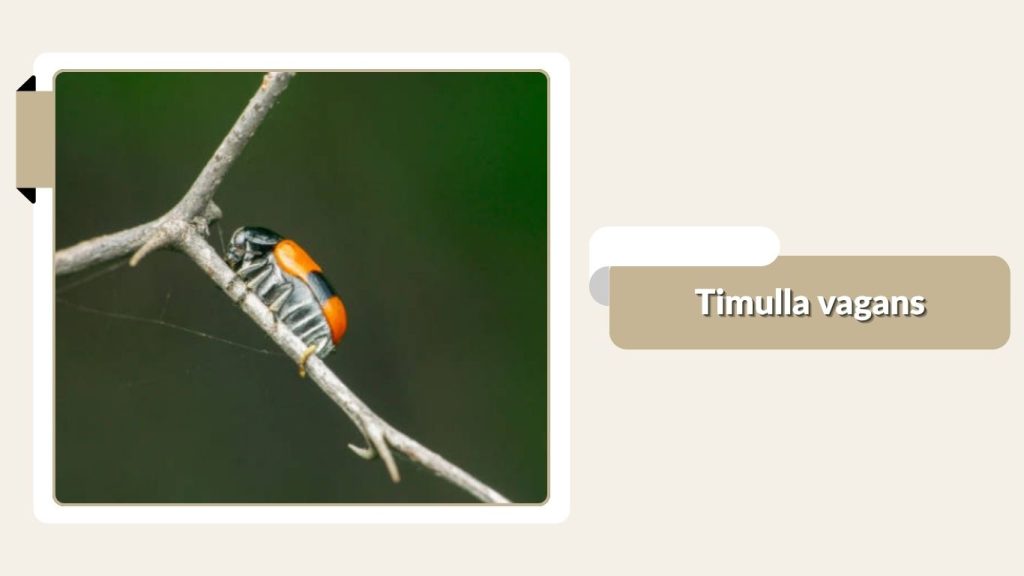
Timulla vagans is a lesser-known velvet ant species belonging to the same family as other brightly colored parasitic wasps. Like all velvet ants, it is actually a wasp, with females being wingless and highly armored. It is known for its solitary behavior and parasitic life cycle.
This species is commonly found in warm, dry environments where it searches for ground-nesting insect hosts.
Physical Appearance
Timulla vagans has a fuzzy body with a mix of red, orange, and black coloration. Females are wingless and resemble ants, while males are winged and more slender. Its thick exoskeleton helps protect it from predators and host insects.
Characteristics
- Solitary parasitic wasp species
- Wingless females resemble ants
- Brightly colored red and black body
- Females have a painful sting
- Strong, protective exoskeleton
- No colony or social structure
- Uses warning coloration for defense
Habitat and Distribution
This species is found in parts of North and Central America, typically in dry grasslands, sandy soils, and open fields. It prefers habitats where ground-nesting bees and wasps are common.
Behavior and Diet
Adults feed on nectar and plant sugars, while larvae develop as parasites inside the nests of other insects. The female lays eggs in host nests, and the larvae consume the developing host insects as their food source.
13. Pseudomethoca canadensis
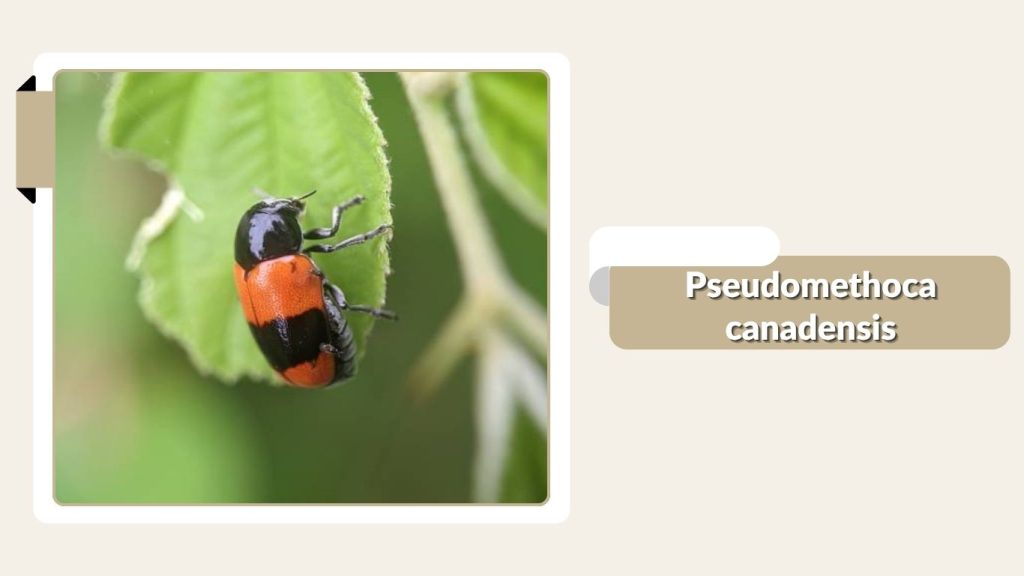
Pseudomethoca canadensis is a North American velvet ant species known for its strong defensive sting and cryptic lifestyle. Like all velvet ants, it is not a true ant but a wingless parasitic wasp. It is often found moving alone across dry soil or sandy ground in search of insect nests.
This species plays a hidden but important ecological role by parasitizing other ground-nesting insects. Its bright coloration and tough body help it survive in harsh environments where predators are common.
Physical Appearance
Pseudomethoca canadensis has a dense covering of reddish-orange and black hairs that give it a velvety texture. Females are wingless and resemble large ants, while males have wings and look more like typical wasps. Its body is compact, heavily armored, and adapted for protection against attacks.
Characteristics
- Solitary parasitic wasp species
- Wingless female resembles ants
- Bright red and black fuzzy body
- Extremely painful sting (female only)
- Strong, hardened exoskeleton
- No social colony structure
- Uses warning coloration for defense
Habitat and Distribution
This species is found in parts of Canada and the northern United States. It prefers dry grasslands, sandy fields, forest edges, and open habitats where host insects such as bees and wasps build underground nests.
Behavior and Diet
Adult Pseudomethoca canadensis feed on nectar and plant secretions, while the larvae develop as parasites inside host nests. The female lays eggs in the nests of ground-dwelling insects, and the larvae consume the host’s developing young. This parasitic strategy ensures survival without the need for colony life.
14. Odontomutilla mexicana
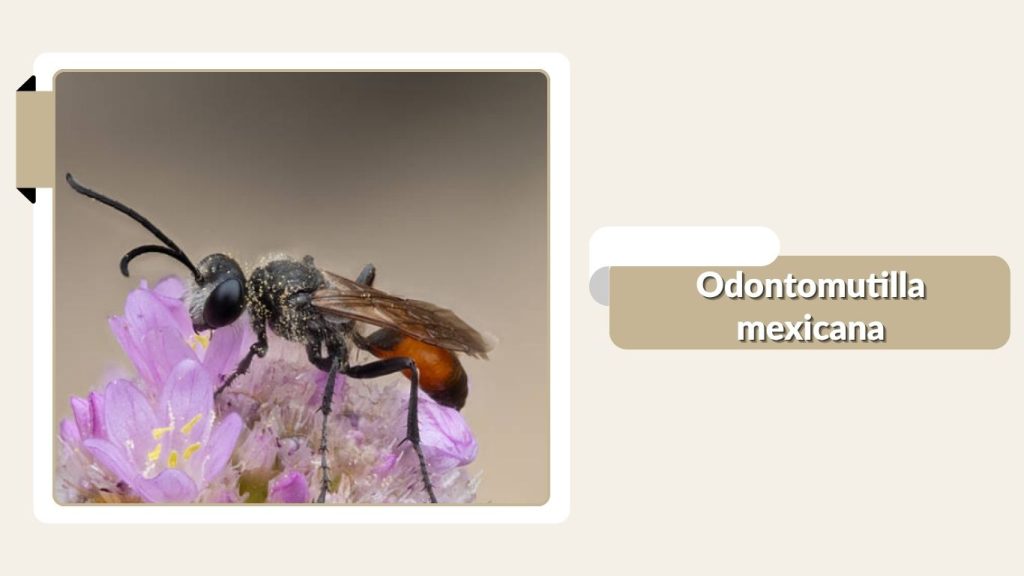
Odontomutilla mexicana is a distinctive velvet ant species found in parts of Central America and Mexico. It belongs to a group of parasitic wasps known for their bright colors and extremely painful sting. Despite its name, it is not a true ant but a wingless female wasp adapted for a solitary lifestyle.
This species is commonly seen in dry, warm environments where it actively searches for the nests of ground-dwelling bees and wasps to complete its reproductive cycle.
Physical Appearance
Odontomutilla mexicana has a striking combination of red, orange, and black velvety hairs covering its body. Females are wingless and ant-like, while males are winged and more slender in shape. Its body is tough and well-armored to resist predators.
Characteristics
- Parasitic wasp species (velvet ant)
- Wingless female resembles ants
- Bright warning coloration (red/black)
- Very painful defensive sting
- Solitary lifestyle, no colony formation
- Strong protective exoskeleton
- Active ground-dwelling behavior
Habitat and Distribution
This species is found mainly in Mexico and parts of Central America. It inhabits deserts, dry forests, scrublands, and sandy open areas where host insects are available in the soil.
Behavior and Diet
Adults feed on nectar and plant fluids, while larvae develop inside the nests of other insects. The female lays eggs in host nests, and the developing larvae consume the host’s immature stages. This parasitic life cycle is essential for the species’ survival.
15. Myrmilla europaea
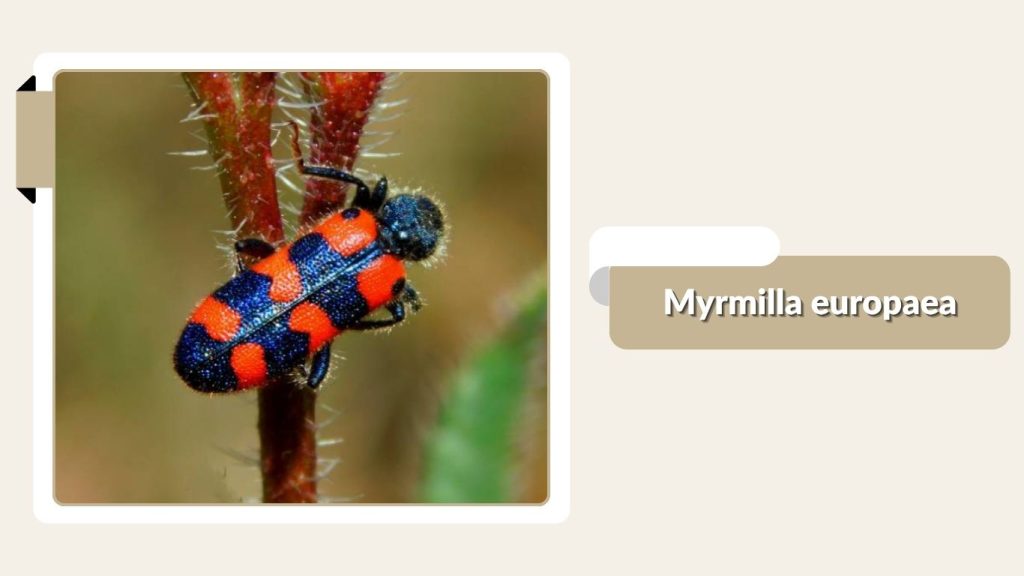
Myrmilla europaea is a velvet ant species found in parts of Europe and surrounding regions. Like all velvet ants, it is actually a solitary parasitic wasp, with wingless females that resemble ants. It is known for its tough body, warning colors, and very painful sting used strictly for defense.
This species is usually seen in warm, dry habitats where it actively searches the ground for nests of other insects. Its behavior is mostly secretive, and it spends much of its time moving alone across soil and vegetation.
Physical Appearance
Myrmilla europaea has a dense covering of black to dark brown velvety hairs, sometimes mixed with reddish markings. Females are wingless and ant-like in shape, while males are winged and look more like typical wasps. Its body is strongly built and covered with a hard exoskeleton for protection.
Characteristics
- Solitary parasitic wasp species
- Wingless female resembles ants
- Dark-colored velvety body
- Females have a painful sting
- Strong, armored exoskeleton
- No social colony behavior
- Uses camouflage and warning traits
Habitat and Distribution
This species is found in parts of southern and central Europe. It prefers dry grasslands, rocky slopes, scrublands, and sandy soils where host insects such as ground-nesting bees and wasps are available.
Behavior and Diet
Adults feed on nectar and plant secretions, while larvae develop as parasites inside host nests. The female lays eggs in the nests of other insects, and the larvae consume the host’s developing stages as food.
16. Ronisia brutia
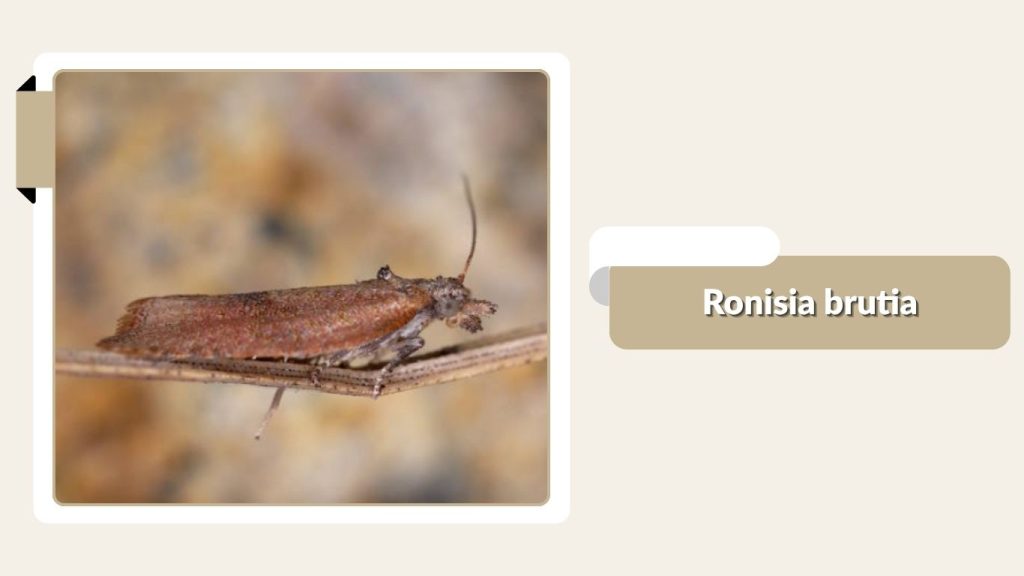
Ronisia brutia is a striking velvet ant species known from parts of the Mediterranean region. It is a solitary parasitic wasp with wingless females that resemble ants and a very painful sting used for defense. Like other velvet ants, it relies on stealth and chemical defenses rather than group behavior.
This species is commonly found in warm, dry environments where it searches for underground nests of bees and wasps to complete its life cycle.
Physical Appearance
Ronisia brutia has a fuzzy body with a mix of red, orange, and black coloration. Females are wingless and robust, while males are winged and more slender. Its body is covered in dense hairs that give it a velvet-like appearance and help protect it from heat and predators.
Characteristics
- Parasitic wasp species (velvet ant)
- Wingless female resembles ants
- Bright red and black coloration
- Extremely painful sting (defensive only)
- Solitary and non-social insect
- Strong protective exoskeleton
- Ground-dwelling behavior
Habitat and Distribution
This species is found in Mediterranean regions of Europe, North Africa, and parts of the Middle East. It prefers dry scrublands, sandy soils, and rocky open habitats with abundant host insect nests.
Behavior and Diet
Adults feed on nectar and plant fluids, while larvae develop inside the nests of other insects. The female lays eggs in host nests, and the larvae consume the developing host larvae, ensuring their growth and survival.
17. Mutilla europaea
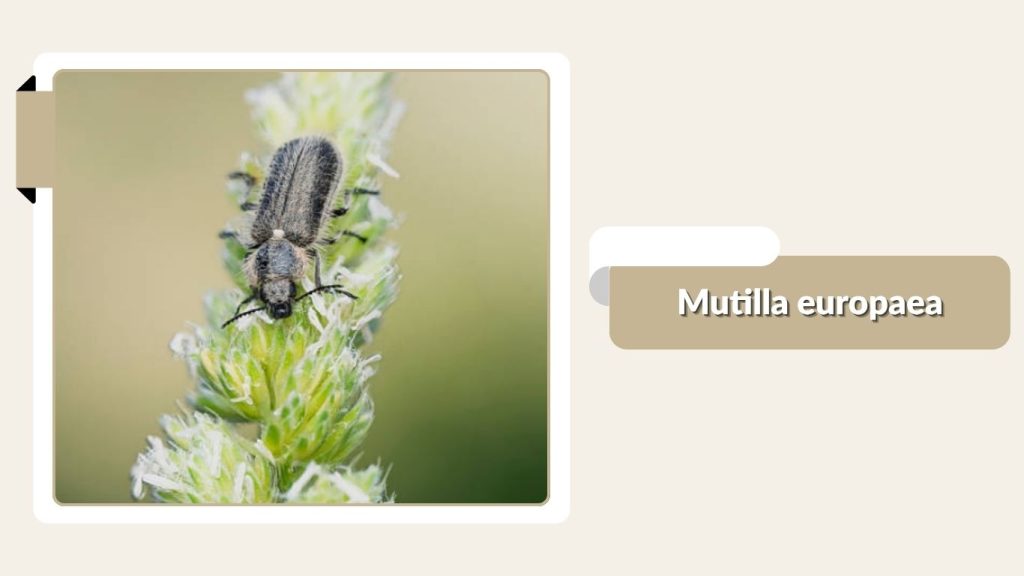
Mutilla europaea is one of the most widely recognized velvet ant species in Europe. Despite its name, it is not a true ant but a wingless parasitic wasp. It is well known for its strong exoskeleton, bright warning colors, and extremely painful sting used for defense against predators.
This species is typically solitary and spends most of its life moving across open ground in search of host insect nests. It plays an important ecological role by regulating populations of ground-nesting bees and wasps.
Physical Appearance
Mutilla europaea has a dense covering of reddish-brown and black velvety hairs. Females are wingless and resemble large ants, while males are winged and appear more like typical wasps. Its body is heavily armored, making it difficult for predators to attack successfully.
Characteristics
- Solitary parasitic wasp species
- Wingless female resembles ants
- Red-brown and black fuzzy body
- Females have a very painful sting
- Strong, hardened exoskeleton
- No colony or social structure
- Uses warning coloration for defense
Habitat and Distribution
This species is found across Europe and parts of Asia, especially in grasslands, meadows, forest edges, and sandy soils. It prefers warm, dry habitats where ground-nesting bees and wasps are present.
Behavior and Diet
Adult Mutilla europaea feed on nectar and plant secretions, while the larvae develop as parasites inside host nests. The female lays eggs in the nests of other insects, and the larvae consume the host’s immature stages as food, completing their parasitic life cycle.
18. Ephuta guttata
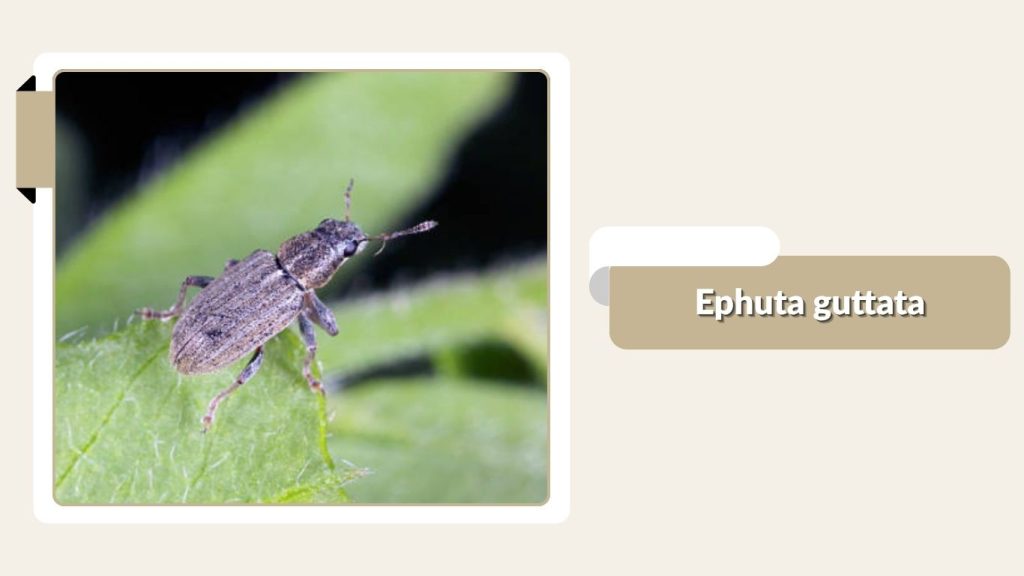
Ephuta guttata is a lesser-known velvet ant species recognized for its spotted body pattern and strong defensive sting. Like all velvet ants, it is actually a solitary parasitic wasp rather than a true ant. It survives by avoiding predators through warning colors and a very painful sting.
This species is active on the ground and is often seen in warm, dry habitats where it searches for insect nests to complete its life cycle.
Physical Appearance
Ephuta guttata has a dense covering of black and reddish hairs with lighter spotted markings on the body. Females are wingless and resemble large ants, while males are winged and more slender like typical wasps. Its body is tough and heavily armored for protection.
Characteristics
- Solitary parasitic wasp species
- Wingless female resembles ants
- Spotted pattern on fuzzy body
- Very painful defensive sting
- Strong, hardened exoskeleton
- No social colony behavior
- Uses warning coloration for defense
Habitat and Distribution
This species is found in parts of North and Central America, mainly in dry grasslands, sandy soils, and open scrub areas. It prefers warm climates where ground-nesting bees and wasps are available.
Behavior and Diet
Adults feed on nectar and plant fluids, while larvae develop inside host insect nests. The female lays eggs in the nests of other insects, and the larvae consume the host’s developing young as their food source.
19. Ephuta unicolor
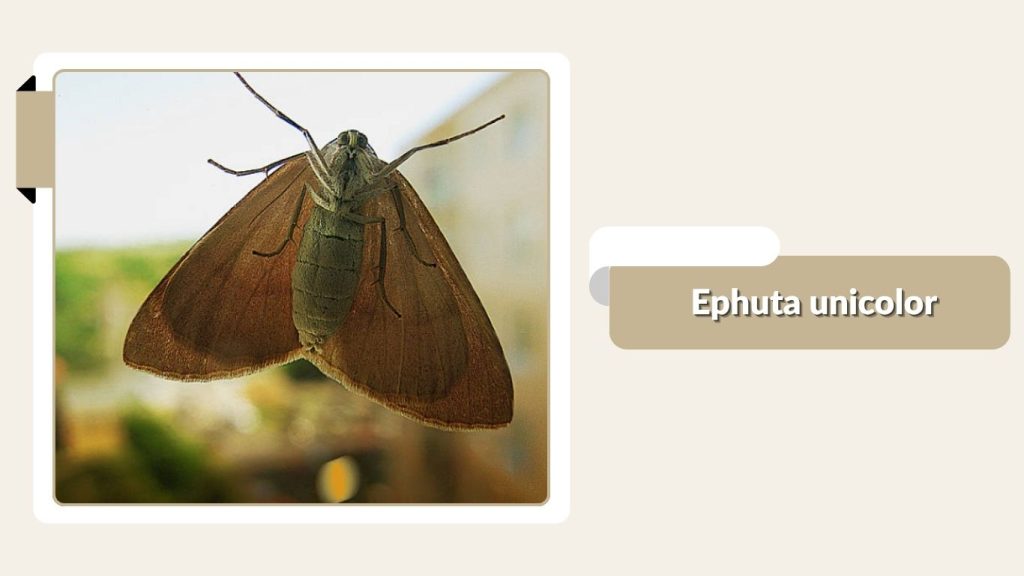
Ephuta unicolor is a velvet ant species known for its more uniform body coloration compared to many brightly patterned relatives. It is a solitary parasitic wasp with wingless females and a powerful sting used only for defense. Despite its intimidating appearance, it plays a specific ecological role in controlling other insect populations.
This species is usually found moving alone across soil surfaces while searching for suitable host nests.
Physical Appearance
Ephuta unicolor has a mostly uniform dark red or brown velvety body. Females are wingless and resemble ants, while males are winged and more wasp-like. Its body is covered in dense hairs and protected by a strong exoskeleton.
Characteristics
- Parasitic wasp (velvet ant) species
- Wingless female resembles ants
- Uniform dark reddish-brown coloration
- Females have a very painful sting
- Solitary and non-social insect
- Strong protective exoskeleton
- Ground-dwelling behavior
Habitat and Distribution
This species is found in parts of the Americas, especially in warm, dry habitats such as grasslands, sandy fields, and open scrub areas. It prefers environments where host insects nest underground.
Behavior and Diet
Adults feed on nectar and plant juices, while larvae develop as parasites inside the nests of ground-nesting insects. The female lays eggs in host nests, and the larvae consume the developing host insects as food, completing their life cycle.
20. Photomorphus spinolae
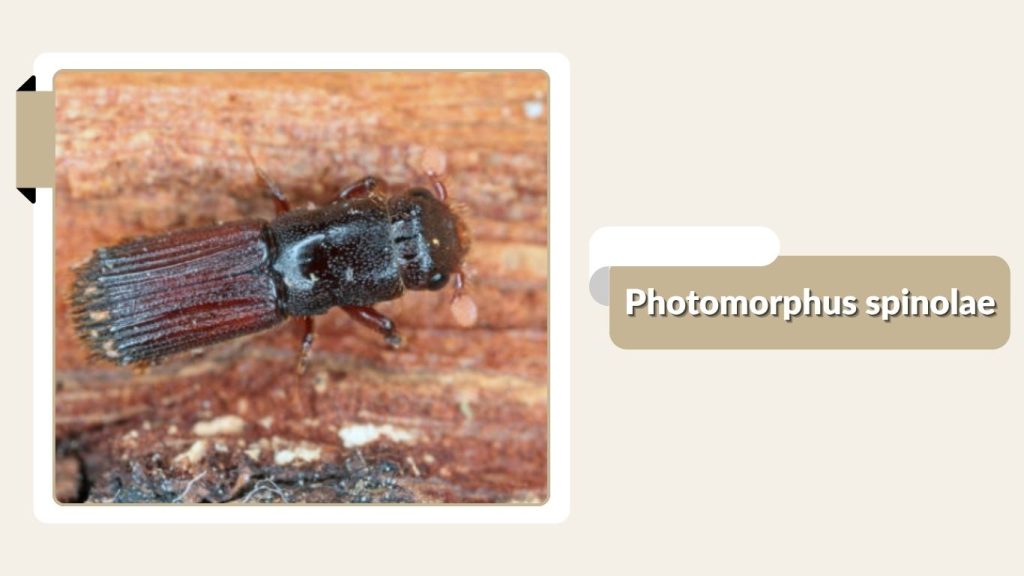
Photomorphus spinolae is a distinctive velvet ant species found mainly in parts of Europe and surrounding regions. Like all velvet ants, it is actually a wingless parasitic wasp, not a true ant. It is known for its striking appearance, strong exoskeleton, and extremely painful sting used purely for defense.
This species is typically solitary and spends much of its time moving across dry ground in search of suitable host insect nests.
Physical Appearance
Photomorphus spinolae has a dense covering of velvety hairs, often showing reddish-brown and darker black tones. Females are wingless and resemble large ants, while males are winged and look more like typical wasps. Its body is compact and heavily armored.
Characteristics
- Solitary parasitic wasp species
- Wingless female resembles ants
- Red-brown and black velvety body
- Females have a very painful sting
- Strong, hardened exoskeleton
- No colony or social structure
- Uses warning coloration for defense
Habitat and Distribution
This species is found in southern and central Europe, especially in dry grasslands, scrublands, forest edges, and sandy soils. It prefers warm environments where ground-nesting bees and wasps are available.
Behavior and Diet
Adults feed on nectar and plant secretions, while larvae develop as parasites inside host nests. The female lays eggs in the nests of other insects, and the larvae consume the host’s developing stages as food.
21. Sphaeropthalma pensylvanica
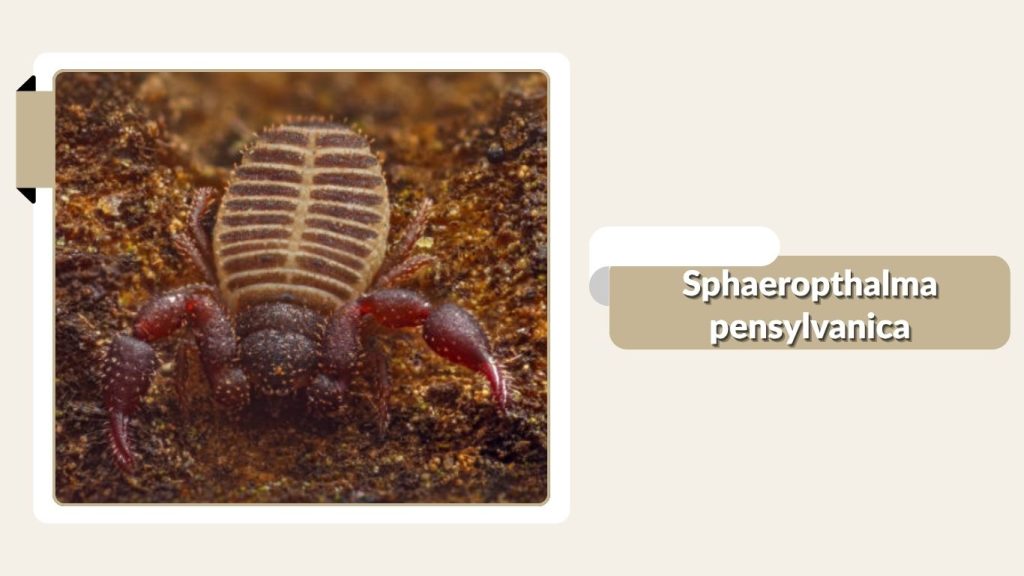
Sphaeropthalma pensylvanica is a North American velvet ant species known for its bold coloration and painful defensive sting. Despite its ant-like appearance, it is actually a solitary parasitic wasp. It is commonly found moving quickly across sandy or grassy ground.
This species relies on its tough exoskeleton and warning colors to survive in environments filled with predators.
Physical Appearance
Sphaeropthalma pensylvanica has a fuzzy body with bright red or orange markings combined with darker black sections. Females are wingless and resemble ants, while males are winged and more slender. Its body is strongly built and covered in dense hairs.
Characteristics
- Solitary parasitic wasp species
- Wingless female resembles ants
- Bright red and black coloration
- Females have a very painful sting
- Strong protective exoskeleton
- Ground-dwelling behavior
- No social colony system
Habitat and Distribution
This species is found in the eastern United States, particularly in grasslands, sandy soils, open fields, and forest edges. It prefers warm environments where host insects such as bees and wasps nest underground.
Behavior and Diet
Adults feed on nectar and plant fluids, while larvae develop as parasites inside the nests of other insects. The female lays eggs in host nests, and the larvae consume the host’s immature insects as food during development.
22. Sphaeropthalma fulvohirta
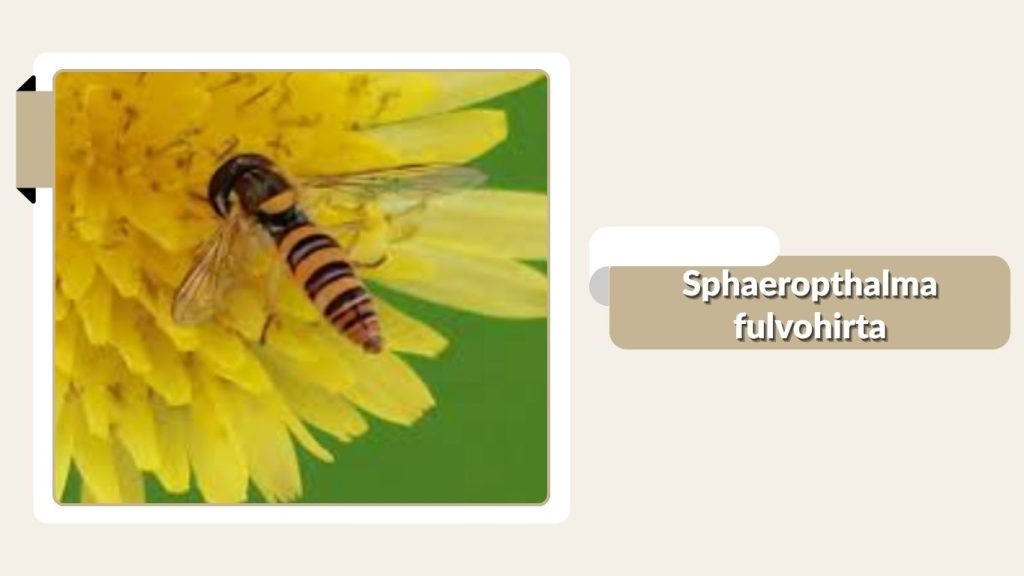
Sphaeropthalma fulvohirta is a North American velvet ant species known for its dense hairy body and strong defensive sting. Like all velvet ants, it is actually a solitary parasitic wasp rather than a true ant. It survives mainly by avoiding predators through its tough exoskeleton and warning coloration.
This species is typically found moving alone across dry ground while searching for underground nests of bees and wasps, which it uses for reproduction.
Physical Appearance
Sphaeropthalma fulvohirta has a thick covering of golden, reddish, and black velvety hairs. Females are wingless and resemble large ants, while males are winged and more slender like typical wasps. Its body is compact and heavily armored.
Characteristics
- Solitary parasitic wasp species
- Wingless female resembles ants
- Dense golden-red and black hairs
- Females have a very painful sting
- Strong, hardened exoskeleton
- No colony or social behavior
- Uses warning colors for defense
Habitat and Distribution
This species is found in parts of the southern and eastern United States. It prefers dry grasslands, sandy soils, open fields, and scrub habitats where ground-nesting insects are present.
Behavior and Diet
Adults feed on nectar and plant secretions, while larvae develop as parasites inside host nests. The female lays eggs in the nests of other insects, and the larvae consume the developing host larvae as food.
23. Pseudomethoca frigida
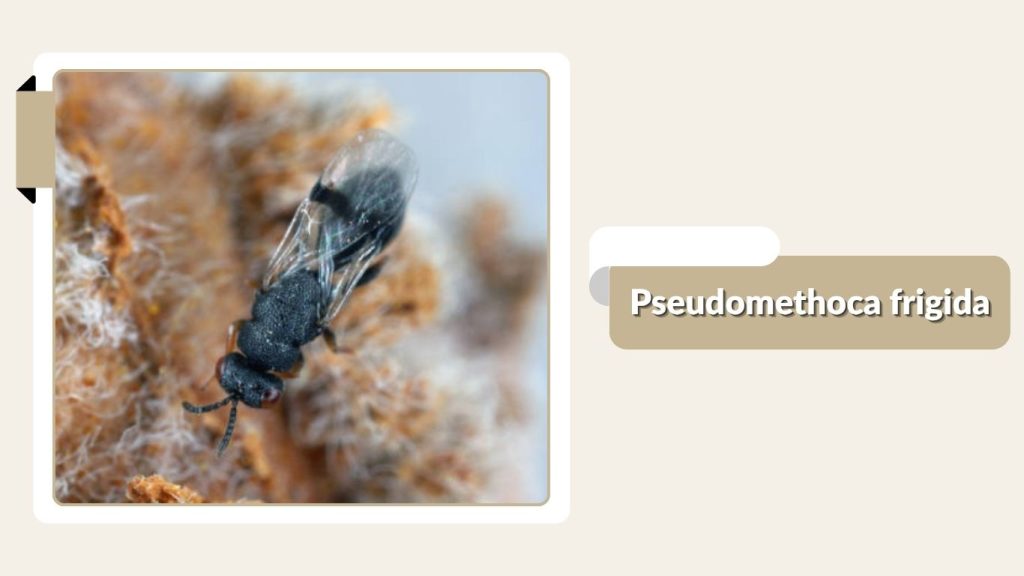
Pseudomethoca frigida is a velvet ant species adapted to cooler climates compared to many of its relatives. It is a solitary parasitic wasp, with wingless females that resemble ants and a powerful defensive sting. Despite its small size, it has a very tough body and strong survival adaptations.
This species is often found in open habitats where it searches for insect nests in soil and sandy areas.
Physical Appearance
Pseudomethoca frigida has a fuzzy body with darker brown to black coloration, sometimes with reddish tones. Females are wingless and ant-like, while males are winged and more wasp-shaped. Its body is covered in dense hairs that help with insulation and protection.
Characteristics
- Solitary parasitic wasp species
- Wingless female resembles ants
- Dark brown to black fuzzy body
- Females have a painful sting
- Strong, armored exoskeleton
- Adapted to cooler environments
- No social colony structure
Habitat and Distribution
This species is found in parts of North America, especially in northern regions and cooler grasslands. It prefers open fields, sandy soils, and forest edges where host insects are available.
Behavior and Diet
Adults feed on nectar and plant fluids, while larvae develop inside the nests of other ground-dwelling insects. The female lays eggs in host nests, and the larvae consume the developing host larvae as food, completing their parasitic life cycle.
24. Dasymutilla quadriguttata
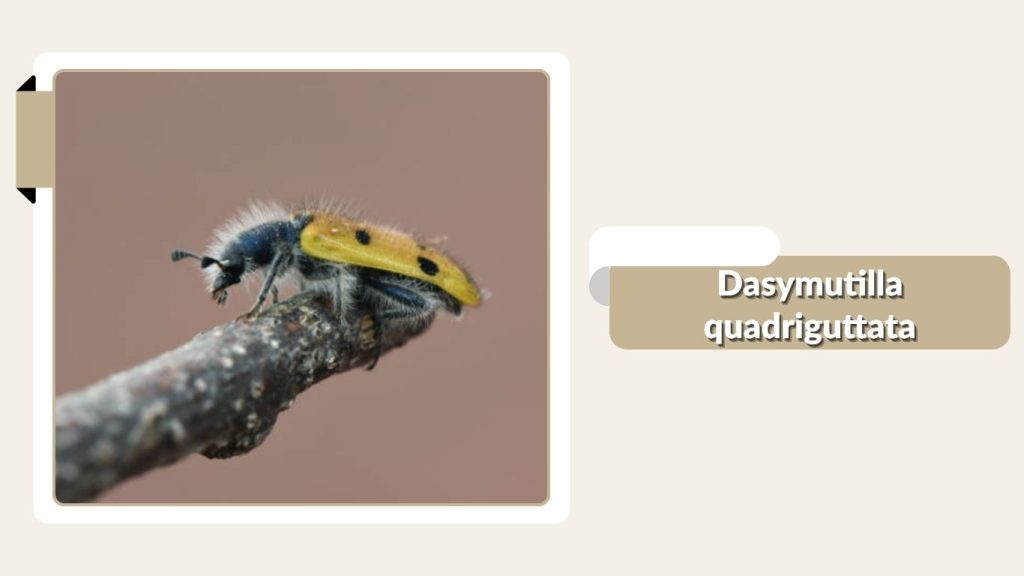
Dasymutilla quadriguttata is a distinctive velvet ant species recognized by its spotted body pattern and strong defensive capabilities. Like all velvet ants, it is actually a solitary parasitic wasp rather than a true ant. It is well known for its extremely painful sting and armored body that helps it survive in harsh environments.
This species is typically active on the ground, moving quickly across sandy or dry habitats in search of underground nests of bees and wasps.
Physical Appearance
Dasymutilla quadriguttata has a dense covering of red, orange, and black velvety hairs with noticeable spotted markings on the body. Females are wingless and resemble large ants, while males are winged and look more like typical wasps. Its body is compact and heavily protected by a hard exoskeleton.
Characteristics
- Solitary parasitic wasp species
- Wingless female resembles ants
- Spotted red and black fuzzy body
- Females have a very painful sting
- Strong, hardened exoskeleton
- No social colony behavior
- Uses warning coloration for defense
Habitat and Distribution
This species is found in parts of North America, especially in dry grasslands, sandy soils, scrublands, and open fields. It prefers warm environments where ground-nesting bees and wasps are available as hosts.
Behavior and Diet
Adults feed on nectar and plant secretions, while larvae develop as parasites inside host nests. The female lays eggs in the nests of other insects, and the larvae consume the host’s developing stages as food.
25. Dasymutilla monticola
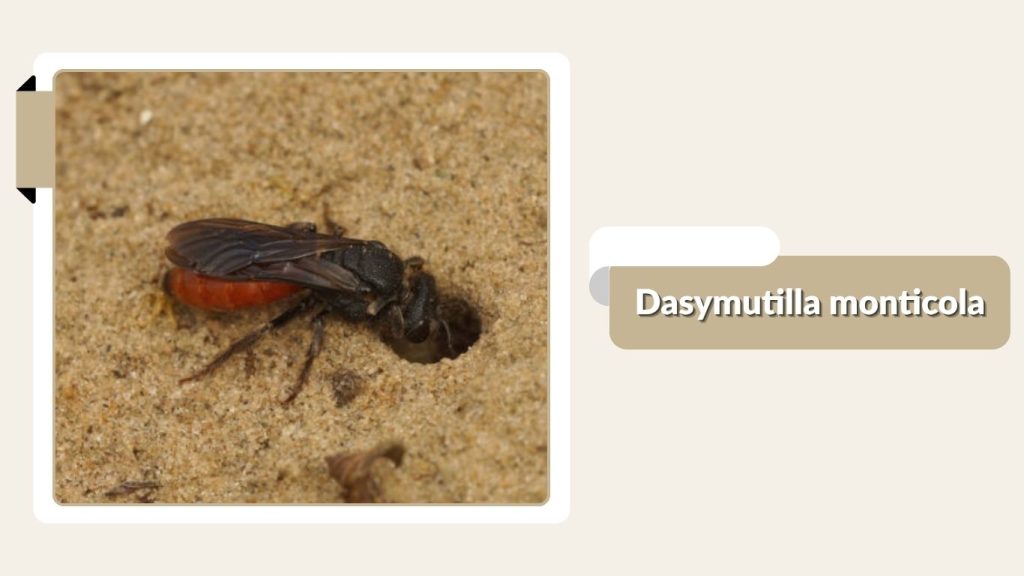
Dasymutilla monticola is a velvet ant species typically associated with higher elevation or mountainous habitats. Like other velvet ants, it is a solitary parasitic wasp with wingless females and a powerful defensive sting. It is adapted to survive in cooler and more rugged environments compared to many related species.
This insect is usually seen moving alone across soil, rocks, and sparse vegetation while searching for suitable host nests.
Physical Appearance
Dasymutilla monticola has a fuzzy body with reddish, orange, and black coloration. Females are wingless and resemble ants, while males are winged and more slender. Its body is strongly armored and covered with dense hairs that help with protection and temperature regulation.
Characteristics
- Solitary parasitic wasp species
- Wingless female resembles ants
- Red, orange, and black coloration
- Females have a very painful sting
- Strong protective exoskeleton
- Adapted to cooler/mountain habitats
- No colony or social structure
Habitat and Distribution
This species is found in mountainous and highland regions of North America. It prefers rocky slopes, open forest edges, grasslands, and sandy soils where host insects such as ground-nesting bees and wasps are present.
Behavior and Diet
Adults feed on nectar and plant fluids, while larvae develop inside the nests of other insects. The female lays eggs in host nests, and the larvae consume the developing host larvae as food, completing their parasitic life cycle.