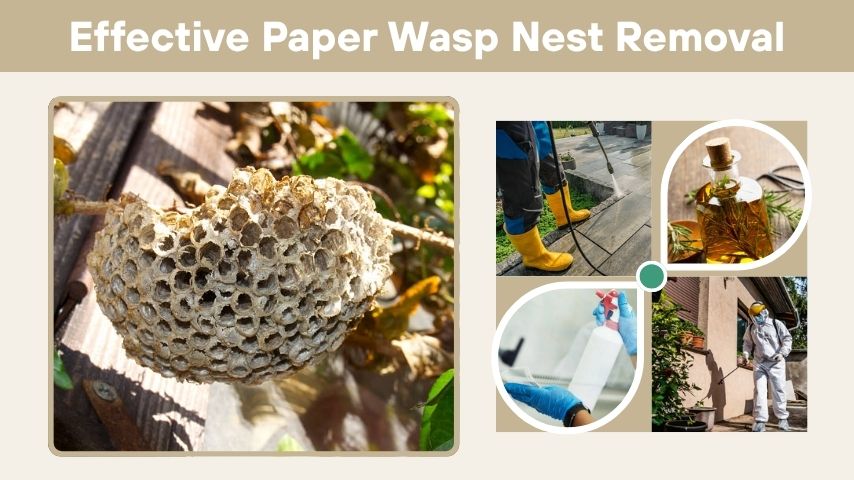
Paper wasps play an important role in the ecosystem by controlling insect populations, but their nests near homes, gardens, or play areas can pose serious risks. Removing these nests safely is essential to prevent stings and allergic reactions. This guide provides step-by-step instructions on identifying nests, choosing safe removal methods, tackling large or hard-to-reach nests, and knowing when to call professionals. Whether you’re dealing with a small nest in a tree or a large colony under your eaves, these tips ensure safe and effective removal.
Understanding Paper Wasp Nests
Recognizing paper wasp nests, understanding their types, and identifying potential risks is the first step toward safe removal. Knowledge of nest location, size, and seasonality helps determine the safest method to remove them.
Types of Paper Wasp Nests
- Small umbrella-shaped nests: Typically under eaves, overhangs, or porch ceilings. Usually contain fewer wasps and are easier to remove.
- Large tree or shrub nests: Often found in low branches or shrubs, these nests can house dozens of wasps and may require more caution.
- Indoor nests: Attics, wall voids, or cellars can harbor nests, especially in warm climates. Removal may require specialized tools or professional help.
- Species-specific variations: European, Asian, or red paper wasps may build differently shaped nests, sometimes larger or more aggressive.
Risks Associated with Paper Wasp Nests
- Stings and allergic reactions: Wasps defend their nests aggressively. Even a single sting can be dangerous for allergic individuals.
- Aggressive defensive behavior: Disturbing a nest can trigger multiple stings. Avoid using your hands or bare tools.
- Structural concerns: Indoor nests may damage walls, insulation, or ceiling areas if not addressed.
Signs You Should Consider Removal
- Nests located in high-traffic areas like doorways, patios, or playgrounds.
- Aggressive wasps frequenting outdoor areas, indicating an active colony.
- Abandoned nests that could encourage new colonies if left unchecked.
DIY Methods for Paper Wasp Nest Removal
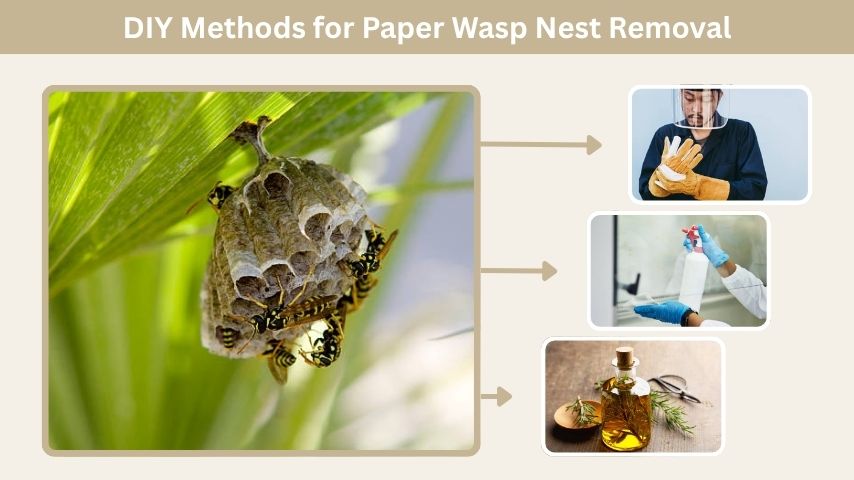
Homeowners can remove paper wasp nests using protective gear, sprays, or natural methods. Timing, preparation, and safety precautions are critical to prevent stings and injuries.
Protective Measures
- Wear long sleeves, gloves, and eye protection.
- Plan an escape route before approaching the nest.
- Keep family and pets indoors during removal.
Chemical and Spray Techniques
- Use wasp-specific insecticides labeled for paper wasps.
- Spray in the evening or night, when wasps are less active.
- Follow label instructions for distance, duration, and repeat applications if necessary.
- After spraying, allow the nest to remain undisturbed for 24 hours before removal.
Natural or Humane Options
- Smothering: Cover small nests with a cloth or bag and gently remove them.
- Smoke: Light a small fire or use a smoker nearby to encourage wasps to leave before removal.
- Essential oils: Peppermint, clove, or citronella oils can deter wasps temporarily.
- Relocation: If the nest is abandoned, gently move it away from the house to a safe outdoor location.
Seasonal Considerations
The time of year affects wasp activity and safety. Understanding seasonal behavior helps plan removal effectively and minimizes risk of stings.
Winter and Dormant Nests
- Wasps are inactive or absent, making removal safer and sting-free.
- Abandoned nests can be safely removed without protective sprays.
- Removing dormant nests prevents spring re-colonization near homes.
Spring and Summer Nests
- Colonies are active and aggressive, so caution is required.
- Evening or nighttime removal reduces the risk of stings.
- Use protective gear and sprays, or consider professional services for larger nests.
Removing Large or Hard-to-Reach Nests
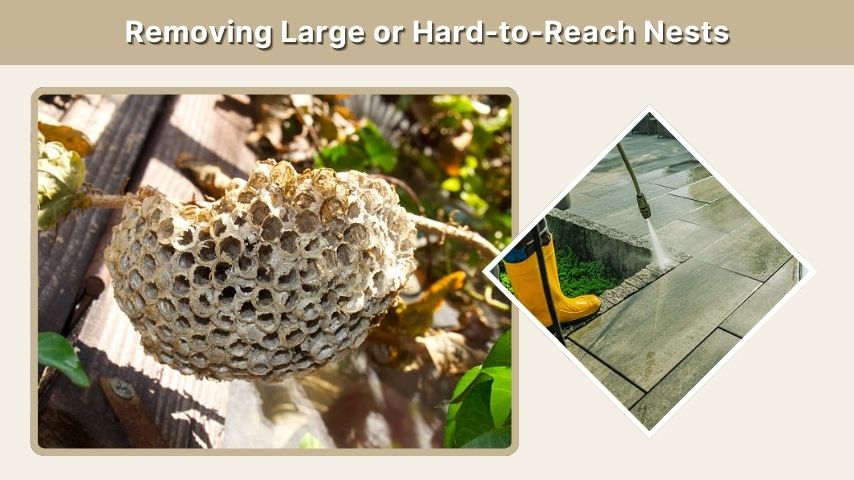
Large nests, or those located high in trees, under eaves, or inside walls, require extra caution. These situations may need specialized tools or professional intervention to ensure safety and effective removal.
Tools and Techniques
- Long-handled tools: Extend your reach safely to knock down nests in trees or under eaves.
- Pressure washer: Can remove nests from exterior surfaces, but use cautiously to avoid spreading wasps.
- Ladders: Only use if stable; never lean directly under an active nest.
- Nighttime removal: Reduces wasp activity and sting risk.
Safety Precautions
- Ensure protective clothing is worn at all times.
- Keep bystanders and pets away during removal.
- Be prepared for rapid retreat if wasps become aggressive.
When DIY Isn’t Enough
- Large colonies or inaccessible nests may be too dangerous for home removal.
- Indoor nests in walls, attics, or cellars often require professional pest control.
Professional Paper Wasp Nest Removal
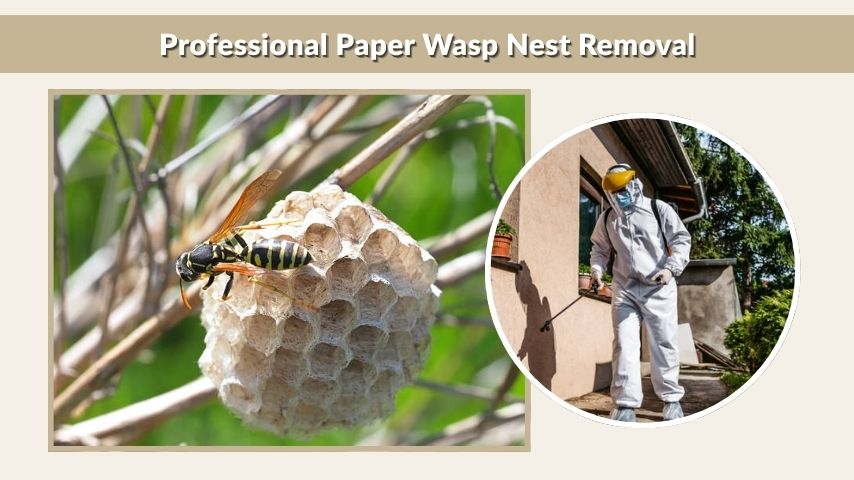
Hiring experts ensures complete and safe removal, especially for large, aggressive, or hard-to-reach nests. Professionals also provide preventive advice for future infestations.
When to Call a Professional
- Nests located inside walls or ceilings.
- Large tree or shrub colonies beyond safe reach.
- Presence of allergic individuals in the household.
Cost Considerations
- Pricing varies by region, nest size, and accessibility.
- Average cost ranges from $75 to $250, depending on complexity.
- Professional removal may include follow-up treatments or preventive measures.
Choosing the Right Service
- Hire licensed pest control companies with experience in wasp removal.
- Confirm they follow humane and environmentally safe practices.
- Check reviews and local recommendations to ensure reliability.
Prevention Tips After Removal
Preventing future infestations is easier than repeated removals. Simple maintenance and deterrents can keep paper wasps away from your home and garden.
Home and Garden Maintenance
- Seal cracks and gaps around windows, doors, and siding.
- Trim trees and shrubs away from your home.
- Inspect eaves, attics, and cellars regularly for early signs of nesting.
Wasp Deterrents
- Install decoy nests to discourage colony establishment.
- Use essential oils or repellents on areas previously affected.
- Avoid leaving food scraps or sweet drinks outdoors that attract wasps.
FAQs
Can I remove a paper wasp nest myself safely?
Yes, small or abandoned nests can often be removed safely using protective clothing, insecticide sprays, or smothering techniques. Always work during evening hours when wasps are less active and ensure pets and family are indoors.
What is the best time of day or season to remove a nest?
The safest time is evening or nighttime, especially in spring and summer when colonies are active. In winter, dormant or abandoned nests can be removed safely without active wasps. Seasonal timing significantly reduces the risk of stings.
Are there natural ways to remove or deter paper wasps?
Yes, natural options include smoke, essential oils like peppermint or citronella, or relocating abandoned nests. These methods are more humane and reduce chemical exposure but may be less effective against large or active colonies.
How much does professional nest removal cost?
Costs vary by nest size, location, and complexity. Small nests may cost around $75–$100, while larger or hard-to-reach nests can range $150–$250. Professional services often include safety measures and preventive advice.
Is it safe to remove an abandoned paper wasp nest?
Yes, abandoned nests are safe to remove, as they contain no active wasps. Removal prevents new colonies from establishing in the same location and can be done without chemical sprays or extensive protective gear.