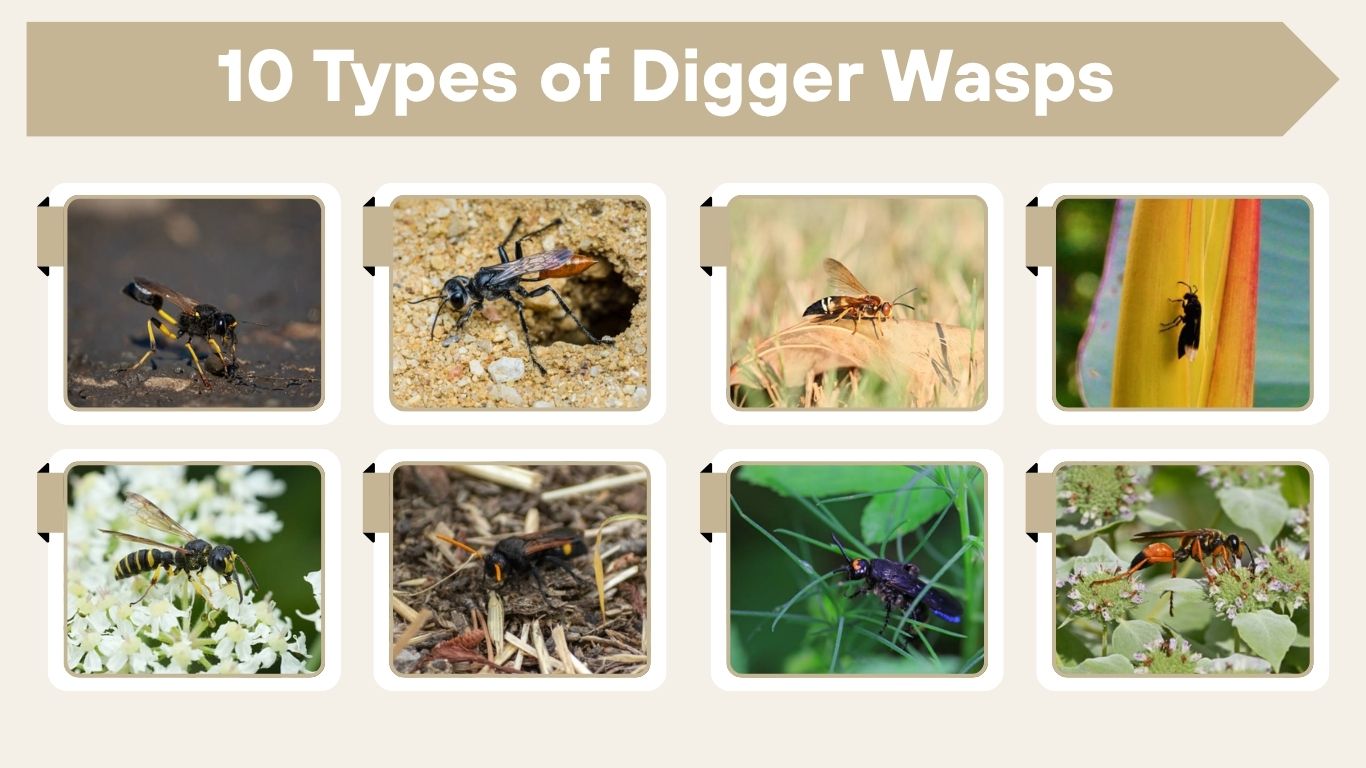
Digger wasps are fascinating solitary insects known for their burrowing behavior and predatory habits. Females dig tunnels in soil or sandy areas and provision their nests with paralyzed insects or spiders to feed their larvae. While their appearance may seem intimidating, most digger wasps are non-aggressive and beneficial for controlling pest populations in gardens, fields, and forests. Adult digger wasps primarily feed on nectar or plant sap. In this guide, you will discover 10 common types of digger wasps, along with their identification, habitat, behavior, and lifecycle.
1. Great Black Digger Wasp
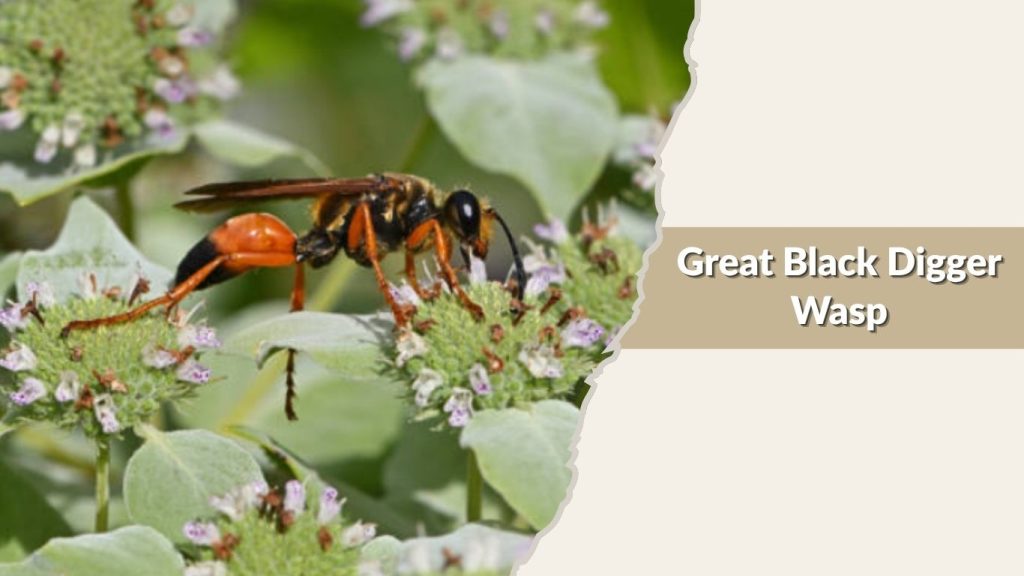
The Great Black Digger Wasp is a large solitary wasp known for its glossy black body and powerful burrowing behavior. Females dig tunnels in sandy or loose soil to create nests for their eggs, provisioning each burrow with paralyzed insects to feed their larvae. Despite their intimidating appearance, they are generally non-aggressive and beneficial for controlling pest populations.
Identification
- Large, glossy black body measuring about 1–1.5 inches
- Narrow waist typical of solitary wasps
- Transparent or slightly smoky wings
- Long black antennae and sturdy legs
- Smooth, mostly hairless body
- Females larger than males
- Strong legs adapted for digging burrows
Habitat and Distribution
Great Black Digger Wasps are commonly found in open fields, gardens, sandy soils, forest edges, and meadows. They occur across North America and parts of Europe. Areas with loose, well-drained soil and nearby flowering plants for nectar provide ideal conditions for nesting and feeding.
Behavior and Diet
Adult Great Black Digger Wasps feed primarily on flower nectar and plant sap. Females hunt small insects or spiders, paralyzing them with a sting and storing them in underground burrows as food for larvae. Adults are solitary and rarely sting humans unless provoked.
Lifecycle
The lifecycle begins when females dig burrows and stock each cell with paralyzed prey. Eggs are laid beside the stored insects, and larvae feed on the prey while developing. Pupation occurs inside the burrow, and adults later emerge to mate and continue the reproductive cycle.
2. Blue-Winged Digger Wasp
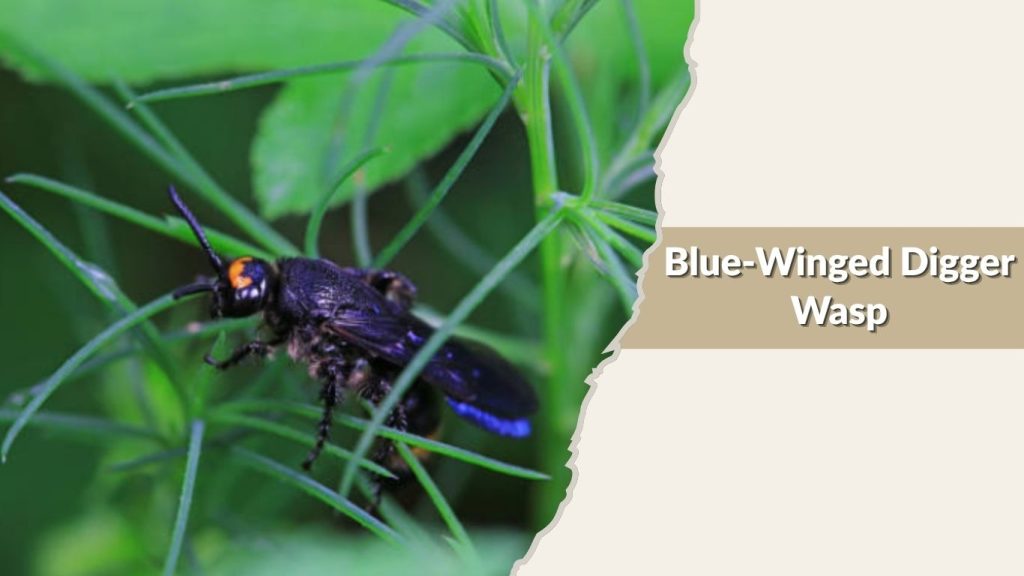
The Blue-Winged Digger Wasp is a solitary wasp species recognized for its dark body and striking bluish wings. These wasps are important predators, hunting insects to provision their nests for their larvae. Despite their striking appearance, they are generally non-aggressive toward humans and are considered beneficial in gardens and fields.
Identification
- Medium-sized body, mostly black or dark brown
- Transparent wings with a noticeable bluish tint
- Narrow waist typical of solitary wasps
- Long segmented antennae
- Slender legs adapted for digging and hunting
- Smooth body surface with minimal hair
- Females slightly larger than males
Habitat and Distribution
Blue-Winged Digger Wasps are commonly found in sandy or loose soil areas, open fields, gardens, and woodland edges. They occur across North America, Europe, and parts of Asia depending on the species. Flowering plants nearby provide nectar for adults, while soil is used for nesting burrows.
Behavior and Diet
Adult Blue-Winged Digger Wasps feed mainly on nectar, sap, or fruit juices. Females hunt small insects, paralyze them with a sting, and place them in underground burrows to serve as food for their developing larvae. Adults are solitary and rarely sting humans unless directly threatened.
Lifecycle
The lifecycle begins when females dig burrows and stock them with paralyzed prey. Eggs are laid beside the stored insects, and larvae feed on them while developing. Pupation occurs within the burrow, and adults later emerge to mate and continue the reproductive cycle.
3. Golden Digger Wasp
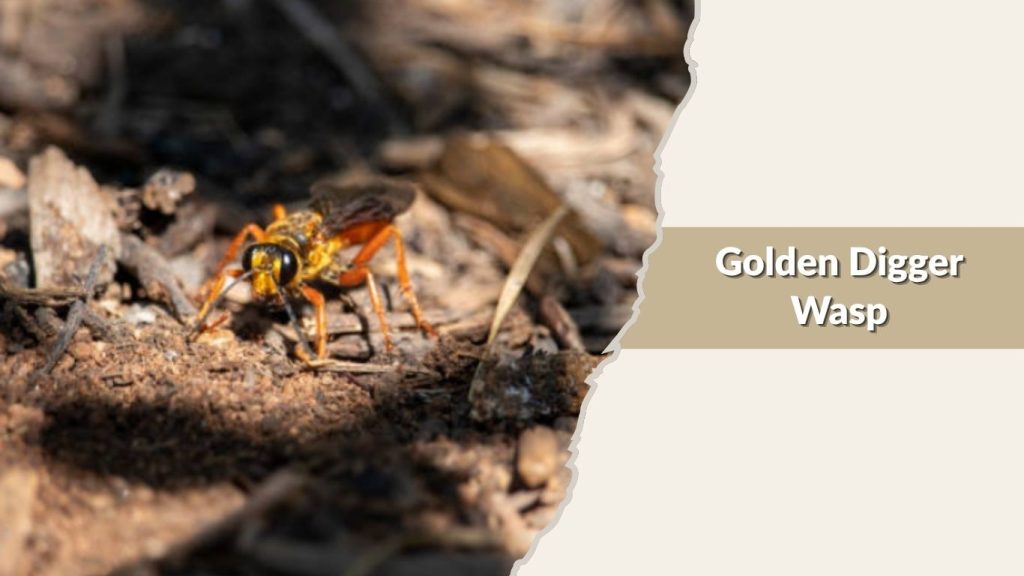
The Golden Digger Wasp is a solitary wasp species notable for its shiny black body with distinctive golden or yellow markings. These wasps are efficient hunters, capturing insects to provision their underground nests for their developing larvae. They are generally non-aggressive and beneficial for controlling garden pests.
Identification
- Medium-sized body, glossy black with golden or yellow markings
- Narrow waist typical of solitary wasps
- Transparent or lightly smoky wings
- Long antennae and slender legs
- Smooth, mostly hairless body
- Females slightly larger than males
- Strong legs adapted for digging burrows
Habitat and Distribution
Golden Digger Wasps are commonly found in open fields, gardens, sandy soils, and woodland edges. They occur in North America and parts of Europe and Asia. These wasps prefer habitats with loose soil for nesting and nearby flowering plants for nectar feeding.
Behavior and Diet
Adult Golden Digger Wasps feed mainly on nectar and plant sap. Females hunt small insects or spiders, paralyzing them and placing them in underground burrows as food for larvae. Adults are solitary and non-aggressive, rarely interacting with humans.
Lifecycle
The lifecycle begins when females dig burrows and stock each cell with paralyzed prey. Eggs are laid beside the stored insects. Larvae feed on the provided prey while growing, then pupate inside the burrow. Adult wasps later emerge to mate and continue the reproductive cycle.
4. Red-Headed Digger Wasp
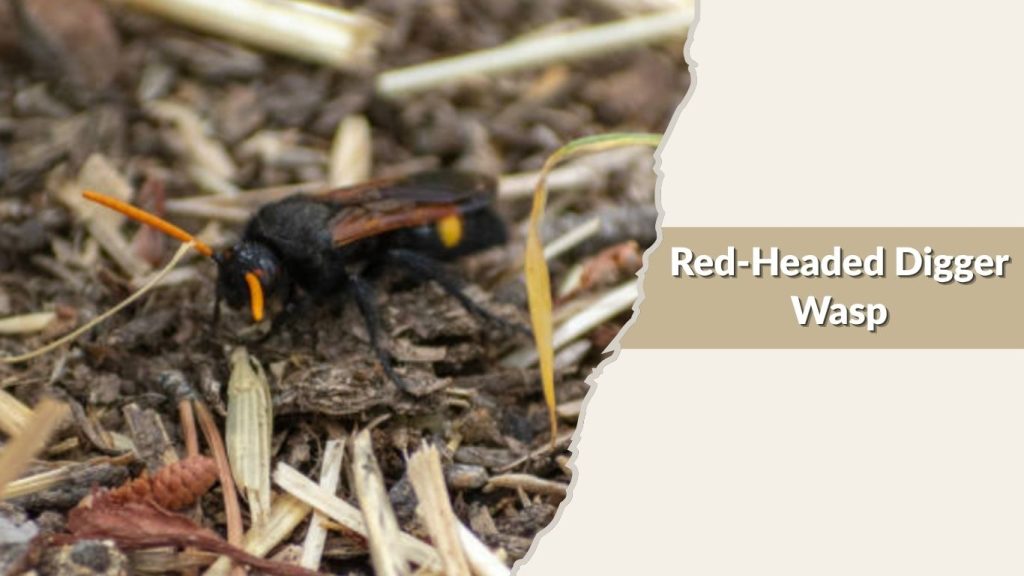
The Red-Headed Digger Wasp is a solitary wasp species known for its striking reddish-orange head and dark body. These wasps are beneficial predators, hunting insects to feed their larvae. Despite their bold appearance, they are generally non-aggressive toward humans and play an important ecological role in gardens and open habitats.
Identification
- Medium-sized body with a dark black or brown body
- Bright red or orange head
- Narrow waist typical of solitary wasps
- Transparent or lightly smoky wings
- Long segmented antennae
- Slender legs adapted for digging and hunting
- Smooth, mostly hairless body
Habitat and Distribution
Red-Headed Digger Wasps are commonly found in gardens, open fields, sandy soils, and woodland edges. They occur across North America and parts of Europe and Asia. Areas with loose soil for nesting and flowering plants for nectar provide ideal habitats.
Behavior and Diet
Adult Red-Headed Digger Wasps feed mainly on nectar and plant sap. Females hunt small insects or spiders, paralyze them, and place them inside underground burrows to provide food for their larvae. Adults are solitary and rarely sting humans unless provoked.
Lifecycle
The lifecycle begins when females dig burrows and stock each cell with paralyzed prey. Eggs are laid beside the stored insects, and larvae feed on the prey while developing. Pupation occurs inside the burrow, and adults later emerge to mate and continue the reproductive cycle.
5. Sand Digger Wasp
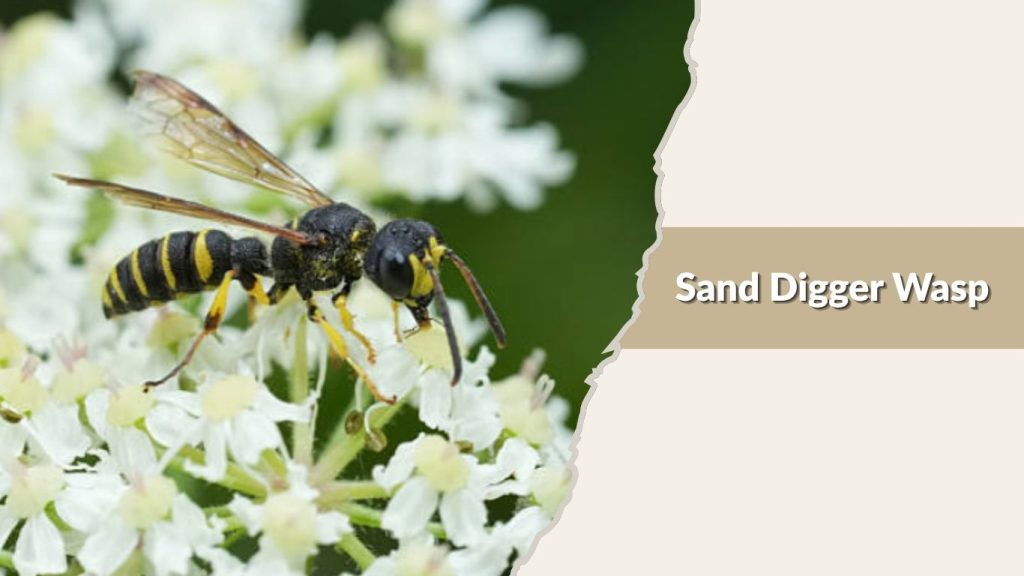
The Sand Digger Wasp is a solitary wasp species adapted to sandy or loose soil habitats, where females dig burrows to lay eggs and provision larvae with paralyzed insects. These wasps are non-aggressive and beneficial predators, helping control small insect populations in gardens and open areas.
Identification
- Medium-sized black or dark brown body
- Narrow waist typical of solitary wasps
- Transparent or slightly smoky wings
- Long antennae and slender legs
- Smooth, mostly hairless body
- Females slightly larger than males
- Strong legs adapted for digging in sandy soil
Habitat and Distribution
Sand Digger Wasps are commonly found in sandy soils, open fields, beaches, gardens, and woodland edges. They occur across North America, Europe, and parts of Asia. Flowering plants nearby provide nectar, while sandy areas are used for nesting burrows.
Behavior and Diet
Adult Sand Digger Wasps feed primarily on nectar and plant sap. Females hunt small insects or spiders, paralyzing them and placing them inside underground burrows as food for their larvae. Adults are solitary and rarely interact with humans unless their nests are disturbed.
Lifecycle
The lifecycle begins when females dig burrows in loose or sandy soil and stock them with paralyzed prey. Eggs are laid beside the prey, and larvae feed on the stored insects while developing. Pupation occurs within the burrow, and adults later emerge to mate and continue the reproductive cycle.
6. Thread-Waisted Digger Wasp
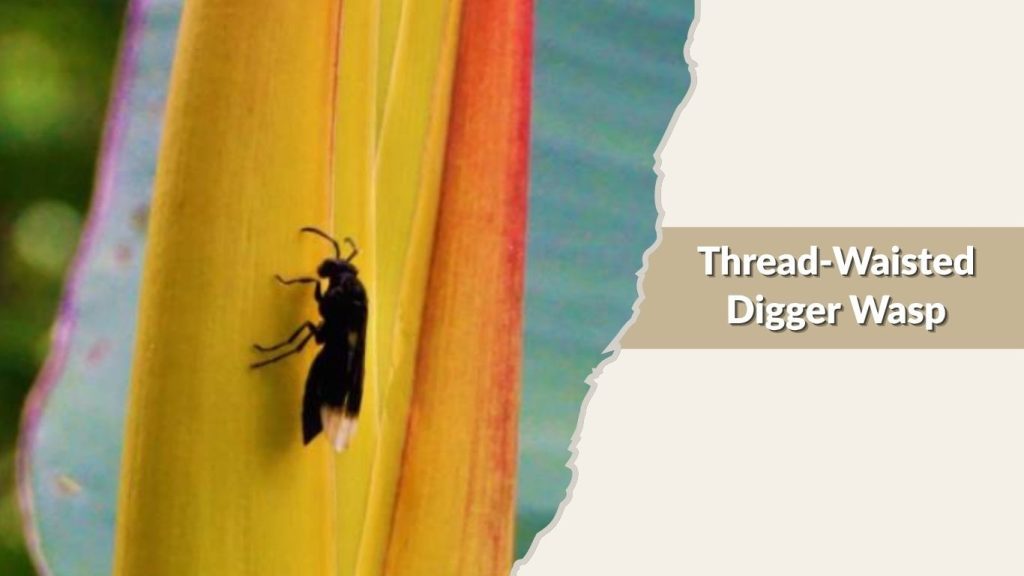
The Thread-Waisted Digger Wasp is a slender solitary wasp known for its extremely narrow waist connecting the thorax and abdomen. These wasps are efficient hunters, capturing small insects or spiders to provision their underground nests. Despite their delicate appearance, they are non-aggressive and beneficial in controlling garden pests.
Identification
- Medium-sized body, mostly black or dark brown
- Extremely narrow, thread-like waist
- Transparent or lightly smoky wings
- Long segmented antennae
- Slender legs adapted for digging and hunting
- Smooth, mostly hairless body
- Females slightly larger than males
Habitat and Distribution
Thread-Waisted Digger Wasps are commonly found in open fields, sandy soils, gardens, and woodland edges. They occur across North America, Europe, and parts of Asia. Flowering plants provide nectar for adults, and loose soil is used for nesting burrows.
Behavior and Diet
Adult Thread-Waisted Digger Wasps feed mainly on nectar, fruit juices, and plant sap. Females hunt small insects or spiders, paralyzing them and placing them in underground burrows for their developing larvae. Adults are solitary and rarely sting humans unless directly threatened.
Lifecycle
The lifecycle begins when females dig burrows and stock each cell with paralyzed prey. Eggs are laid beside the stored insects, and larvae feed on them while developing. Pupation occurs inside the burrow, and adults later emerge to mate and continue the reproductive cycle.
7. Cicada Killer Wasp
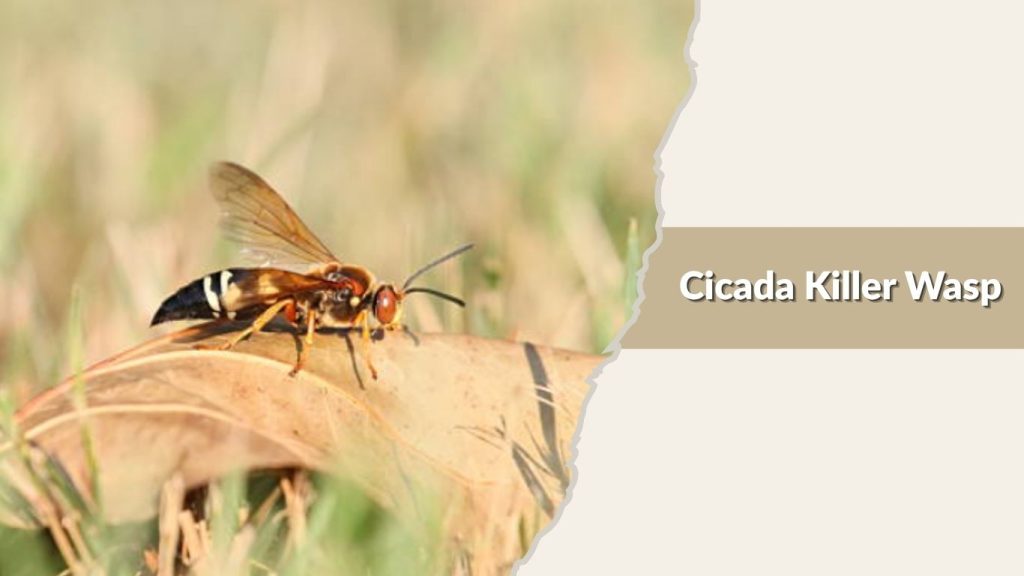
The Cicada Killer Wasp is a large solitary wasp known for hunting cicadas to provision its underground nests. Despite its intimidating size, it is generally non-aggressive toward humans. These wasps play an important role in controlling cicada populations in gardens, fields, and open habitats.
Identification
- Large body measuring 1.5–2 inches long
- Glossy black or dark brown body with yellow markings
- Narrow waist typical of solitary wasps
- Transparent wings with slight smoky tint
- Long antennae and sturdy legs
- Females larger than males
- Strong mandibles for handling prey
Habitat and Distribution
Cicada Killer Wasps are commonly found in sandy soils, open fields, gardens, and woodland edges. They occur throughout North America, especially in regions with abundant cicadas. Flowering plants provide nectar for adults, while loose soil is used for nesting burrows.
Behavior and Diet
Adult Cicada Killer Wasps feed on nectar and plant sap. Females hunt cicadas, paralyzing them with a sting, and transport them to underground burrows as food for their larvae. Adults are solitary and rarely sting humans unless provoked near the nest.
Lifecycle
The lifecycle begins when females dig burrows in sandy soil and provision each cell with paralyzed cicadas. Eggs are laid beside the stored prey, and larvae feed on the cicadas while developing. Pupation occurs inside the burrow, and adults later emerge to mate and continue the reproductive cycle.
8. Black-Tailed Digger Wasp
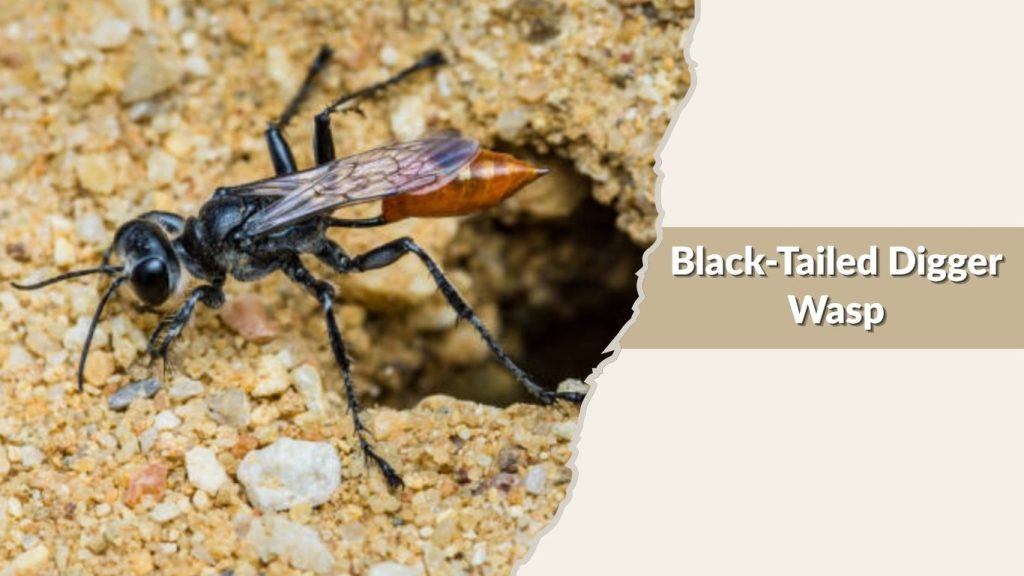
The Black-Tailed Digger Wasp is a solitary wasp species recognized by its dark body and distinctive black-tipped abdomen. Females dig burrows in sandy or loose soil to lay eggs and provision them with paralyzed insects. Despite their intimidating appearance, these wasps are generally non-aggressive and beneficial for controlling insect populations.
Identification
- Medium-sized black body with a dark or black-tipped abdomen
- Narrow waist typical of solitary wasps
- Transparent or slightly smoky wings
- Long segmented antennae
- Slender legs adapted for digging and hunting
- Smooth, mostly hairless body
- Females slightly larger than males
Habitat and Distribution
Black-Tailed Digger Wasps are commonly found in gardens, open fields, sandy soils, and woodland edges. They occur across North America, Europe, and parts of Asia. Flowering plants nearby provide nectar for adults, while loose soil is essential for nesting burrows.
Behavior and Diet
Adult Black-Tailed Digger Wasps feed primarily on nectar and plant sap. Females hunt small insects or spiders, paralyzing them and placing them inside burrows for their larvae. Adults are solitary and rarely sting humans unless disturbed directly.
Lifecycle
The lifecycle begins when females dig burrows in loose soil and stock each cell with paralyzed prey. Eggs are laid beside the stored insects, and larvae feed on them while developing. Pupation occurs within the burrow, and adults later emerge to mate and continue the reproductive cycle.
9. Mud-Digger Wasp
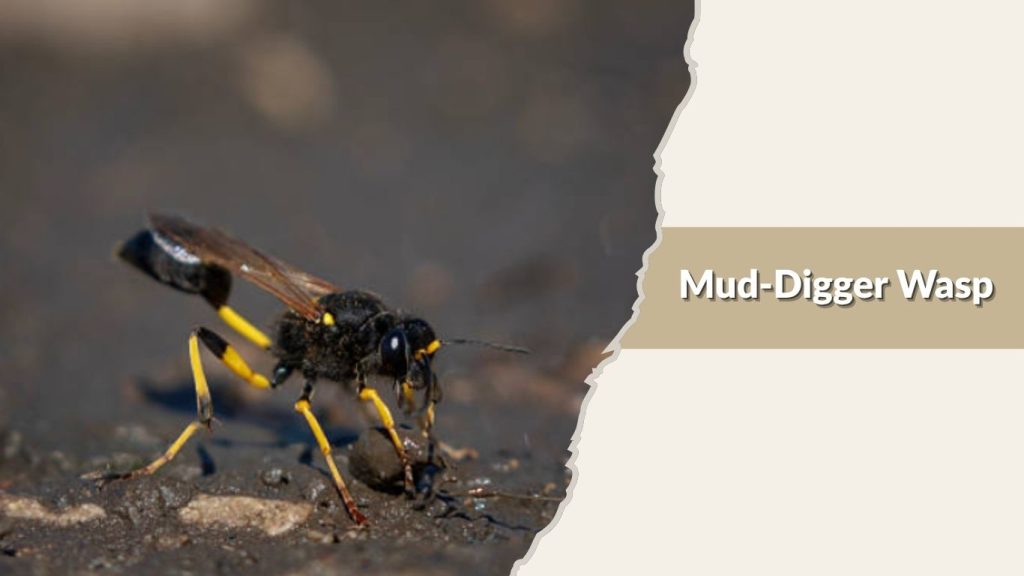
The Mud-Digger Wasp is a solitary wasp known for constructing mud nests in sheltered locations, such as under eaves, rocks, or tree branches. These wasps are beneficial predators, capturing insects to provision their nests for developing larvae. They are generally non-aggressive and rarely interact with humans.
Identification
- Medium-sized glossy black or dark brown body
- Narrow waist typical of solitary wasps
- Transparent wings with smoky or amber tint
- Long antennae and slender legs
- Smooth, mostly hairless body
- Females slightly larger than males
- Distinctive mud nest constructions
Habitat and Distribution
Mud-Digger Wasps are commonly found in gardens, parks, forest edges, and urban areas with sheltered structures for nest attachment. They occur across North America, Europe, and parts of Asia. Flowering plants provide nectar for adults, while mud is used for nest building.
Behavior and Diet
Adult Mud-Digger Wasps feed mainly on nectar, plant sap, or fruit juices. Females hunt small insects or spiders, paralyze them, and place them in mud nest cells as food for their larvae. These wasps are solitary and non-aggressive unless their nests are disturbed.
Lifecycle
The lifecycle begins when females construct mud nests and stock each cell with paralyzed prey. Eggs are laid beside the stored insects, and larvae feed on the provided prey while developing through several stages. Pupation occurs within the mud cell, and adults later emerge to mate and continue the reproductive cycle.
10. Horned Digger Wasp
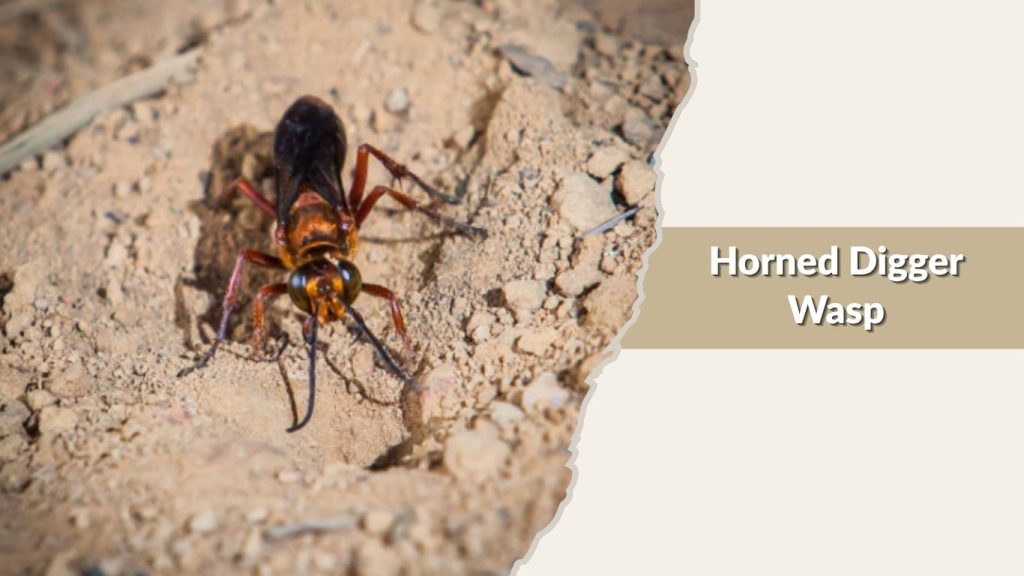
The Horned Digger Wasp is a solitary wasp species recognized for its dark body and small horn-like projections on the head or thorax in some individuals. These wasps dig burrows in sandy or loose soil to lay eggs and provision their nests with paralyzed prey. They are non-aggressive and beneficial for controlling small insect populations.
Identification
- Medium-sized black or dark brown body
- Narrow waist typical of solitary wasps
- Small horn-like projections on head or thorax
- Transparent or lightly smoky wings
- Long segmented antennae
- Slender legs adapted for digging
- Smooth, mostly hairless body
Habitat and Distribution
Horned Digger Wasps are commonly found in sandy soils, open fields, gardens, and woodland edges. They occur across North America, Europe, and parts of Asia. Flowering plants provide nectar for adults, while loose soil is used for constructing nesting burrows.
Behavior and Diet
Adult Horned Digger Wasps feed primarily on nectar, sap, or fruit juices. Females hunt small insects or spiders, paralyze them with a sting, and place them in burrows for their developing larvae. Adults are solitary and rarely sting humans unless directly provoked.
Lifecycle
The lifecycle begins when females dig burrows in loose soil and stock each cell with paralyzed prey. Eggs are laid beside the stored insects, and larvae feed on the prey while developing. Pupation occurs within the burrow, and adults later emerge to mate and continue the reproductive cycle.
FAQs
What are digger wasps?
Digger wasps are solitary wasps that dig burrows in soil or sand to lay their eggs. They provision their nests with paralyzed insects or spiders for their larvae, making them important natural pest controllers.
Are digger wasps dangerous to humans?
Most digger wasps are non-aggressive and do not sting unless provoked. Even large species are generally harmless and avoid human contact.
What do digger wasps eat?
Adult digger wasps primarily feed on nectar, plant sap, or fruit juices. Larvae feed on the paralyzed insects or spiders provided by the female in the nest.
Where are digger wasps commonly found?
Digger wasps are commonly found in sandy soils, gardens, open fields, forest edges, and woodland habitats. They prefer areas with flowering plants for nectar and loose soil for nesting.
How do digger wasps reproduce?
Females dig burrows or use natural cavities to store paralyzed prey and lay eggs beside it. Larvae feed on the prey, pupate within the burrow, and emerge as adults to mate and continue the reproductive cycle.