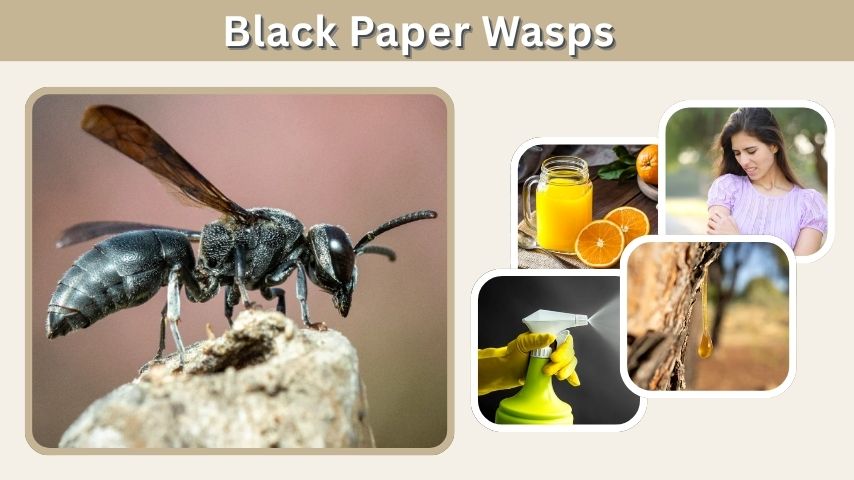
Black paper wasps are common stinging insects found around homes, gardens, porches, and attics. Many species appear mostly black, while others have yellow, red, brown, or white markings. These wasps are known for their umbrella-shaped paper nests and long dangling legs during flight. Although they can sting when disturbed, they also help control garden pests by hunting caterpillars and other insects. Learning how to identify black paper wasps, recognize their nests, and understand their behavior can help homeowners stay safe while protecting beneficial insects in outdoor spaces.
What Is a Black Paper Wasp?
Black paper wasps belong to a group of social wasps that build paper-like nests from chewed wood fibers and saliva. Some species are completely black, while others display yellow, red, or white markings. These wasps are commonly seen flying slowly around roofs, porches, trees, and outdoor structures during warm months.
Physical Appearance of Black Paper Wasps
Black paper wasps have several easy-to-recognize features:
- Slim body with a narrow waist
- Long legs that hang while flying
- Dark black or black-and-yellow coloration
- Thin transparent wings
- Antennae that curve slightly downward
- Body length usually between 0.6 and 1 inch
Are Paper Wasps Naturally Black?
Some paper wasp species are naturally all black, especially in warmer climates. Others may appear black with yellow stripes, red markings, or white bands. Color patterns often depend on the species and geographic location. In some areas, black paper wasps are more common than the traditional reddish-brown paper wasps many people recognize.
Black Paper Wasp Scientific Classification
Most black paper wasps belong to the Polistes genus. These wasps are social insects that live in small colonies led by a queen. Workers help expand the nest, gather food, and protect the colony from threats.
Types of Black Paper Wasps
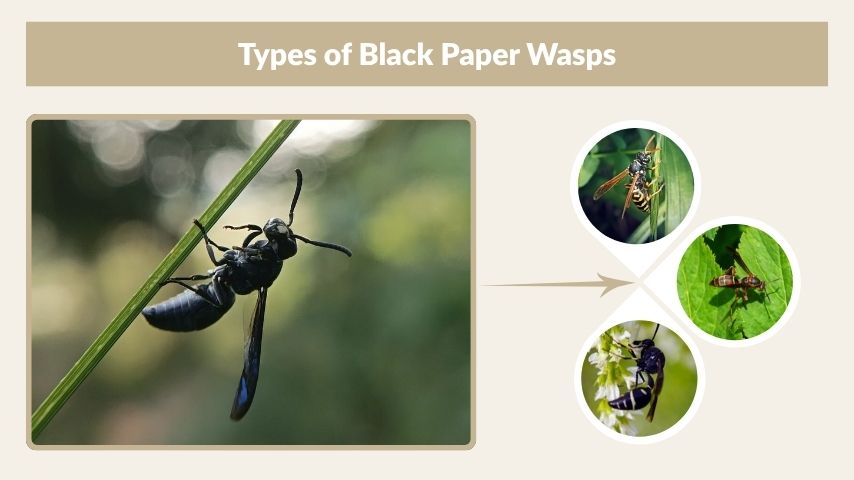
Several species and color variations are commonly called black paper wasps. Their markings can help homeowners identify the exact species around their property.
All Black Paper Wasp
The all black paper wasp has a dark body with very few visible markings. These wasps often build nests under roof edges, porch ceilings, and attic vents. They usually prefer quiet, sheltered spaces protected from rain and direct sunlight.
Black and Yellow Paper Wasp
This species has a mostly black body with bright yellow markings on the abdomen and face. People often confuse them with yellow jackets, but paper wasps have longer legs and slimmer bodies.
Red and Black Paper Wasp
Red and black paper wasps have reddish wings or reddish sections on the thorax and abdomen. These species are sometimes more defensive near nests, especially during late summer when colonies become larger.
Black and White Paper Wasp
Black and white paper wasps are less common and may be confused with mason wasps. Their white stripes or spots create a striking contrast against the dark body.
Black Paper Wasp vs Other Wasps
Many people confuse black paper wasps with mud daubers, hornets, and yellow jackets. Learning the differences helps prevent unnecessary fear and allows safer nest identification.
Black Paper Wasp vs Mud Dauber
| Feature | Black Paper Wasp | Mud Dauber |
| Nest Material | Paper fibers | Mud |
| Social Behavior | Colonial | Solitary |
| Temperament | Defensive near nest | Usually calm |
| Nest Shape | Open comb | Tube-shaped mud cells |
| Flight Style | Slow hovering | Faster direct flight |
Black Paper Wasp vs Yellow Jacket
| Feature | Black Paper Wasp | Yellow Jacket |
| Body Shape | Slim | Thick and compact |
| Legs During Flight | Hang downward | Tucked inward |
| Nest Type | Open paper nest | Covered enclosed nest |
| Aggression | Moderate | Highly aggressive |
| Common Colors | Black, red, yellow | Bright yellow and black |
Black Paper Wasp vs Great Black Wasp
Great black wasps are much larger and usually solitary. Unlike paper wasps, they do not build hanging paper nests. Instead, they create underground burrows where they store paralyzed insects for their larvae.
Black Paper Wasp Nest Identification
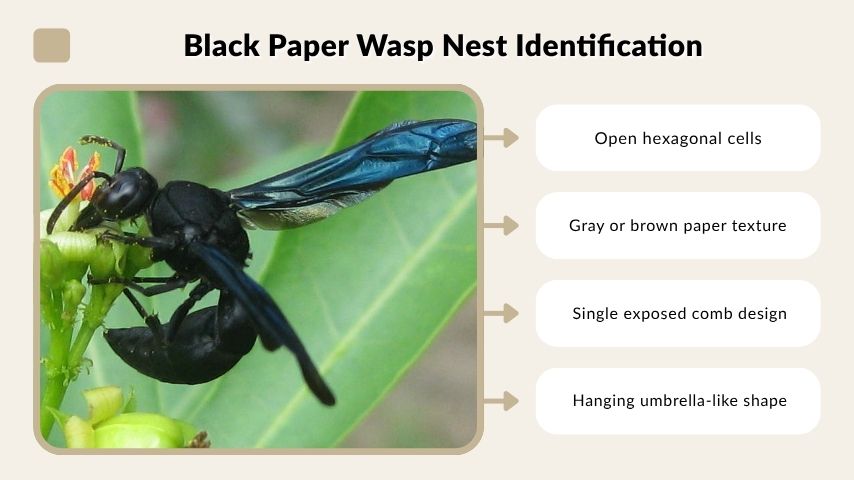
Black paper wasps build unique nests that are easy to identify once you know what to look for. Their nests are commonly attached to buildings and outdoor structures.
What Does a Black Paper Wasp Nest Look Like?
Black paper wasp nests usually have these features:
- Open hexagonal cells
- Gray or brown paper texture
- Single exposed comb design
- Hanging umbrella-like shape
- Attached by a thin central stalk
Common Nesting Locations
These wasps often build nests in sheltered places such as:
- Porch ceilings
- Roof corners
- Attics
- Garages
- Window frames
- Tree branches
- Outdoor furniture
Black Paper Wasp Nest in Attic
Attics provide warmth, darkness, and protection from predators. A nest inside an attic may lead to increased wasp activity around vents, windows, or ceiling cracks. Homeowners often notice buzzing sounds or multiple wasps entering through roof gaps during summer months.
Are Black Paper Wasps Aggressive?
Black paper wasps are not usually aggressive unless their nest is disturbed. They mainly sting to defend their colony from perceived threats. Slow movement and keeping distance from nests can reduce the chance of being stung.
When Black Paper Wasps Sting
Most stings happen when:
- Someone touches the nest
- Vibrations disturb the colony
- Lawn equipment shakes nearby structures
- People swat at flying wasps
- Nests are approached too closely
Black Paper Wasp Sting Symptoms
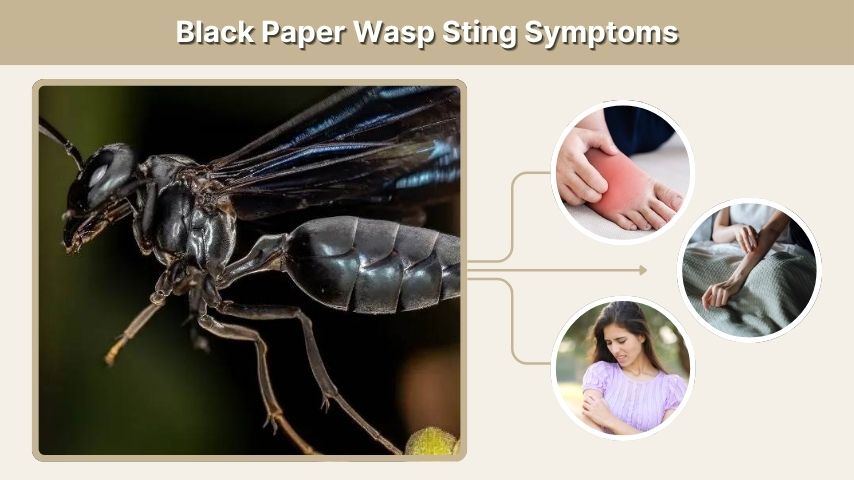
A black paper wasp sting is painful but usually not dangerous for healthy adults. Most reactions stay mild and improve within a few hours or days. However, allergic reactions may require immediate medical attention.
Common Sting Reactions
Most people experience the following symptoms after a sting:
- Sharp burning pain
- Redness around the sting site
- Swelling and irritation
- Mild itching
- Temporary warmth in the skin
Severe Allergic Reactions
Some people may experience serious allergic symptoms, including difficulty breathing, dizziness, or swelling of the throat. These reactions are medical emergencies and require immediate treatment.
Are Black Paper Wasps Poisonous?
Black paper wasps are not poisonous, but they are venomous. Their venom is injected through the sting and is used mainly for defense. The venom causes pain and swelling but rarely creates serious problems unless someone has an allergy.
What Do Black Paper Wasps Eat?
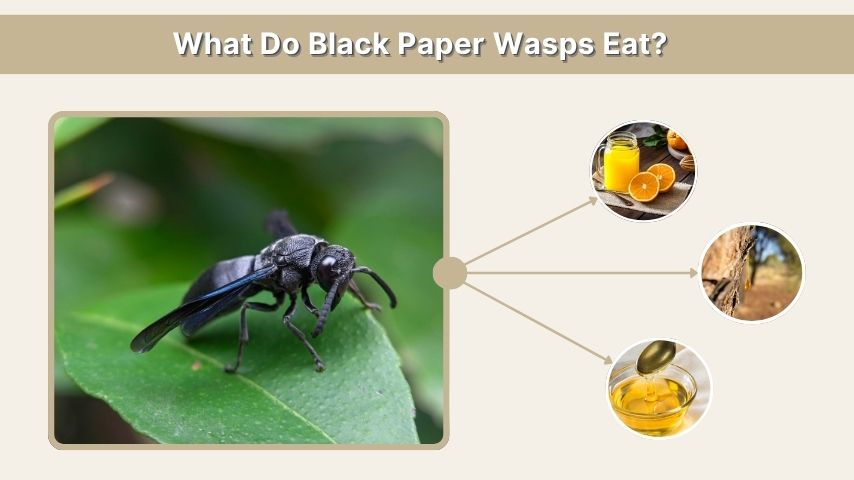
Black paper wasps play an important role in controlling insect populations. Their diet changes depending on their life stage and seasonal food availability.
Adult Diet
Adult black paper wasps commonly feed on:
- Flower nectar
- Fruit juices
- Tree sap
- Sugary liquids
- Honeydew from aphids
What They Feed Their Larvae
Worker wasps hunt insects and feed them to developing larvae inside the nest. Common prey includes caterpillars, flies, spiders, and beetle larvae. This hunting behavior helps reduce many common garden pests.
Are Black Paper Wasps Beneficial?
Although many homeowners fear them, black paper wasps provide several environmental benefits. They naturally control pest insects that damage plants and crops. Some species also help pollinate flowers while feeding on nectar.
Where Are Black Paper Wasps Found?
Black paper wasps are found across many regions of North America and other warm climates around the world. Their activity increases during spring and summer.
Black Paper Wasps in Texas
Texas has several black paper wasp species because of its warm climate. Nests are often found under roof edges, fences, barns, and porch ceilings.
Black Paper Wasps in Georgia and Alabama
Southern states provide ideal nesting conditions due to long warm seasons and high humidity. Colonies in these areas may become large during late summer.
Black Paper Wasps in Colorado and Massachusetts
In cooler states, black paper wasps are more seasonal. Colonies usually begin in spring and disappear after cold weather arrives in autumn.
Black Paper Wasps in Australia
Australia also has paper wasp species with dark black coloration. Some Australian species are more aggressive than North American paper wasps and often build nests close to homes.
Why Black Paper Wasps Gather Around Homes
Homes provide shelter, warmth, and safe nesting surfaces for paper wasps. Structures with overhangs and protected corners are especially attractive to queens searching for nesting locations.
Why They Build Nests on Roof Corners
Roof edges and porch ceilings protect nests from heavy rain and direct sunlight. These areas also reduce exposure to predators and strong winds.
Why Black Paper Wasps Enter Houses
Wasps sometimes enter homes through attic vents, open windows, or wall gaps. Indoor lights may attract them during evening hours, especially if nests are nearby.
Signs of a Growing Colony
A developing colony often shows several warning signs:
- Frequent wasp traffic near one location
- Multiple wasps flying around roof edges
- Visible hanging paper nests
- Increased defensive behavior near structures
How to Get Rid of Black Paper Wasps Safely
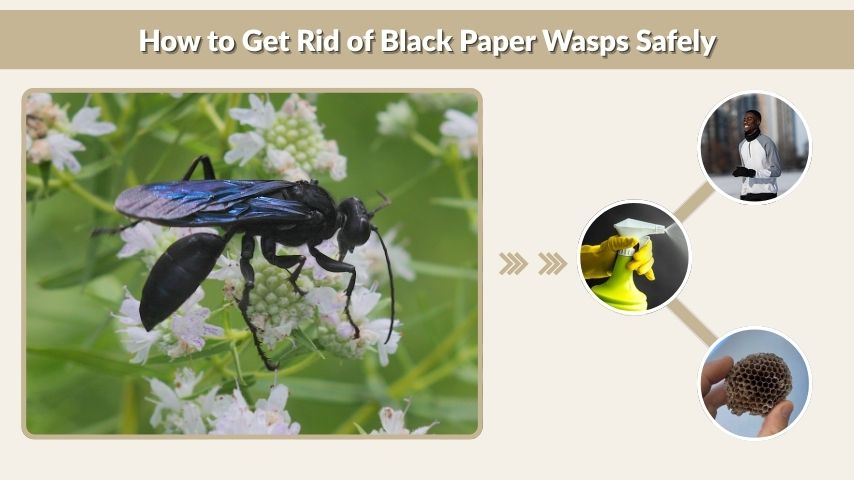
Removing paper wasps should always be done carefully because disturbed colonies may become defensive. Small nests are easier and safer to remove early in the season.
Best Time for Nest Removal
Early morning or late evening is usually safest because wasps are less active in cooler temperatures. Avoid removing nests during the hottest part of the day.
Safe DIY Removal Methods
Homeowners commonly use these methods:
- Wear long sleeves and gloves
- Use approved wasp sprays from a distance
- Remove small inactive nests carefully
- Keep children and pets away from the area
Natural Prevention Methods
Some homeowners use natural deterrents to discourage nesting:
- Peppermint oil sprays
- Vinegar and water mixtures
- Fake decoy nests
- Regular cleaning of outdoor corners
When to Call a Professional
Professional pest control may be necessary when:
- Nests are inside walls or attics
- Colonies become very large
- Residents have sting allergies
- Multiple nests appear around the property
Prevention Tips for Black Paper Wasps
Preventing nests is easier than removing established colonies. Regular inspections around the home can greatly reduce future wasp activity.
How to Prevent Nest Building
These prevention steps can help:
- Seal cracks and wall openings
- Repair damaged screens
- Remove outdoor food sources
- Check roof corners regularly
- Remove small starter nests quickly
Yard Maintenance Tips
Keeping outdoor spaces clean and trimmed makes properties less attractive to nesting queens. Overgrown vegetation and cluttered storage areas often provide shelter for wasps.
FAQs
Are black paper wasps more aggressive than yellow jackets?
No, black paper wasps are usually less aggressive than yellow jackets. They mainly sting when defending their nest, while yellow jackets may attack more quickly around food or disturbed colonies.
Do black paper wasps return to old nests?
Most paper wasps do not reuse old nests, but new queens may build nearby. Old nests can still attract future colonies if the area remains sheltered and protected.
Can black paper wasps damage houses?
Paper wasps rarely cause structural damage. Their nests are attached to surfaces but usually do not harm wood, siding, or roofing materials.
How can I tell if a black paper wasp nest is active?
An active nest will have visible wasps flying in and out during daylight hours. You may also see workers crawling across the open cells.
Should I remove every black paper wasp nest?
Not always. Small nests located away from people may be left alone because paper wasps help control pests naturally. Removal is usually recommended only when nests are near doors, walkways, or living spaces.