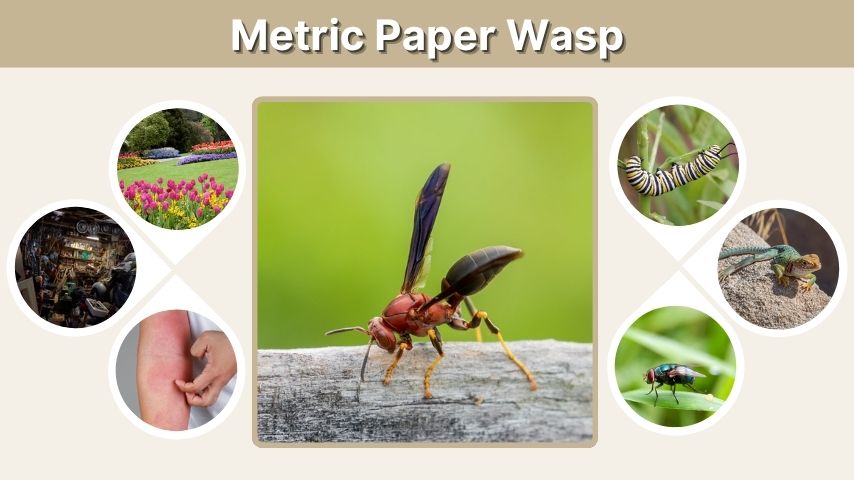
The metric paper wasp is a social wasp species known for its slender body, hanging paper nests, and defensive sting. These wasps are commonly found in gardens, forests, porches, and other sheltered outdoor areas across North America. Their ability to build paper-like nests from wood fibers makes them one of the most recognizable paper wasp species.
Although many people fear wasps because of their sting, metric paper wasps also provide benefits by hunting garden pests such as caterpillars and flies. Understanding their nesting habits, diet, and behavior can help people safely identify and avoid conflicts with these insects around homes and outdoor spaces.
What Is a Metric Paper Wasp?
The metric paper wasp is a social insect belonging to the paper wasp group. Like other paper wasps, it lives in colonies and builds open comb nests using chewed wood fibers mixed with saliva. These wasps are active hunters that feed insects to developing larvae while adults mainly consume sugary liquids.
Scientific Name and Classification
The scientific name of the metric paper wasp is Polistes metricus. It belongs to the Vespidae family, which includes hornets, yellowjackets, and other social wasps.
Physical Appearance
- Slender body with narrow waist
- Brown and yellow coloration
- Long dangling legs during flight
- Dark wings folded lengthwise
- Curved antennae
- Smooth body surface with little hair
Metric Paper Wasp Characteristics
Metric paper wasps are social insects that cooperate in colony life. They defend nests aggressively if threatened but usually avoid humans when left undisturbed. Their hunting behavior helps reduce populations of harmful garden insects.
Metric Paper Wasp Identification
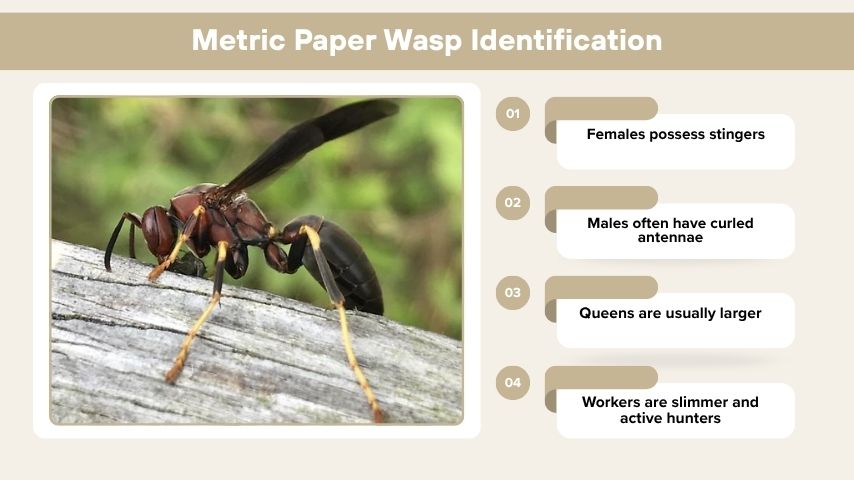
Metric paper wasps can be identified by their thin body shape, long legs, and exposed paper nests. Their flight pattern is slower and more relaxed compared to yellowjackets. Observing body color and nest structure can help distinguish them from similar wasp species.
Size and Body Structure
Adult metric paper wasps usually grow between 0.6 and 1 inch long. Their slim waist and long legs make them appear more delicate than other social wasps.
Color Patterns
The body is generally brown with yellow markings on the face, abdomen, and legs. Wing color may appear smoky or dark brown depending on lighting and age.
Male vs Female Differences
- Females possess stingers
- Males often have curled antennae
- Queens are usually larger
- Workers are slimmer and active hunters
- Males do not defend nests aggressively
Metric Paper Wasp Habitat and Range
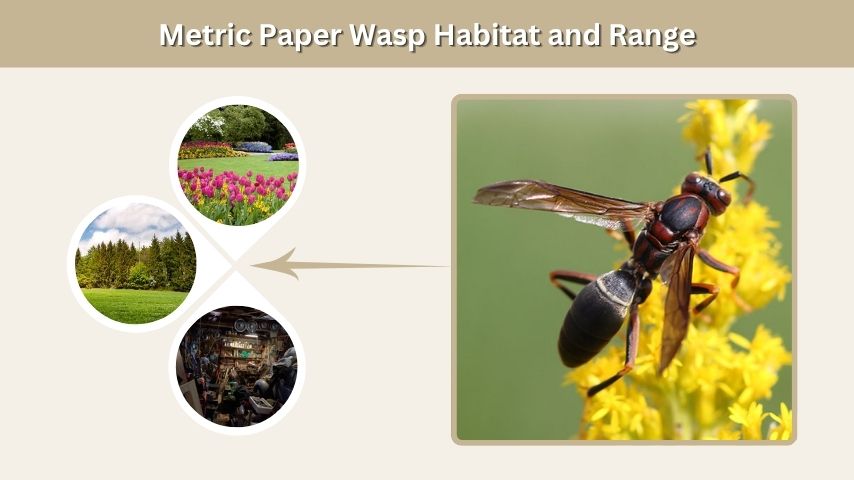
Metric paper wasps are widely distributed across parts of North America. They prefer warm environments with sheltered nesting areas and nearby food sources. Gardens, forests, and buildings provide ideal conditions for colony development during warmer months.
Geographic Distribution
This species is commonly found throughout the eastern and central United States. Populations are especially active in temperate regions with long warm seasons.
Preferred Habitats
- Gardens and flower beds
- Forest edges
- Porches and roof overhangs
- Garages and sheds
- Outdoor structures with shelter
Seasonal Activity
Metric paper wasps become active during spring when queens emerge from winter shelter. Colony size increases throughout summer before declining during colder autumn weather.
Metric Paper Wasp Nest
Metric paper wasps build unique open nests that resemble upside-down umbrellas. These nests contain exposed hexagonal cells where eggs and larvae develop. Colonies usually remain relatively small compared to yellowjacket or hornet nests.
What Does a Metric Paper Wasp Nest Look Like?
The nest appears gray or brown and has a papery texture created from chewed wood fibers. Individual cells remain open and visible from below, unlike enclosed hornet nests.
Nest Locations
- Roof overhangs
- Tree branches
- Window frames
- Deck railings
- Outdoor furniture
How Metric Paper Wasps Build Nests
Worker wasps scrape wood fibers from fences, dead wood, and tree bark. They chew the material into pulp and combine it with saliva to form lightweight paper-like nest material.
Metric Paper Wasp Sting
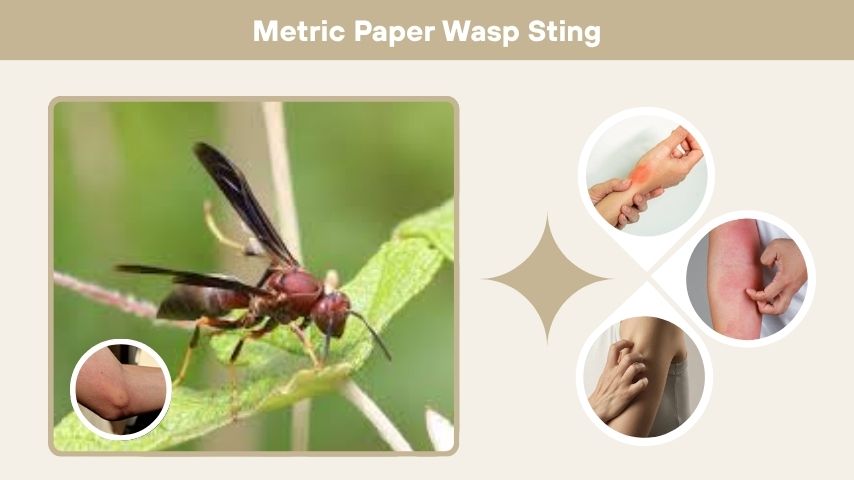
Metric paper wasps can sting when they feel threatened or when someone disturbs the nest. Although their sting is painful, these wasps are usually less aggressive than yellowjackets. Most stings happen accidentally when people get too close to nesting areas around homes, gardens, or outdoor structures.
Do Metric Paper Wasps Sting?
Yes, metric paper wasps can sting multiple times because they do not lose their stinger after attacking. They mainly sting to defend the nest or protect themselves from danger.
How Painful Is the Sting?
The sting usually causes a sharp burning sensation followed by redness and swelling. Pain levels vary depending on individual sensitivity and the number of stings received.
Sting Symptoms
- Redness around the sting area
- Swelling and irritation
- Burning or throbbing pain
- Itching after several hours
- Allergic reactions in sensitive people
What To Do After a Sting
Cleaning the sting area with soap and water can reduce infection risk. Cold compresses may help decrease swelling and discomfort. People showing signs of severe allergic reactions should seek medical attention immediately.
Metric Paper Wasp Diet and Hunting
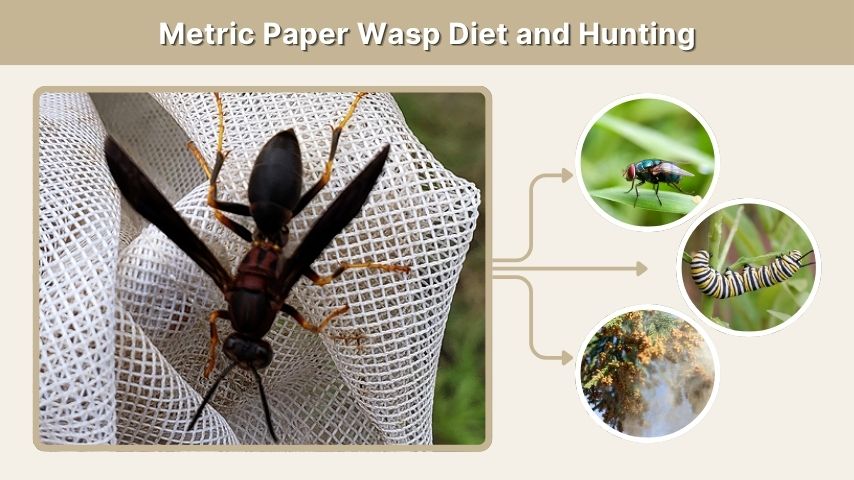
Metric paper wasps feed on both sugary foods and protein-rich insects. Adults mainly consume nectar and sweet liquids, while larvae require insects for proper development. Their hunting behavior makes them useful predators in gardens and agricultural environments.
What Do Metric Paper Wasps Eat?
Adult wasps commonly feed on nectar, fruit juices, and sugary liquids. They also hunt caterpillars, flies, and other insects to feed growing larvae inside the nest.
Hunting Behavior
Metric paper wasps actively search for insects on plants and around gardens. They capture prey using strong jaws and carry it back to the colony where larvae are fed chewed insect material.
Adult vs Larval Diet
- Adults prefer sugary foods
- Larvae require protein-rich insects
- Caterpillars are common prey
- Nectar provides energy for adults
- Workers feed developing larvae
Metric Paper Wasp Behavior and Life Cycle
Metric paper wasps live in organized colonies led by a queen. Colony activity changes throughout the year depending on temperature and food availability. Most colonies survive for only one season before dying off during colder weather.
Colony Formation
In spring, a fertilized queen emerges from winter shelter and begins building a small nest. She lays eggs and raises the first generation of worker wasps alone before the colony expands.
Reproduction and Mating
During late summer, colonies produce new queens and males for reproduction. After mating, future queens search for protected winter shelter while the rest of the colony gradually dies.
Winter Survival
Only fertilized queens survive winter by hiding in cracks, wood piles, or sheltered spaces. Old nests are abandoned and are not reused the following year.
Metric Paper Wasp Predators and Threats
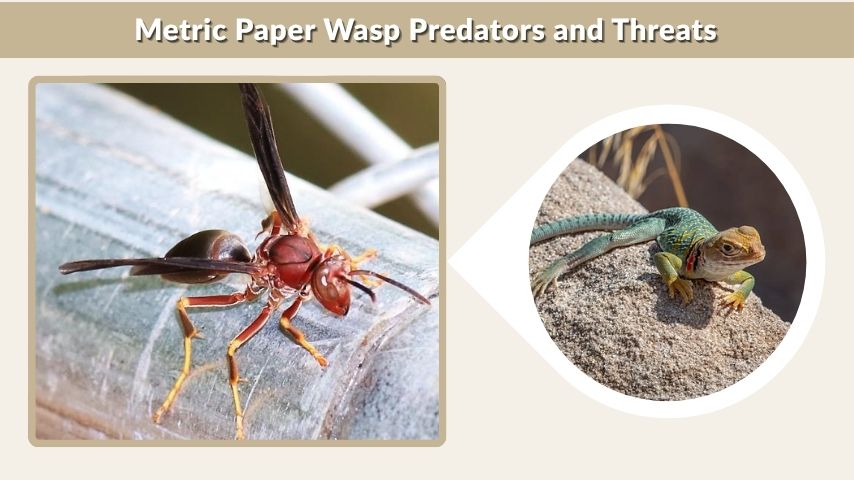
Metric paper wasps face threats from predators, weather, and human activity. Birds, spiders, and larger insects may attack nests or individual wasps. Environmental changes and pesticides can also affect colony survival.
Common Predators
- Birds
- Spiders
- Lizards
- Praying mantises
- Larger wasps and hornets
Environmental Threats
Heavy rain, strong winds, pesticides, and habitat destruction can damage nests and reduce wasp populations. Human nest removal also affects colony survival.
Human Interaction
Metric paper wasps often nest near homes, which increases encounters with people. Although they can sting, they also help control garden pests and may benefit local ecosystems when left undisturbed.
Metric Paper Wasp vs Similar Wasps
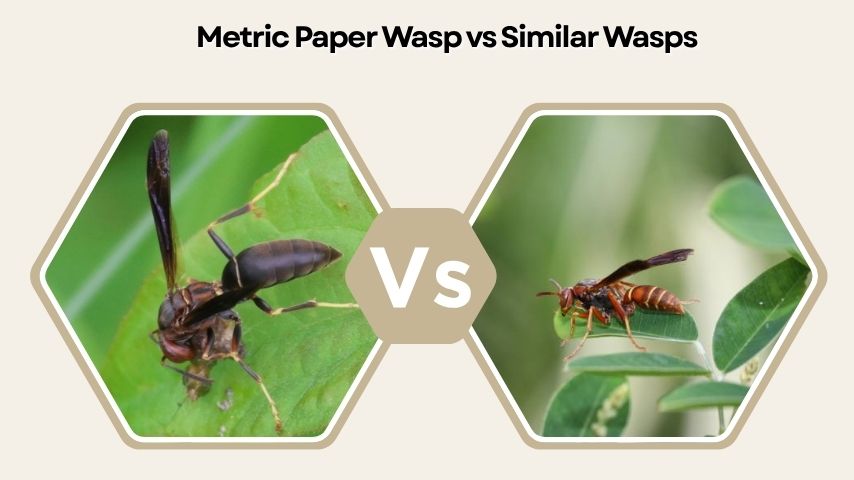
Metric paper wasps are often confused with yellowjackets and other paper wasp species. However, differences in body shape, nest style, and aggression levels help distinguish them from similar insects.
Metric Paper Wasp vs Red Paper Wasp
| Feature | Metric Paper Wasp | Red Paper Wasp |
| Color | Brown and yellow | Reddish-brown |
| Body Size | Medium | Slightly larger |
| Nest Style | Open comb | Open comb |
Metric Paper Wasp vs Yellowjacket
| Feature | Metric Paper Wasp | Yellowjacket |
| Body Shape | Slender | Compact |
| Nest Type | Open nest | Enclosed nest |
| Aggression | Less aggressive | More aggressive |
FAQs
Do metric paper wasps sting?
Yes, metric paper wasps can sting when they feel threatened or when someone disturbs their nest. Their sting is painful but usually not dangerous unless the person has an allergic reaction to wasp venom.
What does a metric paper wasp nest look like?
A metric paper wasp nest looks like a small open umbrella-shaped structure made from gray paper-like material. The nest contains visible hexagonal cells where eggs and larvae develop.
Are metric paper wasps aggressive?
Metric paper wasps are generally less aggressive than yellowjackets. They usually avoid humans unless their nest is disturbed or they feel threatened near the colony.
What do metric paper wasps eat?
Adult metric paper wasps mainly eat nectar, fruit juices, and sugary liquids. They also hunt insects such as caterpillars and flies to feed developing larvae inside the nest.
Where are metric paper wasps found?
Metric paper wasps are commonly found in parts of North America, especially in the eastern and central United States. They often build nests around gardens, forests, porches, garages, and roof overhangs.