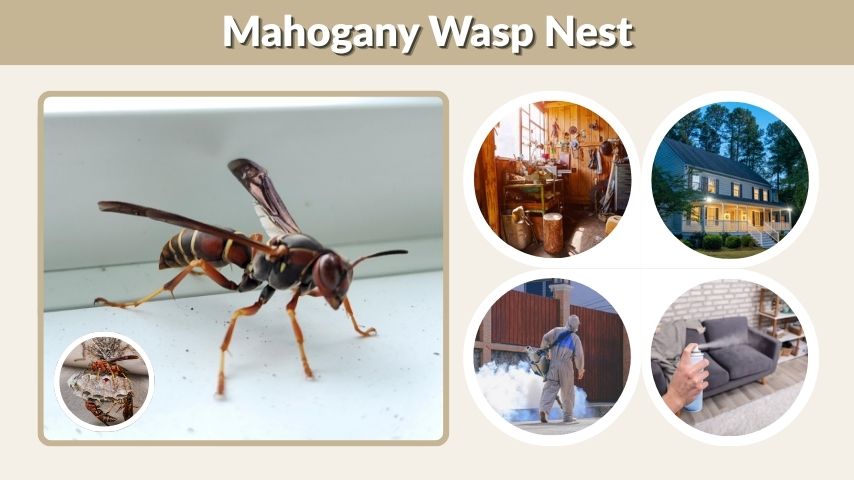
A mahogany wasp nest can be alarming to find around your home, porch, shed, fence, tree, or roofline. Mahogany wasps are a type of paper wasp known for their reddish-brown or mahogany-colored bodies. Like other paper wasps, they build papery nests from chewed wood fibers and saliva. These nests are often small at first but can grow as the colony becomes more active in warm weather. Understanding what a mahogany wasp nest looks like, where it is commonly found, and how to handle it safely can help protect your home and family.
What Is a Mahogany Wasp?
Mahogany wasps are reddish-brown paper wasps with slender bodies, narrow waists, long legs, wings, and antennae. Their color gives them the “mahogany” name. They are often confused with red wasps, orange wasps, or red paper wasps because of their warm body color.
These wasps are not usually aggressive when they are away from the nest. However, they may sting if they feel threatened, especially when someone gets too close to the colony. Their main goal is to defend the nest, protect the young, and continue building the colony.
Why They Build Nests
Mahogany wasps build nests to raise their young. The queen begins the nest in spring, usually in a protected location. As workers emerge, they help expand the nest, gather food, and defend the colony.
The nest is made from wood fibers collected from fences, decks, tree bark, or weathered wood. The wasps chew the fibers and mix them with saliva, creating a paper-like material.
What Does a Mahogany Wasp Nest Look Like?
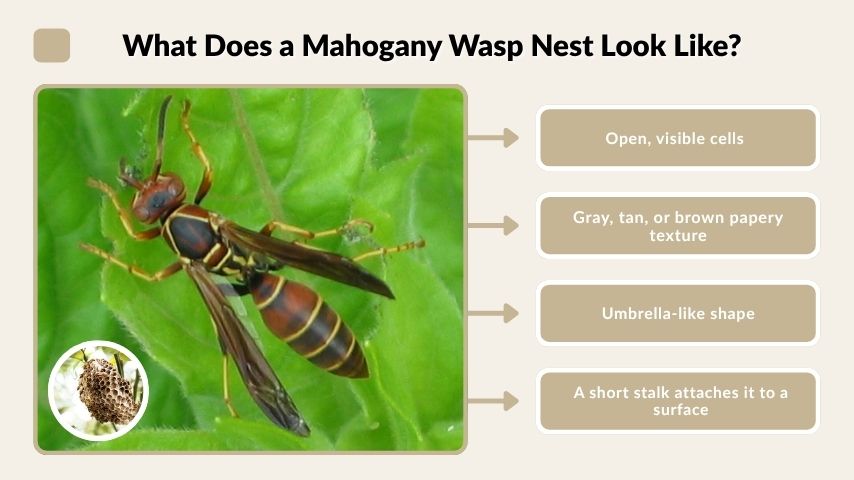
A mahogany wasp nest usually looks like an open paper comb. It may hang upside down from a horizontal surface, such as an eave, porch ceiling, branch, shed roof, or deck beam. Unlike some hornet nests, it is usually not fully enclosed in a round paper shell.
The nest often has visible hexagonal cells where eggs and larvae develop. Early in the season, it may be small, about the size of a coin or golf ball. Later, it can become much larger depending on colony size and conditions.
Common Nest Features
A mahogany wasp nest may have:
- Open, visible cells
- Gray, tan, or brown papery texture
- Umbrella-like shape
- A short stalk attaches it to a surface
- Adult wasps resting on the comb
- Location under cover or shade
If you see reddish-brown wasps repeatedly flying to the same hidden spot, there may be a nest nearby.
Where Do Mahogany Wasps Build Nests?
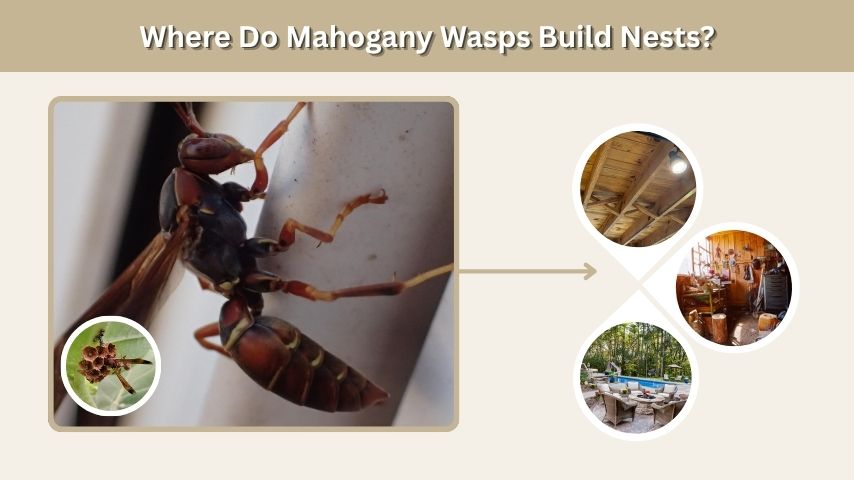
Mahogany wasps prefer protected areas that are sheltered from heavy rain, wind, and direct disturbance. They often choose places around homes because buildings provide stable surfaces and shade.
Common Nesting Areas
You may find mahogany wasp nests in:
- Porch ceilings
- Roof eaves
- Decks and railings
- Sheds and garages
- Fence posts
- Tree branches
- Shrubs
- Attics or wall gaps
- Outdoor furniture
- Playsets
- Barns or carports
Nests near doors, windows, patios, or walkways are more concerning because people may accidentally disturb them.
Are Mahogany Wasp Nests Dangerous?
A mahogany wasp nest can be dangerous if it is close to human activity. The wasps may sting when they think the nest is being threatened. A single sting can be painful, and multiple stings are possible if the colony becomes defensive.
For most people, a wasp sting causes pain, redness, swelling, and itching. However, people with wasp allergies may have a serious reaction and need emergency medical care.
When a Nest Is High Risk
A nest is more risky when it is:
- Near a doorway or window
- Under a porch or patio
- Close to children or pets
- Inside a shed or garage
- Near outdoor seating
- In a high-traffic area
- Large or very active
If the nest is far from people and not causing problems, it may not need immediate removal. Wasps also help control insects, so they can be beneficial when nesting away from living areas.
Mahogany Wasp Nest vs Other Wasp Nests
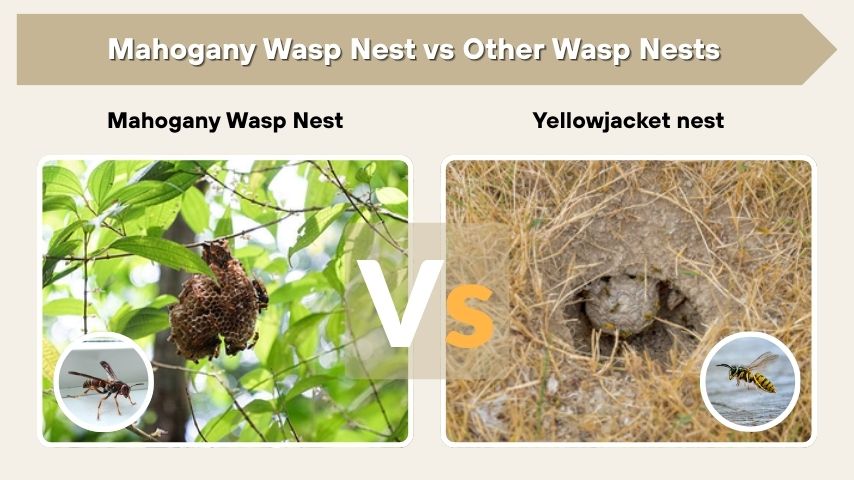
Mahogany wasp nests are usually paper wasp nests. They differ from yellowjacket and hornet nests in shape and structure.
| Nest Type | Appearance | Common Location | Risk Level |
| Mahogany/paper wasp nest | Open comb, umbrella-like | Eaves, porches, branches | Moderate to high near people |
| Yellowjacket nest | Hidden or enclosed, often underground | Soil, wall voids, cavities | High |
| Hornet nest | Large enclosed paper ball | Trees, shrubs, buildings | High |
| Mud dauber nest | Mud tubes or cells | Walls, eaves, sheds | Lower |
Correct identification matters because treatment and removal methods vary.
How to Remove a Mahogany Wasp Nest
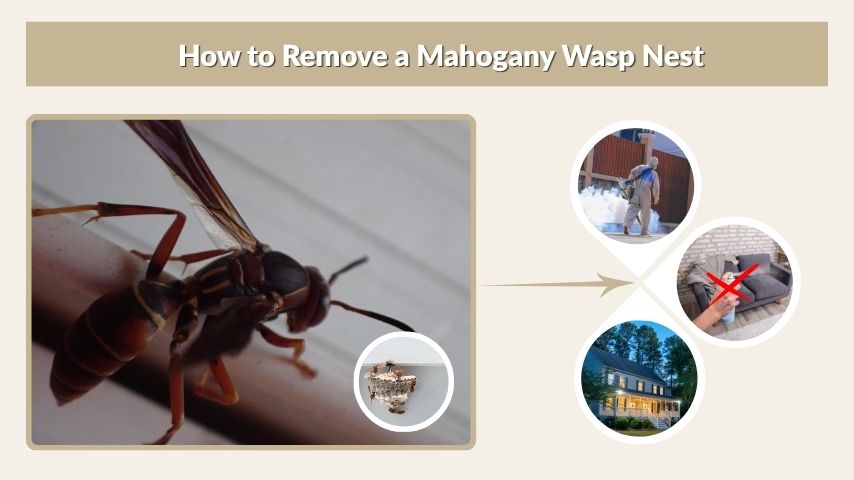
Removing a mahogany wasp nest can be risky. If you are allergic to stings, if the nest is large, or if it is in a difficult location, call a pest control professional.
Small early-season nests may be easier to manage, but safety should come first. Never knock down an active nest during the day when wasps are flying in and out.
Safe Removal Tips
Before attempting removal, consider these steps:
- Wear protective clothing.
- Keep children and pets away.
- Avoid sudden movements near the nest.
- Do not spray randomly indoors.
- Treat at night or early morning when wasps are less active.
- Follow all product label directions.
- Stand at a safe distance.
- Leave the area immediately if wasps become active.
After the wasps are dead or gone, the nest can be knocked down and discarded. Clean the area to reduce scent marks that may attract future nesting.
When to Call a Professional
Professional removal is best if the nest is large, high up, inside a wall, near electrical areas, or close to heavy foot traffic. You should also call a professional if someone in the home is allergic to wasp stings.
How to Prevent Mahogany Wasp Nests
Prevention is easiest in spring, before nests grow large. Regular inspections help catch small nests early.
Prevention Tips
To reduce future nesting:
- Inspect eaves, porches, sheds, and decks weekly in spring.
- Seal cracks around siding, vents, and rooflines.
- Repair damaged screens and gaps.
- Keep outdoor trash sealed.
- Remove fallen fruit and sugary spills.
- Paint or seal exposed wood surfaces.
- Keep shrubs trimmed away from the house.
- Remove old inactive nests after the season.
Wasps are attracted to sheltered nesting spots, food sources, and building materials like weathered wood. Reducing these attractants can make your property less inviting.
FAQs
What does a mahogany wasp nest look like?
A mahogany wasp nest usually looks like an open, umbrella-shaped paper comb with visible hexagonal cells. It often hangs from eaves, porch ceilings, branches, sheds, or deck beams. The nest may be gray, tan, or brown and can grow larger during warm months.
Are mahogany wasps aggressive?
Mahogany wasps are not usually aggressive when they are away from the nest. However, they can become defensive if someone gets too close, shakes the nest, sprays it, or blocks their flight path. Nests near doors, patios, or play areas should be handled carefully.
Do mahogany wasps sting?
Yes, mahogany wasps can sting. Their sting is painful and may cause redness, swelling, and itching. People with allergies may have more serious reactions. Avoid handling nests yourself if you are allergic or unsure how to remove them safely.
Where do mahogany wasps build nests?
Mahogany wasps often build nests under roof eaves, porch ceilings, decks, tree branches, shrubs, sheds, garages, fences, and outdoor structures. They prefer sheltered places protected from rain and disturbance.
Should I remove a mahogany wasp nest?
You should remove or professionally treat a mahogany wasp nest if it is near people, pets, doors, windows, patios, or play areas. If it is far from activity and not causing problems, it may be left alone because wasps help control other insects.