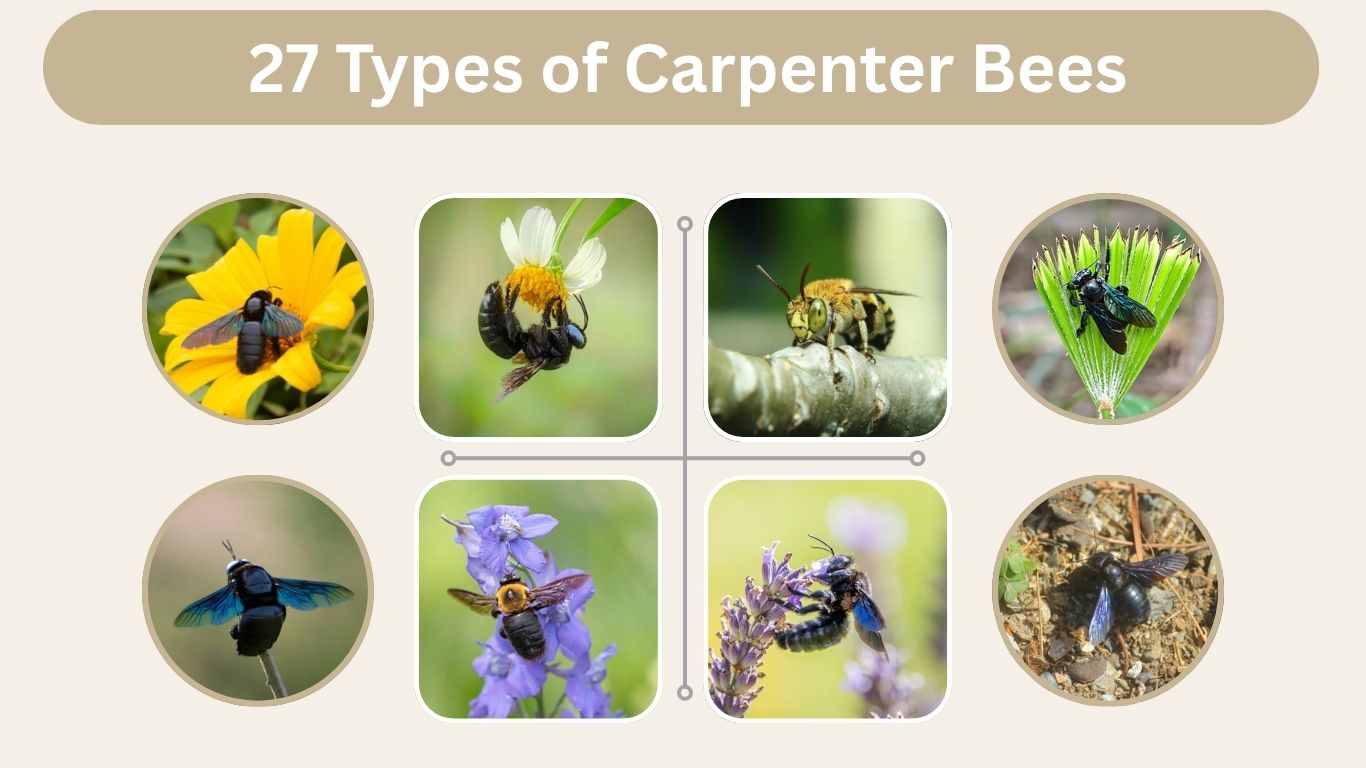
Carpenter bees are strong, wood-nesting bees found in gardens, forests, farms, and neighborhoods around the world. They are known for their shiny abdomens, loud buzzing flight, and habit of making tunnels in wood or plant stems. From large black carpenter bees to colorful blue, green, and violet species, each type has unique features that make identification easier.
1. Eastern Carpenter Bee
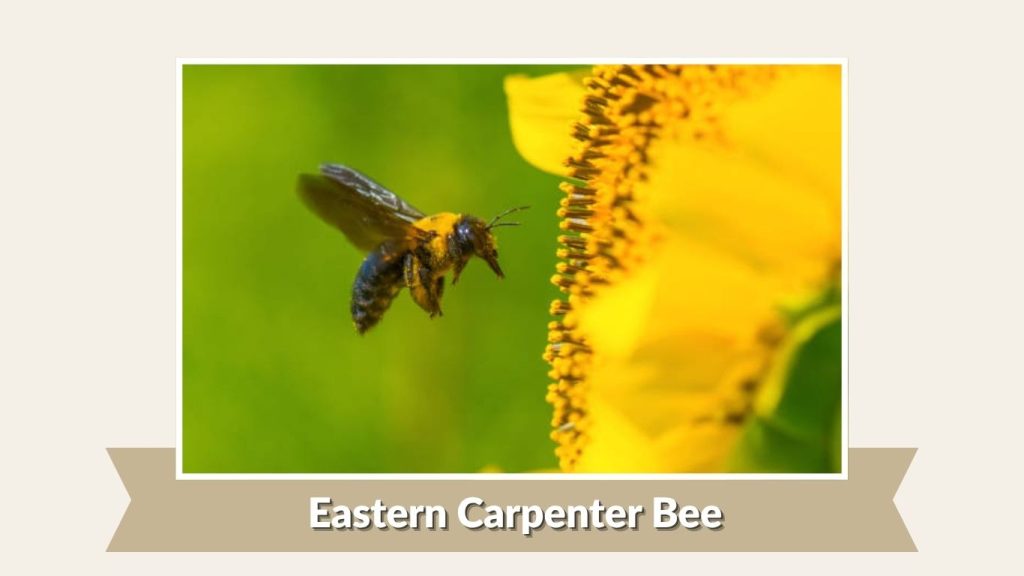
The Eastern Carpenter Bee is one of the most common carpenter bees in North America. It is often seen around wooden structures, gardens, fences, decks, and flowering plants. This bee gets its name from its habit of boring into wood to create nesting tunnels. Although it may look similar to a bumblebee, its shiny black abdomen makes it easier to identify.
Characteristics
- Large carpenter bee with a strong body
- Shiny black abdomen without thick hair
- Males may have a pale or yellowish face
- Females can bore tunnels into wood
- Common around flowers, decks, and fences
- Usually active during spring and summer
Size
Eastern Carpenter Bees are large bees, usually around 0.75 to 1 inch long. Their broad body and loud buzzing sound often make them noticeable. Females are strong enough to chew into untreated or weathered wood, where they make tunnels for laying eggs.
Color
This bee usually has a black body with yellow hairs on the thorax. The abdomen is smooth, shiny, and black, which helps separate it from bumblebees. Male Eastern Carpenter Bees often have a light-colored face, while females usually have a darker face.
Habitat and ID
Eastern Carpenter Bees are commonly found in gardens, woodlands, yards, and areas with exposed wood. They often nest in wooden beams, porch rails, fences, sheds, and dead tree branches. To identify them, look for a large bee with a fuzzy yellow thorax, shiny black abdomen, and round holes in nearby wood.
2. Southern Carpenter Bee
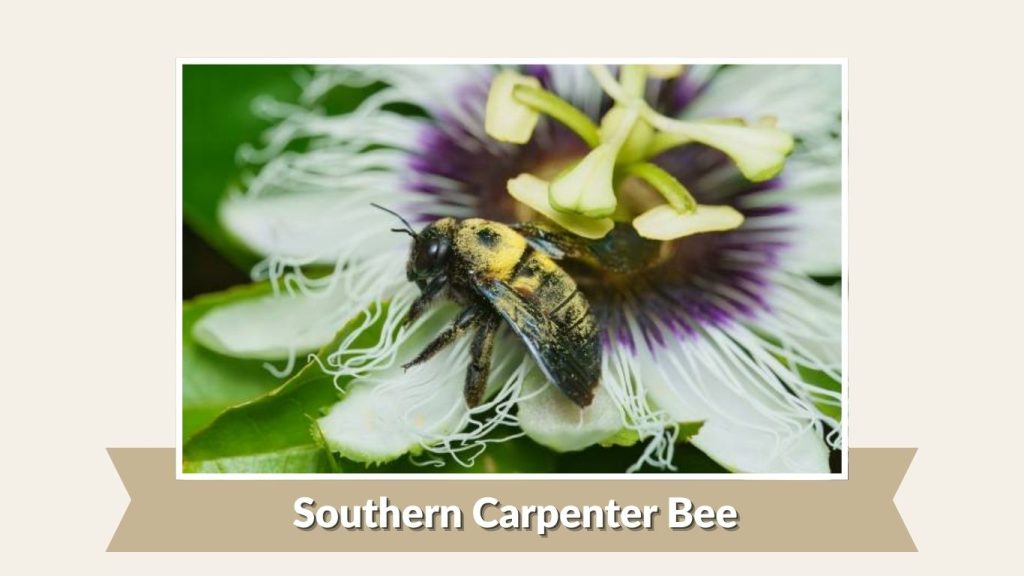
The Southern Carpenter Bee is a large carpenter bee commonly found in warm regions. It is often seen flying around gardens, wooden fences, porches, and flowering plants. Like other carpenter bees, it can bore into wood to make nesting tunnels. This bee is usually active in spring and summer when flowers are abundant.
Characteristics
- Large bee with a strong, rounded body
- Smooth and shiny abdomen
- Often nests in untreated or old wood
- Common in warm southern areas
- Visits many flowering plants for nectar
- Females can chew tunnels into wood
Size
Southern Carpenter Bees are usually about 0.75 to 1 inch long. Their large size and loud buzzing sound make them easy to notice around homes and gardens. Females are strong wood-borers and may reuse old tunnels or create new nesting holes.
Color
This bee usually has a dark body with yellowish hairs on the thorax. The abdomen is mostly black, smooth, and shiny. Males may have lighter markings on the face, while females are usually darker and more solid-looking.
Habitat and ID
Southern Carpenter Bees live in gardens, wooded areas, farms, and neighborhoods with exposed wood. They often nest in fences, wooden posts, porch rails, sheds, and dead branches. To identify them, look for a large bee with a fuzzy upper body, shiny abdomen, and round entrance holes in wood.
3. Valley Carpenter Bee
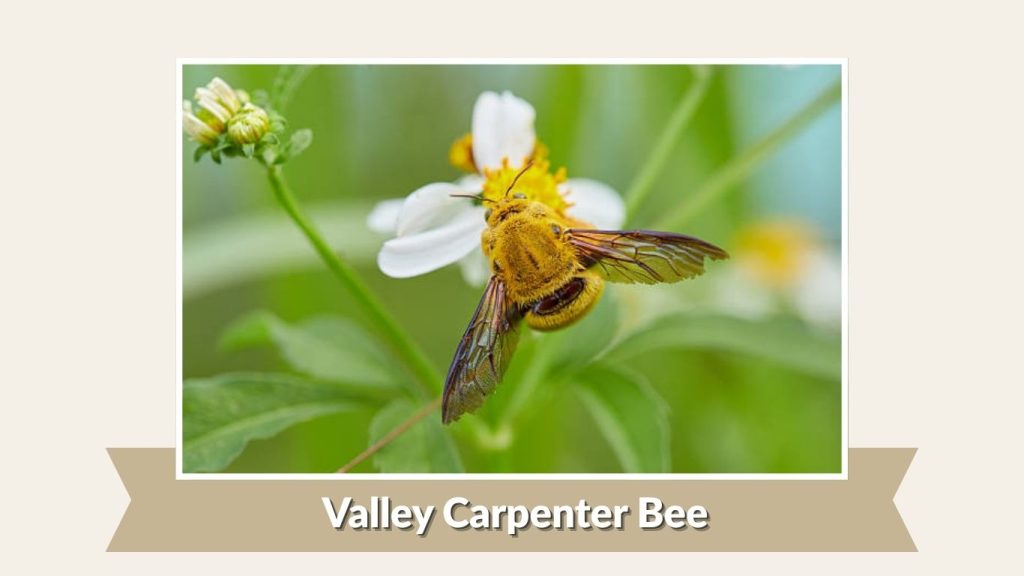
The Valley Carpenter Bee is a very large and noticeable carpenter bee found in parts of western North America. It is often seen around gardens, desert plants, orchards, and wooden structures. This bee is known for its strong body, loud flight, and important role in pollinating many flowers.
Characteristics
- Very large carpenter bee
- Strong body and loud buzzing flight
- Females are usually black and shiny
- Males may appear golden or yellowish
- Common in warm valleys and dry regions
- Nests in wood, branches, and plant stems
Size
Valley Carpenter Bees are among the larger carpenter bees, often reaching around 1 inch long or slightly more. Their big body makes them easy to recognize when they fly near flowers or wooden nesting areas. Despite their size, they are usually not aggressive unless handled.
Color
Female Valley Carpenter Bees are usually shiny black with dark wings. Males look very different and may have golden-yellow or tan coloring. This strong color difference between males and females makes the species especially interesting and easier to identify.
Habitat and ID
Valley Carpenter Bees are found in warm valleys, gardens, deserts, orchards, and open woodlands. They may nest in dead wood, wooden structures, or thick plant stems. To identify them, look for a very large bee, black females, golden males, and strong buzzing around flowers.
4. California Carpenter Bee
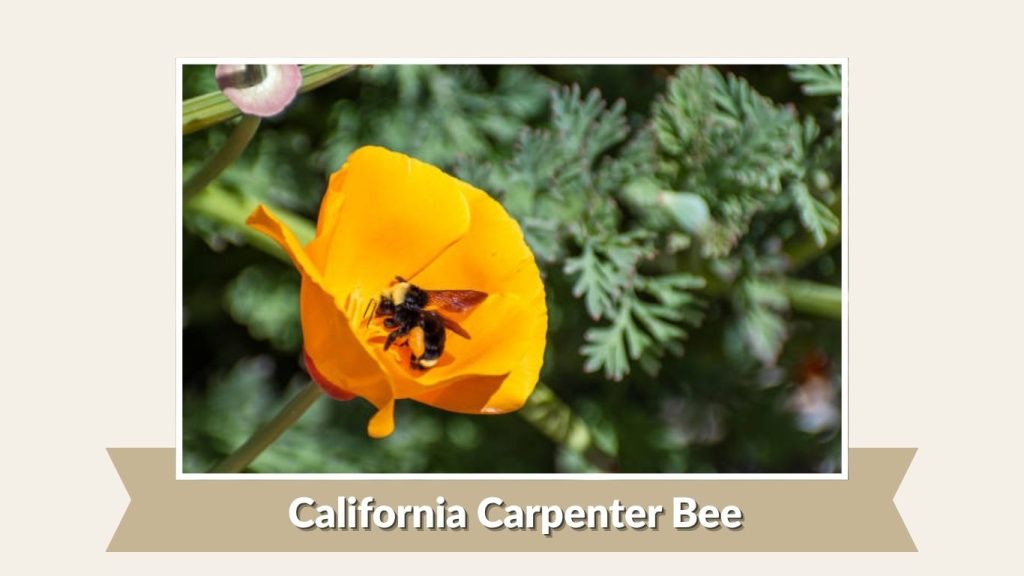
The California Carpenter Bee is a large carpenter bee found in western regions, especially around gardens, woodlands, and dry landscapes. It is often seen visiting flowers and flying near wood where it may nest. This bee helps pollinate plants but can also make tunnels in exposed wooden surfaces.
Characteristics
- Large carpenter bee with a sturdy body
- Often seen around flowers and wood
- Shiny abdomen with little hair
- Females can bore into wood
- Active in warm weather
- Important pollinator for many plants
Size
California Carpenter Bees are usually around 0.75 to 1 inch long. Their size, loud buzzing, and slow hovering flight make them easy to notice. Females use their strong jaws to chew into wood and create nesting tunnels for their young.
Color
This bee is usually dark, often black or bluish-black, with a shiny abdomen. Some may show yellowish hair on the thorax, depending on the species and sex. The smooth abdomen helps separate carpenter bees from fuzzier bumblebees.
Habitat and ID
California Carpenter Bees live in gardens, chaparral areas, woodlands, yards, and dry open spaces. They may nest in fence posts, wooden beams, dead branches, or untreated lumber. To identify them, look for a large dark bee with a shiny abdomen and round holes in wood.
5. Mountain Carpenter Bee
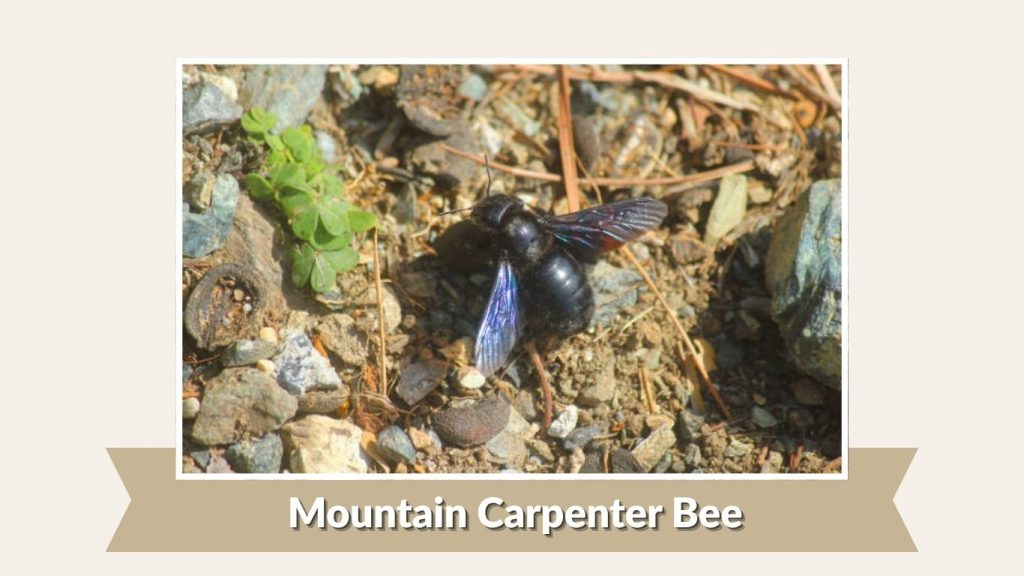
The Mountain Carpenter Bee is a carpenter bee found in higher elevations and wooded mountain areas. It is often seen around wildflowers, forest edges, cabins, and wooden structures. Like other carpenter bees, it may create nesting tunnels in dead wood or untreated wooden surfaces.
Characteristics
- Medium to large carpenter bee
- Strong body with a shiny abdomen
- Found near mountain forests and wildflowers
- Nests in dead wood or exposed lumber
- Active during warmer months
- Helps pollinate native plants
Size
Mountain Carpenter Bees are usually medium to large, often measuring around 0.5 to 1 inch long. Their size can vary depending on the species and region. They are strong flyers and may be seen moving from flower to flower in sunny mountain habitats.
Color
This bee is usually dark brown, black, or bluish-black, with some hair on the upper body. The abdomen is often smooth and shiny. Some individuals may have pale or yellowish markings, especially males, but females are usually darker.
Habitat and ID
Mountain Carpenter Bees live in mountain forests, meadows, wooded slopes, and areas near cabins or fences. They may nest in dead trees, logs, wooden posts, or weathered lumber. To identify them, look for a dark, sturdy bee near flowers and small round holes in wood.
6. Small Carpenter Bee
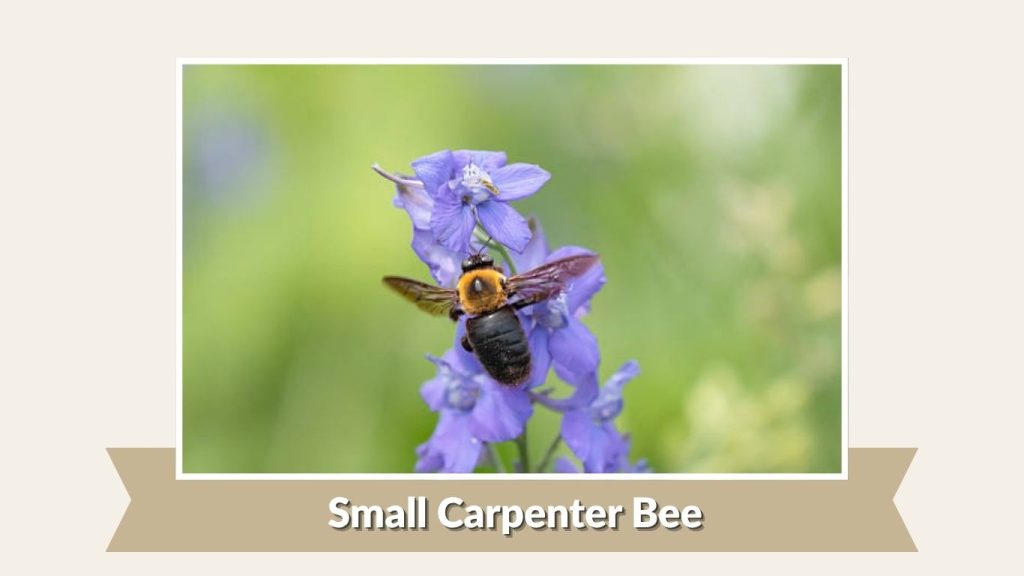
The Small Carpenter Bee is much smaller than the large carpenter bees often seen around decks and fences. It usually nests in plant stems instead of thick wooden beams. These bees are important pollinators and are often found in gardens, fields, meadows, and areas with dry hollow stems.
Characteristics
- Small bee with a slim body
- Often nests inside plant stems
- May have dark, metallic, or shiny coloring
- Important pollinator for small flowers
- Active during warm daylight hours
- Less damaging to wood than large carpenter bees
Size
Small Carpenter Bees are usually much smaller than large carpenter bees, often around 0.25 to 0.5 inch long. Because of their tiny size, they may be overlooked in gardens. They move quickly among flowers and often nest in broken or hollow plant stems.
Color
These bees are often dark, shiny, or slightly metallic. Some may appear black, greenish, or bluish depending on the species. Their smooth body and smaller size help separate them from larger, fuzzier bees.
Habitat and ID
Small Carpenter Bees live in gardens, meadows, fields, roadsides, and areas with dry plant stems. They often nest in hollow twigs, weed stems, and pithy plant stalks. To identify them, look for a tiny shiny bee visiting flowers or entering small holes in plant stems.
7. Violet Carpenter Bee
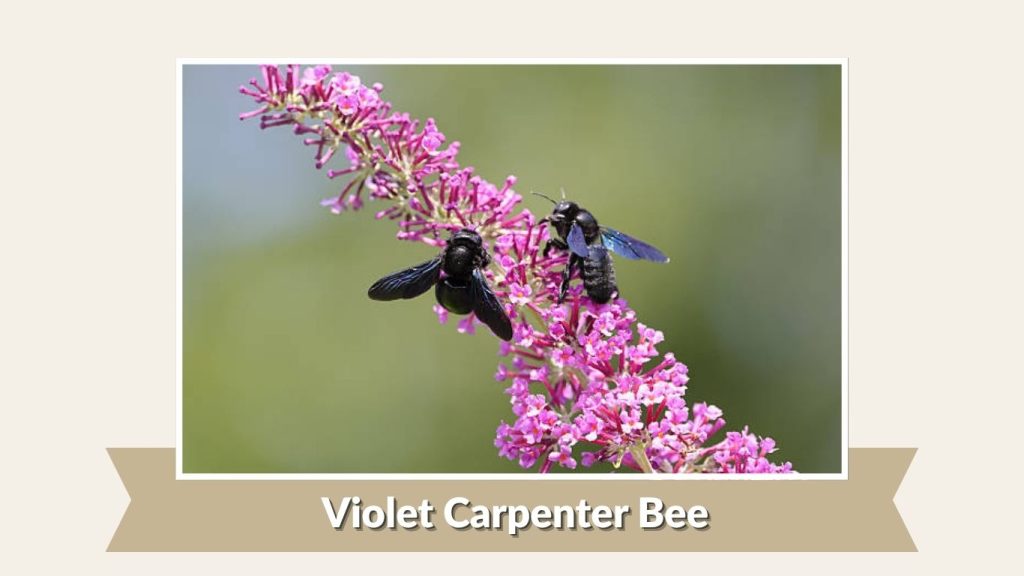
The Violet Carpenter Bee is a striking carpenter bee known for its dark body and violet-blue shine on its wings. It is commonly found in parts of Europe and nearby regions. This bee is often seen around flowers, gardens, orchards, and sunny woodland edges where it searches for nectar and pollen.
Characteristics
- Large carpenter bee with a strong body
- Dark body with violet-blue wing shine
- Smooth and shiny abdomen
- Females can bore into dead wood
- Active during warm sunny days
- Important pollinator for many flowers
Size
Violet Carpenter Bees are large bees, usually around 0.75 to 1 inch long. Their size and deep buzzing sound make them easy to notice. They are strong flyers and often move slowly around flowers while collecting nectar and pollen.
Color
This bee has a mostly black body with a metallic violet or blue shine, especially on the wings. The wings can look bright purple-blue in sunlight. Its dark body and colorful wing reflection make it one of the most attractive carpenter bees.
Habitat and ID
Violet Carpenter Bees live in gardens, orchards, meadows, woodland edges, and areas with dead or weathered wood. They often nest in dry logs, old branches, fence posts, and wooden structures. To identify them, look for a large black bee with violet-blue wings and a shiny abdomen.
8. Large Carpenter Bee
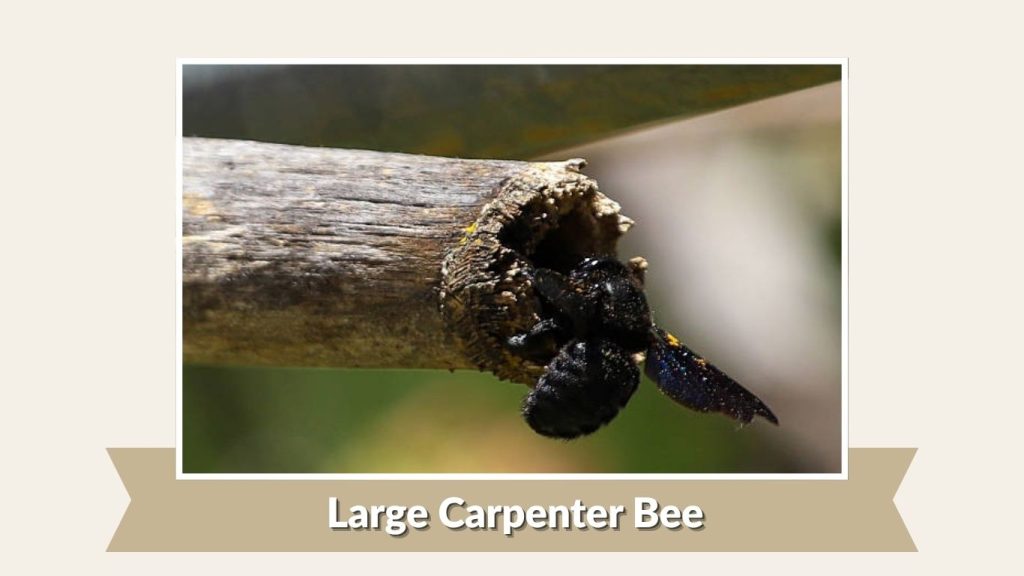
The Large Carpenter Bee is a powerful wood-nesting bee found in many warm and tropical regions. It is often seen around flowering plants, wooden fences, dead branches, and garden structures. Like other carpenter bees, females can chew tunnels into wood to create safe nesting places for their young.
Characteristics
- Large bee with a broad, strong body
- Smooth and shiny abdomen
- Loud buzzing flight
- Females tunnel into wood for nesting
- Common around flowers and wooden areas
- Active in warm daylight conditions
Size
Large Carpenter Bees are usually about 0.75 to 1.2 inches long, depending on the species. Their strong bodies and heavy flight make them easy to recognize. They may hover near wood or flowers and can look intimidating, but they are usually not aggressive.
Color
Large Carpenter Bees are often black, dark brown, or bluish-black. Many have yellow, pale, or gray hairs on the thorax, while the abdomen remains smooth and shiny. Some species may also show metallic blue, green, or purple tones.
Habitat and ID
Large Carpenter Bees live in forests, gardens, farms, orchards, parks, and areas with exposed wood. They may nest in dead trees, bamboo, wooden posts, porch rails, or untreated lumber. To identify them, look for a big bee with a shiny abdomen and round nesting holes in wood.
9. Tropical Carpenter Bee
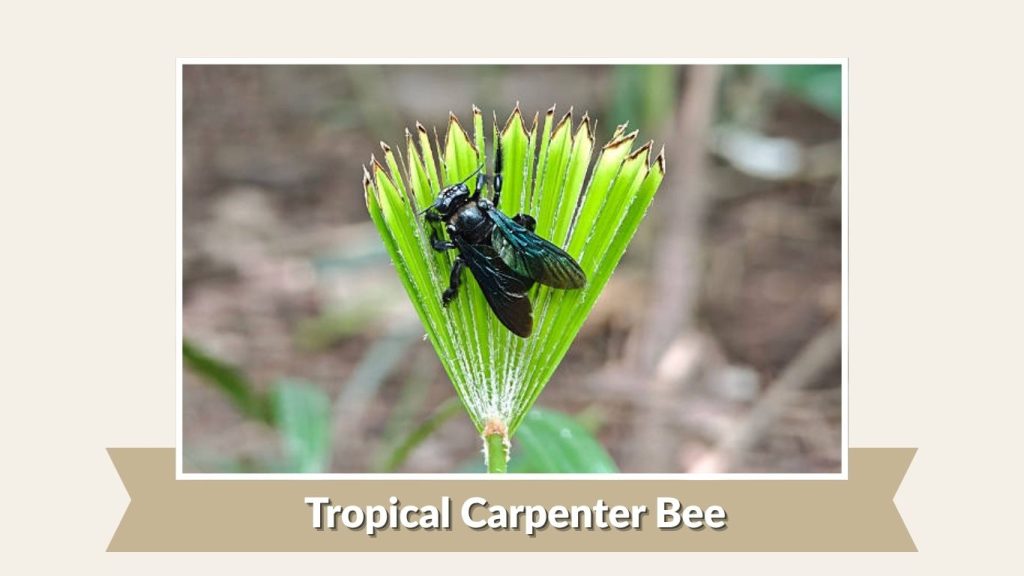
The Tropical Carpenter Bee is a warm-region carpenter bee often found in forests, gardens, farms, and plantations. It plays an important role in pollinating tropical flowers and crops. This bee is usually active in sunny weather and may nest in soft, dry, or weathered wood.
Characteristics
- Large bee common in tropical regions
- Strong body and powerful wings
- Shiny abdomen with little hair
- Visits many flowering plants
- Nests in dead wood or plant stems
- Active during warm daytime hours
Size
Tropical Carpenter Bees are usually medium to large, often around 0.75 to 1 inch long. Their size helps them visit larger tropical flowers. They are strong flyers and may travel between gardens, forest edges, and crop fields in search of food.
Color
These bees are commonly black, dark brown, or bluish-black. Some tropical species may have yellowish hairs, pale markings, or metallic reflections. Their shiny abdomen is one of the easiest ways to separate them from bumblebees.
Habitat and ID
Tropical Carpenter Bees live in rainforests, gardens, orchards, plantations, farms, and wooded villages. They may nest in dead branches, bamboo, dry stems, fences, or wooden buildings. To identify them, look for a large dark bee visiting flowers and entering clean round holes in wood.
10. Yellow-faced Carpenter Bee
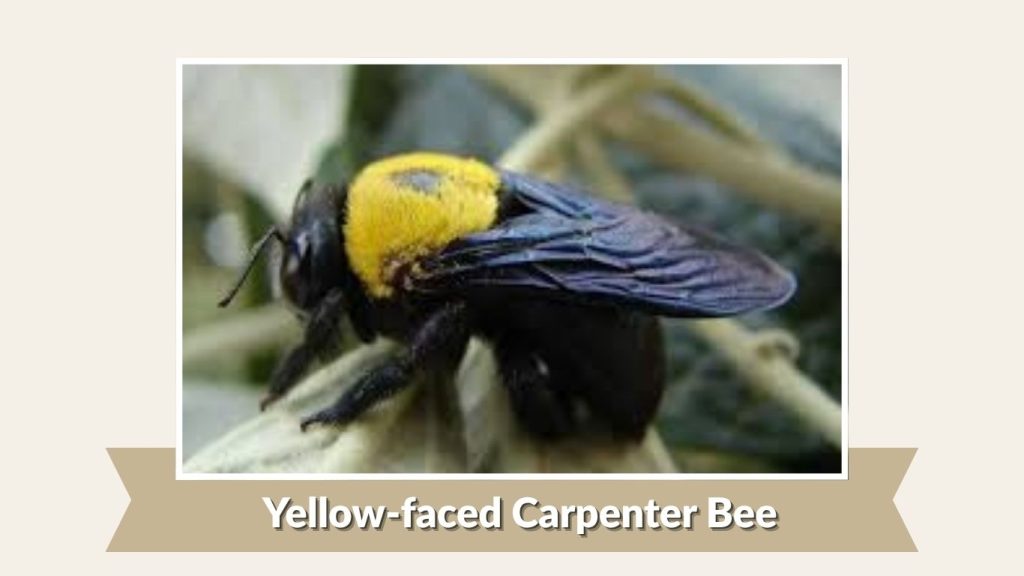
The Yellow-faced Carpenter Bee is named for the pale or yellow markings often seen on the face of males. It is usually found around flowers, gardens, fields, and wooden nesting places. Like many carpenter bees, it can be useful as a pollinator but may also create tunnels in wood.
Characteristics
- Medium to large carpenter bee
- Males often have yellow or pale face markings
- Females are usually darker
- Smooth, shiny abdomen
- Active around flowers in warm weather
- Nests in wood or plant stems
Size
Yellow-faced Carpenter Bees are usually around 0.5 to 1 inch long, depending on the species. Their size makes them noticeable while they hover near flowers or nesting sites. Males may patrol areas around flowers, while females search for food and nesting material.
Color
This bee often has a dark body with yellowish or pale facial markings, especially in males. The thorax may have short hairs, while the abdomen is usually smooth and shiny. Females are often darker and may have fewer bright markings.
Habitat and ID
Yellow-faced Carpenter Bees are found in gardens, meadows, farms, forest edges, and areas with dry stems or wood. They may nest in dead branches, hollow stems, wooden posts, or weathered lumber. To identify them, look for a dark carpenter bee with a shiny abdomen and pale facial markings on males.
11. Blue Carpenter Bee
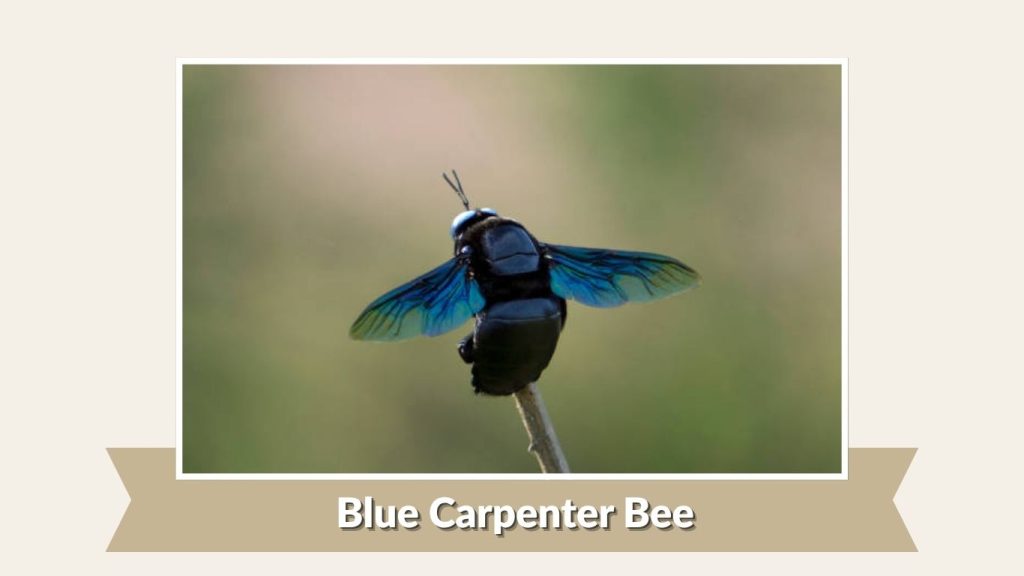
The Blue Carpenter Bee is a beautiful carpenter bee known for its bluish body shine or blue-toned hairs. It is found in parts of Asia and other warm regions. This bee is often seen visiting bright flowers, where it collects nectar and pollen while helping plants reproduce.
Characteristics
- Medium to large bee with blue coloring
- Strong body and shiny abdomen
- Often visits colorful flowers
- Females may nest in wood or stems
- Active during sunny daytime hours
- Useful pollinator in gardens and forests
Size
Blue Carpenter Bees are usually medium to large, often around 0.75 to 1 inch long. Their bold color and strong flight make them easy to notice. They may hover near flowers before landing to collect nectar or pollen.
Color
This bee may appear black with blue reflections, or it may have blue hairs on parts of the body. In sunlight, the color can look metallic blue or deep bluish-purple. The abdomen is often smooth and shiny, which is typical of carpenter bees.
Habitat and ID
Blue Carpenter Bees live in forests, gardens, orchards, farms, and wooded areas. They may nest in dead wood, bamboo, branches, or dry plant stems. To identify them, look for a large bee with blue tones, a shiny abdomen, and carpenter bee nesting behavior.
12. Peacock Carpenter Bee
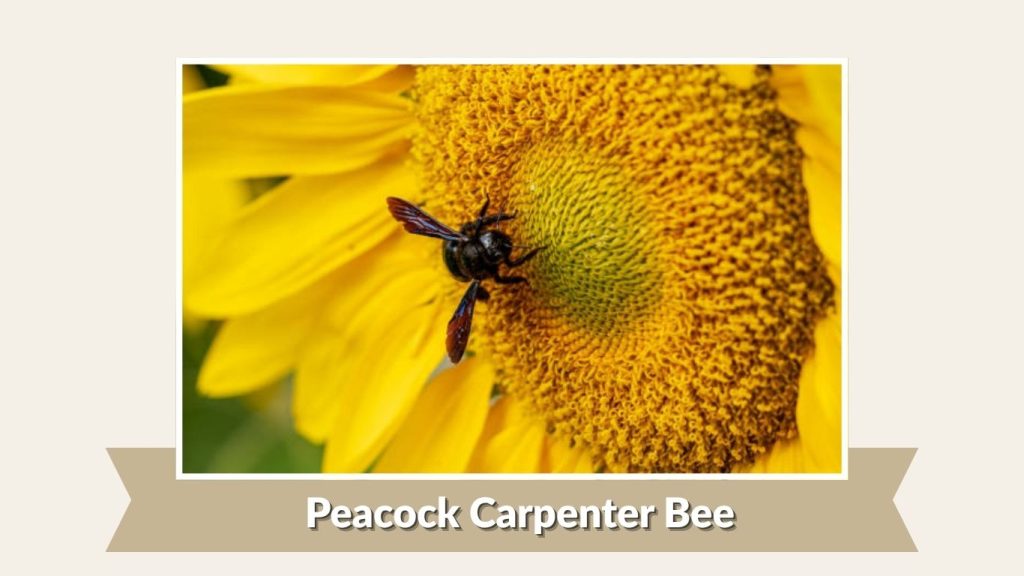
The Peacock Carpenter Bee is a colorful carpenter bee known for its bright metallic look. Its body may show blue, green, or purple reflections that can resemble the rich colors of a peacock. This bee is usually found in warm regions with flowers, trees, and suitable nesting wood.
Characteristics
- Colorful carpenter bee with metallic shine
- May show blue, green, or purple tones
- Smooth abdomen with reflective coloring
- Strong flyer and active pollinator
- Nests in wood or hollow plant material
- Usually active in warm sunny weather
Size
Peacock Carpenter Bees are usually medium to large, often around 0.5 to 1 inch long. Their size and bright shine make them stand out when they fly near flowers. They are strong enough to travel between wooded areas and open feeding sites.
Color
This bee may have a dark body with bright metallic reflections. Blue, green, and purple tones may appear depending on the light. Its colorful shine gives it a jewel-like appearance, making it one of the more eye-catching carpenter bees.
Habitat and ID
Peacock Carpenter Bees live in warm forests, gardens, orchards, and areas with dry nesting material. They may use dead branches, bamboo, wooden posts, or hollow stems for nesting. To identify them, look for a shiny, colorful carpenter bee with metallic blue-green or purple tones.
13. Green Carpenter Bee
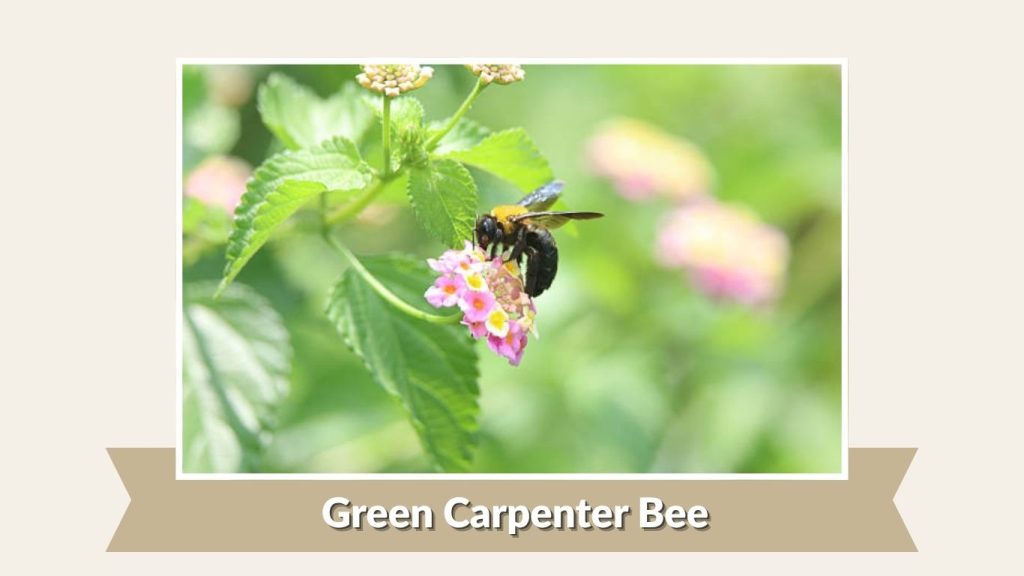
The Green Carpenter Bee is a colorful bee known for its greenish metallic body. It is often seen visiting flowers in warm regions, especially in gardens, forests, and open woodlands. Like other carpenter bees, it may nest in wood or plant material while also serving as a useful pollinator.
Characteristics
- Medium to large bee with green metallic coloring
- Smooth and shiny abdomen
- Strong flying ability
- Visits flowers for nectar and pollen
- May nest in wood or dry stems
- Active during warm daylight hours
Size
Green Carpenter Bees are usually medium to large, often around 0.5 to 1 inch long. Their noticeable color and active flight make them easy to spot around flowering plants. They may move quickly from flower to flower while feeding.
Color
This bee often has a bright green or greenish-blue metallic shine. Some individuals may appear darker in shade, depending on light and angle. The shiny body surface helps separate it from many dull-colored bees.
Habitat and ID
Green Carpenter Bees live in gardens, forests, meadows, orchards, and wooded areas with nesting materials nearby. They may nest in dry stems, dead branches, or soft wood. To identify them, look for a green metallic bee with a smooth abdomen and carpenter bee-like nesting habits.
14. Giant Carpenter Bee
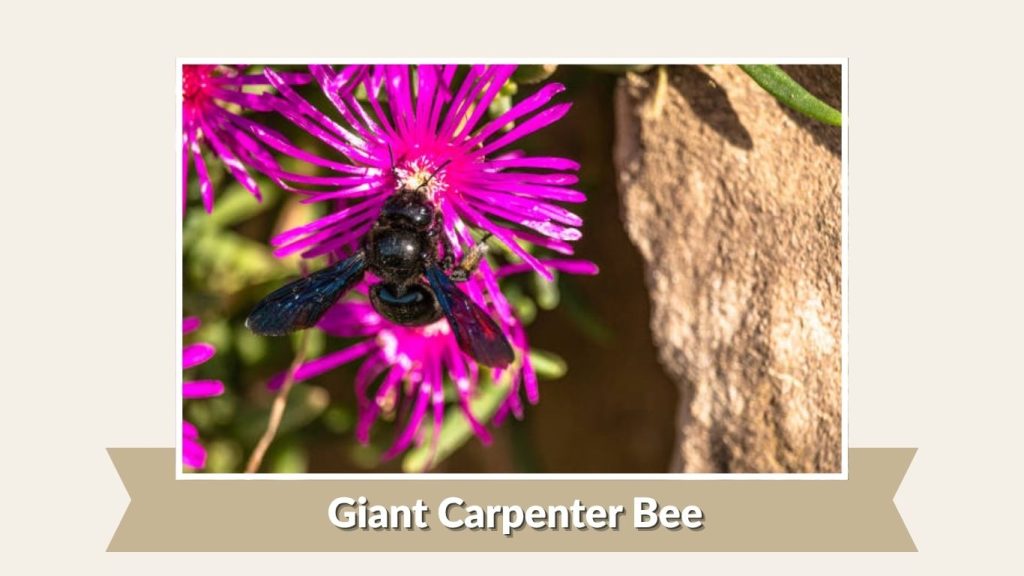
The Giant Carpenter Bee is a very large carpenter bee known for its powerful body and loud buzzing flight. It is found in warm regions where flowers, forests, gardens, and wooden nesting materials are available. Because of its large size, this bee can look intimidating, but it usually focuses on feeding and nesting rather than bothering people.
Characteristics
- Very large carpenter bee with a strong body
- Smooth, shiny abdomen
- Loud buzzing sound during flight
- Females can tunnel into wood
- Important pollinator for large flowers
- Active during warm daylight hours
Size
Giant Carpenter Bees are among the largest carpenter bees, often measuring around 1 inch or more. Their broad body and strong wings make them easy to notice around flowers and wooden areas. Their size also helps them pollinate larger flowers that smaller bees may not use easily.
Color
This bee is often black, dark brown, or bluish-black, depending on the species and region. Some may show yellowish hairs on the thorax, while the abdomen remains smooth and shiny. In sunlight, certain individuals may show metallic blue or purple reflections.
Habitat and ID
Giant Carpenter Bees live in tropical forests, gardens, farms, orchards, and wooded areas. They often nest in dead wood, bamboo, branches, and untreated wooden structures. To identify them, look for a very large bee with a shiny abdomen, strong buzzing, and round nesting holes in wood.
15. Black Carpenter Bee
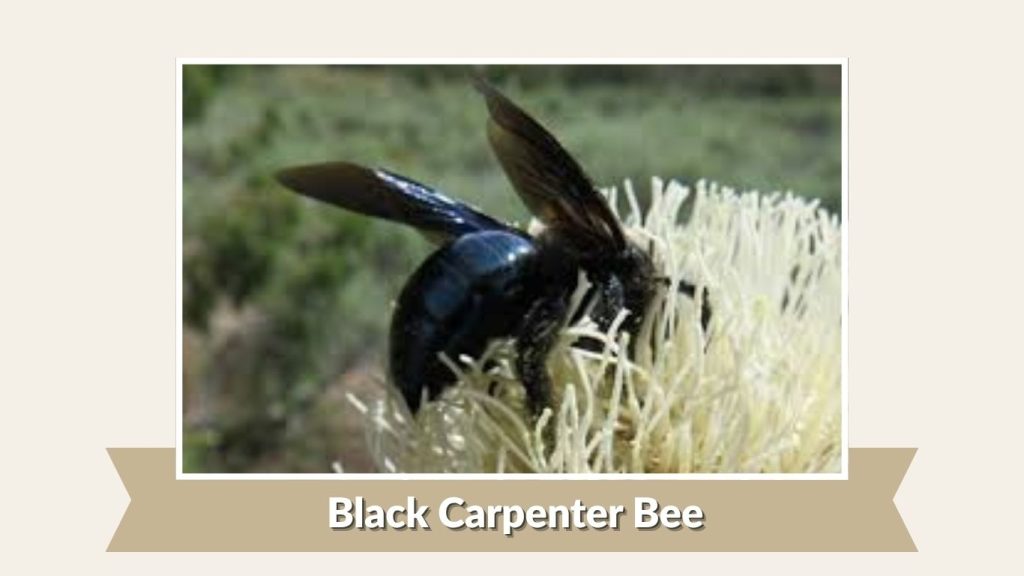
The Black Carpenter Bee is a dark-colored carpenter bee commonly seen around flowers and wooden nesting sites. It is often mistaken for a bumblebee, but its shiny, mostly hairless abdomen helps tell it apart. This bee is a useful pollinator, though females may bore into exposed wood to make nests.
Characteristics
- Large bee with mostly black coloring
- Smooth and shiny abdomen
- Strong body and loud flight
- Females can drill tunnels into wood
- Common around flowers and gardens
- Usually active in spring and summer
Size
Black Carpenter Bees are usually medium to large, often around 0.75 to 1 inch long. Their size and dark body make them noticeable when flying near porches, fences, or flowering plants. Females are strong enough to chew into soft or weathered wood.
Color
This bee is mostly black, with a shiny abdomen and darker wings. Some may have small patches of yellow, gray, or pale hair on the thorax. The smooth black abdomen is one of the best features for separating it from bumblebees.
Habitat and ID
Black Carpenter Bees live in gardens, forests, farms, parks, and neighborhoods with exposed wood. They may nest in fence posts, wooden beams, dead branches, porch rails, and sheds. To identify them, look for a large dark bee with a glossy abdomen and clean round holes in wood.
16. Hairy Carpenter Bee
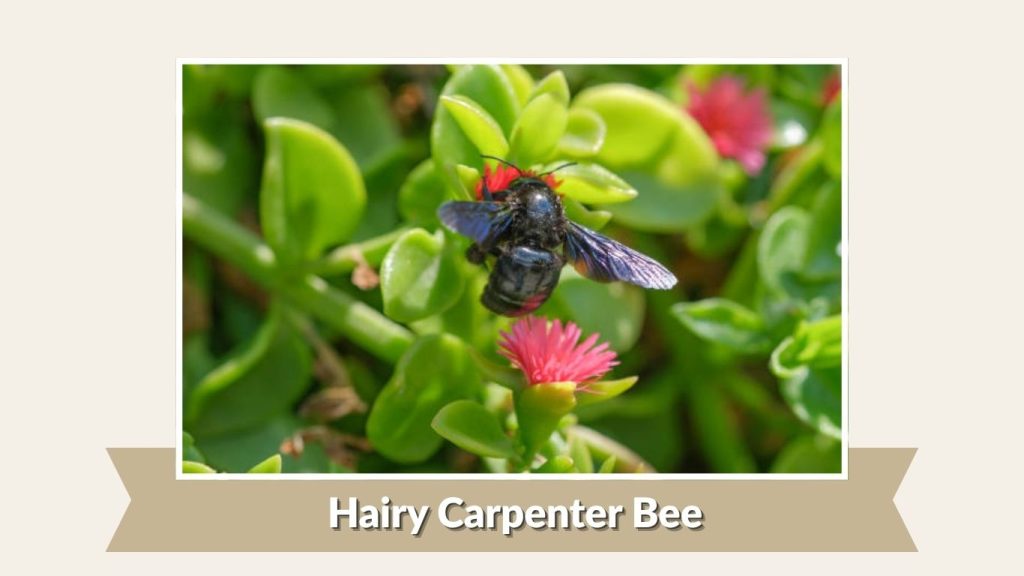
The Hairy Carpenter Bee is a carpenter bee with noticeable body hair, especially around the thorax. It may look similar to a bumblebee at first, but its nesting behavior and shinier abdomen help with identification. This bee is often found around flowers, woodlands, gardens, and areas with dead or untreated wood.
Characteristics
- Medium to large bee with visible body hairs
- Thorax often appears fuzzy
- Abdomen may be partly shiny
- Females can nest in wood or stems
- Visits flowers for nectar and pollen
- Active during warm daylight hours
Size
Hairy Carpenter Bees are usually medium to large, often around 0.5 to 1 inch long. Their strong body and active flight make them easy to see near flowers. Some species may appear bulkier because of the thick hairs on the upper body.
Color
This bee may be black, brown, yellowish, or grayish, depending on the species. The thorax is often covered with pale or yellow hairs, while the abdomen may be darker and smoother. This mix of hair and shine helps separate it from fully fuzzy bumblebees.
Habitat and ID
Hairy Carpenter Bees live in gardens, meadows, forests, farms, and wooded edges. They may nest in dead branches, old wood, bamboo, or dry plant stems. To identify them, look for a fuzzy upper body, a shinier abdomen, and carpenter bee nesting holes.
17. Golden Carpenter Bee
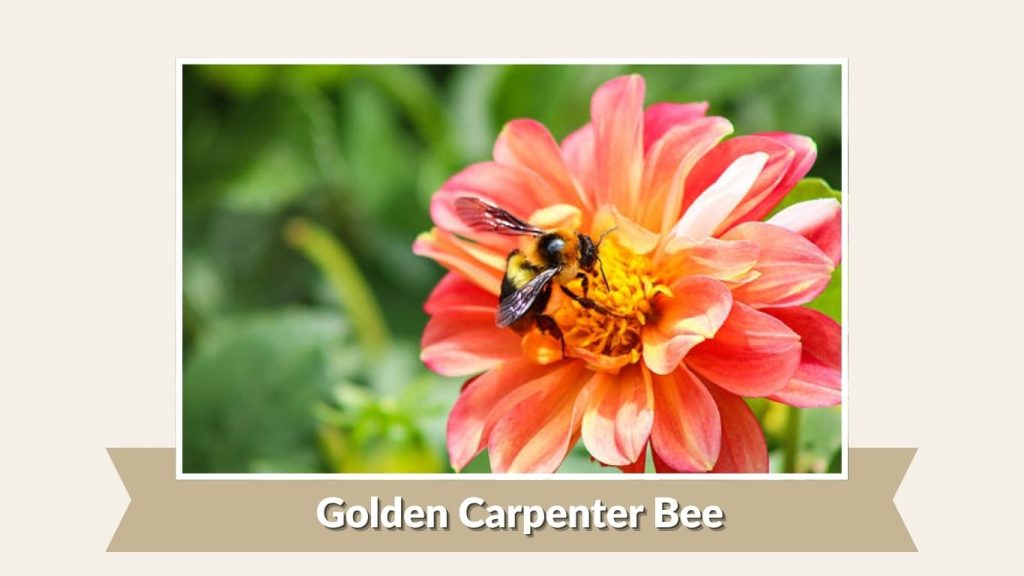
The Golden Carpenter Bee is a bright-looking carpenter bee that may have golden-yellow hairs or warm-colored markings. It is often seen around flowers in gardens, fields, orchards, and wooded areas. Like other carpenter bees, it helps pollinate plants while using wood or stems for nesting.
Characteristics
- Medium to large carpenter bee
- Golden, yellowish, or tan body hairs
- Strong flyer with a buzzing sound
- Smooth abdomen in many species
- Visits many flowering plants
- May nest in wood or dry stems
Size
Golden Carpenter Bees are usually around 0.5 to 1 inch long, depending on the species. Their size and warm coloring make them noticeable in sunny gardens. Males are often brighter than females and may fly around flowers while searching for mates.
Color
This bee may have golden-yellow, tan, or pale hairs on the thorax or face. The abdomen may be black, brown, or partly shiny. In some species, males appear much lighter or more golden than females, making color an important identification clue.
Habitat and ID
Golden Carpenter Bees live in gardens, forests, orchards, meadows, farms, and warm open areas. They may nest in dead wood, stems, fence posts, or bamboo. To identify them, look for a carpenter bee with golden hairs, a sturdy body, and smooth abdomen.
18. Hawaiian Carpenter Bee
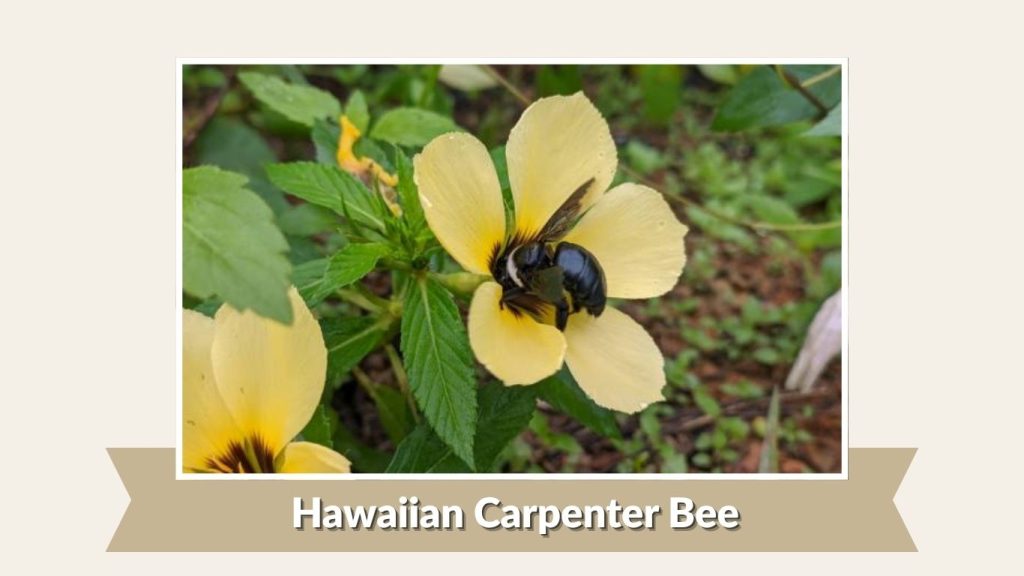
The Hawaiian Carpenter Bee is a native carpenter bee found in Hawaii. It is important because it helps pollinate native island plants. These bees are often seen around coastal plants, dry forests, gardens, and shrublands. Some Hawaiian carpenter bees are rare, making their habitats especially important to protect.
Characteristics
- Native carpenter bee of Hawaii
- Medium-sized body with strong wings
- Often dark or black in color
- Visits native flowers for nectar
- May nest in stems or wood
- Important pollinator for island plants
Size
Hawaiian Carpenter Bees are usually medium-sized, often smaller than some large mainland carpenter bees. Their size can vary by species. They are strong enough to fly between flowers in windy coastal or dry forest areas, where they search for nectar and pollen.
Color
These bees are commonly black or dark-colored, though some may show pale hairs or markings. Their body may appear shiny in sunlight. Males and females can look different, with males sometimes showing lighter facial features.
Habitat and ID
Hawaiian Carpenter Bees live in coastal zones, dry forests, shrublands, gardens, and areas with native flowering plants. They may nest in dead stems, twigs, or suitable wood. To identify them, look for a dark carpenter bee visiting native Hawaiian flowers and using small nesting holes.
19. Indian Carpenter Bee
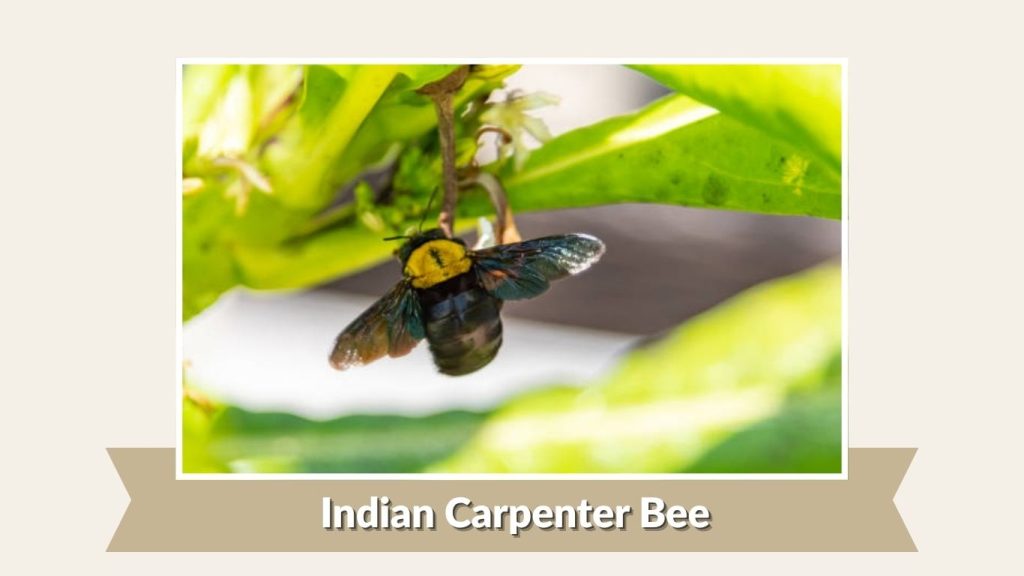
The Indian Carpenter Bee is a large bee commonly found in India and nearby regions. It is often seen visiting flowers in gardens, farms, forests, and village areas. This bee is a strong pollinator and may nest in wooden beams, dead branches, bamboo, or other dry plant materials.
Characteristics
- Large carpenter bee with a strong body
- Smooth, shiny abdomen
- Common around flowers and wooden areas
- Females can bore into wood
- Useful pollinator for crops and plants
- Active during warm sunny days
Size
Indian Carpenter Bees are usually large, often around 0.75 to 1 inch long. Their size and loud buzzing make them easy to notice near flowering plants. They are strong flyers and can travel between gardens, farms, and wooded areas for food.
Color
This bee is often black, bluish-black, or dark brown. Some individuals may show yellowish or pale hairs on the thorax. The abdomen is usually smooth and shiny, which helps distinguish it from many hairy bees.
Habitat and ID
Indian Carpenter Bees live in gardens, farms, orchards, forests, parks, and villages with available nesting wood. They may nest in bamboo, dead branches, wooden posts, or house beams. To identify them, look for a large dark bee with a shiny abdomen and round holes in dry wood.
20. Japanese Carpenter Bee
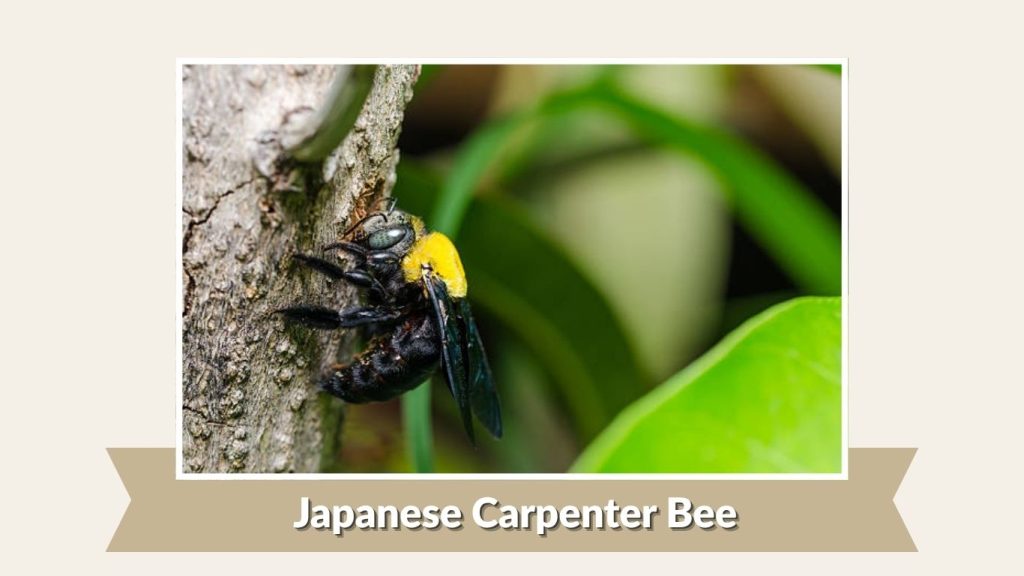
The Japanese Carpenter Bee is a large carpenter bee found in Japan and nearby areas. It is often seen around flowering trees, gardens, forests, and wooden structures. This bee is known for its dark body, strong flight, and ability to create nesting tunnels in wood.
Characteristics
- Large carpenter bee with a sturdy body
- Dark body and shiny abdomen
- Strong buzzing flight
- Females tunnel into wood for nests
- Visits garden and forest flowers
- Active during warm seasons
Size
Japanese Carpenter Bees are usually around 0.75 to 1 inch long. Their large body and slow, powerful flight make them easy to notice around flowers. Females use their strong jaws to chew nesting tunnels in wood or suitable plant material.
Color
This bee is usually black or very dark brown, often with a shiny abdomen. Some may show bluish or purplish reflections in sunlight. The thorax may have short hairs, while the abdomen remains smoother and glossier.
Habitat and ID
Japanese Carpenter Bees live in forests, gardens, orchards, parks, and areas near wooden buildings. They may nest in dead trees, wooden beams, bamboo, or fence posts. To identify them, look for a large dark bee with a shiny abdomen and carpenter bee nesting holes in wood.
21. Chinese Carpenter Bee
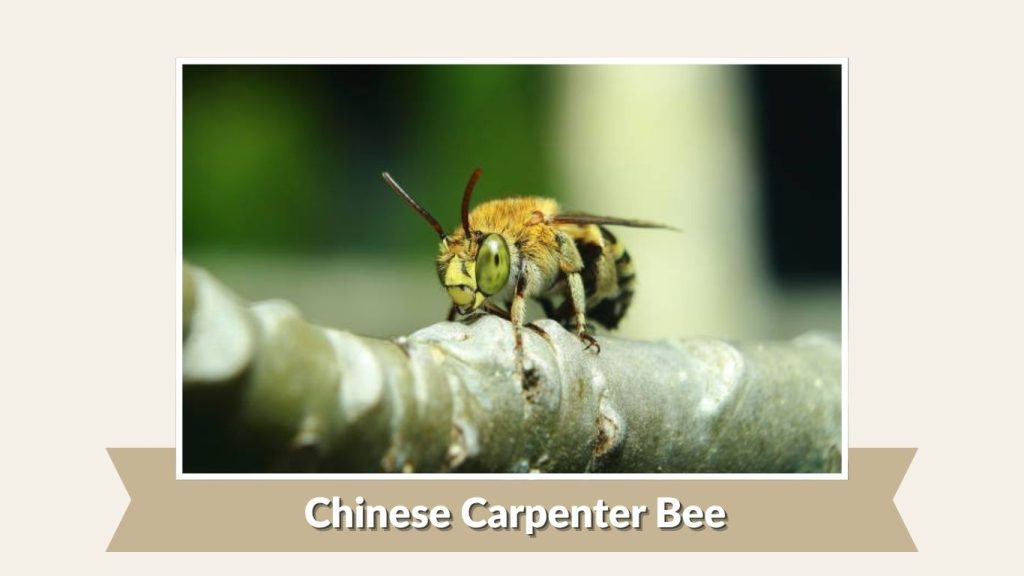
The Chinese Carpenter Bee is a large carpenter bee found in China and nearby Asian regions. It is often seen around gardens, farms, orchards, forests, and flowering shrubs. This bee is an important pollinator and may also nest in dry wood, bamboo, or dead plant stems.
Characteristics
- Large carpenter bee with a strong body
- Smooth and shiny abdomen
- Often dark black or bluish-black
- Females can tunnel into wood
- Visits many flowering plants
- Active during warm daylight hours
Size
Chinese Carpenter Bees are usually medium to large, often around 0.75 to 1 inch long. Their sturdy body and loud buzzing make them noticeable around flowers and wooden nesting places. Females use strong jaws to dig tunnels for eggs and larvae.
Color
This bee is usually black, dark brown, or bluish-black. Some individuals may show pale or yellowish hairs on the thorax. In sunlight, the body or wings may reflect blue or purple tones, giving it a glossy appearance.
Habitat and ID
Chinese Carpenter Bees live in forests, farms, orchards, gardens, parks, and wooded villages. They may nest in bamboo, dead branches, wooden posts, and weathered lumber. To identify them, look for a large dark bee with a shiny abdomen and clean round holes in dry wood.
22. Malaysian Carpenter Bee
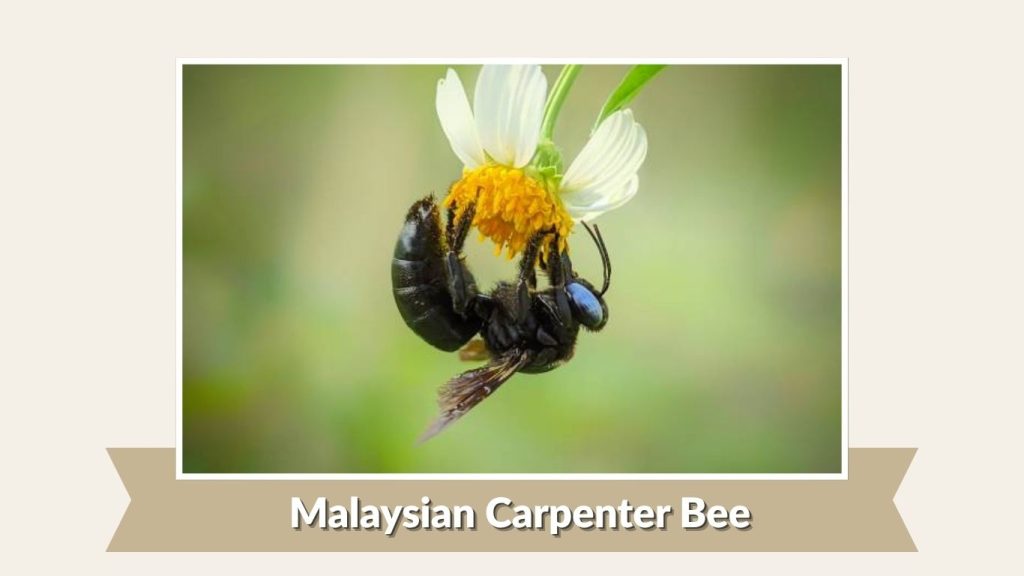
The Malaysian Carpenter Bee is a tropical carpenter bee found in Malaysia and nearby Southeast Asian areas. It is commonly seen around gardens, rainforests, plantations, orchards, and flowering trees. This bee helps pollinate many tropical plants while nesting in wood or plant material.
Characteristics
- Medium to large tropical carpenter bee
- Strong body and loud buzzing flight
- Smooth, shiny abdomen
- Common around tropical flowers
- Nests in wood, bamboo, or stems
- Active in warm humid weather
Size
Malaysian Carpenter Bees are usually medium to large, often around 0.75 to 1 inch long. Their size allows them to visit larger tropical flowers. They are strong flyers and may move between forests, farms, and gardens in search of nectar.
Color
This bee is often black, dark brown, or bluish-black, though some may show yellowish hairs or metallic reflections. The abdomen is usually smooth and glossy. Depending on the species, the wings may appear dark, blue, or purple in bright light.
Habitat and ID
Malaysian Carpenter Bees live in rainforests, gardens, orchards, plantations, parks, and wooded villages. They may nest in bamboo, dry branches, dead wood, or wooden structures. To identify them, look for a large tropical bee with a shiny abdomen and round nesting holes.
23. African Carpenter Bee
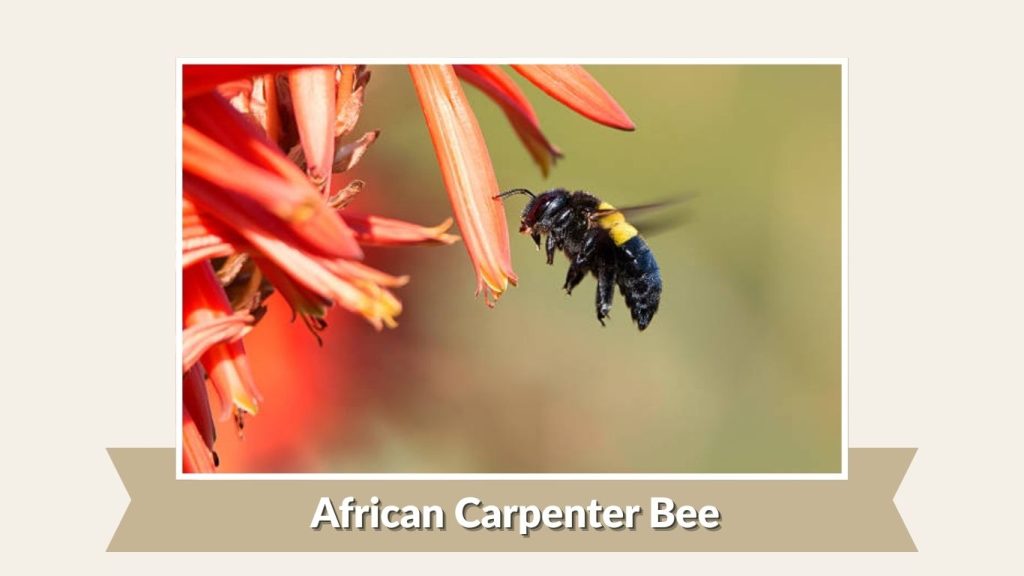
The African Carpenter Bee is a strong and active carpenter bee found across many parts of Africa. It is often seen around wildflowers, farms, gardens, savannas, and wooded areas. This bee is useful for pollination, especially in warm regions where many plants bloom throughout the year.
Characteristics
- Medium to large carpenter bee
- Strong body with powerful wings
- Smooth and shiny abdomen
- Common in warm African habitats
- Females may bore into wood or stems
- Important pollinator for wild and crop plants
Size
African Carpenter Bees are usually medium to large, often around 0.5 to 1 inch long depending on the species. Their heavy body and buzzing flight make them noticeable around flowers. They are strong enough to fly in open sunny habitats and wooded areas.
Color
These bees are often black, dark brown, or bluish-black. Some species may have yellow, white, or pale hairs on the thorax or face. The abdomen is usually smoother than that of bumblebees and may reflect blue or purple in sunlight.
Habitat and ID
African Carpenter Bees live in savannas, forests, farms, gardens, shrublands, and villages with flowering plants and nesting wood. They may use dead branches, bamboo, stems, or wooden structures for nesting. To identify them, look for a sturdy carpenter bee with a glossy abdomen and wood-boring behavior.
24. Brazilian Carpenter Bee
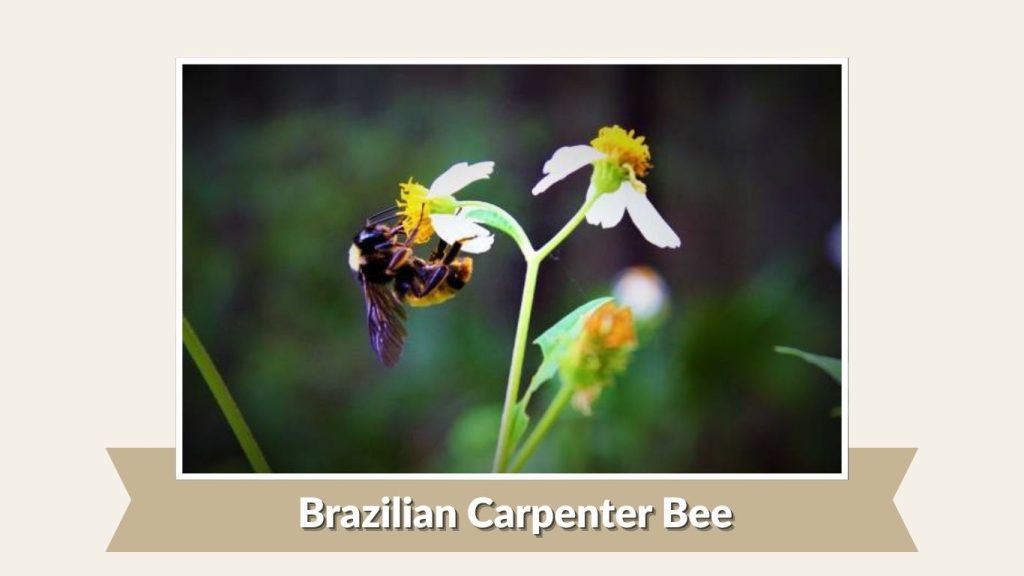
The Brazilian Carpenter Bee is a carpenter bee found in Brazil and other parts of South America. It is often seen visiting tropical flowers, gardens, forests, farms, and orchards. This bee is an important pollinator and may nest in dry wood, dead branches, bamboo, or plant stems.
Characteristics
- Medium to large carpenter bee
- Strong flying ability
- Smooth, shiny abdomen
- Common around tropical flowers
- Females can tunnel into wood
- Useful pollinator for wild plants and crops
Size
Brazilian Carpenter Bees are usually medium to large, often around 0.75 to 1 inch long. Their strong body helps them visit large flowers and travel between forest edges and gardens. Their loud buzzing flight can make them easy to notice.
Color
This bee is commonly black, dark brown, or bluish-black, though some species may show yellowish hairs or metallic tones. The abdomen is usually glossy and less hairy than a bumblebee’s abdomen. Some may have dark wings with blue or violet reflections.
Habitat and ID
Brazilian Carpenter Bees live in tropical forests, gardens, farms, orchards, parks, and wooded areas. They may nest in dead trees, bamboo, branches, wooden posts, or dry stems. To identify them, look for a large dark bee with a shiny abdomen and round holes in wood or stems.
25. Mexican Carpenter Bee
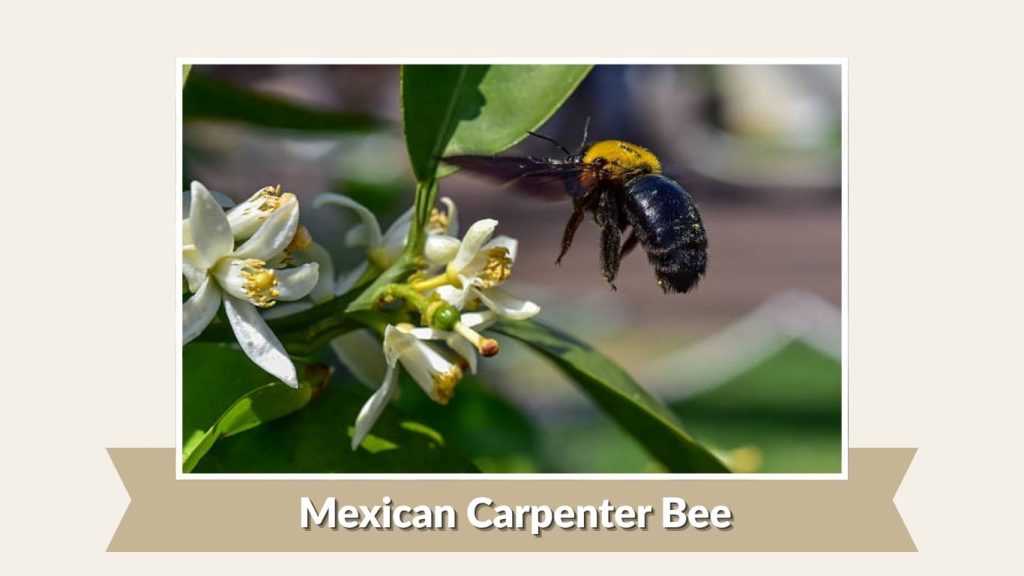
The Mexican Carpenter Bee is a carpenter bee found in Mexico and nearby regions. It is often seen around desert flowers, gardens, farms, orchards, and wooded areas. This bee helps pollinate many native and cultivated plants while using dry wood or plant stems for nesting.
Characteristics
- Medium to large carpenter bee
- Strong body and loud buzzing flight
- Smooth, shiny abdomen
- Active in warm sunny habitats
- Females may tunnel into wood
- Visits many flowers for nectar and pollen
Size
Mexican Carpenter Bees are usually around 0.5 to 1 inch long, depending on the species. Their size makes them noticeable when they hover near flowers or wooden nesting areas. They are strong flyers and can travel across open, dry landscapes.
Color
This bee is often black, dark brown, or bluish-black. Some may show pale, yellow, or gray hairs on the thorax. The abdomen is usually smooth and shiny, which helps separate carpenter bees from fuzzier bees like bumblebees.
Habitat and ID
Mexican Carpenter Bees live in deserts, dry forests, gardens, farms, orchards, and villages with flowers and nesting material. They may nest in dead wood, cactus stems, bamboo, or wooden posts. To identify them, look for a sturdy dark bee with a glossy abdomen and wood-boring nesting behavior.
26. Australian Carpenter Bee
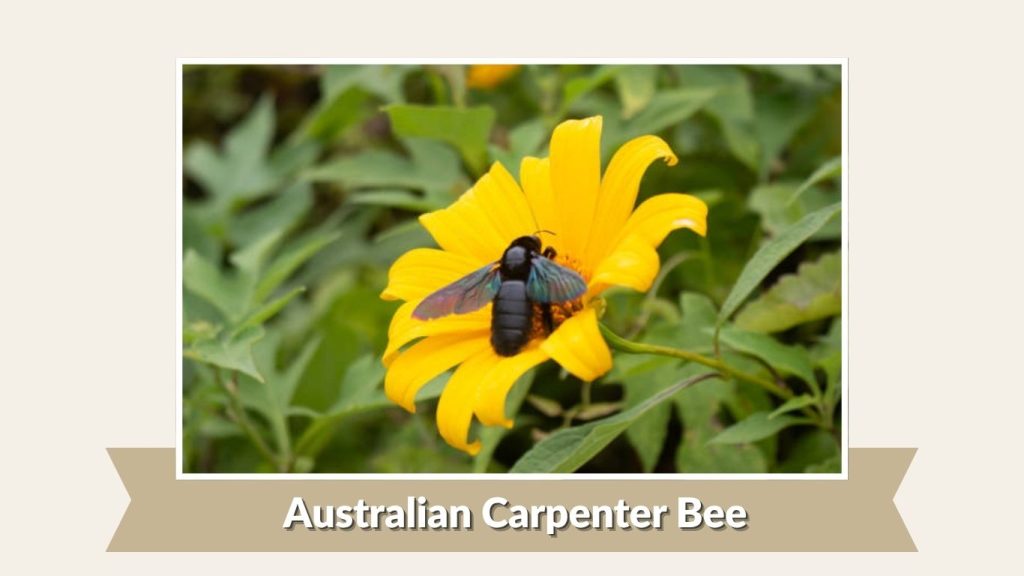
The Australian Carpenter Bee is a beautiful carpenter bee found in Australia. Some species are known for their metallic blue-green coloring, while others are darker. These bees are important native pollinators and are often seen in forests, gardens, heathlands, and areas with flowering shrubs.
Characteristics
- Medium to large native carpenter bee
- Some species have metallic blue-green coloring
- Strong body and powerful flight
- May nest in dead wood or plant stems
- Active during warm daylight hours
- Important pollinator of native plants
Size
Australian Carpenter Bees are usually medium to large, often around 0.5 to 1 inch long. Their size and bright coloring can make them stand out around flowers. They are strong flyers and may move between native plants, gardens, and wooded areas.
Color
Some Australian Carpenter Bees are bright metallic blue, green, or blue-green, while others may be black or dark brown. Their shiny body is one of their most noticeable features. Males and females may differ slightly in color or markings.
Habitat and ID
Australian Carpenter Bees live in forests, heathlands, gardens, coastal areas, woodlands, and shrublands. They may nest in dead flower stalks, dry stems, or soft wood. To identify them, look for a shiny carpenter bee, often with blue-green coloring, visiting native flowers.
27. European Carpenter Bee
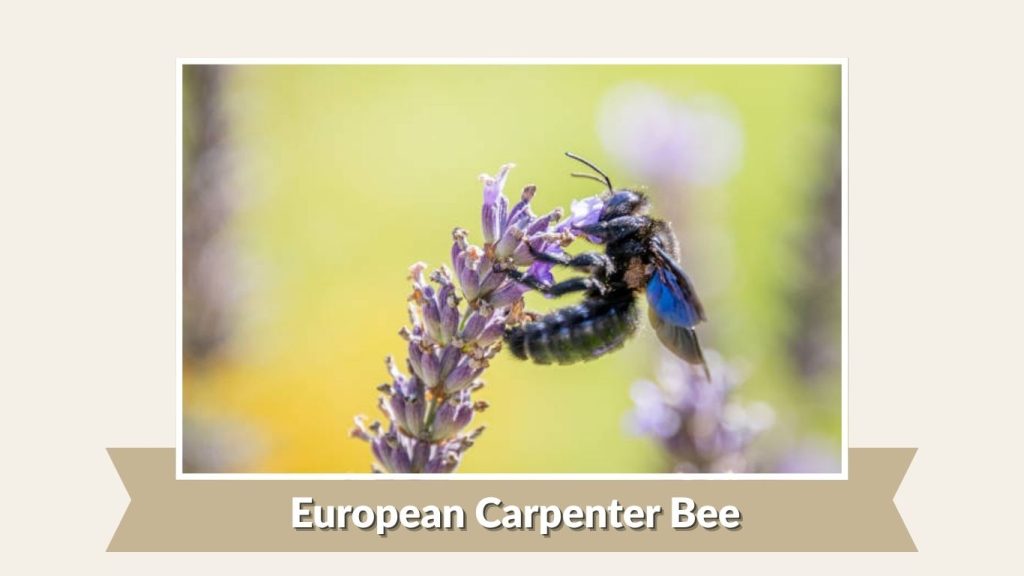
The European Carpenter Bee is a large carpenter bee found across parts of Europe and nearby regions. It is often seen around gardens, orchards, meadows, and old wooden structures. This bee is a helpful pollinator and is especially known for its dark body and violet-blue wing shine.
Characteristics
- Large carpenter bee with a powerful body
- Dark body with shiny abdomen
- Wings may show violet or blue reflections
- Females can bore into dead wood
- Visits many garden and wild flowers
- Active in warm sunny weather
Size
European Carpenter Bees are usually large, often around 0.75 to 1 inch long. Their size and deep buzzing flight make them easy to notice. They are strong flyers and commonly visit flowers during warm spring and summer days.
Color
This bee is usually black or very dark, with wings that may shine blue or violet in sunlight. The abdomen is smooth and glossy, unlike the hairy abdomen of a bumblebee. This dark body and colorful wing reflection make it easier to identify.
Habitat and ID
European Carpenter Bees live in gardens, orchards, vineyards, meadows, woodland edges, and areas with old wood. They may nest in dead branches, logs, fence posts, or wooden beams. To identify them, look for a large black bee with violet-blue wings and round holes in dry wood.