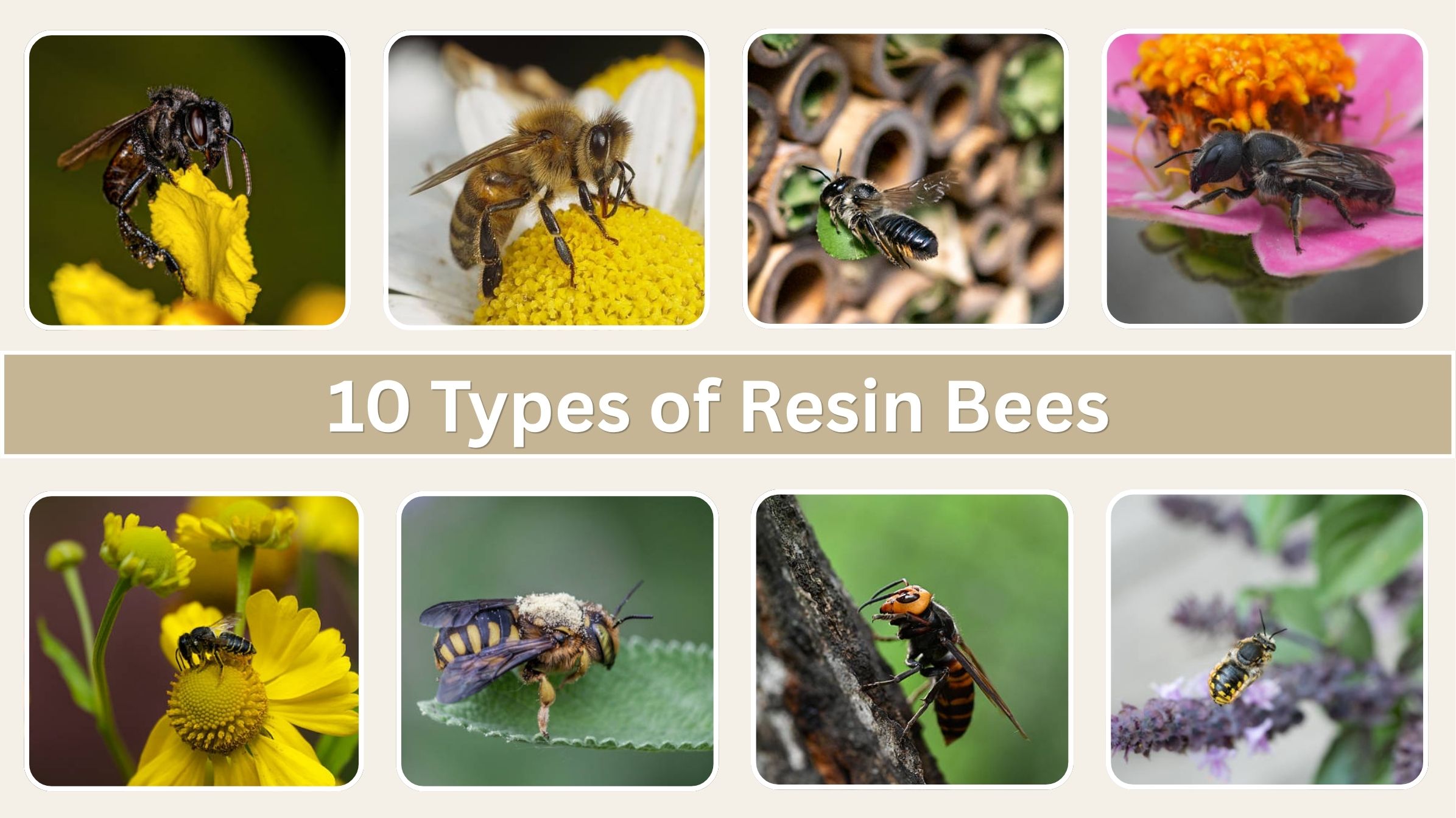
Resin bees are fascinating pollinators that use sticky plant resin, mud, leaves, fibers, or similar natural materials to build and protect their nests. Some bees are true resin users, while others are closely related bees with similar nesting habits. These bees are usually solitary, gentle, and important for gardens, farms, orchards, and wild habitats. They help pollinate flowers, fruits, vegetables, and native plants while creating nests in hollow stems, wood holes, soil spaces, or bee houses. Learning about different resin bees makes it easier to identify them and understand their role in nature.
1. Honey Bee
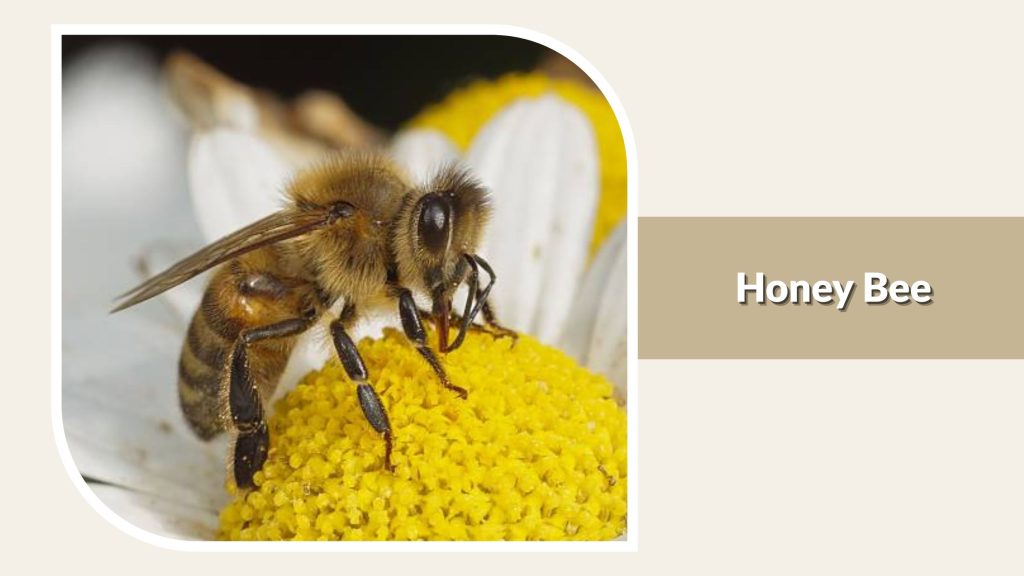
Honey bees are one of the most well-known bees in the world. They are social insects that live in large colonies and are famous for producing honey and beeswax. While they are not usually called resin bees, honey bees can collect plant resins to make propolis, a sticky material used to protect their hive.
Identification
- Honey bees have a golden-brown body with dark bands.
- Their bodies are covered with fine hairs.
- They have six legs and two pairs of wings.
- Worker honey bees are smaller than drones and queens.
- They have pollen baskets on their hind legs.
- Their body size is usually about 12 to 15 mm long.
- They are often seen visiting flowers in groups.
Habitat and Distribution
Honey bees live in many parts of the world, especially in gardens, farms, forests, orchards, and grasslands. They usually build their nests in hollow trees, rock cavities, wall spaces, or artificial beehives. Because humans keep them for honey production and crop pollination, honey bees are now found in many countries.
They prefer areas with plenty of flowering plants because flowers provide nectar and pollen. Nectar is used to make honey, while pollen is an important food source for young bees.
Behavior and Diet
Honey bees are highly social and live in organized colonies. A colony usually has one queen, many workers, and some drones. Worker bees collect nectar, pollen, water, and resin from plants. They also clean the hive, feed larvae, and protect the colony.
Their diet mainly includes nectar and pollen. Nectar gives them energy, while pollen provides protein. Honey bees also make honey by storing and processing nectar inside the hive.
Lifecycle
The honey bee lifecycle has four stages: egg, larva, pupa, and adult. The queen lays eggs inside wax cells. After a few days, the eggs hatch into larvae. Worker bees feed the larvae until they become pupae. Finally, adult bees emerge from the cells and begin their role in the colony.
2. Stingless Bee
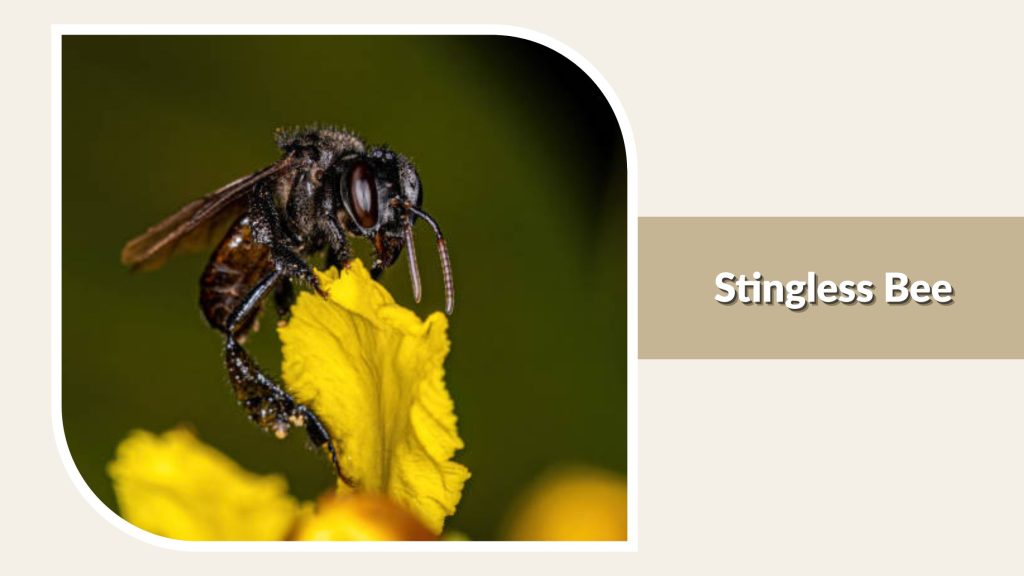
Stingless bees are small social bees known for collecting plant resin to build and protect their nests. They are called stingless because their stingers are very small and not useful for defense. Instead, they protect their colonies by biting, using sticky resin, or blocking nest entrances.
Identification
- Stingless bees are usually small, often 2 to 8 mm long.
- Their bodies may be black, brown, yellow, or shiny.
- They have short hairs on the body.
- Their wings are clear or lightly tinted.
- They do not have a useful stinger.
- Many species have a narrow nest entrance made with wax and resin.
- They are often seen flying in groups near flowers or nest openings.
Habitat and Distribution
Stingless bees are mostly found in tropical and subtropical regions. They live in forests, gardens, farms, orchards, and warm woodland areas. Many species build nests inside tree hollows, wall cracks, soil cavities, or old termite nests.
They are common in parts of South America, Africa, Asia, and Australia. These bees prefer warm places with many flowering plants and good nesting spaces. In some regions, people keep stingless bees for honey, pollination, and traditional beekeeping.
Behavior and Diet
Stingless bees live in colonies with a queen, workers, and males. Workers collect nectar, pollen, and plant resin. Resin is mixed with wax to make a strong material used for nest walls, storage pots, and entrance tubes.
Their diet mainly includes nectar and pollen. Nectar gives them energy, while pollen helps feed young bees. They are important pollinators for many wild plants and crops.
Lifecycle
The stingless bee lifecycle includes egg, larva, pupa, and adult stages. The queen lays eggs in small brood cells. Worker bees prepare the cells with food before the eggs are laid. After hatching, larvae feed and grow inside the cells. They then become pupae and later emerge as adult bees.
3. Mason Bee
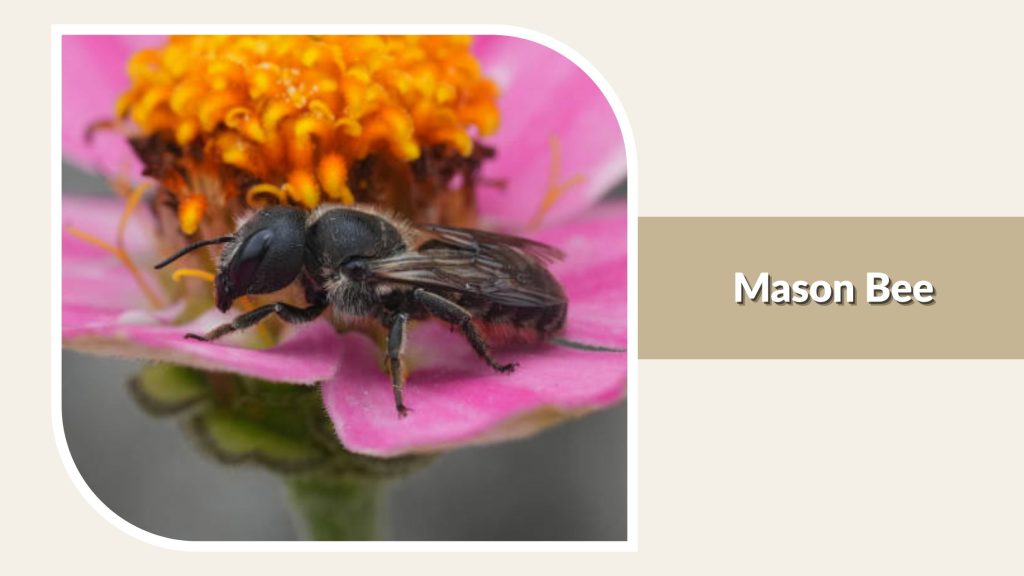
Mason bees are solitary bees that often use mud, clay, and sometimes plant resin to build or seal their nests. Unlike honey bees and stingless bees, they do not live in large colonies. Each female mason bee works alone to create nest chambers for her eggs.
Identification
- Mason bees are usually small to medium-sized bees.
- Their bodies are often blue, green, black, or metallic.
- They have a sturdy body shape.
- Many species have dense hairs on the body.
- They carry pollen on the underside of the abdomen.
- They are usually less aggressive than social bees.
- They are often seen around flowers, hollow stems, or small holes in wood.
Habitat and Distribution
Mason bees live in gardens, orchards, meadows, forests, parks, and farmland. They commonly nest in hollow plant stems, beetle holes in wood, cracks in walls, or artificial bee houses. They do not make large hives or honey stores.
These bees are found in many regions, including North America, Europe, and parts of Asia. They prefer areas with flowering plants and safe nesting cavities. Mason bees are especially valued in orchards because they are strong pollinators of fruit trees.
Behavior and Diet
Mason bees are active during warm seasons when flowers are available. A female collects pollen and nectar, places the food inside a nest chamber, lays one egg, and seals the chamber with mud or similar material.
Their diet mainly includes nectar and pollen. Adults drink nectar for energy, while larvae feed on the pollen and nectar mixture stored by the mother. Mason bees are peaceful and rarely sting unless handled roughly.
Lifecycle
The mason bee lifecycle has four stages: egg, larva, pupa, and adult. The egg hatches inside a sealed nest chamber. The larva eats the stored food, grows, and later spins a cocoon. It then becomes a pupa and develops into an adult. Many mason bees emerge the following spring.
4. Leafcutter Bee
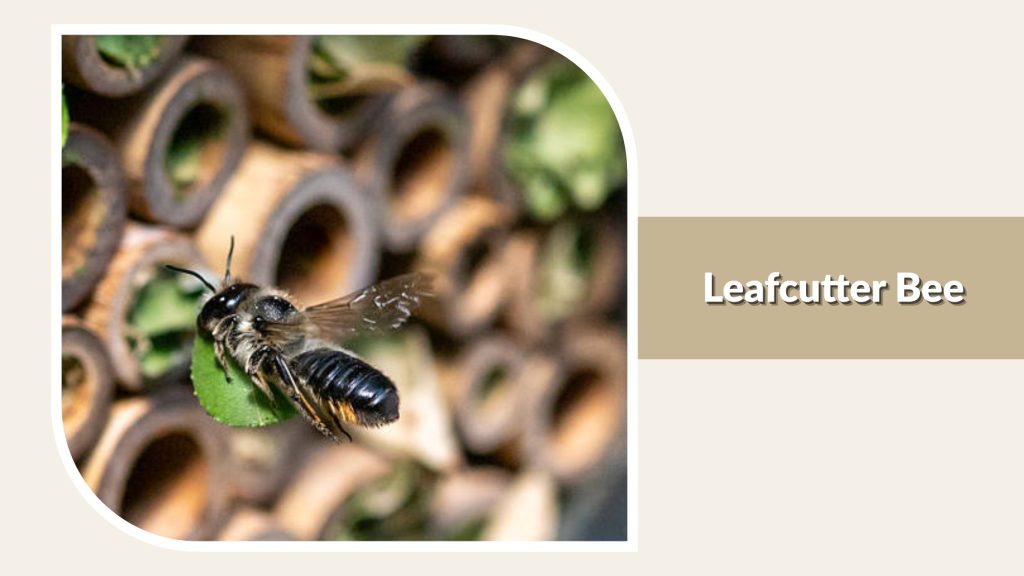
Leafcutter bees are solitary bees known for cutting neat round or oval pieces from leaves. They use these leaf pieces to line and divide their nest cells. Some species may also use resin or plant materials to strengthen their nests, making them closely connected with resin-using bees.
Identification
- Leafcutter bees are usually medium-sized bees.
- Their bodies are often black, gray, or brown.
- Many species have pale bands of hair on the abdomen.
- They carry pollen on the underside of the abdomen.
- Their jaws are strong and used for cutting leaves.
- They are often seen carrying leaf pieces while flying.
- They may leave smooth circular cuts on plant leaves.
Habitat and Distribution
Leafcutter bees live in gardens, farms, forests, meadows, orchards, and urban green spaces. They usually nest in hollow stems, holes in wood, wall cracks, soil cavities, or artificial bee houses. They do not form large colonies or produce honey.
These bees are found in many parts of the world, especially where flowering plants and suitable nesting sites are available. They are common in warm and temperate regions and are important pollinators for wildflowers, vegetables, and crops.
Behavior and Diet
Leafcutter bees are solitary, so each female builds and cares for her own nest. She cuts pieces from soft leaves and carries them back to the nest. These pieces are used to make small cells for eggs and food storage.
Their diet mainly includes nectar and pollen. Adult bees drink nectar for energy, while the larvae feed on stored pollen mixed with nectar. Leafcutter bees are active flower visitors and usually gentle around people.
Lifecycle
The leafcutter bee lifecycle includes egg, larva, pupa, and adult stages. A female places pollen and nectar inside a leaf-lined cell, lays one egg, and seals the cell. The egg hatches into a larva, which eats the stored food. Later, it becomes a pupa and finally develops into an adult bee.
5. Carpenter Bee
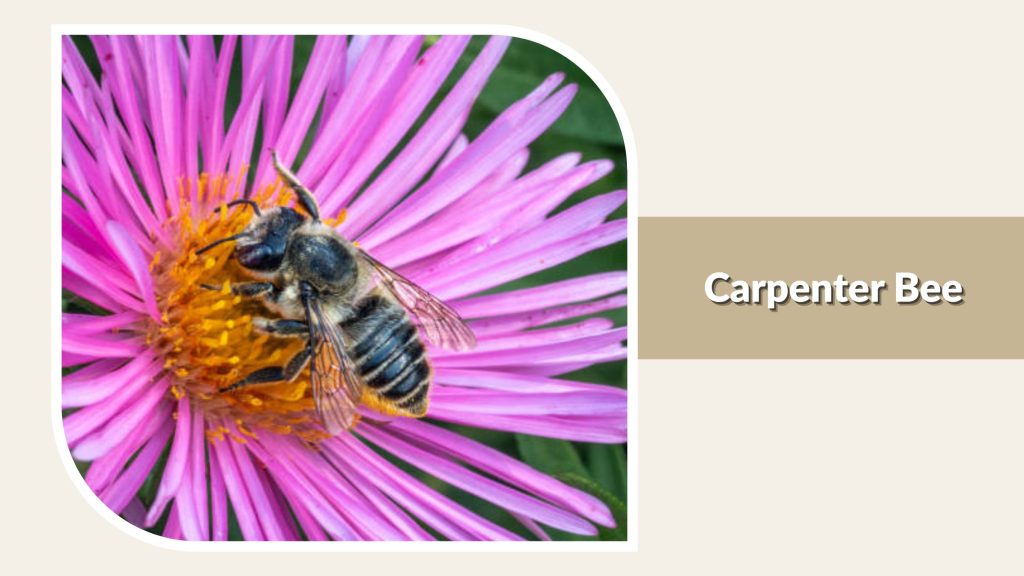
Carpenter bees are large solitary bees known for making nests by boring holes into wood. Some species may also collect plant resin or other natural materials to help protect nesting areas. They are important pollinators and are often seen around flowers, wooden structures, trees, and garden spaces.
Identification
- Carpenter bees are usually large and strong-bodied.
- Their bodies are often black, blue-black, or yellowish.
- Many have a shiny, hairless-looking abdomen.
- Their thorax is usually hairy.
- They look similar to bumblebees but often have a smoother abdomen.
- They have strong jaws for chewing wood.
- They are often seen hovering near wooden posts, fences, or tree trunks.
Habitat and Distribution
Carpenter bees live in forests, gardens, farms, orchards, parks, and urban areas. They usually nest in dry, soft, or weathered wood, such as dead trees, bamboo, wooden beams, fences, and house structures. They do not eat wood; they only tunnel into it to make nesting chambers.
These bees are found in many warm and temperate regions around the world. They prefer places with flowering plants nearby because they need regular access to nectar and pollen.
Behavior and Diet
Carpenter bees are mostly solitary. A female chews a tunnel into wood and creates separate chambers for her eggs. Males may hover near nests to guard territory, but they cannot sting. Females can sting, but they are usually gentle unless disturbed.
Their diet includes nectar and pollen from flowers. Adults drink nectar for energy, while larvae feed on pollen mixed with nectar stored inside the nest chambers.
Lifecycle
The carpenter bee lifecycle includes egg, larva, pupa, and adult stages. The female places food inside each chamber, lays one egg, and seals it. The larva feeds, grows, and becomes a pupa. Later, it develops into an adult bee and leaves the nest.
6. Carder Bee
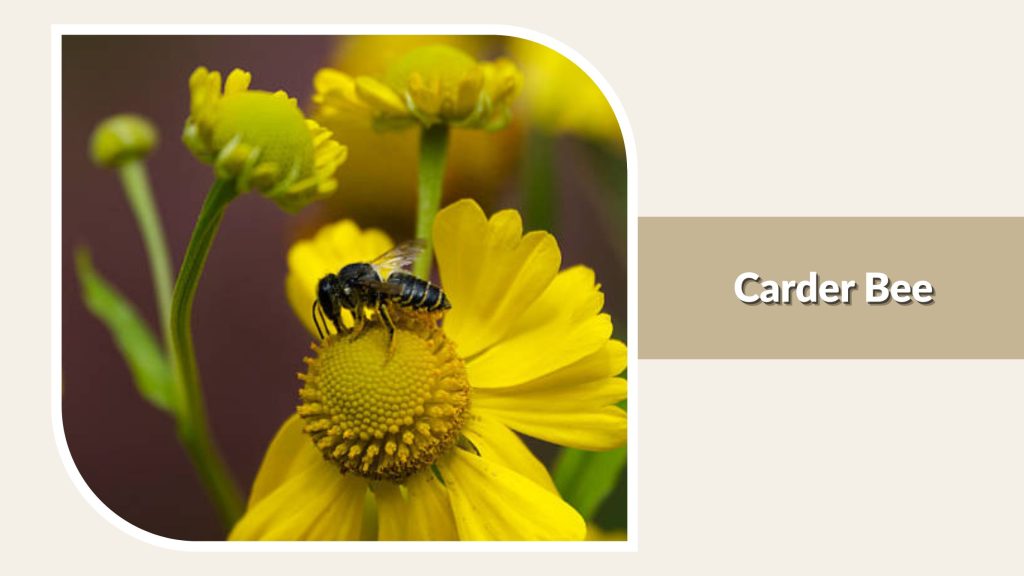
Carder bees are bees known for collecting soft plant hairs, fibers, and sometimes resin-like materials to build or line their nests. They get their name from the way they “card” or scrape fibers from plants. These bees are important pollinators and are often seen visiting garden flowers, wildflowers, and herbs.
Identification
- Carder bees are usually small to medium-sized bees.
- Their bodies are often yellow, brown, black, or gray.
- Many species have a fuzzy or woolly appearance.
- They may have pale bands or markings on the abdomen.
- Their legs are hairy and useful for collecting pollen.
- Some species look similar to small bumblebees.
- They are often seen around flowers and soft-leaved plants.
Habitat and Distribution
Carder bees live in gardens, meadows, grasslands, farms, woodland edges, and urban green spaces. They prefer areas with many flowering plants and plants that provide soft fibers for nesting. Some species nest in hollow stems, soil cavities, wall cracks, or old insect holes.
They are found in many parts of the world, especially in temperate and warm regions. Because they visit many kinds of flowers, carder bees help pollinate both wild plants and cultivated garden plants.
Behavior and Diet
Carder bees are usually solitary, although some may nest near each other when good sites are available. Female bees collect plant fibers and use them to make comfortable nest cells. They also gather nectar and pollen from flowers.
Their diet mainly includes nectar and pollen. Adults drink nectar for energy, while larvae feed on stored pollen and nectar inside the nest. Carder bees are generally active during warm, sunny weather and are not aggressive unless handled.
Lifecycle
The carder bee lifecycle includes egg, larva, pupa, and adult stages. A female prepares a nest cell, stores pollen and nectar, lays one egg, and seals the cell. The larva hatches and feeds on the stored food. It later becomes a pupa and finally emerges as an adult bee.
7. Resin Bee
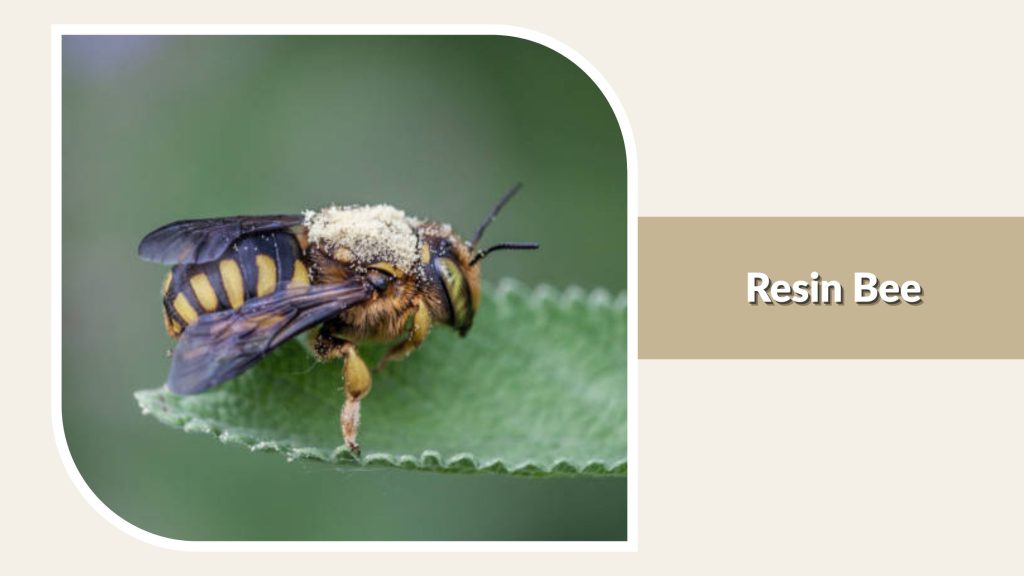
Resin bees are solitary bees that collect sticky plant resin to build and seal their nests. They use resin as a strong natural material to protect eggs and larvae from moisture, parasites, and predators. These bees are useful pollinators and are often found around flowers, trees, and nesting cavities.
Identification
- Resin bees are usually small to medium-sized bees.
- Their bodies are often black, brown, or dark gray.
- Some species have pale hair bands on the abdomen.
- They may look similar to leafcutter bees.
- They often carry pollen on the underside of the abdomen.
- Females collect sticky resin from plants and trees.
- They are commonly seen near flowers, wood holes, or plant stems.
Habitat and Distribution
Resin bees live in gardens, forests, woodlands, orchards, farms, and urban green spaces. They often nest in pre-existing holes, such as hollow stems, beetle tunnels in wood, wall cracks, and artificial bee houses. They do not usually dig their own nest cavities.
These bees are found in many warm and temperate regions of the world. They prefer areas with flowering plants for food and resin-producing trees or plants for nesting materials.
Behavior and Diet
Resin bees are solitary, so each female builds her own nest. She collects resin and uses it to divide nest cells, seal entrances, and protect the developing young. Some species may also mix resin with mud, leaf pieces, or plant fibers.
Their diet mainly includes nectar and pollen. Adult bees drink nectar for energy, while larvae feed on pollen mixed with nectar stored inside the nest cells. Resin bees are generally gentle and rarely sting unless handled.
Lifecycle
The resin bee lifecycle includes egg, larva, pupa, and adult stages. The female places food inside a resin-lined cell, lays one egg, and seals the cell. The larva hatches, eats the stored food, and grows. It then becomes a pupa and later emerges as an adult bee.
8. Wool Carder Bee
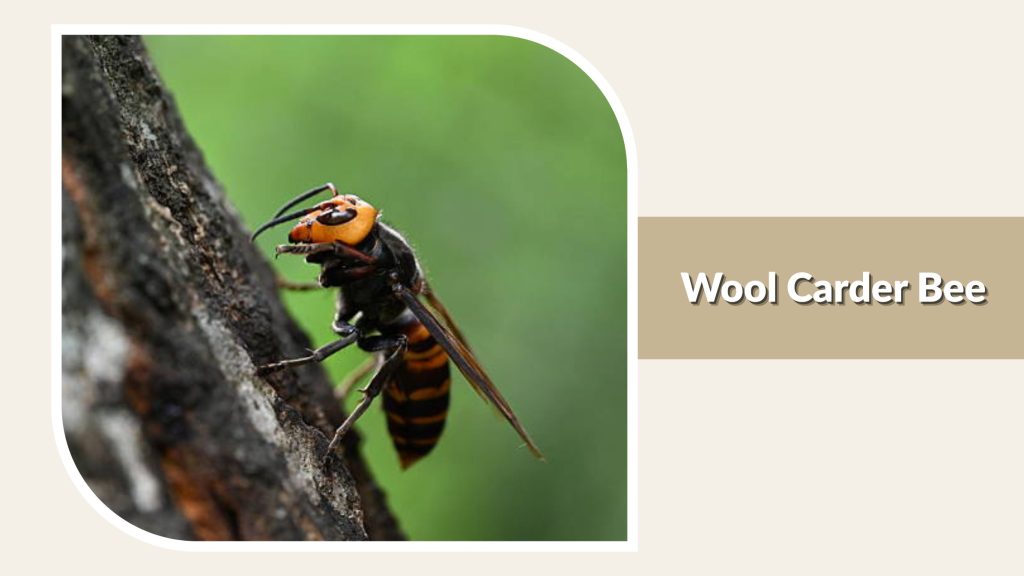
Wool carder bees are solitary bees known for collecting soft plant hairs to build their nests. They scrape wool-like fibers from fuzzy plants and use them to line nest cells. Although they are not true resin bees, some nesting habits can include plant materials that help protect their young.
Identification
- Wool carder bees are usually small to medium-sized bees.
- Their bodies are often black with yellow markings.
- They have a sturdy body shape.
- Their abdomen may look slightly pointed.
- Males are often larger than females.
- They are commonly seen around fuzzy-leaved plants.
- They may hover near flowers and chase away other insects.
Habitat and Distribution
Wool carder bees live in gardens, meadows, parks, woodland edges, farms, and urban green spaces. They prefer places with flowering plants and fuzzy plants such as lamb’s ear, mullein, or similar soft-leaved plants. These plants provide fibers for nesting.
They are found in many temperate and warm regions. They often nest in hollow stems, old insect holes, wall cracks, or other small cavities. Because they use ready-made spaces, they are also sometimes found around bee hotels and garden structures.
Behavior and Diet
Wool carder bees are solitary, but males can be very territorial. Male bees often guard flower patches and chase away other bees, flies, or insects. Females spend time collecting plant hairs, nectar, and pollen for their nests.
Their diet mainly includes nectar and pollen. Adults drink nectar for energy, while larvae feed on stored pollen mixed with nectar. These bees are useful pollinators, especially in gardens with many flowering herbs and ornamental plants.
Lifecycle
The wool carder bee lifecycle includes egg, larva, pupa, and adult stages. A female lines a nest cavity with soft plant fibers, places pollen and nectar inside, and lays one egg. The larva hatches and feeds on the stored food. Later, it becomes a pupa and develops into an adult bee.
9. Orchard Bee
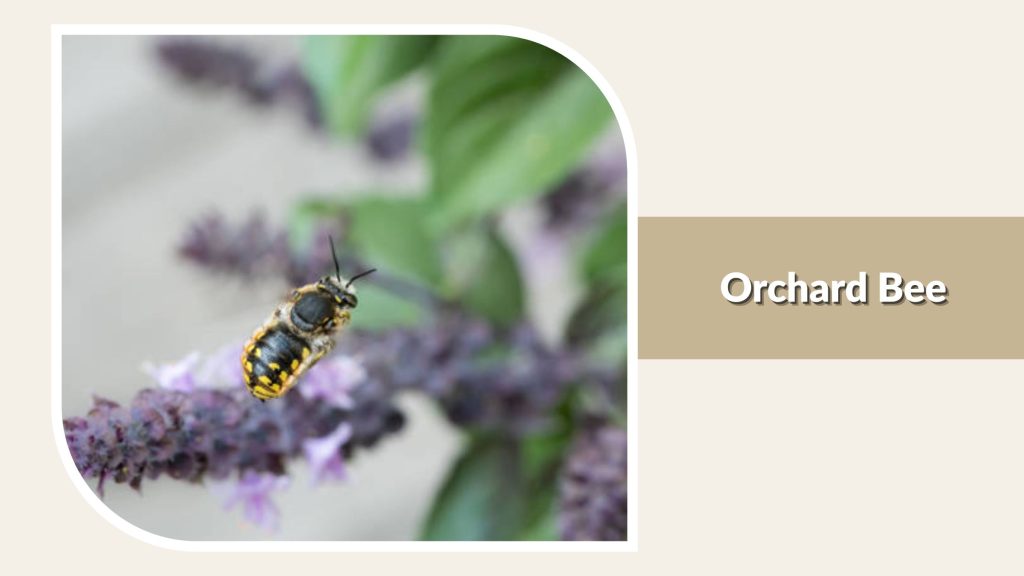
Orchard bees are solitary bees that are well known for pollinating fruit trees. They are often active in spring when apple, cherry, plum, and pear trees begin to bloom. Many orchard bees belong to the mason bee group, and they may use mud or plant materials to seal their nest cells.
Identification
- Orchard bees are usually small to medium-sized bees.
- Their bodies may be dark blue, green, black, or metallic.
- They have a strong and compact body shape.
- Many species have fine hairs for carrying pollen.
- They often carry pollen on the underside of the abdomen.
- They are commonly seen around fruit blossoms in spring.
- They are usually gentle and rarely sting unless handled.
Habitat and Distribution
Orchard bees live in orchards, gardens, farms, woodland edges, parks, and areas with flowering trees. They usually nest in hollow stems, small holes in wood, old beetle tunnels, or artificial bee houses. They do not build large colonies or make honey.
These bees are found in many temperate regions, especially where fruit trees and wildflowers are common. They prefer places with early spring flowers and safe nesting cavities nearby.
Behavior and Diet
Orchard bees are active flower visitors and excellent pollinators. A single female can visit many blossoms while collecting pollen and nectar. Because they move quickly between flowers, they help fruit trees produce better crops.
Their diet mainly includes nectar and pollen. Adults drink nectar for energy, while larvae feed on pollen mixed with nectar stored in nest cells. Female orchard bees work alone to prepare each chamber for their young.
Lifecycle
The orchard bee lifecycle includes egg, larva, pupa, and adult stages. A female places pollen and nectar inside a nest chamber, lays one egg, and seals it with mud or plant material. The larva hatches and eats the stored food. It later becomes a pupa and develops into an adult bee.
10. Megachile Bee
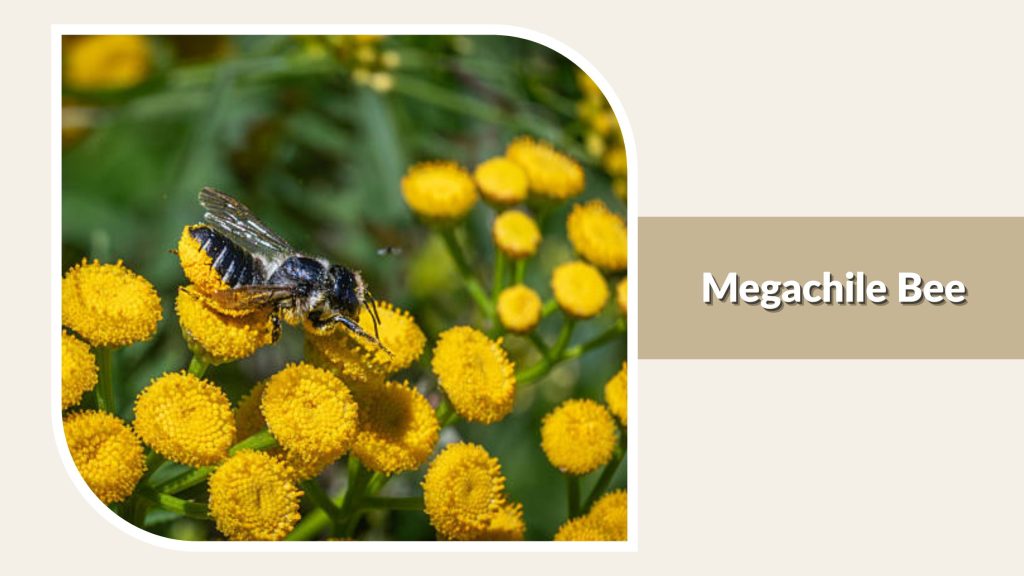
Megachile bees are solitary bees that include leafcutter bees, resin bees, and carder bees. Many species use leaves, plant fibers, mud, or resin to build and protect their nests. They are important pollinators and are often found visiting flowers in gardens, farms, forests, and natural landscapes.
Identification
- Megachile bees are usually small to medium-sized bees.
- Their bodies are often black, brown, gray, or metallic.
- Many species have pale hair bands on the abdomen.
- They often carry pollen on the underside of the abdomen.
- Some species have strong jaws for cutting leaves or handling resin.
- They may be seen entering small holes, stems, or bee houses.
- They are often active around flowers during warm, sunny weather.
Habitat and Distribution
Megachile bees live in many habitats, including gardens, meadows, orchards, forests, farms, parks, and urban green spaces. They commonly nest in hollow stems, holes in wood, wall cracks, soil cavities, or artificial bee houses.
They are found in many parts of the world, especially in areas with flowering plants and suitable nesting sites. Since the group includes many species, their exact habitat can vary. Some prefer dry open areas, while others live near woodland edges or gardens.
Behavior and Diet
Megachile bees are usually solitary. Each female builds her own nest and prepares separate cells for her eggs. Depending on the species, she may use leaf pieces, resin, plant hairs, mud, or other materials to line and seal the nest.
Their diet mainly includes nectar and pollen. Adults drink nectar for energy, while larvae feed on stored pollen mixed with nectar. Many Megachile bees are strong pollinators because they visit many flowers while collecting food.
Lifecycle
The Megachile bee lifecycle includes egg, larva, pupa, and adult stages. A female prepares a nest cell, stores pollen and nectar, lays one egg, and seals the cell. The larva hatches and feeds on the stored food. Later, it becomes a pupa and finally emerges as an adult bee.
FAQs
What is a Megachile bee?
A Megachile bee is a solitary bee from a large group that includes leafcutter bees, resin bees, and carder bees. These bees are known for using natural materials such as leaves, resin, mud, or plant fibers to build and seal their nests. They are also important pollinators.
Are Megachile bees dangerous?
Megachile bees are not usually dangerous. They are solitary and do not defend large colonies like honey bees. Females can sting, but they rarely do unless they are handled roughly or trapped. Most Megachile bees are gentle and safe to observe around flowers and bee houses.
Where do Megachile bees make their nests?
Megachile bees usually nest in small ready-made spaces. These may include hollow stems, holes in wood, wall cracks, soil cavities, or artificial bee houses. Depending on the species, they may line their nest cells with leaf pieces, plant resin, mud, or soft plant fibers.
What do Megachile bees eat?
Adult Megachile bees mainly feed on nectar from flowers, which gives them energy. Female bees also collect pollen to feed their young. Inside each nest cell, the female stores a mixture of pollen and nectar so the larva has enough food to grow and develop.
Why are Megachile bees important?
Megachile bees are important because they help pollinate many wild plants, garden flowers, fruits, and crops. As they move from flower to flower collecting nectar and pollen, they transfer pollen between plants. This supports plant reproduction, healthy ecosystems, and better crop production.