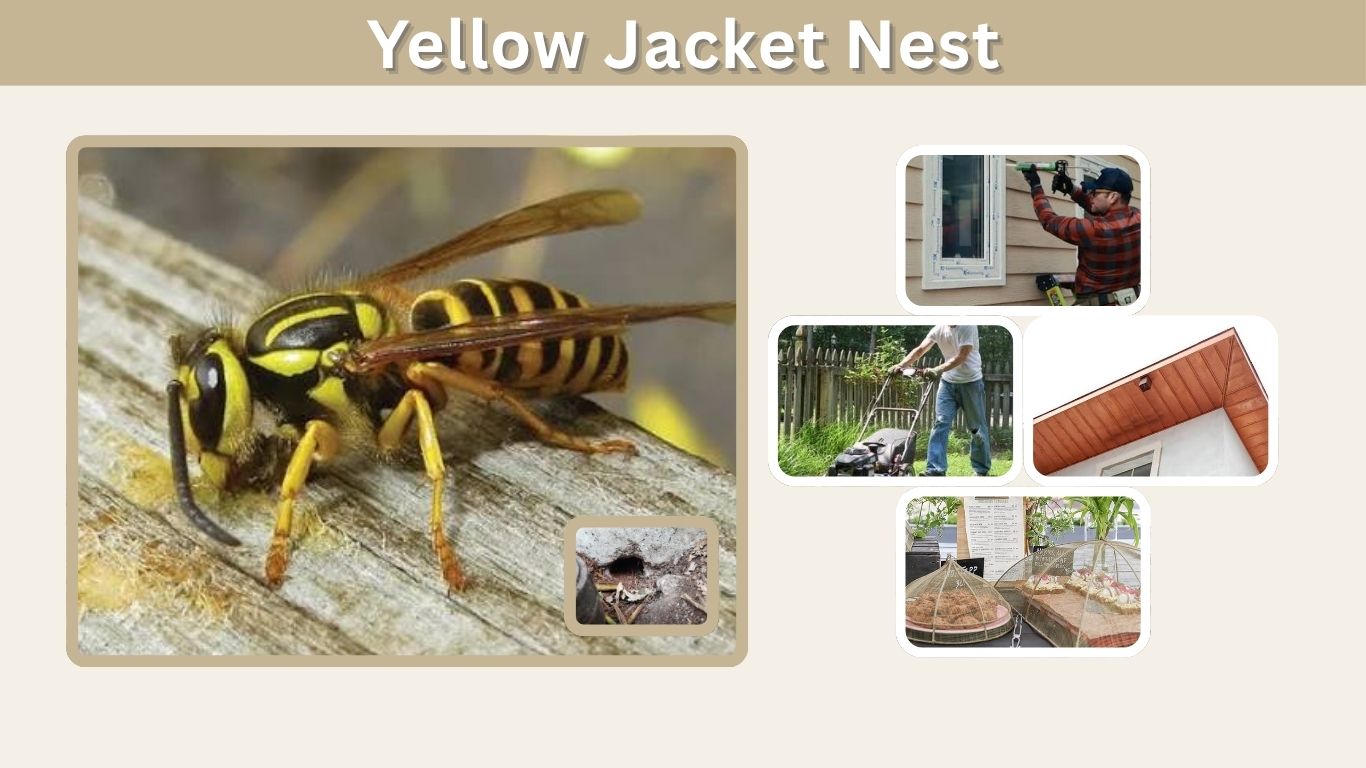
Yellow jacket nests can be hard to notice until the colony becomes active and defensive. Many nests are hidden in the ground, inside wall voids, under siding, or in sheltered outdoor spaces. Because yellow jackets can sting repeatedly, it is important to identify the nest correctly before attempting removal. This guide explains what a yellow jacket nest looks like, where yellow jackets nest, and when professional yellow jacket nest removal is the safest option.
What Does a Yellow Jacket Nest Look Like?
A yellow jacket nest is usually made from a paper-like material created from chewed wood fibers. However, many people never see the full nest because yellow jackets often build it underground or inside hidden cavities.
Common Nest Features
- Paper-like gray or tan material
- A busy entrance hole with wasps flying in and out
- Strong activity during warm daylight hours
- Nest hidden in soil, walls, siding, logs, or shrubs
- Defensive wasps near the entrance
Yellow jackets are often confused with bees because of their yellow-and-black color, but they are wasps and can become aggressive near their nest. Oregon State University notes that yellow jackets may nest in the ground, making them difficult to see, and recommends listening for buzzing and watching for wasps flying around holes in the ground.
Where Do Yellow Jackets Nest?
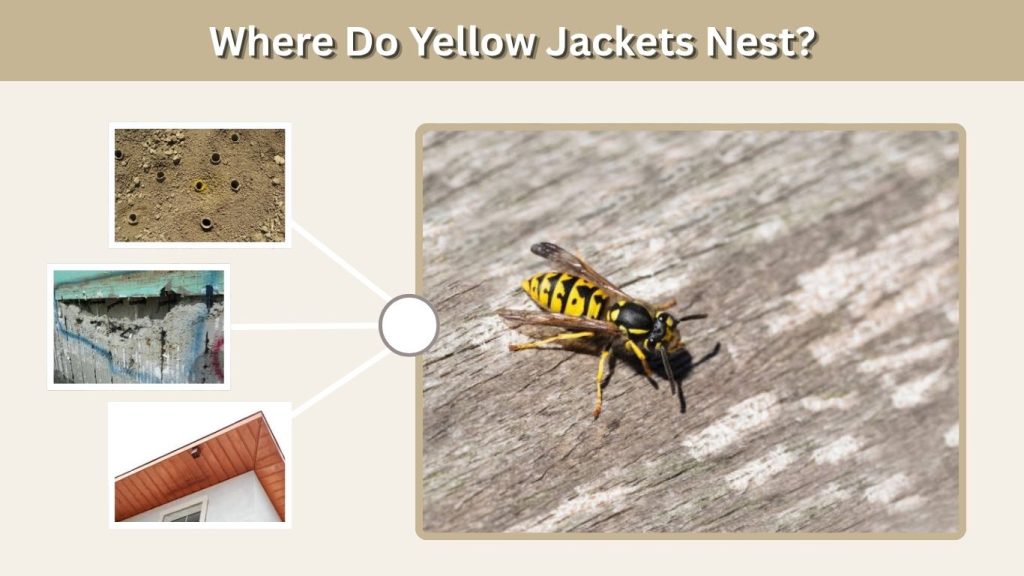
Yellow jackets choose protected places where the colony can grow without disturbance. Some nests are visible, but many are hidden.
| Nest Location | What You May Notice |
| Ground or underground nest | Wasps entering a small hole in soil |
| Wall void | Buzzing inside a wall or wasps entering a crack |
| Siding or eaves | Wasps flying under gaps or trim |
| Shrubs or logs | Heavy wasp traffic around one spot |
| Attic or crawl space | Wasps entering through vents or openings |
Yellow Jacket Nest in Ground
A yellow jacket nest in the ground is one of the most common problems for homeowners. These nests may be built in abandoned rodent holes, gaps near roots, or hidden soil cavities. The entrance may look like a small hole, but the underground colony can be much larger than it appears.
Yellow Jacket Nest in Wall
A yellow jacket nest inside a wall is more serious because the nest is hidden and difficult to access. You may hear buzzing or see wasps entering through siding, cracks, vents, or gaps around windows. Do not seal the hole while the colony is active, because trapped yellow jackets may move deeper into the house.
How to Find a Yellow Jacket Nest
Finding the nest requires patience and caution. Do not swat, shake, dig, or spray randomly.
Safe Signs to Watch
- Watch from a safe distance during the day
- Look for repeated flight to one hole or crack
- Listen for buzzing near soil, siding, or walls
- Check trash areas, fruit trees, sheds, and decks
- Avoid mowing or trimming near suspected nests
Yellow jackets can react strongly if their nest is disturbed. Oregon State University advises running away if you disturb a nest and covering outdoor food, especially sweets and meats, to reduce yellow jacket attraction.
How to Get Rid of a Yellow Jacket Nest Safely
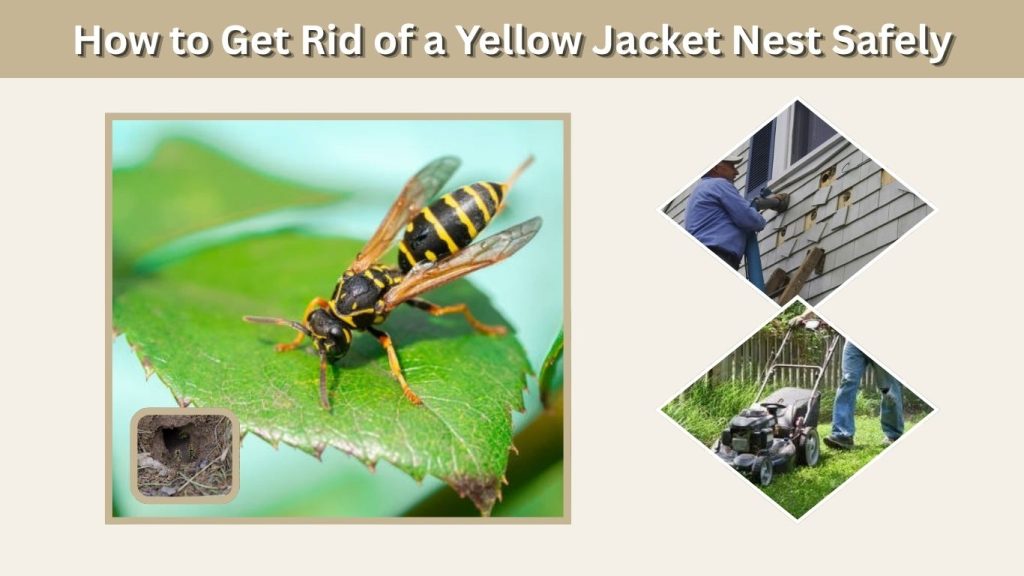
The safest method depends on the nest location, colony size, and risk to people or pets. If the nest is far from human activity, leaving it alone may be the best choice. Wasps can help control other insects, and not every nest needs removal.
When Removal May Be Needed
Removal may be needed when the nest is:
- Near doors, walkways, patios, or play areas
- In a lawn where people mow or walk
- Inside a wall, attic, or siding
- Near children, pets, or allergic individuals
- Large, highly active, or difficult to access
For home insecticides, Oregon State’s pest guidance says products can work when used according to label instructions, but nest sprays involve very high risk because yellow jackets may attack when the nest is sprayed.
Yellow Jacket Nest Removal: DIY or Professional?
Small, easy-to-access outdoor nests may be managed by experienced homeowners using a product labeled for yellow jackets, wasps, or hornets. However, many cases are better handled by pest control professionals.
Call a Professional If
- The nest is inside a wall, ceiling, or siding
- You are allergic to stings
- The nest is large or hard to reach
- Wasps are entering your living space
- You cannot clearly locate the nest entrance
- Children or pets are at high risk
Ask Extension notes that ground nests are often yellow jackets and that labeled dust or powder formulations may be used for ground nests, with the product label giving the instructions, rate, and safety information.
Best Time to Treat a Yellow Jacket Nest
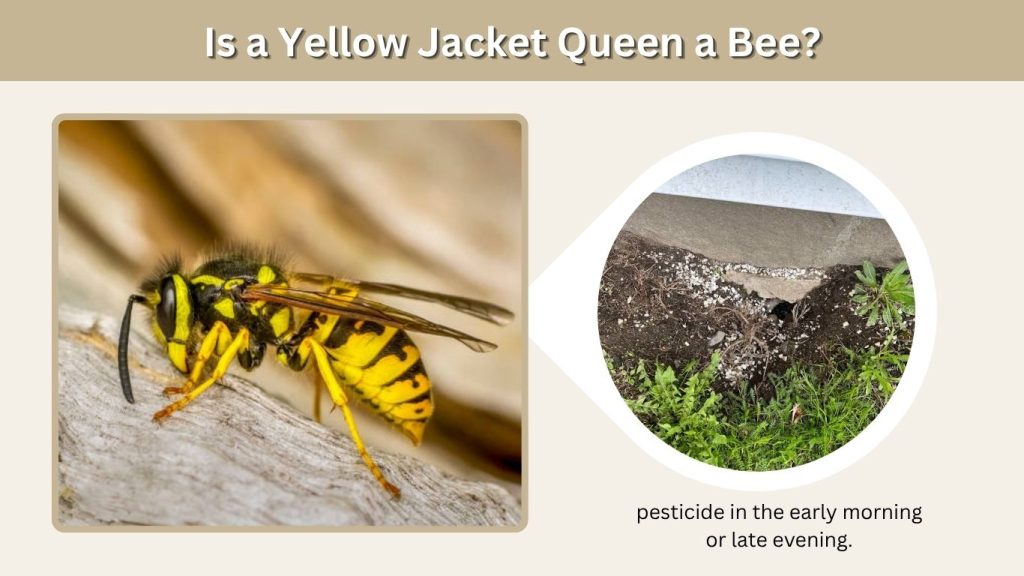
Yellow jackets are usually less active in the early morning or late evening. That is why many pest-control labels and extension resources recommend treatment during cooler, low-activity periods.
Oregon State advises locating the nest during the day but not applying spray then; instead, apply pesticide in the early morning or late evening when yellow jackets are less active.
What Not to Do With a Yellow Jacket Nest
Unsafe methods can make the problem worse and increase the risk of multiple stings.
Avoid These Mistakes
- Do not pour gasoline or lighter fluid into the nest
- Do not light the nest on fire
- Do not block a wall nest entrance
- Do not spray flying yellow jackets randomly
- Do not mow over a ground nest
- Do not stand close to the entrance while treating
Oregon State specifically warns that gasoline, lighter fluid, and fire should not be used for yellow jacket nests because they are dangerous and not allowed as pesticide methods.
How to Prevent Yellow Jacket Nests
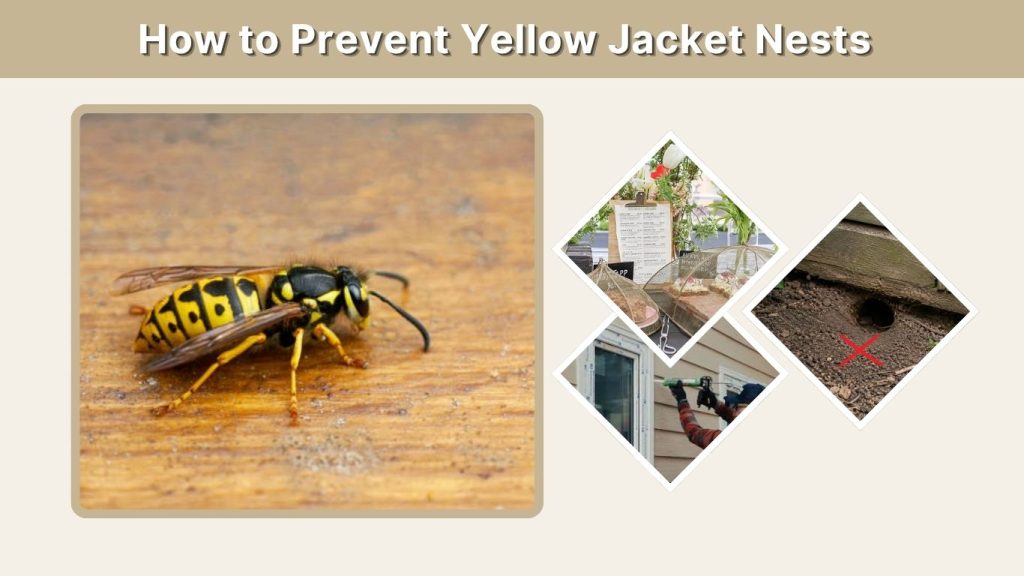
Prevention focuses on reducing food, water, and shelter around your property.
Prevention Tips
- Keep trash cans sealed
- Clean up fallen fruit
- Cover outdoor food and drinks
- Repair gaps in siding, vents, and trim
- Fill abandoned ground holes when inactive
- Keep pet food indoors
- Move garbage away from doors and patios
Texas A&M’s IPM guidance recommends keeping outdoor waste containers closed, placing trash away from entrances, fixing water leaks, and reducing attractants near walkways and play areas.
Yellow Jacket Nest vs Paper Wasp Nest
Yellow jacket nests and paper wasp nests are often confused, but they are not the same.
| Feature | Yellow Jacket Nest | Paper Wasp Nest |
| Common location | Ground, wall voids, siding, hidden cavities | Under eaves, branches, porch ceilings |
| Visibility | Often hidden | Usually visible |
| Nest shape | Enclosed paper nest or hidden cavity | Open comb shape |
| Behavior | More defensive near nest | Usually less aggressive unless disturbed |
| Removal risk | Often higher | Usually easier to see and assess |
Correct identification matters because an underground yellow jacket nest is usually more dangerous than a small exposed paper wasp nest.
FAQs
Do yellow jackets nest in the ground?
Yes, yellow jackets often nest in the ground. They may use abandoned rodent burrows, root spaces, or hidden soil cavities. A ground nest usually has one main entrance with steady wasp traffic during the day.
What does a yellow jacket nest look like?
A yellow jacket nest may look like a gray paper structure, but many nests are hidden underground or inside walls. In those cases, the most visible sign is wasps repeatedly entering and leaving one hole or crack.
How many yellow jackets are in a nest?
The number can vary widely depending on the species, season, and nest age. A mature nest may contain hundreds or even thousands of yellow jackets, which is why disturbing a nest can be dangerous.
Can I remove a yellow jacket nest myself?
You may be able to remove a small, accessible outdoor nest with a properly labeled product, but it is risky. Call a professional for wall nests, underground nests near people, large colonies, or any situation involving sting allergies.
Will yellow jackets reuse the same nest?
In many colder regions, colonies die out in winter and do not reuse the same nest the next year. However, new queens can start new nests nearby if shelter, food, and nesting sites remain available.