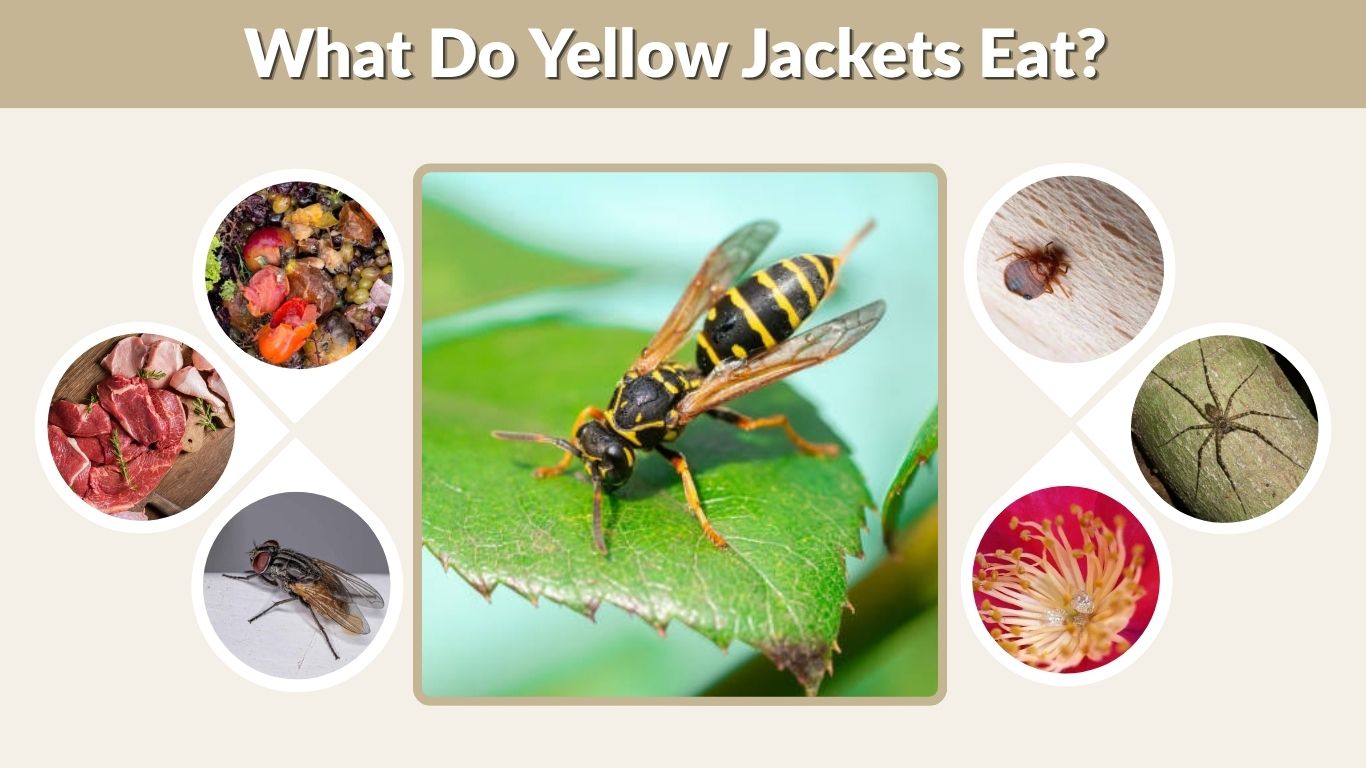
Yellow jackets are opportunistic predators and scavengers that eat both natural foods and human leftovers. Their diet changes with the season and the needs of their colony. Workers collect protein-rich insects and meat to feed developing larvae, while adult yellow jackets mainly seek sugary liquids for energy. This explains why they may hunt garden pests during spring but gather around soda, fruit, garbage, and outdoor meals in late summer. Understanding what yellow jackets eat can help you appreciate their ecological role and reduce unwanted encounters around your home.
What Do Yellow Jackets Eat?
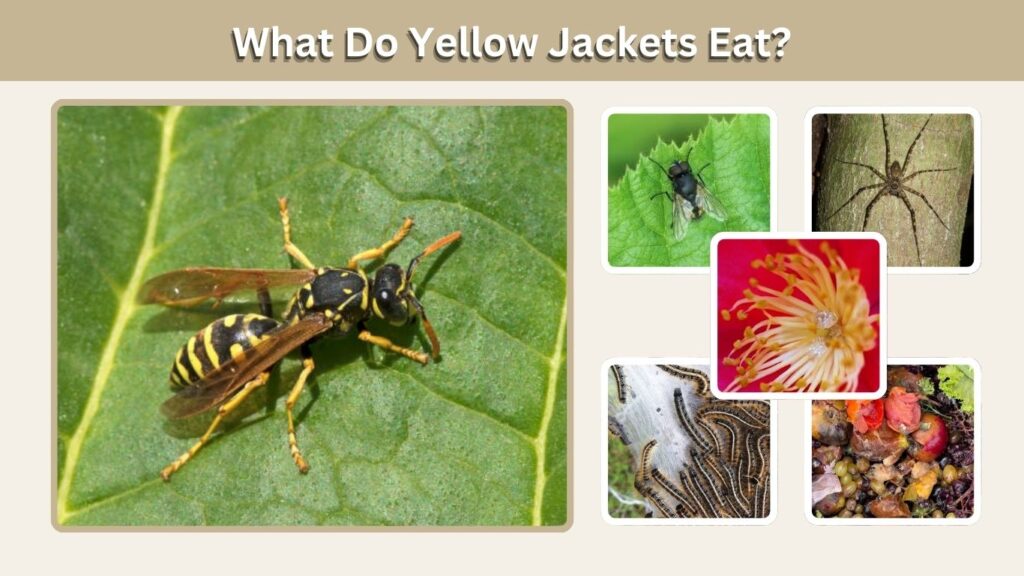
Yellow jackets eat insects, spiders, nectar, fruit, tree sap, meat, pet food, sugary drinks, and discarded human food. They are beneficial predators because they capture many plant-feeding insects, but scavenging species can become persistent pests around patios, trash cans, picnics, and outdoor kitchens.
1. Flies
Flies are an important protein source for yellow jacket colonies. Workers hunt adult flies and may collect fly larvae from garbage, dead animals, and other organic materials.
The captured prey is carried back to the nest and used to feed developing larvae. By hunting nuisance flies, yellow jackets can provide a useful form of natural insect control.
2. Caterpillars
Yellow jackets commonly capture caterpillars from gardens, shrubs, trees, and agricultural areas. They use their strong jaws to kill and process the prey before carrying it back to their colony.
Because many caterpillars damage vegetables and ornamental plants, yellow jackets can be beneficial garden predators when their nests are located away from people.
3. Beetles
Adult beetles, beetle larvae, and other small insects may become food for yellow jacket larvae. Workers search vegetation, soil surfaces, fallen wood, and other places where beetles are active.
Although yellow jackets can be intimidating, their insect-hunting behavior helps reduce populations of certain plant-feeding and nuisance insects.
4. Spiders
Spiders are another protein-rich food collected by yellow jacket workers. They may find spiders beneath leaves, along walls, around wood piles, or inside sheltered outdoor structures.
The spiders are normally taken back to the colony rather than consumed immediately by the worker. Yellow jackets capture spiders and insects primarily to support their growing young.
5. Nectar
Adult yellow jackets need carbohydrate-rich liquids for energy, and flower nectar provides a natural source. They visit open flowers where nectar is easy to reach with their relatively short mouthparts.
While feeding, yellow jackets may transfer pollen between flowers. They are not as efficient as many bees, but wasps can still contribute to plant pollination.
6. Ripe and Overripe Fruit
Yellow jackets are strongly attracted to the sweet juices of ripe, damaged, or overripe fruit. Common targets include grapes, berries, peaches, pears, plums, and fallen apples.
Fruit becomes especially attractive during late summer and fall when colonies are large and natural food supplies may become limited. Removing fallen or rotting fruit can make a yard less appealing to scavenging workers.
7. Honeydew and Tree Sap
Honeydew is a sugary liquid produced by sap-feeding insects such as aphids. Adult yellow jackets consume it as an energy source and may repeatedly visit plants containing large aphid populations.
They can also feed on sap leaking from damaged trees. Both foods provide carbohydrates that support flying, foraging, nest maintenance, and other adult activities.
8. Meat and Fish
Yellow jackets are sometimes called “meat bees” because scavenging species are attracted to chicken, turkey, ham, fish, liver, and other protein-rich foods. They may cut off small portions and carry them back to the nest.
Fresh meat is more attractive than badly rotted meat. Yellow jackets commonly appear near barbecues, picnic tables, outdoor kitchens, and uncovered food during warm weather.
9. Sugary Drinks and Desserts
Soda, fruit juice, sweet tea, ice cream, cake, syrup, and similar foods provide the sugar adult yellow jackets seek. Open drink cans are especially dangerous because a wasp can crawl inside without being noticed.
Outdoor drinks should remain covered, and cans or glasses should be checked before anyone takes a sip. A yellow jacket trapped near a person’s mouth may sting while attempting to escape.
10. Garbage and Pet Food
Garbage cans may contain meat scraps, fruit, desserts, spilled drinks, and other foods attractive to yellow jackets. Outdoor dishes of wet cat food or dog food can also become reliable feeding sites.
Use trash containers with tight-fitting lids, clean spills promptly, and bring pet dishes indoors after feeding. Once yellow jackets discover a dependable food location, they may continue searching that area even after the original food has been removed.
Yellow Jacket Diet by Season
A yellow jacket’s feeding behavior changes as its colony grows. Natural prey is especially important when workers are raising large numbers of larvae. Later in the year, some species become more noticeable around human foods.
| Season | Common Foods | Main Purpose |
| Spring | Nectar, sap and small insects | Queen survival and early colony growth |
| Summer | Flies, caterpillars, beetles, spiders and meat | Feeding developing larvae |
| Late summer | Insects, fruit, meat and sugary drinks | Supporting a large colony |
| Fall | Overripe fruit, garbage, soda and picnic foods | Providing energy when natural food declines |
Yellow jacket colonies generally reach their highest populations in late summer. At this time, workers from scavenging species may forage aggressively around outdoor food and beverages.
What Do Yellow Jacket Larvae Eat?
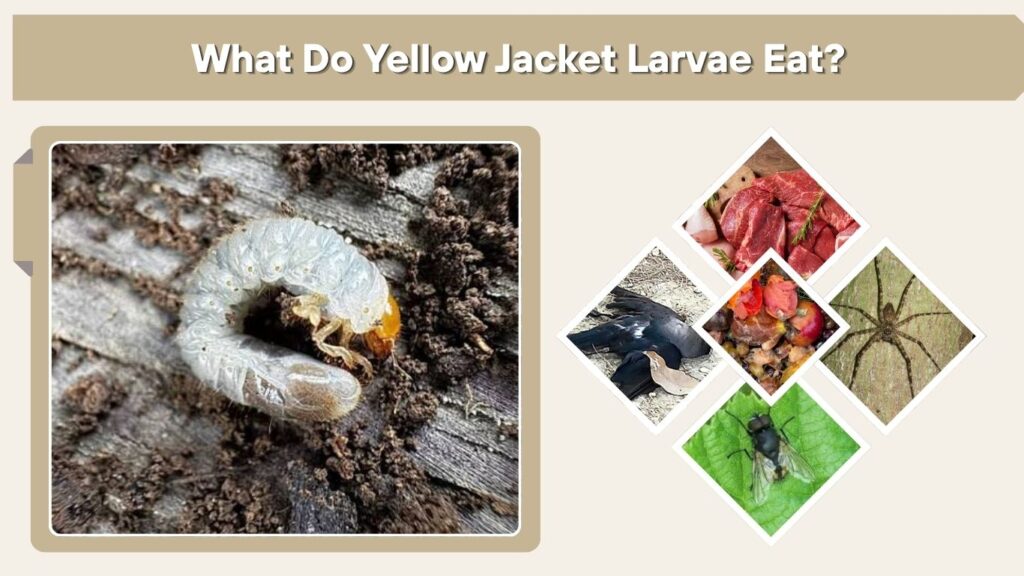
Yellow jacket larvae eat protein-rich food supplied by adult workers. This food can include chewed insects, spiders, fish, meat, and carrion. Workers capture or collect the food, process it with their jaws, and bring it back to the nest.
Adult workers mainly obtain energy from sugary liquids such as nectar, fruit juice, honeydew, and sweet human foods. This difference explains why yellow jackets may search for both meat and sugar during the same outdoor meal.
How to Stop Yellow Jackets From Eating Around Your Home
Yellow jackets are less likely to gather where food is unavailable. Keep meals covered until people are ready to eat, remove leftovers promptly, and wipe up sugary spills.
Place garbage in sealed containers, bring pet food indoors, collect fallen fruit, and cover drink cans. Avoid swatting at individual wasps because sudden movement can increase the chance of a defensive sting.
FAQs
Do yellow jackets eat mosquitoes?
Yellow jackets may catch mosquitoes and other small flying insects, although mosquitoes are not necessarily their primary prey. Their diet includes a broad range of flies, caterpillars, beetles, spiders, and other available invertebrates.
Do yellow jackets eat honey?
Yellow jackets can eat honey because it contains concentrated sugar. They may attempt to enter weak or exposed honey-bee colonies to obtain honey, larvae, or other resources. They are also attracted to syrup, soda, fruit juice, and similar sweet liquids.
Do yellow jackets eat dead animals?
Some yellow jacket species scavenge protein from carrion and dead animals. They may remove small pieces of tissue and carry them to their nests. This scavenging habit also attracts them to meat scraps, fish, outdoor pet food, and garbage.
What food attracts yellow jackets the most?
Attraction depends partly on the season. Meat and insects are useful when colonies need protein for larvae, while nectar, ripe fruit, soda, and desserts supply energy to adults. Scavenging activity around sugary human food often becomes more noticeable in late summer and fall.
Do yellow jackets eat wood?
Yellow jackets do not use wood as food. They scrape weathered wood fibers from fences, buildings, or trees, mix those fibers with saliva, and use the material to construct their paper-like nests. Their actual diet consists mainly of insects, animal protein, and sugary liquids.