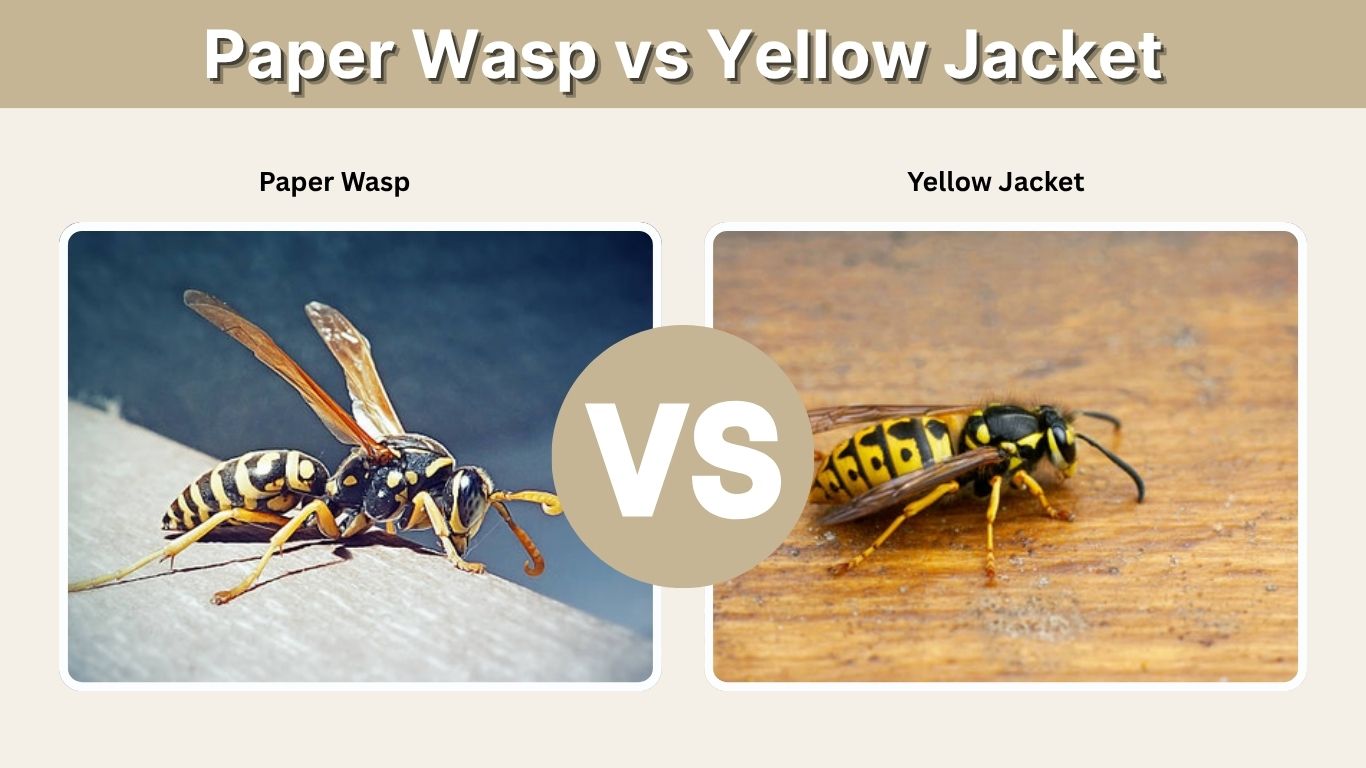
Paper wasps and yellow jackets are often confused because both may have yellow-and-black markings, narrow waists, and painful stings. However, their body shape, nesting habits, flight behavior, and aggressiveness are noticeably different. Paper wasps are usually slender, with long legs and exposed umbrella-shaped nests. Yellow jackets have compact bodies and commonly live underground or inside enclosed cavities. This paper wasp vs yellow jacket guide explains how to identify them safely.
Paper Wasp vs Yellow Jacket: Quick Comparison
Both insects are social wasps that live in colonies and defend their nests. The easiest identification clues are body shape, leg position, nest appearance, and behavior around food.
| Feature | Paper Wasp | Yellow Jacket |
| Body shape | Long and slender | Shorter and stockier |
| Common colors | Brown, red, black, or yellow | Bright yellow and black |
| Legs in flight | Hang visibly below body | Usually held close to body |
| Nest | Open, umbrella-shaped comb | Enclosed paper nest |
| Common nest sites | Eaves, decks, rails, branches | Ground holes, walls, attics |
| Behavior | Usually less aggressive | More defensive and persistent |
| Food interest | Hunts caterpillars and insects | Hunts insects and scavenges human food |
| Sting ability | Can sting repeatedly | Can sting repeatedly |
How to Identify a Paper Wasp
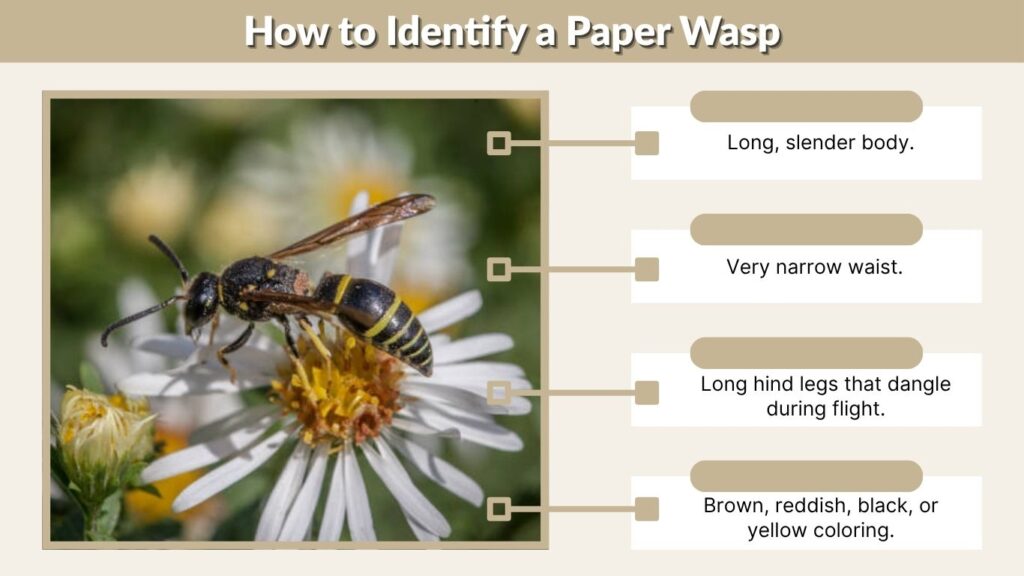
Paper wasps belong mainly to the genus Polistes. Their thin bodies, narrow waists, and long legs give them a delicate appearance compared with yellow jackets.
Body Shape, Color and Size
Paper wasps are commonly about ½ to 1 inch long, although size varies by species. Important identification features include:
- Long, slender body
- Very narrow waist
- Long hind legs that dangle during flight
- Brown, reddish, black, or yellow coloring
- Narrower abdomen than a yellow jacket
- Slow, graceful-looking flight
Northern paper wasps may appear mostly brown or reddish, while European paper wasps have bold yellow-and-black markings that closely resemble those of yellow jackets.
Paper Wasp Antennae
The antennae can help when comparing a European paper wasp vs yellow jacket. European paper wasps usually have orange or orange-tipped antennae, while most yellow jackets have darker antennae. European paper wasps also have a thinner waist, longer legs, and a more elongated abdomen.
Paper Wasp Behavior
Paper wasps generally do not chase people searching for food. They spend much of their time collecting nectar and hunting caterpillars, sawfly larvae, and other soft-bodied insects for their young. Because they prey on garden pests, paper wasps can provide useful natural pest control.
They may sting when their nest is touched, shaken, sprayed, or approached too closely. However, paper wasps away from the nest usually try to escape rather than attack.
How to Identify a Yellow Jacket
Yellow jackets are social wasps belonging mainly to the genera Vespula and Dolichovespula. They are known for their compact bodies, rapid flight, enclosed nests, and defensive colonies.
Appearance and Flight
Yellow jackets are commonly around ⅜ to ⅝ inch long. Their bodies appear smooth, shiny, and boldly marked.
Typical features include:
- Stocky, muscular-looking body
- Bright yellow-and-black abdominal bands
- Shorter legs held near the body during flight
- Broad abdomen and less noticeable waist
- Fast, direct flight
- Smooth body with little visible hair
Individual species have different abdominal patterns, so color alone is not always enough for identification.
Yellow Jacket Behavior
Yellow jackets hunt insects but may also scavenge meat, sugary drinks, ripe fruit, garbage, and food left outdoors. They often appear around trash cans, picnic tables, outdoor restaurants, and fallen fruit.
Some species become particularly troublesome during late summer and fall as colony activity changes and natural food becomes less available. Yellow jackets may repeatedly return to food and can defend their colony aggressively.
Yellow Jacket Nest vs Paper Wasp Nest
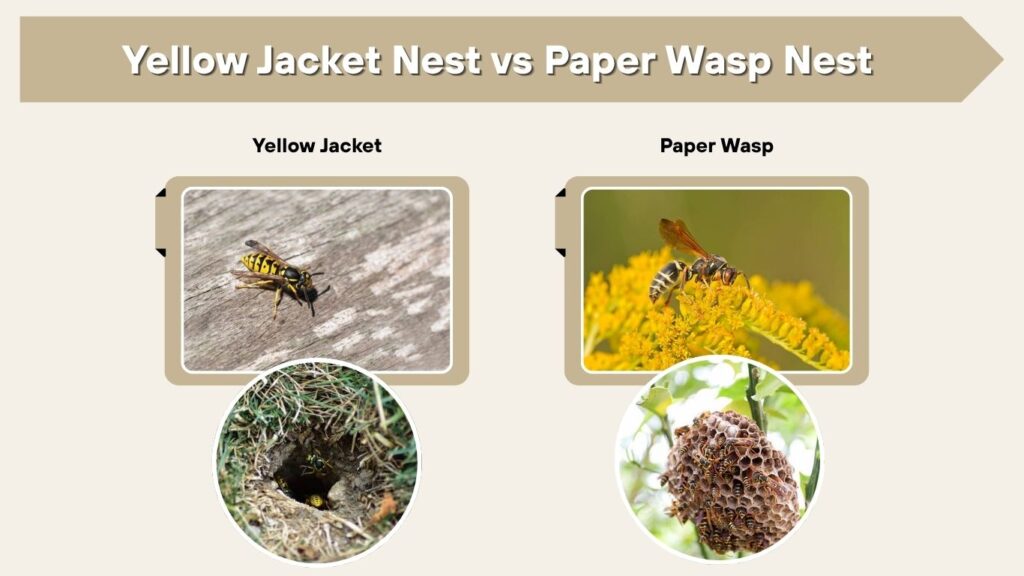
Nest appearance is often the clearest difference between these insects. Both use chewed wood fibers mixed with saliva to produce a paper-like nesting material, but their nest structures are very different.
What Does a Paper Wasp Nest Look Like?
A paper wasp nest resembles a small upside-down umbrella. It consists of a single exposed comb containing visible hexagonal cells. There is no outer paper covering around the comb.
Common paper wasp nesting locations include:
- Under roof eaves
- Beneath decks and porch ceilings
- Inside outdoor grills
- Under railings and window ledges
- In sheds, pipes or birdhouses
- On tree branches and shrubs
The nest is attached to a surface by a narrow stalk. European paper wasps may also build nests inside protected cavities, making them harder to notice.
What Does a Yellow Jacket Nest Look Like?
A yellow jacket nest has multiple horizontal combs surrounded by a protective paper envelope. However, people often see only the entrance because many colonies are concealed.
Yellow jackets commonly nest:
- In abandoned rodent burrows
- Under landscaping materials
- Inside tree cavities
- Behind house siding
- Within wall voids
- In attics or concrete blocks
A steady stream of wasps entering and leaving one small opening usually indicates an active yellow jacket colony. Hidden nests inside buildings are especially difficult and dangerous to treat.
Paper Wasp Sting vs Yellow Jacket Sting
Both insects have smooth stingers and can sting more than once. Unlike honey bees, paper wasps and yellow jackets usually do not leave their stingers in human skin.
Which Sting Hurts More?
Sting pain depends on the species, sting location, number of stings, and individual sensitivity. A paper wasp sting can cause sharp burning pain, redness, itching, and swelling. A yellow jacket sting causes similar symptoms.
Yellow jackets may present a greater practical risk because they often attack in groups when their nest is disturbed. They can also pursue a perceived threat for some distance. Paper wasps are more likely to sting during direct contact with their exposed nest.
What to Do After a Sting
For an ordinary local reaction:
- Move away from the nest or insects.
- Wash the area with soap and water.
- Apply a wrapped cold pack to reduce swelling.
- Avoid scratching the sting.
- Watch for symptoms of an allergic reaction.
Difficulty breathing, throat swelling, faintness, widespread hives, or swelling far from the sting requires immediate emergency medical attention.
Paper Wasp vs Yellow Jacket vs Hornet
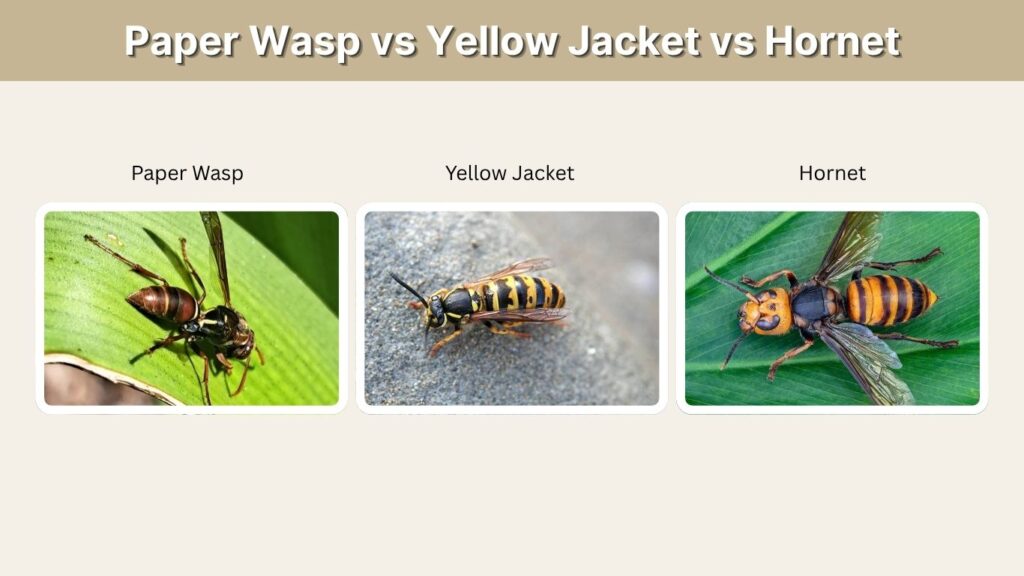
“Wasp” is a broad term that includes paper wasps, yellow jackets, and hornets. Hornets usually have larger, heavier bodies than paper wasps or common yellow jackets.
| Insect | Body | Typical Nest |
| Paper wasp | Slender with long legs | Open umbrella-shaped comb |
| Yellow jacket | Compact and brightly banded | Enclosed nest underground or in cavities |
| Hornet | Large and robust | Enclosed aerial or cavity nest |
Some names can be misleading. The bald-faced hornet, for example, is technically an aerial yellow jacket rather than a true hornet.
Which One Is More Aggressive?
Yellow jackets are generally considered more defensive and troublesome around people. They may investigate food, enter drink containers, and aggressively protect hidden nests. Accidentally stepping near an underground entrance can trigger multiple workers to emerge.
Paper wasps are usually less aggressive when they are away from their colony. European paper wasps rarely sting unless their nest is accidentally disturbed. Nevertheless, any active nest close to a door, play area, walkway, or frequently used deck should be treated cautiously.
Should You Remove the Nest?
A nest located far from people can often be left alone. Paper wasps and yellow jackets prey on other insects, and most colonies are annual. In colder regions, workers and old queens die when freezing weather arrives, while newly mated queens overwinter elsewhere.
Professional removal is the safer option when:
- The nest is inside a wall or roof
- Numerous yellow jackets are entering one opening
- The colony is beside a doorway or walkway
- Children or pets regularly use the area
- Someone nearby has a sting allergy
- The nest cannot be clearly seen or reached safely
Do not seal a yellow jacket entrance while the colony is active. Trapped workers may search for another exit and enter the home.
FAQs
Are paper wasps the same as yellow jackets?
No. Both are social wasps in the family Vespidae, but they belong to different groups. Paper wasps have slender bodies and build exposed comb nests. Yellow jackets are stockier and normally construct enclosed nests underground, inside structures, or occasionally above ground.
How can you identify a paper wasp vs yellow jacket in flight?
Look at the legs and body shape. A paper wasp normally flies with its long legs hanging below its slender body. A yellow jacket has a compact abdomen, flies more quickly, and usually keeps its shorter legs tucked close to its body.
Is a European paper wasp a yellow jacket?
No. European paper wasps closely resemble yellow jackets because both have yellow-and-black patterns. However, European paper wasps are generally larger and slimmer, with longer legs, narrower waists, and orange-tipped antennae. Their nests also have uncovered, visible cells.
Which is more dangerous, a paper wasp or yellow jacket?
Yellow jackets generally create a higher sting risk because they aggressively defend their colonies and may attack in groups. Paper wasps can also sting repeatedly, but they are usually less confrontational unless someone approaches, shakes, touches, or attempts to remove their nest.
Do paper wasps and yellow jackets reuse old nests?
Most colonies build new nests each spring rather than reusing the previous year’s structure. Newly mated queens survive winter in protected locations and begin new colonies when temperatures rise. Some European paper wasps may occasionally reuse or establish nests at previous sites.