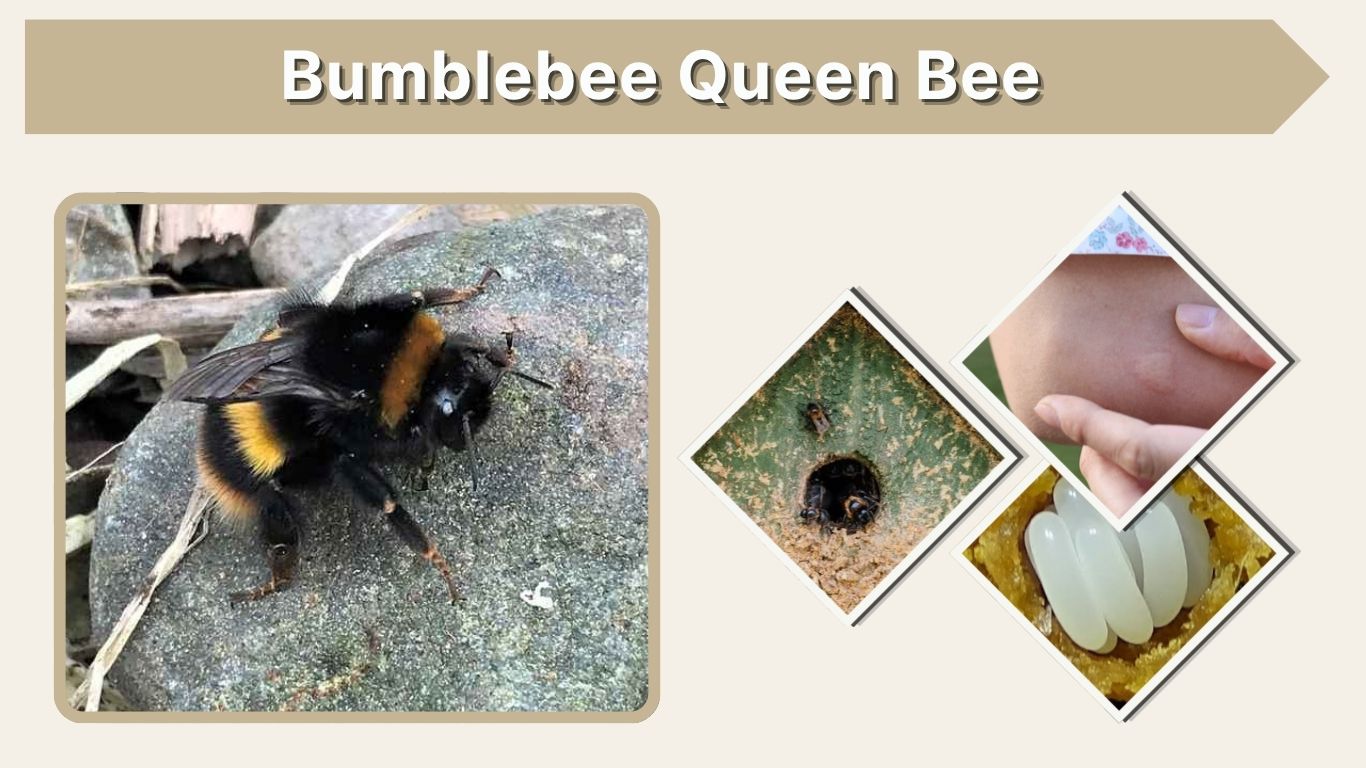
A bumblebee queen bee is the reproductive female that starts and leads a bumblebee colony. Unlike honey bee colonies, which can survive for several years, most bumblebee colonies last only one season. The queen is usually the largest member of the colony and is responsible for finding a nesting site, laying eggs, and producing the first generation of workers. Later in the season, the colony produces males and new queens. Understanding the queen’s appearance, behavior, and life cycle makes it much easier to recognize how bumblebee colonies develop.
What Is a Bumblebee Queen?
A bumblebee queen is not a separate species of bee. Instead, she is a reproductive female within a bumblebee species. A colony normally begins with one queen that survived winter and emerged in spring.
During the early stage of colony development, she performs nearly every job herself. She finds a nest, gathers food, builds wax structures, lays eggs, and feeds developing larvae.
Main Roles of the Queen
The queen is responsible for:
- Starting a new colony
- Choosing a nesting location
- Producing the first eggs
- Feeding the first larvae
- Producing worker bumblebees
- Producing males later in the season
- Producing new queens before the colony ends
Once enough workers have developed, the queen spends most of her time inside the nest laying eggs while workers take over foraging and nest maintenance.
How to Identify a Bumblebee Queen
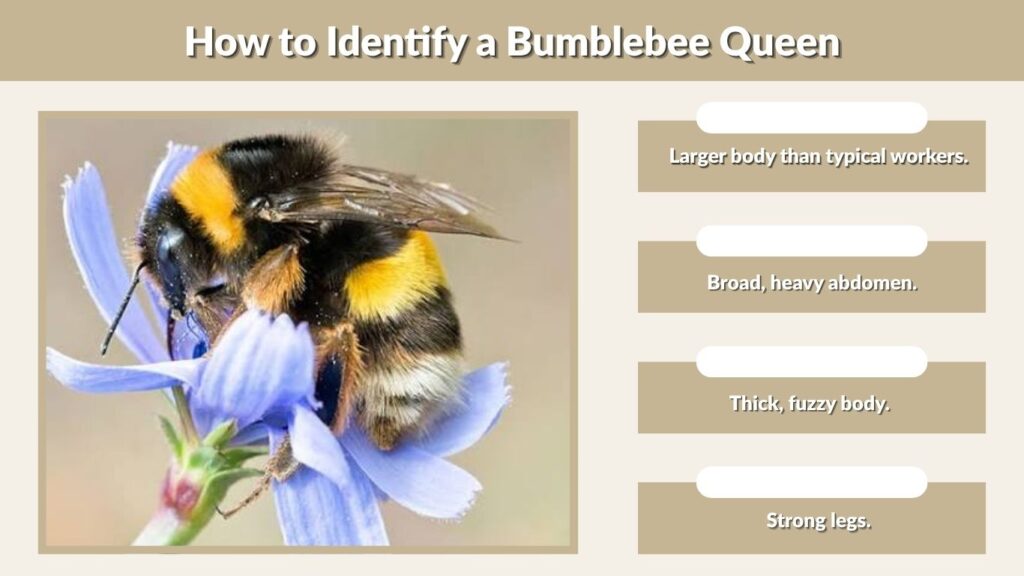
A queen usually looks similar to the workers of her species, but she is noticeably larger and more heavily built.
Color patterns vary by species, so size alone should not be the only identification clue.
Bumblebee Queen Identification
Look for:
- Larger body than typical workers
- Broad, heavy abdomen
- Thick, fuzzy body
- Strong legs
- Species-specific yellow, orange, white, or black markings
- Slow, powerful flight
- Solitary activity during early spring
Seeing a large bumblebee flying alone close to the ground in early spring is often a clue that it may be a queen searching for a nest.
How Big Is a Bumblebee Queen?
Queen size varies significantly among bumblebee species.
In many species, queens can reach roughly 0.7 to more than 1 inch long, while workers are noticeably smaller.
Queens also have heavier bodies because they carry developed reproductive organs and must survive the winter period before establishing a colony.
Bumblebee Queen vs Worker Bumblebee
Queens and workers are both female and may look very similar. The easiest differences are usually size, reproductive function, and seasonal behavior.
| Feature | Bumblebee Queen | Worker Bumblebee |
| Sex | Female | Female |
| Size | Largest caste | Usually smaller |
| Main role | Reproduction | Foraging and colony care |
| Can sting | Yes | Yes |
| Starts nest | Yes | No |
| Survives winter | New queens usually do | Usually no |
| Egg laying | Main reproductive female | Usually limited or none |
Is Every Large Bumblebee a Queen?
Not necessarily.
Different bumblebee species naturally vary in size, and large workers of one species can sometimes resemble queens of smaller species.
Season can provide another clue. Large solitary bumblebees seen in early spring are more likely to be queens because worker populations have not yet developed.
Bumblebee Queen vs Honey Bee Queen
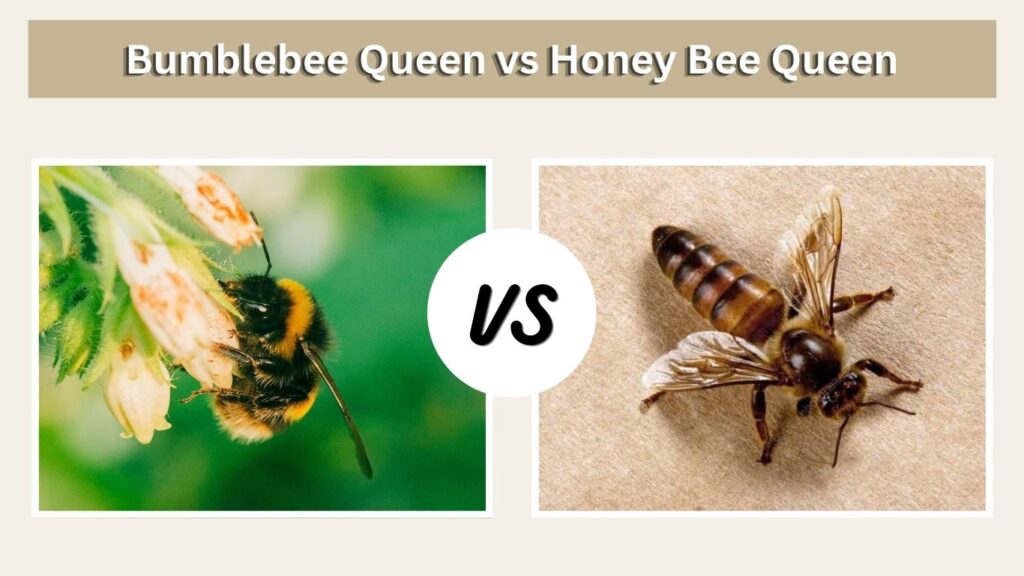
A bumblebee queen and honey bee queen perform similar reproductive roles but live in very different types of colonies.
Honey bee colonies are generally perennial, while most bumblebee colonies are seasonal.
| Feature | Bumblebee Queen | Honey Bee Queen |
| Colony type | Usually seasonal | Usually multi-year |
| Colony size | Dozens to hundreds | Thousands to tens of thousands |
| Starts colony alone | Yes | Normally no |
| Forages early in life | Yes | Normally no |
| Survives winter | New queens overwinter alone | Queen remains in colony |
| Appearance | Large and fuzzy | Long abdomen, less bulky |
| Main role later | Egg laying | Egg laying |
Which Queen Is Bigger?
The answer depends on the species being compared.
A bumblebee queen is usually thick, round, and heavily covered with hair. A honey bee queen has a longer abdomen but is generally more slender.
Because bumblebee queens have much bulkier bodies, they often appear larger at first glance.
Bumblebee Queen Life Cycle
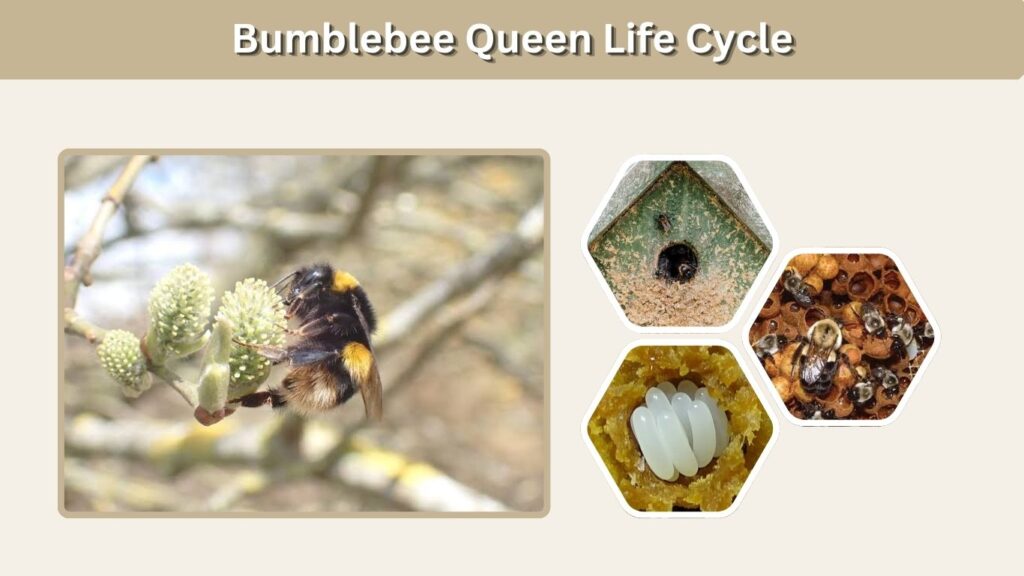
The life cycle of a bumblebee colony is closely tied to the queen. Nearly the entire colony dies before winter, while newly produced queens survive and restart the cycle.
Spring: The Queen Emerges
After spending winter in a sheltered location, a fertilized queen emerges as temperatures begin to rise.
Her first priorities are feeding and finding a suitable nesting site.
She frequently visits early-blooming flowers to restore energy reserves after overwintering.
Starting a Nest
Once she finds a suitable site, the queen begins building her nest.
Potential nesting places may include abandoned rodent burrows, cavities beneath sheds, spaces under vegetation, compost piles, bird boxes, or other protected locations.
She produces wax and creates the first structures needed for raising her young.
Laying the First Eggs
The queen lays a small group of eggs and keeps them warm by sitting over the developing brood.
She must leave the nest periodically to gather pollen and nectar.
When the larvae hatch, she feeds them until they develop into pupae and eventually emerge as the colony’s first workers.
What Happens After Workers Emerge?
The arrival of workers changes the queen’s role dramatically.
Instead of repeatedly leaving the nest to search for food, she can remain inside and concentrate on reproduction.
Workers Take Over Colony Duties
Workers begin:
- Collecting nectar
- Collecting pollen
- Feeding larvae
- Maintaining the nest
- Defending the colony
- Regulating nest conditions
This allows the queen to produce more eggs and rapidly increase colony size.
Depending on the species, habitat, food availability, and season, a mature bumblebee colony may contain dozens or several hundred individuals.
How Does a Bumblebee Queen Mate?
Bumblebee mating usually occurs later in the colony’s seasonal cycle.
The queen that originally founded the colony begins producing males and new queens rather than only workers.
New Queens and Males
Young queens leave the nest and eventually mate with males.
After mating, a new queen feeds heavily to build fat reserves necessary for surviving winter.
The males do not survive winter, and neither do most workers or the original colony queen.
Only the newly fertilized queens typically continue into the following year.
Where Do Bumblebee Queens Go in Winter?
New queens usually spend winter alone in protected sites.
They may choose shallow underground locations, loose soil, leaf litter, compost, or other sheltered places where temperatures remain relatively stable.
Bumblebee Queen Hibernation
During overwintering, the queen enters a state of reduced activity.
Her stored body fat provides energy until spring.
When warmer conditions return, she emerges, feeds on flowers, searches for a nesting location, and begins an entirely new colony.
This means that one successful queen can become the founder of hundreds of bumblebees during the following season.
Can a Bumblebee Queen Sting?
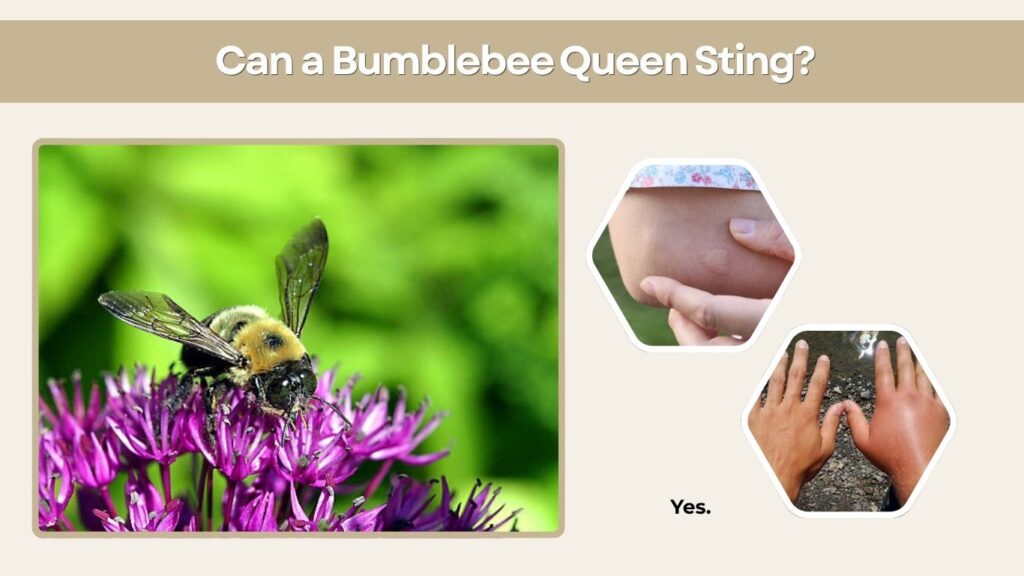
Yes. A bumblebee queen is female and has a functional stinger.
Like female workers, she can sting more than once because the bumblebee stinger normally does not remain lodged in human skin.
However, queens generally have little reason to sting unless they are handled, trapped, or feel directly threatened.
Are Queen Bumblebees Aggressive?
Queen bumblebees are not normally aggressive toward people.
A queen searching for a nest in spring may fly close to the ground, around walls, or near buildings. This behavior can look unusual but usually means she is investigating potential nesting locations.
Giving her space is generally all that is necessary.
Do Bumblebee Queens Make Honey?
Bumblebees store small amounts of nectar-derived food, but they do not create large reserves of harvestable honey like honey bees.
A queen may initially gather nectar and pollen herself before workers emerge.
Once workers take over foraging, they bring food back to the colony and store limited quantities for short-term use.
Because most bumblebee colonies do not survive winter, they do not need the large honey stores maintained by honey bee colonies.
Why Are Bumblebee Queens Important?
Every successful bumblebee colony begins with a queen.
If a new queen survives winter, finds sufficient food, locates a safe nest, and successfully produces workers, she can establish an entire colony.
Queens therefore play an especially important role in maintaining local bumblebee populations.
Helping Bumblebee Queens
Gardeners can support queens by:
- Growing early-blooming flowers
- Avoiding unnecessary pesticide use
- Providing flowers throughout spring and summer
- Leaving some natural nesting areas undisturbed
- Avoiding destruction of active nests
- Providing diverse native flowering plants
Early spring flowers are particularly useful because newly emerged queens need abundant food before they can establish nests.
FAQs
What is the difference between a queen bee and a bumblebee?
“Queen bee” describes a reproductive role, while “bumblebee” describes a group of bee species. Bumblebee colonies have queens, so a bee can be both a bumblebee and a queen. Honey bee colonies also have queens.
How can you tell if a bumblebee is a queen?
Queens are generally larger and heavier than workers of the same species. In early spring, a particularly large bumblebee flying alone and searching around the ground or structures is often a queen looking for a nesting location.
Does a queen bumblebee sting?
Yes. Queen bumblebees are female and possess functional stingers. They can potentially sting repeatedly but normally sting only when they feel trapped or threatened.
Does the original bumblebee queen survive winter?
Usually not. The queen that founded the colony normally dies around the end of the colony’s seasonal cycle. Newly produced and mated queens are the individuals that typically overwinter and begin new colonies the following spring.
Is a bumblebee queen bigger than a worker?
Yes, in most species the queen is the largest member of the colony. She typically has a thicker abdomen and heavier body than workers, although exact size varies depending on the bumblebee species.