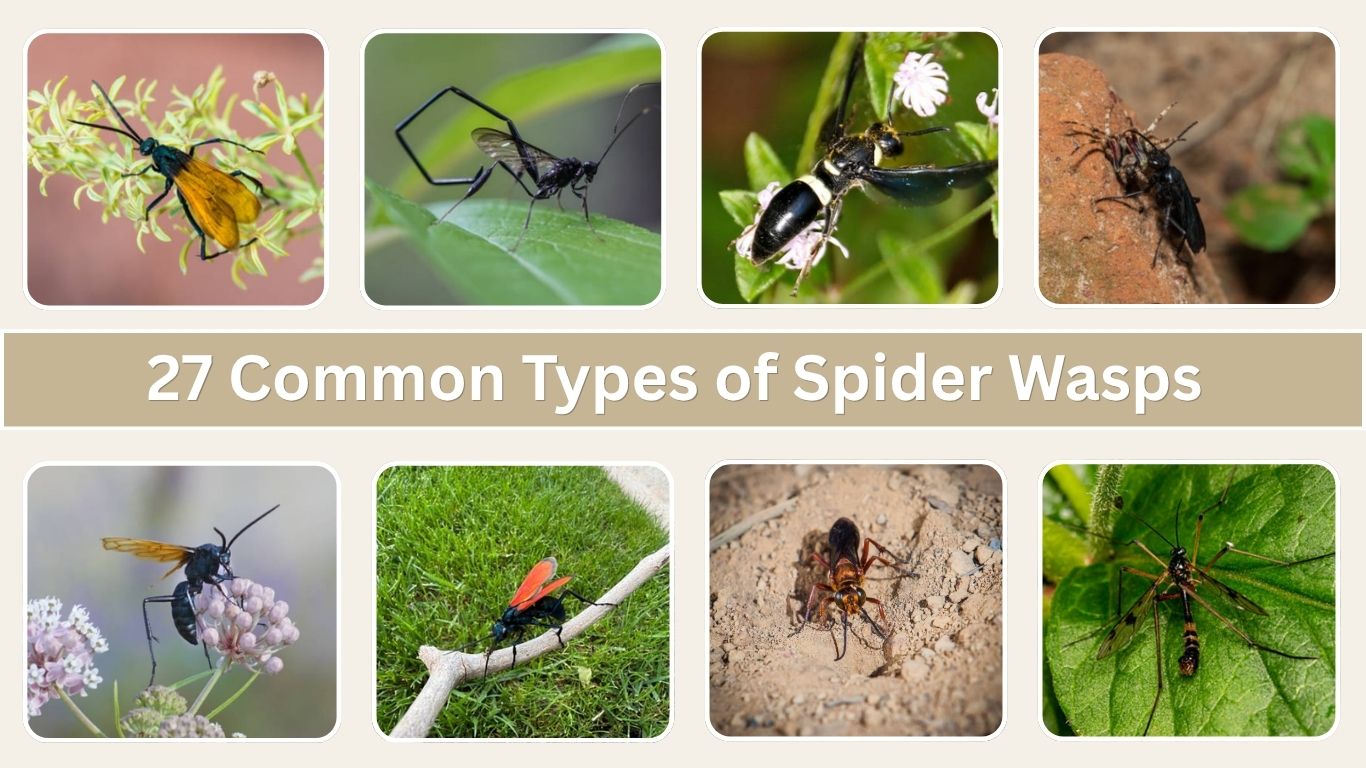
Spider wasps are fascinating insects known for their incredible hunting skills and unique relationship with spiders. Belonging to the family Pompilidae, these solitary wasps can be found in deserts, forests, grasslands, and tropical regions around the world. Many species are recognized for their bright colors, long legs, and painful stings. Female spider wasps hunt and paralyze spiders to provide food for their developing larvae. From giant tarantula hawks to slender forest hunters, these remarkable insects display a wide range of behaviors, appearances, and adaptations that make them some of the most interesting wasps in nature.
1. Tarantula Hawk
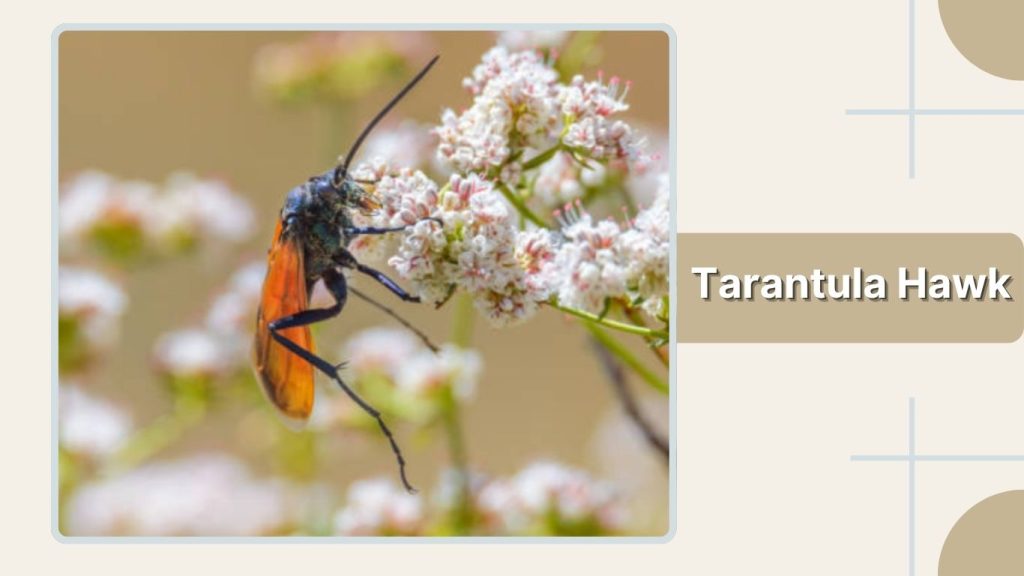
Tarantula hawks are among the largest and most powerful spider wasps in the world. These striking wasps are best known for hunting tarantulas, which they paralyze and use as food for their larvae. Their metallic blue-black bodies and bright orange wings make them easy to recognize in the wild.
Identification
- Large body size ranging from 1.5 to 2 inches long
- Metallic blue-black or dark purple body coloration
- Bright orange or rust-colored wings
- Long legs with hooked claws for handling spiders
- Curved antennae and a narrow waist typical of wasps
- Females possess an extremely painful sting
Habitat and Distribution
Tarantula hawks are commonly found in deserts, grasslands, and tropical regions. They are especially widespread in the southwestern United States, Mexico, Central America, and parts of South America. These wasps prefer warm climates where tarantulas are abundant and often nest in sandy or loose soil.
Behavior and Diet
Adult tarantula hawks primarily feed on nectar from flowers and are generally non-aggressive toward humans unless threatened. Female wasps actively hunt tarantulas by searching their burrows and engaging in intense battles to sting and paralyze the spider. Males do not hunt and spend most of their time feeding on nectar.
Life Cycle
The female tarantula hawk drags a paralyzed tarantula into a burrow and lays a single egg on the spider’s body. After hatching, the larva feeds on the still-living tarantula, consuming non-vital organs first to keep the host alive as long as possible. The larva later pupates inside the burrow before emerging as an adult wasp.
2. Blue-Black Spider Wasp
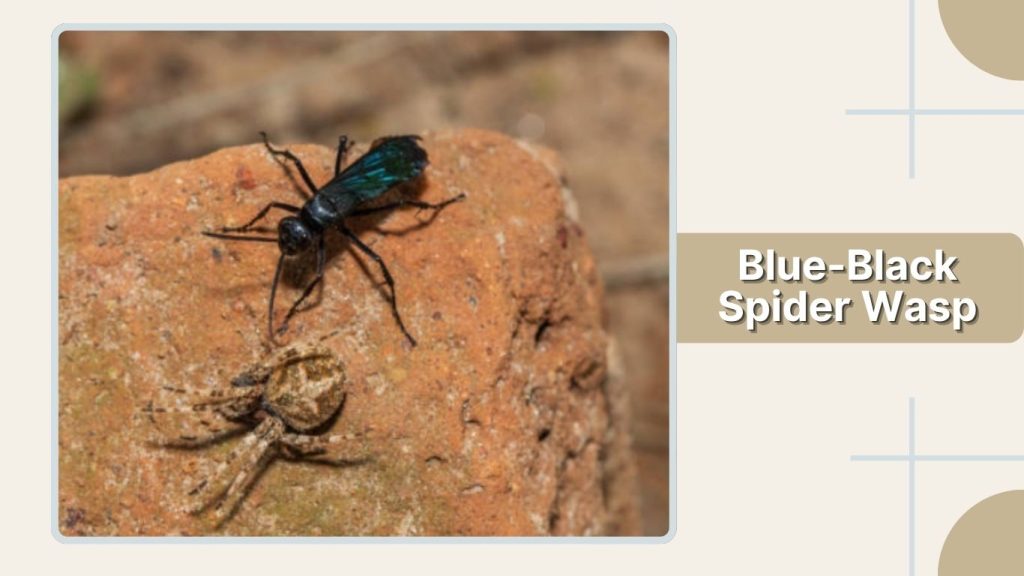
Blue-black spider wasps are slender hunting wasps recognized for their dark metallic coloration and fast movements. These solitary wasps specialize in capturing spiders, which they use to feed their developing larvae. They are commonly seen flying close to the ground while searching for prey.
Identification
- Shiny metallic blue-black body
- Slim and elongated appearance
- Transparent dark-tinted wings
- Long spiny legs adapted for hunting
- Narrow waist between thorax and abdomen
- Usually measures around 0.5 to 1 inch long
Habitat and Distribution
Blue-black spider wasps are found in gardens, forests, meadows, and woodland edges. They occur throughout North America and can also be seen in parts of Central America. These wasps prefer areas with abundant spiders and suitable nesting sites in soil or decaying wood.
Behavior and Diet
Adult blue-black spider wasps feed mainly on flower nectar and plant juices. Females hunt spiders by stinging and paralyzing them before dragging them to a nest. These wasps are solitary and do not form colonies like social wasps. They are usually harmless to humans unless handled roughly.
Life Cycle
The female constructs a nest in soil or hidden cavities and places a paralyzed spider inside. She then lays an egg on the spider, providing fresh food for the developing larva. The larva feeds on the spider, pupates within the nest, and later emerges as an adult wasp.
3. Rusty Spider Wasp
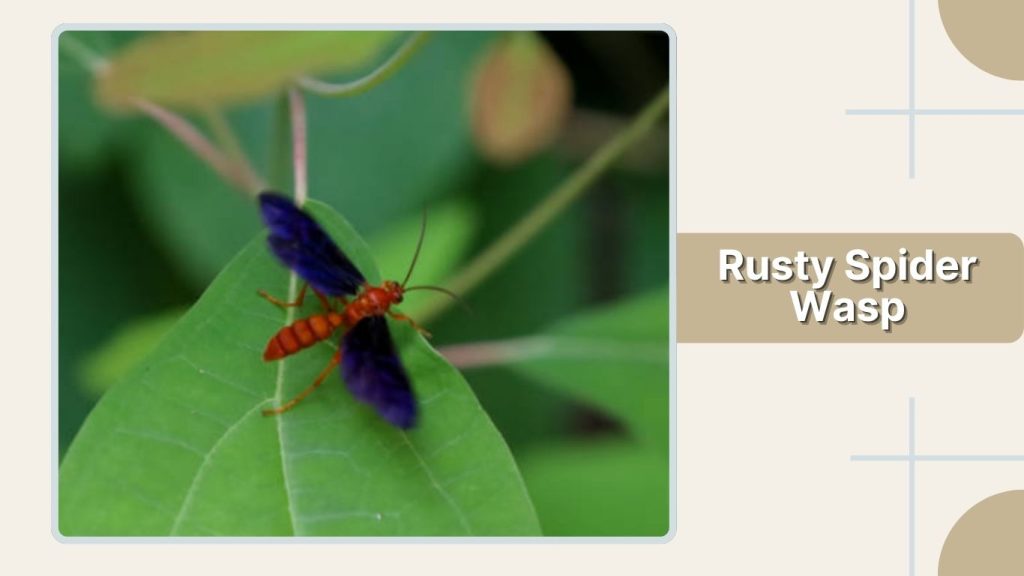
Rusty spider wasps are medium-sized hunting wasps known for their reddish-brown coloration and active hunting behavior. These solitary insects play an important role in controlling spider populations in natural ecosystems.
Identification
- Rusty red or reddish-brown body coloration
- Dark smoky wings
- Long black legs with visible spines
- Slender body with a narrow waist
- Curved antennae
- Typically measures about 0.5 to 1.2 inches in length
Habitat and Distribution
Rusty spider wasps are commonly found in open woodlands, gardens, grasslands, and sandy habitats. They are widely distributed across North America, especially in warmer southern regions where spiders are plentiful.
Behavior and Diet
Adult rusty spider wasps feed mainly on nectar from flowering plants. Females actively search for spiders on the ground, in vegetation, or inside burrows. After locating prey, the wasp delivers a sting that paralyzes the spider before transporting it to a nesting site. These wasps are generally solitary and rarely aggressive toward people.
Life Cycle
The female creates a nest in soil, hollow stems, or hidden crevices. A paralyzed spider is placed inside the nest, and a single egg is laid on the prey. Once hatched, the larva feeds on the spider until fully developed. It then pupates within the nest and eventually emerges as an adult rusty spider wasp.
4. Red-Winged Spider Wasp
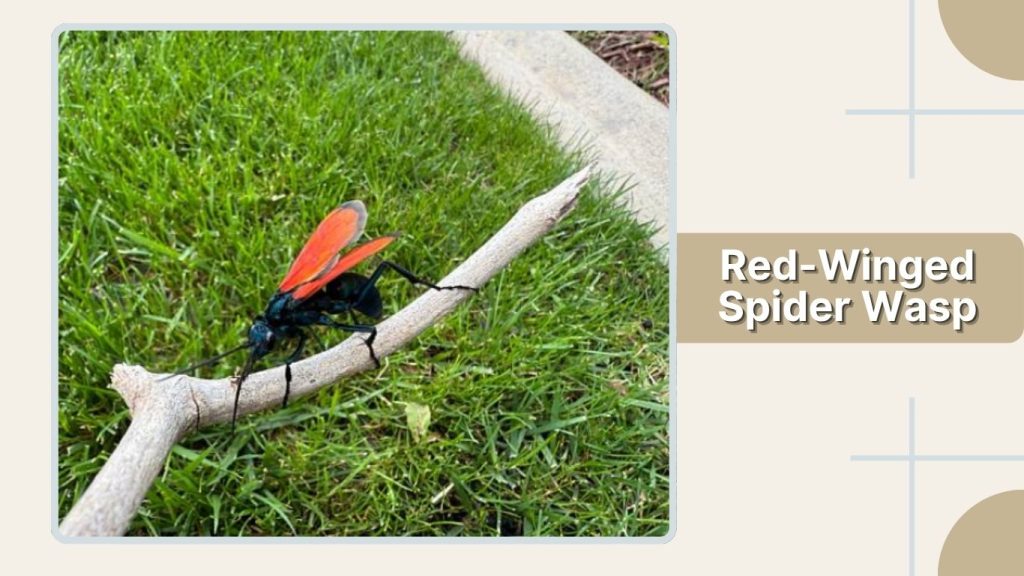
Red-winged spider wasps are striking solitary wasps recognized for their dark bodies and vivid reddish-orange wings. These active hunters are commonly seen moving rapidly across the ground or low vegetation while searching for spiders. Their bold appearance often makes them one of the easiest spider wasps to identify in the wild.
Identification
- Glossy black or blue-black body coloration
- Bright red, orange-red, or reddish-brown wings
- Long legs covered with fine spines
- Thin waist connecting the thorax and abdomen
- Slightly curved antennae
- Body length usually ranges from 0.7 to 1.5 inches
- Females are generally larger than males
- Wings may appear smoky near the edges in some species
Habitat and Distribution
Red-winged spider wasps inhabit a wide range of environments, including forests, grasslands, deserts, gardens, and woodland edges. They are especially common in warm and temperate regions where spider populations are abundant. Many species occur throughout North America, Central America, and parts of South America.
These wasps prefer habitats with loose soil, fallen logs, rocks, or natural crevices that can serve as nesting locations. They are frequently spotted near flowering plants because adults rely heavily on nectar as a food source.
Behavior and Diet
Adult red-winged spider wasps primarily feed on nectar, tree sap, and sugary plant fluids. They are important pollinators and regularly visit flowers during the warmer months. Despite their intimidating appearance, they are usually non-aggressive unless threatened or handled.
Female wasps are skilled hunters that specialize in capturing spiders. After locating prey, the wasp attacks quickly and delivers a precise sting that paralyzes the spider without killing it. This ensures the prey remains fresh for the developing larva.
Males do not hunt spiders and spend most of their time feeding and searching for mates. They are often seen resting on vegetation or patrolling open areas.
Life Cycle
The life cycle of the red-winged spider wasp begins when the female prepares a nest in soil, rotting wood, or a sheltered cavity. Once the nest is ready, she hunts for a suitable spider and drags the paralyzed prey back to the nesting chamber.
A single egg is laid on the spider’s body. After hatching, the larva slowly consumes the spider while avoiding vital organs at first to keep the prey alive and fresh for as long as possible. This feeding stage lasts until the larva is fully grown.
5. Gold-Marked Spider Wasp
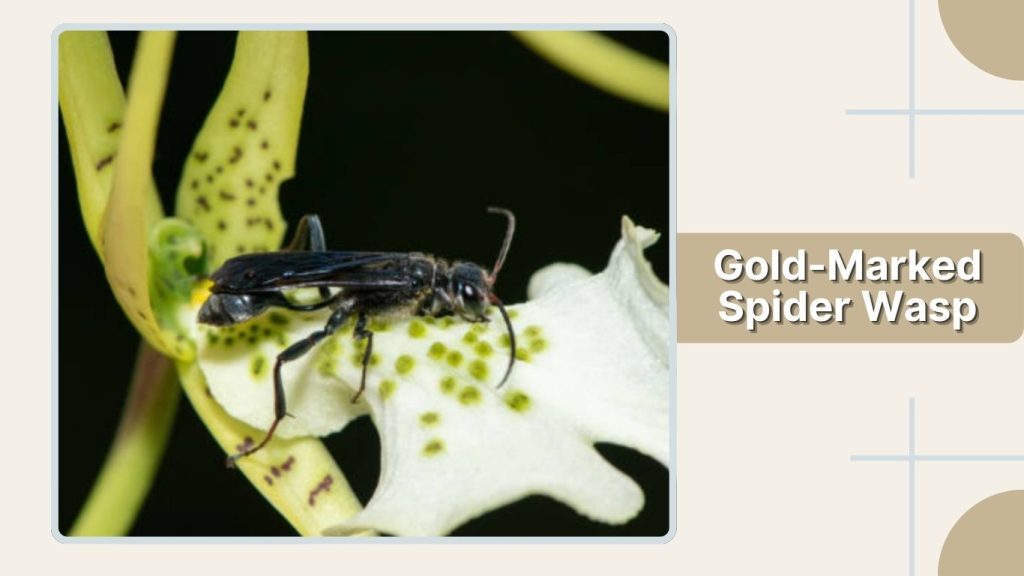
Gold-marked spider wasps are elegant hunting wasps known for the golden or yellow markings that contrast against their dark bodies. These solitary insects are fast-moving predators that specialize in hunting spiders for their offspring. Their colorful markings and agile behavior make them noticeable in gardens and wild habitats.
Identification
- Dark black or metallic blue-black body
- Distinct golden, yellow, or orange markings on the abdomen or thorax
- Long slender legs with sharp spines
- Narrow waist typical of spider wasps
- Transparent or smoky wings
- Curved antennae with a smooth appearance
- Body size generally ranges from 0.5 to 1.3 inches
- Females are often larger and more robust than males
Habitat and Distribution
Gold-marked spider wasps are commonly found in forests, meadows, gardens, shrublands, and sandy environments. They are widely distributed across North America and can also occur in tropical and subtropical regions of Central America.
These wasps prefer warm habitats with plenty of spiders and suitable nesting areas. They often build nests in loose soil, beneath stones, inside rotting wood, or within natural cracks in the ground. Flower-rich environments are especially attractive because adults rely on nectar for energy.
Behavior and Diet
Adult gold-marked spider wasps mainly feed on nectar from flowers and occasionally consume plant juices. They are active during warm daylight hours and are frequently observed flying low to the ground while searching for prey.
Female wasps are specialized spider hunters. Once a spider is located, the wasp attacks with speed and precision, delivering a powerful sting that paralyzes the prey. The immobilized spider is then dragged or carried back to the nest.
Although females possess painful stings, these wasps are generally calm and avoid human interaction unless disturbed. Males lack stingers and spend most of their time feeding or searching for mates.
Life Cycle
The female gold-marked spider wasp begins the reproductive process by preparing a nesting chamber in soil or another protected location. After capturing a spider, she places it inside the nest and lays a single egg on the prey’s body.
The egg soon hatches into a larva, which feeds gradually on the paralyzed spider. The larva consumes non-essential organs first, ensuring the spider remains alive and fresh throughout development. Once fully grown, the larva spins a cocoon and enters the pupal stage.
6. Black Spider Wasp
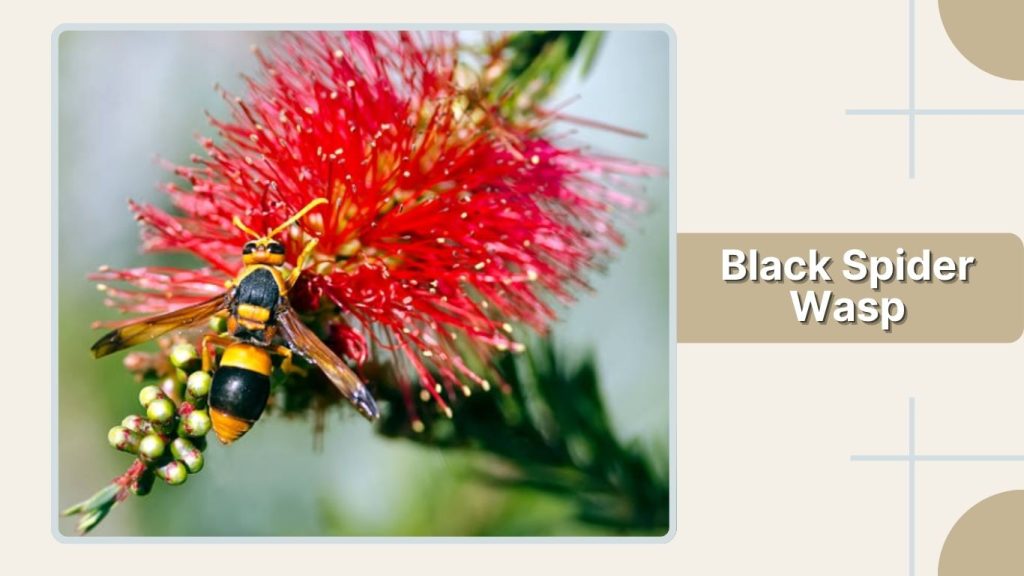
Black spider wasps are powerful solitary hunters recognized for their entirely dark coloration and fast, nervous movements. These wasps are highly effective predators that specialize in capturing spiders to provide food for their larvae. They are often seen running across the ground, tree bark, or low vegetation while searching for prey.
Identification
- Solid black or deep blue-black body coloration
- Long narrow body with a distinct waist
- Dark smoky or transparent wings
- Long legs equipped with sharp spines for gripping spiders
- Curved antennae and strong mandibles
- Body length ranges from 0.5 to 1.8 inches depending on species
- Females are typically larger and heavier than males
- Some species display a metallic sheen under sunlight
Habitat and Distribution
Black spider wasps are widely distributed across North America, South America, Europe, Africa, and parts of Asia. They thrive in forests, grasslands, deserts, gardens, and woodland edges where spider populations are abundant.
These wasps commonly nest in sandy soil, under rocks, within rotting wood, or inside natural ground cavities. They are especially active in warm climates and are frequently observed around flowering plants where they feed on nectar.
Behavior and Diet
Adult black spider wasps mainly consume nectar, fruit juices, and sugary plant secretions. They are important pollinators because they regularly visit flowers while feeding. Despite their intimidating appearance, they are generally non-aggressive toward humans unless threatened or accidentally handled.
Female black spider wasps are skilled hunters with highly specialized behaviors. They search for spiders on the ground, beneath leaves, inside burrows, or within webs. Once prey is located, the wasp attacks quickly and delivers a precise sting that paralyzes the spider.
After immobilizing the prey, the female drags or carries the spider to a prepared nest. Some species are capable of transporting spiders much larger than themselves over considerable distances. Males do not hunt and instead spend their time feeding and searching for mates.
Life Cycle
The life cycle begins when the female creates a nesting chamber in soil or another sheltered location. After capturing a spider, she places it inside the nest and lays a single egg on the prey.
The egg hatches into a larva that slowly feeds on the still-living spider. The larva consumes less vital tissues first, keeping the spider alive and fresh until feeding is complete. This strategy provides a continuous food source during development.
7. Orange Spider Wasp
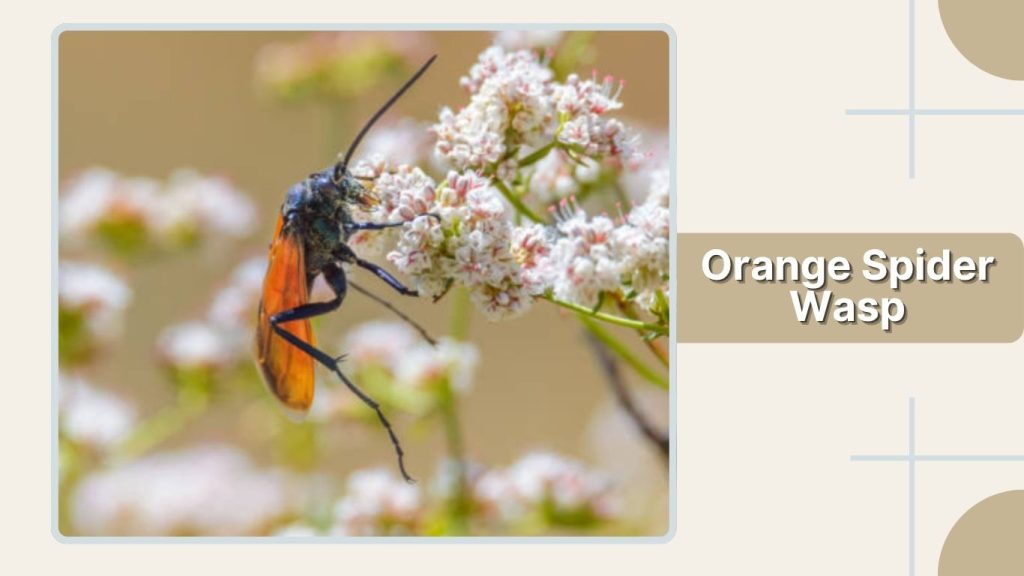
Orange spider wasps are brightly colored hunting wasps known for their vivid orange bodies or wings and their active spider-hunting behavior. These solitary insects are commonly found in warm environments where they patrol the ground and vegetation in search of prey. Their striking appearance often serves as a warning to predators about their painful sting.
Identification
- Bright orange, orange-red, or rusty-orange body coloration
- Some species have black markings on the thorax or abdomen
- Long slender legs with visible spines
- Narrow waist connecting the body sections
- Transparent or smoky wings, sometimes with an orange tint
- Curved antennae and strong jaws
- Body length typically ranges from 0.6 to 1.5 inches
- Females are usually larger and more powerful than males
Habitat and Distribution
Orange spider wasps are commonly found in deserts, grasslands, forests, tropical regions, and suburban gardens. They are widespread across North America, Central America, South America, and parts of Asia and Africa.
These wasps prefer warm climates with abundant spider populations and suitable nesting areas. They often create nests in sandy soil, loose dirt, under stones, or inside abandoned burrows. Adults are frequently seen around flowering plants where they gather nectar.
Behavior and Diet
Adult orange spider wasps feed mainly on nectar and other sugary plant fluids. They are active during sunny weather and spend much of their time flying low to the ground while searching for spiders.
Females are highly specialized hunters that target a variety of spider species. After locating prey, the wasp attacks rapidly and delivers a sting that paralyzes the spider without killing it. The immobilized spider is then dragged back to the nest, even if it is larger than the wasp itself.
Although these wasps possess strong stings, they are generally not aggressive toward humans unless threatened. Males cannot sting and mainly focus on feeding and mating activities.
Life Cycle
The female orange spider wasp begins by preparing a nest chamber in soil or another sheltered area. Once the nest is ready, she captures a spider and places it inside before laying a single egg on the prey.
The egg hatches into a larva that feeds slowly on the paralyzed spider. The larva carefully consumes non-essential organs first, keeping the spider alive and fresh throughout development. After feeding is complete, the larva spins a cocoon and enters the pupal stage.
8. Velvet Ant Spider Wasp
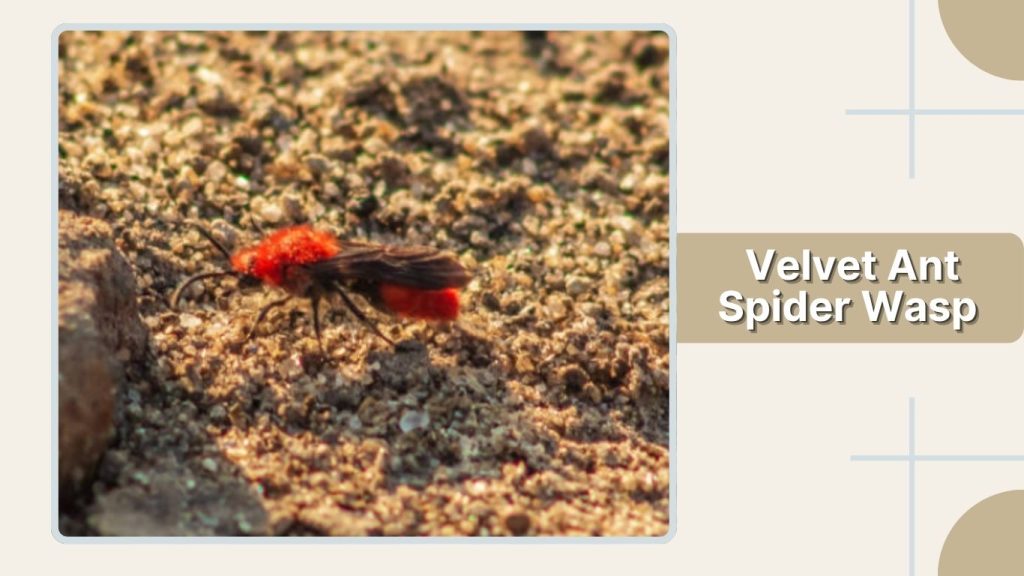
Velvet ant spider wasps are unusual spider-hunting wasps known for their fuzzy, brightly colored bodies and powerful sting. Despite the name “velvet ant,” they are actually wasps. Females are wingless and resemble large hairy ants, while males have wings and can fly. Their vivid colors serve as a warning to predators.
Identification
- Dense velvety hair covering the body
- Bright red, orange, yellow, white, or black coloration
- Females are wingless and ant-like in appearance
- Males possess dark transparent wings
- Strong legs adapted for fast movement on the ground
- Thick exoskeleton that offers protection from predators
- Narrow waist between the thorax and abdomen
- Body size usually ranges from 0.3 to 1 inch long
- Females have an extremely painful sting
Habitat and Distribution
Velvet ant spider wasps are widely distributed across North America, South America, Africa, and parts of Asia. They are especially common in dry and sandy habitats such as deserts, grasslands, open forests, and scrublands.
These wasps prefer warm environments where they can easily locate nesting sites and prey. Females are often seen running rapidly across sandy ground or beneath vegetation while searching for hosts or spiders. They may also inhabit gardens and rural landscapes with loose soil.
Behavior and Diet
Adult velvet ant spider wasps feed mainly on nectar and sugary liquids from flowers. They are solitary insects and do not form colonies. Their bright warning colors help deter predators such as birds and reptiles.
Females are active hunters and parasites. Some species attack spiders directly, while others invade the nests of ground-nesting wasps or bees. Their tough bodies make them difficult for predators to kill, and they are capable of producing squeaking sounds when threatened.
Male velvet ants are harmless because they lack stingers, but females possess one of the most painful stings among insects. However, they usually sting only when disturbed or handled.
Life Cycle
The female velvet ant spider wasp searches for a suitable nest or prey source before laying her eggs. In parasitic species, she enters another insect’s nest and deposits an egg near the host larva or stored prey. In spider-hunting species, eggs may be laid on paralyzed spiders kept within a protected chamber.
After hatching, the larva feeds on the host insect or spider until fully developed. The larva then forms a cocoon and enters the pupal stage. Once metamorphosis is complete, the adult wasp emerges and begins searching for food and mates.
9. Metallic Blue Spider Wasp
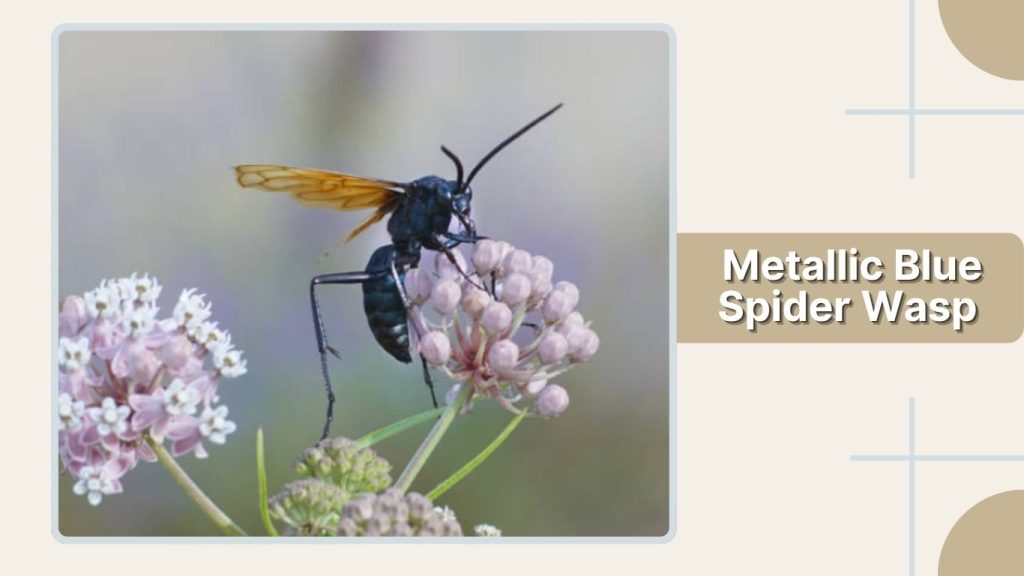
Metallic blue spider wasps are elegant hunting wasps famous for their shimmering blue coloration and swift movements. These solitary predators are highly specialized for hunting spiders and are often seen flying close to the ground or exploring vegetation in search of prey. Their glossy metallic appearance makes them one of the most visually striking spider wasps.
Identification
- Brilliant metallic blue or blue-black body coloration
- Glossy exoskeleton that reflects light
- Long slender legs with sharp spines
- Transparent dark-tinted or smoky wings
- Narrow waist connecting the thorax and abdomen
- Curved antennae and powerful mandibles
- Body length typically ranges from 0.5 to 1.4 inches
- Females are generally larger and more robust than males
- Smooth and streamlined body shape adapted for active hunting
Habitat and Distribution
Metallic blue spider wasps are found in forests, grasslands, gardens, deserts, and tropical environments. They are widely distributed across North America, Central America, South America, and some regions of Asia and Africa.
These wasps prefer warm habitats with abundant spider populations and suitable nesting areas. They often nest in sandy soil, loose earth, rotting wood, or abandoned burrows. Adults are commonly observed around flowering plants because nectar is an important food source.
Behavior and Diet
Adult metallic blue spider wasps mainly feed on nectar, flower juices, and other sugary substances. They are active during warm daylight hours and move quickly while searching for food or prey.
Females are highly efficient spider hunters. After locating a spider, the wasp attacks rapidly and uses a precise sting to paralyze the prey. The immobilized spider is then dragged or carried back to the nest to serve as food for the developing larva.
These wasps are usually solitary and non-aggressive toward humans. However, females can deliver a painful sting if threatened or handled. Males lack stingers and spend most of their time feeding and searching for mates.
Life Cycle
The female metallic blue spider wasp begins the reproductive process by preparing a nest chamber in soil or another sheltered location. Once the nest is ready, she captures a spider and places it inside before laying a single egg on the prey.
After hatching, the larva feeds slowly on the paralyzed spider, consuming less vital tissues first to keep the prey alive and fresh. This feeding process continues until the larva is fully developed.
The mature larva spins a cocoon and enters the pupal stage within the nest. After metamorphosis is complete, the adult wasp emerges and begins its independent life. In warmer regions, some species may produce multiple generations each year.
10. Common Spider Wasp
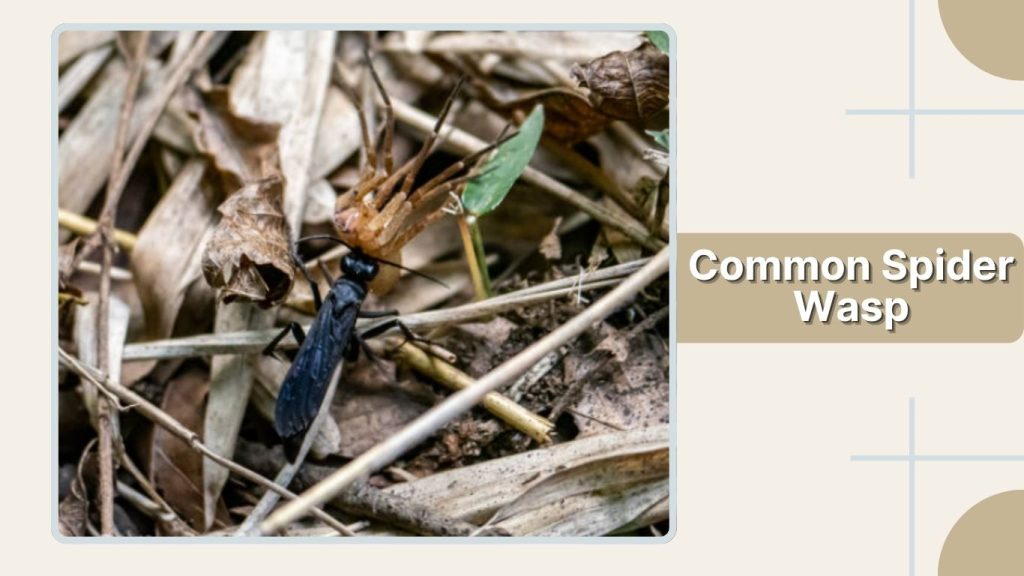
Common spider wasps are widespread solitary hunters known for their agile movements and ability to capture a variety of spiders. Although their appearance can vary between species, they typically share slender bodies, long legs, and strong hunting instincts. These wasps play an important role in maintaining spider populations in natural ecosystems.
Identification
- Slender black, brown, or dark metallic body
- Long legs with visible spines used for gripping prey
- Narrow waist between the thorax and abdomen
- Transparent or smoky wings
- Curved antennae and elongated body shape
- Body size usually ranges from 0.4 to 1.2 inches long
- Females are often larger than males
- Fast-running behavior when searching for spiders
Habitat and Distribution
Common spider wasps are found throughout North America, Europe, Asia, Africa, and many tropical regions. They inhabit forests, meadows, grasslands, gardens, deserts, and woodland edges where spiders are plentiful.
These wasps prefer warm habitats with loose soil or sheltered nesting locations. Nests are commonly built underground, beneath rocks, inside rotting wood, or within natural crevices. Adults are frequently seen visiting flowers for nectar.
Behavior and Diet
Adult common spider wasps feed mainly on nectar, plant juices, and sugary liquids. They are active during daylight hours and are often observed moving rapidly along the ground or low vegetation while searching for spiders.
Females are solitary hunters that specialize in paralyzing spiders with a powerful sting. Once prey is captured, the wasp drags or carries the spider back to a prepared nest. Some species are capable of hunting spiders much larger than themselves.
These wasps are generally non-aggressive toward humans and sting only when threatened. Males do not possess stingers and spend most of their time feeding or searching for mates.
Life Cycle
The female common spider wasp constructs a nesting chamber in soil or another protected location before hunting for prey. After capturing and paralyzing a spider, she places it inside the nest and lays a single egg on the spider’s body.
The egg hatches into a larva that slowly feeds on the still-living spider. The larva consumes less essential organs first, which keeps the prey alive and fresh during development. Once feeding is complete, the larva spins a cocoon and enters the pupal stage.
After metamorphosis is finished, the adult wasp emerges from the nest and begins searching for food, mates, and suitable nesting sites. Depending on climate conditions, some species may produce several generations each year.
11. Scarlet Spider Wasp
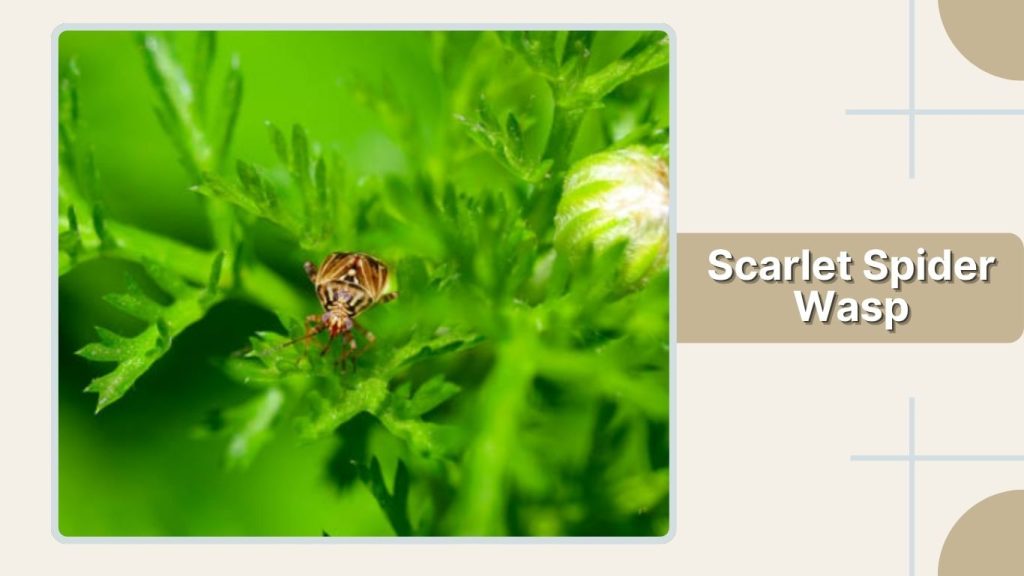
Scarlet spider wasps are brightly colored hunting wasps admired for their vivid scarlet or reddish-orange coloration and active predatory behavior. These solitary insects are highly skilled spider hunters and are commonly seen in warm environments where they search for prey among vegetation and ground cover.
Identification
- Bright scarlet, reddish-orange, or deep red body coloration
- Dark black markings on the abdomen or thorax in some species
- Long slender legs with sharp spines
- Narrow waist connecting body segments
- Transparent smoky or dark-tinted wings
- Curved antennae and powerful mandibles
- Body length usually ranges from 0.6 to 1.4 inches
- Females are generally larger and heavier than males
- Smooth, glossy body surface with striking coloration
Habitat and Distribution
Scarlet spider wasps are commonly found in forests, meadows, deserts, tropical regions, and gardens. They are widely distributed across North America, Central America, South America, and some parts of Asia.
These wasps prefer warm habitats with abundant spiders and suitable nesting sites. They commonly nest in loose soil, beneath rocks, inside decaying wood, or within abandoned burrows. Adults are frequently observed visiting flowers to feed on nectar.
Behavior and Diet
Adult scarlet spider wasps mainly consume nectar, flower juices, and other sugary liquids. They are highly active during daylight hours and often move quickly while exploring the ground or vegetation for prey.
Female scarlet spider wasps are specialized hunters that target a variety of spider species. Once a spider is found, the wasp attacks rapidly and delivers a precise sting that paralyzes the prey. The immobilized spider is then dragged or carried back to the nest as food for the developing larva.
These wasps are generally solitary and avoid human interaction. Females can produce a painful sting when threatened, while males are harmless because they lack stingers.
Life Cycle
The life cycle begins when the female prepares a nesting chamber in soil or another protected location. After capturing a spider, she places it inside the nest and lays a single egg on the prey.
The egg hatches into a larva that feeds gradually on the still-living spider. The larva consumes less vital tissues first, ensuring the prey remains fresh throughout development. Once feeding is complete, the larva spins a cocoon and enters the pupal stage.
After metamorphosis is finished, the adult scarlet spider wasp emerges from the nest and begins searching for food, mates, and suitable nesting sites. In warmer climates, multiple generations may develop within a single year.
12. Yellow-Legged Spider Wasp
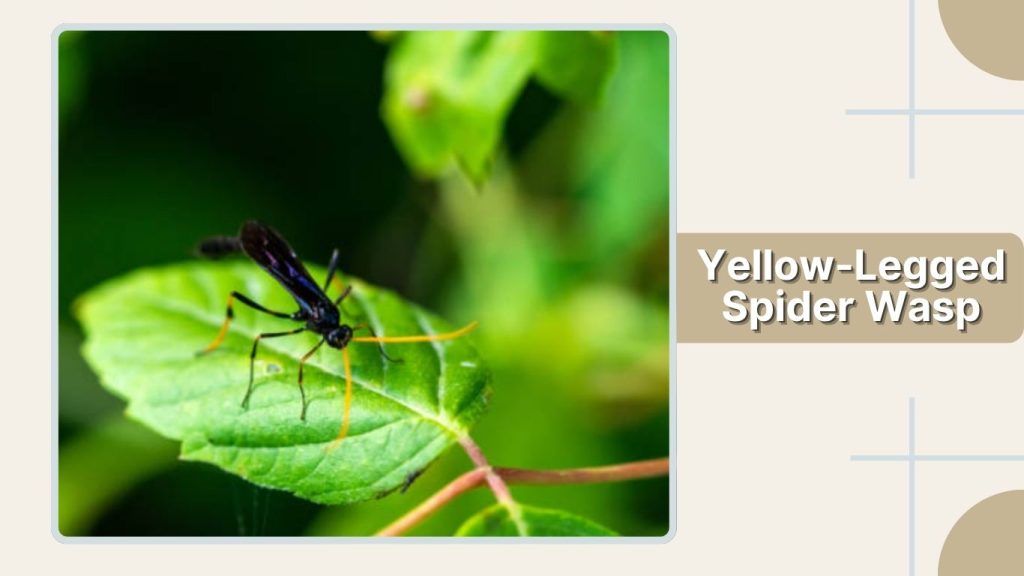
Yellow-legged spider wasps are distinctive hunting wasps recognized for their dark bodies and bright yellow or orange legs. These agile predators are highly adapted for capturing spiders and are commonly seen moving rapidly across the ground or vegetation while searching for prey.
Identification
- Black or dark metallic blue-black body coloration
- Bright yellow, orange-yellow, or golden legs
- Long slender body with a narrow waist
- Transparent or smoky wings
- Curved antennae and strong mandibles
- Spiny legs designed for gripping spiders
- Body length usually ranges from 0.5 to 1.3 inches
- Females are larger and more robust than males
- Some species display a slight metallic sheen in sunlight
Habitat and Distribution
Yellow-legged spider wasps are widely distributed across North America, Europe, Asia, and tropical regions. They inhabit forests, grasslands, gardens, meadows, deserts, and woodland edges where spider populations are abundant.
These wasps prefer warm environments with loose soil or hidden cavities suitable for nesting. Nests are commonly built underground, beneath rocks, inside decaying wood, or in natural crevices. Adults are often seen visiting flowers to feed on nectar.
Behavior and Diet
Adult yellow-legged spider wasps primarily feed on nectar and sugary plant fluids. They are active during sunny weather and spend much of their time searching for spiders near the ground or among low vegetation.
Females are skilled hunters that attack spiders with speed and precision. After delivering a paralyzing sting, the wasp drags the immobilized spider back to the nest. Some species are capable of transporting prey much larger than themselves.
Although females possess painful stings, these wasps are generally not aggressive toward humans unless threatened or handled. Males lack stingers and focus mainly on feeding and mating.
Life Cycle
The female yellow-legged spider wasp begins by constructing a nesting chamber in soil or another sheltered location. Once the nest is ready, she captures a spider and places it inside before laying a single egg on the prey.
After the egg hatches, the larva feeds slowly on the still-living spider. The larva consumes non-essential organs first to keep the prey fresh throughout development. When feeding is complete, the larva spins a cocoon and enters the pupal stage.
Following metamorphosis, the adult wasp emerges from the nest and begins searching for food and mates. In warmer climates, several generations may occur during the same year.
13. Brown Spider Wasp
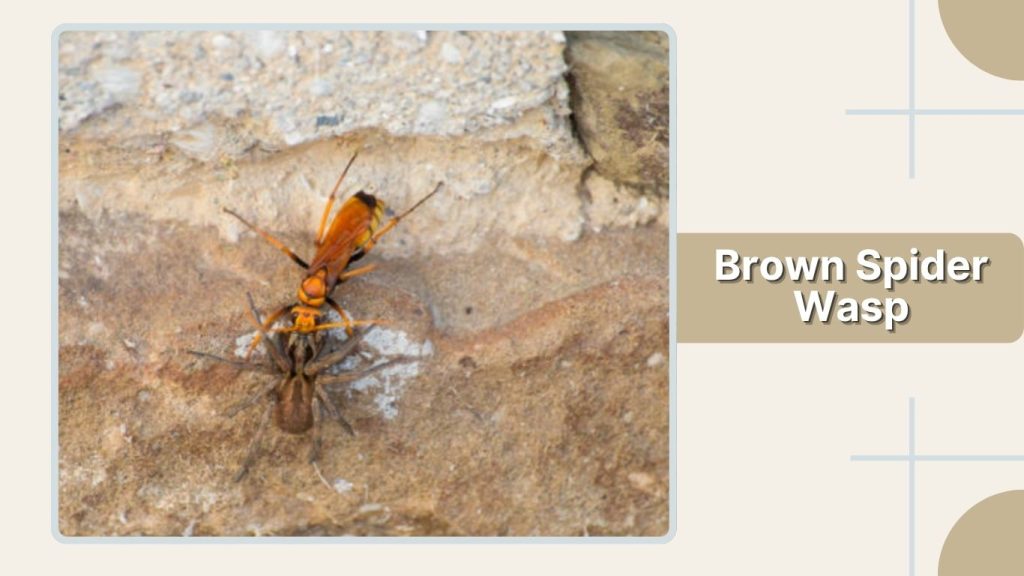
Brown spider wasps are slender predatory wasps known for their brown or reddish-brown coloration and impressive spider-hunting abilities. These solitary insects are fast-moving hunters that play an important role in controlling spider populations in a variety of natural habitats.
Identification
- Brown, reddish-brown, or dark chestnut body coloration
- Long narrow body with a clearly defined waist
- Transparent or smoky brown wings
- Long spiny legs adapted for gripping prey
- Curved antennae and strong mandibles
- Body length typically ranges from 0.5 to 1.4 inches
- Females are usually larger than males
- Some species may have darker markings on the abdomen or thorax
Habitat and Distribution
Brown spider wasps are widely distributed across North America, Europe, Asia, Africa, and tropical regions. They commonly inhabit forests, grasslands, gardens, woodland edges, deserts, and open meadows where spiders are abundant.
These wasps prefer warm environments with sandy or loose soil suitable for nesting. They often build nests underground, beneath rocks, inside hollow wood, or within natural crevices. Adults are frequently seen around flowering plants while feeding on nectar.
Behavior and Diet
Adult brown spider wasps feed mainly on nectar, flower juices, and sugary plant secretions. They are active during daylight hours and spend much of their time flying low to the ground or exploring vegetation in search of spiders.
Female brown spider wasps are specialized hunters that attack a variety of spider species. Once prey is located, the wasp delivers a precise sting that paralyzes the spider without killing it. The immobilized prey is then dragged back to the nest to provide fresh food for the developing larva.
These wasps are generally solitary and non-aggressive toward humans. Females can sting if threatened, while males are harmless because they do not possess stingers.
Life Cycle
The life cycle begins when the female prepares a nesting chamber in soil or another protected location. After capturing a spider, she places it inside the nest and lays a single egg on the prey’s body.
The egg hatches into a larva that slowly feeds on the paralyzed spider. The larva consumes less vital tissues first so the spider remains alive and fresh during development. After completing its feeding stage, the larva spins a cocoon and enters the pupal stage.
Once metamorphosis is complete, the adult brown spider wasp emerges from the nest and begins searching for food, mates, and suitable nesting areas. In warmer regions, multiple generations may occur each year.
14. Great Black Spider Wasp
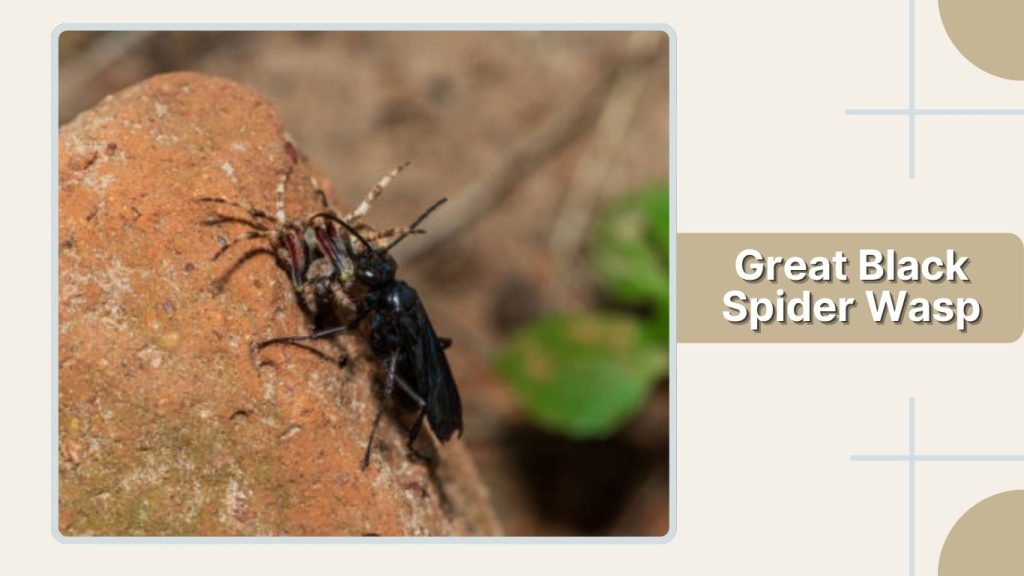
Great black spider wasps are large and powerful hunting wasps known for their glossy black bodies and impressive ability to capture spiders. These solitary insects are among the most recognizable spider wasps because of their size, strength, and active hunting behavior. Despite their intimidating appearance, they are usually calm and rarely aggressive toward humans.
Identification
- Entirely black or deep blue-black body coloration
- Smooth glossy exoskeleton with a metallic sheen
- Long slender legs equipped with strong spines
- Dark smoky or transparent black wings
- Narrow waist between the thorax and abdomen
- Curved antennae and strong jaws
- Body length generally ranges from 1 to 2 inches
- Females are significantly larger and stronger than males
- Powerful body structure adapted for carrying large spiders
Habitat and Distribution
Great black spider wasps are widely distributed throughout North America, especially in warm and temperate regions. They are commonly found in grasslands, gardens, forests, meadows, deserts, and woodland edges where spiders are abundant.
These wasps prefer habitats with loose soil or sheltered nesting areas. Nests are often built underground, beneath rocks, inside rotting wood, or within abandoned burrows. Adults are frequently seen feeding on flowers during warm months.
Behavior and Diet
Adult great black spider wasps primarily feed on nectar, flower juices, and sugary plant fluids. They are important pollinators because they regularly visit flowering plants while feeding.
Females are highly skilled hunters that specialize in capturing large spiders. After locating prey, the wasp attacks rapidly and delivers a precise sting that paralyzes the spider. The immobilized spider is then dragged back to the nest, even when the prey is much larger than the wasp itself.
These wasps are generally solitary and avoid conflict with humans. Females can deliver a very painful sting if threatened or handled, while males are harmless because they do not possess stingers.
Life Cycle
The female great black spider wasp begins by preparing a nesting chamber in soil or another sheltered location. Once the nest is ready, she captures a spider and places it inside before laying a single egg on the prey.
After hatching, the larva feeds slowly on the paralyzed spider. It consumes non-vital tissues first to keep the spider alive and fresh throughout development. Once feeding is complete, the larva spins a cocoon and enters the pupal stage.
After metamorphosis is complete, the adult wasp emerges from the nest and begins searching for food, mates, and nesting sites. In warm climates, some species may produce multiple generations within a single year.
15. Red Spider Wasp
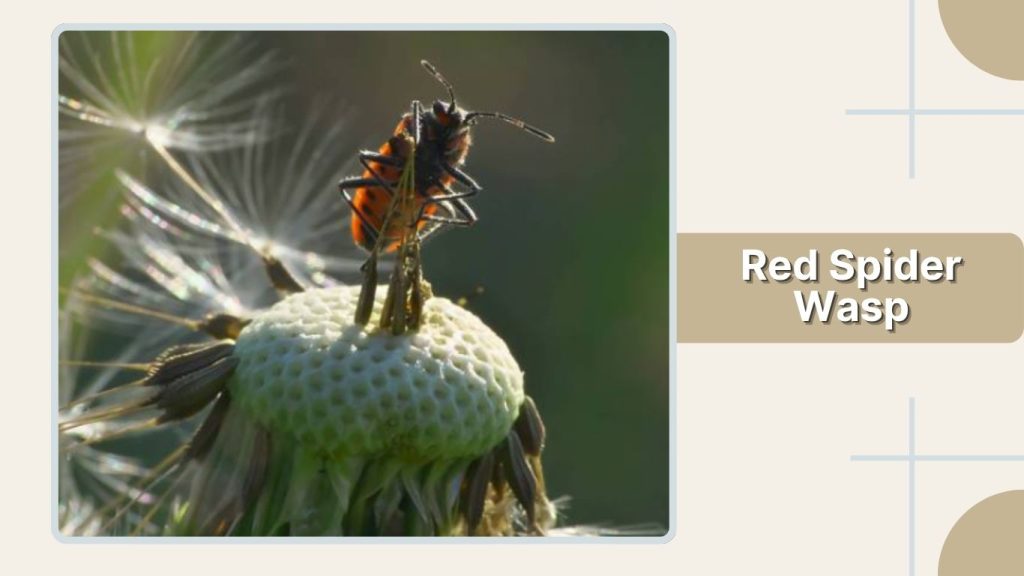
Red spider wasps are brightly colored solitary hunters known for their reddish bodies and active spider-hunting behavior. These wasps are agile predators that play an important role in controlling spider populations in natural ecosystems. Their vivid coloration often serves as a warning to predators about their painful sting.
Identification
- Bright red, reddish-brown, or orange-red body coloration
- Long slender body with a narrow waist
- Dark smoky or transparent wings
- Long spiny legs designed for gripping prey
- Curved antennae and strong mandibles
- Body length usually ranges from 0.6 to 1.5 inches
- Females are larger and heavier than males
- Some species may display black markings on the abdomen or thorax
Habitat and Distribution
Red spider wasps are found across North America, Central America, South America, and some tropical regions worldwide. They commonly inhabit forests, meadows, deserts, gardens, grasslands, and woodland edges where spiders are plentiful.
These wasps prefer warm climates with loose soil or natural cavities suitable for nesting. Nests are commonly constructed underground, beneath rocks, inside decaying wood, or in abandoned burrows. Adults are often seen visiting flowers for nectar.
Behavior and Diet
Adult red spider wasps mainly feed on nectar, flower juices, and sugary plant fluids. They are highly active during warm daylight hours and are frequently observed flying low over the ground while searching for spiders.
Female red spider wasps are specialized hunters that attack spiders with speed and precision. After locating prey, the wasp delivers a powerful sting that paralyzes the spider without killing it. The immobilized spider is then dragged or carried back to the nest as food for the developing larva.
These wasps are generally solitary and non-aggressive toward humans unless threatened. Females can inflict a painful sting, while males are harmless because they do not possess stingers.
Life Cycle
The life cycle begins when the female prepares a nesting chamber in soil or another protected location. After capturing a spider, she places it inside the nest and lays a single egg on the prey’s body.
The egg hatches into a larva that feeds gradually on the still-living spider. The larva consumes less essential organs first to keep the spider fresh during development. Once fully grown, the larva spins a cocoon and enters the pupal stage.
After metamorphosis is complete, the adult red spider wasp emerges from the nest and begins searching for food, mates, and suitable nesting sites. In warmer climates, several generations may develop during a single year.
16. White-Banded Spider Wasp
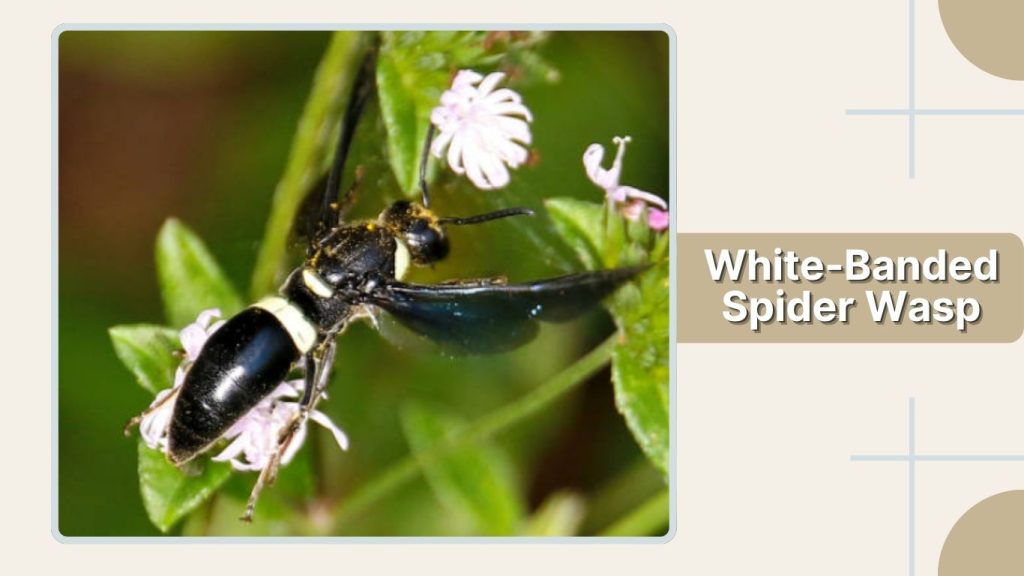
White-banded spider wasps are distinctive solitary hunters recognized for the pale white or cream-colored bands across their dark bodies. These agile wasps are specialized spider predators and are commonly seen moving quickly over the ground or low vegetation while searching for prey.
Identification
- Black or dark blue-black body coloration
- Distinct white or pale cream bands on the abdomen
- Long slender legs with sharp spines
- Narrow waist between the thorax and abdomen
- Transparent smoky or dark-tinted wings
- Curved antennae and strong mandibles
- Body length usually ranges from 0.5 to 1.4 inches
- Females are generally larger and more robust than males
- Smooth glossy body surface with contrasting markings
Habitat and Distribution
White-banded spider wasps are found in forests, grasslands, deserts, gardens, and woodland edges throughout North America and other warm regions. They are especially common in areas with abundant spider populations and suitable nesting conditions.
These wasps prefer warm habitats with sandy soil, loose earth, or natural crevices for nesting. Nests are often located underground, beneath stones, inside rotting wood, or within abandoned insect burrows. Adults are commonly seen visiting flowers while feeding on nectar.
Behavior and Diet
Adult white-banded spider wasps primarily feed on nectar, flower juices, and sugary plant secretions. They are active during sunny weather and spend much of their time searching for spiders close to the ground.
Females are highly efficient hunters that target a variety of spider species. Once prey is located, the wasp attacks rapidly and delivers a paralyzing sting. The immobilized spider is then dragged back to the nest to serve as food for the developing larva.
Although females possess painful stings, these wasps are usually non-aggressive and avoid human contact unless disturbed. Males lack stingers and mainly focus on feeding and mating activities.
Life Cycle
The female white-banded spider wasp begins by constructing a nesting chamber in soil or another protected location. After capturing a spider, she places it inside the nest and lays a single egg on the prey.
The egg soon hatches into a larva that slowly feeds on the still-living spider. The larva consumes non-vital tissues first so the prey remains alive and fresh during development. Once feeding is complete, the larva spins a cocoon and enters the pupal stage.
After metamorphosis is finished, the adult wasp emerges from the nest and begins searching for food, mates, and suitable nesting areas. In warm climates, some species may complete multiple generations in a single year.
17. Blue Tarantula Hawk
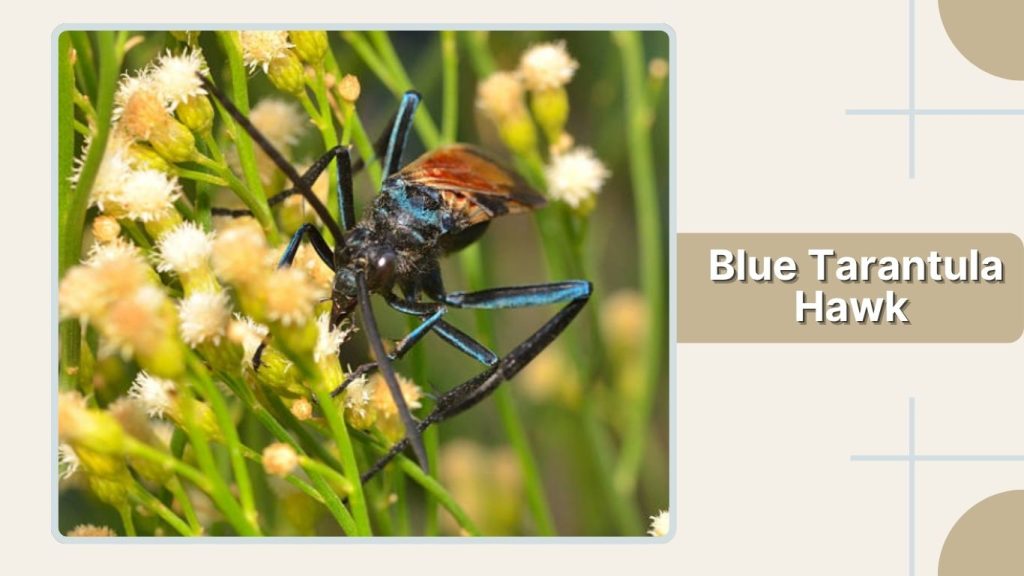
Blue tarantula hawks are large and powerful spider wasps famous for their metallic blue bodies and ability to hunt tarantulas. These impressive wasps are among the largest spider-hunting insects and are well known for their painful sting. Despite their intimidating appearance, they are generally non-aggressive unless threatened.
Identification
- Metallic blue or deep blue-black body coloration
- Large robust body with a narrow waist
- Dark blue, black, or smoky wings
- Long legs with hooked claws for handling spiders
- Curved antennae and strong mandibles
- Body length usually ranges from 1.5 to 2 inches
- Females are larger and heavier than males
- Smooth glossy exoskeleton with an iridescent sheen
- Powerful sting considered one of the most painful among insects
Habitat and Distribution
Blue tarantula hawks are commonly found in deserts, grasslands, tropical forests, and scrublands across North America, Central America, and South America. They are especially abundant in warm climates where tarantulas are common.
These wasps prefer sandy or loose soil suitable for nesting. They often inhabit dry open landscapes, woodland edges, and areas with flowering plants. Adults are frequently observed feeding on nectar during warm daylight hours.
Behavior and Diet
Adult blue tarantula hawks mainly feed on nectar, flower juices, and sugary plant fluids. They are important pollinators because they regularly visit flowering plants while feeding.
Female blue tarantula hawks are specialized hunters that target tarantulas and other large spiders. After locating a spider, the wasp attacks aggressively and delivers a precise sting that paralyzes the prey. The immobilized spider is then dragged to a prepared nest, even when it is much larger than the wasp itself.
Although females possess an extremely painful sting, these wasps usually avoid human interaction and sting only when threatened or handled. Males do not possess stingers and are harmless.
Life Cycle
The female blue tarantula hawk begins by preparing a nesting chamber in soil or another sheltered location. Once the nest is ready, she captures and paralyzes a tarantula before dragging it into the chamber.
A single egg is laid on the spider’s body. After hatching, the larva slowly feeds on the still-living tarantula, consuming less vital tissues first to keep the prey fresh during development. This feeding process continues until the larva is fully grown.
The mature larva spins a cocoon and enters the pupal stage inside the nest. After metamorphosis is complete, the adult wasp emerges and begins searching for food and mates. In warmer climates, some species may produce more than one generation each year.
18. Dusky Spider Wasp
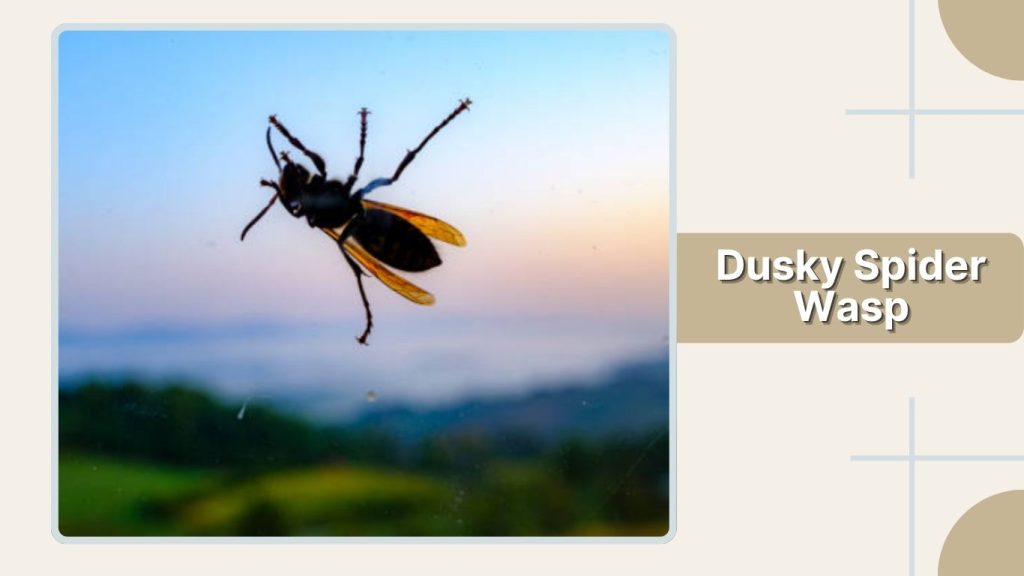
Dusky spider wasps are dark-colored solitary hunters known for their smoky wings and swift hunting behavior. These wasps are highly specialized predators that capture spiders to provide food for their developing larvae. Their muted coloration helps them blend into natural environments while searching for prey.
Identification
- Dark brown, black, or dusky gray body coloration
- Smoky or dark-tinted wings
- Long slender body with a narrow waist
- Long spiny legs adapted for gripping spiders
- Curved antennae and strong mandibles
- Body length generally ranges from 0.5 to 1.3 inches
- Females are usually larger and more powerful than males
- Smooth body surface with a slightly metallic appearance in sunlight
Habitat and Distribution
Dusky spider wasps are widely distributed across North America, Europe, Asia, and tropical regions. They inhabit forests, grasslands, meadows, gardens, deserts, and woodland edges where spiders are abundant.
These wasps prefer warm habitats with sandy soil, loose earth, or hidden cavities suitable for nesting. Nests are commonly built underground, beneath rocks, inside decaying wood, or within abandoned insect burrows. Adults are often found near flowers while feeding on nectar.
Behavior and Diet
Adult dusky spider wasps primarily feed on nectar, flower juices, and sugary plant secretions. They are active during warm daylight hours and spend much of their time searching for spiders near the ground or among low vegetation.
Females are efficient hunters that specialize in paralyzing spiders with a precise sting. Once prey is immobilized, the wasp drags or carries it back to the nest to serve as food for the developing larva. Some species are capable of capturing spiders larger than themselves.
These wasps are generally non-aggressive toward humans and sting only when threatened or handled. Males do not possess stingers and focus mainly on feeding and mating activities.
Life Cycle
The female dusky spider wasp begins by constructing a nesting chamber in soil or another protected location. After capturing a spider, she places it inside the nest and lays a single egg on the prey.
The egg hatches into a larva that slowly feeds on the still-living spider. The larva consumes non-vital tissues first so the prey remains alive and fresh during development. After completing its feeding stage, the larva spins a cocoon and enters the pupal stage.
Once metamorphosis is complete, the adult dusky spider wasp emerges from the nest and begins searching for food, mates, and suitable nesting sites. In warm climates, multiple generations may develop during a single year.
19. Short-Winged Spider Wasp
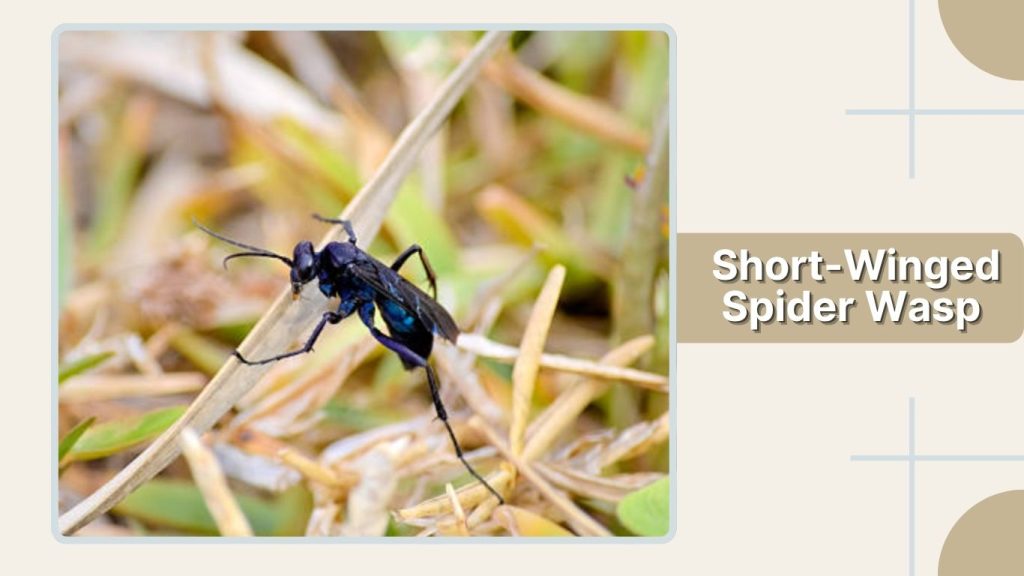
Short-winged spider wasps are unusual spider-hunting wasps recognized for their reduced wing size and fast ground movement. These solitary predators rely more on running than flying and are highly adapted for searching for spiders in soil, leaf litter, and low vegetation.
Identification
- Shortened or reduced wings compared to other spider wasps
- Black, brown, or dark reddish body coloration
- Long slender body with a narrow waist
- Strong spiny legs adapted for running and gripping prey
- Curved antennae and powerful mandibles
- Females are often wingless or nearly wingless in some species
- Body length generally ranges from 0.4 to 1 inch
- Fast-running behavior across the ground
Habitat and Distribution
Short-winged spider wasps are found in forests, grasslands, deserts, and woodland edges across North America, Europe, Asia, and other warm regions. They commonly inhabit sandy or loose-soil environments where spiders are abundant.
These wasps prefer ground-level habitats with rocks, leaf litter, decaying wood, or underground cavities suitable for nesting. Because of their reduced wings, they are most often seen running rather than flying.
Behavior and Diet
Adult short-winged spider wasps mainly feed on nectar, plant juices, and sugary secretions. They are active during warm daylight hours and spend much of their time searching for spiders among ground debris and vegetation.
Females are highly specialized hunters that use speed and agility to overpower spiders. After locating prey, the wasp delivers a precise sting that paralyzes the spider without killing it. The immobilized spider is then dragged back to a prepared nest.
These wasps are generally solitary and avoid humans whenever possible. Females can sting when threatened, while males are harmless because they lack stingers.
Life Cycle
The female short-winged spider wasp prepares a nesting chamber in soil, beneath rocks, or inside natural crevices. After capturing a spider, she places it inside the nest and lays a single egg on the prey.
The egg hatches into a larva that slowly feeds on the still-living spider. The larva consumes less essential tissues first to keep the prey alive and fresh during development. Once feeding is complete, the larva spins a cocoon and enters the pupal stage.
After metamorphosis is complete, the adult wasp emerges from the nest and begins searching for food, mates, and nesting sites. In warmer climates, some species may produce multiple generations each year.
20. Long-Legged Spider Wasp
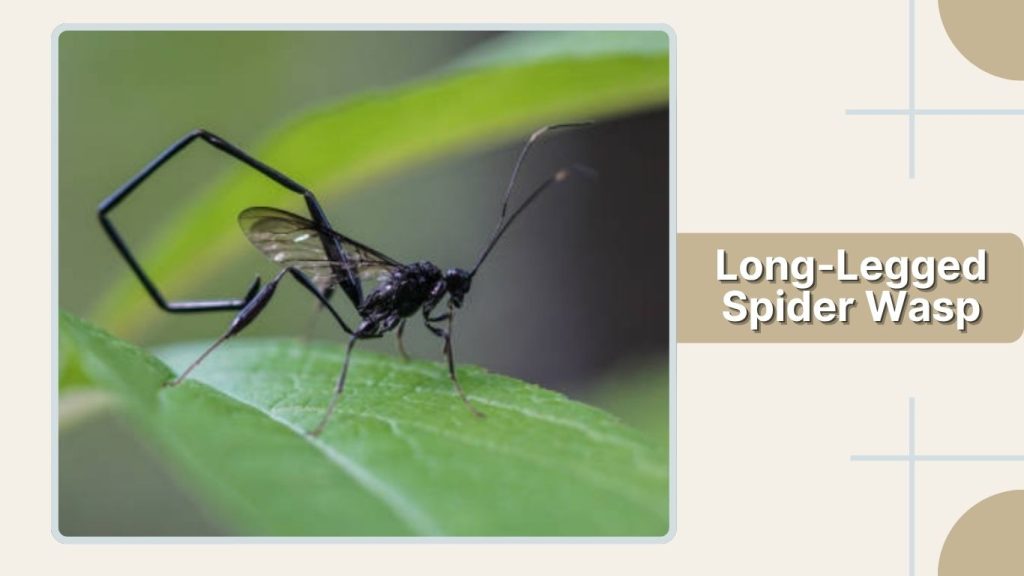
Long-legged spider wasps are slender predatory wasps recognized for their unusually long legs and agile hunting behavior. These solitary hunters are highly specialized for capturing spiders and are often seen moving rapidly across vegetation or open ground while searching for prey.
Identification
- Extremely long, slender legs compared to body size
- Black, dark brown, or metallic blue-black body coloration
- Narrow waist connecting the thorax and abdomen
- Transparent or smoky wings
- Curved antennae and strong mandibles
- Spiny legs designed for gripping and carrying spiders
- Body length usually ranges from 0.5 to 1.5 inches
- Females are generally larger and more robust than males
- Streamlined body adapted for fast movement
Habitat and Distribution
Long-legged spider wasps are widely distributed across North America, South America, Europe, Asia, and tropical regions. They inhabit forests, grasslands, meadows, gardens, wetlands, and woodland edges where spiders are abundant.
These wasps prefer warm habitats with sandy soil, loose earth, or hidden crevices suitable for nesting. Nests are commonly constructed underground, beneath rocks, inside decaying wood, or within abandoned burrows. Adults are frequently seen visiting flowers to feed on nectar.
Behavior and Diet
Adult long-legged spider wasps mainly feed on nectar, flower juices, and sugary plant secretions. They are active during sunny weather and often move quickly across the ground or low vegetation while searching for prey.
Females are specialized hunters that rely on speed and agility to capture spiders. After locating prey, the wasp attacks rapidly and delivers a sting that paralyzes the spider without killing it. The immobilized spider is then dragged back to the nest to provide fresh food for the developing larva.
Although females possess painful stings, these wasps are generally non-aggressive and avoid humans unless disturbed or handled. Males are harmless because they do not possess stingers.
Life Cycle
The female long-legged spider wasp begins by preparing a nesting chamber in soil or another sheltered location. Once the nest is ready, she captures a spider and places it inside before laying a single egg on the prey.
After hatching, the larva slowly feeds on the still-living spider. The larva consumes less essential tissues first so the prey remains alive and fresh throughout development. Once fully developed, the larva spins a cocoon and enters the pupal stage.
Following metamorphosis, the adult wasp emerges from the nest and begins searching for food, mates, and suitable nesting sites. In warmer climates, several generations may occur within a single year.
21. Giant Spider Wasp
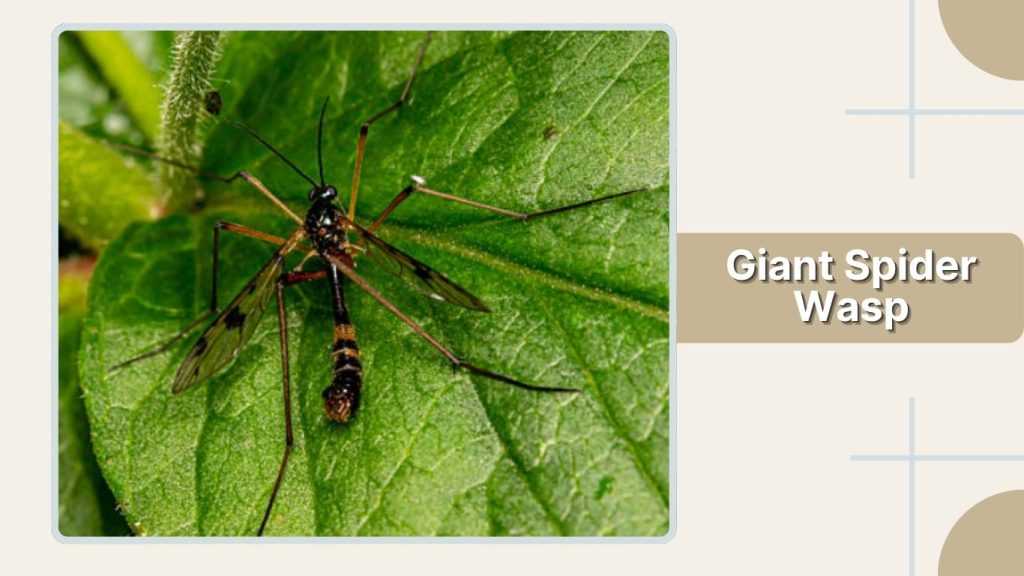
Giant spider wasps are among the largest members of the spider wasp family and are well known for their strength, size, and ability to hunt large spiders. These impressive solitary hunters are powerful predators that play an important role in controlling spider populations in many ecosystems.
Identification
- Very large body size compared to most wasps
- Black, dark blue-black, or reddish-black coloration
- Long powerful legs with sharp spines
- Narrow waist between the thorax and abdomen
- Large smoky, orange, or dark-tinted wings
- Strong curved antennae and large mandibles
- Body length usually ranges from 1 to 2.5 inches
- Females are larger and stronger than males
- Glossy exoskeleton with a metallic sheen in some species
Habitat and Distribution
Giant spider wasps are found across North America, Central America, South America, Africa, and tropical regions worldwide. They inhabit deserts, forests, grasslands, scrublands, and woodland edges where large spiders are common.
These wasps prefer warm climates with loose soil or sheltered nesting sites. Nests are commonly built underground, beneath rocks, inside hollow logs, or within abandoned burrows. Adults are often seen feeding on flowers during warm seasons.
Behavior and Diet
Adult giant spider wasps mainly feed on nectar, flower juices, and sugary plant fluids. They are important pollinators because they frequently visit flowering plants while feeding.
Females are powerful hunters capable of attacking large spiders, including tarantulas in some species. Once prey is located, the wasp uses speed and precision to deliver a paralyzing sting. The immobilized spider is then dragged or carried back to the nest, sometimes over long distances.
Despite their intimidating appearance, giant spider wasps are generally non-aggressive toward humans unless threatened. Females can deliver an extremely painful sting, while males are harmless because they lack stingers.
Life Cycle
The female giant spider wasp begins by preparing a nesting chamber in soil or another protected location. After capturing a spider, she places it inside the nest and lays a single egg on the prey’s body.
The egg hatches into a larva that slowly feeds on the still-living spider. The larva consumes less vital tissues first to keep the prey alive and fresh during development. Once feeding is complete, the larva spins a cocoon and enters the pupal stage.
After metamorphosis is complete, the adult giant spider wasp emerges from the nest and begins searching for food, mates, and suitable nesting areas. In warm climates, some species may produce multiple generations each year.
22. Sand Spider Wasp
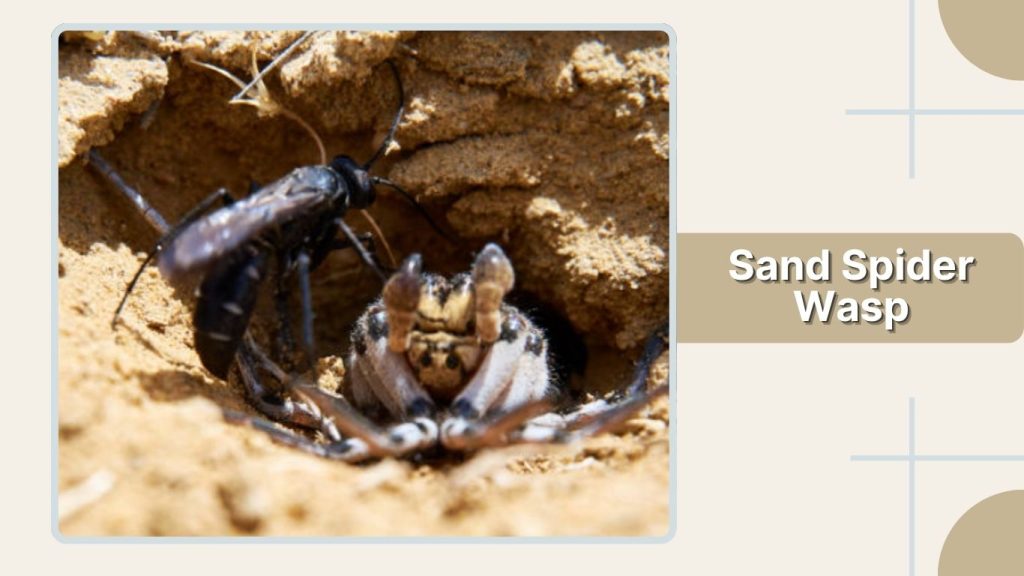
Sand spider wasps are ground-dwelling hunting wasps specially adapted for life in sandy environments. These solitary predators are fast runners and skilled hunters that search for spiders in loose soil, dunes, and dry open habitats. Their coloration often helps them blend into sandy surroundings for camouflage and protection.
Identification
- Light brown, sandy yellow, or reddish-brown body coloration
- Slender body with a narrow waist
- Long legs with spines for digging and gripping prey
- Transparent or lightly smoky wings
- Curved antennae and strong mandibles
- Body length generally ranges from 0.5 to 1.4 inches
- Females are larger and more powerful than males
- Fast-running behavior on sandy surfaces
- Camouflaged appearance that blends with dry habitats
Habitat and Distribution
Sand spider wasps are commonly found in deserts, coastal dunes, sandy grasslands, dry scrublands, and open woodland areas. They occur across North America, Africa, Asia, and other warm regions where loose sandy soil is abundant.
These wasps prefer dry habitats with plenty of burrowing spiders and open ground suitable for nesting. Nests are usually constructed directly in sandy soil, often in sheltered locations protected from heavy rain or flooding.
Behavior and Diet
Adult sand spider wasps mainly feed on nectar, flower juices, and sugary plant secretions. They are active during warm sunny weather and spend much of their time running across the ground while searching for prey.
Females are highly specialized hunters that target spiders living in sandy or underground habitats. Once a spider is located, the wasp attacks rapidly and delivers a sting that paralyzes the prey. The immobilized spider is then dragged back to the nest to provide food for the developing larva.
These wasps are generally solitary and non-aggressive toward humans unless disturbed. Females can sting when threatened, while males are harmless because they do not possess stingers.
Life Cycle
The female sand spider wasp begins by digging a nesting chamber in loose sandy soil. After preparing the nest, she captures and paralyzes a spider before dragging it underground.
A single egg is laid on the spider’s body. Once the egg hatches, the larva slowly feeds on the still-living prey, consuming less essential tissues first to keep the spider fresh throughout development. After feeding is complete, the larva spins a cocoon and enters the pupal stage.
When metamorphosis is finished, the adult sand spider wasp emerges from the nest and begins searching for food, mates, and suitable nesting sites. In warm climates, several generations may occur within a single year.
23. Golden Spider Wasp
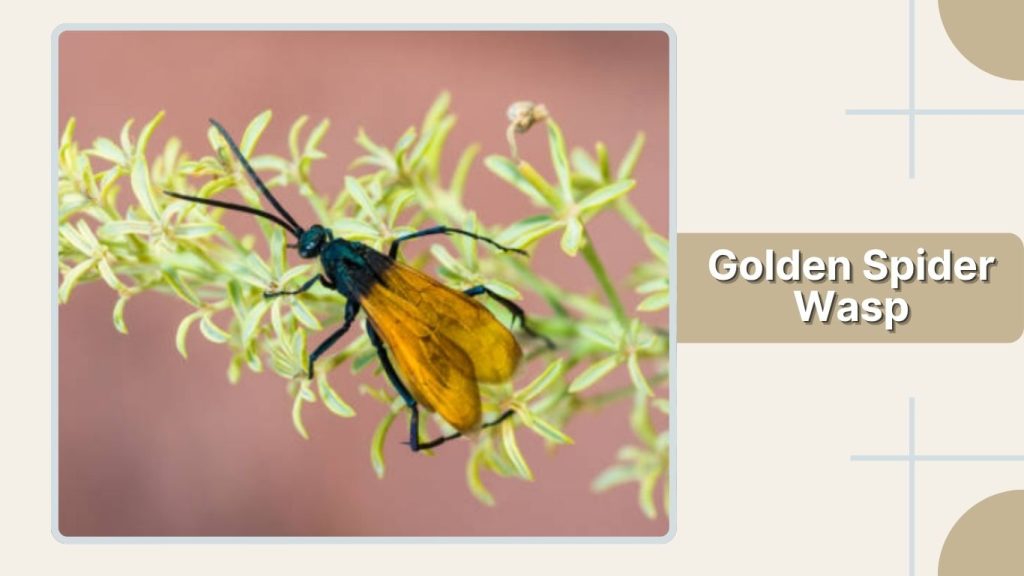
Golden spider wasps are brightly colored hunting wasps known for their golden-yellow markings and active spider-hunting behavior. These solitary insects are agile predators that play an important role in maintaining ecological balance by controlling spider populations. Their vivid coloration often acts as a warning signal to predators.
Identification
- Golden-yellow, orange-yellow, or metallic gold markings on the body
- Black or dark brown background coloration
- Long slender body with a narrow waist
- Transparent or smoky wings
- Long spiny legs adapted for gripping spiders
- Curved antennae and strong mandibles
- Body length usually ranges from 0.5 to 1.5 inches
- Females are generally larger and more robust than males
- Glossy body surface with bright contrasting colors
Habitat and Distribution
Golden spider wasps are found in forests, meadows, grasslands, deserts, tropical regions, and gardens across North America, Central America, South America, and parts of Asia and Africa.
These wasps prefer warm habitats with loose soil or hidden cavities suitable for nesting. Nests are often built underground, beneath stones, inside rotting wood, or within abandoned insect burrows. Adults are frequently observed feeding on nectar from flowering plants.
Behavior and Diet
Adult golden spider wasps mainly feed on nectar, flower juices, and sugary plant secretions. They are active during warm daylight hours and spend much of their time searching for spiders near the ground or among vegetation.
Females are highly specialized hunters that attack spiders using speed and precision. Once prey is located, the wasp delivers a paralyzing sting that immobilizes the spider without killing it. The spider is then dragged back to the nest to provide food for the developing larva.
These wasps are usually non-aggressive toward humans unless threatened or handled. Females possess painful stings, while males are harmless because they do not have stingers.
Life Cycle
The female golden spider wasp begins by preparing a nesting chamber in soil or another protected location. After capturing a spider, she places it inside the nest and lays a single egg on the prey.
The egg hatches into a larva that slowly feeds on the still-living spider. The larva consumes less vital tissues first so the prey remains alive and fresh during development. Once fully grown, the larva spins a cocoon and enters the pupal stage.
After metamorphosis is complete, the adult golden spider wasp emerges from the nest and begins searching for food, mates, and suitable nesting areas. In warm climates, multiple generations may occur within the same year.
24. Slender Spider Wasp
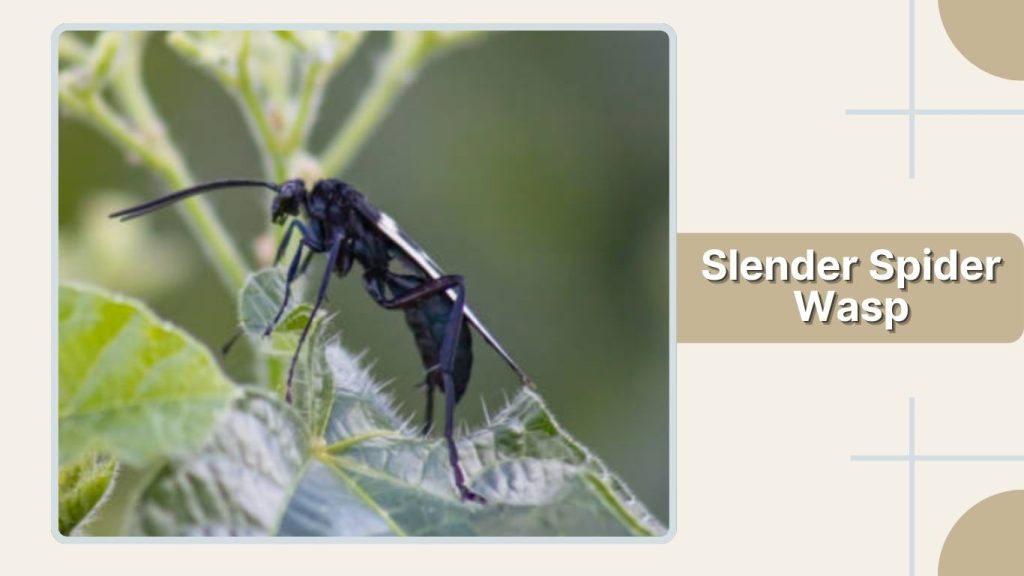
Slender spider wasps are graceful hunting wasps recognized for their thin bodies, long legs, and agile movements. These solitary predators are highly adapted for chasing and capturing spiders in a variety of environments. Their streamlined body structure allows them to move quickly through vegetation and across the ground while searching for prey.
Identification
- Very slender and elongated body shape
- Black, dark brown, or metallic blue-black coloration
- Narrow waist between the thorax and abdomen
- Long delicate legs with sharp spines
- Transparent or smoky wings
- Curved antennae and strong mandibles
- Body length generally ranges from 0.5 to 1.3 inches
- Females are slightly larger and heavier than males
- Fast and agile movement while hunting
Habitat and Distribution
Slender spider wasps are widely distributed across North America, Europe, Asia, Africa, and tropical regions. They commonly inhabit forests, meadows, grasslands, gardens, wetlands, and woodland edges where spiders are abundant.
These wasps prefer warm environments with sandy soil, loose earth, or natural cavities suitable for nesting. Nests are often built underground, beneath stones, inside rotting wood, or within abandoned burrows. Adults are commonly seen visiting flowers to feed on nectar.
Behavior and Diet
Adult slender spider wasps mainly feed on nectar, flower juices, and sugary plant secretions. They are active during warm daylight hours and spend much of their time searching for spiders among vegetation and ground cover.
Females are highly specialized hunters that rely on speed and precision to capture prey. Once a spider is located, the wasp attacks rapidly and delivers a sting that paralyzes the spider without killing it. The immobilized prey is then dragged or carried back to the nest.
These wasps are generally solitary and non-aggressive toward humans unless disturbed. Females can deliver a painful sting if threatened, while males are harmless because they do not possess stingers.
Life Cycle
The female slender spider wasp begins by preparing a nesting chamber in soil or another sheltered location. After capturing a spider, she places it inside the nest and lays a single egg on the prey.
The egg hatches into a larva that slowly feeds on the still-living spider. The larva consumes non-essential tissues first so the prey remains alive and fresh during development. Once feeding is complete, the larva spins a cocoon and enters the pupal stage.
After metamorphosis is complete, the adult slender spider wasp emerges from the nest and begins searching for food, mates, and suitable nesting sites. In warm climates, some species may produce multiple generations each year.
25. Tropical Spider Wasp
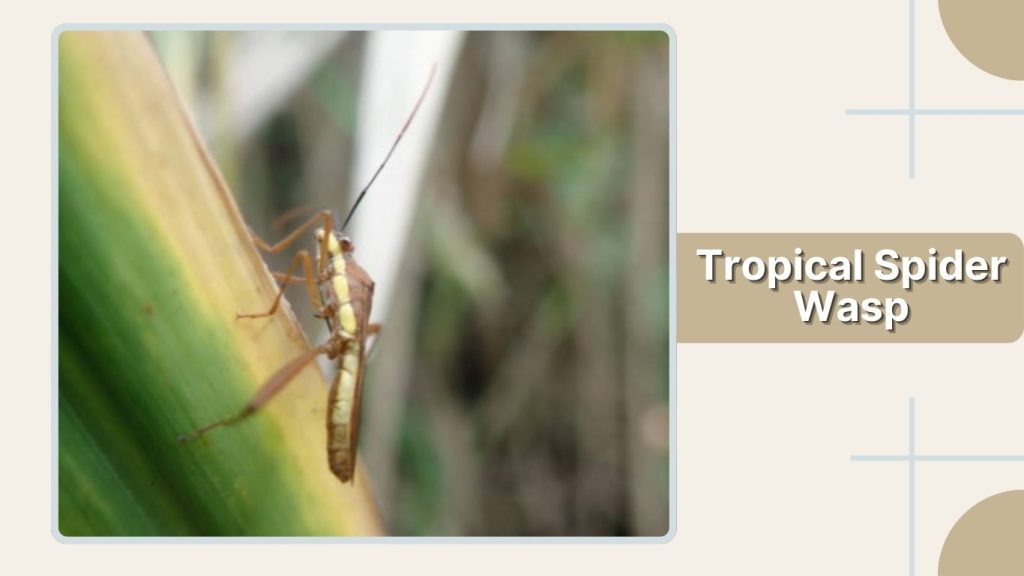
Tropical spider wasps are colorful and highly active hunting wasps commonly found in warm and humid climates. These solitary predators are known for their ability to hunt a wide variety of spiders in dense vegetation, forests, and tropical ecosystems. Their bright coloration and energetic behavior make them easy to notice in the wild.
Identification
- Black, metallic blue, orange, or reddish body coloration
- Long slender body with a narrow waist
- Transparent, smoky, or brightly tinted wings
- Long spiny legs adapted for gripping prey
- Curved antennae and strong mandibles
- Body length usually ranges from 0.6 to 1.8 inches
- Females are generally larger and more robust than males
- Some species display vivid markings or metallic reflections
Habitat and Distribution
Tropical spider wasps are widely distributed across Central America, South America, Southeast Asia, Africa, and other tropical and subtropical regions. They commonly inhabit rainforests, tropical woodlands, grasslands, gardens, and coastal regions where spider populations are abundant.
These wasps prefer warm, humid environments with loose soil, fallen logs, dense vegetation, or natural cavities suitable for nesting. Adults are frequently seen around flowering plants while feeding on nectar.
Behavior and Diet
Adult tropical spider wasps mainly feed on nectar, flower juices, and sugary plant fluids. They are active during warm daylight hours and spend much of their time exploring vegetation and ground cover while searching for spiders.
Females are highly skilled hunters that attack spiders using speed and precision. After locating prey, the wasp delivers a powerful sting that paralyzes the spider without killing it. The immobilized spider is then dragged or carried back to the nest as food for the developing larva.
These wasps are usually solitary and avoid conflict with humans unless threatened. Females possess painful stings, while males are harmless because they do not have stingers.
Life Cycle
The female tropical spider wasp begins by preparing a nesting chamber in soil, rotting wood, or another protected location. After capturing a spider, she places it inside the nest and lays a single egg on the prey.
Once the egg hatches, the larva slowly feeds on the still-living spider. The larva consumes non-essential tissues first to keep the prey fresh throughout development. After completing its feeding stage, the larva spins a cocoon and enters the pupal stage.
When metamorphosis is complete, the adult tropical spider wasp emerges from the nest and begins searching for food, mates, and suitable nesting sites. In tropical climates, several generations may develop throughout the year.
26. Forest Spider Wasp
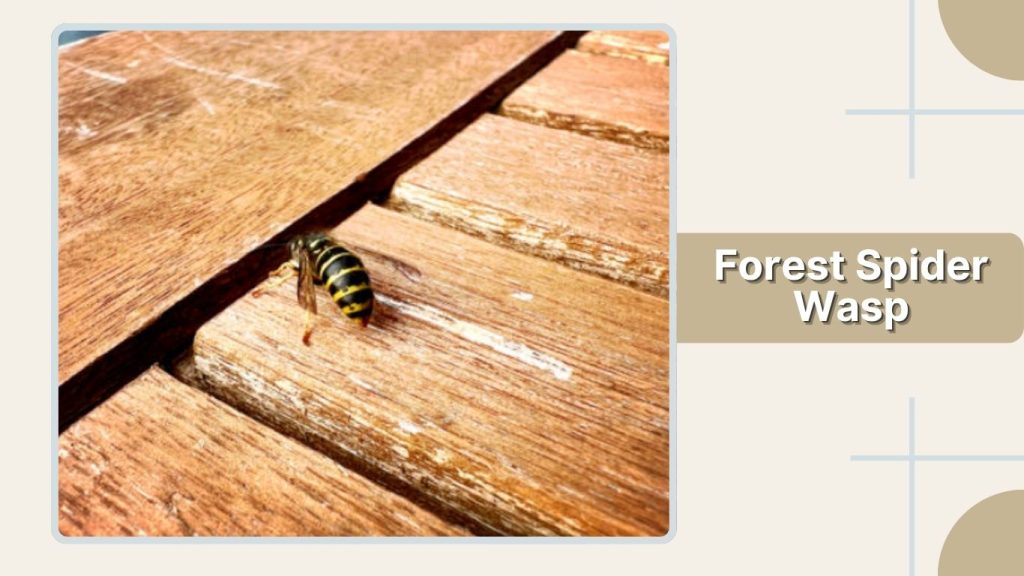
Forest spider wasps are agile hunting wasps commonly found in wooded habitats where they hunt spiders among leaf litter, tree bark, and dense vegetation. These solitary predators are important natural controllers of spider populations and are well adapted to life in shaded forest environments.
Identification
- Black, dark brown, or metallic blue-black body coloration
- Slender body with a narrow waist
- Long legs with strong spines for gripping prey
- Transparent or smoky wings
- Curved antennae and powerful mandibles
- Body length usually ranges from 0.5 to 1.5 inches
- Females are larger and more robust than males
- Fast-running and agile hunting behavior
- Some species display faint metallic reflections in sunlight
Habitat and Distribution
Forest spider wasps are widely distributed across North America, Europe, Asia, South America, and tropical forest regions. They commonly inhabit deciduous forests, tropical rainforests, woodland edges, mountain forests, and heavily vegetated areas where spiders are abundant.
These wasps prefer moist, shaded habitats with loose soil, fallen logs, rotting wood, and natural crevices suitable for nesting. Adults are often found near forest flowers while feeding on nectar.
Behavior and Diet
Adult forest spider wasps mainly feed on nectar, flower juices, and sugary plant secretions. They are active during warm daylight hours and spend much of their time exploring leaf litter, tree trunks, and vegetation while searching for spiders.
Females are specialized hunters that target spiders living in forest habitats. Once prey is located, the wasp attacks quickly and delivers a precise sting that paralyzes the spider without killing it. The immobilized prey is then dragged back to the nest to provide food for the developing larva.
These wasps are generally solitary and avoid human contact unless disturbed. Females can deliver painful stings when threatened, while males are harmless because they do not possess stingers.
Life Cycle
The female forest spider wasp begins by preparing a nesting chamber in soil, rotting wood, or another protected forest location. After capturing a spider, she places it inside the nest and lays a single egg on the prey.
The egg hatches into a larva that slowly feeds on the still-living spider. The larva consumes non-vital tissues first so the prey remains alive and fresh during development. Once fully developed, the larva spins a cocoon and enters the pupal stage.
After metamorphosis is complete, the adult forest spider wasp emerges from the nest and begins searching for food, mates, and suitable nesting areas. In warm climates, several generations may occur within a single year.
27. Desert Spider Wasp
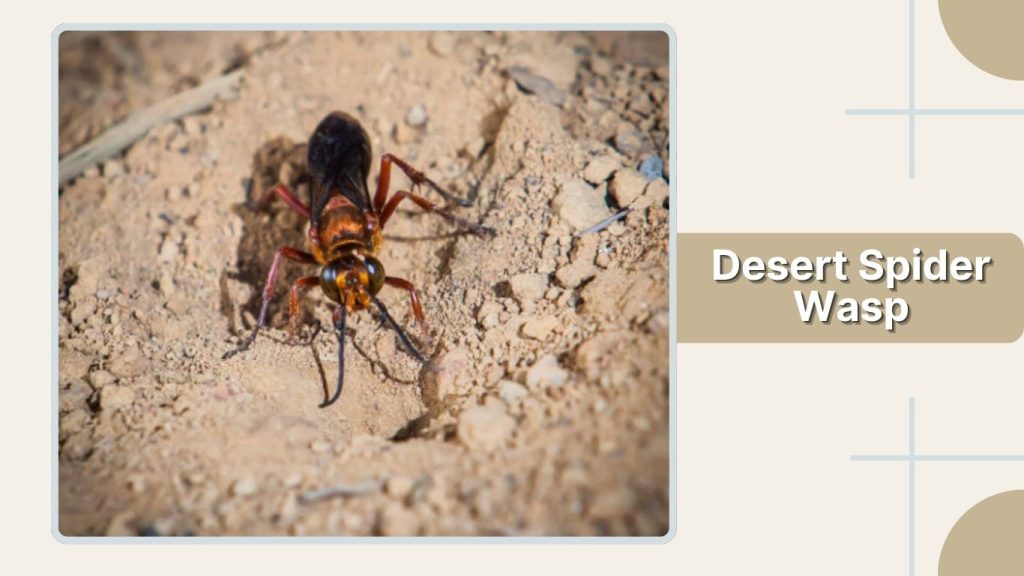
Desert spider wasps are tough and highly adaptable hunting wasps specially suited for dry and hot environments. These solitary predators are skilled at locating spiders in sandy deserts, rocky terrain, and arid grasslands. Their speed, endurance, and powerful sting make them effective hunters in harsh climates.
Identification
- Black, reddish-brown, orange, or sandy-colored body
- Slender body with a narrow waist
- Long legs with strong spines for digging and gripping prey
- Transparent, smoky, or orange-tinted wings
- Curved antennae and powerful mandibles
- Body length usually ranges from 0.6 to 2 inches
- Females are generally larger and more powerful than males
- Some species display metallic blue or black reflections
- Fast-running behavior on hot sandy surfaces
Habitat and Distribution
Desert spider wasps are commonly found in deserts, dry scrublands, rocky canyons, and arid grasslands across North America, Africa, the Middle East, Australia, and other warm regions.
These wasps prefer hot environments with loose sandy soil suitable for nesting. They often build nests underground or use natural crevices beneath rocks and dry vegetation. Adults are frequently observed around desert flowers while feeding on nectar.
Behavior and Diet
Adult desert spider wasps mainly feed on nectar, flower juices, and sugary plant fluids. They are highly active during warm daylight hours and are capable of surviving extreme desert temperatures.
Females are specialized hunters that target ground-dwelling spiders, including large desert species and tarantulas. After locating prey, the wasp attacks quickly and delivers a powerful sting that paralyzes the spider without killing it. The immobilized prey is then dragged back to the nest to provide fresh food for the developing larva.
These wasps are generally solitary and avoid humans unless threatened. Females can inflict a very painful sting, while males are harmless because they lack stingers.
Life Cycle
The female desert spider wasp begins by digging a nesting chamber in sandy soil or locating a sheltered underground cavity. After capturing and paralyzing a spider, she places it inside the nest and lays a single egg on the prey.
The egg hatches into a larva that slowly feeds on the still-living spider. The larva consumes less vital tissues first so the prey remains alive and fresh throughout development. After completing its feeding stage, the larva spins a cocoon and enters the pupal stage.
Once metamorphosis is complete, the adult desert spider wasp emerges from the nest and begins searching for food, mates, and suitable nesting sites. In hot desert climates, several generations may occur during the year.
FAQs
What is a spider wasp?
A spider wasp is a type of solitary wasp that hunts spiders as food for its larvae. These wasps belong to the family Pompilidae and are known for their long legs, narrow waists, and powerful stings.
Are spider wasps dangerous to humans?
Spider wasps are generally not aggressive toward humans and usually sting only when threatened or handled. However, some species, such as tarantula hawks, can deliver extremely painful stings.
What do adult spider wasps eat?
Adult spider wasps mainly feed on nectar, flower juices, and other sugary plant fluids. They are also important pollinators because they frequently visit flowers while feeding.
Where do spider wasps build their nests?
Spider wasps commonly build nests in sandy soil, underground burrows, rotting wood, rock crevices, or other sheltered locations. Some species may also use abandoned insect nests.
Why do spider wasps paralyze spiders instead of killing them?
Spider wasps paralyze spiders to keep the prey alive and fresh for their larvae. The developing larva feeds gradually on the spider, ensuring a continuous food source throughout its growth.