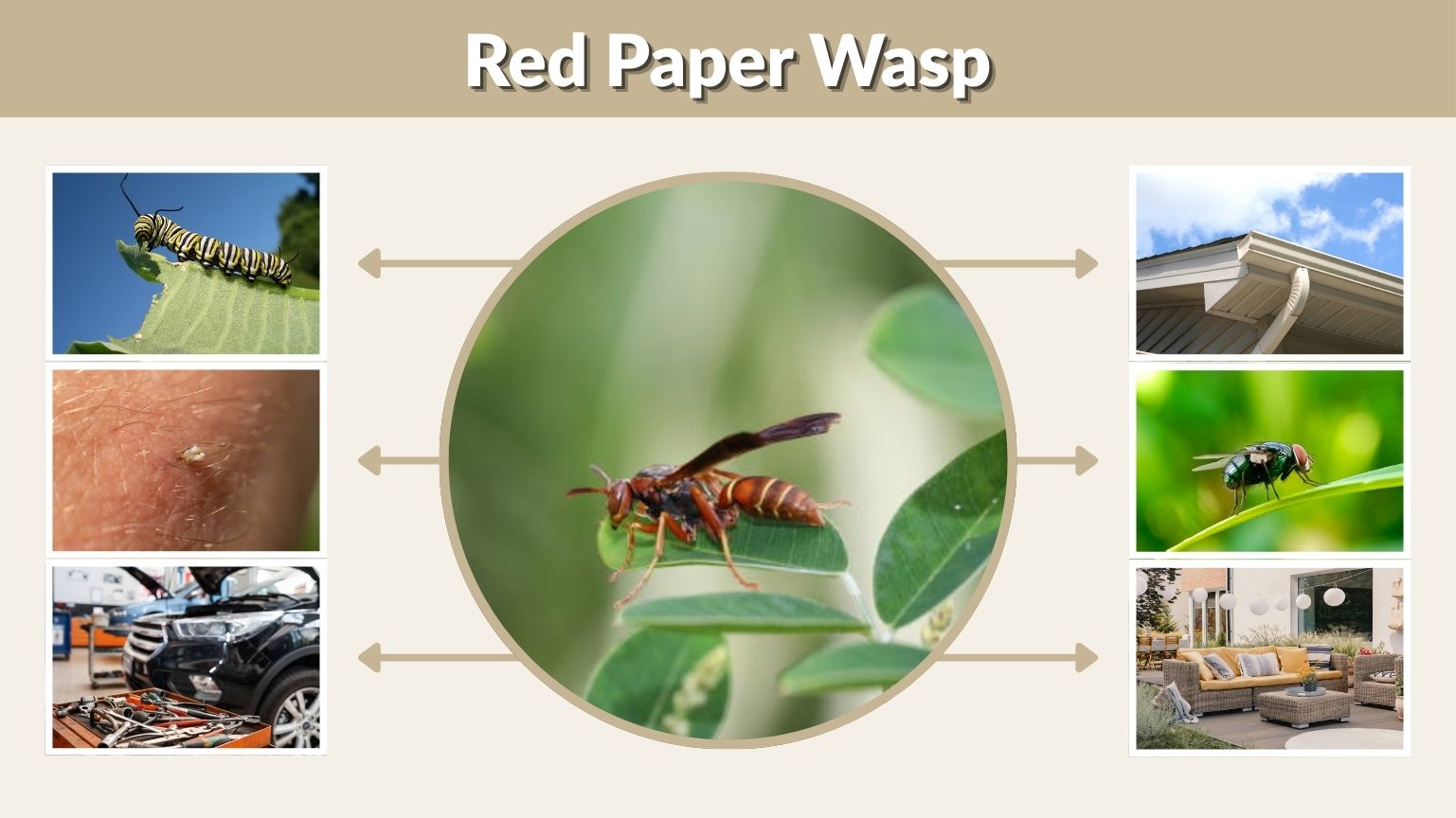
Red paper wasps are large reddish-brown insects commonly found around homes, gardens, and outdoor structures in warm regions. These social wasps are known for their painful sting, hanging paper nests, and long legs that dangle while flying. Although many people fear red paper wasps because of their appearance, they are usually defensive rather than naturally aggressive. Red paper wasps also play an important role in controlling garden pests. Understanding their habitat, behavior, nests, and sting symptoms can help homeowners stay safe and prevent unwanted infestations.
What Is a Red Paper Wasp?
Red paper wasps are social wasps that belong to the Polistes genus. They are recognized by their reddish or reddish-brown bodies and their ability to build paper-like nests from chewed wood fibers. These wasps are commonly found in warm climates throughout the southern United States.
Is a Red Wasp a Paper Wasp?
Many people use the terms “red wasp” and “red paper wasp” interchangeably. In most cases, red wasps are a type of paper wasp. They build open nests with visible honeycomb-shaped cells and usually hang them beneath roofs, porches, and tree branches.
Unlike yellow jackets, red paper wasps have slimmer bodies and longer legs. They are less aggressive away from the nest but can sting repeatedly if they feel threatened. Their bright coloration acts as a warning signal to predators and humans.
Red Paper Wasp Size and Appearance
Red paper wasps are larger than many common flying insects. Their bodies are thin and elongated, with narrow waists and long reddish wings. Some species may also show black or yellow markings depending on the region.
Common physical features include:
- Reddish-brown body color
- Long dangling legs during flight
- Narrow waist and smooth body
- Visible stinger in females
- Paper-like hanging nests
These characteristics make red paper wasps easier to identify around homes and gardens.
Types of Red Paper Wasps
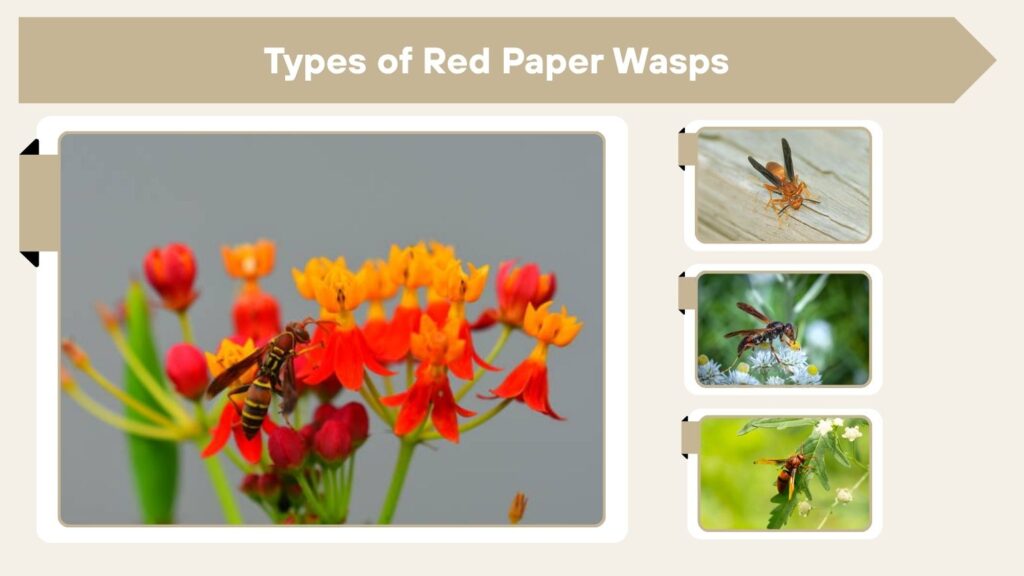
Several wasp species are commonly grouped under the name red paper wasp. While they share similar nesting behavior, each species has slightly different colors, habitat preferences, and geographic ranges.
Fine Backed Red Paper Wasp
The fine backed red paper wasp is commonly found in southern states such as Texas and Florida. It has a slimmer body and smoother back compared to other red wasp species. These wasps often build nests under roof edges and outdoor shelters.
Fine backed red paper wasps feed mainly on insects and nectar. Their hunting behavior helps reduce caterpillar and garden pest populations naturally.
Coarse Backed Red Paper Wasp
The coarse backed red paper wasp has a rougher body texture and slightly darker coloration. This species is also known for building larger nests in protected outdoor spaces.
Like other paper wasps, coarse backed red paper wasps defend their nests aggressively if disturbed. However, they usually avoid humans unless directly threatened.
Red and Black Paper Wasp
Some red paper wasps display black markings on their thorax or abdomen. These color patterns vary depending on species and location. Red and black paper wasps are often confused with other stinging insects because of their darker appearance.
Despite these differences, they still build the same open paper nests and behave similarly to other paper wasp species.
Red Paper Wasp Habitat
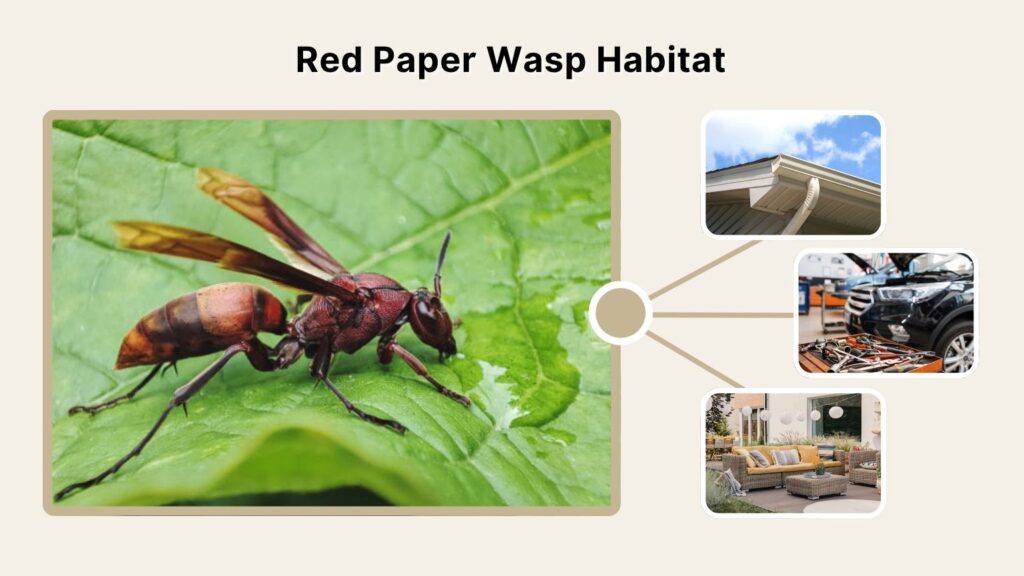
Red paper wasps thrive in warm environments where food, water, and nesting spaces are available. They commonly live near human structures because sheltered areas provide ideal nesting protection from weather and predators.
Where Do Red Paper Wasps Live?
Red paper wasps are widely distributed across the southern United States and other warm regions. They are especially common in states with long summers and mild winters.
Areas where red paper wasps are frequently found include:
- Texas
- Florida
- Georgia
- Tennessee
- Missouri
- California
- Ohio
- Colorado
They may also appear around wooded areas, gardens, barns, garages, and backyard patios.
Where Do Red Paper Wasps Nest?
Red paper wasps build hanging nests in protected locations. Their nests are made from wood fibers mixed with saliva, creating a gray paper-like material. Unlike enclosed hornet nests, paper wasp nests remain open and visible.
Common nesting spots include:
- Roof overhangs
- Porch ceilings
- Garages
- Tree branches
- Sheds
- Outdoor furniture
These nests grow larger as the colony expands during warmer months.
Are Red Paper Wasps Dangerous?
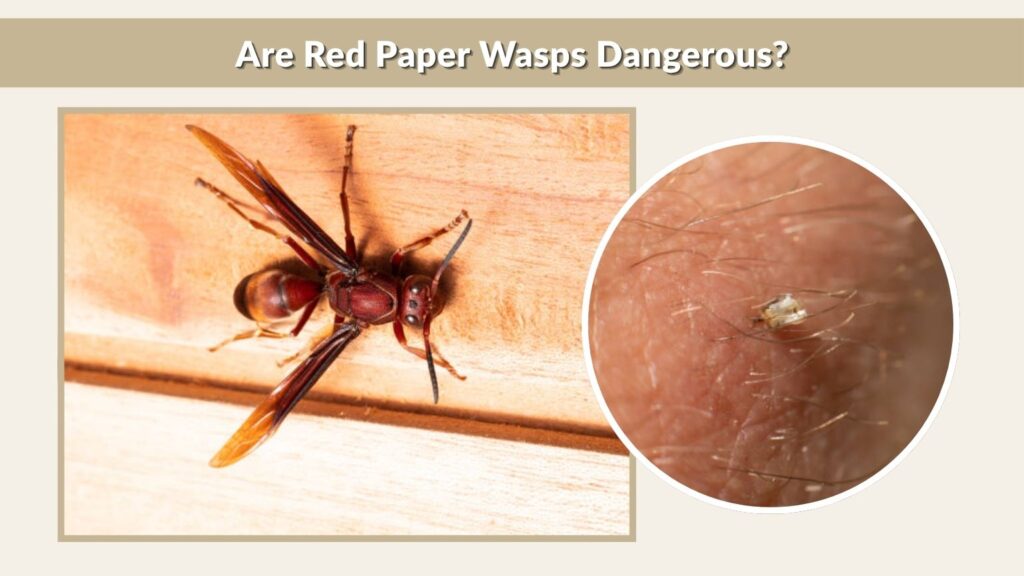
Red paper wasps can deliver painful stings, but they are not usually dangerous unless someone has an allergic reaction. Most stings cause temporary pain, swelling, and irritation that improve within a few hours or days.
Are Red Paper Wasps Aggressive?
Red paper wasps are defensive insects rather than naturally aggressive hunters. They mainly sting when people get too close to their nest or accidentally disturb the colony.
When threatened, red paper wasps may swarm together to protect their queen and larvae. Sudden movements near nests often trigger defensive behavior.
Are Red Paper Wasps Dangerous to Humans?
For most people, a red paper wasp sting causes discomfort but not serious harm. However, individuals allergic to wasp venom may experience severe reactions that require emergency medical treatment.
Possible sting symptoms include:
- Sharp burning pain
- Swelling around the sting area
- Redness and itching
- Mild skin irritation
- Temporary warmth or throbbing
Severe allergic symptoms such as breathing difficulty or facial swelling require immediate medical attention.
Red Paper Wasp Sting Guide
Red paper wasp stings are known for causing sharp pain and irritation. Female wasps use their stingers to defend the nest against threats. Unlike honeybees, paper wasps can sting multiple times because they do not lose their stinger after attacking.
How Painful Is a Red Paper Wasp Sting?
The sting of a red paper wasp is considered moderately painful compared to other stinging insects. Many people describe the sensation as sudden burning pain followed by swelling and soreness.
Pain levels vary depending on:
- Number of stings
- Sting location
- Personal sensitivity
- Allergic reactions
- Size of the wasp colony
Although painful, most red paper wasp stings improve with basic home treatment and rest.
Red Paper Wasp Diet and Behavior
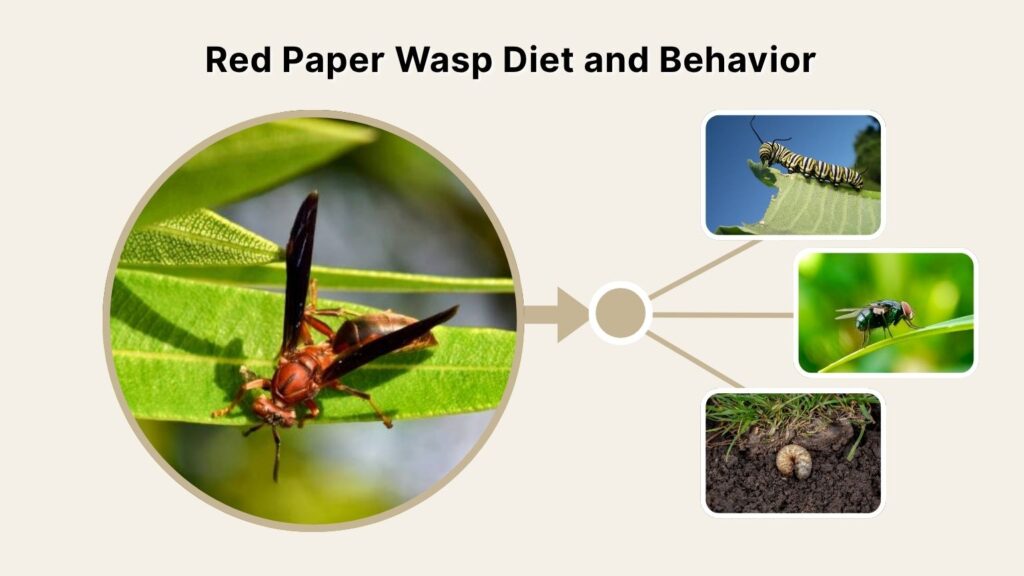
Red paper wasps are important predators in many ecosystems because they help control harmful insect populations. Although they are feared for their sting, these wasps benefit gardens and farms by hunting caterpillars and other plant-damaging insects.
What Do Red Paper Wasps Eat?
Red paper wasps eat both sugary foods and protein-rich insects. Adult wasps usually consume nectar and sweet liquids, while larvae are fed chewed insects collected by worker wasps.
Their common food sources include:
- Caterpillars
- Flies
- Beetle larvae
- Nectar
- Fruit juices
- Sweet plant material
This diet makes red paper wasps valuable natural pest controllers in outdoor environments.
Are Red Paper Wasps Beneficial?
Many homeowners consider red paper wasps pests, but they also provide ecological benefits. By feeding on insects that damage crops and garden plants, they help maintain balance in local ecosystems.
Red paper wasps also contribute to pollination when visiting flowers for nectar. Although they are not as effective as bees, they still assist with plant reproduction while searching for food.
Red Paper Wasp Predators
Despite their venomous sting, red paper wasps are hunted by several predators in nature. Their nests and larvae are especially vulnerable to attacks from birds and larger insects.
Natural predators include:
- Birds
- Spiders
- Lizards
- Frogs
- Dragonflies
- Larger wasps
Predators help control wasp populations and prevent colonies from becoming too large.
How to Get Rid of Red Paper Wasps
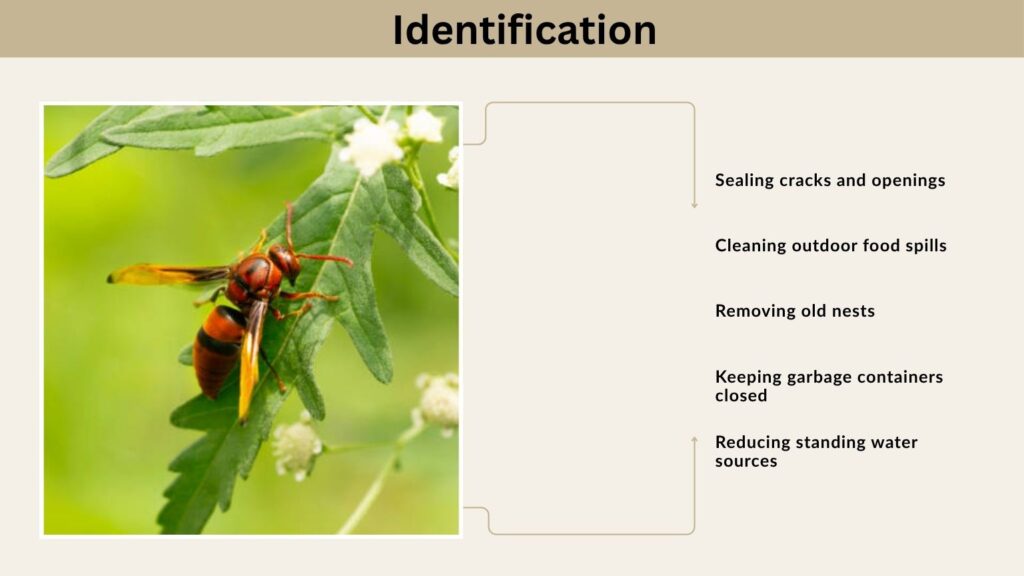
Red paper wasps often build nests near homes, making removal necessary when colonies become a safety concern. Safe prevention methods and proper nest removal techniques reduce the chance of painful stings and recurring infestations.
How to Keep Red Paper Wasps Away
Preventing red paper wasps from nesting is usually easier than removing an active colony. Wasps prefer quiet, sheltered locations where they can build nests without disturbance.
Helpful prevention methods include:
- Sealing cracks and openings
- Cleaning outdoor food spills
- Removing old nests
- Keeping garbage containers closed
- Reducing standing water sources
Regular outdoor maintenance can discourage wasps from settling near homes.
Red Paper Wasp Deterrents
Natural deterrents may help reduce wasp activity around outdoor areas. Strong scents and visual distractions sometimes encourage wasps to relocate elsewhere.
Popular deterrent options include:
- Peppermint oil spray
- Vinegar solutions
- Wasp decoy nests
- Citronella products
- Essential oil mixtures
These methods work best before nests become large and fully established.
Red Paper Wasp Nest Removal
Removing a red paper wasp nest can be dangerous if done incorrectly. Wasps become highly defensive when their colony is threatened, especially during warmer months when nests contain larvae and workers.
The safest time for nest removal is late evening or early morning when wasps are less active. Protective clothing should always be worn during removal attempts. Large nests or nests in difficult locations are usually best handled by professional pest control services.
Red Paper Wasp vs Other Wasps
Red paper wasps are often confused with yellow jackets, hornets, and other stinging insects. While these insects may appear similar, they behave differently and build different types of nests.
Red Paper Wasp vs Yellow Jacket
Yellow jackets are generally more aggressive than red paper wasps. They build enclosed nests underground or inside wall spaces, while red paper wasps build open hanging nests.
Important differences include:
- Red paper wasps have slimmer bodies
- Yellow jackets are brighter yellow and black
- Paper wasps hang their legs during flight
- Yellow jackets are more aggressive around food
- Paper wasps build open comb nests
These differences help homeowners identify the insects correctly before attempting removal.
Paper Wasp vs Red Wasp
The term “paper wasp” refers to a large group of wasp species, while “red wasp” usually describes reddish-colored paper wasps. In many cases, red wasps are simply a color variation within the paper wasp family.
Not all paper wasps are red, but most red wasps display the same nest-building behavior and body structure associated with paper wasps.
Interesting Red Paper Wasp Facts
Red paper wasps are surprisingly intelligent insects with complex colony behavior. Scientists continue studying their communication systems, nest-building skills, and social structure.
Fascinating Facts About Red Paper Wasps
- Red paper wasps make nests from chewed wood fibers mixed with saliva.
- Queens start new colonies alone during spring.
- These wasps recognize members of their own colony.
- Female wasps are responsible for stinging.
- Red paper wasps help control harmful garden pests naturally.
Their unique behavior makes them one of the most recognizable social wasps in North America.
FAQs
Are red paper wasps aggressive?
Red paper wasps are usually defensive rather than naturally aggressive. They often avoid humans unless their nest is disturbed. If someone gets too close to the colony, the wasps may sting repeatedly to protect their queen and larvae.
How painful is a red paper wasp sting?
A red paper wasp sting causes sharp burning pain followed by swelling and redness. Most people experience temporary discomfort that improves within a few hours or days. Pain intensity varies depending on sensitivity, sting location, and the number of stings received.
Where do red paper wasps build nests?
Red paper wasps commonly build hanging paper nests beneath roof overhangs, porches, garages, sheds, and tree branches. Their nests are open and umbrella-shaped, with visible honeycomb cells made from chewed wood fibers and saliva.
What do red paper wasps eat?
Red paper wasps feed on nectar, fruit juices, and insects such as caterpillars and flies. Adult wasps mainly consume sugary foods, while larvae receive protein-rich insects collected and chewed by worker wasps within the colony.
How do you get rid of red paper wasps?
The best way to get rid of red paper wasps is by removing nests safely during cooler evening hours and preventing new nesting sites. Sealing gaps, using deterrents, and contacting professional pest control services can help reduce wasp activity around homes.