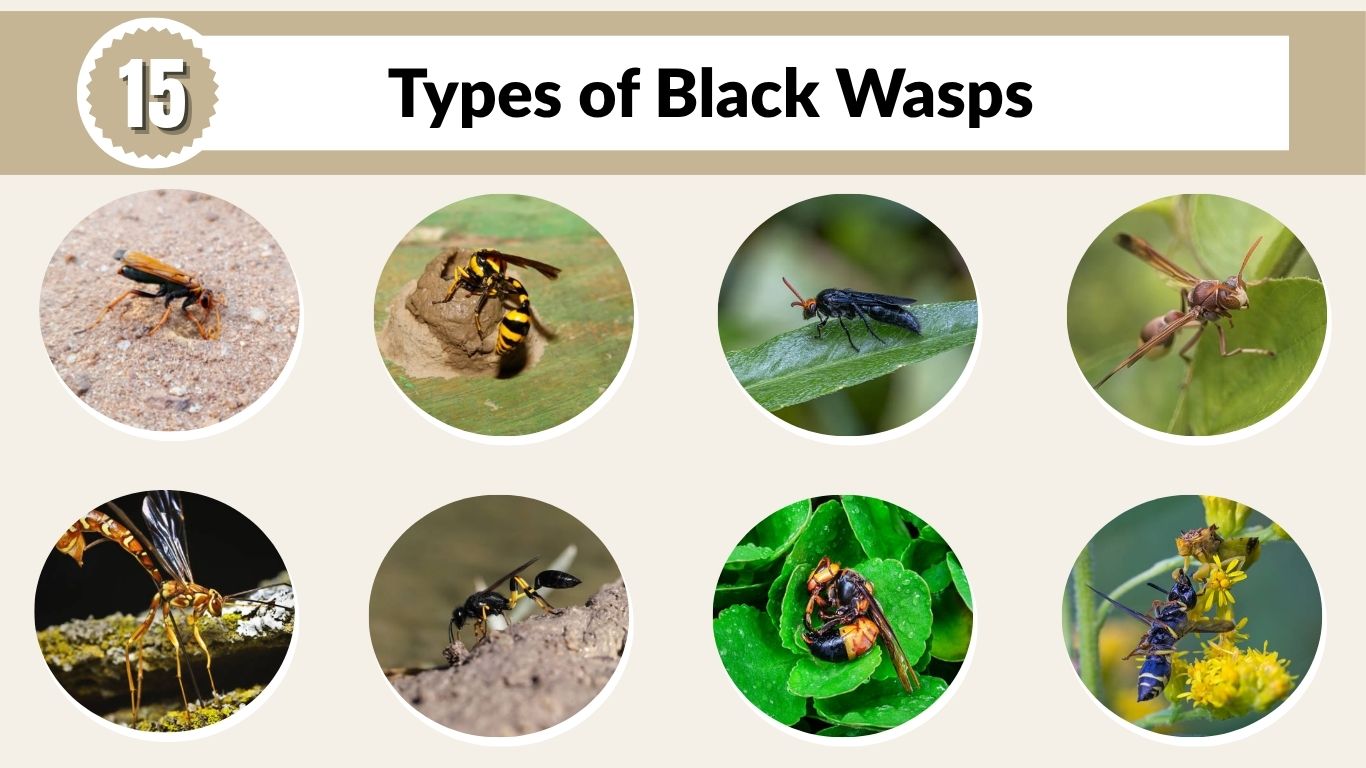
Black wasps are a fascinating group of insects recognized for their sleek dark bodies and often intimidating appearance. Found in forests, meadows, gardens, and deserts, these wasps play important ecological roles as predators and pollinators. Most species are solitary and harmless to humans, while some social species build nests for multiple offspring. Adult black wasps feed mainly on nectar or plant sap, while females provision their larvae with paralyzed prey. In this guide, you will discover 15 common types of black wasps, along with their identification, habitat, behavior, and lifecycle.
1. Great Black Wasp
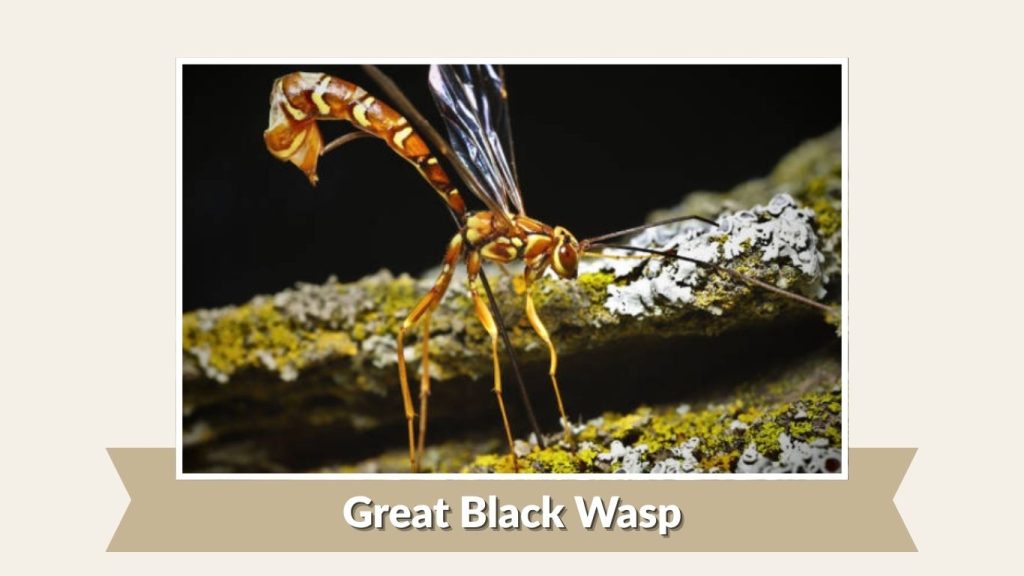
The Great Black Wasp is a large solitary wasp known for its shiny black body and impressive size. Despite its intimidating appearance, this species is generally non-aggressive and beneficial because it helps control grasshopper and katydid populations. It is commonly seen visiting flowers during warm months in gardens and open habitats.
Identification
- Large body measuring about 1–1.5 inches long
- Entire body covered in glossy black coloration
- Dark smoky wings with bluish shine
- Long black legs and antennae
- Narrow waist typical of solitary wasps
- Females are usually larger than males
- Smooth and mostly hairless body surface
Habitat and Distribution
Great Black Wasps are widely distributed across North America and are commonly found in gardens, meadows, woodland edges, and open grassy areas. They prefer habitats with sandy or loose soil where females can dig underground nests. Flower-rich environments are especially attractive because adults feed on nectar.
Behavior and Diet
Adult Great Black Wasps feed mainly on flower nectar and are important pollinators. Females hunt grasshoppers, crickets, and katydids, paralyzing them with a sting before placing them inside underground nests as food for developing larvae. These wasps are solitary and usually avoid human interaction unless directly threatened.
Lifecycle
The lifecycle begins when females dig burrows in the soil and stock them with paralyzed insects. Eggs are laid on the prey, and larvae hatch to feed on the stored food supply. After completing development, the larvae pupate inside the nest chamber. Adult wasps later emerge during warm seasons to mate and continue the reproductive cycle.
2. Black-and-Gold Wasp
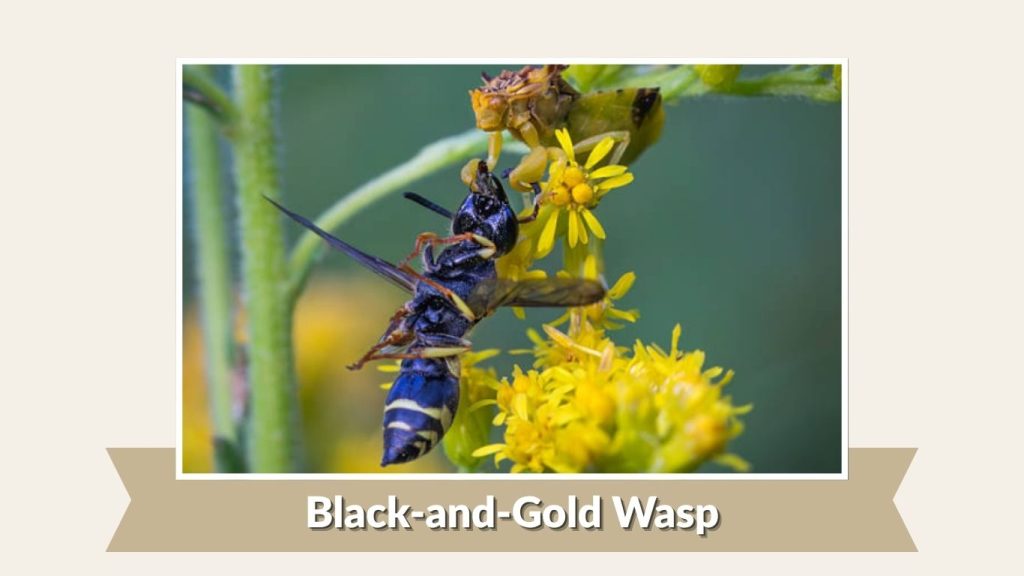
The Black-and-Gold Wasp is a striking solitary wasp recognized for its shiny black body marked with bright golden or yellow patterns. These wasps are commonly seen around flowers and gardens during warm months. Although they may look intimidating, they are generally non-aggressive and help control insect populations.
Identification
- Medium-sized slender body
- Glossy black coloration with yellow or golden markings
- Narrow waist typical of solitary wasps
- Transparent dark-tinted wings
- Long antennae and legs
- Smooth body surface with little hair
- Bright markings often appear on the abdomen or thorax
Habitat and Distribution
Black-and-Gold Wasps are commonly found in gardens, meadows, woodland edges, and open grassy habitats. They occur in parts of North America, Europe, and other warm temperate regions depending on the species. Flower-rich environments and areas with loose soil provide ideal feeding and nesting conditions.
Behavior and Diet
Adult Black-and-Gold Wasps feed mainly on nectar and other sugary plant fluids. Females hunt small insects or spiders, which they paralyze and place inside nests as food for developing larvae. These wasps are solitary hunters and rarely show aggression toward humans unless disturbed directly.
Lifecycle
The lifecycle begins when females build nests in soil, wood cavities, or sheltered crevices. Eggs are laid alongside paralyzed prey stored for the larvae. After hatching, larvae feed on the prey while developing through several stages. Pupation occurs inside the nest chamber, and adults later emerge to reproduce and continue the cycle.
3. Black-Capped Wasp
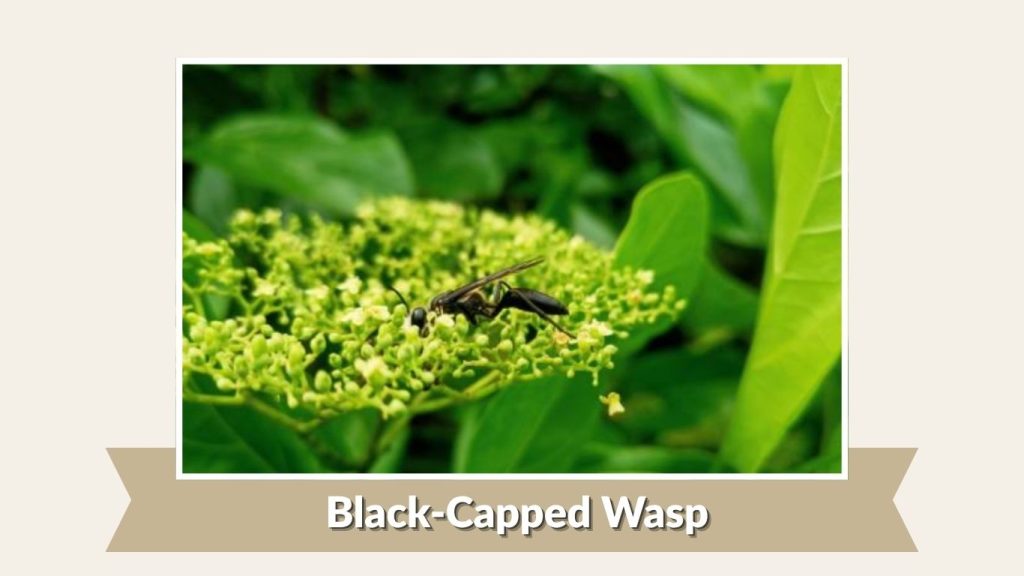
The Black-Capped Wasp is a slender wasp species recognized for its dark head and contrasting body markings. These wasps are commonly found in gardens, forests, and open habitats where they hunt small insects and visit flowers. Despite their alert behavior, they are generally non-aggressive toward humans.
Identification
- Medium-sized slender body
- Black head or “cap” on the upper body
- Black and yellow or reddish body markings
- Narrow waist typical of wasps
- Transparent smoky wings
- Long antennae and legs
- Smooth body with minimal hair coverage
Habitat and Distribution
Black-Capped Wasps are commonly found in woodland edges, meadows, gardens, and shrub-filled habitats. They occur in various temperate and subtropical regions depending on the species. Areas with flowering plants and suitable nesting sites such as soil banks or hollow stems are especially attractive.
Behavior and Diet
Adult Black-Capped Wasps feed mainly on nectar and sugary plant fluids. Females hunt caterpillars, flies, or other small insects to provide food for their larvae. These wasps are solitary hunters and usually build nests in soil, wood cavities, or protected crevices. They rarely sting humans unless threatened.
Lifecycle
The lifecycle begins when females prepare nests and stock them with paralyzed prey. Eggs are laid beside the stored food, allowing larvae to feed immediately after hatching. Larvae grow through several developmental stages before pupating inside the nest chamber. Adult wasps later emerge to mate and continue the reproductive cycle.
4. Black-Headed Wasp
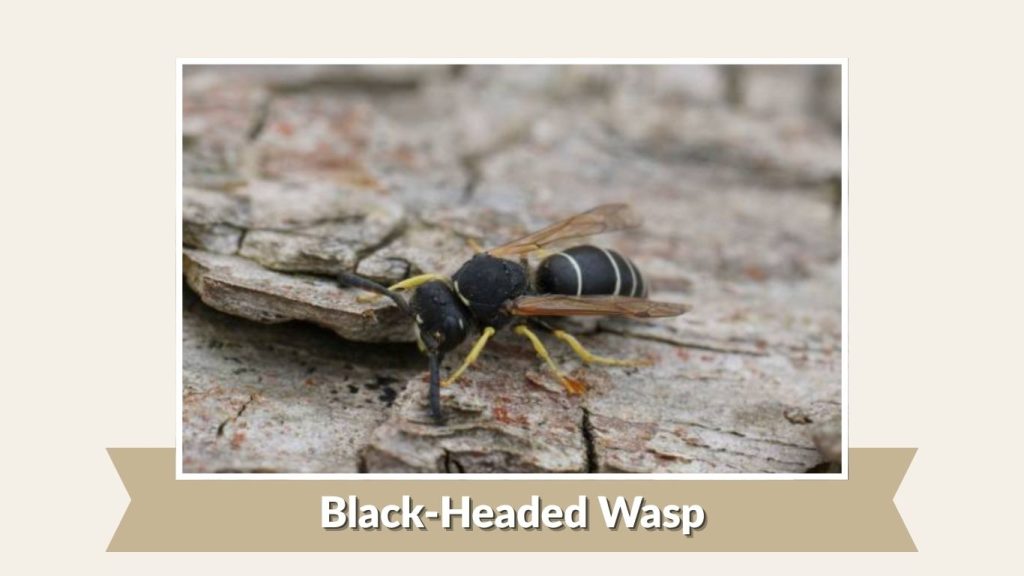
The Black-Headed Wasp is a slender predatory wasp commonly recognized by its dark head and contrasting body coloration. These wasps are often seen around flowers, gardens, and woodland habitats where they hunt insects and collect nectar. Although they may appear intimidating, they are generally non-aggressive toward humans.
Identification
- Medium-sized slender body
- Distinct black head coloration
- Black and yellow or reddish body markings
- Narrow waist typical of wasps
- Transparent wings with smoky tint
- Long legs and segmented antennae
- Smooth body surface with little visible hair
Habitat and Distribution
Black-Headed Wasps are commonly found in gardens, meadows, forests, and open woodland habitats. They occur across various temperate and subtropical regions depending on the species. Flower-rich environments and sheltered nesting areas provide ideal conditions for feeding and reproduction.
Behavior and Diet
Adult Black-Headed Wasps mainly feed on nectar, fruit juices, and other sugary liquids. Females hunt caterpillars, flies, or spiders to supply food for their developing larvae. These wasps are usually solitary and build nests in soil, hollow stems, or cracks in wood. They rarely sting unless disturbed directly.
Lifecycle
The lifecycle begins when females construct nests and stock them with paralyzed prey. Eggs are laid beside the stored insects or spiders, giving larvae an immediate food source after hatching. Larvae grow through several stages before pupating inside the nest chamber. Adults later emerge and continue the reproductive cycle during warm seasons.
5. Black-Tailed Wasp
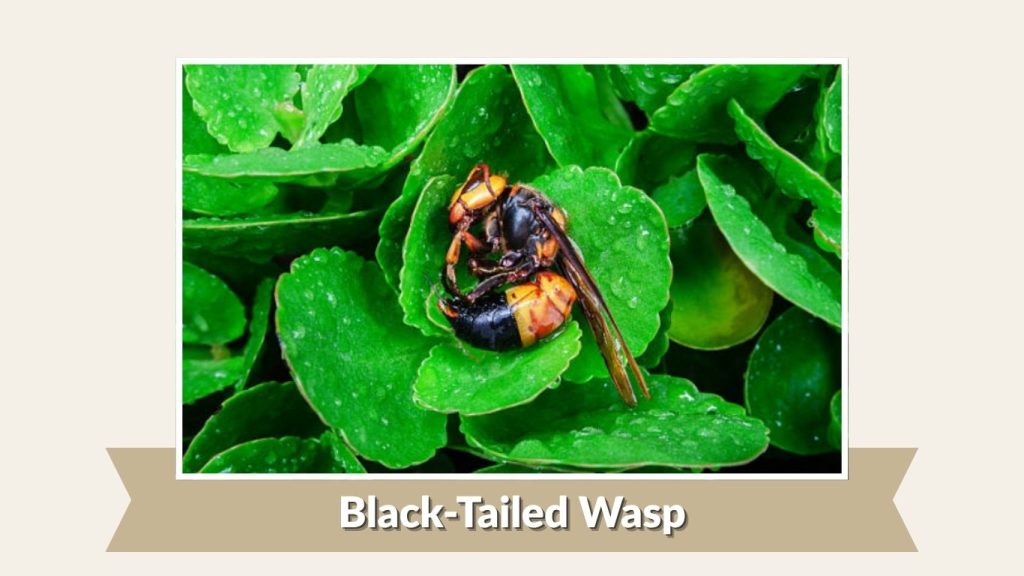
The Black-Tailed Wasp is a solitary wasp species recognized for its glossy black body and dark-colored abdomen tip. These wasps are commonly found in gardens, meadows, and woodland edges where they hunt insects and visit flowers for nectar. Despite their appearance, they are generally non-aggressive toward humans.
Identification
- Medium-sized slender body
- Entire body glossy black with darker tail segment
- Narrow waist typical of solitary wasps
- Transparent or slightly smoky wings
- Long segmented antennae
- Smooth body surface with minimal hair
- Strong legs adapted for digging or gripping surfaces
Habitat and Distribution
Black-Tailed Wasps are found in gardens, forest edges, open meadows, and landscaped areas. They occur in North America, Europe, and parts of Asia depending on the species. These wasps prefer habitats with flowering plants and loose soil for nesting.
Behavior and Diet
Adult Black-Tailed Wasps feed primarily on flower nectar and sugary plant fluids. Females hunt insects or spiders, paralyzing them with a sting to provide food for their larvae. These wasps are solitary and typically avoid human contact unless threatened.
Lifecycle
The lifecycle begins when females dig burrows or use natural cavities to store paralyzed prey and lay eggs. Larvae feed on the provided prey while developing through several stages. Pupation occurs inside the nest chamber, and adults later emerge to mate and continue the reproductive cycle.
6. Black Mud Dauber
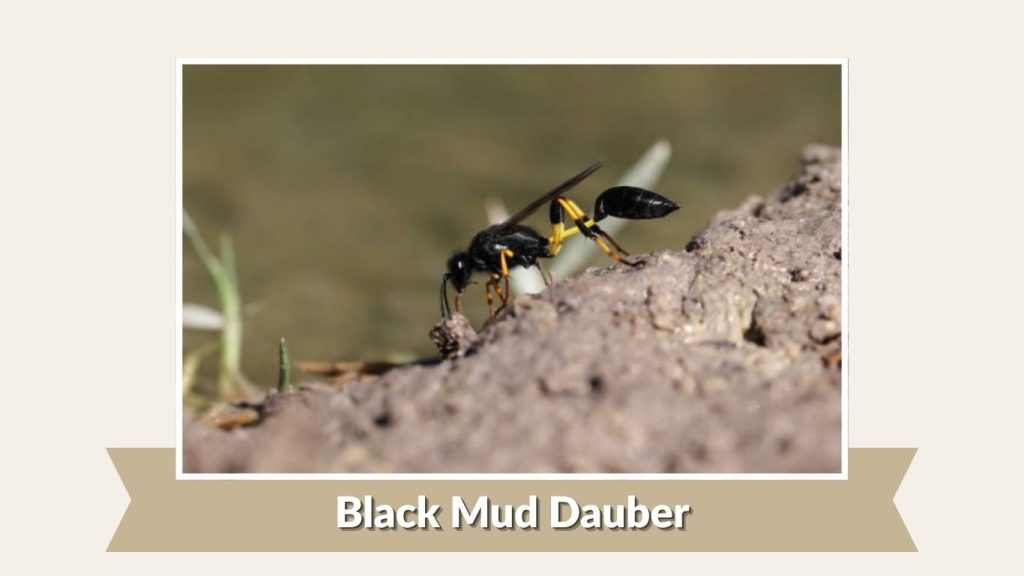
The Black Mud Dauber is a solitary wasp known for building mud nests in sheltered locations such as under eaves, bridges, or rock overhangs. These wasps are non-aggressive and help control spider populations, as they provision their nests with paralyzed spiders for their larvae.
Identification
- Medium to large slender body
- Entirely glossy black coloration
- Narrow waist typical of wasps
- Long, thread-like legs
- Transparent wings with slight smoky tint
- Long segmented antennae
- Females often larger than males
Habitat and Distribution
Black Mud Daubers are commonly found in gardens, open woodlands, parks, and urban areas with structures suitable for mud nest attachment. They occur widely across North America, Europe, and parts of Asia. Sheltered ledges, eaves, and rock crevices provide ideal nesting sites.
Behavior and Diet
Adult Black Mud Daubers feed mainly on nectar and plant sap. Females capture spiders, paralyze them, and place them inside mud nests to serve as food for larvae. Adults are solitary, rarely aggressive, and play an important role in controlling spider populations.
Lifecycle
The lifecycle begins when females build mud nests in sheltered locations. Eggs are laid inside each mud cell along with paralyzed spiders. Larvae feed on the stored prey while developing. After completing growth, they pupate within the mud cells. Adults emerge later to mate and continue the reproductive cycle.
7. Black Horned Wasp
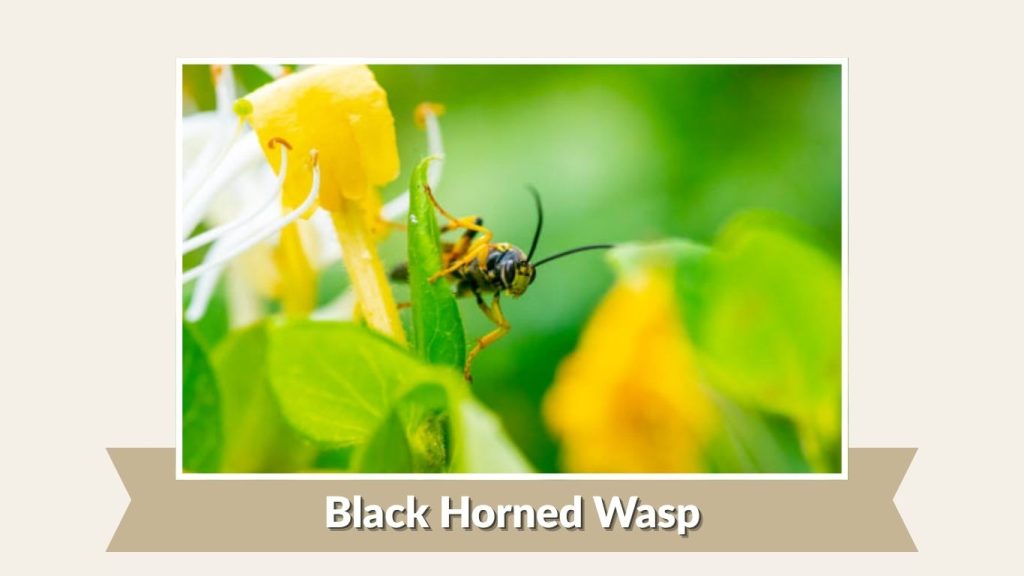
The Black Horned Wasp is a solitary wasp species recognized for its glossy black body and prominent horn-like projections on the thorax or head in some species. These wasps are beneficial predators, hunting other insects to provision their nests. They are generally non-aggressive toward humans.
Identification
- Medium-sized black body with glossy sheen
- Narrow waist typical of wasps
- Horn-like projections on the thorax or head
- Transparent smoky wings
- Long segmented antennae
- Slender legs adapted for gripping
- Smooth, mostly hairless body
Habitat and Distribution
Black Horned Wasps are commonly found in forests, gardens, meadows, and woodland edges. They occur across North America, Europe, and parts of Asia depending on the species. These wasps prefer habitats with loose soil or natural crevices for nesting and flowering plants for nectar feeding.
Behavior and Diet
Adult Black Horned Wasps feed on nectar and plant sap. Females hunt caterpillars, flies, or spiders, paralyzing them with a sting and storing them in nests for their larvae. Adults are solitary and avoid human contact, rarely stinging unless provoked.
Lifecycle
The lifecycle begins when females construct nests in soil, hollow stems, or natural cavities. Eggs are laid beside paralyzed prey, providing food for the larvae. Larvae feed and grow through several stages before pupating inside the nest chamber. Adults later emerge to mate and continue the reproductive cycle.
8. Black Digger Wasp
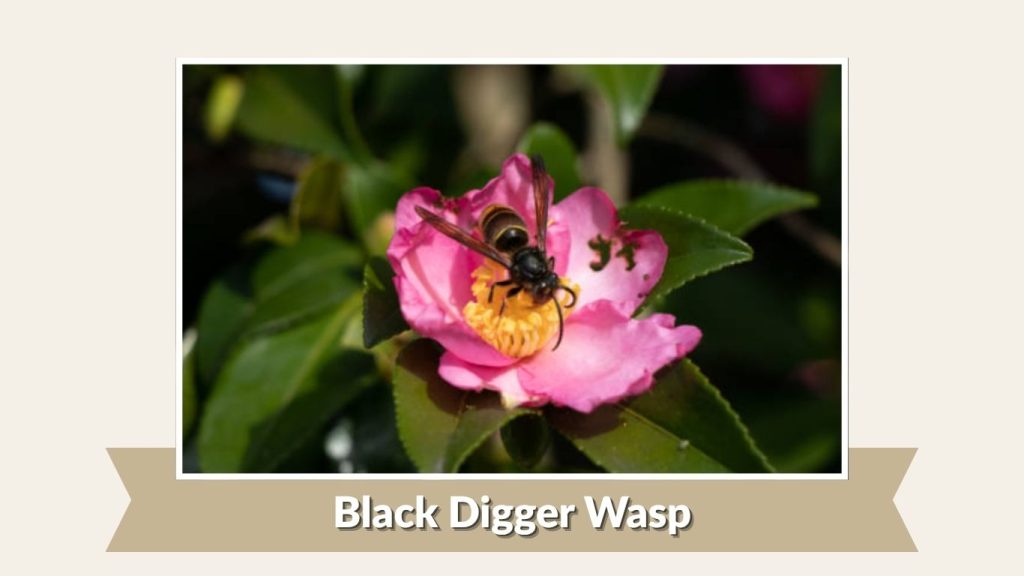
The Black Digger Wasp is a solitary wasp known for its glossy black body and burrowing behavior. Females dig tunnels in sandy or loose soil to create nests for their eggs, provisioning each burrow with paralyzed insects for the larvae. Despite its appearance, this wasp is non-aggressive toward humans.
Identification
- Medium-sized glossy black body
- Narrow waist typical of solitary wasps
- Transparent or lightly tinted wings
- Long antennae and slender legs
- Females slightly larger than males
- Smooth, mostly hairless body
- Strong legs adapted for digging
Habitat and Distribution
Black Digger Wasps are commonly found in open fields, sandy soils, gardens, and forest edges. They occur in North America, Europe, and parts of Asia depending on the species. Loose soil is essential for nest construction, while nearby flowering plants provide nectar for adults.
Behavior and Diet
Adult Black Digger Wasps feed on nectar and plant sap. Females hunt small insects or spiders, paralyzing them and placing them inside underground burrows as food for their larvae. Adults are solitary and non-aggressive, rarely interacting with humans unless directly disturbed.
Lifecycle
The lifecycle begins when females dig burrows in suitable soil and stock each cell with paralyzed prey. Eggs are laid beside the stored insects, and larvae feed on them while growing. Pupation occurs within the burrow, and adults later emerge to mate and begin the reproductive cycle again.
9. Black Spider Wasp
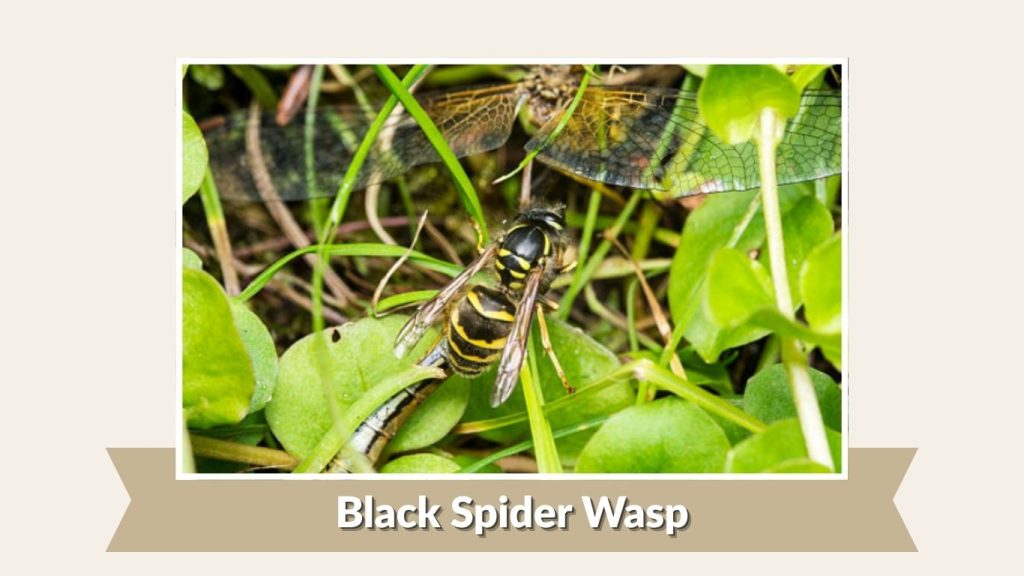
The Black Spider Wasp is a solitary predatory wasp recognized for hunting spiders to provision its nests. These wasps are entirely black and have a glossy appearance. Despite their intimidating look, they are generally non-aggressive toward humans and play an important role in controlling spider populations.
Identification
- Medium to large glossy black body
- Narrow waist typical of solitary wasps
- Long legs and antennae
- Transparent smoky wings
- Females are larger than males
- Smooth body surface with minimal hair
- Strong mandibles for handling prey
Habitat and Distribution
Black Spider Wasps are commonly found in gardens, forests, meadows, and woodland edges. They occur across North America, Europe, and parts of Asia. They prefer habitats with abundant spider populations and sheltered locations such as soil crevices or under rocks for nesting.
Behavior and Diet
Adult Black Spider Wasps feed mainly on nectar, flower sap, and sometimes fruit juices. Females hunt spiders, paralyzing them with a sting, and place them inside burrows as food for larvae. Adults are solitary and rarely show aggression toward humans.
Lifecycle
The lifecycle begins when females construct burrows or use natural cavities to store paralyzed spiders and lay eggs. Larvae feed on the spiders while developing through multiple stages. After pupation inside the nest chamber, adults emerge to mate and continue the reproductive cycle.
10. Black Potter Wasp
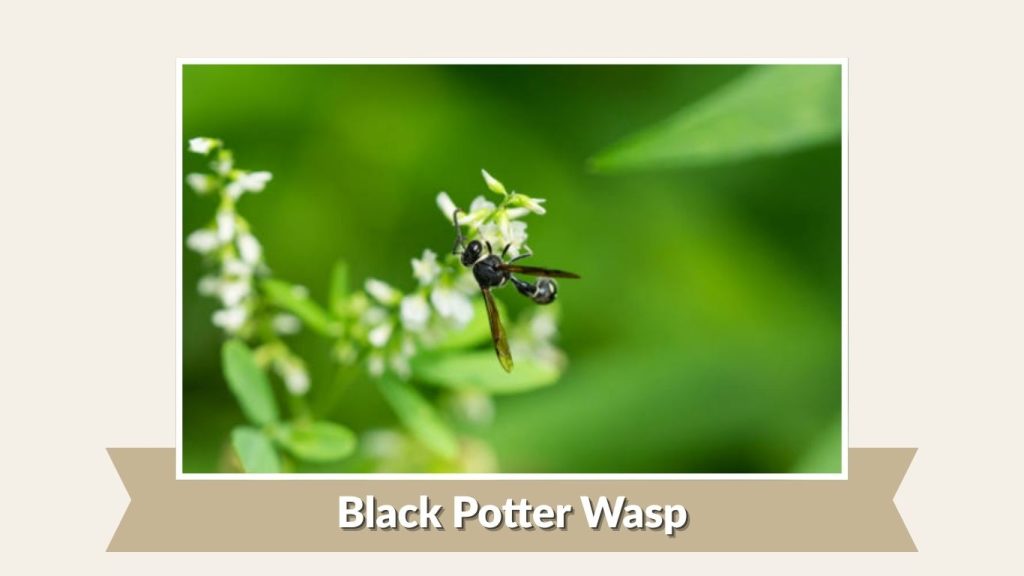
The Black Potter Wasp is a solitary wasp species known for constructing small mud pots or nests to house their eggs and provision their larvae with paralyzed prey. These wasps are entirely black and generally non-aggressive, making them beneficial predators in gardens and natural habitats.
Identification
- Medium-sized glossy black body
- Narrow waist typical of solitary wasps
- Transparent smoky wings
- Long antennae and slender legs
- Smooth body surface with minimal hair
- Females slightly larger than males
- Distinctive mud nests attached to sheltered surfaces
Habitat and Distribution
Black Potter Wasps are commonly found in gardens, parks, forests, and woodland edges. They occur across North America, Europe, and parts of Asia. They prefer habitats with accessible mud or clay for nest building and areas with flowering plants for nectar.
Behavior and Diet
Adult Black Potter Wasps feed mainly on nectar and plant sap. Females hunt small insects or caterpillars, paralyzing them and placing them inside mud pots as food for developing larvae. These wasps are solitary and rarely sting humans unless provoked.
Lifecycle
The lifecycle begins when females construct small mud nests attached to sheltered surfaces. Eggs are laid inside each nest cell along with paralyzed prey. Larvae feed on the stored insects while developing through several stages. Pupation occurs within the mud cell, and adults later emerge to continue the reproductive cycle.
11. Black Thread-Waisted Wasp
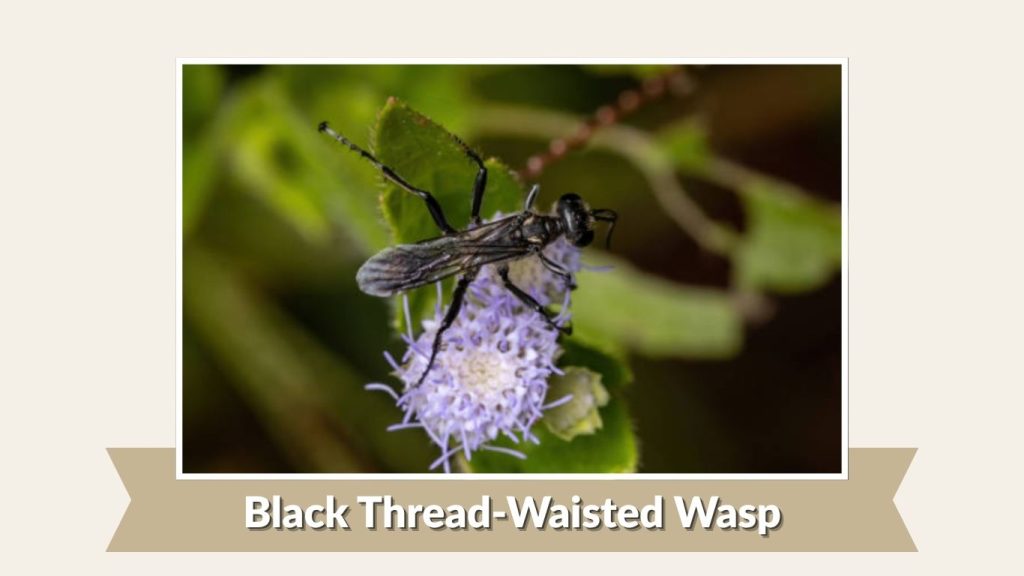
The Black Thread-Waisted Wasp is a solitary wasp species known for its slender black body and extremely narrow waist. These wasps are commonly found in gardens, meadows, and woodland edges, where they hunt small insects to provision their nests. They are generally non-aggressive and beneficial for controlling pest populations.
Identification
- Slender black body with a very narrow “thread-like” waist
- Medium-sized with long legs and antennae
- Transparent or slightly smoky wings
- Smooth, mostly hairless body
- Females slightly larger than males
- Distinct separation between thorax and abdomen
- Agile flyer with quick movements
Habitat and Distribution
Black Thread-Waisted Wasps are commonly found in open fields, gardens, forests, and woodland edges. They occur in North America, Europe, and parts of Asia. These wasps prefer areas with loose soil or natural cavities for nesting and nearby flowering plants for nectar.
Behavior and Diet
Adult Black Thread-Waisted Wasps feed primarily on nectar and plant sap. Females hunt small insects or spiders, paralyzing them and placing them inside burrows or natural cavities as food for larvae. They are solitary, non-aggressive, and rarely interact with humans.
Lifecycle
The lifecycle begins when females construct burrows or use pre-existing cavities to store paralyzed prey and lay eggs. Larvae feed on the stored insects while developing. Pupation occurs within the nest, and adults later emerge to mate and continue the reproductive cycle during the warm season.
12. Black Paper Wasp
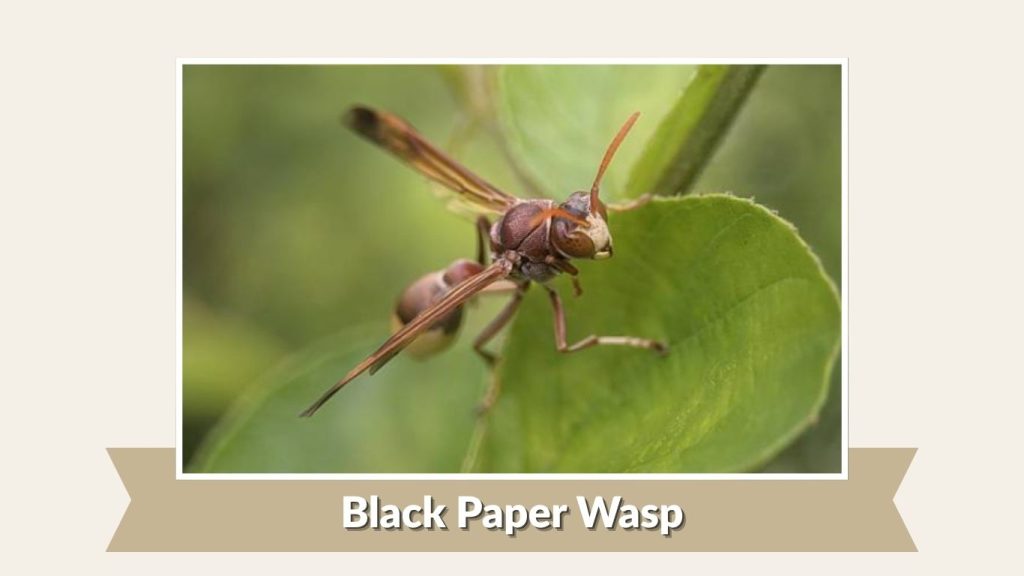
The Black Paper Wasp is a social wasp species recognized for its glossy black body and nest-building behavior. Unlike solitary wasps, these wasps construct papery nests, often under eaves, tree branches, or sheltered structures. They are beneficial predators, feeding on caterpillars and other garden pests, and are generally non-aggressive unless their nest is threatened.
Identification
- Medium-sized body, glossy black coloration
- Narrow waist typical of wasps
- Transparent wings with slight smoky tint
- Long black antennae and legs
- Smooth body with minimal hair
- Distinct papery nest construction
- Adults slightly smaller than solitary wasps of similar size
Habitat and Distribution
Black Paper Wasps are commonly found in gardens, parks, forests, and urban areas where sheltered nesting sites are available. They occur across North America, Europe, and parts of Asia. Areas with flowering plants provide nectar, while open habitats with branches or eaves are preferred for nest attachment.
Behavior and Diet
Adult Black Paper Wasps feed on nectar and plant sap. They are predatory, capturing caterpillars, flies, and other small insects to feed their larvae. These wasps are social, living in small colonies, and can defend their nests if disturbed, though they are generally non-aggressive when left alone.
Lifecycle
The lifecycle begins with the queen establishing a small nest in spring. Eggs are laid inside nest cells and larvae are fed paralyzed insects collected by adults. After pupation, adult workers emerge to help expand the nest and care for new larvae. The colony grows throughout the summer, and new queens and males emerge in late summer or fall to mate and continue the cycle.
13. Black Velvet Wasp
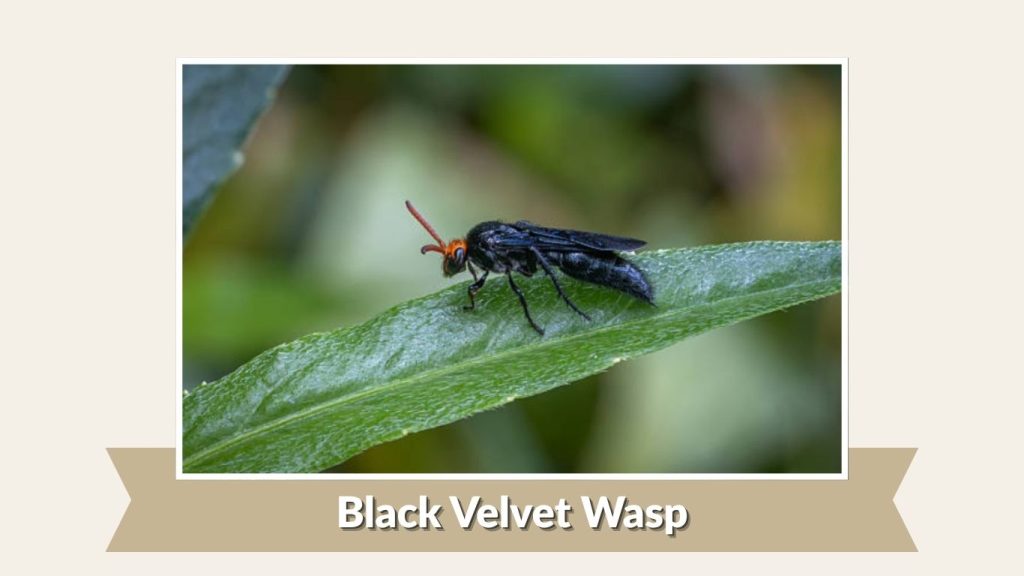
The Black Velvet Wasp is a solitary parasitic wasp known for its striking velvety black body and bright orange or red markings on some species. These wasps are beneficial predators, often targeting the larvae of other insects. Despite their dramatic appearance, they are generally non-aggressive toward humans.
Identification
- Medium-sized body with velvety black coloration
- Narrow waist typical of solitary wasps
- Bright orange or red markings on thorax or abdomen (in some species)
- Transparent or slightly smoky wings
- Long antennae and slender legs
- Smooth, hairless body surface
- Females slightly larger than males
Habitat and Distribution
Black Velvet Wasps are commonly found in gardens, meadows, forests, and woodland edges. They occur in North America, Europe, and parts of Asia. These wasps prefer habitats with loose soil or cavities for laying eggs and nearby flowering plants for nectar feeding.
Behavior and Diet
Adult Black Velvet Wasps feed primarily on nectar and plant sap. Females hunt larvae of other insects, paralyzing them with a sting and laying eggs on or near the host. The developing larvae feed on the host insect. Adults are solitary and rarely sting humans unless provoked.
Lifecycle
The lifecycle begins when females locate host larvae and lay eggs on or near them. After hatching, the sawfly larvae feed on the paralyzed host and develop through multiple stages. Pupation occurs in soil, leaf litter, or sheltered areas. Adults emerge later to feed, mate, and continue the reproductive cycle.
14. Black Mason Wasp
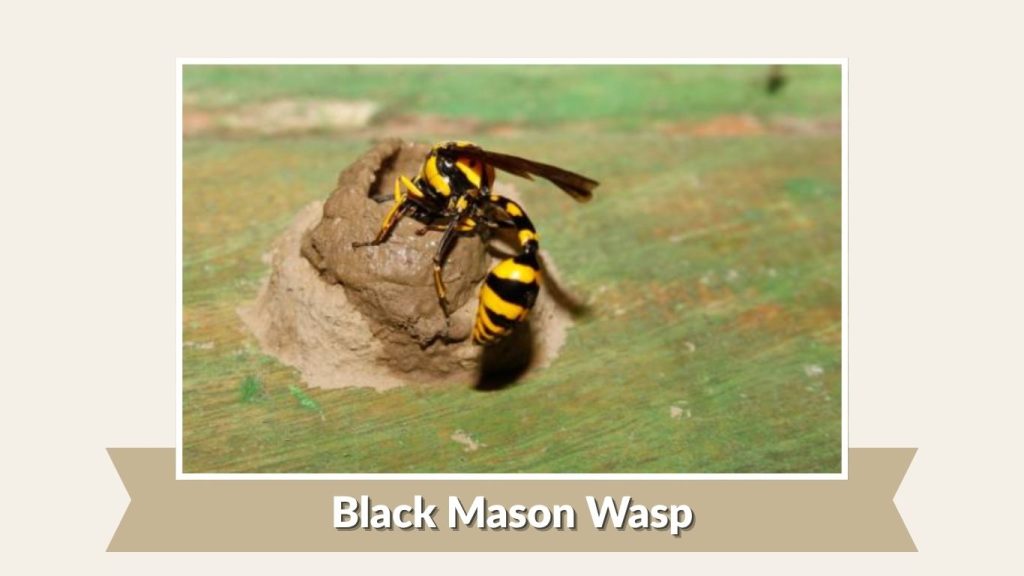
The Black Mason Wasp is a solitary wasp known for building nests from mud or clay in sheltered locations, such as under eaves, rock overhangs, or tree branches. These wasps are beneficial predators, hunting insects to provision their nests. They are non-aggressive and rarely interact with humans.
Identification
- Medium-sized glossy black body
- Narrow waist typical of solitary wasps
- Transparent or lightly smoky wings
- Long segmented antennae
- Slender legs adapted for climbing and nest construction
- Smooth, mostly hairless body
- Females larger than males
Habitat and Distribution
Black Mason Wasps are commonly found in gardens, parks, forest edges, and urban areas with sheltered structures for mud nest construction. They occur in North America, Europe, and parts of Asia. Areas with loose soil and nearby flowers for nectar provide ideal conditions.
Behavior and Diet
Adult Black Mason Wasps feed mainly on nectar, fruit juices, and sap. Females hunt small insects or caterpillars, paralyzing them and placing them inside mud cells as food for developing larvae. They are solitary and generally avoid human contact.
Lifecycle
The lifecycle begins when females construct mud nests and stock each cell with paralyzed prey. Eggs are laid beside the stored insects. Larvae hatch and feed on the provided prey while developing through several stages. Pupation occurs within the mud cell, and adults later emerge to mate and continue the reproductive cycle.
15. Black Tarantula Hawk
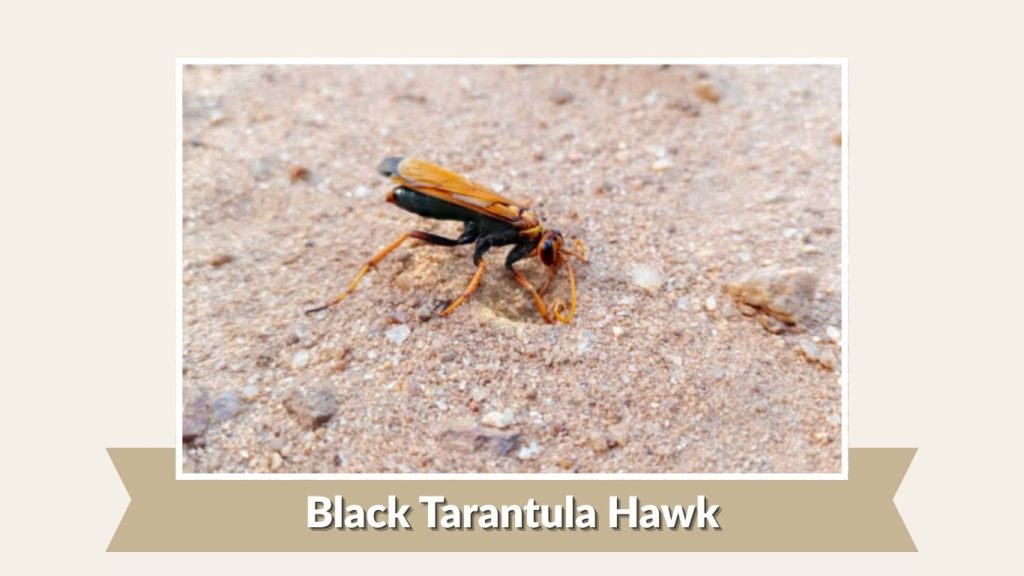
The Black Tarantula Hawk is a large solitary wasp known for hunting tarantulas to provision its nests. It is one of the most intimidating-looking wasps due to its size and metallic black coloration. Despite its fearsome appearance, it is generally non-aggressive toward humans unless provoked.
Identification
- Very large body, often over 2 inches long
- Glossy black coloration
- Narrow waist typical of solitary wasps
- Long legs with bright orange or black tips (in some species)
- Transparent wings with bluish or smoky tint
- Long segmented antennae
- Females possess a very long ovipositor for paralyzing prey
Habitat and Distribution
Black Tarantula Hawks are commonly found in deserts, grasslands, and scrublands. They occur in North and South America, particularly in the southwestern United States, Mexico, and parts of Central and South America. Open habitats with tarantula populations provide ideal hunting grounds for females.
Behavior and Diet
Adult Black Tarantula Hawks feed mainly on nectar and sometimes fruit juices. Females hunt tarantulas, paralyzing them with a powerful sting before placing them in underground burrows as food for their larvae. Adults are solitary and generally non-aggressive toward humans unless their nest is threatened.
Lifecycle
The lifecycle begins when females locate a tarantula and paralyze it with a sting. Eggs are laid on or near the immobilized spider, and larvae feed on the paralyzed prey as they grow. Pupation occurs inside the burrow, and adults later emerge to mate and continue the reproductive cycle.
FAQs
What are black wasps?
Black wasps are a diverse group of solitary or social wasps characterized by dark or black-colored bodies. Many species are predators or parasitoids, hunting insects or spiders to feed their larvae. They are generally beneficial for controlling pest populations.
Are black wasps dangerous to humans?
Most black wasps are non-aggressive and do not sting unless provoked. Even large species, such as the Black Tarantula Hawk, rarely attack humans and only use their sting defensively.
What do black wasps eat?
Adult black wasps mainly feed on nectar, plant sap, or fruit juices. Females hunt insects or spiders to provide food for their developing larvae.
Where are black wasps commonly found?
Black wasps can be found in gardens, meadows, forests, deserts, and woodland edges. Their habitat depends on the species, but they prefer areas with flowering plants for nectar and suitable nesting sites.
How do black wasps reproduce?
Females lay eggs in soil, cavities, or mud nests, often alongside paralyzed prey. Larvae feed on the stored prey while developing, pupate in the nest, and emerge as adults to continue the reproductive cycle.