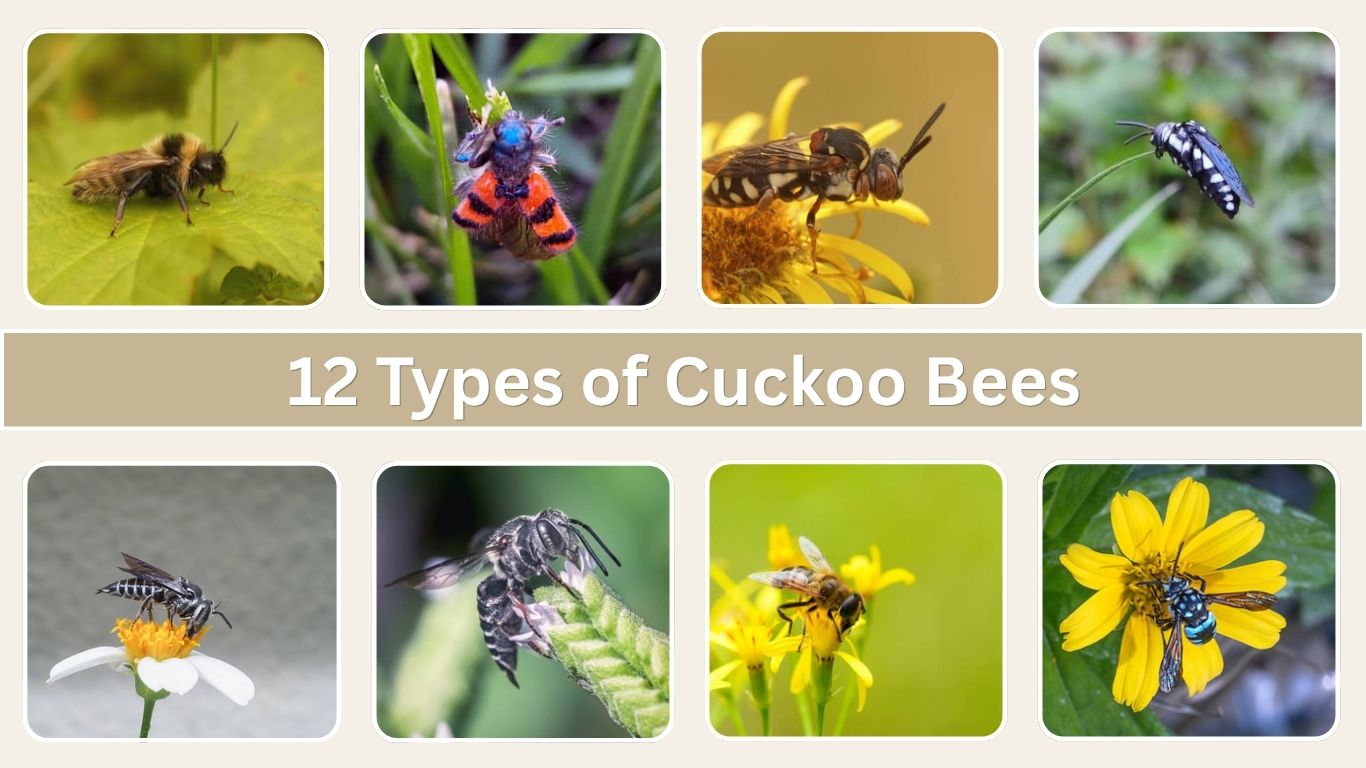
Cuckoo bees are fascinating parasitic bees that do not build their own nests or collect pollen for their young. Instead, they lay eggs in the nests of other bees, where their larvae use the stored food. These bees come in many shapes, colors, and sizes, from wasp-like nomad bees to fuzzy cuckoo bumblebees. This guide covers 12 types of cuckoo bees with simple identification details.
1. Nomad Cuckoo Bee
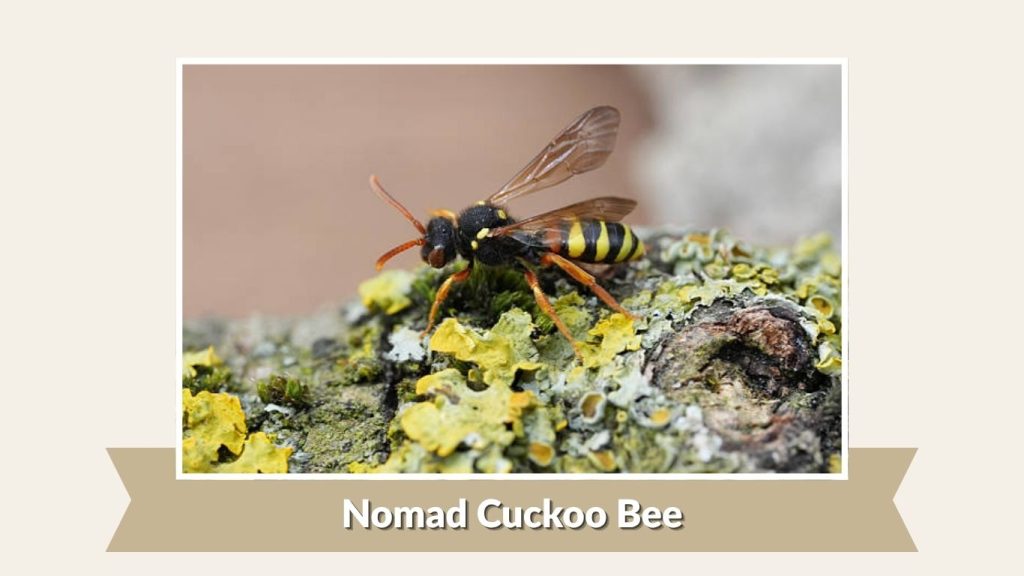
The nomad cuckoo bee is a small parasitic bee from the genus Nomada. These bees are called cuckoo bees because they do not build their own nests. Instead, females lay eggs inside the nests of other solitary bees, especially mining bees. They are often wasp-like in appearance, with red, yellow, and black markings.
Identification
- Small to medium-sized bee
- Wasp-like body shape
- Red, yellow, orange, or black markings
- Mostly hairless body
- No pollen-carrying hairs on the legs
- Slender body with narrow waist
- Often seen flying low near the ground
Habitat
Nomad cuckoo bees are commonly found in gardens, meadows, woodland edges, grasslands, and open areas where host bees are active. Since they depend on other bees’ nests, they are often seen near bare soil, sandy patches, or places where mining bees dig their nesting tunnels.
Diet
Adult nomad cuckoo bees feed mainly on nectar from flowers. Unlike many other bees, females do not collect pollen for their young. Their larvae develop inside host bee nests and feed on the food stores that the host bee collected for its own offspring.
Behavior
Nomad cuckoo bees are solitary and parasitic. Females search carefully for host nests, enter them, and lay their eggs inside. When the larvae hatch, they use the host nest’s food supply. These bees are usually not aggressive and are more often noticed moving quickly around flowers or low over nesting areas.
2. Blood Bee
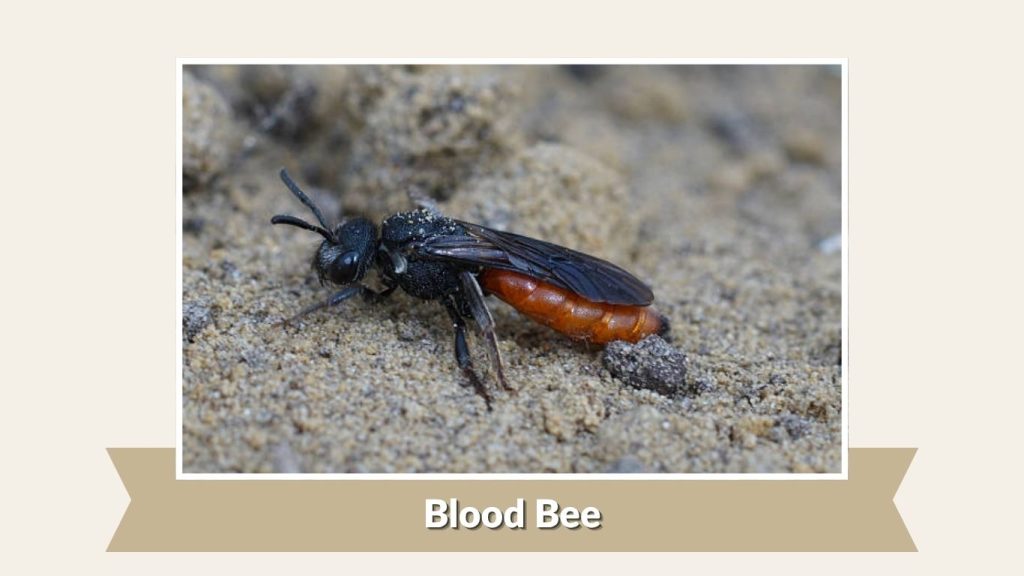
The blood bee is a cuckoo bee from the genus Sphecodes. It gets its common name from its bright red abdomen, which makes it easy to notice. Like other cuckoo bees, it does not collect pollen for its young. Instead, it lays eggs in the nests of other solitary bees.
Identification
- Small to medium-sized bee
- Bright red abdomen
- Dark head and thorax
- Shiny body with little hair
- No pollen baskets or pollen-carrying hairs
- Slender body shape
- Often seen near ground-nesting bees
Habitat
Blood bees are often found in gardens, meadows, grasslands, woodland edges, and sandy or bare soil areas. They are usually seen where their host bees nest. Since many host bees make tunnels in the ground, blood bees often fly low over soil while searching for nests.
Diet
Adult blood bees feed on nectar from flowers. They do not gather pollen to feed their larvae. After the female lays an egg in a host nest, the young larva uses the stored food that the host bee collected. This makes the blood bee dependent on other bee species.
Behavior
Blood bees are solitary and parasitic. Females search for the nests of other bees, enter them, and lay eggs inside. Their shiny bodies and red abdomens make them easier to identify than many other cuckoo bees. They are usually not aggressive and are most active in warm weather.
3. Sharp-Tailed Cuckoo Bee
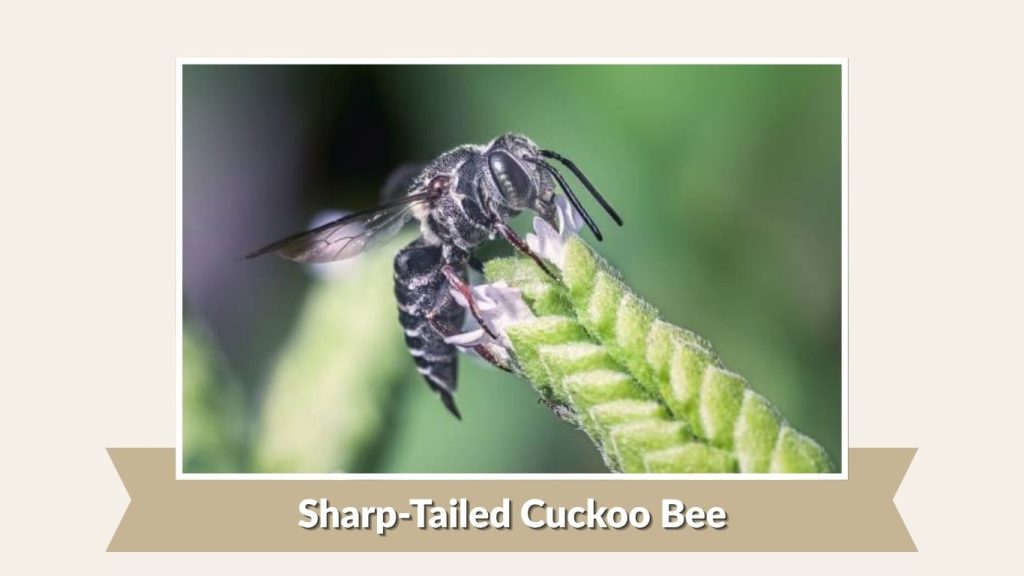
The sharp-tailed cuckoo bee belongs to the genus Coelioxys. It is named for the pointed tip of the female’s abdomen. These bees are parasitic and usually target leafcutter bee nests. Their narrow bodies and sharp rear end make them different from many rounder bee species.
Identification
- Slender body shape
- Pointed abdomen, especially in females
- Dark body with pale hair bands
- Narrow waist
- Little or no pollen-carrying hair
- Long, tapered rear end
- Fast, active flight around flowers
Habitat
Sharp-tailed cuckoo bees are found in gardens, meadows, woodland edges, and places where leafcutter bees are active. They may also appear near dead wood, hollow stems, bee hotels, and wall cracks because leafcutter bees often use these spaces for nesting.
Diet
Adults feed mainly on nectar from flowers. Female sharp-tailed cuckoo bees do not collect pollen for their young. Instead, they lay eggs in leafcutter bee nests. Their larvae then feed on the pollen and nectar stored by the host bee.
Behavior
Sharp-tailed cuckoo bees are solitary parasites. Females search for active host nests and place their eggs inside. Their larvae develop using the food meant for the host bee’s young. These bees are quick and alert, often moving between flowers and nesting areas during warm sunny days.
4. Cuckoo Leafcutter Bee
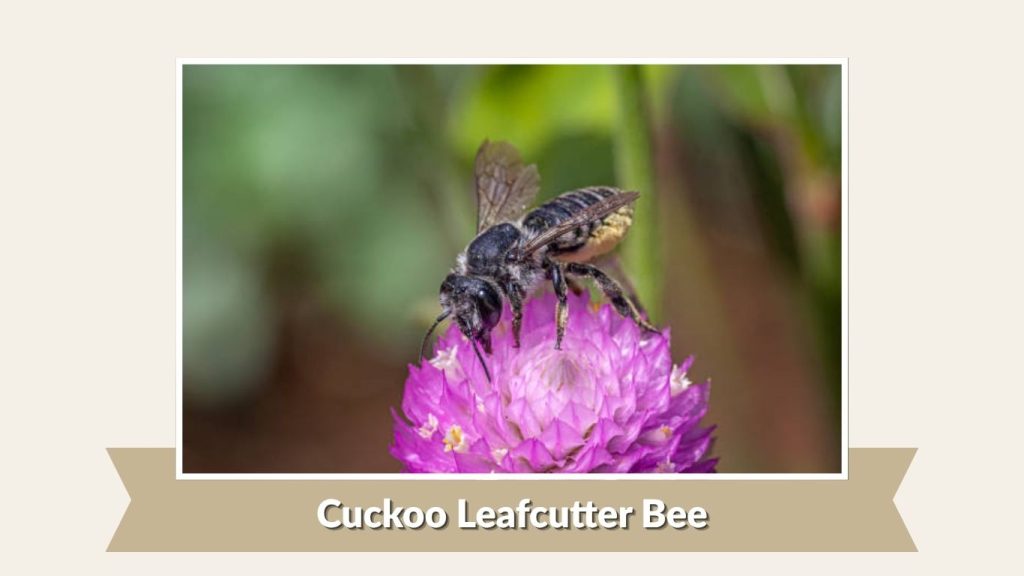
The cuckoo leafcutter bee is a parasitic bee closely linked with leafcutter bees. Instead of cutting leaves and building its own nest, it uses the nests of other bees. It has a compact body and often looks darker and less hairy than pollen-collecting bees.
Identification
- Small to medium-sized body
- Dark body color
- Less hairy than many leafcutter bees
- No pollen brush under the abdomen
- Strong jaws
- Compact body shape
- Often found near leafcutter bee nesting sites
Habitat
Cuckoo leafcutter bees live in places where leafcutter bees are common. These areas include gardens, parks, meadows, woodland edges, and places with hollow stems, dead wood, or bee hotels. They depend on host nests, so they are usually found near suitable nesting materials.
Diet
Adult cuckoo leafcutter bees drink nectar from flowers. Unlike true leafcutter bees, they do not collect pollen or leaf pieces for their young. Their larvae grow inside host nests and feed on the pollen and nectar stored by the original nest-building bee.
Behavior
Cuckoo leafcutter bees are solitary and parasitic. Females watch for leafcutter bee nests and lay their eggs inside when they find a chance. Their young use the host’s food supply. These bees may be seen visiting flowers or moving around nesting holes during warm weather.
5. Cloak-and-Dagger Bee
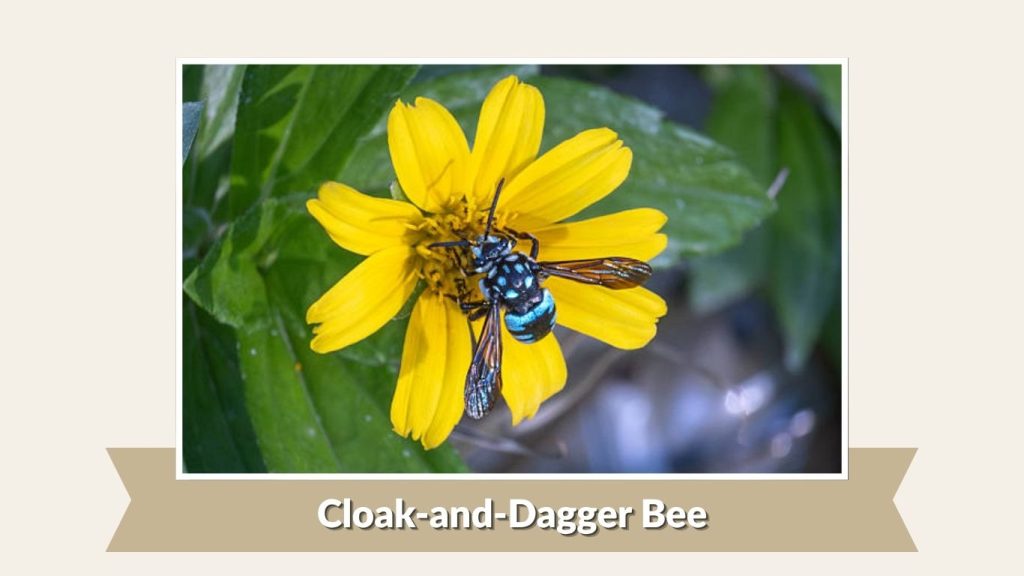
The cloak-and-dagger bee is a cuckoo bee known for its secretive parasitic lifestyle. It belongs to the genus Thyreus and is often linked with blue-banded bee hosts. Its patterned body, pale spots, and dark background make it an attractive and unusual-looking bee.
Identification
- Dark body with pale blue or white markings
- Stocky bee shape
- Short hair patches on the body
- No pollen-carrying hairs
- Bold spotted pattern
- Clear wings with dark veins
- Often seen resting on plants at night
Habitat
Cloak-and-dagger bees are found in gardens, open woodlands, grasslands, and areas where their host bees live. They are often seen around flowering plants during the day. Because they rely on host nests, they usually occur in places where blue-banded bees or similar solitary bees are active.
Diet
Adult cloak-and-dagger bees feed on nectar from flowers. Females do not collect pollen because they do not build or supply nests. Their larvae develop inside the nests of host bees and use the food stored there for growth.
Behavior
Cloak-and-dagger bees are solitary cuckoo bees. Females search for host nests and lay eggs inside them. They are often seen flying quickly around flowers or resting on stems. Their parasitic lifestyle allows them to reproduce without building their own nests or collecting food for larvae.
6. Triepeolus Cuckoo Bee
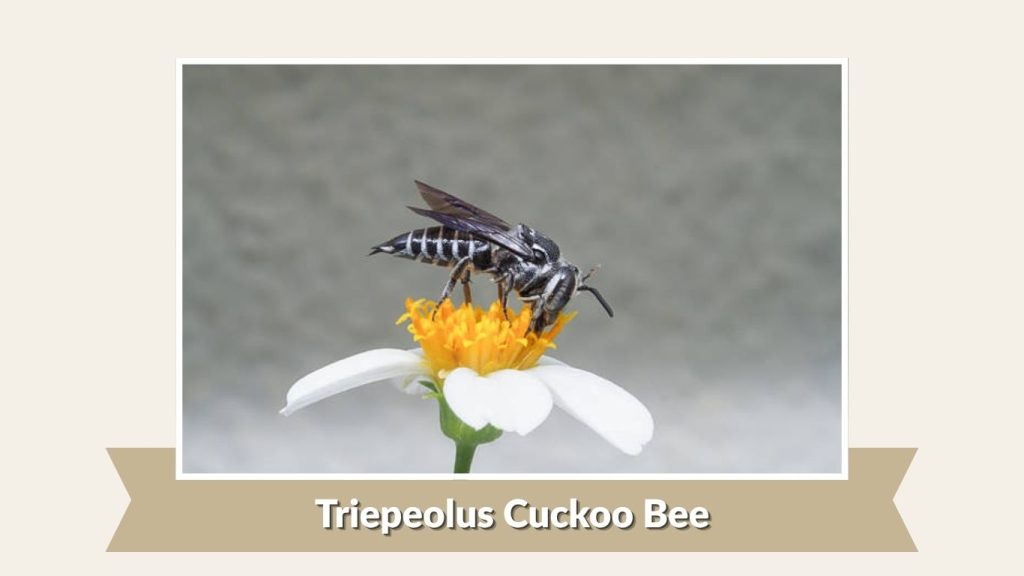
The Triepeolus cuckoo bee is a patterned parasitic bee from the genus Triepeolus. It often has bold pale markings across a dark body. These bees usually target nests of long-horned bees and related solitary bees. They are active flower visitors and are often seen in sunny open habitats.
Identification
- Dark body with pale or cream markings
- Distinct banded pattern on abdomen
- Medium-sized bee
- Hairy but without pollen-carrying structures
- Strong legs and compact body
- Short antennae compared with long-horned bees
- Often seen on flowers in sunny areas
Habitat
Triepeolus cuckoo bees are usually found in meadows, prairies, gardens, roadsides, and open fields. They prefer areas with many flowering plants and nearby host bee nests. Their presence often depends on healthy populations of solitary ground-nesting bees.
Diet
Adult Triepeolus cuckoo bees feed on nectar from many types of flowers. Females do not gather pollen for their larvae. After they lay eggs in host nests, the larvae use the stored pollen and nectar prepared by the host bee.
Behavior
Triepeolus cuckoo bees are solitary and parasitic. Females search for the nests of suitable host bees and place their eggs inside. Their patterned bodies help distinguish them from many plain-colored bees. They are usually active during warm daylight hours and often move quickly from flower to flower.
7. Epeolus Cuckoo Bee
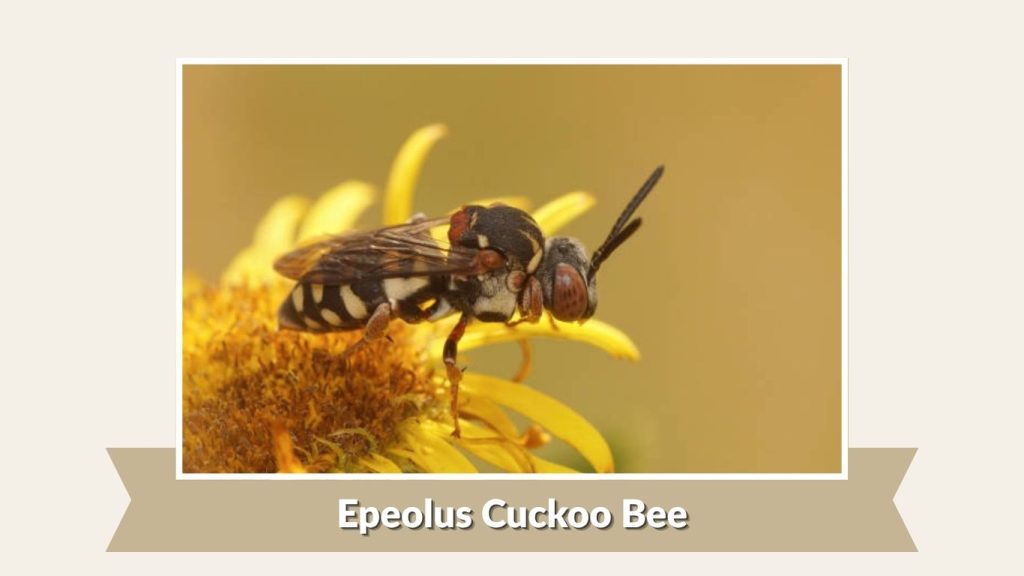
The Epeolus cuckoo bee is a small to medium-sized parasitic bee from the genus Epeolus. It often has a dark body with pale markings, giving it a patterned appearance. These bees usually depend on cellophane bees and related solitary bees as hosts. They are often seen visiting flowers in sunny open areas.
Identification
- Small to medium-sized body
- Dark body with pale markings
- Patterned abdomen
- Short, pale hair patches
- No pollen-carrying hairs
- Compact body shape
- Often seen on flowers
Habitat
Epeolus cuckoo bees are commonly found in meadows, gardens, grasslands, sandy areas, and open habitats where host bees are active. Since many host bees nest in the ground, Epeolus bees may be seen flying low over bare soil or near nesting sites.
Diet
Adult Epeolus cuckoo bees feed on nectar from flowers. Females do not collect pollen for their larvae. Instead, they lay eggs inside host bee nests, where their young feed on the pollen and nectar stored by the host bee.
Behavior
Epeolus cuckoo bees are solitary parasites. Females search for suitable host nests and lay eggs inside them. Their larvae use the host’s food supply to grow. These bees are usually active in warm weather and can be seen moving between flowers and nesting areas.
8. Stelis Cuckoo Bee
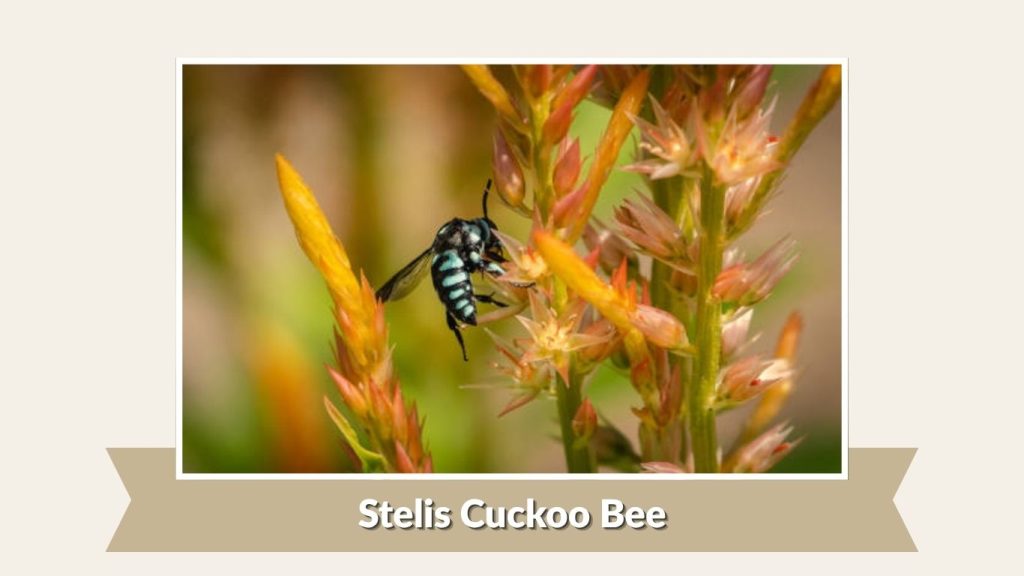
The Stelis cuckoo bee is a small parasitic bee from the genus Stelis. It often has a dark, compact body and may show pale spots or bands. These bees commonly use the nests of mason bees, leafcutter bees, or related solitary bees. They are less hairy than many pollen-collecting bees.
Identification
- Small, compact body
- Dark body color
- Pale spots or bands on some species
- Less hairy appearance
- No pollen brush under the abdomen
- Strong jaws
- Short, sturdy shape
Habitat
Stelis cuckoo bees live in areas where their host bees are common. These habitats include gardens, parks, meadows, woodland edges, and places with bee hotels, hollow stems, wall cracks, or dead wood. They are often noticed near nesting holes used by mason and leafcutter bees.
Diet
Adult Stelis cuckoo bees drink nectar from flowers. Females do not gather pollen or build their own nests. Their larvae grow inside host nests and feed on the pollen and nectar stored there. This makes them fully dependent on other solitary bees for reproduction.
Behavior
Stelis cuckoo bees are solitary and parasitic. Females enter host nests and lay eggs inside the prepared brood cells. Their larvae develop using the host bee’s food supply. Because they are small and quiet, they are often overlooked unless seen near bee nesting sites.
9. Melecta Cuckoo Bee
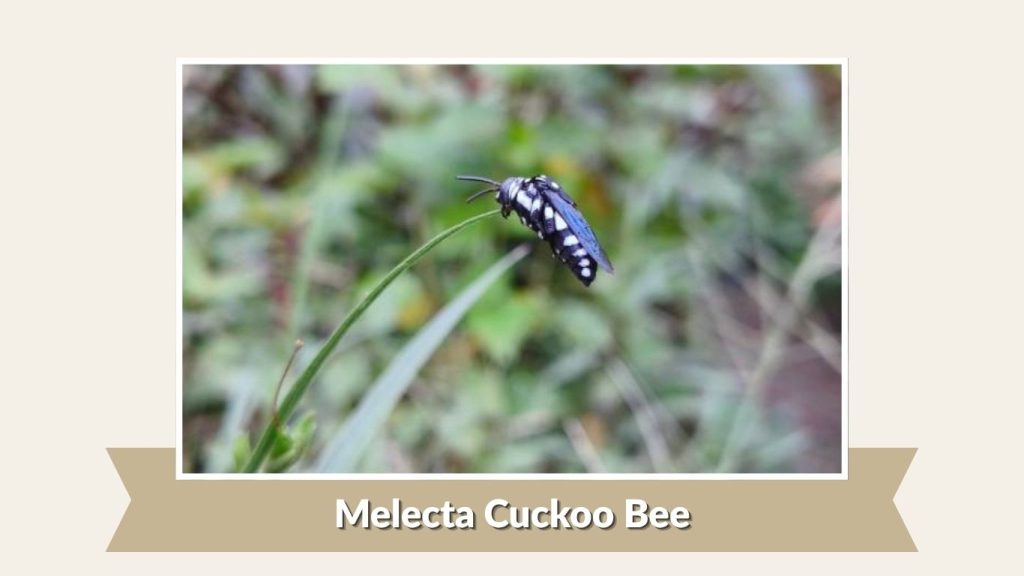
The Melecta cuckoo bee is a hairy parasitic bee from the genus Melecta. It often has dark coloring with pale hair patches or bands. These bees usually target the nests of anthophorine bees, such as flower bees. They may look robust and fuzzy but do not collect pollen for their young.
Identification
- Medium-sized bee
- Dark body with pale hair patches
- Fuzzy but not pollen-carrying
- Robust body shape
- Broad head and thorax
- Pale bands or spots on abdomen
- Often resembles a small bumblebee
Habitat
Melecta cuckoo bees are found in gardens, meadows, grasslands, woodland edges, and sunny places where their host bees nest. They may be seen near banks, walls, cliffs, or dry soil where flower bees create nesting tunnels. Flower-rich areas are important for adult feeding.
Diet
Adult Melecta cuckoo bees feed mainly on nectar from flowers. Females do not collect pollen because they rely on host bees to provide food for the larvae. Once inside a host nest, the young bee feeds on the stored pollen and nectar.
Behavior
Melecta cuckoo bees are solitary parasites. Females search for active host nests and lay eggs inside. Their larvae grow using the food meant for the host bee’s offspring. Adults are often seen flying strongly between flowers during warm, sunny weather.
10. Cuckoo Bumblebee
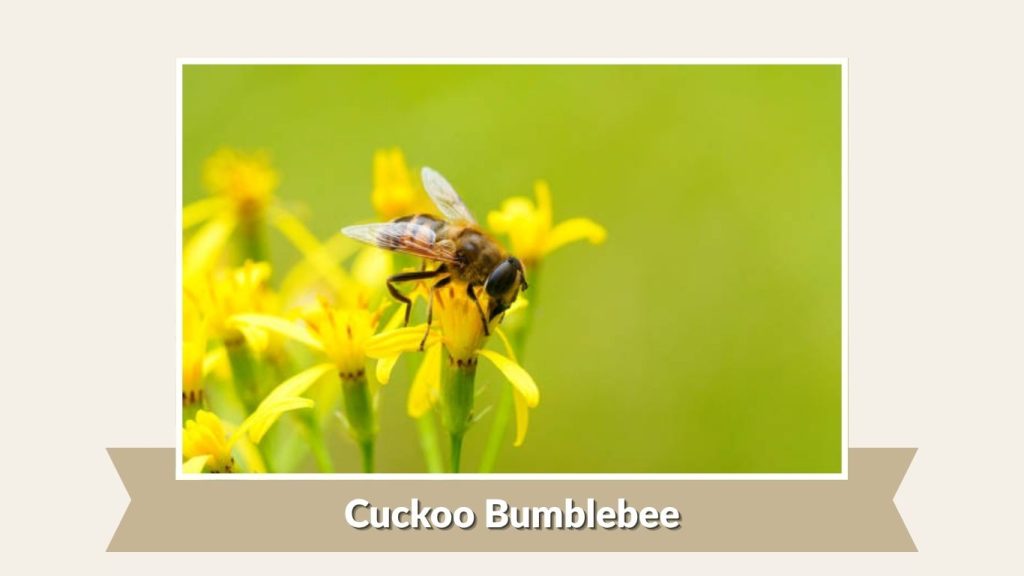
The cuckoo bumblebee belongs to the subgenus Psithyrus within Bombus. Unlike normal bumblebees, it does not build its own colony. A female cuckoo bumblebee enters another bumblebee nest, takes over, and uses the host workers to raise her young.
Identification
- Large, bumblebee-like body
- Fuzzy black and yellow markings
- No pollen baskets on hind legs
- Often has a tougher, shinier body
- Females may look darker than host bees
- Strong legs and thick body
- Similar size to many bumblebees
Habitat
Cuckoo bumblebees live in gardens, meadows, grasslands, woodland edges, farms, and flower-rich areas where host bumblebees are present. They depend on existing bumblebee nests, so their habitat must support both flowering plants and healthy host colonies.
Diet
Adult cuckoo bumblebees feed on nectar from flowers. They do not collect pollen for a worker colony. After taking over a host nest, the female uses the host workers to feed and raise her offspring. This lifestyle makes them different from ordinary social bumblebees.
Behavior
Cuckoo bumblebees are social parasites. A female searches for a host bumblebee nest, enters it, and may dominate or replace the host queen. She then lays her own eggs, while host workers care for the young. These bees are usually seen flying near flowers or searching for nests.
11. Suckley’s Cuckoo Bumblebee
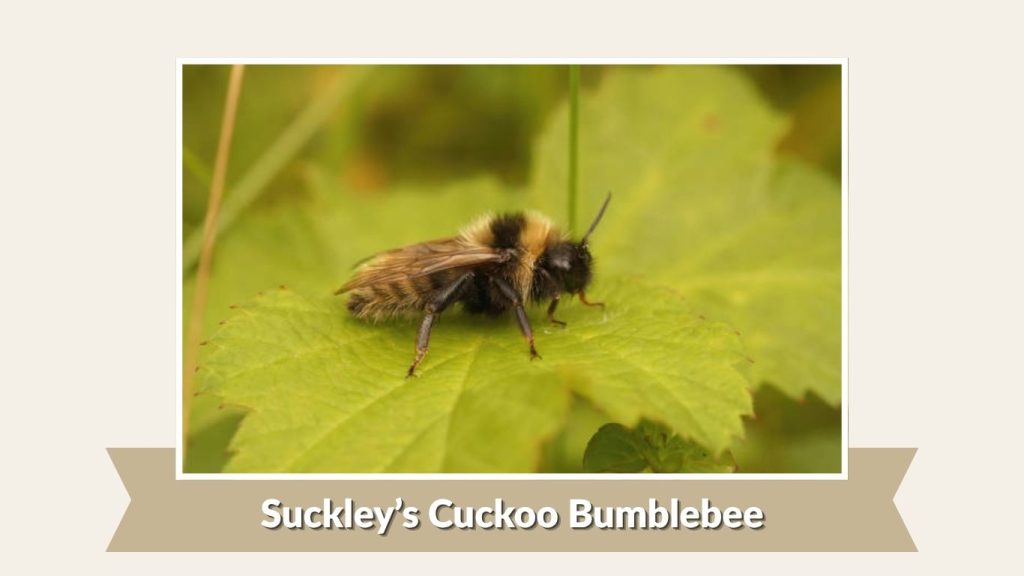
Suckley’s cuckoo bumblebee is a parasitic bumblebee known scientifically as Bombus suckleyi. It is native to parts of North America and depends on other bumblebee species to raise its young. Like other cuckoo bumblebees, it does not have pollen baskets and does not produce its own worker colony.
Identification
- Large bumblebee-like body
- Black and yellow color pattern
- No pollen baskets on hind legs
- Dark wings in many individuals
- Fuzzy body with a strong build
- Often has a yellow band near the front of the abdomen
- Similar to host bumblebees in appearance
Habitat
Suckley’s cuckoo bumblebee is found in grasslands, meadows, open woodlands, farms, and flower-rich landscapes where host bumblebees live. It depends on areas with strong host populations and enough flowers for adult feeding. Loss of habitat can reduce both host bees and this cuckoo species.
Diet
Adult Suckley’s cuckoo bumblebees feed on nectar from flowering plants. Females do not collect pollen for their own workers. Instead, after entering a host nest, they rely on host bumblebee workers to provide food and care for their developing offspring.
Behavior
Suckley’s cuckoo bumblebee is a nest parasite. A female searches for a host bumblebee colony, enters the nest, and uses the host workers to raise her young. Because it depends on other bumblebees, its survival is closely linked to the health of host bee populations.
12. Neon Cuckoo Bee
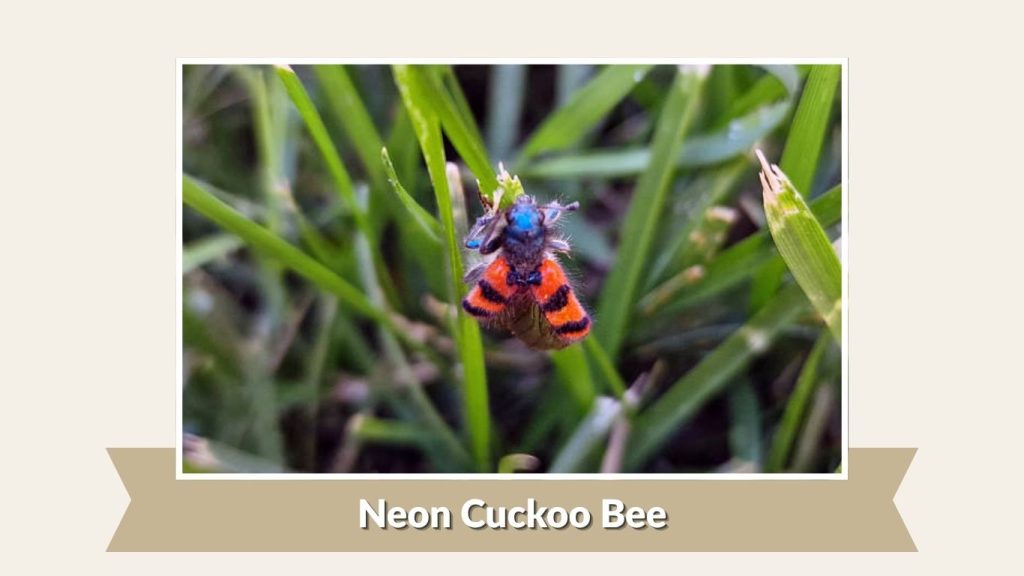
The neon cuckoo bee is a small parasitic bee from the genus Neon. Like other cuckoo bees, it does not build its own nest or collect pollen for its young. Instead, it lays eggs in the nests of other solitary bees. This bee is often small, dark, and easy to overlook because of its hidden lifestyle.
Identification
- Small body size
- Dark or blackish body color
- Pale markings on some species
- Less hairy than many pollen-collecting bees
- No pollen-carrying hairs
- Compact body shape
- Often seen near host bee nesting areas
Habitat
Neon cuckoo bees are usually found in places where their host bees are active. These may include gardens, meadows, open fields, woodland edges, sandy soil, and areas with low vegetation. Because they depend on host nests, they are often noticed near ground-nesting solitary bees.
Diet
Adult neon cuckoo bees feed mainly on nectar from flowers. Females do not gather pollen because their larvae use the food stored inside host nests. Once the female places an egg in a suitable nest, the young bee develops using the pollen and nectar collected by the host bee.
Behavior
Neon cuckoo bees are solitary and parasitic. Females search carefully for host bee nests and lay their eggs inside. Their larvae grow without the mother building a nest or preparing food. These bees are generally quiet, quick-moving, and most active during warm sunny periods.
FAQs
What are cuckoo bees?
Cuckoo bees are parasitic bees that lay their eggs in the nests of other bees. They do not build their own nests or collect pollen for their young. Their larvae use the food stored by the host bee to grow and develop.
Why are they called cuckoo bees?
They are called cuckoo bees because their behavior is similar to cuckoo birds. Just as cuckoo birds lay eggs in other birds’ nests, cuckoo bees lay eggs in the nests of other bees. This allows them to reproduce without making nests themselves.
Do cuckoo bees collect pollen?
Most cuckoo bees do not collect pollen for their young. Because they rely on host bees’ nests, they usually lack pollen baskets or pollen-carrying hairs. Adult cuckoo bees may still visit flowers to drink nectar for their own energy.
Are cuckoo bees dangerous?
Cuckoo bees are not usually dangerous to people. They are generally solitary and not aggressive. Like many bees, females may sting if handled or threatened, but they usually avoid humans and spend their time visiting flowers or searching for host nests.
Where can cuckoo bees be found?
Cuckoo bees can be found in gardens, meadows, grasslands, woodland edges, sandy areas, and places where their host bees live. Since they depend on other bees, they are often seen near nesting sites, flower-rich habitats, or bare soil used by ground-nesting bees.