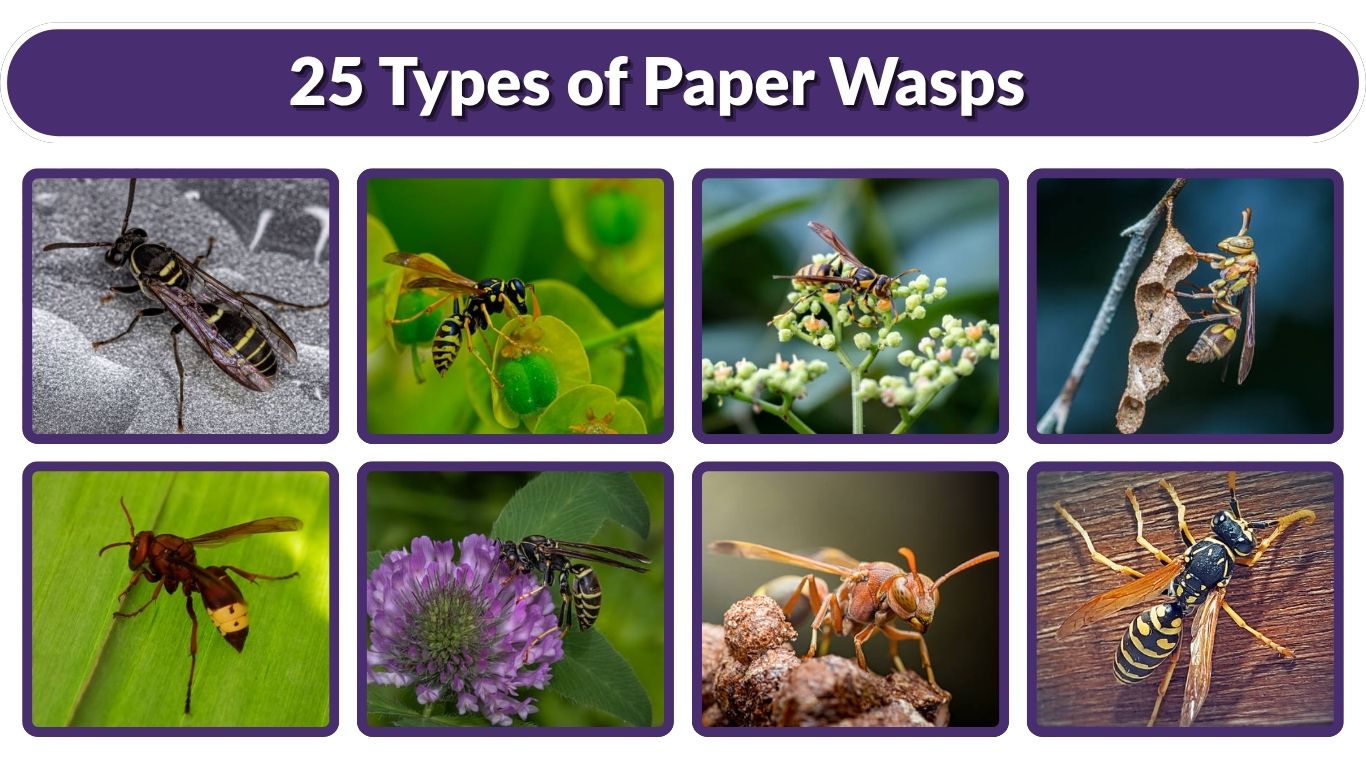
Paper wasps are fascinating insects known for their slender bodies, social behavior, and unique paper-like nests. Found across the world, these wasps play an important role in ecosystems by controlling pest populations and pollinating plants. Each type has distinct features, habitats, and behaviors that make it unique. This guide explores 25 types of paper wasps, highlighting their identification, habitat and distribution, behavior and diet, and lifecycle to help you better understand these important and often misunderstood insects.
1. European Paper Wasp
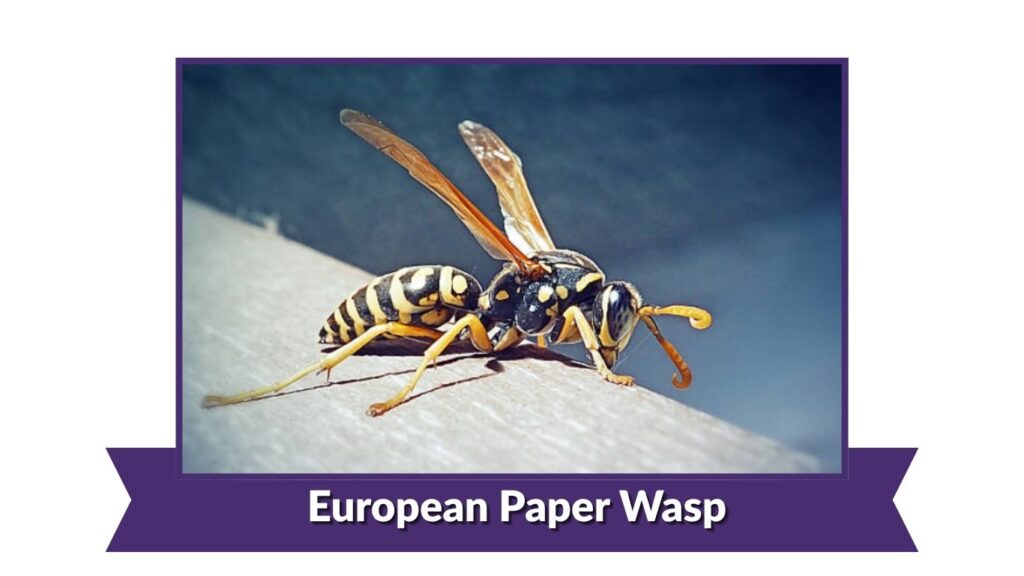
The European paper wasp is one of the most widespread and recognizable paper wasp species. It is known for its slender body, yellow and black markings, and umbrella-shaped nests. This species has adapted well to human environments and is commonly seen in gardens, buildings, and outdoor spaces.
Identification
- Slender body with a narrow waist
- Yellow and black striped pattern
- Long legs that hang while flying
- Orange-tipped antennae
- Wings folded lengthwise when at rest
Habitat and Distribution
The European paper wasp is native to Europe but has spread to many parts of the world, including North America, Australia, and New Zealand. It commonly builds nests in sheltered areas such as under roof eaves, tree branches, wall cavities, and fences. This species adapts well to urban and suburban environments, often living close to human activity where food sources are easily available.
Behavior and Diet
European paper wasps are social insects that live in small colonies. They are generally less aggressive than some other wasps but will defend their nests if threatened. Their diet consists mainly of insects such as caterpillars, flies, and other small pests, making them beneficial for natural pest control. Adults also feed on nectar and sugary substances for energy.
Lifecycle
The lifecycle of the European paper wasp begins when a queen emerges in spring and starts building a nest. She lays eggs that develop into workers, which then take over nest expansion and care duties. The colony grows through summer, producing more workers and eventually new queens and males. As colder weather approaches, the colony declines, and only fertilized queens survive to start new nests the following year.
2. Red Paper Wasp
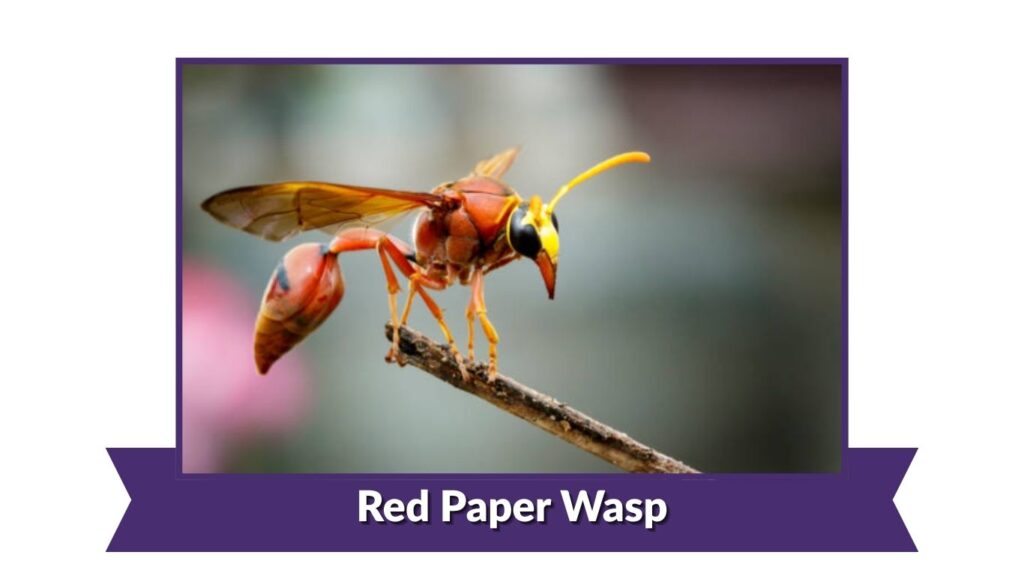
The red paper wasp is a common and easily recognized species known for its reddish-brown color and long legs. It is often found in warm regions and is one of the more familiar paper wasps in North America. This species plays a helpful role in controlling garden pests.
Identification
- Reddish-brown body color
- Slender body with a narrow waist
- Long legs that dangle during flight
- Dark wings with a slightly smoky appearance
- Smooth, shiny body surface
Habitat and Distribution
Red paper wasps are mainly found in North America, especially in the southern United States. They prefer warm climates and are commonly seen in gardens, forests, and around human structures. Their nests are usually built in sheltered locations such as under roof eaves, porch ceilings, tree branches, and outdoor furniture. They adapt well to areas where food and shelter are easily available.
Behavior and Diet
These wasps are social and live in colonies, although their colonies are usually smaller than those of some other wasp species. They are generally not aggressive unless their nest is disturbed. Red paper wasps feed on insects like caterpillars, which makes them useful for pest control. Adults also consume nectar and sugary liquids for energy.
Lifecycle
The lifecycle begins in spring when a fertilized queen starts a new nest. She lays eggs that develop into worker wasps. As the colony grows, workers take over duties such as nest building and feeding larvae. By late summer, the colony produces new queens and males. After mating, the old colony dies off, and new queens survive the winter to start the cycle again.
3. Golden Paper Wasp
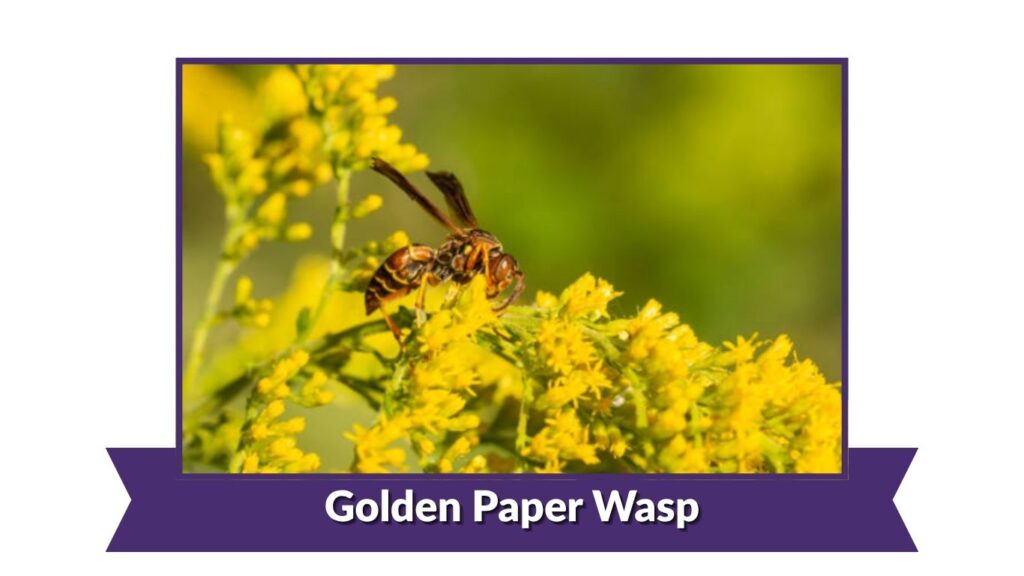
The golden paper wasp is a striking species known for its bright yellow or golden coloration. It is commonly found in warm regions and is often seen flying around vegetation and human structures. Like other paper wasps, it builds open, umbrella-shaped nests and plays a role in controlling insect populations.
Identification
- Bright yellow or golden body color
- Slender body with a narrow waist
- Long legs that hang during flight
- Transparent wings with a slight tint
- Smooth body with minimal markings
Habitat and Distribution
Golden paper wasps are typically found in tropical and subtropical regions, including parts of Asia, Africa, and the Americas. They prefer habitats such as forests, gardens, and agricultural areas. Their nests are usually built in sheltered spots like under leaves, branches, roof edges, or man-made structures. They are adaptable and can live close to human environments if food is available.
Behavior and Diet
These wasps are social insects that live in small colonies. They are usually calm but can become defensive if their nest is threatened. Golden paper wasps feed mainly on insects such as caterpillars and flies, which they capture to feed their larvae. Adult wasps also consume nectar and sugary substances for energy.
Lifecycle
The lifecycle starts when a queen builds a nest and lays eggs. The eggs hatch into larvae, which are fed by the queen and later by worker wasps. As the colony grows, workers take over responsibilities like nest building and food collection. Toward the end of the season, new queens and males are produced. After mating, only the new queens survive to begin new colonies.
4. Guinea Paper Wasp
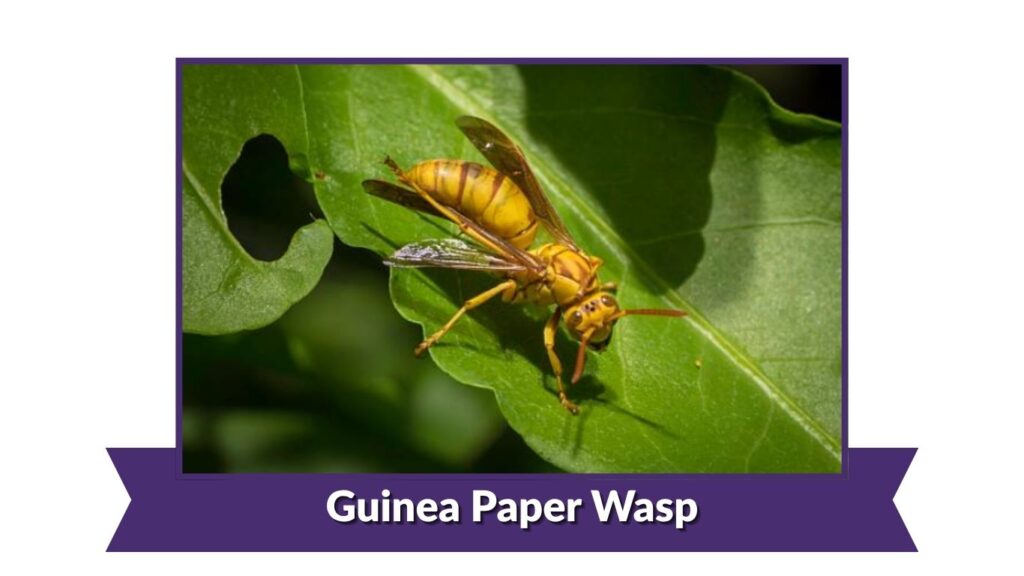
The Guinea paper wasp is a tropical species known for its slender shape and vibrant coloration. It is commonly found in warm regions and builds characteristic paper nests from chewed plant material. Like other paper wasps, it plays an important role in controlling insect populations in its habitat.
Identification
- Slender body with a narrow waist
- Yellow and brown or reddish markings
- Long legs that hang during flight
- Transparent wings with a light tint
- Smooth, shiny body surface
Habitat and Distribution
Guinea paper wasps are mainly found in tropical regions of Africa and parts of Asia. They live in forests, grasslands, and areas with dense vegetation. These wasps often build their nests in sheltered places such as tree branches, under leaves, or on buildings. They prefer warm climates where food sources like insects and nectar are readily available.
Behavior and Diet
Guinea paper wasps are social insects that live in small colonies. They are generally calm but will defend their nest if disturbed. Their diet mainly includes insects such as caterpillars and flies, which they hunt to feed their larvae. Adult wasps also consume nectar and other sugary substances for energy.
Lifecycle
The lifecycle begins when a queen starts a new nest and lays eggs. The eggs hatch into larvae, which are fed by the queen and later by worker wasps. As the colony grows, workers take over tasks such as nest building and foraging. Toward the end of the season, new queens and males are produced. After mating, only the fertilized queens survive to establish new colonies.
5. Asian Paper Wasp
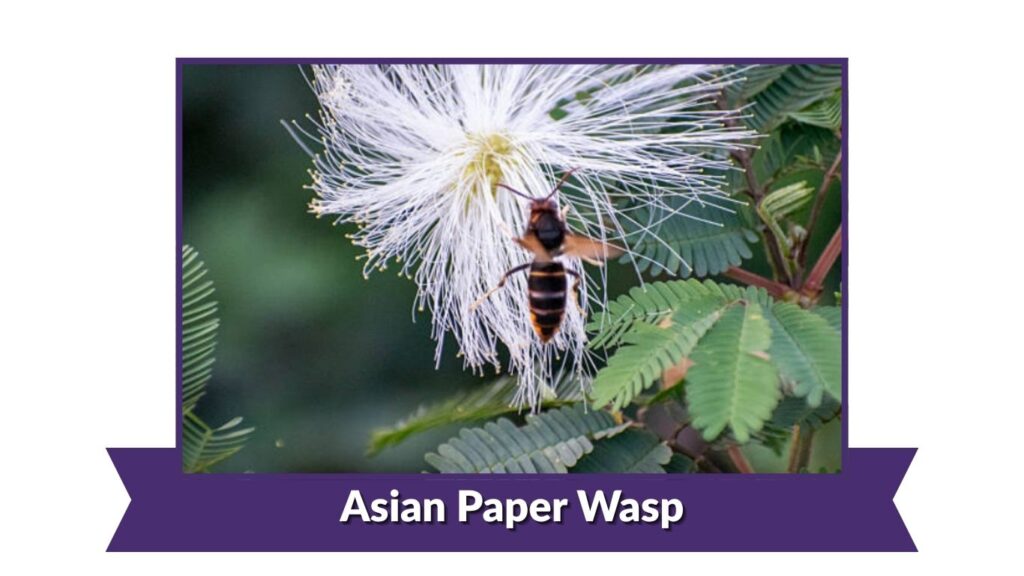
The Asian paper wasp is a common species found across many parts of Asia. It is known for its slender body, distinct markings, and ability to adapt to both natural and urban environments. Like other paper wasps, it builds open, papery nests and helps control insect populations.
Identification
- Slender body with a narrow waist
- Yellow and black or brown striped pattern
- Long legs that hang during flight
- Transparent wings folded lengthwise at rest
- Slightly pointed abdomen
Habitat and Distribution
Asian paper wasps are widely distributed across South, Southeast, and East Asia. They live in forests, gardens, farms, and urban areas. Their nests are commonly built in sheltered places such as under roof eaves, tree branches, window frames, and walls. They are highly adaptable and can thrive in areas with human activity as long as food and shelter are available.
Behavior and Diet
These wasps are social and live in small to medium-sized colonies. They are generally not aggressive but will defend their nest if threatened. Their diet mainly consists of insects like caterpillars, flies, and other small pests, making them beneficial for natural pest control. Adult wasps also feed on nectar and sugary liquids for energy.
Lifecycle
The lifecycle starts when a queen builds a nest and lays eggs in early spring. The eggs develop into larvae, which are cared for by the queen and later by worker wasps. As the colony grows, workers take over duties such as foraging and nest expansion. By late season, new queens and males are produced. After mating, only fertilized queens survive to start new colonies.
6. Australian Paper Wasp
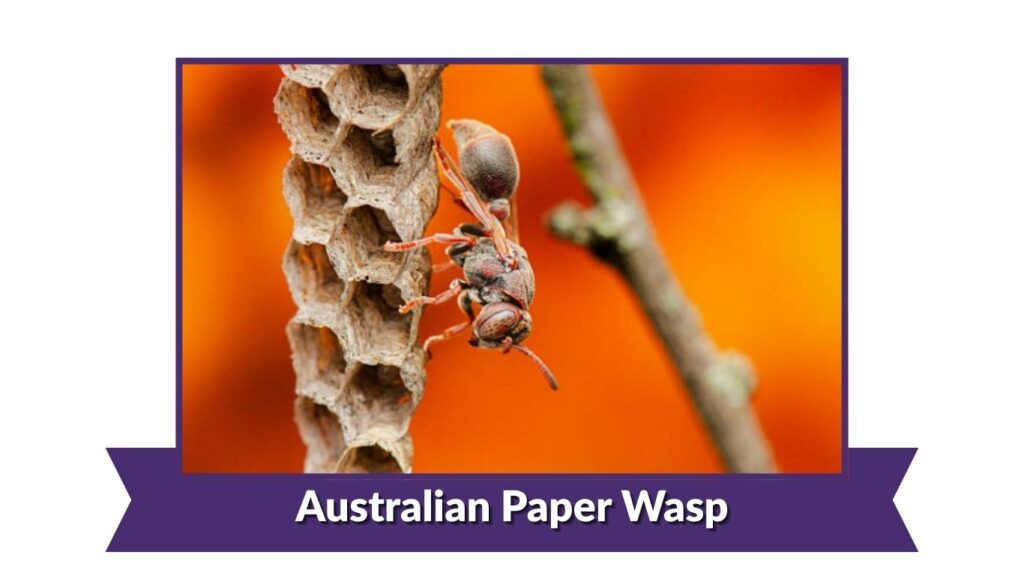
The Australian paper wasp is a common species known for its slender body and adaptability to different environments. It is widely seen in gardens and urban areas, where it builds small paper nests. Like other paper wasps, it helps control insect populations and plays a useful role in the ecosystem.
Identification
- Slender body with a narrow waist
- Yellow and black or brown markings
- Long legs that hang during flight
- Transparent wings folded when at rest
- Smooth body with a slightly elongated shape
Habitat and Distribution
Australian paper wasps are found across Australia and nearby regions. They live in a variety of habitats including forests, gardens, and urban areas. Their nests are usually built in sheltered places such as under roof edges, tree branches, fences, and outdoor structures. They prefer warm climates and areas where food sources like insects and nectar are abundant.
Behavior and Diet
These wasps are social and live in small colonies. They are generally calm but can become defensive if their nest is disturbed. Their diet mainly includes insects such as caterpillars, flies, and other small pests, which they capture to feed their larvae. Adult wasps also consume nectar and sugary liquids for energy.
Lifecycle
The lifecycle begins when a queen starts building a nest and lays eggs. The eggs hatch into larvae, which are fed by the queen and later by worker wasps. As the colony grows, workers take over tasks such as foraging and nest building. Toward the end of the season, new queens and males are produced, and after mating, only the fertilized queens survive to form new colonies.
7. Common Paper Wasp
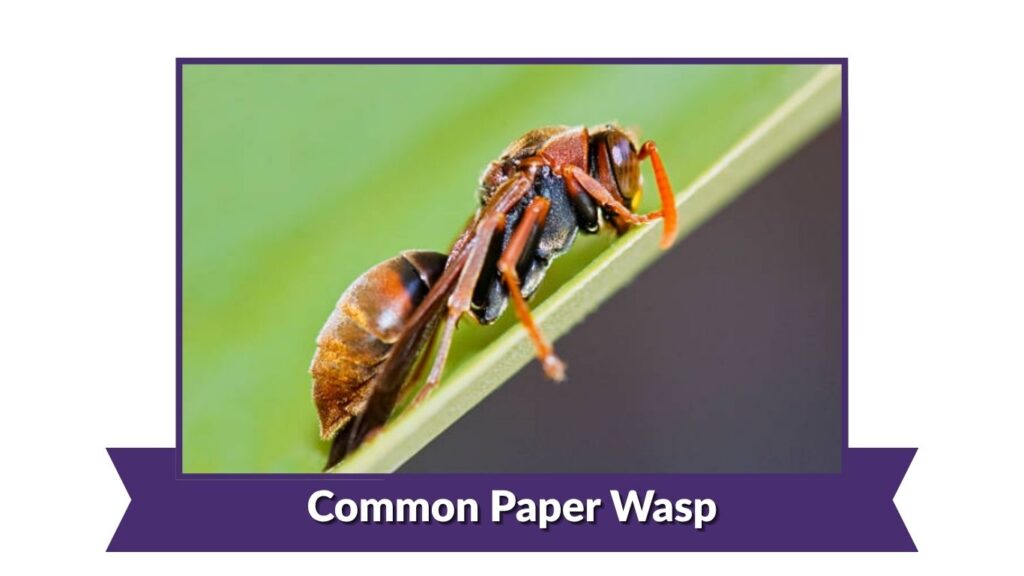
The common paper wasp is a widely recognized species known for its simple nest structure and frequent presence around human habitats. It is adaptable and can be found in many regions, often building nests in sheltered places. Like other paper wasps, it plays an important role in controlling insect populations.
Identification
- Slender body with a narrow waist
- Yellow and black striped pattern
- Long legs that hang during flight
- Transparent wings folded lengthwise at rest
- Slightly elongated abdomen
Habitat and Distribution
Common paper wasps are found in many parts of the world, including Europe, Asia, and the Americas. They live in forests, gardens, farms, and urban areas. Their nests are usually built in protected locations such as under roof eaves, tree branches, fences, and walls. They prefer environments where food sources like insects and nectar are easily available.
Behavior and Diet
These wasps are social and live in colonies that grow during the warmer months. They are generally non-aggressive but will defend their nests if threatened. Their diet mainly consists of insects such as caterpillars, flies, and other small pests, making them beneficial for pest control. Adults also feed on nectar and sugary substances.
Lifecycle
The lifecycle starts when a queen establishes a nest in spring and lays eggs. The larvae are fed by the queen and later by worker wasps. As the colony grows, workers take over tasks such as nest building and food collection. Toward the end of the season, new queens and males are produced. After mating, only fertilized queens survive to begin new colonies.
8. Ringed Paper Wasp
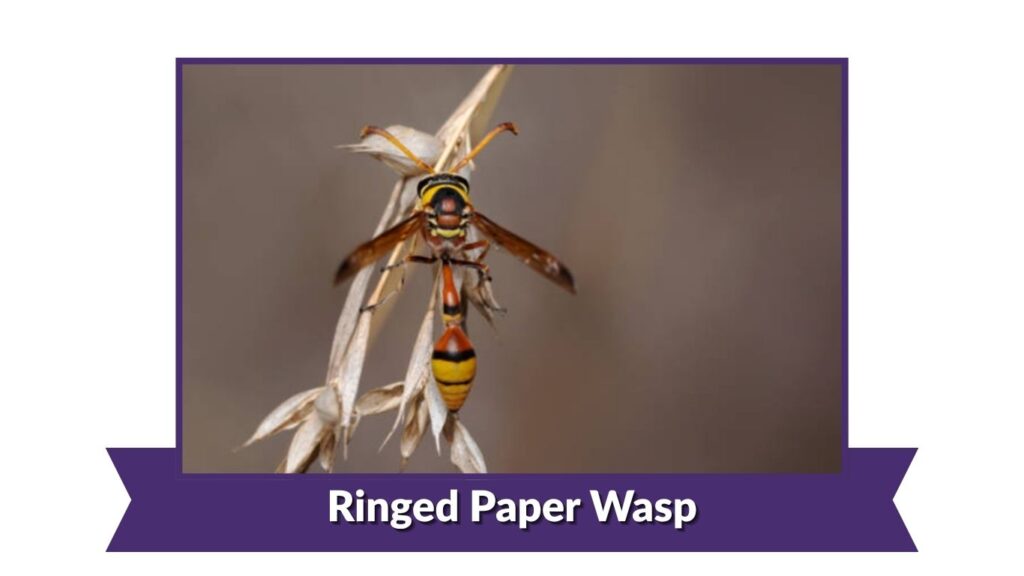
The ringed paper wasp is known for the distinct band-like markings on its body. It is a slender and active insect that builds small, open nests in sheltered areas. Like other paper wasps, it contributes to controlling insect populations and is commonly seen in warm environments.
Identification
- Slender body with a narrow waist
- Distinct ring or band patterns on the abdomen
- Yellow and brown or black coloration
- Long legs that hang during flight
- Transparent wings folded at rest
Habitat and Distribution
Ringed paper wasps are found in warm and tropical regions across parts of Asia, Africa, and the Americas. They live in forests, gardens, and near human settlements. Their nests are usually built in protected areas such as under leaves, branches, roof edges, or walls. They prefer environments with good shelter and easy access to food.
Behavior and Diet
These wasps are social and live in small colonies. They are usually calm but will defend their nest if disturbed. Their diet mainly consists of insects like caterpillars, flies, and other small pests, which they hunt to feed their larvae. Adult wasps also consume nectar and sugary liquids.
Lifecycle
The lifecycle begins when a queen builds a nest and lays eggs. The eggs develop into larvae, which are cared for by the queen and later by worker wasps. As the colony grows, workers take over tasks like foraging and nest building. By the end of the season, new queens and males are produced, and only fertilized queens survive to start new colonies.
9. Dark Paper Wasp
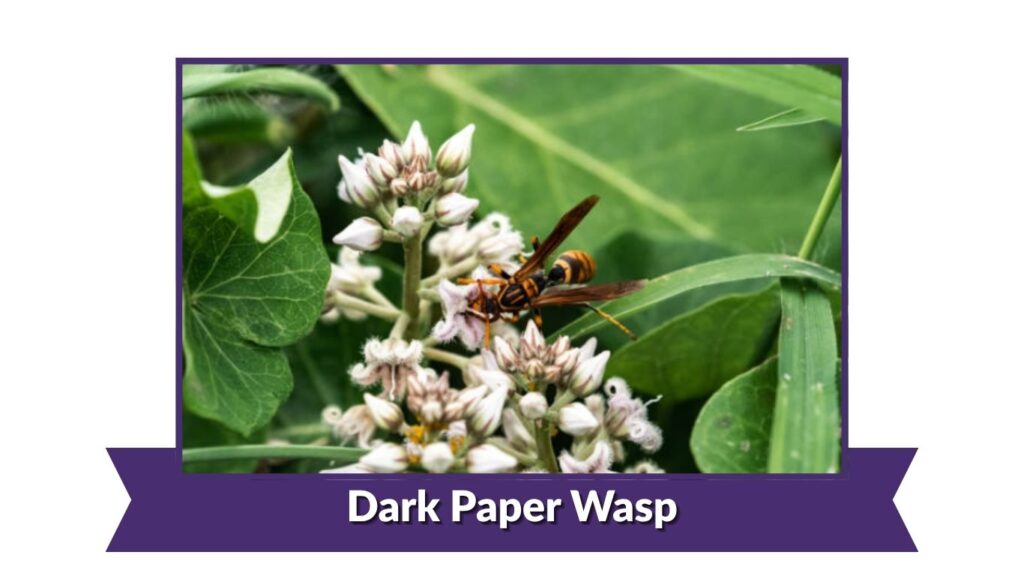
The dark paper wasp is a less brightly colored species known for its darker body tones and slender shape. It is commonly found in warm regions and builds typical open paper nests. Despite its simple appearance, it plays an important role in maintaining ecological balance by controlling insect populations.
Identification
- Slender body with a narrow waist
- Dark brown or black coloration
- Long legs that hang during flight
- Transparent wings with a smoky tint
- Smooth and slightly shiny body
Habitat and Distribution
Dark paper wasps are found in tropical and subtropical regions across different continents. They live in forests, gardens, and areas close to human habitation. Their nests are usually built in sheltered places such as under tree branches, leaves, roof edges, or walls. They prefer environments with warmth and easy access to food sources like insects and nectar.
Behavior and Diet
These wasps are social and live in small colonies. They are generally calm but will become defensive if their nest is threatened. Their diet mainly includes insects such as caterpillars and flies, which they capture to feed their larvae. Adult wasps also consume nectar and other sugary substances for energy.
Lifecycle
The lifecycle starts when a queen establishes a nest and lays eggs. The larvae are fed by the queen and later by worker wasps. As the colony grows, workers take over responsibilities such as nest building and foraging. Toward the end of the season, new queens and males are produced. After mating, only fertilized queens survive to begin new colonies.
10. Yellow Paper Wasp
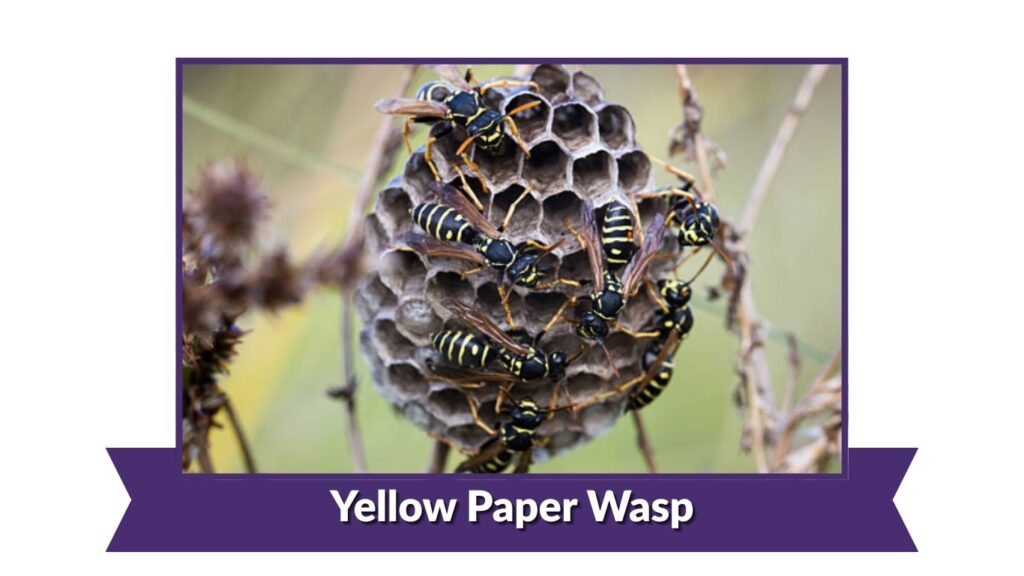
The yellow paper wasp is a brightly colored species recognized for its vivid yellow markings and slender body. It is commonly found in warm regions and is often seen around gardens and buildings. Like other paper wasps, it builds open nests and helps control insect populations.
Identification
- Bright yellow body with black markings
- Slender shape with a narrow waist
- Long legs that hang during flight
- Transparent wings folded at rest
- Smooth and slightly shiny body
Habitat and Distribution
Yellow paper wasps are found in tropical and subtropical regions around the world. They live in forests, gardens, and urban areas. Their nests are usually built in sheltered locations such as under roof eaves, tree branches, fences, and walls. They prefer warm climates and environments where food sources like insects and nectar are readily available.
Behavior and Diet
These wasps are social and live in colonies that grow during warmer months. They are generally not aggressive but will defend their nests if disturbed. Their diet mainly includes insects such as caterpillars, flies, and other small pests, making them beneficial for pest control. Adults also feed on nectar and sugary liquids.
Lifecycle
The lifecycle begins when a queen starts a nest in spring and lays eggs. The larvae are fed by the queen and later by worker wasps. As the colony develops, workers take over tasks like foraging and nest building. Toward the end of the season, new queens and males are produced, and only fertilized queens survive to form new colonies.
11. Tropical Paper Wasp
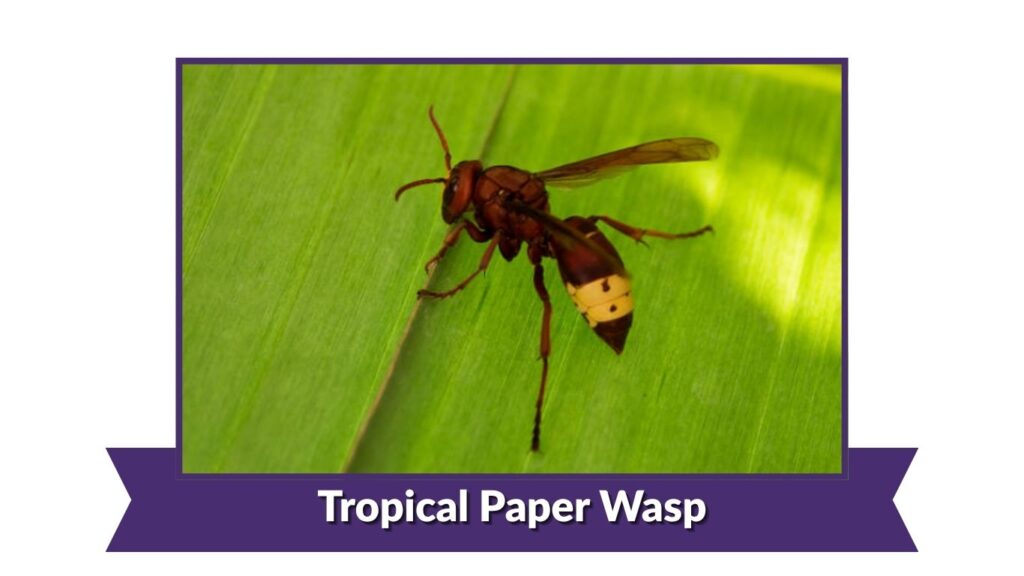
The tropical paper wasp is a common species found in warm climates, known for its adaptability and simple nest structure. It is often seen in gardens, forests, and near human homes. Like other paper wasps, it plays a helpful role in controlling insect populations.
Identification
- Slender body with a narrow waist
- Yellow, brown, or black coloration
- Long legs that hang during flight
- Transparent wings folded lengthwise at rest
- Smooth body with light markings
Habitat and Distribution
Tropical paper wasps are found in tropical and subtropical regions across Asia, Africa, and the Americas. They live in forests, gardens, farms, and urban areas. Their nests are usually built in sheltered locations such as under leaves, tree branches, roof edges, and walls. They prefer warm environments with abundant food sources like insects and nectar.
Behavior and Diet
These wasps are social and live in small to medium-sized colonies. They are generally calm but can become defensive if their nest is disturbed. Their diet mainly includes insects such as caterpillars, flies, and other small pests, which they capture to feed their larvae. Adult wasps also consume nectar and sugary substances.
Lifecycle
The lifecycle starts when a queen builds a nest and lays eggs. The eggs develop into larvae, which are fed by the queen and later by worker wasps. As the colony grows, workers take over responsibilities such as foraging and nest building. By the end of the season, new queens and males are produced, and only fertilized queens survive to begin new colonies.
12. Giant Paper Wasp
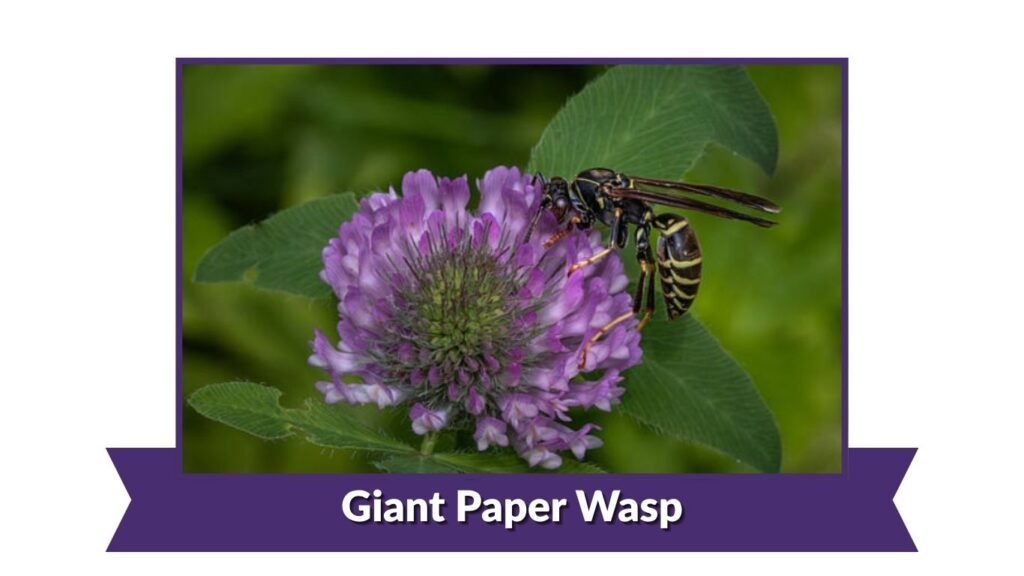
The giant paper wasp is a larger species of paper wasp known for its impressive size and strong presence. Despite its intimidating appearance, it behaves similarly to other paper wasps and contributes to controlling insect populations in its environment.
Identification
- Larger body compared to most paper wasps
- Slender shape with a narrow waist
- Yellow, brown, or black coloration
- Long legs that hang during flight
- Strong wings with a slightly darker tint
Habitat and Distribution
Giant paper wasps are found in tropical and subtropical regions across Asia, Africa, and parts of the Americas. They live in forests, gardens, and sometimes near human structures. Their nests are typically built in sheltered areas such as under large leaves, tree branches, or roof edges. They prefer warm climates and locations with abundant food sources.
Behavior and Diet
These wasps are social and live in colonies, although colony size may vary. They are usually not aggressive unless their nest is threatened. Their diet mainly consists of insects such as caterpillars, beetles, and flies, which they capture to feed their larvae. Adult wasps also consume nectar and sugary substances for energy.
Lifecycle
The lifecycle begins when a queen establishes a nest and lays eggs. The larvae are fed by the queen and later by worker wasps. As the colony develops, workers take over tasks such as nest building and foraging. Toward the end of the season, new queens and males are produced, and only fertilized queens survive to start new colonies.
13. Forest Paper Wasp
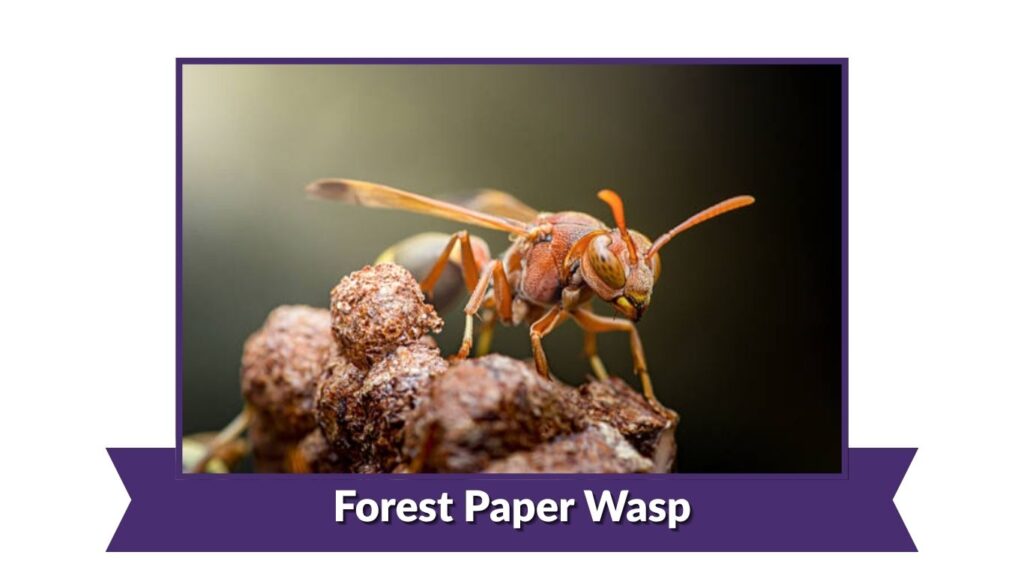
The forest paper wasp is commonly found in wooded areas and is known for building its nests among trees and dense vegetation. It has a slender body and blends well with its surroundings. Like other paper wasps, it plays a useful role in controlling insect populations.
Identification
- Slender body with a narrow waist
- Brown, yellow, or black coloration
- Long legs that hang during flight
- Transparent wings folded at rest
- Slightly elongated body shape
Habitat and Distribution
Forest paper wasps are found in forested regions across various parts of the world, including Asia, Europe, and the Americas. They prefer dense vegetation where trees and shrubs provide natural shelter. Their nests are usually built on branches, under leaves, or attached to tree trunks. These environments offer protection and easy access to food sources.
Behavior and Diet
These wasps are social and live in small colonies. They are generally calm but will defend their nests if disturbed. Their diet mainly includes insects such as caterpillars, flies, and other small pests, which they hunt to feed their larvae. Adult wasps also consume nectar and sugary substances.
Lifecycle
The lifecycle starts when a queen builds a nest and lays eggs. The eggs hatch into larvae, which are cared for by the queen and later by worker wasps. As the colony grows, workers take over tasks like foraging and nest construction. By the end of the season, new queens and males are produced, and only fertilized queens survive to begin new colonies.
14. Black Paper Wasp
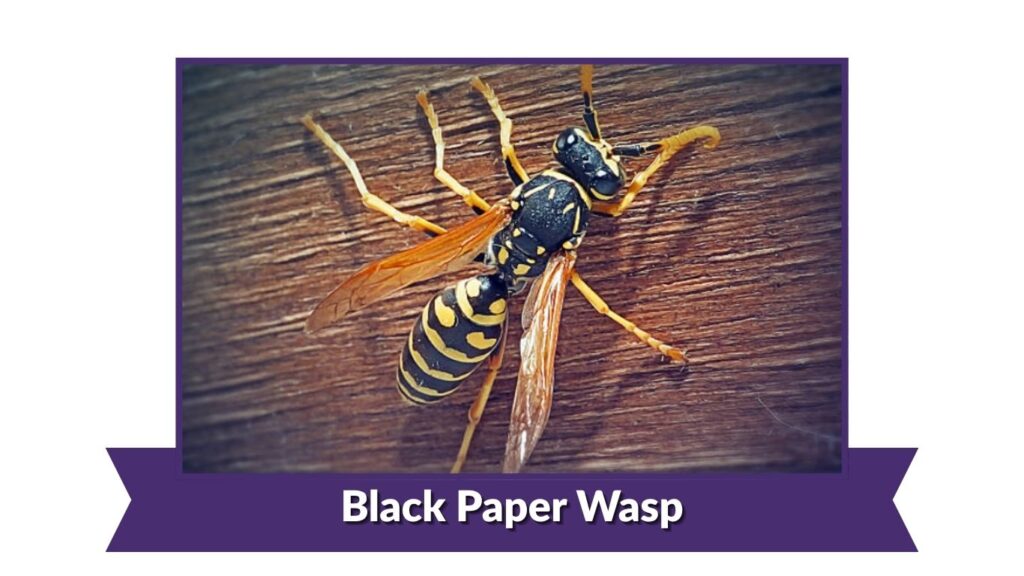
The black paper wasp is a dark-colored species known for its sleek appearance and strong flying ability. It is often seen in warm regions and builds simple, open nests in sheltered places. Like other paper wasps, it plays a role in controlling insect populations.
Identification
- Mostly black or very dark brown body
- Slender shape with a narrow waist
- Long legs that hang during flight
- Dark, slightly glossy wings
- Smooth and shiny body surface
Habitat and Distribution
Black paper wasps are found in tropical and subtropical regions across different parts of the world. They live in forests, gardens, and urban areas. Their nests are usually built in protected places such as under roof edges, tree branches, fences, and walls. They prefer warm climates and areas where food sources like insects and nectar are available.
Behavior and Diet
These wasps are social and live in small colonies. They are generally not aggressive but will defend their nests if disturbed. Their diet mainly consists of insects such as caterpillars, flies, and other small pests, making them useful for pest control. Adults also feed on nectar and sugary liquids.
Lifecycle
The lifecycle begins when a queen establishes a nest and lays eggs. The larvae are fed by the queen and later by worker wasps. As the colony grows, workers take over tasks such as foraging and nest building. Toward the end of the season, new queens and males are produced, and only fertilized queens survive to form new colonies.
15. Brown Paper Wasp
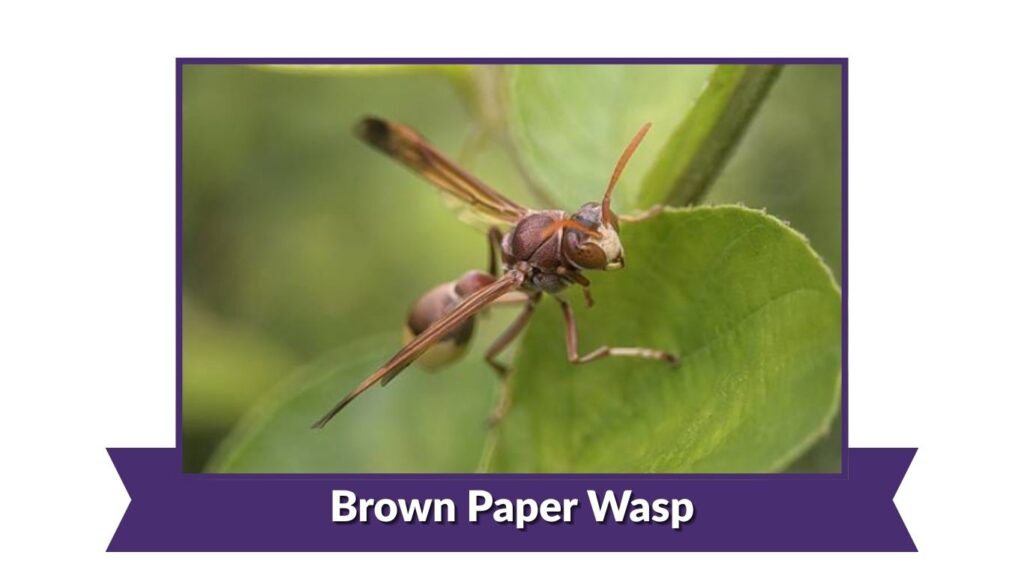
The brown paper wasp is a common species recognized for its earthy coloration and slender body. It is often found in warm climates and builds simple paper nests in sheltered areas. Like other paper wasps, it is beneficial in reducing pest insect populations.
Identification
- Brown or reddish-brown body color
- Slender shape with a narrow waist
- Long legs that hang during flight
- Transparent wings with a light tint
- Smooth and slightly glossy body
Habitat and Distribution
Brown paper wasps are found in tropical and subtropical regions around the world. They live in forests, gardens, farms, and urban areas. Their nests are usually built in protected places such as under roof eaves, tree branches, fences, and walls. They prefer warm environments with access to insects and nectar.
Behavior and Diet
These wasps are social and live in small colonies. They are generally calm but will defend their nest if disturbed. Their diet mainly includes insects like caterpillars, flies, and other small pests, which they hunt to feed their larvae. Adult wasps also consume nectar and sugary substances.
Lifecycle
The lifecycle starts when a queen builds a nest and lays eggs. The eggs develop into larvae, which are cared for by the queen and later by worker wasps. As the colony grows, workers take over tasks such as foraging and nest building. By the end of the season, new queens and males are produced, and only fertilized queens survive to begin new colonies.
16. Striped Paper Wasp
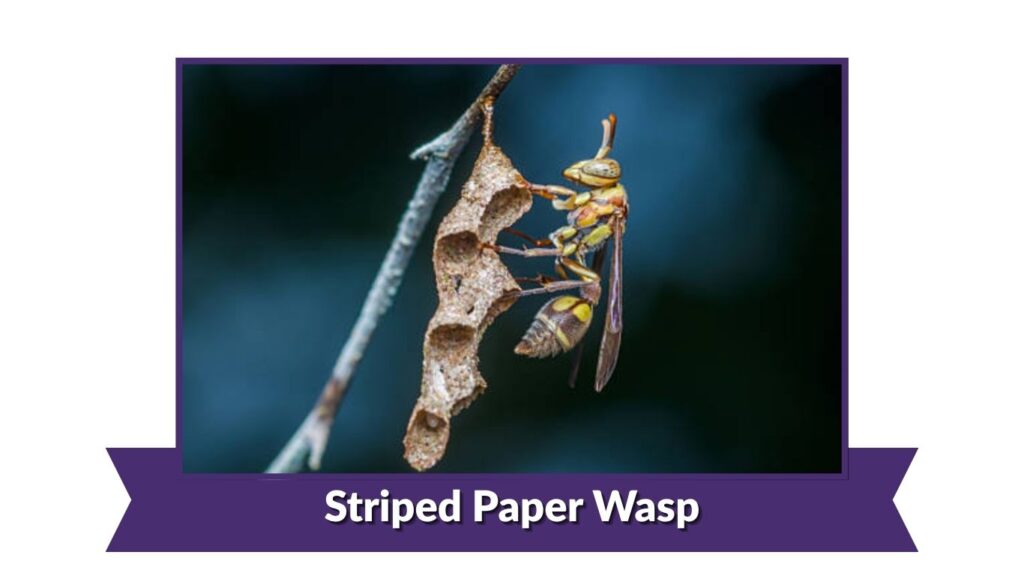
The striped paper wasp is known for its clear banded pattern across the body, making it easy to recognize. It is a slender and active insect that builds open paper nests. Like other paper wasps, it helps control pest insects and is commonly found in warm environments.
Identification
- Distinct striped pattern on the abdomen
- Slender body with a narrow waist
- Yellow and black or brown banding
- Long legs that hang during flight
- Transparent wings folded at rest
Habitat and Distribution
Striped paper wasps are found in tropical and subtropical regions across various continents. They live in forests, gardens, and near human settlements. Their nests are usually built in sheltered places such as under leaves, tree branches, roof edges, or walls. They prefer warm climates and areas with good food availability.
Behavior and Diet
These wasps are social and live in small colonies. They are generally calm but will defend their nest if threatened. Their diet mainly includes insects such as caterpillars, flies, and other small pests, which they capture to feed their larvae. Adult wasps also feed on nectar and sugary liquids.
Lifecycle
The lifecycle begins when a queen starts a nest and lays eggs. The eggs hatch into larvae, which are fed by the queen and later by worker wasps. As the colony grows, workers take over tasks such as foraging and nest building. Toward the end of the season, new queens and males are produced, and only fertilized queens survive to start new colonies.
17. Orange Paper Wasp
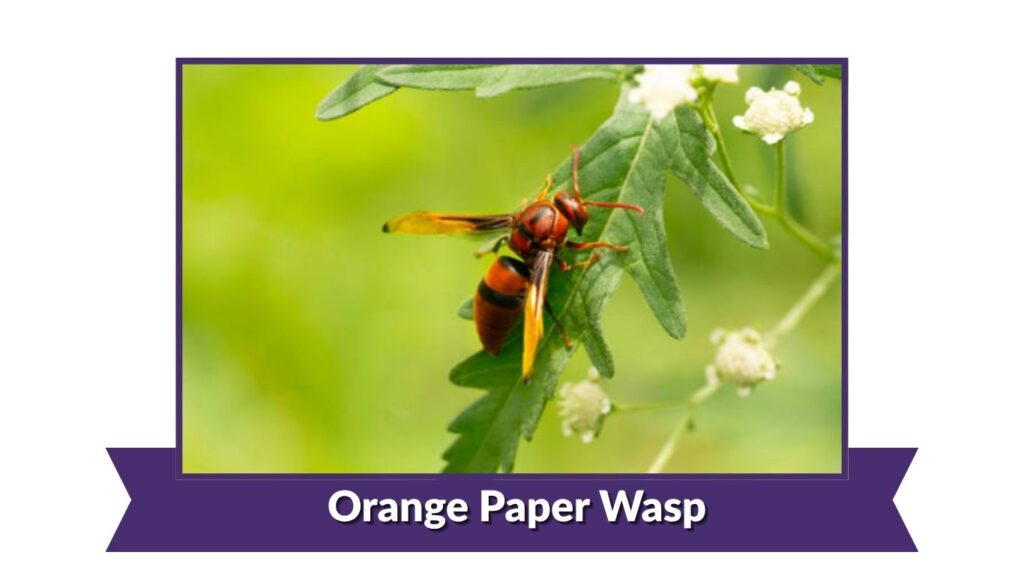
The orange paper wasp is a brightly colored species known for its vivid orange or reddish-orange body. It is commonly found in warm regions and is often seen around vegetation and buildings. Like other paper wasps, it builds open nests and helps control insect populations.
Identification
- Bright orange or reddish-orange body
- Slender shape with a narrow waist
- Long legs that hang during flight
- Transparent wings with a slight tint
- Smooth and shiny body surface
Habitat and Distribution
Orange paper wasps are found in tropical and subtropical regions across different parts of the world. They live in forests, gardens, and urban areas. Their nests are usually built in sheltered locations such as under roof edges, tree branches, leaves, or walls. They prefer warm climates with abundant food sources like insects and nectar.
Behavior and Diet
These wasps are social and live in small colonies. They are generally calm but will defend their nest if disturbed. Their diet mainly consists of insects such as caterpillars, flies, and other small pests, which they capture to feed their larvae. Adult wasps also consume nectar and sugary substances for energy.
Lifecycle
The lifecycle starts when a queen builds a nest and lays eggs. The eggs develop into larvae, which are cared for by the queen and later by worker wasps. As the colony grows, workers take over responsibilities such as foraging and nest building. By the end of the season, new queens and males are produced, and only fertilized queens survive to establish new colonies.
18. Small Paper Wasp
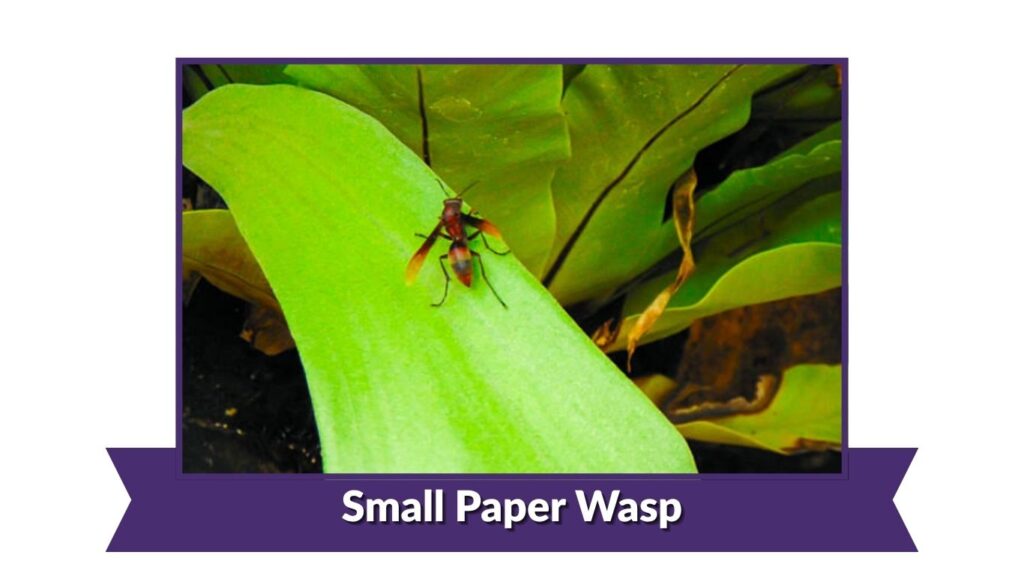
The small paper wasp is a tiny and less noticeable species compared to other paper wasps. It is known for its delicate build and simple nest structure. Despite its size, it plays an important role in controlling small insect populations in its environment.
Identification
- Small body size compared to other paper wasps
- Slender shape with a narrow waist
- Light yellow, brown, or black coloration
- Long legs that hang during flight
- Thin, transparent wings
Habitat and Distribution
Small paper wasps are found in warm regions across different parts of the world. They live in gardens, forests, and near human settlements. Their nests are usually built in sheltered areas such as under leaves, small branches, roof edges, or walls. They prefer environments with mild temperatures and easy access to food sources like insects and nectar.
Behavior and Diet
These wasps are social and live in small colonies. They are generally calm and less aggressive than larger wasp species but will defend their nests if threatened. Their diet mainly includes small insects such as flies, larvae, and caterpillars, which they hunt to feed their young. Adult wasps also feed on nectar and sugary liquids.
Lifecycle
The lifecycle begins when a queen starts building a nest and lays eggs. The eggs hatch into larvae, which are fed by the queen and later by worker wasps. As the colony develops, workers take over tasks like foraging and nest construction. Toward the end of the season, new queens and males are produced, and only fertilized queens survive to start new colonies.
19. Slender Paper Wasp
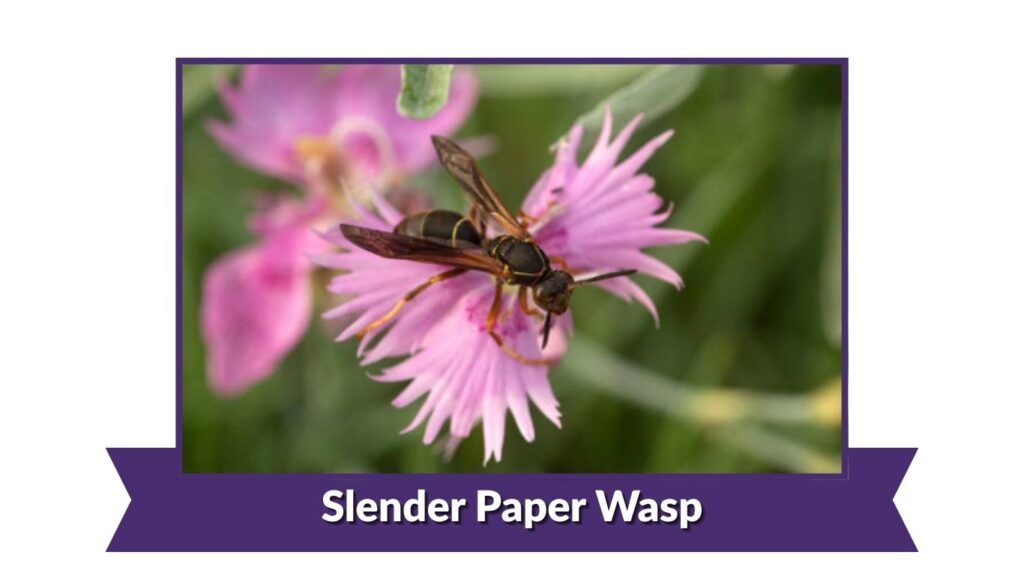
The slender paper wasp is known for its thin body and graceful appearance. It is an agile flier and commonly found in warm environments. Like other paper wasps, it builds open nests and plays an important role in controlling insect populations.
Identification
- Very thin, elongated body
- Narrow waist clearly visible
- Yellow, brown, or black coloration
- Long legs that hang during flight
- Transparent wings folded at rest
Habitat and Distribution
Slender paper wasps are found in tropical and subtropical regions across different parts of the world. They live in forests, gardens, and near human structures. Their nests are usually built in sheltered places such as under leaves, tree branches, roof edges, and walls. They prefer warm climates with abundant vegetation and food sources.
Behavior and Diet
These wasps are social and live in small colonies. They are generally calm but will defend their nest if disturbed. Their diet mainly includes insects such as caterpillars, flies, and other small pests, which they capture to feed their larvae. Adult wasps also consume nectar and sugary substances.
Lifecycle
The lifecycle starts when a queen builds a nest and lays eggs. The eggs develop into larvae, which are fed by the queen and later by worker wasps. As the colony grows, workers take over tasks such as foraging and nest building. Toward the end of the season, new queens and males are produced, and only fertilized queens survive to begin new colonies.
20. Mountain Paper Wasp
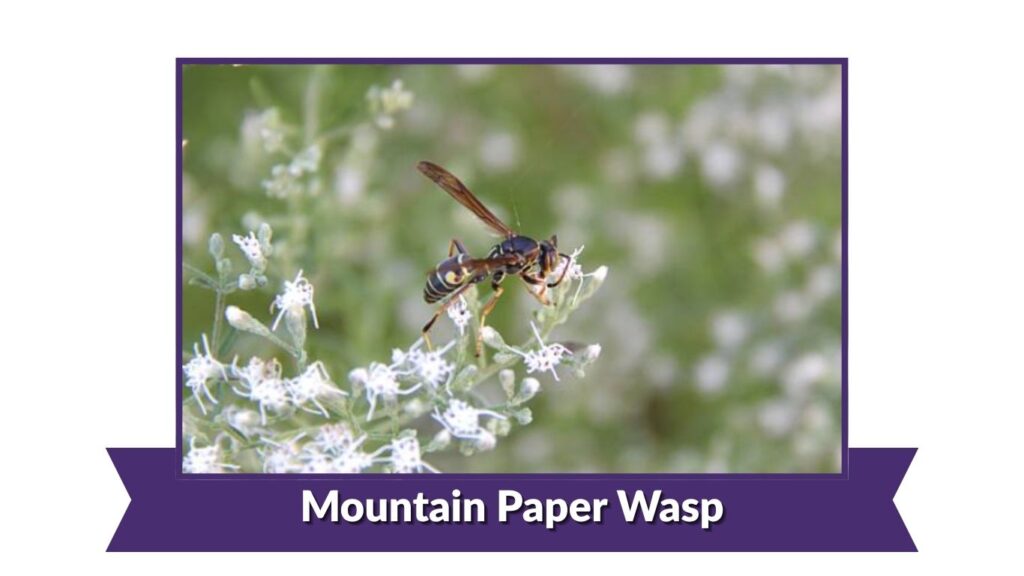
The mountain paper wasp is a species adapted to higher elevation environments. It is known for its resilience and ability to survive in cooler climates compared to many other paper wasps. Like its relatives, it builds open paper nests and helps control insect populations.
Identification
- Slender body with a narrow waist
- Yellow, brown, or dark-colored markings
- Long legs that hang during flight
- Transparent wings folded at rest
- Slightly robust body for cooler climates
Habitat and Distribution
Mountain paper wasps are found in hilly and mountainous regions across various parts of the world. They prefer cooler climates and are commonly seen in forests, rocky areas, and highland vegetation zones. Their nests are usually built in sheltered places such as under rocks, tree branches, cliff edges, or building structures in elevated areas.
Behavior and Diet
These wasps are social and live in small colonies. They are generally calm but will defend their nests if disturbed. Their diet mainly consists of insects such as caterpillars, flies, and other small pests, which they hunt to feed their larvae. Adult wasps also consume nectar and sugary substances for energy.
Lifecycle
The lifecycle begins when a queen starts building a nest during warmer periods. She lays eggs that develop into larvae and later into worker wasps. As the colony grows, workers take over responsibilities such as foraging and nest building. Toward the end of the season, new queens and males are produced, and only fertilized queens survive to establish new colonies.
21. Coastal Paper Wasp
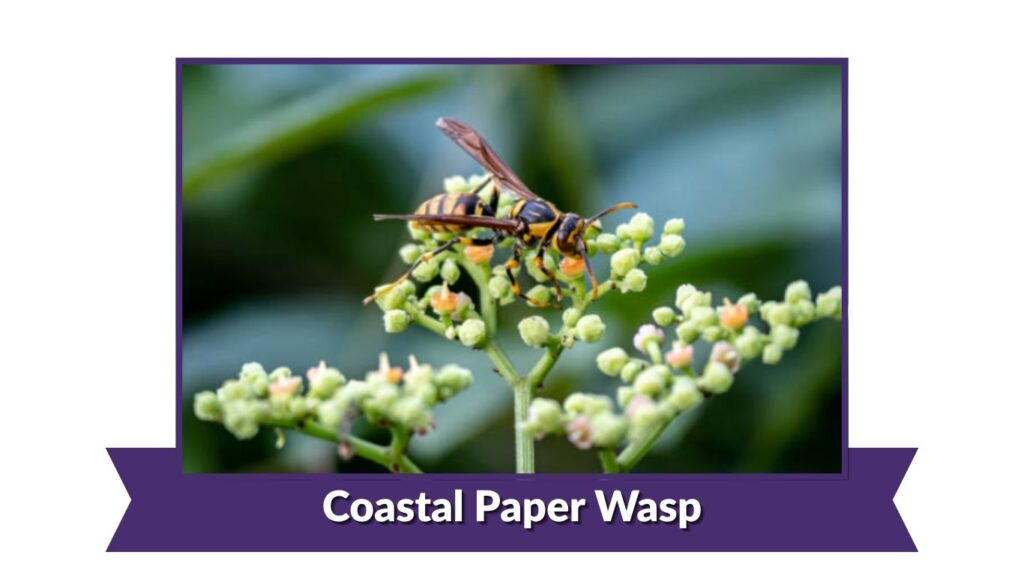
The coastal paper wasp is a species commonly found near coastal and seaside environments. It is well adapted to humid and breezy conditions and often builds nests in sheltered locations. Like other paper wasps, it plays a helpful role in controlling insect populations.
Identification
- Slender body with a narrow waist
- Yellow, brown, or black coloration
- Long legs that hang during flight
- Transparent wings folded at rest
- Smooth body with light markings
Habitat and Distribution
Coastal paper wasps are found in coastal regions across different parts of the world. They live near beaches, mangroves, coastal forests, and human settlements close to the sea. Their nests are usually built in protected areas such as under roof edges, tree branches, rocks, or wooden structures. They prefer humid environments with easy access to food sources.
Behavior and Diet
These wasps are social and live in small colonies. They are generally calm but will defend their nest if disturbed. Their diet mainly includes insects such as flies, caterpillars, and other small pests, which they hunt to feed their larvae. Adult wasps also consume nectar and sugary liquids.
Lifecycle
The lifecycle starts when a queen builds a nest and lays eggs. The eggs develop into larvae, which are fed by the queen and later by worker wasps. As the colony grows, workers take over tasks such as foraging and nest building. Toward the end of the season, new queens and males are produced, and only fertilized queens survive to begin new colonies.
22. Dusky Paper Wasp
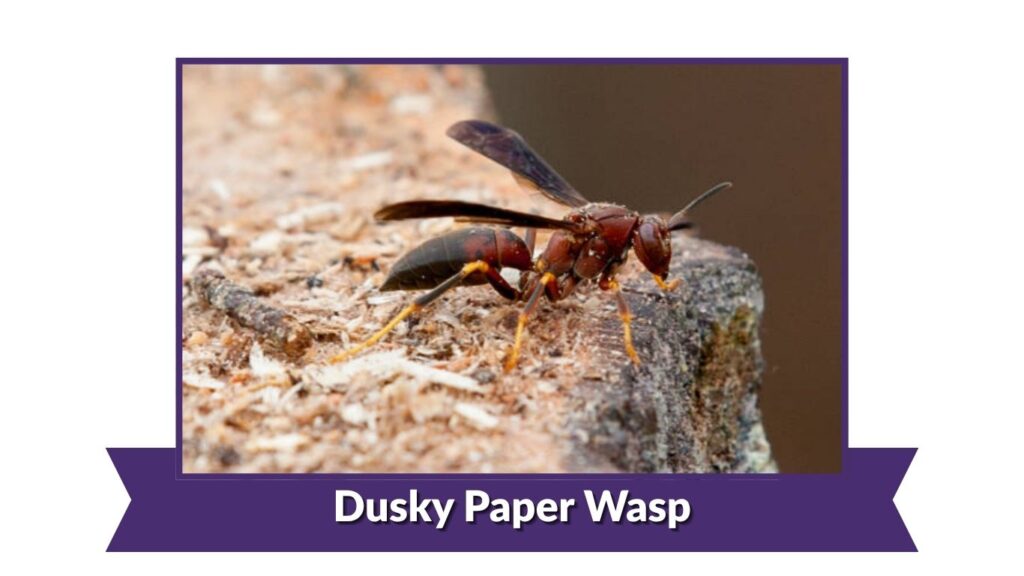
The dusky paper wasp is known for its darker, muted coloration compared to brighter species. It is commonly found in warm regions and builds simple, open paper nests. Despite its less noticeable appearance, it plays an important role in controlling insect populations.
Identification
- Dark brown or grayish body color
- Slender shape with a narrow waist
- Long legs that hang during flight
- Wings with a slightly smoky appearance
- Smooth and dull body surface
Habitat and Distribution
Dusky paper wasps are found in tropical and subtropical regions across various continents. They live in forests, gardens, and urban areas. Their nests are usually built in sheltered places such as under leaves, tree branches, roof edges, or walls. They prefer warm environments with access to insects and nectar.
Behavior and Diet
These wasps are social and live in small colonies. They are generally calm but will defend their nest if disturbed. Their diet mainly includes insects such as caterpillars, flies, and other small pests, which they capture to feed their larvae. Adult wasps also consume nectar and sugary substances.
Lifecycle
The lifecycle begins when a queen starts a nest and lays eggs. The eggs hatch into larvae, which are fed by the queen and later by worker wasps. As the colony grows, workers take over tasks like foraging and nest building. Toward the end of the season, new queens and males are produced, and only fertilized queens survive to form new colonies.
23. Green Paper Wasp
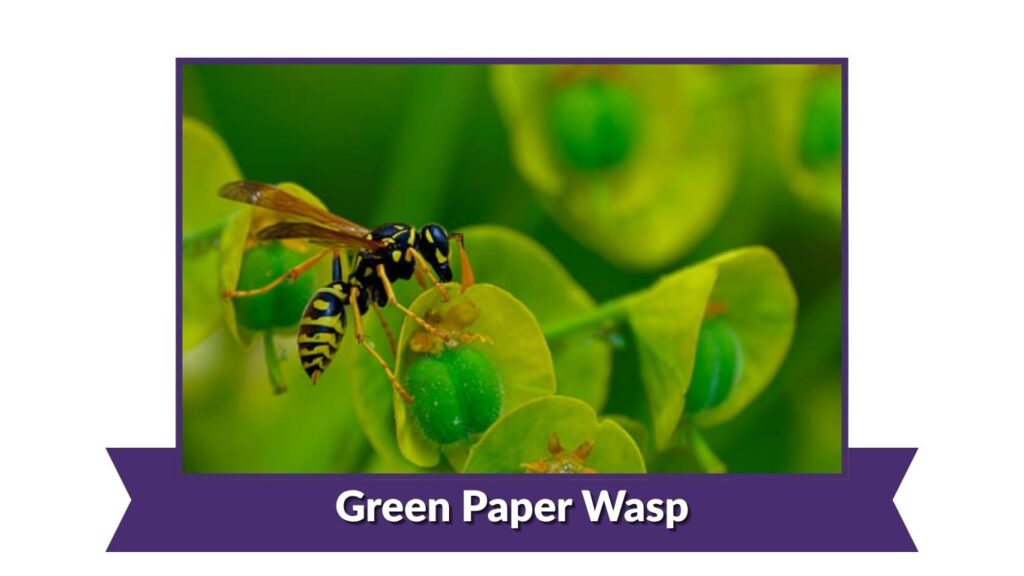
The green paper wasp is a less common but visually distinct species known for its greenish tint or metallic sheen. It is typically found in warm regions and builds small, open paper nests. Like other paper wasps, it contributes to controlling insect populations in its environment.
Identification
- Greenish or metallic body coloration
- Slender body with a narrow waist
- Long legs that hang during flight
- Transparent wings with a slight tint
- Smooth and slightly shiny body
Habitat and Distribution
Green paper wasps are found in tropical and subtropical regions across parts of Asia, Africa, and the Americas. They live in forests, gardens, and near human structures. Their nests are usually built in sheltered locations such as under leaves, tree branches, roof edges, or walls. They prefer warm climates with access to insects and nectar.
Behavior and Diet
These wasps are social and live in small colonies. They are generally calm but will defend their nest if disturbed. Their diet mainly includes insects such as caterpillars, flies, and other small pests, which they hunt to feed their larvae. Adult wasps also consume nectar and sugary substances.
Lifecycle
The lifecycle starts when a queen builds a nest and lays eggs. The eggs develop into larvae, which are fed by the queen and later by worker wasps. As the colony grows, workers take over tasks such as foraging and nest building. Toward the end of the season, new queens and males are produced, and only fertilized queens survive to establish new colonies.
24. Pale Paper Wasp
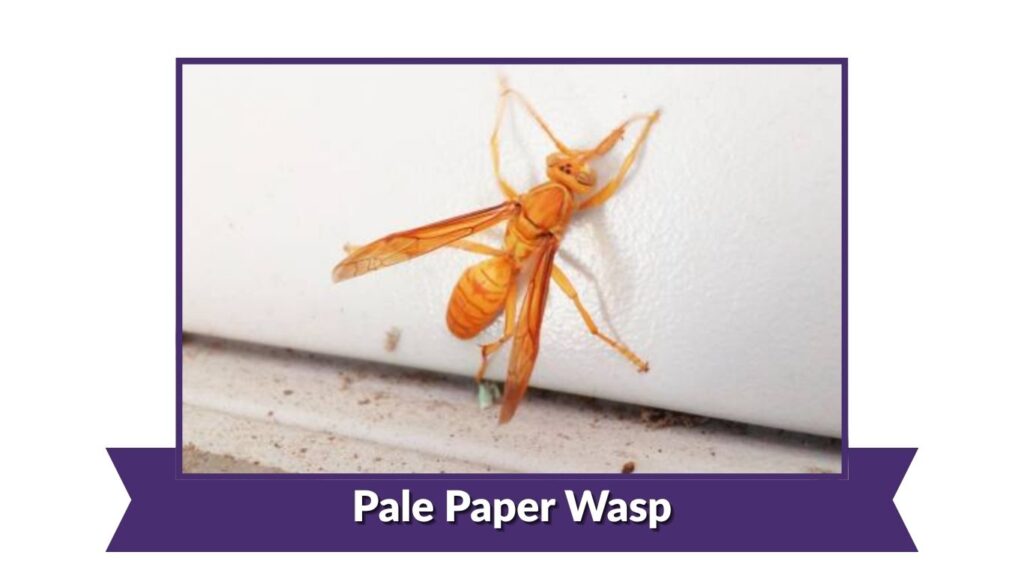
The pale paper wasp is a lightly colored species known for its soft yellow or cream appearance. It is commonly found in warm regions and builds small, open nests in sheltered areas. Like other paper wasps, it plays a role in controlling insect populations.
Identification
- Pale yellow or cream-colored body
- Slender shape with a narrow waist
- Long legs that hang during flight
- Light, transparent wings
- Smooth and lightly colored body
Habitat and Distribution
Pale paper wasps are found in tropical and subtropical regions across different parts of the world. They live in forests, gardens, and near human settlements. Their nests are usually built in sheltered places such as under leaves, tree branches, roof edges, or walls. They prefer warm environments with access to insects and nectar.
Behavior and Diet
These wasps are social and live in small colonies. They are generally calm but will defend their nest if disturbed. Their diet mainly includes insects such as caterpillars, flies, and other small pests, which they capture to feed their larvae. Adult wasps also consume nectar and sugary substances.
Lifecycle
The lifecycle begins when a queen starts a nest and lays eggs. The eggs hatch into larvae, which are fed by the queen and later by worker wasps. As the colony grows, workers take over tasks like foraging and nest building. Toward the end of the season, new queens and males are produced, and only fertilized queens survive to start new colonies.
25. Banded Paper Wasp
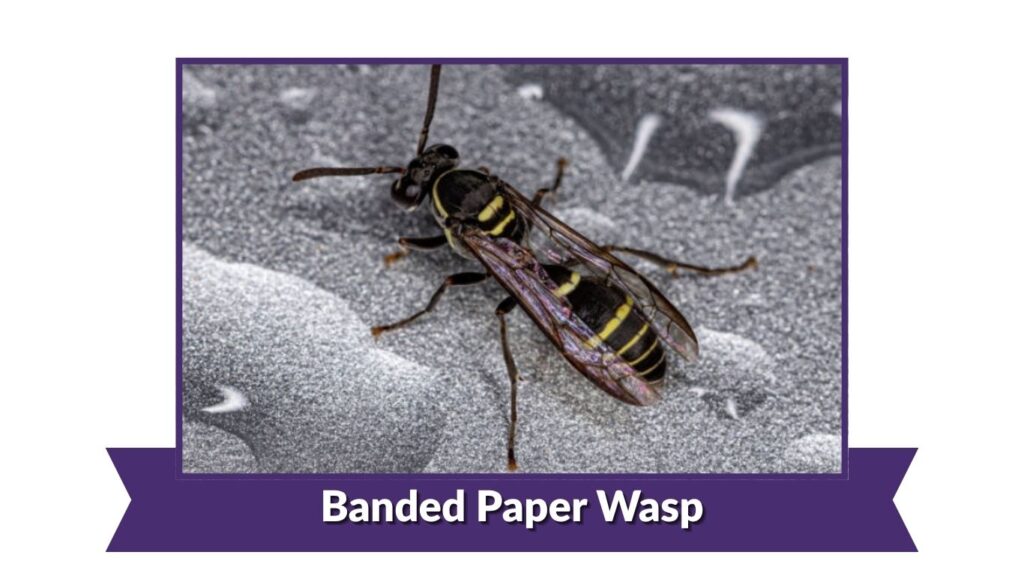
The banded paper wasp is recognized for the clear band-like markings across its body. It is a slender and active insect that builds open paper nests in sheltered locations. Like other paper wasps, it plays an important role in controlling insect populations and maintaining ecological balance.
Identification
- Distinct banded pattern on the abdomen
- Slender body with a narrow waist
- Yellow, black, or brown coloration
- Long legs that hang during flight
- Transparent wings folded at rest
Habitat and Distribution
Banded paper wasps are found in tropical and subtropical regions across various parts of the world. They live in forests, gardens, and near human structures. Their nests are usually built in protected places such as under leaves, tree branches, roof edges, or walls. They prefer warm climates with easy access to food sources like insects and nectar.
Behavior and Diet
These wasps are social and live in small colonies. They are generally calm but will defend their nest if disturbed. Their diet mainly includes insects such as caterpillars, flies, and other small pests, which they hunt to feed their larvae. Adult wasps also consume nectar and sugary substances.
Lifecycle
The lifecycle starts when a queen builds a nest and lays eggs. The eggs develop into larvae, which are fed by the queen and later by worker wasps. As the colony grows, workers take over tasks such as foraging and nest building. Toward the end of the season, new queens and males are produced, and only fertilized queens survive to begin new colonies.
FAQs
Are paper wasps dangerous to humans?
Paper wasps are generally not aggressive, but they can sting if they feel threatened or if their nest is disturbed. Their sting can be painful, but they usually avoid humans unless provoked. Keeping a safe distance from their nests helps prevent unwanted encounters.
What do paper wasps eat?
Paper wasps mainly feed on insects such as caterpillars, flies, and other small pests, which they use to feed their larvae. Adult wasps also consume nectar and sugary liquids for energy, making them both predators and pollinators.
Where do paper wasps build their nests?
Paper wasps build nests in sheltered areas such as under roof eaves, tree branches, leaves, fences, and walls. Their nests are made from chewed plant material mixed with saliva, forming a paper-like structure with open cells.
How long do paper wasps live?
The lifespan of paper wasps depends on their role. Worker wasps usually live for a few weeks, while queens can live for several months and survive through winter to start new colonies in the next season.
Why are paper wasps important?
Paper wasps play a vital role in ecosystems by controlling harmful insect populations and helping with pollination. Their presence helps maintain natural balance, especially in gardens and agricultural areas where they reduce pest damage.