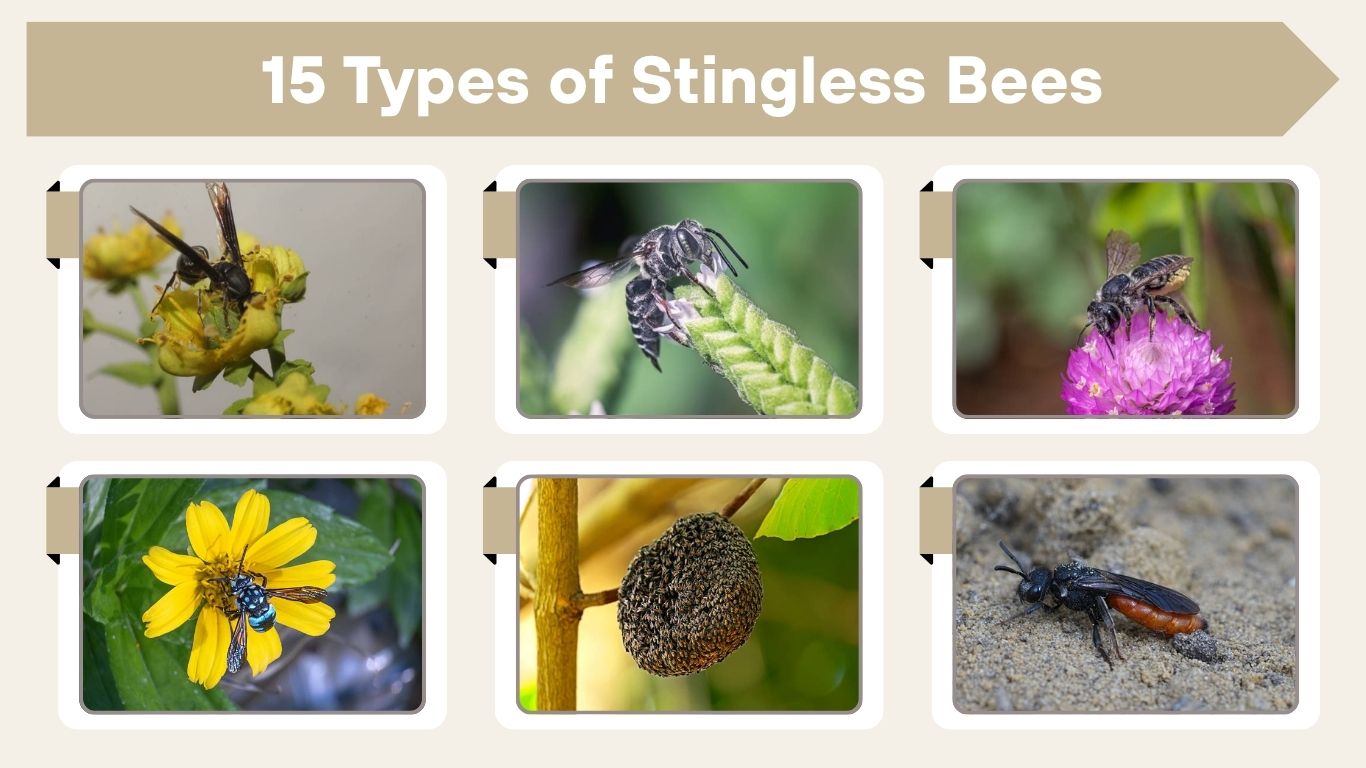
Stingless bees are small social bees known for living in colonies, producing honey, and pollinating many wild and cultivated plants. Although they do not have a functional sting, they can still defend their nests in other ways. Different species vary in size, color, nesting habits, range, and behavior, which helps with identification.
1. Melipona beecheii
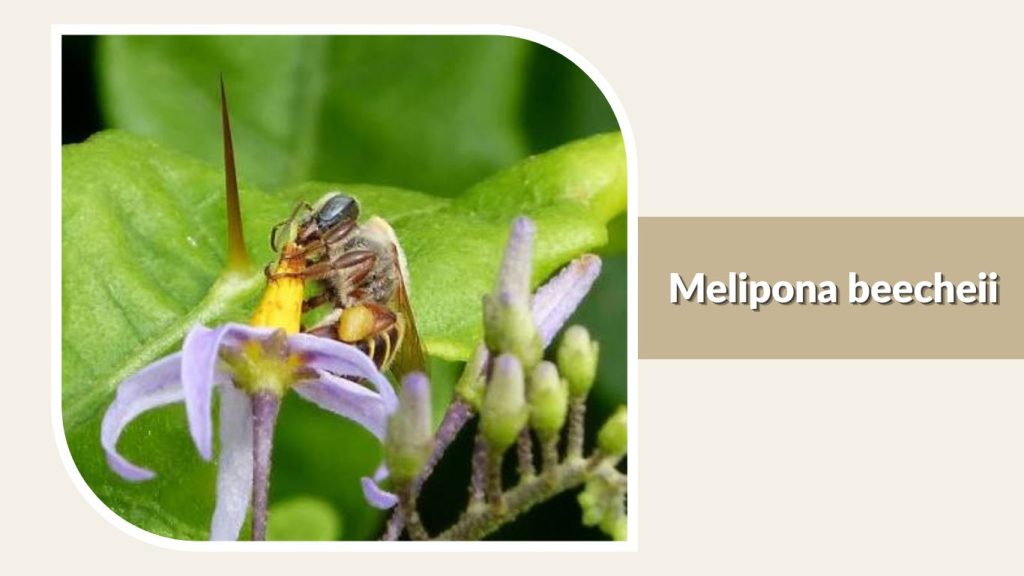
Melipona beecheii is a well-known stingless bee species native to Central America and Mexico. It has been kept by people for centuries because of its honey and gentle nature. This species is important for pollination and traditional beekeeping.
Characteristics
- Stingless bee species
- Produces sweet medicinal honey
- Lives in tree cavities or managed hives
- Gentle and easy to handle
- Important pollinator for native plants
- Common in tropical regions
Appearance
Melipona beecheii has a small to medium-sized body with dark coloring. Its body is usually black or dark brown, with lighter markings on some parts. Like other stingless bees, it does not have a functional sting.
Habitat
This species lives in tropical forests, gardens, farms, and areas with many flowering plants. It often nests in hollow trees but can also live in traditional wooden hives.
Identification
You can identify Melipona beecheii by its dark body, stingless nature, and Central American range. Its managed colonies and honey production also make it easier to recognize.
2. Melipona quadrifasciata
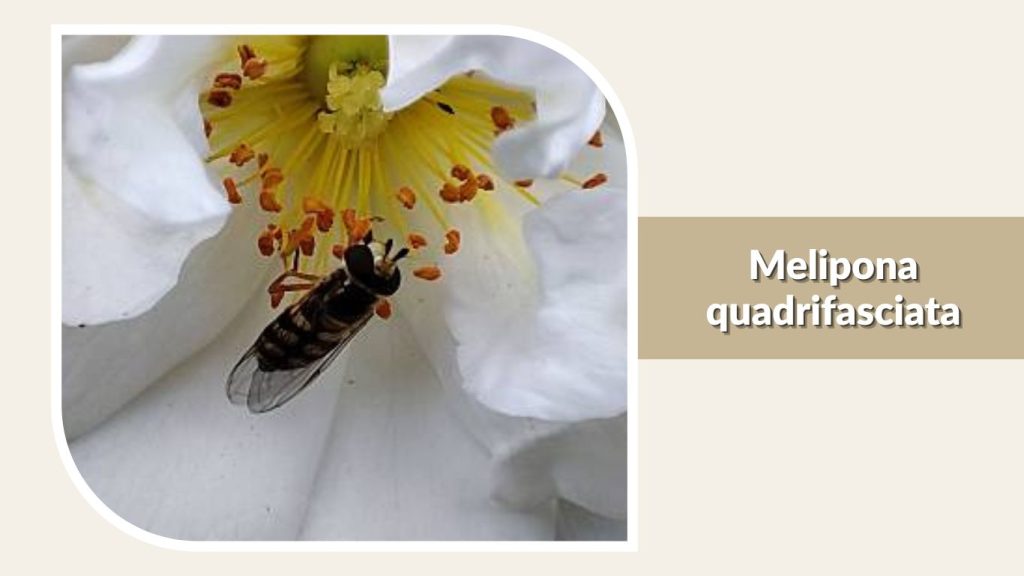
Melipona quadrifasciata is a stingless bee species found mainly in Brazil and nearby regions. It is valued for its honey and strong role in pollination. This bee is often kept by meliponiculturists because it is calm and useful.
Characteristics
- Medium-sized stingless bee
- Dark body with pale bands
- Produces high-quality honey
- Gentle colony behavior
- Important native pollinator
- Often kept in artificial hives
Appearance
Melipona quadrifasciata usually has a dark body with yellowish or pale stripes across the abdomen. These bands are helpful for identification. Its body is compact and slightly hairy.
Habitat
This bee lives in forests, orchards, gardens, and rural areas. It prefers warm environments with enough flowers and nesting places. Colonies are often found in hollow trees.
Identification
You can identify this species by its striped abdomen and Brazilian range. Its calm behavior and use in stingless beekeeping are also useful signs.
3. Melipona scutellaris
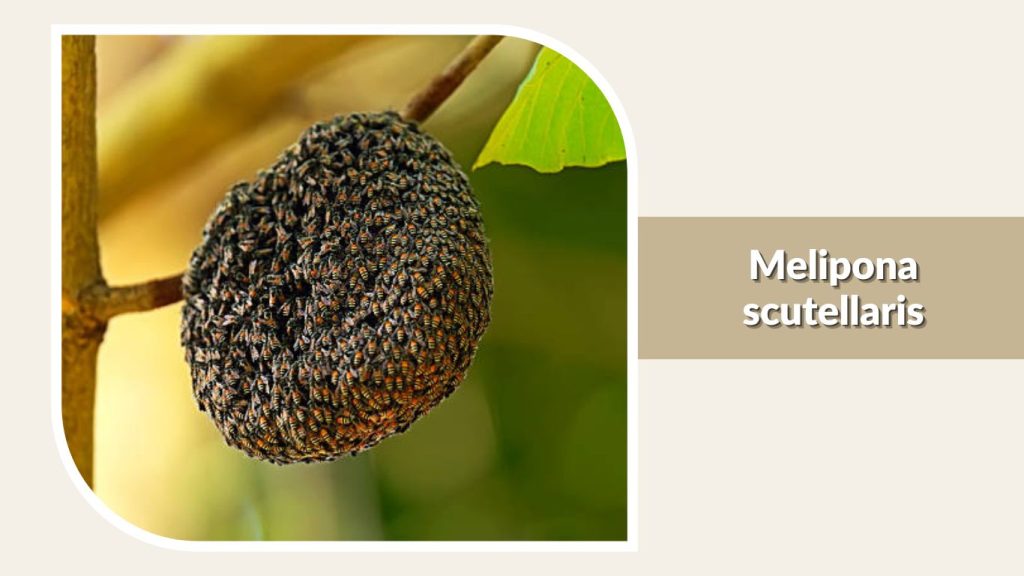
Melipona scutellaris is a stingless bee native to northeastern Brazil. It is one of the most popular stingless bees for honey production in that region. This species is known for producing flavorful honey and forming strong colonies.
Characteristics
- Native Brazilian stingless bee
- Produces valuable honey
- Forms strong colonies
- Important for crop pollination
- Gentle compared with many bees
- Often kept in wooden hives
Appearance
Melipona scutellaris has a dark body with yellowish markings. Its body is small but sturdy, and the wings are usually transparent or slightly smoky. The head and thorax may appear shiny.
Habitat
This bee lives in tropical forests, farms, orchards, and gardens. It nests in hollow trees and managed hives. It prefers warm areas with rich flowering plants.
Identification
Melipona scutellaris can be identified by its Brazilian range, dark body, and yellow markings. Its popularity in honey production also makes it easier to recognize.
4. Tetragonula carbonaria
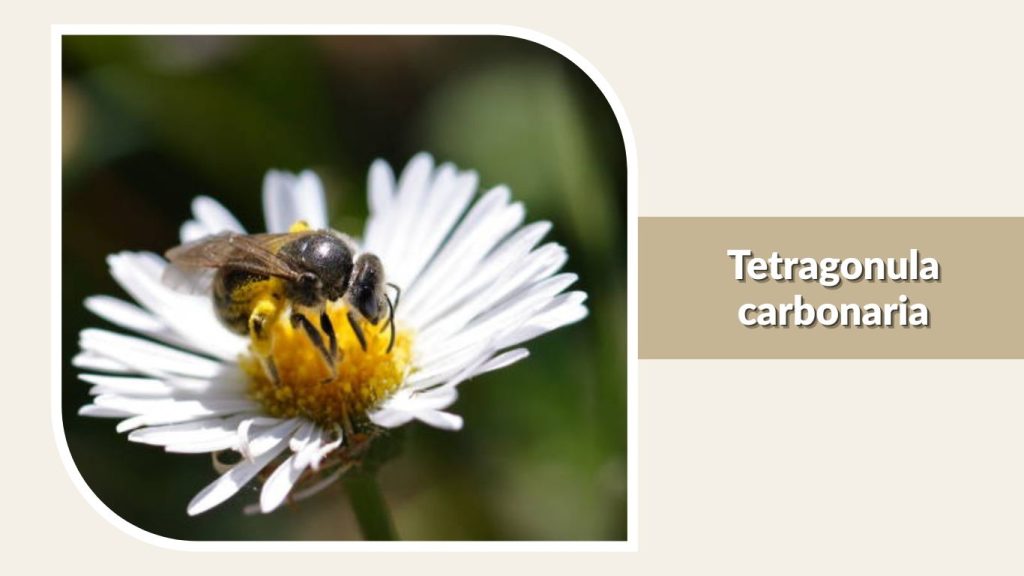
Tetragonula carbonaria is an Australian stingless bee species known for its spiral-shaped brood comb. It is commonly kept in backyard hives and is valued for pollination. This bee is small, active, and helpful in gardens.
Characteristics
- Small Australian stingless bee
- Builds spiral brood combs
- Produces small amounts of honey
- Excellent garden pollinator
- Lives in strong colonies
- Commonly kept in box hives
Appearance
Tetragonula carbonaria is very small and usually dark black or brown. Its body looks shiny, and it has clear wings. Because of its tiny size, it may look like a small black fly at first glance.
Habitat
This species lives in forests, gardens, parks, and urban areas in Australia. It nests in hollow trees, wall spaces, logs, and managed hives.
Identification
You can identify Tetragonula carbonaria by its small black body, Australian range, and unique spiral brood structure inside the nest.
5. Tetragonula iridipennis
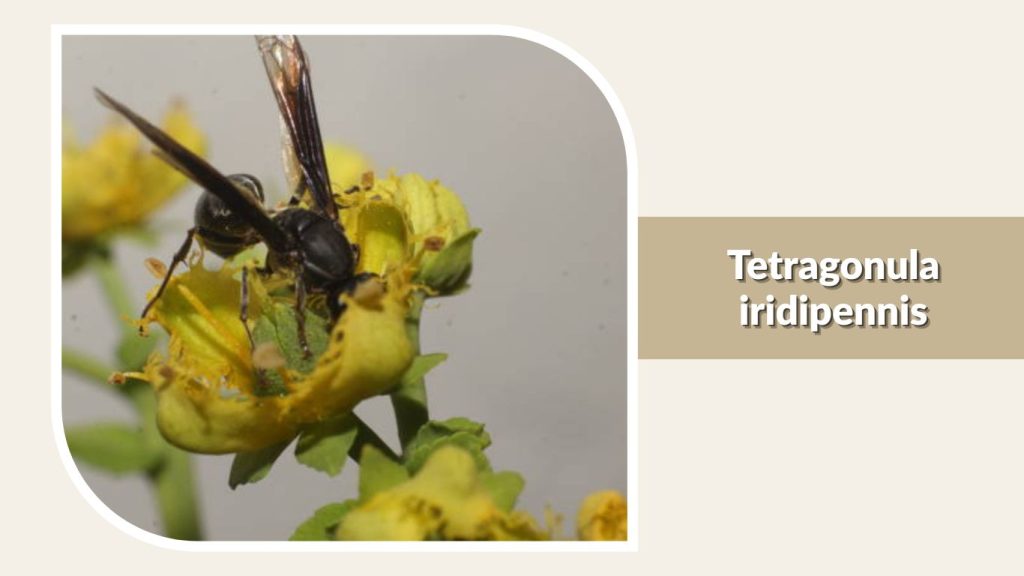
Tetragonula iridipennis is a small stingless bee found in South and Southeast Asia. It is an important pollinator for many wild and cultivated plants. This species is often seen visiting flowers in gardens, farms, and forest edges.
Characteristics
- Very small stingless bee
- Dark body with shiny wings
- Active flower visitor
- Important pollinator for crops
- Lives in small colonies
- Nests in tree holes or wall gaps
Appearance
Tetragonula iridipennis has a tiny dark body, usually black or brown. Its wings may appear slightly shiny in sunlight. Because of its small size, it can be difficult to notice unless many bees are flying around flowers.
Habitat
This bee lives in tropical and subtropical areas, including farms, gardens, forests, and villages. It often nests in cracks, hollow trees, walls, or other protected spaces.
Identification
You can identify Tetragonula iridipennis by its tiny size, dark body, stingless nature, and Asian range. Its habit of visiting many small flowers is also helpful.
6. Tetragonula laeviceps
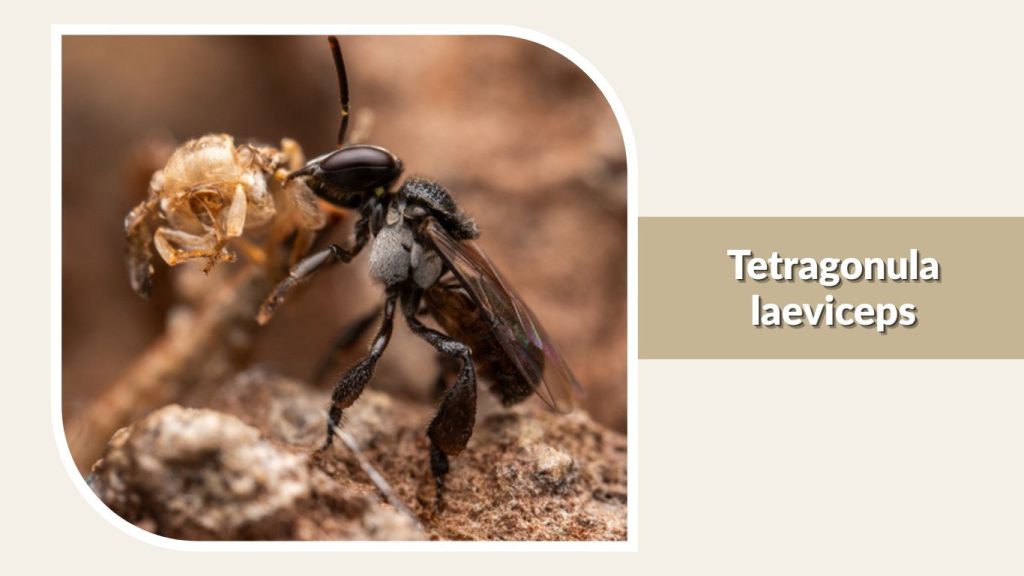
Tetragonula laeviceps is a small stingless bee species found in parts of South and Southeast Asia. It is an active pollinator and is often seen visiting flowers in gardens, farms, and forest areas. This bee is useful for natural ecosystems because it helps many plants produce fruits and seeds.
Characteristics
- Small stingless bee species
- Dark-colored body
- Active flower visitor
- Important pollinator for crops and wild plants
- Lives in colonies
- Often nests in tree holes, walls, or cracks
Appearance
Tetragonula laeviceps has a tiny body that is usually dark brown or black. Its wings are clear and delicate. Because of its small size, it may be difficult to notice unless it is moving around flowers or near its nest entrance.
Habitat
This species lives in tropical and subtropical areas, including forests, orchards, gardens, and villages. It often builds nests in tree cavities, wooden structures, wall gaps, and other protected spaces.
Identification
You can identify Tetragonula laeviceps by its very small size, dark body, stingless nature, and Asian range. Its habit of nesting in small holes near human settlements can also help with identification.
7. Heterotrigona itama
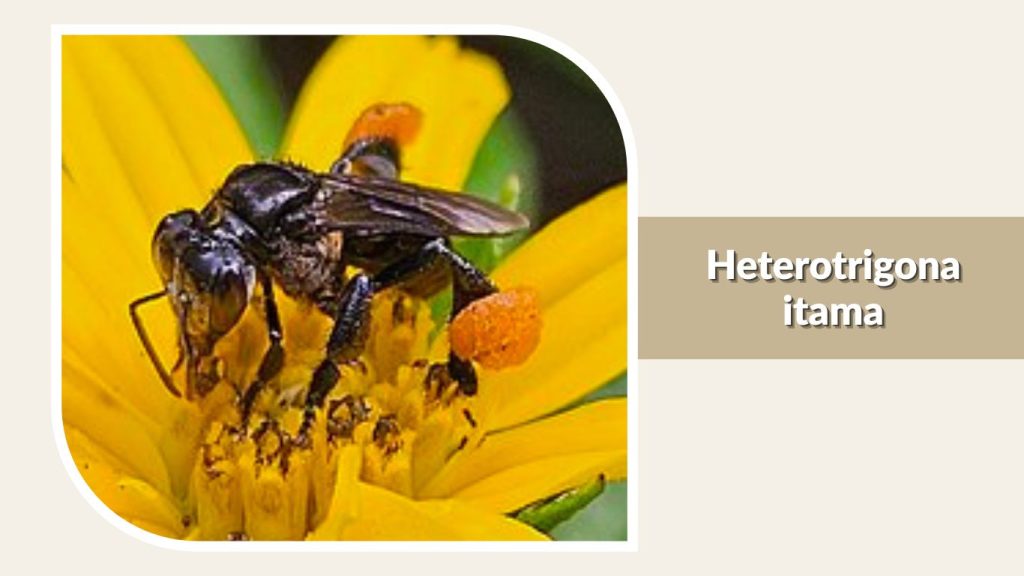
Heterotrigona itama is a popular stingless bee species found in Southeast Asia, especially in Malaysia and nearby regions. It is commonly kept for honey production and pollination. This species is known for being hardy, active, and useful in meliponiculture.
Characteristics
- Small to medium-sized stingless bee
- Dark body with shiny appearance
- Produces stingless bee honey
- Strong and active colony behavior
- Important pollinator for tropical plants
- Commonly kept in managed hives
Appearance
Heterotrigona itama usually has a black or dark brown body with a shiny surface. Its body is compact, and its wings are clear or slightly smoky. It may look larger than some tiny Tetragonula species.
Habitat
This bee lives in tropical forests, farms, orchards, gardens, and village areas. It naturally nests in hollow trees, but it can also adapt well to wooden hive boxes used by beekeepers.
Identification
You can identify Heterotrigona itama by its dark shiny body, Southeast Asian range, and use in stingless beekeeping. Its active colonies and managed hives also make it easier to recognize.
8. Scaptotrigona postica
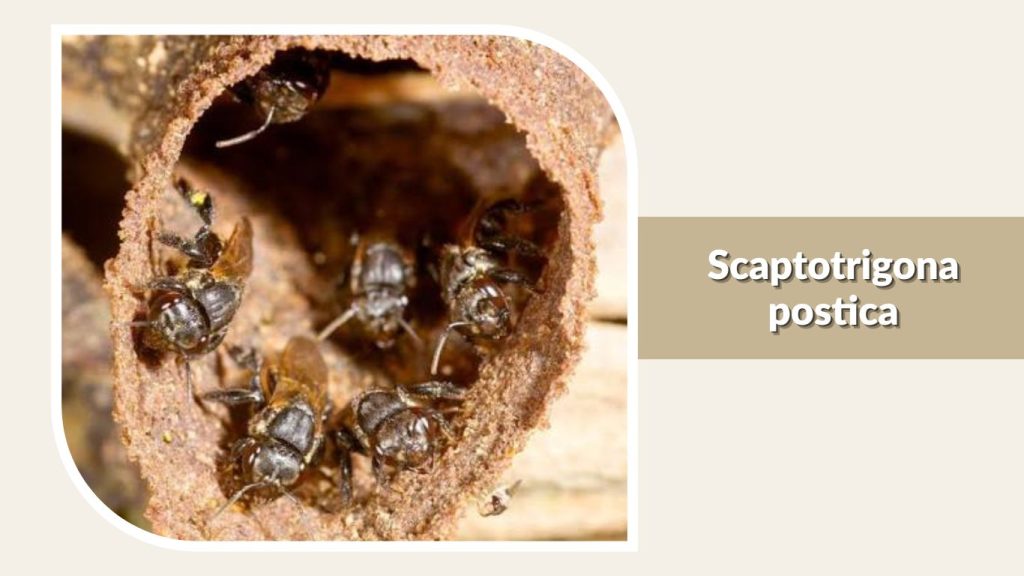
Scaptotrigona postica is a stingless bee species native to South America. It is known for its strong colonies and important role in pollinating native plants. This species is often studied because of its social behavior and value in tropical ecosystems.
Characteristics
- South American stingless bee
- Lives in large colonies
- Dark body with hairy parts
- Important native pollinator
- Produces honey and resin-based nest materials
- Active around flowers and nest entrances
Appearance
Scaptotrigona postica has a dark body that may appear black or brown. It has a sturdy shape and may look slightly hairy compared with some smaller stingless bees. Its wings are transparent and rest neatly over the body.
Habitat
This species lives in tropical and subtropical forests, farms, and natural landscapes. It usually nests in tree cavities or other protected spaces. Areas with many flowering plants support healthy colonies.
Identification
You can identify Scaptotrigona postica by its South American range, dark body, and colony behavior. Its strong nest activity and connection to forest habitats are also useful identification clues.
9. Plebeia droryana
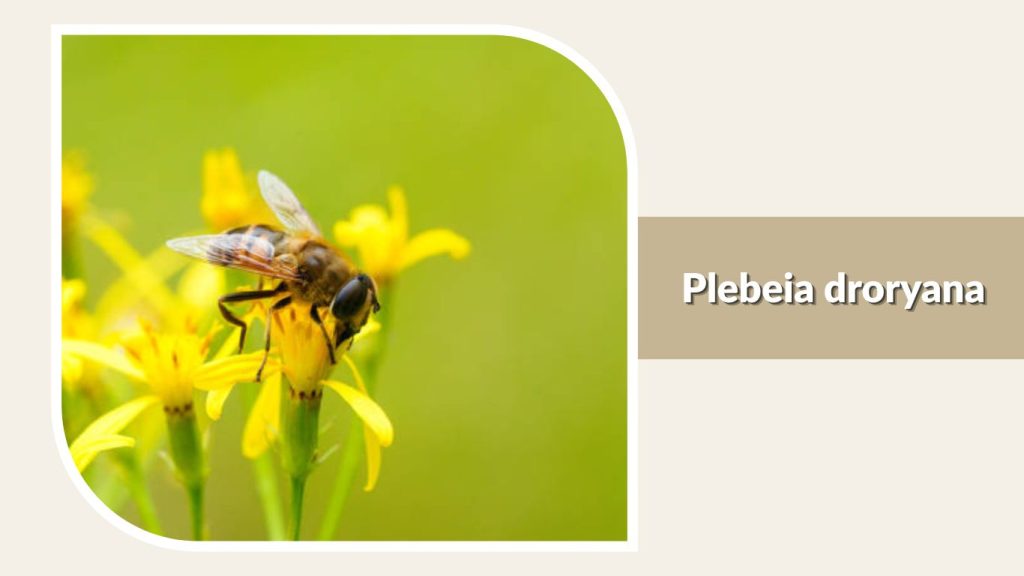
Plebeia droryana is a small stingless bee species found in South America. It is known for its tiny size, gentle nature, and role in pollinating small flowers. This species may live in natural cavities and is sometimes kept in small managed hives.
Characteristics
- Very small stingless bee
- Gentle and non-aggressive
- Dark body with lighter markings
- Visits small flowers
- Lives in small to medium colonies
- Useful pollinator in gardens and natural areas
Appearance
Plebeia droryana has a tiny body that is usually dark brown or black. Some individuals may show lighter markings on the face or body. Its small size makes it easy to overlook when compared with larger bees.
Habitat
This species lives in forests, gardens, orchards, and rural areas. It may nest in small tree holes, cracks, wall spaces, or managed hive boxes. It prefers places with enough flowers and safe nesting sites.
Identification
You can identify Plebeia droryana by its tiny size, dark body, and South American range. Its gentle behavior and habit of visiting small flowers can also help separate it from larger stingless bees.
10. Frieseomelitta varia
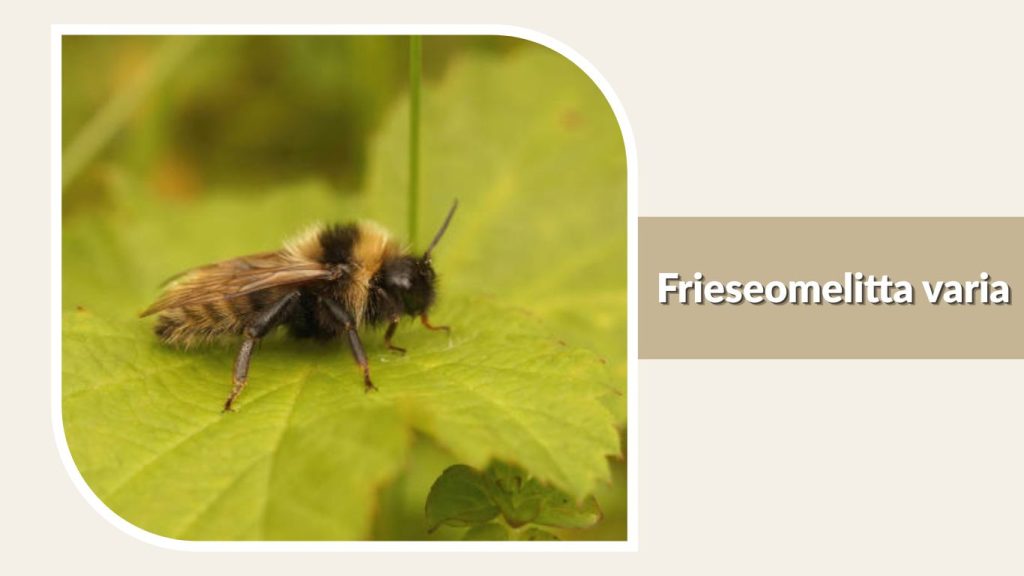
Frieseomelitta varia is a stingless bee species found in parts of South America. It is known for its social colonies and importance as a pollinator. This bee often lives in warm environments where flowers, trees, and nesting spaces are available.
Characteristics
- Stingless bee species from South America
- Dark body with possible pale markings
- Lives in social colonies
- Important pollinator for native plants
- Produces honey and resin materials
- Often nests in protected cavities
Appearance
Frieseomelitta varia has a small to medium-sized body with dark coloring. Some individuals may show lighter marks on the body or face. Its wings are thin and transparent, and the body shape is compact like many stingless bees.
Habitat
This species lives in forests, woodland edges, farms, and gardens. It often nests in tree cavities or other hidden spaces. Warm climates with many flowering plants provide good conditions for the colony.
Identification
You can identify Frieseomelitta varia by its South American range, dark body, and stingless bee behavior. Its colony nesting habits and role as a native pollinator are also helpful identification signs.
11. Nannotrigona testaceicornis
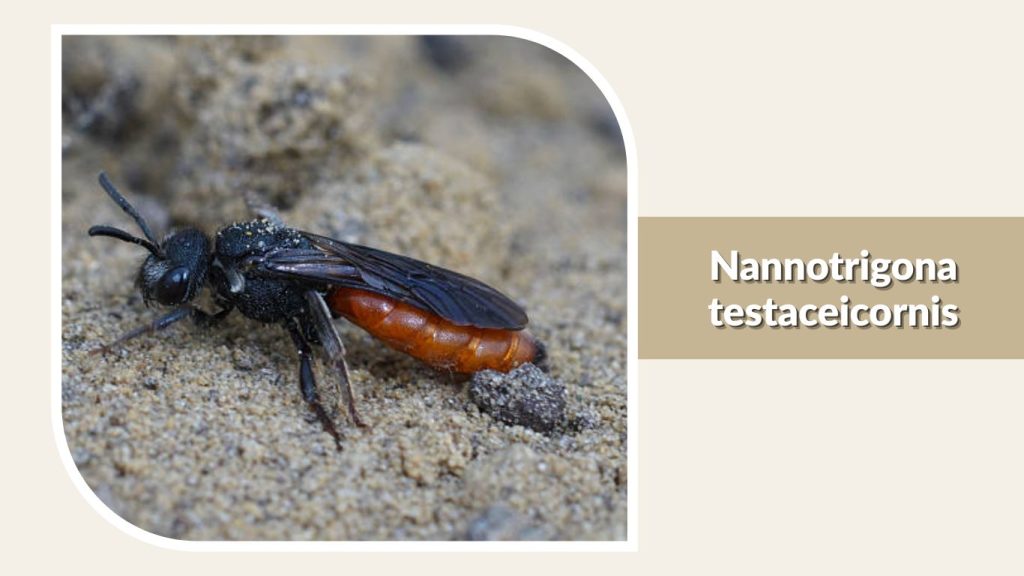
Nannotrigona testaceicornis is a small stingless bee species found in parts of South America. It is an important pollinator for many native plants and garden flowers. Because of its small size, this bee can visit tiny flowers that larger bees may not use easily.
Characteristics
- Very small stingless bee
- Dark body with light markings
- Active flower visitor
- Important pollinator for small flowers
- Lives in social colonies
- Often nests in cavities or protected spaces
Appearance
Nannotrigona testaceicornis has a tiny body with dark brown or black coloring. Some individuals may show lighter markings on the face, legs, or body. Its wings are clear and delicate, and its small size makes it easy to miss around flowers.
Habitat
This species lives in forests, gardens, orchards, and areas with warm climates. It often builds nests in tree cavities, wall gaps, or other sheltered places. It needs flowering plants nearby to support the colony.
Identification
You can identify Nannotrigona testaceicornis by its tiny size, dark body, and South American range. Its habit of visiting very small flowers can also help with identification.
12. Trigona fulviventris
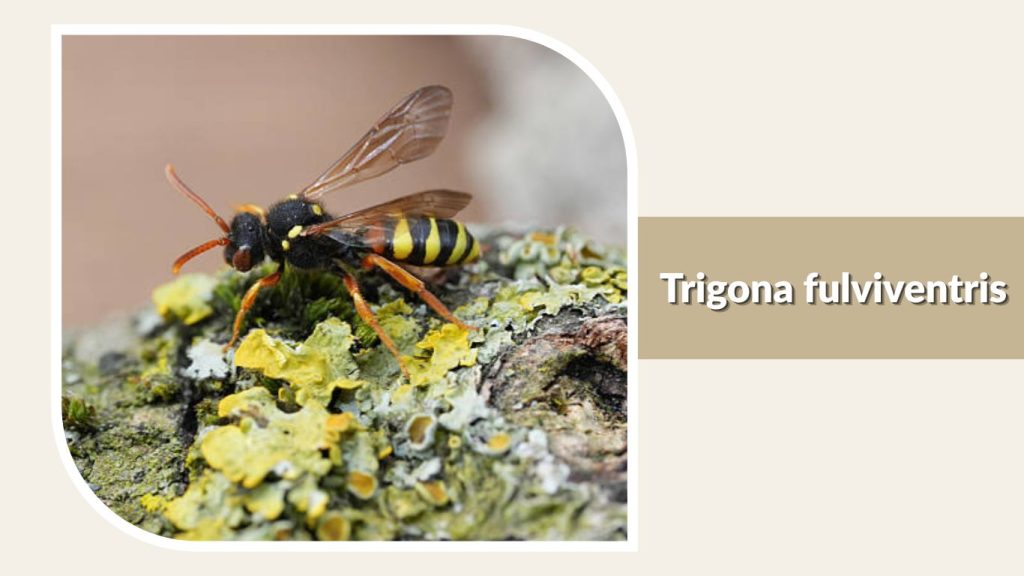
Trigona fulviventris is a stingless bee species found in Central and South America. It is known for its active colonies and its role in pollinating tropical plants. This bee is often seen around flowers, forest edges, and warm garden areas.
Characteristics
- Small to medium stingless bee
- Dark body with yellowish-brown abdomen
- Active and social colony behavior
- Important tropical pollinator
- Feeds on nectar and pollen
- Often nests in protected natural cavities
Appearance
Trigona fulviventris usually has a dark head and thorax with a lighter, yellowish-brown abdomen. This color difference can help separate it from many all-dark stingless bees. Its wings are transparent and rest flat over the body when not flying.
Habitat
This bee lives in tropical forests, gardens, farms, and woodland edges. It prefers warm areas with many flowering plants. Colonies may nest in tree hollows, soil cavities, or other protected spaces.
Identification
You can identify Trigona fulviventris by its yellowish-brown abdomen, stingless nature, and Central or South American range. Its active movement around tropical flowers is also a useful clue.
13. Partamona helleri
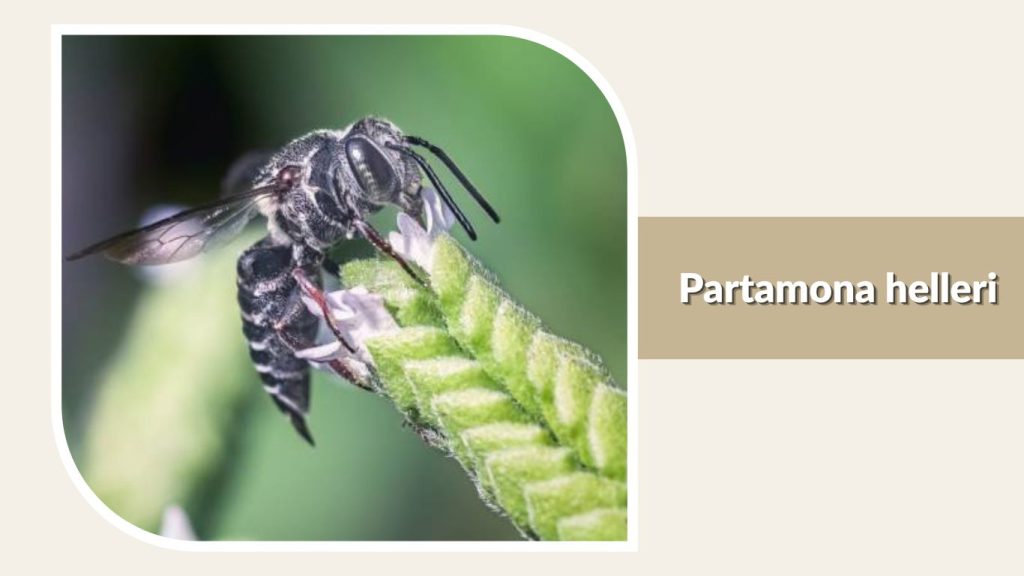
Partamona helleri is a stingless bee species native to Brazil and nearby regions. It is known for building strong colonies and being active around flowers. This species plays an important role in pollinating native plants and can often be found in warm, tropical environments.
Characteristics
- Medium-sized stingless bee
- Dark body with sturdy shape
- Strong social colony behavior
- Important pollinator for native plants
- Builds nests in protected places
- Active around flowers and nest entrances
Appearance
Partamona helleri has a dark, compact body that may look black or deep brown. Its body is slightly sturdier than many tiny stingless bees. The wings are clear or lightly smoky, and the legs may appear darker than the body.
Habitat
This species lives in forests, woodland edges, gardens, and rural areas. It often nests in tree cavities, banks, walls, or other protected sites. Flower-rich habitats help colonies collect enough nectar and pollen.
Identification
You can identify Partamona helleri by its dark sturdy body, Brazilian range, and strong colony activity. Its nesting behavior and presence in warm forested areas are also helpful signs.
14. Cephalotrigona capitata
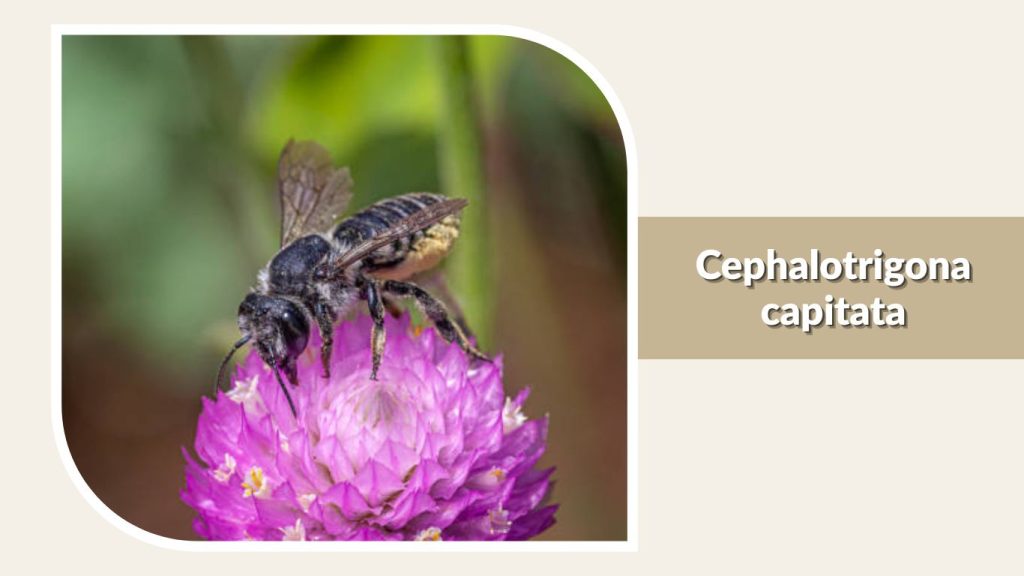
Cephalotrigona capitata is a large stingless bee species found in Central and South America. It is larger than many other stingless bees and is known for its dark body and strong colonies. This bee is an important pollinator in tropical forests and agricultural areas.
Characteristics
- Large stingless bee species
- Dark black or brown body
- Strong colony structure
- Important tropical pollinator
- Collects nectar, pollen, and resin
- Usually nests in tree cavities
Appearance
Cephalotrigona capitata has a larger and more robust body than many small stingless bees. Its color is usually black or dark brown, with clear wings. Its size can make it easier to notice when it is flying around flowers or near the nest.
Habitat
This bee lives in tropical forests, farms, orchards, and areas with many flowering trees. It often nests in hollow trees or other protected cavities. Healthy colonies need warm weather, nesting space, and steady food sources.
Identification
You can identify Cephalotrigona capitata by its larger size, dark body, and Central or South American range. Its strong colony activity and tree-cavity nesting also help with identification.
15. Lestrimelitta limao
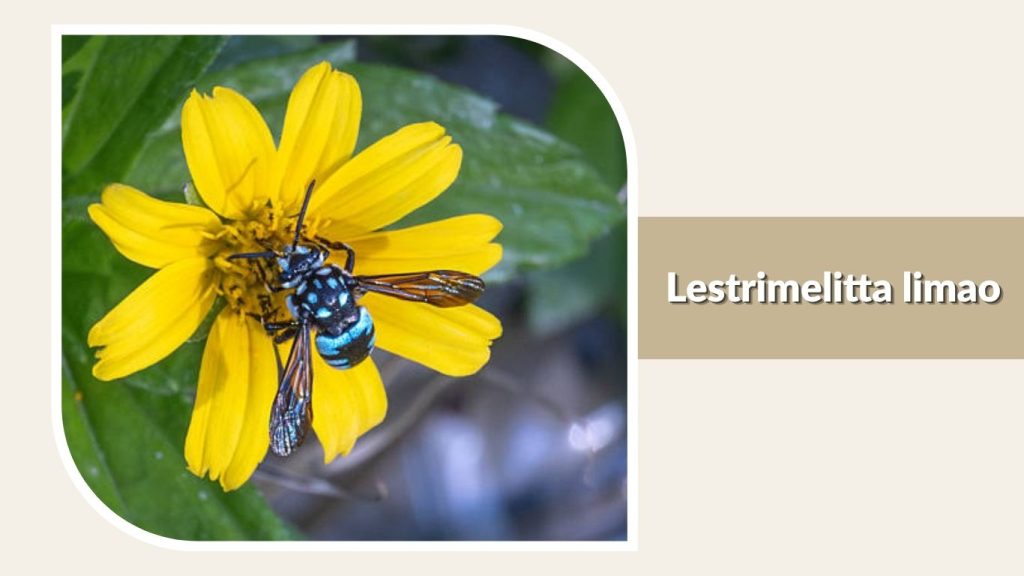
Lestrimelitta limao is a stingless bee species found in South America. Unlike many stingless bees, it is known as a robber bee because it may take resources from other bee colonies. This unusual behavior makes it different from common honey-producing stingless bees.
Characteristics
- Stingless bee species from South America
- Known as a robber bee
- Dark, slender body
- Does not rely on normal flower foraging like many bees
- Invades other bee colonies for resources
- Lives in social colonies
Appearance
Lestrimelitta limao has a dark, narrow body with clear wings. It may look similar to other small stingless bees at first, but its behavior is very different. Its body is usually black or dark brown and less colorful than some other species.
Habitat
This bee lives in tropical and subtropical areas of South America. It may occur near forests, gardens, and places where other stingless bee colonies are present. Its survival is closely connected to the presence of other bee nests.
Identification
You can identify Lestrimelitta limao by its dark body, South American range, and robber-bee behavior. Its habit of attacking or stealing from other colonies is one of the strongest identification clues.