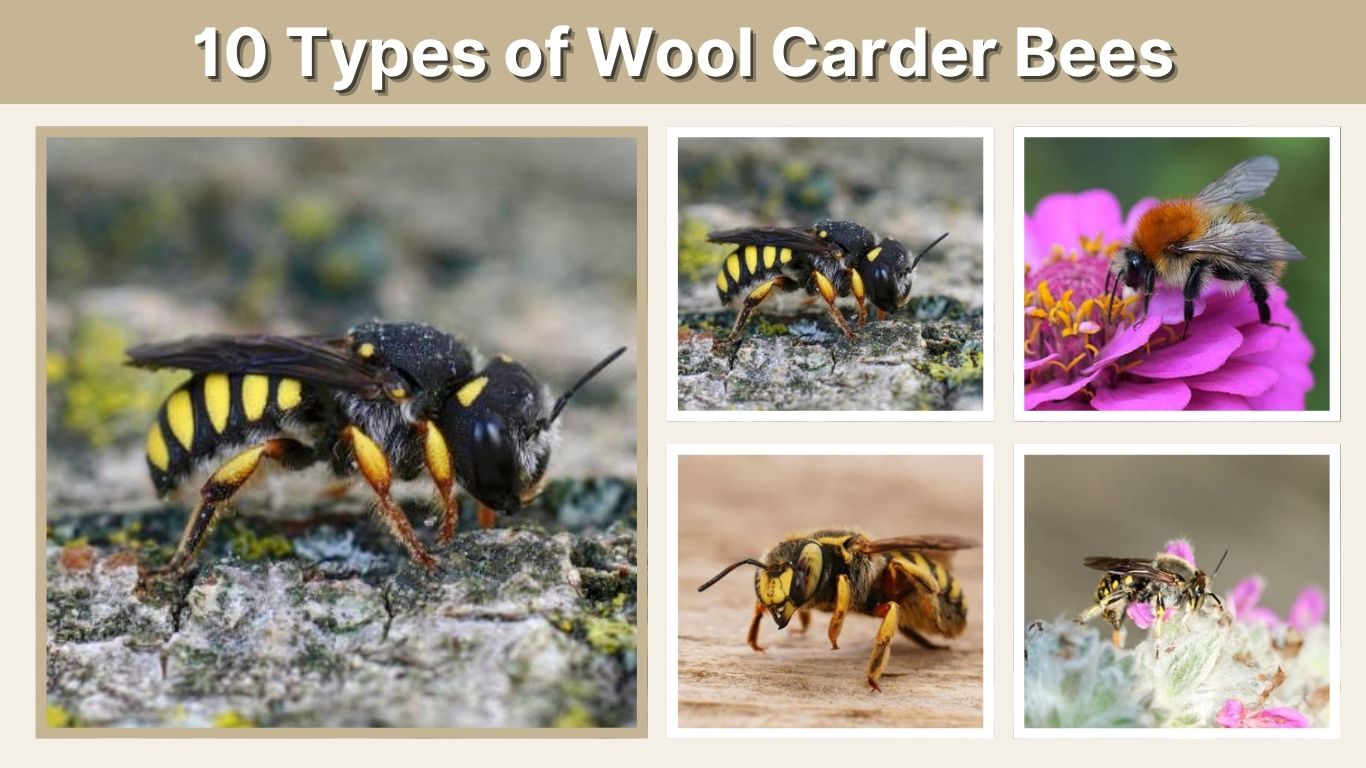
Wool carder bees are fascinating solitary bees known for collecting soft plant hairs to build their nests. Unlike honeybees, they do not live in large colonies or produce honey, but they play an important role as pollinators. These bees are often seen in gardens, meadows, parks, and flower-rich habitats. Many species have bold markings, active flower-visiting habits, and interesting nesting behavior. In this article, you will learn about 10 types of wool carder bees, including their identification, habitat, diet, behavior, and lifecycle in simple, easy-to-understand language.
1. European Wool Carder Bee
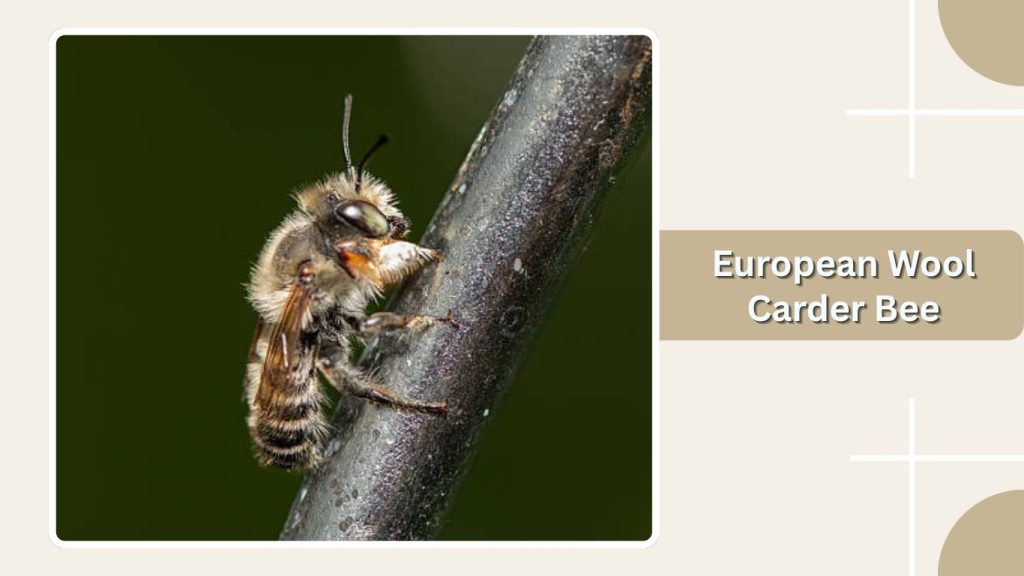
The European wool carder bee is a solitary bee known for collecting soft plant hairs to build its nest. Its scientific name is Anthidium manicatum, and it belongs to the Megachilidae family, the same group that includes mason bees and leafcutter bees. This bee is often seen around gardens, meadows, and flowering plants.
Identification
- The European wool carder bee has a black body with bright yellow markings.
- Males are usually larger than females, which is unusual among many bee species.
- Its body looks stout, compact, and slightly wasp-like.
- Females collect woolly hairs from plants such as lamb’s ear to line their nests.
- Males often patrol flower patches and chase away other insects.
- It has a hairy body, strong legs, and clear wings.
- The yellow spots on the abdomen help separate it from many other solitary bees.
Habitat and Distribution
The European wool carder bee is native to Europe, parts of Asia, and North Africa. It has also spread to places such as North America and New Zealand. It is commonly found in gardens, parks, meadows, fields, and other areas with plenty of flowering plants. This bee prefers places where it can find both nectar-rich flowers and fuzzy-leaved plants for nesting material.
Behavior and Diet
This bee feeds on nectar and pollen from many flowers. Females visit flowers to collect food and gather plant hairs for nest building. Males are known for their territorial behavior. They often guard flower patches and may chase away other bees, flies, or butterflies that enter their area. Despite this behavior, they are useful pollinators and help support garden biodiversity.
Lifecycle
The female European wool carder bee builds nest cells in cavities, hollow stems, wall gaps, or similar sheltered spaces. She lines each cell with plant hairs, adds pollen and nectar, and lays one egg inside. The larva feeds on the stored food, develops inside the nest, and later becomes an adult bee. Adults are most active during warm months when flowers are available.
2. Western Wool Carder Bee
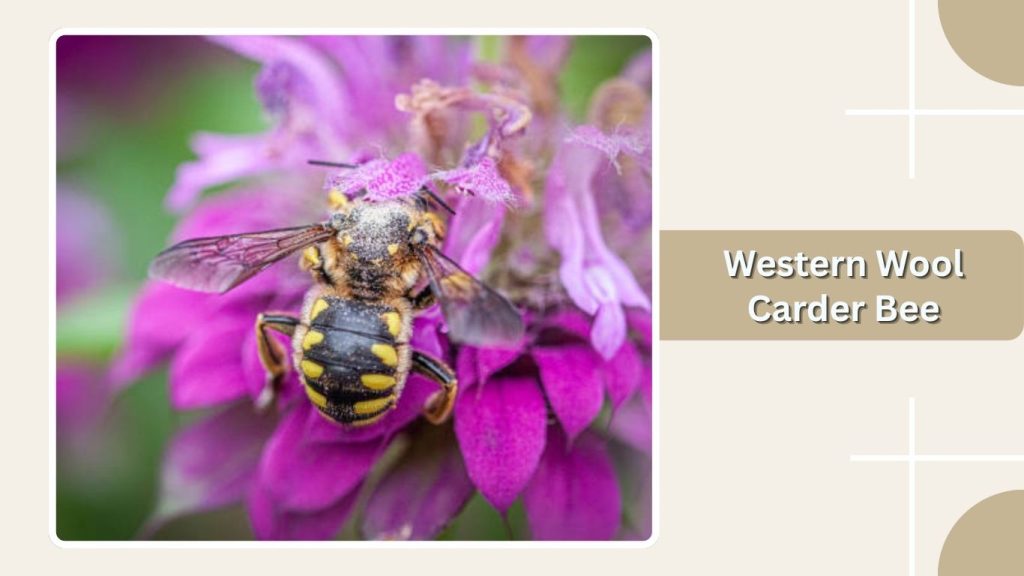
The western wool carder bee is a solitary bee from the genus Anthidium. Like other wool carder bees, it is known for using soft plant fibers, resin, or similar materials to build and protect its nest. These bees are valuable native pollinators and are often noticed around wildflowers, gardens, dry meadows, and open sunny habitats.
Identification
- The western wool carder bee usually has a dark body with yellow or pale markings.
- Its body is compact, strong, and somewhat wasp-like in shape.
- Females often have pollen-carrying hairs on the underside of the abdomen.
- Males may be territorial and patrol flower patches.
- The wings are clear to lightly smoky.
- It has strong jaws that help gather nesting material.
- Its bright markings make it easier to separate from many small, plain-colored bees.
Habitat and Distribution
The western wool carder bee is mostly associated with western parts of North America, especially dry, open, and flower-rich areas. It may occur in grasslands, scrublands, desert edges, gardens, roadsides, and natural meadows. This bee needs two important resources in the same area: flowering plants for food and suitable nesting places such as hollow stems, old insect holes, cracks, or small cavities.
Behavior and Diet
The western wool carder bee feeds on nectar and pollen from flowering plants. Females collect food for their young and also gather soft plant fibers or other materials to prepare nest cells. Males often defend good flower patches because females visit those flowers to feed. This behavior can make the male appear aggressive toward other insects, but the bee is mainly focused on protecting its feeding and mating area.
Lifecycle
The female western wool carder bee builds individual brood cells in a protected cavity. She places pollen and nectar inside each cell, lays one egg, and seals the chamber. The larva hatches and feeds on the stored food until it develops further. After completing its immature stages, it eventually becomes an adult and emerges when weather and flower availability are suitable.
3. Yellow-Legged Wool Carder Bee
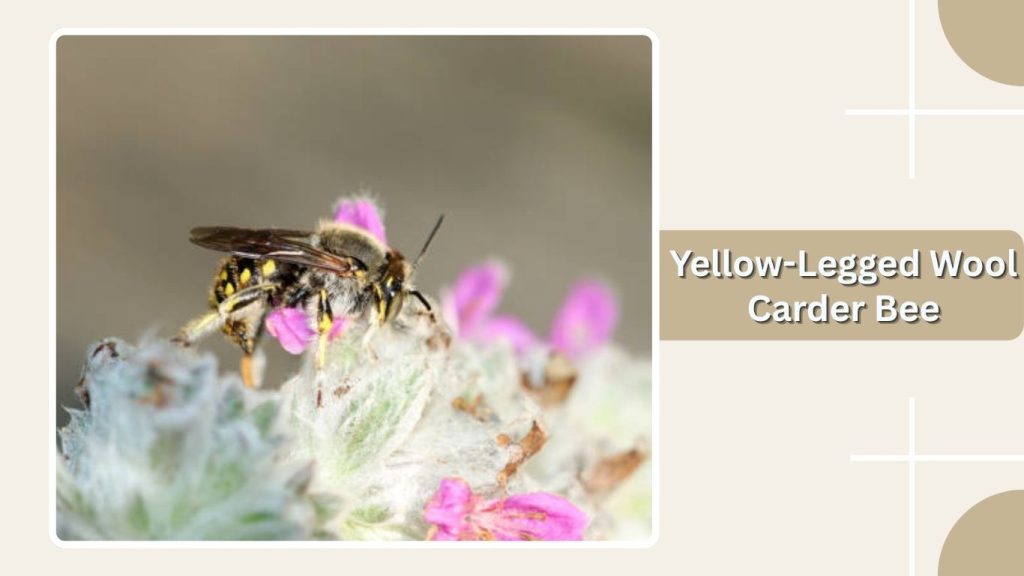
The yellow-legged wool carder bee is a solitary bee known for its bright markings, active flower visits, and habit of using plant fibers in nest construction. Like other wool carder bees, it does not live in a large honeybee-style colony. Instead, each female prepares her own nest cells and provides food for her young.
Identification
- The yellow-legged wool carder bee has a dark body with yellow markings.
- Its legs may appear yellowish or partly yellow, giving the bee its common name.
- The body is compact, sturdy, and slightly wasp-like.
- Females carry pollen on special hairs under the abdomen.
- Males may look larger and often patrol flower patches.
- It has clear wings and strong jaws for handling nesting material.
- The yellow pattern on the body and legs helps distinguish it from plainer solitary bees.
Habitat and Distribution
The yellow-legged wool carder bee is usually found in warm, sunny places where flowers are common. It may occur in gardens, field edges, meadows, roadsides, grasslands, and open woodland edges. Like other wool carder bees, it needs nesting sites such as hollow stems, cracks, old insect holes, or small cavities. It also depends on plants with soft fibers, because females use these materials to line or seal their brood cells.
Behavior and Diet
This bee feeds on nectar and pollen from different flowering plants. Females collect pollen and nectar to feed their larvae, while also gathering plant hairs for nesting. Males may guard flower-rich areas and chase away competing insects. This territorial behavior can look aggressive, but it is part of their mating strategy. While feeding, the bee helps transfer pollen between flowers and supports local pollination.
Lifecycle
The female yellow-legged wool carder bee builds separate brood cells in a safe cavity. She adds a supply of pollen and nectar, lays one egg, and closes the cell. The larva hatches, feeds on the stored food, and develops inside the protected nest. After pupation, the adult bee emerges during a suitable warm season when flowers are available.
4. Large Wool Carder Bee
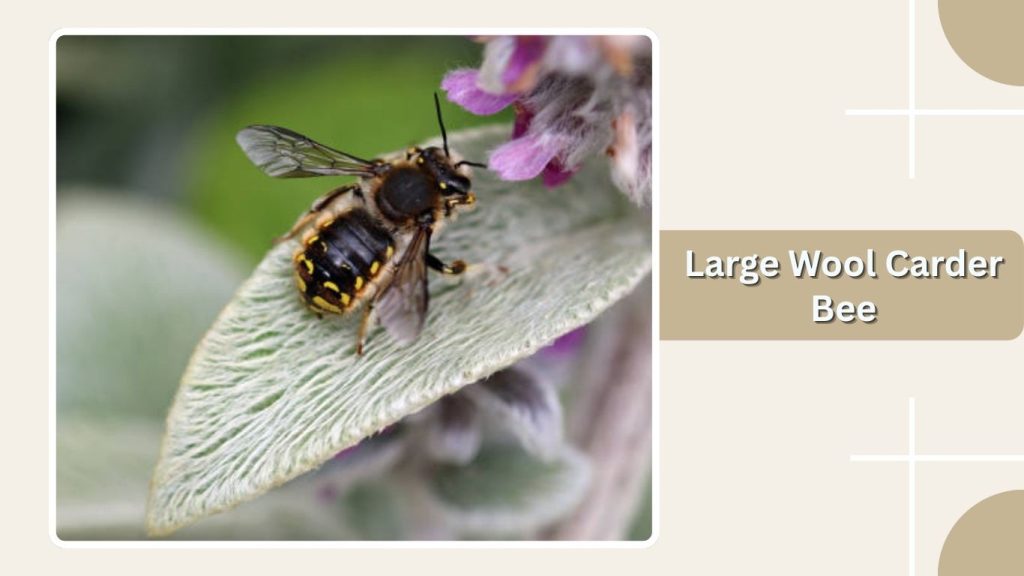
The large wool carder bee is a solitary bee known for its strong body, bold markings, and active behavior around flowers. Like other wool carder bees, the female collects soft plant hairs to build nest cells. This bee is often seen in sunny gardens, meadows, and natural areas where both flowering plants and nesting materials are available.
Identification
- The large wool carder bee has a stout body with black and yellow markings.
- It is usually bigger and stronger-looking than many small solitary bees.
- Its body shape may look slightly like a wasp, but it is a bee.
- Females carry pollen on hairs under the abdomen.
- Males may be larger and more territorial than females.
- It has strong jaws for collecting plant fibers.
- The bright body pattern helps identify it among flower-visiting insects.
Habitat and Distribution
The large wool carder bee is commonly found in open, sunny habitats with many flowers. It may live in gardens, grasslands, meadows, field edges, road verges, and woodland borders. It needs suitable nesting places, such as hollow stems, cracks, old beetle holes, or small cavities in wood, walls, or soil banks. Fuzzy-leaved plants are also important because females use their soft hairs for nest lining.
Behavior and Diet
This bee feeds on nectar and pollen from flowering plants. Females gather pollen and nectar to provision their nest cells, while males often patrol flower patches. A male may chase away other bees, flies, or butterflies that come too close to its chosen area. Although this behavior looks aggressive, the bee is mainly defending access to flowers where females may visit.
Lifecycle
The female large wool carder bee prepares a nest in a protected cavity. She lines the cell with soft plant fibers, adds a food supply of pollen and nectar, and lays one egg. The larva feeds inside the sealed cell until it grows and pupates. Later, the adult bee emerges when temperature, season, and flower availability are suitable.
5. Brown-Banded Carder Bee
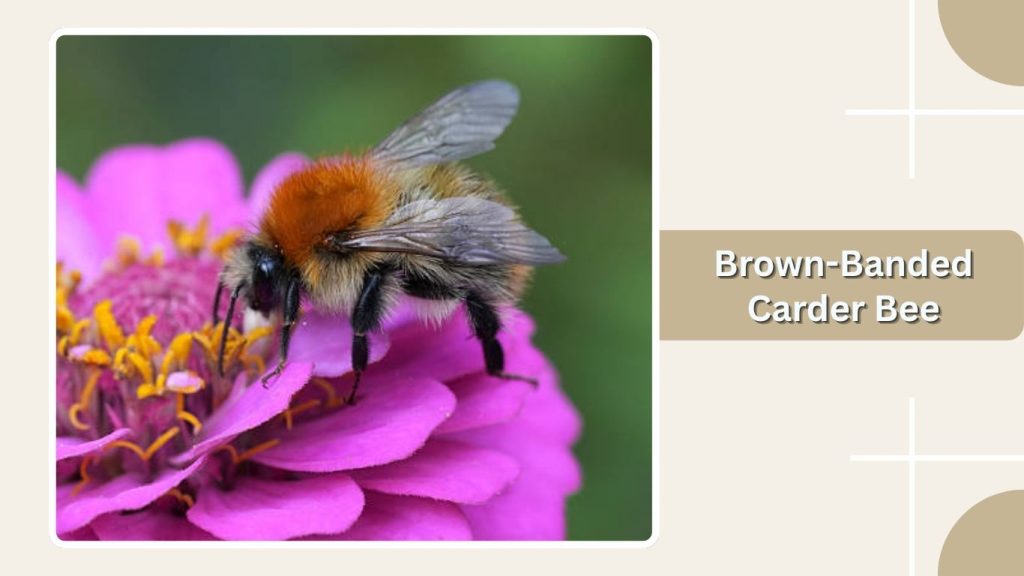
The brown-banded carder bee is a fluffy, medium-sized bee known for its warm brown coloring and important role as a pollinator. Unlike honeybees, it does not live in a large managed hive. It is usually found in flower-rich places where it can collect nectar and pollen throughout the warmer months.
Identification
- The brown-banded carder bee has a soft, hairy body with brown or ginger-brown bands.
- Its body looks rounder and fuzzier than many wool carder bees.
- It may have darker bands across the abdomen.
- The wings are clear to lightly tinted.
- Its legs are hairy and useful for carrying pollen.
- It has a gentle, bumblebee-like appearance.
- The brown banding helps separate it from brighter yellow-and-black carder bees.
Habitat and Distribution
The brown-banded carder bee is often found in grasslands, meadows, gardens, field edges, road verges, and other open habitats with many flowers. It prefers areas where wildflowers bloom for a long season. Healthy nesting sites are also important, especially undisturbed grass, mossy ground, or sheltered vegetation where it can build or occupy a small nest.
Behavior and Diet
This bee feeds on nectar and pollen from many flowering plants. It visits wildflowers, garden flowers, clovers, vetches, knapweeds, and other nectar-rich blooms. While feeding, it transfers pollen from flower to flower, making it useful for natural ecosystems and gardens. It usually moves calmly between flowers and is not aggressive unless disturbed or handled.
Lifecycle
The brown-banded carder bee begins its active season when queens emerge and search for nesting places. After choosing a sheltered nest site, the queen lays eggs and raises the first workers. Workers then help collect food and support the colony. New queens and males appear later in the season. After mating, young queens overwinter and begin the cycle again the next year.
6. Black Wool Carder Bee
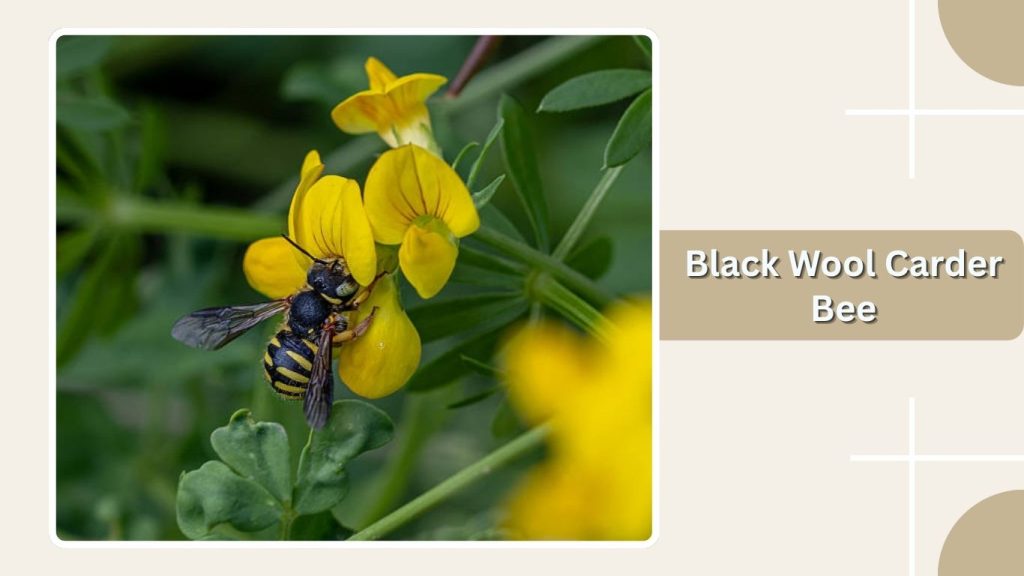
The black wool carder bee is a solitary bee known for its dark body, active flower visits, and careful nest-building habits. Like other wool carder bees, the female collects soft plant fibers to prepare nest cells for her young. It is usually seen in warm, sunny habitats where flowers and nesting materials are available.
Identification
- The black wool carder bee has a mostly dark or black body.
- Some individuals may show pale or yellowish markings.
- Its body is compact, strong, and slightly wasp-like.
- Females carry pollen on hairs under the abdomen.
- Males may patrol flowers and defend feeding areas.
- It has clear or lightly smoky wings.
- Strong jaws help it collect plant fibers for nesting.
Habitat and Distribution
The black wool carder bee is often found in open habitats with many flowering plants. It may live in gardens, dry meadows, grasslands, field edges, scrubland, and woodland borders. Suitable nesting places are important for this bee. Females may use hollow stems, cracks, old insect holes, or small cavities in wood, walls, or plant material. Areas with fuzzy-leaved plants are especially useful because they provide nesting fibers.
Behavior and Diet
This bee feeds on nectar and pollen from different flowers. Females collect pollen and nectar to feed their larvae, while also gathering soft plant hairs for nest building. Males may guard flower patches and chase away other insects that enter the area. Although this behavior can seem aggressive, the bee is mainly protecting access to flowers where females may visit.
Lifecycle
The female black wool carder bee builds separate brood cells inside a protected cavity. She lines each cell with soft plant fibers, adds a mixture of pollen and nectar, and lays one egg. The larva hatches inside the sealed cell and feeds on the stored food. After development and pupation, the adult bee emerges during a warm season when flowers are available.
7. Slender Wool Carder Bee
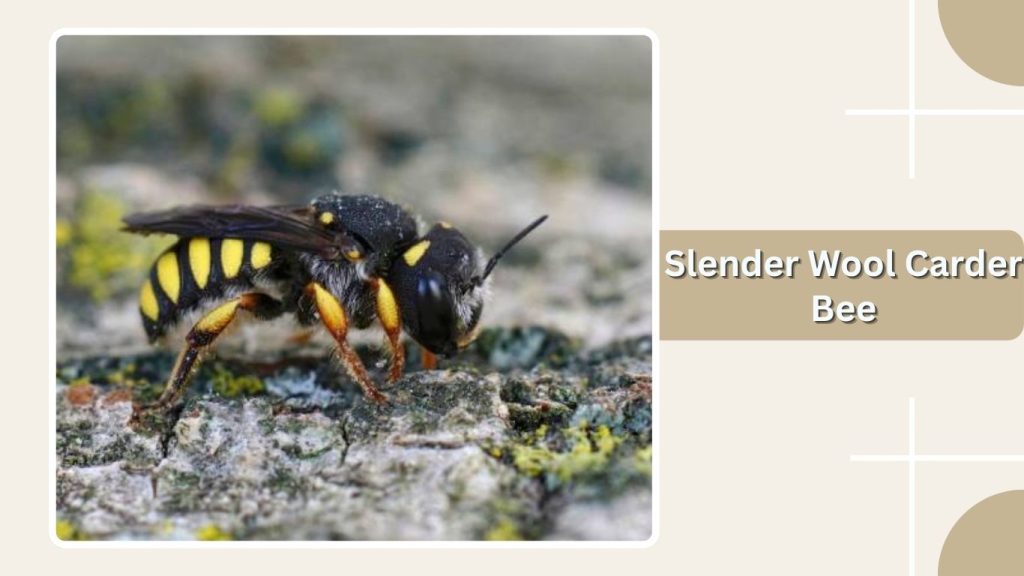
The slender wool carder bee is a solitary bee with a narrower body shape than many larger carder bees. It is usually seen visiting flowers in sunny places, where it collects nectar, pollen, and nesting materials. Like other wool carder bees, the female prepares her own nest instead of living in a large colony.
Identification
- The slender wool carder bee has a slim, compact body.
- Its body is usually dark with pale or yellow markings.
- It may look more narrow than the large wool carder bee.
- Females carry pollen on hairs beneath the abdomen.
- Males may patrol flowers and defend small territories.
- Its wings are clear or slightly smoky.
- Strong mouthparts help females gather plant fibers for nesting.
Habitat and Distribution
The slender wool carder bee is often found in warm, open habitats with plenty of flowers. It may live in gardens, meadows, grasslands, roadsides, field borders, and dry woodland edges. This bee needs suitable nesting cavities, such as hollow stems, cracks, or old insect holes. It also benefits from plants with soft hairs, because females use these fibers to line their nest cells.
Behavior and Diet
This bee feeds on nectar and pollen from different flowering plants. Females collect food for their larvae and gather soft plant hairs for nest building. Males often stay near flower-rich areas and may chase away other insects that enter their territory. While feeding, the slender wool carder bee helps move pollen between flowers and supports local plant reproduction.
Lifecycle
The female slender wool carder bee builds individual brood cells in a hidden cavity. She lines each cell with plant fibers, places pollen and nectar inside, and lays one egg. The larva feeds on the stored food and grows inside the protected chamber. After pupation, the adult bee emerges when warm weather and flowers return.
8. Patchwork Leafcutter Bee
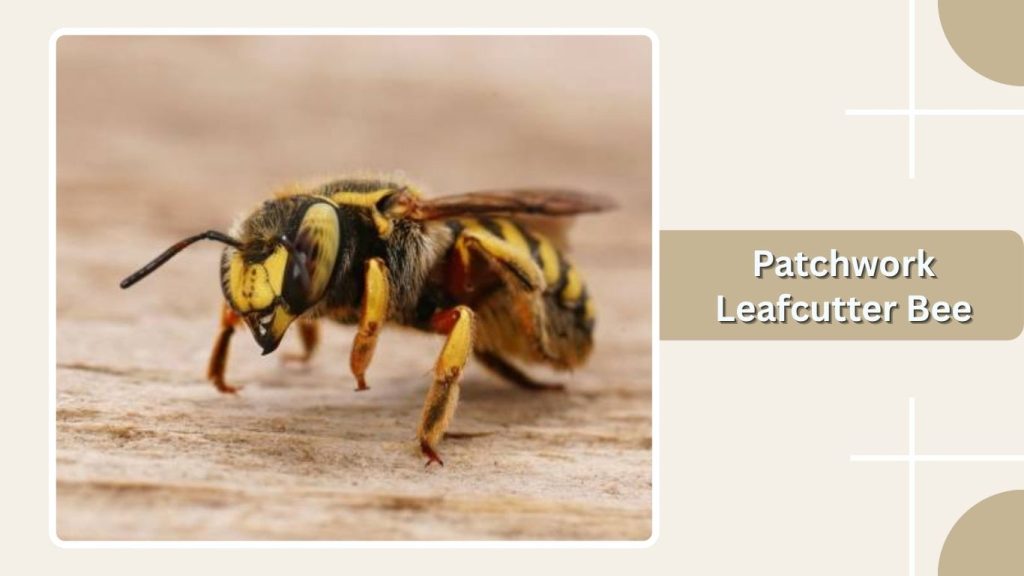
The patchwork leafcutter bee is a solitary bee known for cutting neat pieces from leaves and using them to build nest cells. Although it is not a true wool carder bee, it belongs to the same broad family of solitary bees and has similar nesting habits. It is an important pollinator in gardens, meadows, and flower-rich habitats.
Identification
- The patchwork leafcutter bee has a dark, compact body.
- It may show pale hairs on the face, thorax, or abdomen.
- Females carry pollen on hairs under the abdomen.
- Its body shape is sturdy and slightly rounded.
- The jaws are strong and useful for cutting leaf pieces.
- It often visits flowers quickly and actively.
- Crescent-shaped cuts in leaves can be a sign of its presence.
Habitat and Distribution
The patchwork leafcutter bee is found in sunny places with plenty of flowers and suitable nesting sites. It may live in gardens, parks, meadows, orchards, hedgerows, field edges, and woodland borders. It often uses hollow stems, holes in wood, wall gaps, or other small cavities for nesting. Areas with soft leaves are useful because females need leaf pieces to line and seal their brood cells.
Behavior and Diet
This bee feeds on nectar and pollen from many flowering plants. Females collect pollen and nectar to feed their larvae, then cut small pieces of leaves to build nest partitions. The leaf-cutting does not usually harm healthy plants. While moving between flowers, the bee transfers pollen and helps support plant reproduction in both wild and garden settings.
Lifecycle
The female patchwork leafcutter bee builds a row of brood cells inside a narrow cavity. Each cell is lined with leaf pieces and filled with pollen and nectar. After laying one egg in each cell, she seals it carefully. The larva feeds on the stored food, develops safely inside the nest, pupates, and later emerges as an adult during the warm season.
9. Orange-Tipped Wool Carder Bee
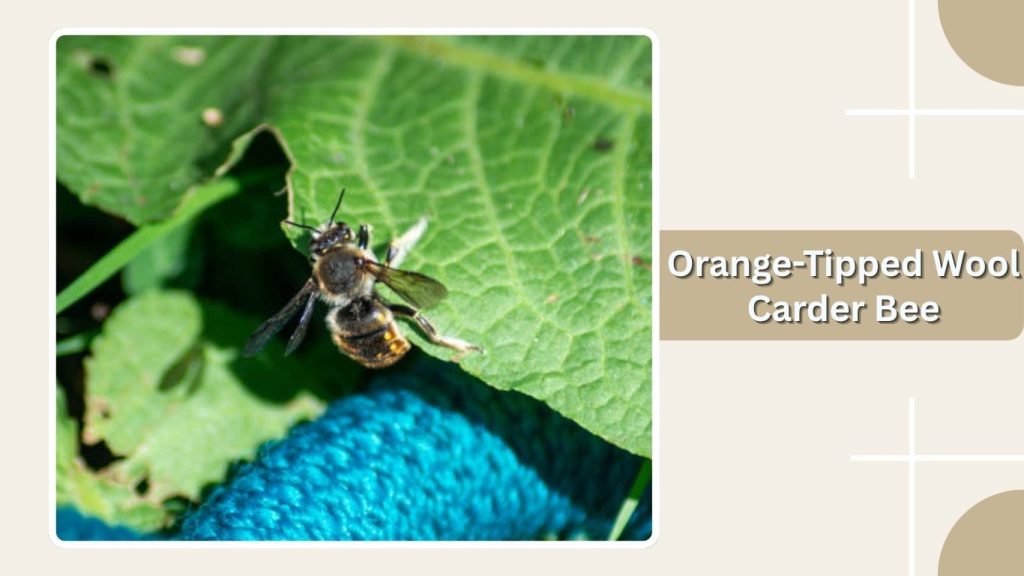
The orange-tipped wool carder bee is a solitary bee known for its bright body markings, quick flower visits, and careful nesting behavior. Like other wool carder bees, the female gathers soft plant material to prepare brood cells. It is usually found in warm, sunny places where flowering plants and nesting cavities are available.
Identification
- The orange-tipped wool carder bee has a compact body with dark and pale markings.
- Some individuals may show orange or warm-colored markings near the tip of the abdomen.
- Its body shape is sturdy and slightly wasp-like.
- Females carry pollen on special hairs under the abdomen.
- Males may patrol flower patches and defend small territories.
- It has clear or lightly smoky wings.
- Strong jaws help females collect soft plant fibers for nest building.
Habitat and Distribution
The orange-tipped wool carder bee is often found in gardens, meadows, field edges, roadsides, grasslands, and open woodland borders. It prefers sunny areas with many nectar-rich flowers. Suitable nesting places are also important. Females may use hollow stems, cracks, old insect tunnels, or small cavities in wood, walls, or plant material.
Behavior and Diet
This bee feeds on nectar and pollen from different flowering plants. Females gather pollen and nectar for their larvae and collect plant fibers to build nest cells. Males may guard flower-rich areas where females are likely to visit. This territorial behavior can make them chase other insects, but they are mainly focused on protecting feeding and mating sites.
Lifecycle
The female orange-tipped wool carder bee builds individual brood cells inside a protected cavity. She lines each cell with soft plant hairs, adds pollen and nectar, and lays one egg. The larva feeds on the stored food and develops safely inside the sealed cell. After pupation, the adult bee emerges during a warm season when flowers are available.
10. Wool Carder Bee
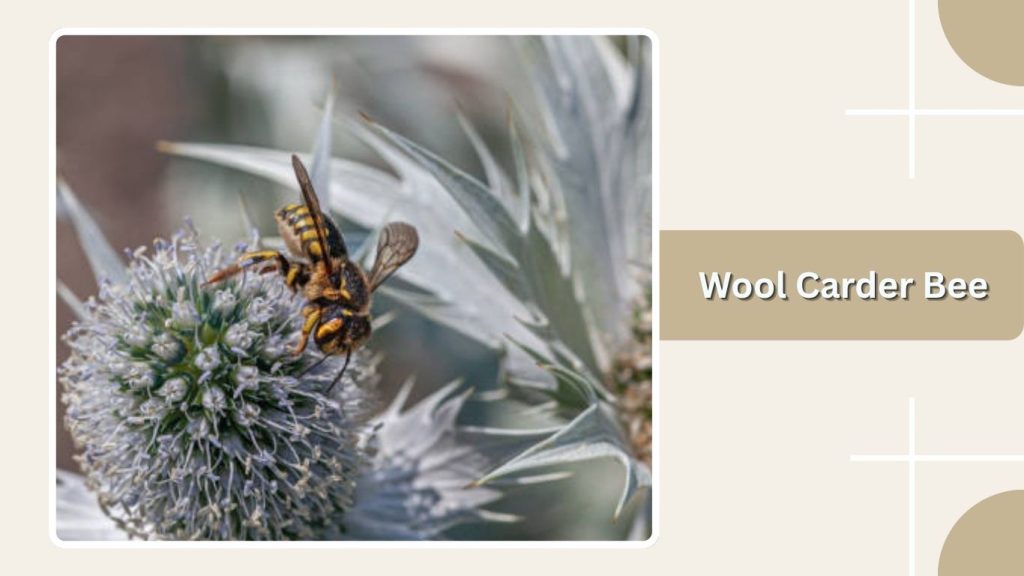
The wool carder bee is a solitary bee known for collecting soft hairs from plants and using them to build its nest. These bees are often seen around gardens, meadows, parks, and wildflower areas. They are useful pollinators and are interesting to observe because of their active flower visits and unique nest-building behavior.
Identification
- The wool carder bee usually has a dark body with yellow or pale markings.
- Its body is compact, strong, and slightly wasp-like.
- Females collect soft plant hairs from fuzzy leaves.
- Females carry pollen on hairs under the abdomen.
- Males are often larger and may defend flower patches.
- It has clear wings and strong jaws.
- Its bold markings help separate it from many smaller solitary bees.
Habitat and Distribution
Wool carder bees live in warm, sunny places with plenty of flowers and nesting materials. They may be found in gardens, meadows, grasslands, roadsides, parks, field edges, and woodland borders. They need flowers for nectar and pollen, but they also need fuzzy-leaved plants such as lamb’s ear or similar plants for nest lining. Small cavities, hollow stems, wall gaps, or old insect holes may be used as nesting sites.
Behavior and Diet
Wool carder bees feed on nectar and pollen from many flowering plants. Females collect food for their larvae and gather plant hairs to line nest cells. Males often patrol flower-rich areas and may chase away other bees, flies, or butterflies. This behavior can seem aggressive, but they are mainly protecting flower patches where females may visit.
Lifecycle
The female wool carder bee builds separate brood cells inside a protected cavity. She lines each cell with soft plant fibers, places pollen and nectar inside, and lays one egg. The larva feeds on the stored food, grows inside the sealed chamber, and later pupates. When conditions are warm and flowers are available, the adult bee emerges and starts the cycle again.
FAQs
1. What is a wool carder bee?
A wool carder bee is a solitary bee that collects soft hairs from plants to build its nest. Unlike honeybees, it does not live in a large colony or produce honey for humans. It is an important pollinator and is often seen visiting garden flowers, wildflowers, and fuzzy-leaved plants.
2. Are wool carder bees aggressive?
Wool carder bees are not usually aggressive toward people. However, males can be very territorial around flower patches and may chase away other insects. This behavior is mostly directed at bees, flies, and butterflies, not humans. They usually sting only if handled or strongly disturbed.
3. Where do wool carder bees live?
Wool carder bees live in sunny places with plenty of flowers and suitable nesting sites. They are commonly found in gardens, meadows, parks, roadsides, grasslands, and field edges. Females often use hollow stems, wall gaps, old insect holes, or small cavities to build their nests.
4. What do wool carder bees eat?
Adult wool carder bees feed on nectar and pollen from flowering plants. Females also collect pollen and nectar to provide food for their larvae. They are often attracted to plants such as lamb’s ear, mint, betony, salvia, lavender, and other nectar-rich garden or wild plants.
5. Why are they called wool carder bees?
They are called wool carder bees because females scrape or “card” soft hairs from fuzzy plants. They roll these plant fibers into a wool-like ball and carry them back to the nest. The fibers are then used to line and protect the brood cells where eggs and larvae develop.