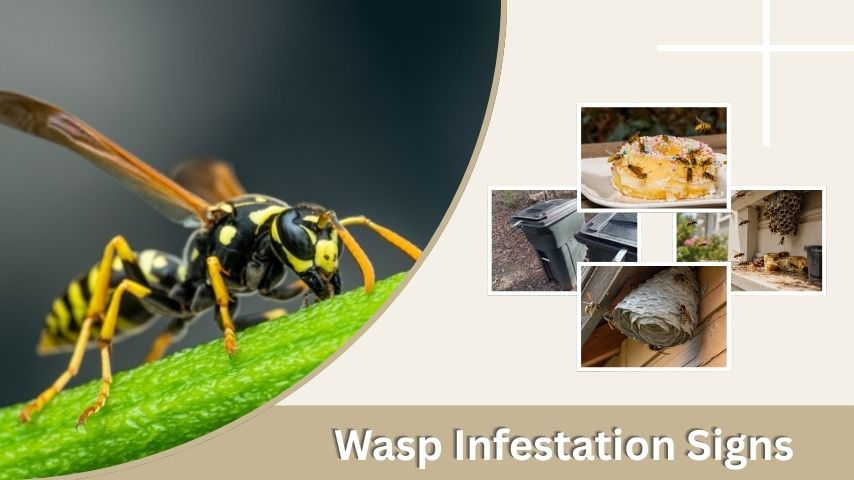
Seeing one or two wasps outside is normal, especially during warm weather. However, repeated wasp activity around the same area can be a warning sign of an infestation. Wasps often build nests in hidden, protected places such as eaves, wall voids, attics, sheds, trees, and ground holes. Knowing the early signs can help you avoid painful stings, property issues, and dangerous nest disturbances.
Why Wasp Infestations Should Not Be Ignored
Wasps are not always bad. They help control garden pests and may contribute to pollination. In many cases, a nest located far from people can be left alone. The problem starts when wasps build near doors, patios, decks, garages, playgrounds, rooflines, or other areas where people and pets move regularly.
Unlike bees, many social wasps can sting multiple times. They may also become defensive if they think their nest is under threat. This makes an active nest around a home or business more than a small nuisance. It can quickly become a safety concern, especially for children, pets, older adults, and anyone allergic to stings.
Common Signs of a Wasp Infestation
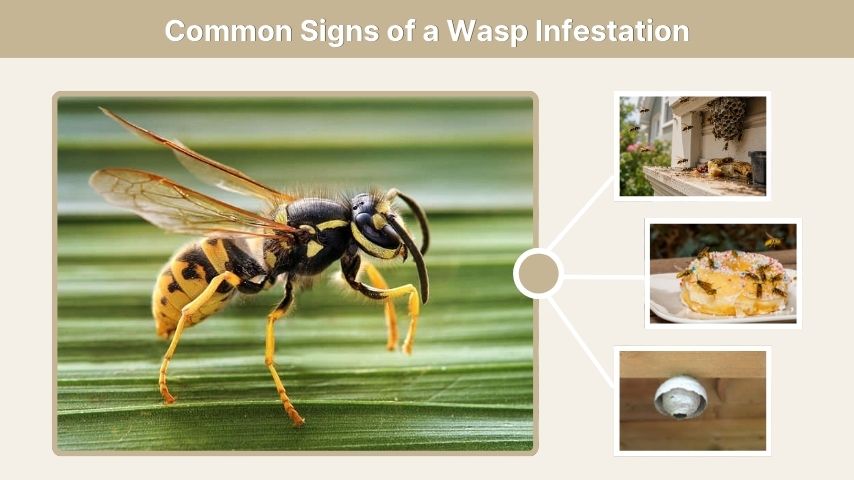
The clearest signs of a wasp infestation are repeated wasp activity, visible nests, buzzing sounds, and wasps entering or leaving the same spot. Some signs are obvious, while others are easy to miss until the nest grows larger.
1. Increased Wasp Activity Around Your Property
A single wasp flying through your yard is not usually a problem. Several wasps appearing every day in the same place is different. If you notice wasps gathering near your porch, roofline, attic vent, shed, fence, garbage bin, or garden, there may be a nest nearby.
Wasps often follow regular flight paths. You may see them flying in and out of one corner of the house, under a deck, through a small wall gap, or around a hole in the ground. This steady traffic is one of the most reliable signs of a nearby colony.
Pay close attention during warmer parts of the day. Wasps are often more active when temperatures rise and they are foraging for food or building materials.
2. Wasps Entering and Exiting One Specific Spot
One of the strongest infestation signs is repeated entry and exit from the same opening. This could be a crack in siding, a gap under roof shingles, a hole in brickwork, a soffit opening, or a small space near a window frame.
If wasps are disappearing into a wall or roof void, the nest may be hidden inside the structure. In this case, do not block the opening. Trapping wasps inside can force them to search for another exit, sometimes into living spaces.
Hidden nests can be more difficult and risky to remove than exposed nests. A pest control professional may be needed if wasps are nesting inside walls, ceilings, or attic spaces.
3. A Visible Paper-Like Nest
Many social wasps build nests from chewed wood fibers mixed with saliva. This creates a gray or brown paper-like material. Depending on the species, the nest may look like an open umbrella, a round ball, or an enclosed papery structure.
Paper wasps often build open, umbrella-shaped nests under eaves, porch ceilings, deck railings, window frames, and outdoor furniture. Hornets and some yellowjackets may build larger enclosed nests in trees, shrubs, roof areas, or wall spaces.
A small nest early in the season may only contain a few wasps, but it can grow quickly. If the nest is near a high-traffic area, it should be taken seriously before the colony becomes larger.
4. Buzzing Sounds in Walls, Ceilings, or Attics
A hidden wasp nest may produce a faint buzzing or scratching sound. This is most noticeable in quiet rooms near walls, ceilings, fireplaces, vents, or attic spaces. The sound may become louder as the colony grows.
Buzzing inside a wall should never be ignored. It may indicate an active nest in a void space. You may also notice wasps appearing indoors if they find a way into the house.
Avoid hitting the wall, spraying random chemicals into openings, or sealing the gap without a plan. Disturbing the colony can increase aggression and may cause wasps to spread into other parts of the building.
5. Wasps Around Food, Garbage, or Sweet Drinks
Wasps are attracted to food sources, especially later in the season when colonies search for sugary foods. If you repeatedly see wasps around trash cans, outdoor meals, fallen fruit, pet food, soda cans, compost bins, or barbecue areas, there may be a nest close by.
Food attraction alone does not always mean there is an infestation. However, if many wasps return daily and fly back toward the same direction, it is worth inspecting the surrounding area carefully.
Keeping lids tight on garbage bins, cleaning spills, picking up fallen fruit, and covering outdoor food can reduce wasp activity around your home.
6. Wasps Near Gaps, Vents, and Rooflines
Wasps prefer protected nesting places. Common nesting spots include soffits, gutters, attic vents, roof edges, cracks in siding, porch ceilings, sheds, barns, garages, and wall voids. If you frequently see wasps near these areas, they may be investigating or already nesting.
Ground-nesting species may use old rodent burrows, soil holes, garden beds, or gaps under patios and walkways. If wasps are flying low to the ground and entering a small hole, avoid walking near it. Ground nests can be especially risky because they are easy to step on by accident.
7. Chewed Wood or Small Wood Fibers
Some wasps collect wood fibers to build their papery nests. You may notice thin scrape marks on wooden fences, deck rails, sheds, outdoor furniture, or untreated wood. Small bits of wood material near a nesting area may also be a clue.
This sign is usually subtle, so it is most helpful when combined with other evidence, such as repeated wasp traffic or a visible nest. If you see wasps landing on wood and scraping the surface, they may be gathering nest-building material.
8. Aggressive or Defensive Wasp Behavior
Wasps become more defensive near their nest. If wasps suddenly fly toward you, hover around your face, follow you, or react aggressively when you approach a certain area, you may be too close to the colony.
This is a serious warning sign. Do not swat at them, shake nearby branches, spray the nest casually, or try to knock it down. Quick movements can make wasps more defensive. Move away slowly and keep children and pets out of the area.
Where Wasps Commonly Build Nests
Wasps choose places that offer shelter, warmth, and protection from weather. They may nest in open outdoor spaces or hidden structural voids.
| Nest Location | What You May Notice |
|---|---|
| Under eaves or porch ceilings | Paper-like nest, visible wasp traffic |
| Attics or wall voids | Buzzing sounds, wasps entering gaps |
| Trees or shrubs | Enclosed nest, wasps flying in groups |
| Ground holes | Wasps entering soil openings |
| Sheds and garages | Nest in corners, rafters, or stored items |
| Decks and railings | Wasps flying under boards or steps |
Checking these areas in spring and early summer can help you catch nest-building before the colony becomes large.
Early Infestation vs Serious Infestation
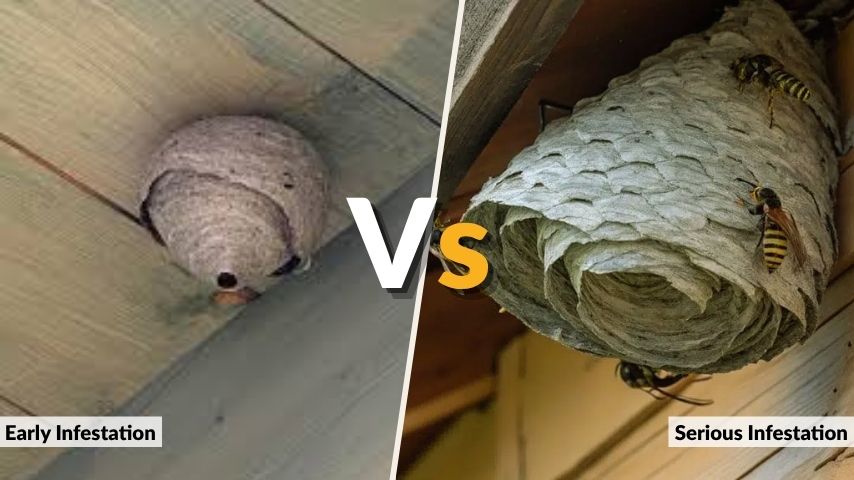
A small early nest may have only a queen and a few workers. At this stage, activity may be light and easy to overlook. You might see only a few wasps around an eave or shed.
A serious infestation usually has constant wasp traffic, a larger nest, defensive behavior, and wasps appearing in areas where people spend time. If the nest is hidden inside a structure, the risk can be higher because it is harder to judge colony size.
Warning Signs of a Serious Problem
- Wasps entering and exiting the same spot all day
- A large visible nest near doors, decks, or windows
- Buzzing inside walls or ceilings
- Wasps getting indoors repeatedly
- Aggressive behavior when people walk nearby
- Activity around a ground hole in a lawn or garden
- Someone in the home has a sting allergy
When these signs are present, professional help is often the safest option.
What to Do If You See Wasp Infestation Signs
Start by observing from a safe distance. Try to identify where wasps are coming from and whether there is a visible nest. Do not stand directly under the nest or block the flight path.
Keep children and pets away from the area. If the nest is near a walkway, door, patio, or play area, limit access until it can be handled safely.
For small exposed nests, some homeowners consider DIY treatment. However, this can be dangerous if the species is aggressive, the nest is large, or the nest is in a wall, attic, roofline, or underground space. In these cases, hiring a trained pest control professional is usually safer.
What Not to Do Around a Wasp Nest
Avoid common mistakes that can make the problem worse. Do not knock down an active nest during the day. Do not spray random household products into wall gaps. Do not seal an opening while wasps are still active inside. Do not use fire, gasoline, or water pressure to destroy a nest.
These methods can cause wasps to swarm, spread, or enter the home. They can also create fire, chemical, or structural hazards.
If you are unsure whether the insects are wasps, bees, hornets, or yellowjackets, get an identification before taking action. Bees may require different handling, and some pollinators should be protected whenever possible.
How to Prevent Wasp Infestations
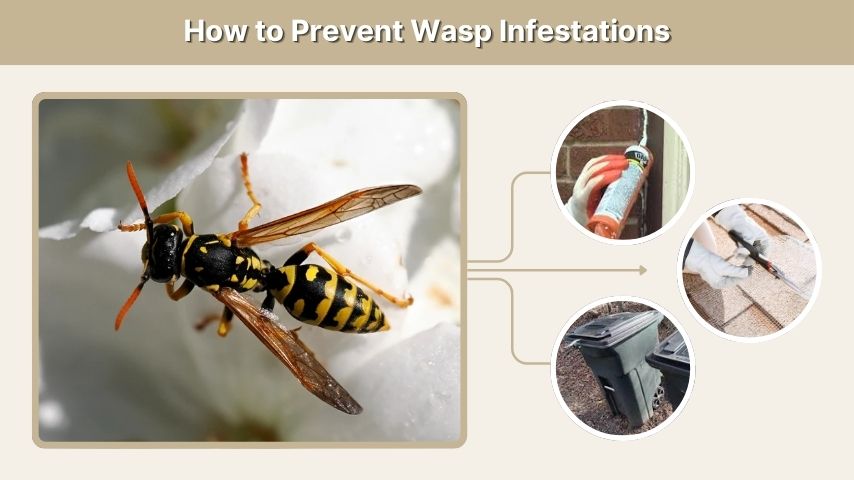
Prevention begins with reducing nesting opportunities and food sources. Seal cracks around siding, vents, windows, rooflines, and utility openings. Repair damaged screens and cover attic vents with proper mesh. Keep sheds and garages organized so nests are easier to spot.
Clean outdoor eating areas after meals. Keep garbage cans tightly closed. Remove fallen fruit from yards. Store pet food indoors and rinse sticky drink containers before disposal.
Routine inspection is also important. Look under eaves, decks, railings, playsets, patio furniture, and shed roofs during spring and early summer. Removing a tiny inactive starter nest is much easier than dealing with a large active colony later.
FAQs
How do I know if I have a wasp infestation?
You may have a wasp infestation if you see several wasps returning to the same area every day, especially around eaves, vents, wall gaps, trees, sheds, or ground holes. A visible paper-like nest, buzzing in walls, or defensive behavior near one spot also suggests an active nest.
What does a wasp nest look like?
A wasp nest may look like gray or brown paper. Paper wasp nests are often open and umbrella-shaped, while hornet or yellowjacket nests may be enclosed and rounded. Some nests are hidden underground or inside walls, making repeated wasp traffic the main clue.
Are wasps dangerous around the house?
Wasps can be dangerous when their nest is close to human activity. Many wasps can sting more than once and may defend the nest if disturbed. The risk is higher for people with allergies, children, pets, and anyone who accidentally gets too close to an active colony.
Should I remove a wasp nest myself?
Small, exposed nests may sometimes be handled by homeowners, but removal can be risky. Large nests, aggressive wasps, ground nests, and nests inside walls, roofs, or attics should usually be handled by a professional. Disturbing a colony without proper protection can lead to multiple stings.
Will wasps go away on their own?
In many regions, social wasp colonies die off during cold weather, and old nests are usually not reused. However, an active nest near doors, walkways, patios, or living spaces may still need treatment before the season ends. Safety should guide the decision.