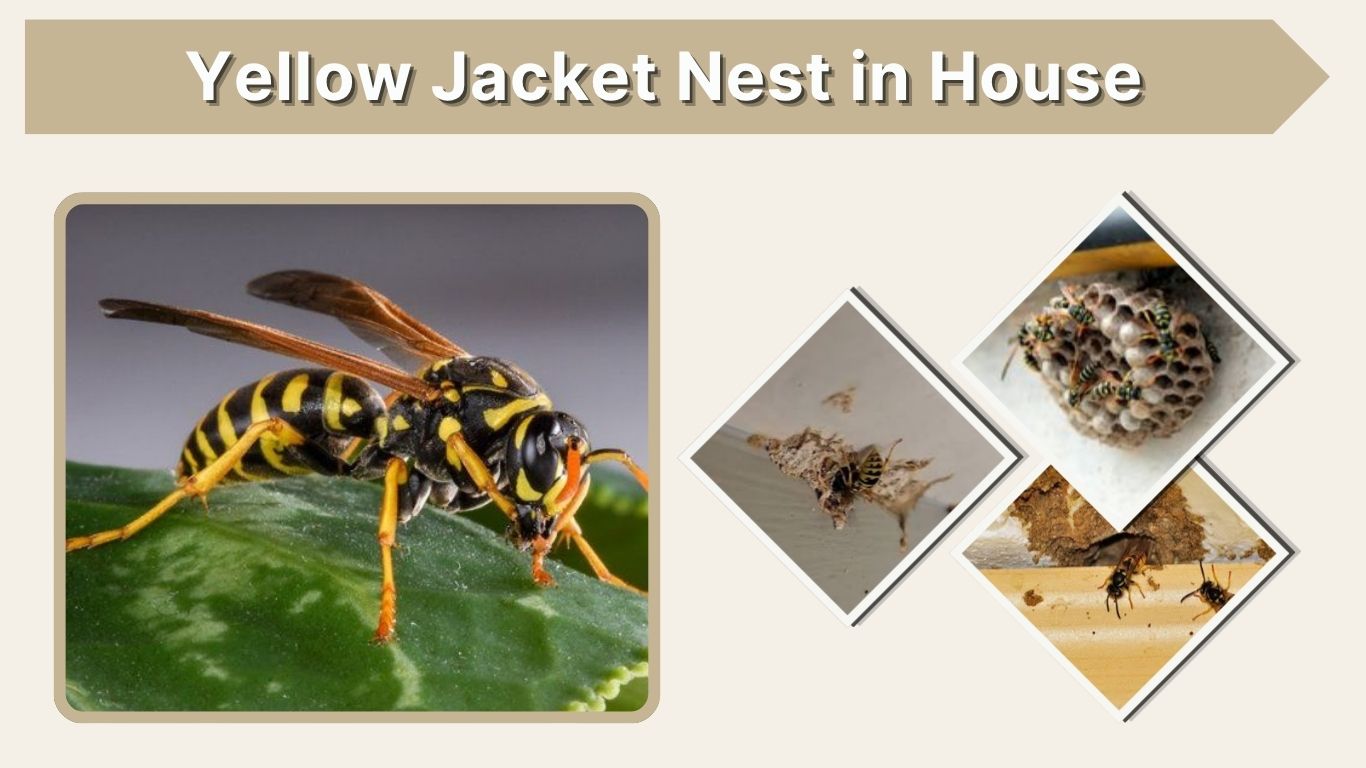
A yellow jacket nest inside a house can create a serious stinging hazard, particularly when the colony is hidden behind siding, inside a wall, beneath an eave or near an exhaust vent. You may notice insects repeatedly entering a small exterior gap or suddenly appearing inside a room. Do not immediately seal the entrance, spray random openings or open the wall. Hidden colonies are difficult to reach, and blocking their normal exit can push yellow jackets farther into the living space. Professional pest control is usually the safest solution.
Do Yellow Jackets Build Nests in Houses?
Yellow jackets commonly nest underground, but some species use enclosed spaces in buildings that resemble natural cavities. Their paper nest may be hidden several feet from the visible exterior entrance.
Common nesting locations include:
- Voids behind exterior siding
- Spaces inside walls
- Attics and roof cavities
- Gaps beneath eaves and soffits
- Foundation openings
- Concrete blocks
- Exhaust vents and ductwork
- Spaces beneath porches or decks
Yellow jackets construct their nests from chewed wood fibers mixed with saliva. Unlike paper-wasp nests, their combs are surrounded by a protective paper envelope and usually remain hidden inside the cavity.
Signs of a Yellow Jacket Nest in the House
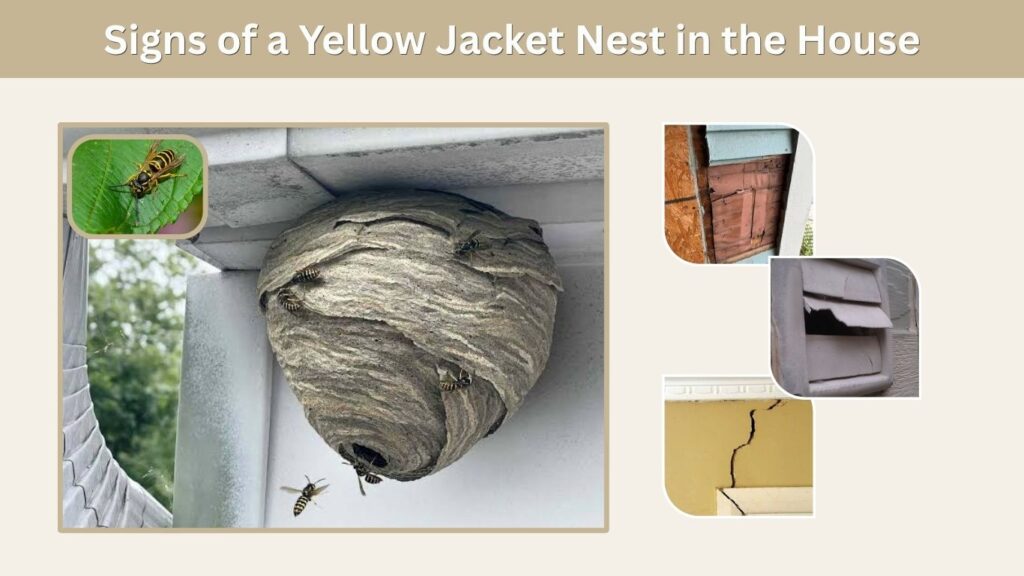
The insects seen indoors may not reveal exactly where the nest is located. Workers may enter the living area through light fixtures, vents, ceiling gaps or cracks around windows.
Repeated Exterior Activity
Watch the outside of the house during daylight. A steady stream of yellow jackets entering and leaving one small opening strongly suggests an active colony.
Possible entrance points include:
- Gaps beneath siding
- Cracks around window frames
- Openings along roof edges
- Holes around cables and utility lines
- Damaged vent covers
- Spaces where siding meets the foundation
Observe from approximately 10–15 feet away and remain outside the insects’ direct flight path. Do not tap the siding, insert an object into the opening or place your face near it.
Yellow Jackets Appearing Indoors
One occasional yellow jacket may have entered through an open door. A hidden nest is more likely when multiple insects repeatedly appear in the same room, especially around:
- Bathroom or kitchen vents
- Recessed lights
- Windows near one wall
- Ceiling fixtures
- Basement or attic openings
- Cracks around pipes
Buzzing or scratching sounds inside a wall can also indicate activity, although other insects or animals may produce similar noises.
Stains or Wall Damage
A large hidden colony can introduce moisture and organic material into a wall cavity. However, visible wall stains are not always present, and opening the wall before treatment can release defensive workers directly into the house.
How to Find a Yellow Jacket Nest Inside a House
Finding the exterior entrance is usually safer and more useful than trying to locate the exact paper nest from indoors.
Track the Flight Path
Observe the building from different angles during warm daylight hours. Yellow jackets usually fly directly between their feeding area and the nest entrance.
Look for repeated traffic around one seam or hole rather than individual wasps resting on flowers or siding.
Check Common Access Areas
Carefully inspect from a safe distance:
- Eaves and soffits
- Roof-to-wall joints
- Window and door trim
- Foundation cracks
- Exterior vents
- Utility penetrations
- Loose or damaged siding
- Porch and deck connections
Do not use a ladder near active yellow jackets. A sting or defensive swarm could cause a serious fall.
Do Not Follow Them by Opening the Wall
The nest may not be directly behind the entrance. Yellow jackets can travel through a cavity before reaching the comb, so cutting drywall may expose the wrong area and give hundreds of insects access to the room.
A pest professional may use activity patterns, inspection equipment or targeted access points to locate and treat the colony more safely.
How to Remove a Yellow Jacket Nest From a House
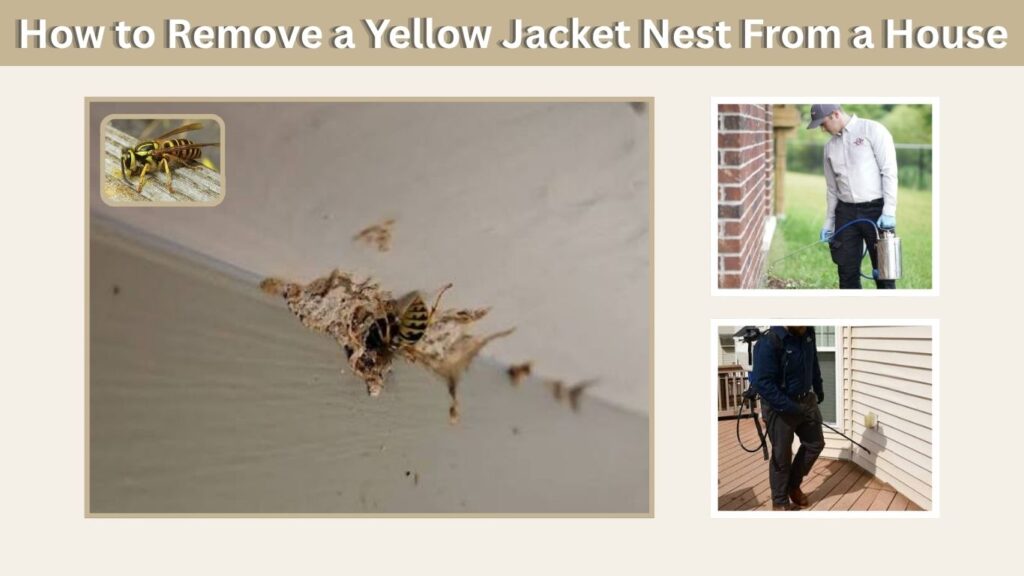
Hidden nests in wall voids, attics and similar building spaces are significantly more difficult to control than exposed nests. University of Minnesota Extension recommends professional pest control for concealed colonies in buildings.
Keep People and Pets Away
Restrict access to the affected room and the exterior entrance area. Children, pets and anyone with a known sting allergy should remain well away.
When yellow jackets are entering a room, close the interior door and place a notice outside it. Avoid swatting at flying insects near the suspected wall because defensive activity may increase.
Contact a Licensed Pest Professional
Professional help is particularly important when:
- Yellow jackets are entering occupied rooms
- The nest is inside siding or a wall
- The entrance is high above the ground
- The colony is beside a doorway
- More than one opening is visible
- Anyone in the home has a sting allergy
- The insects are using a vent or duct
- Previous treatment has failed
Professionals can apply an appropriate wall-void treatment, confirm whether the colony is dead and determine whether the nest or damaged material should be physically removed.
DIY Treatment Considerations
DIY treatment is risky because ordinary wasp spray designed for exposed nests may not reach a colony hidden behind siding. Spraying the visible entrance can kill a few workers without reaching the queen or inner comb.
Only use a pesticide when its label specifically permits treatment of yellow jackets in cracks, crevices or wall voids. Follow all directions concerning application location, protective equipment, ventilation and re-entry. Never improvise by drilling holes or injecting products not approved for indoor structural use. The EPA emphasizes that pesticide labels must always be read and followed.
Treatment is generally safer when yellow jacket activity is lower, such as late evening or early morning. However, darkness does not make a concealed house nest safe for an inexperienced person to approach.
Never Seal an Active Yellow Jacket Entrance
Do not plug an active opening with caulk, foam, tape, cement or expanding sealant. Trapping the colony does not kill it immediately.
Workers may:
- Search for another exterior opening
- Travel through wall cavities
- Emerge around vents or fixtures
- Enter occupied rooms
- Become more defensive around the blocked site
The University of Minnesota specifically warns against sealing a nest entrance until all yellow jackets are dead because doing so can cause them to move into the house.
Seal and repair the structural opening only after treatment is complete and no activity has been observed.
Yellow Jacket Nest in House Siding
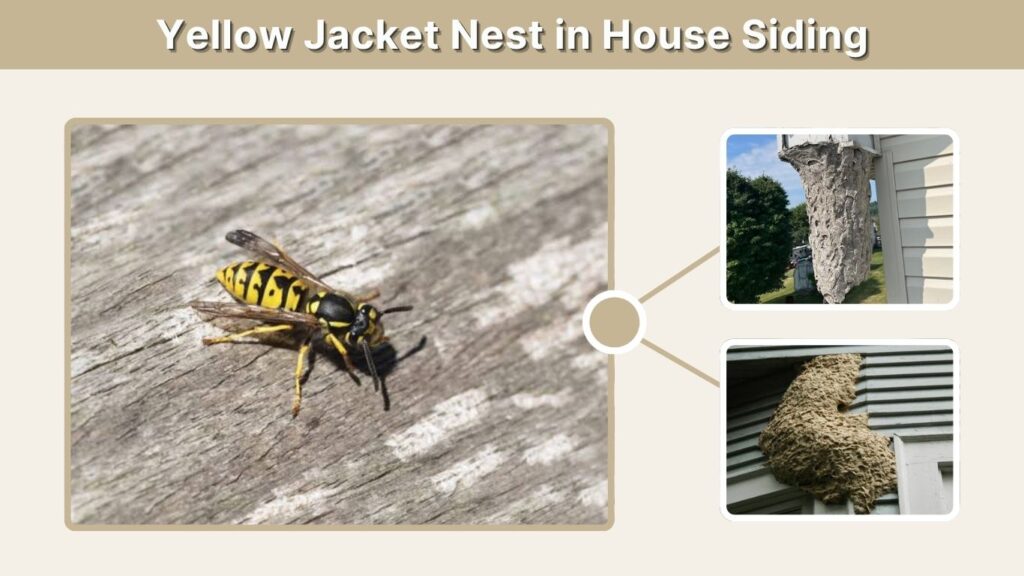
Siding provides narrow gaps through which workers can enter a larger wall cavity. The visible entrance may be beneath a siding edge, corner trim or roof joint.
Do not pull the siding away while the nest is active. This can expose the colony and damage the weather barrier beneath the siding.
A professional may treat the entry point or wall void, wait for activity to stop and then recommend repairs. After elimination, damaged siding and open seams should be sealed to reduce future nesting opportunities.
Yellow Jacket Nest in an Eave or Soffit
First determine whether the nest is exposed or hidden. An exposed paper nest attached beneath an eave may belong to paper wasps or an aerial yellow jacket species. A steady flow disappearing through a soffit opening indicates a hidden structural nest.
Hidden eave nests are especially hazardous because treatment may require a ladder. Professional removal avoids the combined risks of stings, falling and pesticide exposure.
What Happens After the Nest Is Treated?
Do not expect every insect to disappear immediately. Workers that were away may return and circle the entrance. A treated colony should show a clear decline in activity, but control can take a day or two rather than occurring instantly.
Continued heavy traffic may indicate that:
- The treatment did not reach the colony
- Another entrance exists
- The nest is farther inside the structure
- The product needs more time
- A second colony is present
Do not repeatedly approach an agitated nest. Contact the pest professional or follow the product label’s retreatment instructions.
Will Yellow Jackets Return to the Same House?
Yellow jacket colonies are generally annual. Workers and the old queen die as cold weather arrives, while newly produced queens leave to overwinter in protected places. The old nest is not reused.
However, another queen may select the same siding gap or wall cavity in a future year if the entrance remains open. Prevention therefore requires structural repairs after the colony has been eliminated.
How to Prevent Yellow Jackets From Nesting in the House
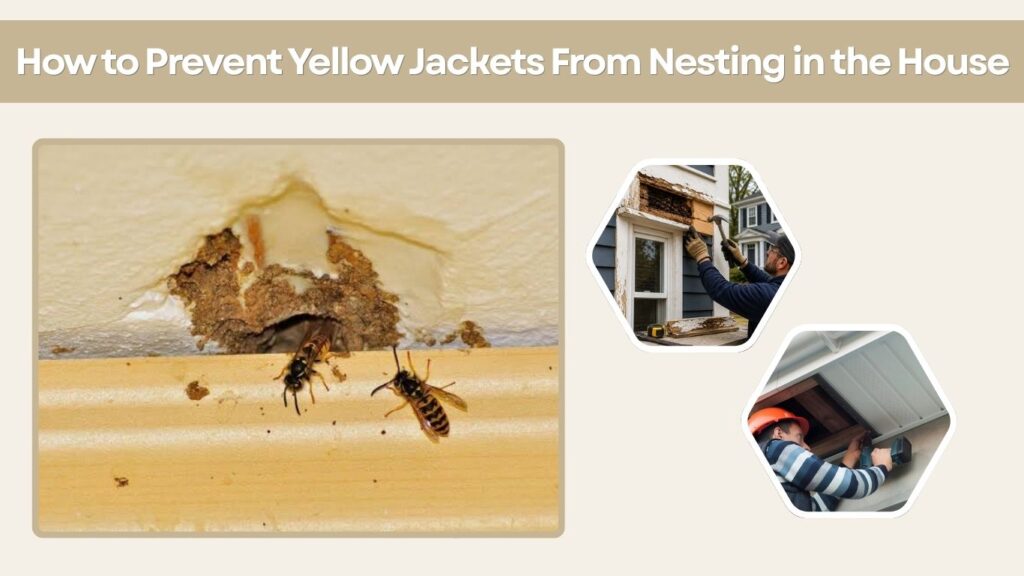
Inspect the exterior during late fall or early spring, when no active colony is present.
Repair or seal:
- Loose siding and trim
- Openings around utility lines
- Damaged soffits
- Gaps around windows and doors
- Cracks where building materials meet
- Broken vent screens
- Foundation openings
Use suitable fine screening on vents without blocking airflow. Keep outdoor rubbish covered, clean spilled food and avoid leaving sugary drinks or pet food outside, as these can attract foraging yellow jackets.
What to Do After a Yellow Jacket Sting
Move indoors or into a closed vehicle immediately. Yellow jackets can sting repeatedly and may pursue someone who approaches their nest.
Wash the sting area and apply a cold compress to reduce discomfort. Seek emergency help for difficulty breathing, throat tightness, facial swelling, widespread hives, dizziness or fainting. Anyone prescribed an epinephrine auto-injector should use it as directed and obtain emergency medical care.
FAQs
Can yellow jackets chew through a house wall?
Yellow jackets usually use existing gaps and cavities rather than creating an entrance through an intact wall. However, blocking their exterior opening can cause them to search through cracks and weak points toward the house’s interior.
Should I spray the yellow jackets entering the siding?
Spraying individual workers rarely eliminates a hidden colony. An aerosol may also drive insects deeper into the wall. Use only a product specifically labeled for the location or hire a qualified professional.
How long can a yellow jacket nest remain inside a wall?
A colony generally lasts for one season. It grows from spring through summer and declines during cold weather. In warm climates or heated structures, activity may persist longer.
Should the nest be physically removed from the wall?
Removal is not always necessary after the entire colony has died. It may be recommended when the nest is accessible, has caused moisture problems or attracts other pests. A professional can assess whether opening the wall is justified.
When can I seal the entrance?
Seal the opening only after treatment is complete and no yellow jacket traffic remains. Closing it while workers are alive can force them to seek another route, including one leading into the living space.