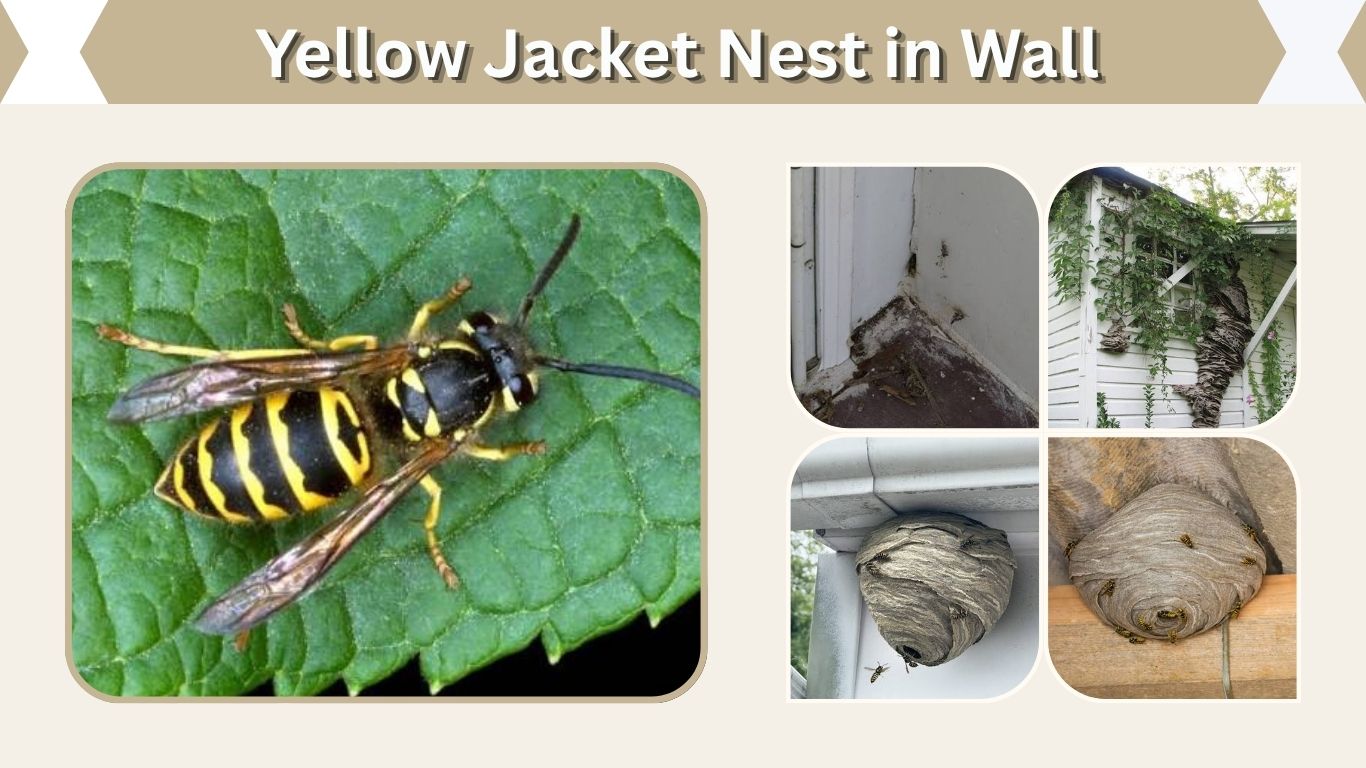
A yellow jacket nest in a wall can remain hidden for weeks while the colony grows inside the structure. Homeowners may first notice wasps entering a crack, buzzing behind drywall, or appearing inside the house. Because yellow jackets aggressively defend their colony and can sting repeatedly, a hidden nest requires careful handling. This guide explains how to identify a wall nest, understand the risks, arrange safe treatment, and prevent yellow jackets from returning.
Do Yellow Jackets Build Nests in Walls?
Yes, several yellow jacket species build nests inside protected structural cavities. Common nesting locations include wall voids, attics, concrete blocks, vents, soffits, basements, and spaces behind exterior siding.
Their nests are made from chewed wood fibers mixed with saliva, creating a gray, paper-like material. Inside the outer envelope are several stacked combs containing eggs, larvae, and pupae. A mature colony may contain hundreds or even thousands of yellow jackets.
Yellow jackets usually enter through small exterior openings, including:
- Gaps around utility pipes
- Cracks between bricks or stones
- Openings beneath siding
- Damaged vents or screens
- Gaps around windows and rooflines
- Holes in mortar or concrete blocks
The visible entrance may be several feet away from the actual nest because the insects can travel through the wall cavity.
Signs of a Yellow Jacket Nest Inside a Wall
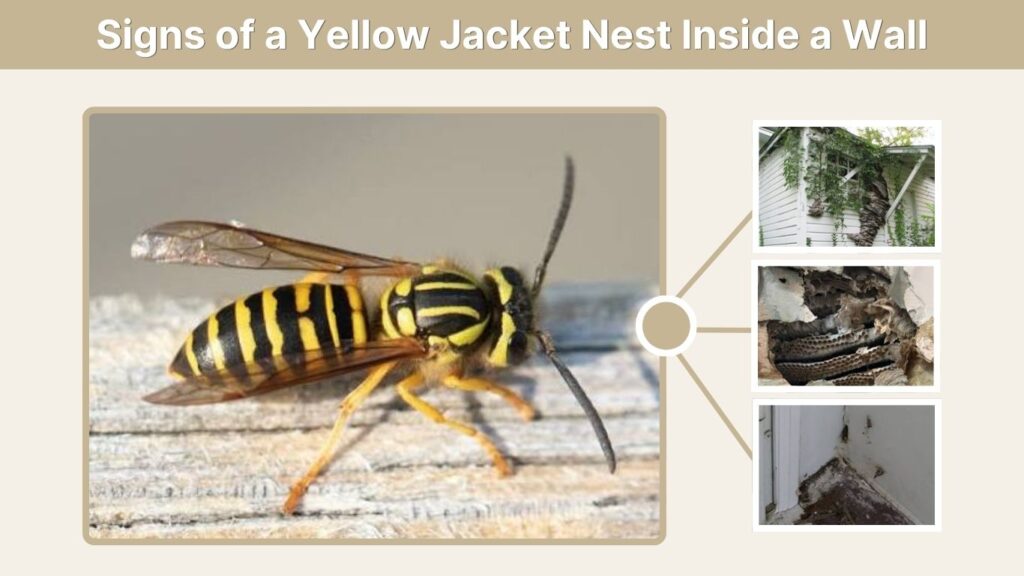
Repeated Activity Around One Opening
Watch the exterior of your house from a safe distance. A steady stream of yellow jackets entering and leaving the same crack usually indicates an established colony rather than random foraging activity.
Activity is often most noticeable during warm, sunny parts of the day.
Buzzing or Scratching Inside the Wall
A large colony may produce a noticeable humming, buzzing, or faint scratching sound. The noise may become louder when you place your ear near the wall, but do not tap, drill, or strike the area because vibrations could disturb the colony.
Yellow Jackets Appearing Indoors
Wasps emerging from light fixtures, vents, electrical outlets, ceiling gaps, or window frames may indicate that a nest has developed an opening into the living space.
An aerosol sprayed into the exterior entrance can sometimes drive yellow jackets deeper into the structure or cause them to search for another exit, potentially bringing them indoors.
A Warm or Discolored Area
A very large nest may occasionally cause a soft spot, stain, unusual odor, or minor discoloration on drywall. These signs alone do not confirm a nest, but they should be investigated when combined with buzzing or visible wasp activity.
Is a Yellow Jacket Nest in a Wall Dangerous?
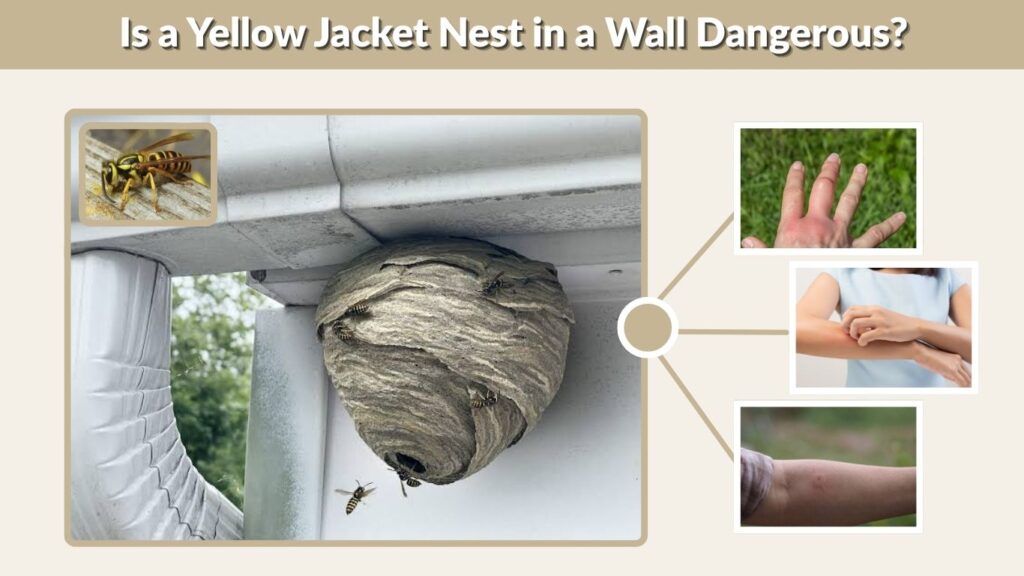
A wall nest can become dangerous when it is near a doorway, patio, bedroom, children’s play area, or another frequently used location. Social wasps defend their colony and may sting repeatedly when they believe the entrance or nest is threatened.
Most stings cause temporary pain, redness, itching, and swelling. However, some people can experience a severe allergic reaction. Difficulty breathing, throat swelling, fainting, or widespread swelling after a sting requires immediate medical attention.
Risk is particularly high when:
- Someone in the home is allergic to wasp venom.
- Yellow jackets are entering occupied rooms.
- The nest is beside a door, walkway, or window.
- Children or pets regularly approach the entrance.
- Renovation or electrical work must be performed nearby.
- The colony has become highly active in late summer.
Do not attempt treatment yourself when you have a known sting allergy.
How to Find a Yellow Jacket Nest in a Wall
Observe the building from at least several yards away and identify where the insects enter. Watch during daylight when workers are actively traveling between the nest and food sources.
Do not block the entrance while observing it. Mark the location from a safe distance so a pest management professional can inspect it later.
The nest may be inside:
| Wall location | Common entrance points | Main concern |
| Drywall cavity | Siding gaps, vents or roof openings | Wasps may enter indoor rooms |
| Brick wall | Cracked mortar and weep holes | The nest may be deep inside the cavity |
| Cinder block | Open block cells and foundation gaps | Several connected voids may be occupied |
| Stone wall | Irregular joints and missing mortar | The exact nest position may be difficult to locate |
| Exterior or retaining wall | Drainage gaps and cracks | Activity may be close to people or landscaping |
Avoid using a drill, inspection camera, or tool until the colony has been controlled. Accidentally opening the nest from inside could release many defensive workers into the room.
How to Get Rid of a Yellow Jacket Nest in a Wall
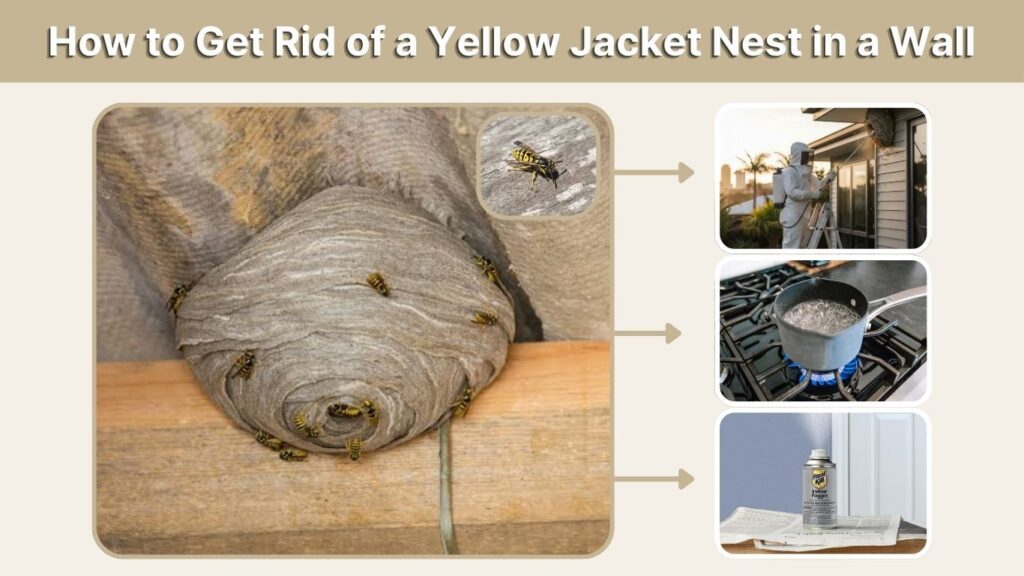
Contact a Pest Management Professional
Professional treatment is the safest option for a hidden structural nest. University extension guidance recommends professional control because colonies may be large, positioned far from the entrance, and difficult to reach without specialized application equipment.
A professional can:
- Confirm that the insects are yellow jackets.
- Locate the entrance and approximate nest position.
- Select a treatment labeled for structural voids.
- Prevent insects from escaping into occupied rooms.
- Confirm that colony activity has stopped.
- Open the wall and remove the nest when necessary.
- Seal the entrance after treatment.
Do Not Seal an Active Entrance
Never immediately fill the entrance with caulk, foam, mortar, or tape. Trapped yellow jackets may chew through interior materials or search for another exit, potentially entering the house.
Seal cracks only after monitoring confirms that no yellow jackets are entering or leaving. The University of Minnesota specifically advises against sealing the opening until the colony is dead.
Avoid Unsafe Home Remedies
Do not pour gasoline into a wall, nest opening, or surrounding ground. Gasoline creates fire and contamination hazards and is not an appropriate pest-control product.
Also avoid:
- Fire, smoke, or burning materials
- Boiling water
- Household cleaners or bleach
- Indoor bug bombs
- Unlabeled pesticide mixtures
- Repeatedly striking or spraying the wall
Foggers cannot effectively penetrate enclosed cracks and voids and can create unnecessary pesticide and fire risks.
Only use a pesticide when its label specifically permits treatment of yellow jackets in the intended location. Follow every instruction concerning application, protective equipment, occupants, pets, electrical hazards, storage, and reentry.
Does the Nest Need to Be Removed From the Wall?
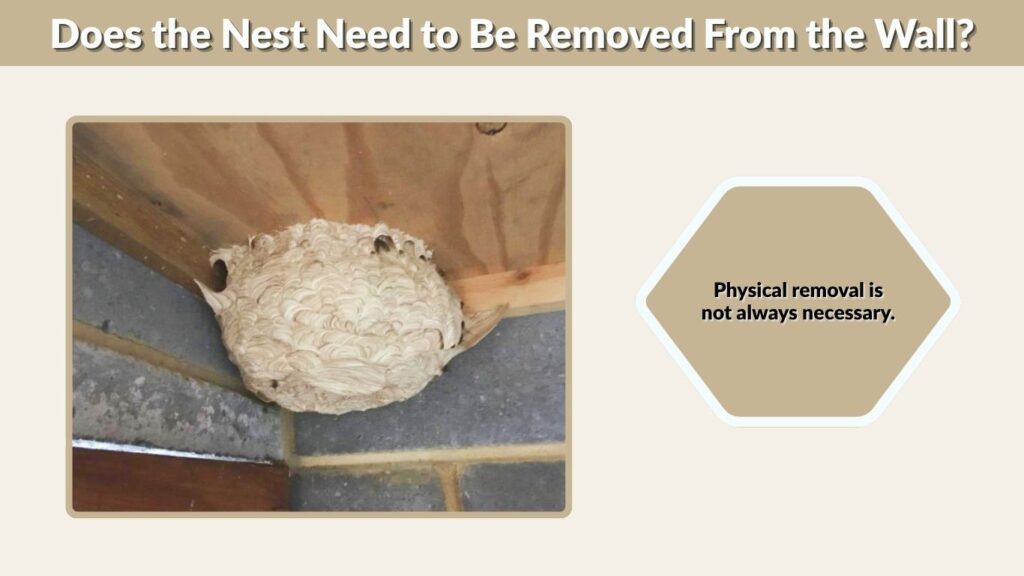
Physical removal is not always necessary. Yellow jacket colonies are annual, and the old nest is normally not reused the following year. Only newly mated queens survive winter, and they establish new colonies in spring.
However, opening the wall may be appropriate when:
- Yellow jackets have damaged or entered the drywall.
- The nest is unusually large.
- Dead larvae or stored food create an odor.
- Other insects or rodents are attracted to the remains.
- Repairs are already required.
- The nest was incorrectly identified as a honey bee colony.
A killed nest containing larvae and food can sometimes decay and produce an unpleasant smell. Purdue Extension notes that abandoned nest material may also attract scavenging insects or rodents.
What Happens to a Wall Nest in Winter?
Freezing weather normally kills the workers and the original queen. The empty nest gradually dries and deteriorates, and yellow jackets generally do not reuse it.
Waiting for winter may be reasonable when the entrance is far from people, the wasps cannot enter the living area, and no one nearby has a sting allergy. However, an active nest near doors, bedrooms, electrical fixtures, or indoor spaces should not simply be ignored.
How to Prevent Yellow Jackets From Nesting in Walls
Inspect the exterior after the colony is inactive and repair potential entry points.
- Replace damaged vent screens.
- Seal cracks around pipes and utility cables.
- Repair loose siding, fascia, and soffits.
- Repoint damaged brick or stone mortar.
- Cover unused openings with appropriate screening.
- Repair gaps around windows and doors.
- Keep outdoor garbage containers tightly closed.
Complete repairs during the cooler season or only after confirming that the nest is inactive. Sealing structural gaps during spring can help prevent queens from establishing new colonies.
FAQs
Can yellow jackets chew through drywall?
Yellow jackets may enlarge weak openings or chew through soft interior materials while searching for another exit. This is more likely when homeowners seal the exterior entrance of an active nest. Avoid blocking the opening until treatment has eliminated the colony.
Can I leave a yellow jacket nest inside an outside wall?
It may be left temporarily when it is completely separated from living spaces, far from human activity, and unlikely to cause stings. Waiting until freezing weather can end an annual colony, but nests beside entrances or occupied rooms should be professionally evaluated.
How much does yellow jacket wall-nest removal cost?
The price varies according to nest accessibility, colony size, building height, wall material, treatment requirements, and whether drywall or masonry must be opened and repaired. Request a written estimate that separates pest treatment, nest removal, structural repair, and return visits.
Why do yellow jackets keep coming into my house?
They may be entering through an interior gap connected to the wall cavity. Common routes include vents, recessed lights, electrical openings, ceiling cracks, and window frames. Close the room, keep people away, and arrange an inspection rather than sealing the outdoor entrance.
Will yellow jackets return to the same wall?
They do not normally reuse the old paper nest, but a new queen may choose the same wall cavity if suitable openings remain. After the colony is inactive, seal cracks, repair screens, replace damaged mortar, and correct gaps around siding and utilities.