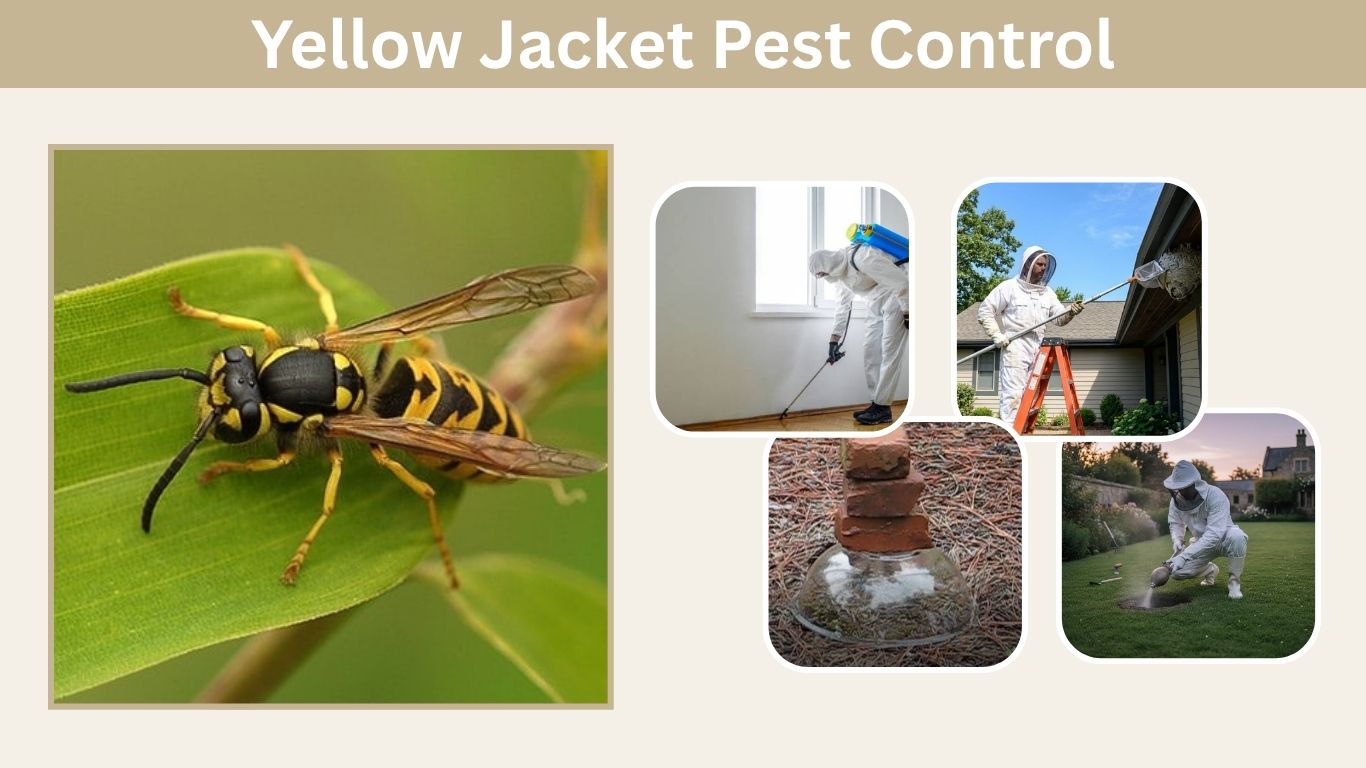
Yellow jackets can become a serious pest problem when they build nests near lawns, doorways, patios, playgrounds, wall cavities, or other frequently used areas. Because an alarmed colony may release numerous defensive workers, yellow jacket pest control requires more caution than controlling many ordinary household insects. The right method depends on the nest’s location, colony size, time of year, and risk to nearby people. This guide explains how professional treatment works, when limited DIY control may be reasonable, what affects the cost, and how to prevent future infestations.
When Is Yellow Jacket Pest Control Necessary?
Not every yellow jacket nest must be destroyed. These wasps prey on caterpillars, flies, and other insects, giving them a beneficial ecological role. A nest located far from people can sometimes remain untouched until freezing weather ends the colony.
Control is more appropriate when a nest is:
- Beside a doorway, path, deck, patio, or playground
- Hidden inside a wall, attic, soffit, or crawlspace
- In a lawn that must be mowed
- Close to children or pets
- Near someone with a known sting allergy
- Producing yellow jackets inside the house
- Creating repeated stinging incidents
Yellow jackets strongly defend their colonies. Nests in high-traffic areas therefore present a greater concern than nests located in undisturbed corners of a property.
How to Locate a Yellow Jacket Nest
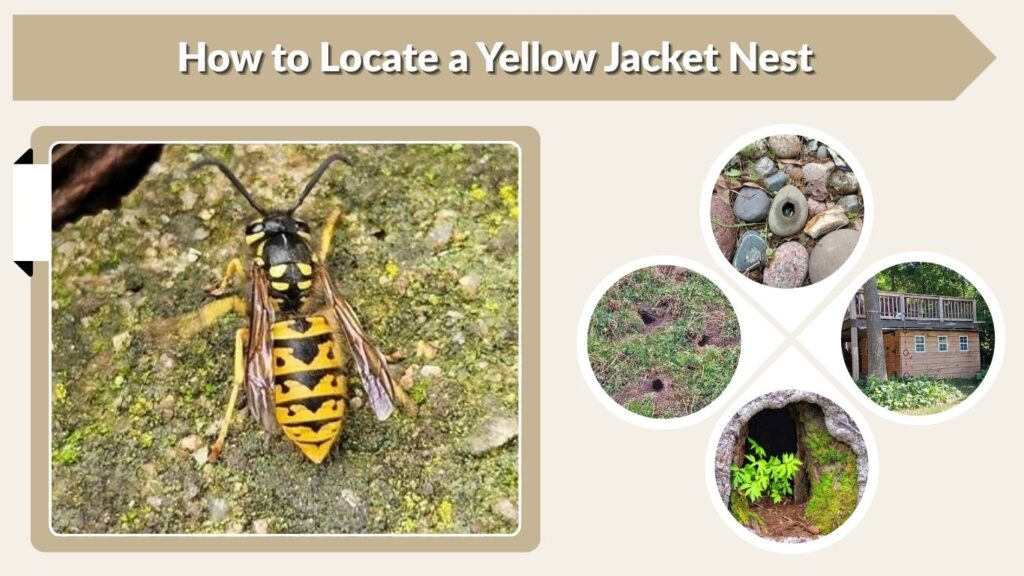
Successful pest control begins with finding the colony rather than simply spraying individual workers.
Follow Their Flight Path
From a safe distance, watch where yellow jackets travel. Workers often fly along a repeated route between a food source and the nest entrance. A steady stream of wasps entering and leaving one opening is a strong indication of an active colony.
Never stand directly in front of the entrance. Avoid striking the ground, mowing nearby grass, or placing equipment over the hole while observing it.
Common Nesting Locations
Yellow jackets frequently nest in:
- Abandoned rodent burrows
- Holes beneath shrubs or landscape stones
- Hollow logs and tree cavities
- Spaces beneath decks or sheds
- Wall voids and attics
- Gaps behind siding
- Concrete blocks
- Eaves and roof spaces
Ground nests may appear as nothing more than a small hole with workers flying through it. Structural nests can be harder to identify because the visible opening may be several feet from the actual paper nest.
Professional vs. DIY Yellow Jacket Control
| Situation | Limited DIY Control | Professional Service |
| Small, exposed and accessible nest | Sometimes | Optional |
| Underground nest near people | High risk | Recommended |
| Nest inside a wall or attic | Not recommended | Strongly recommended |
| Nest above a ladder-safe height | Not recommended | Recommended |
| Multiple entrance points | Difficult | Recommended |
| Person has a sting allergy | Never attempt | Essential |
| Wasps entering living spaces | Not recommended | Essential |
Professional pest-control technicians have protective equipment, application tools, and experience locating hidden colonies. They can also determine whether the insects are yellow jackets, paper wasps, hornets, or bees before selecting a treatment.
How Professional Yellow Jacket Pest Control Works
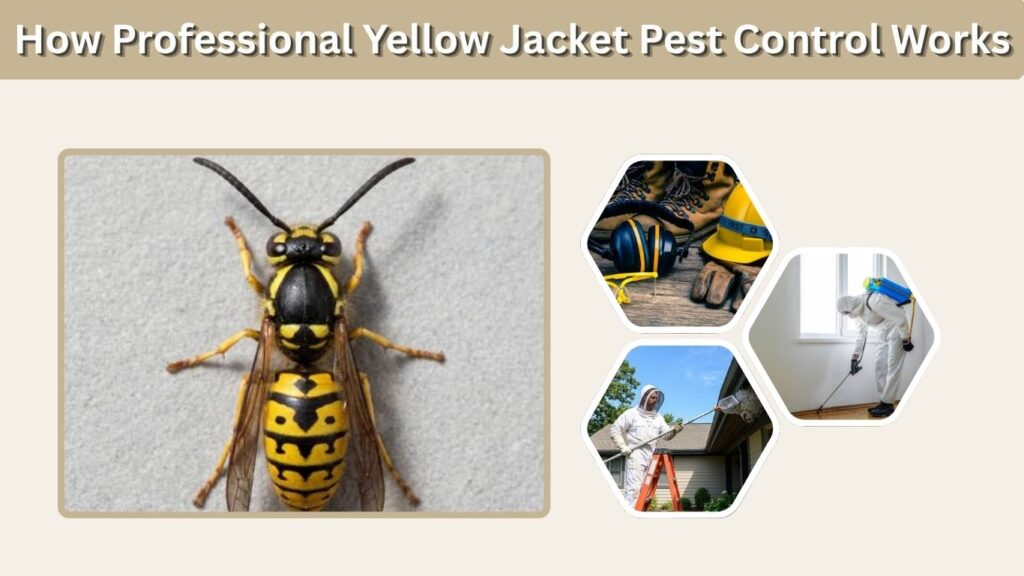
A yellow jacket exterminator normally begins by inspecting the property and observing worker movement.
Identifying the Nest
The technician determines whether the colony is underground, exposed, or hidden inside a structure. This matters because each nest type requires a different application method.
Treating only visible workers provides temporary relief but does not solve the problem. Effective control must reach the colony, including the queen and developing brood.
Treating the Colony
Depending on the nest location and locally approved products, a professional may apply an appropriately labelled insecticidal dust, aerosol, liquid treatment, or specialized vacuuming method.
Dust formulations may be useful for certain underground or concealed nests because workers can carry particles farther into the colony. An ordinary aerosol directed at a wall opening may fail to reach the hidden nest and could cause workers to search for another exit into the building.
Confirming That Activity Has Ended
Some colonies do not disappear immediately. Technicians may monitor the entrance, schedule a follow-up visit, or repeat treatment if workers remain active.
Openings should generally be sealed only after the colony is inactive. Sealing an active structural entrance can trap yellow jackets inside and encourage them to enter occupied rooms.
Can You Control Yellow Jackets Yourself?
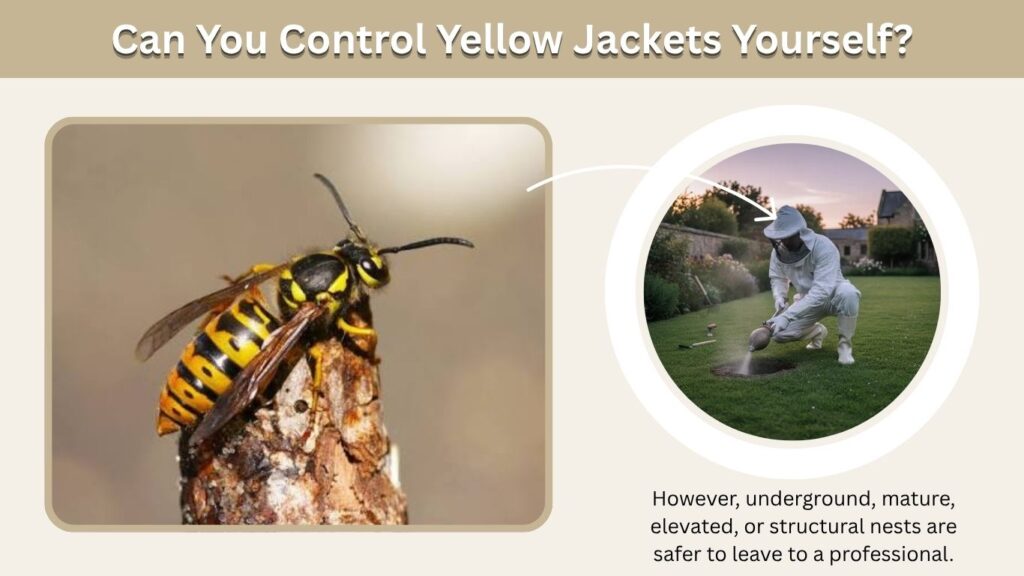
A homeowner may consider treating only a clearly visible, accessible nest when there is a safe escape route and no one nearby has a sting allergy. However, underground, mature, elevated, or structural nests are safer to leave to a professional.
Essential DIY Safety Rules
When using any pesticide:
- Confirm that the label specifically includes yellow jackets or wasps.
- Read and follow the entire product label.
- Keep children and pets away.
- Wear the protective clothing required by the label.
- Avoid treating during strong wind or rain.
- Never exceed the labelled application rate.
- Store and dispose of the product as directed.
Extension guidance commonly recommends treatment during late evening or early morning, when yellow jacket activity is lower. Even then, the colony may defend itself aggressively. Anyone allergic to stings should never attempt nest control.
Methods to Avoid
Do not attempt to destroy a nest with:
- Gasoline or other fuel
- Fire or boiling liquids
- Lawn mowers or string trimmers
- Sticks, rocks, or high-pressure water
- An unlabelled chemical mixture
- A vacuum not designed for pest control
- Immediate sealing of an active wall entrance
These methods can cause injury, contaminate soil, damage the property, or trigger a mass defensive response.
Do Yellow Jacket Traps Eliminate a Nest?
Traps may reduce the number of foraging workers around patios, trash cans, fruit trees, or outdoor eating areas. However, they should be considered a supporting tool rather than a dependable way to eliminate an established colony.
Place traps away from doors, seating areas, and places where children play. Positioning a trap directly beside a patio may attract additional yellow jackets toward the area people are trying to protect.
Yellow Jacket Pest Control Cost Factors
The price of professional treatment varies by company and region. A technician generally considers:
- Whether the nest is underground or structural
- Height and accessibility
- Colony size
- Number of nests
- Need for ladders or specialized equipment
- Whether wall materials must be opened
- Severity of indoor activity
- Follow-up treatment requirements
- Emergency or same-day service
A straightforward, accessible ground nest will generally require less work than a colony hidden deep inside a wall or roof space. Request a written quote describing the treatment, follow-up policy, warranty, and whether structural repairs are included.
Finding Yellow Jacket Pest Control Near You
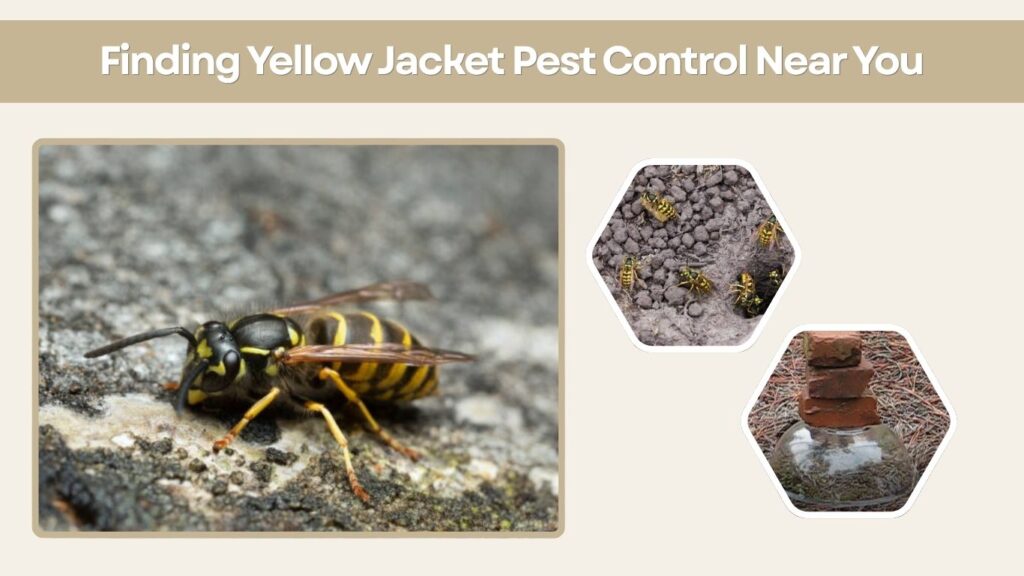
When choosing a local company, ask whether it is licensed and insured where required. Describe where the insects are entering, how long the activity has continued, and whether anyone on the property has been stung.
A qualified service should be able to explain:
- How the nest will be located
- Which treatment method is appropriate
- Required safety precautions
- How long people and pets must avoid the area
- When the entrance can be sealed
- Whether follow-up treatment is included
Be cautious of anyone who recommends sealing an active wall opening without first controlling the colony.
How to Prevent Future Yellow Jacket Problems
Reduce Food Sources
Keep outdoor garbage in containers with tight-fitting lids. Clean sugary spills, cover drinks, bring pet food indoors, and collect fallen fruit. Late-season yellow jackets are particularly attracted to sweet foods, meat, and discarded beverages.
Seal Structural Openings
After existing colonies are eliminated, repair damaged screens and seal gaps around siding, vents, pipes, roof edges, soffits, and utility lines. Inspect sheds, garages, and attic spaces during spring, when colonies are still small.
Maintain the Yard
Fill abandoned animal burrows when they are confirmed empty. Repair voids beneath landscape timbers, remove unnecessary debris, and check the lawn before mowing if yellow jacket activity has been observed.
FAQs
Can pest control completely get rid of yellow jackets?
Yes. Professional treatment can eliminate an active colony when the nest is correctly located and the application reaches its occupants. Large or hidden nests may require monitoring or a second treatment, especially when the colony extends deep inside a wall or underground cavity.
How quickly does yellow jacket pest control work?
Visible activity may decline rapidly, but complete control can take longer when workers are away from the nest during treatment or when a hidden colony is difficult to reach. Follow the technician’s instructions and avoid approaching the entrance until activity has completely stopped.
Should I seal a yellow jacket hole immediately?
No. Do not seal an opening while the colony is active. Trapped workers may chew through interior materials or find another route into the house. Wait until treatment has eliminated the colony, then seal the opening to prevent future nesting.
What is the best pest control for yellow jackets?
The best method depends on the nest. An exposed nest, underground colony, and wall-void nest require different approaches. Correct identification and nest location are more important than choosing a single universal spray or product.
When should I call a yellow jacket exterminator?
Call a professional when the nest is inside a building, underground near a busy area, difficult to reach, producing wasps indoors, or threatening someone with a sting allergy. Professional help is also appropriate when the entrance cannot be located safely.