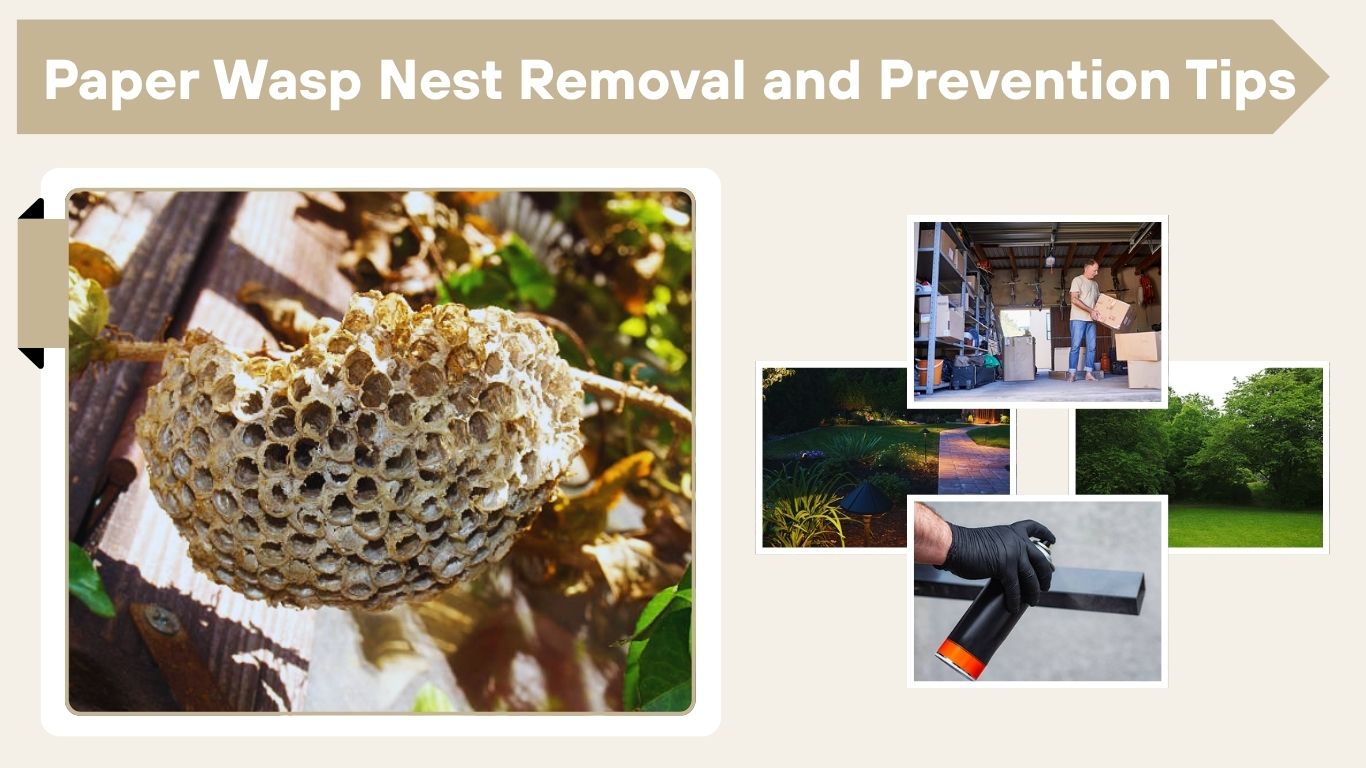
Paper wasp nests are commonly found around homes, garages, trees, and roof eaves during warmer months. These nests may look harmless at first, but an active colony can become a problem when located near doors, patios, or walkways. Understanding how to identify paper wasp nests, where they are built, and how to remove them safely can help homeowners avoid painful stings and prevent larger infestations. This guide explains the appearance, nesting habits, and safe removal methods for paper wasp nests.
What Is a Paper Wasp Nest?
Paper wasp nests are small to medium-sized structures built from wood fibers mixed with the wasps’ saliva. The result is a gray or brown paper-like material that gives these insects their name. Unlike enclosed hornet nests, paper wasp nests have open cells that remain visible from underneath.
How Paper Wasps Build Their Nests
Paper wasps gather weathered wood, dead plant stems, and fence fibers to create their nests. They chew the material into a soft pulp and combine it with saliva to form a durable paper-like substance. The queen begins the nest in spring by creating a few starter cells where she lays eggs.
As worker wasps mature, they continue expanding the structure by adding more hexagonal cells. Over time, the nest grows larger and supports a bigger colony. Most nests remain relatively small compared to hornet nests, but some can become surprisingly large by late summer.
What Are Paper Wasp Nests Made Of?
Paper wasp nests are made from natural wood fibers and plant materials. These materials are softened and shaped into thin layers that harden into lightweight paper structures. Because of this construction method, the nests often appear fragile but can withstand rain and wind surprisingly well.
The outer texture usually looks rough and layered. Fresh nests may appear lighter in color, while older nests become darker and more weathered over time.
What Does a Paper Wasp Nest Look Like?
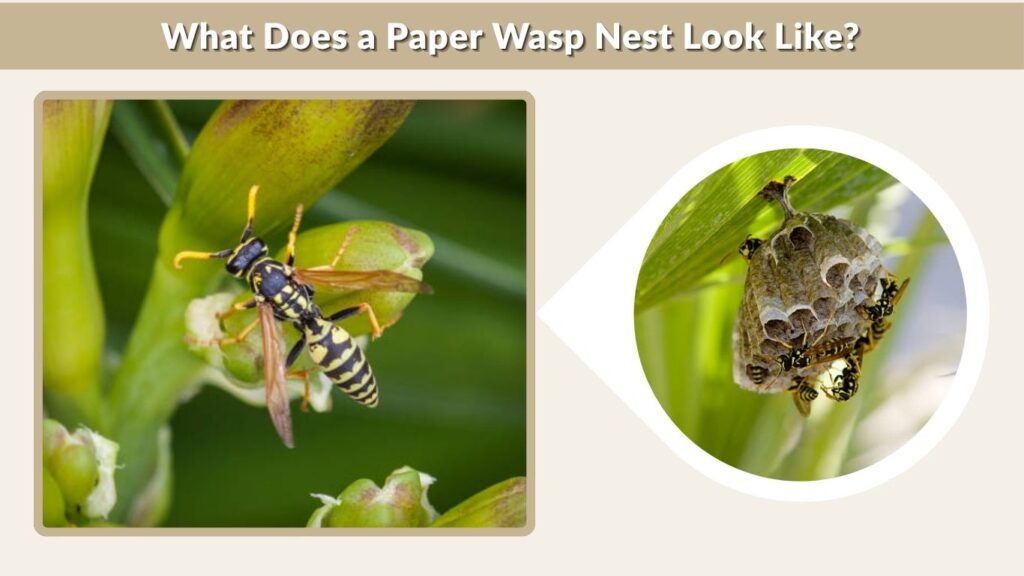
Paper wasp nests are easy to recognize once you understand their basic structure. Most nests hang upside down and expose open honeycomb-like cells. They are often attached to a surface by a thin stalk called a pedicel.
Common Features of a Paper Wasp Nest
Several visual features help distinguish paper wasp nests from other insect nests:
- Open hexagonal cells are visible from below
- The nest has an umbrella or saucer-like shape
- A single narrow stalk attaches the nest to surfaces
- The material appears gray, brown, or papery
These nests are commonly found under roof edges, porch ceilings, tree branches, and outdoor furniture.
Small vs Large Paper Wasp Nests
Small nests usually appear during early spring when the queen starts building alone. These starter nests may contain only a few cells and a handful of developing larvae. As summer progresses, worker wasps continue adding layers and expanding the colony.
Large nests may contain dozens or even hundreds of cells by late summer. Although paper wasp nests are generally smaller than hornet nests, a mature colony can still become dangerous if disturbed. Larger nests also attract more worker wasps, increasing the risk of multiple stings.
Where Do Paper Wasps Build Their Nests?
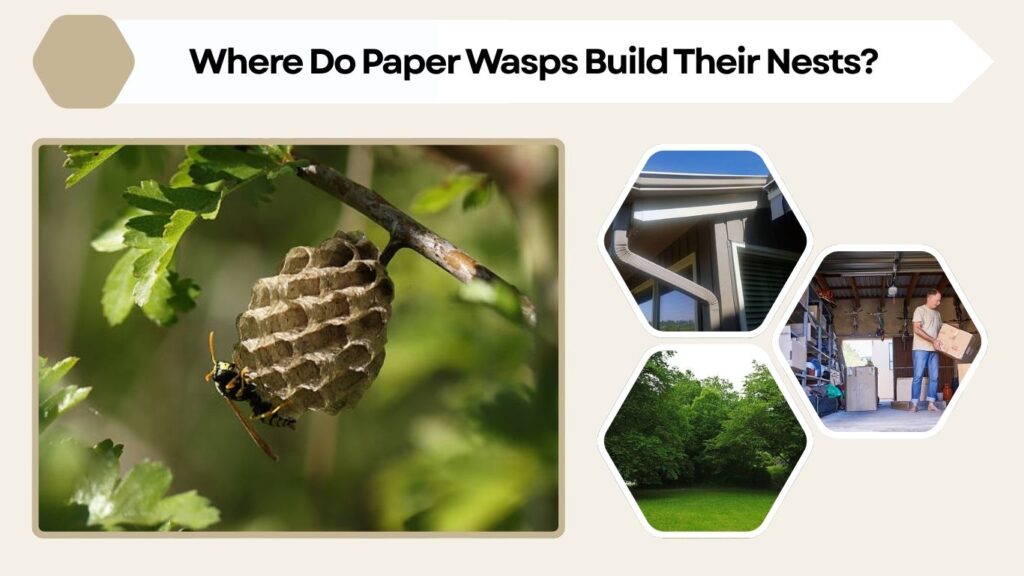
Paper wasps prefer quiet, protected areas that shield their nests from heavy rain and predators. They often choose locations close to food and water sources, making residential properties attractive nesting sites.
Common Nesting Locations
Homeowners frequently discover paper wasp nests in the following areas:
- Roof eaves and gutters
- Porch ceilings and deck railings
- Garages and storage sheds
- Trees and shrubs
- Window frames and outdoor furniture
These protected spaces allow colonies to grow with minimal disturbance.
Paper Wasp Nests in Trees and Walls
Paper wasps sometimes build nests in tree branches where leaves help hide the colony from predators. Tree nests may remain unnoticed until the colony becomes large enough for increased wasp activity to be visible.
In some cases, paper wasps build nests inside wall voids, attic spaces, or gaps near siding. These hidden nests are more difficult to remove because the colony is partially protected inside the structure. Wall nests can also create long-term problems if wasps repeatedly return to the same location.
Paper Wasp Nest vs Hornet Nest
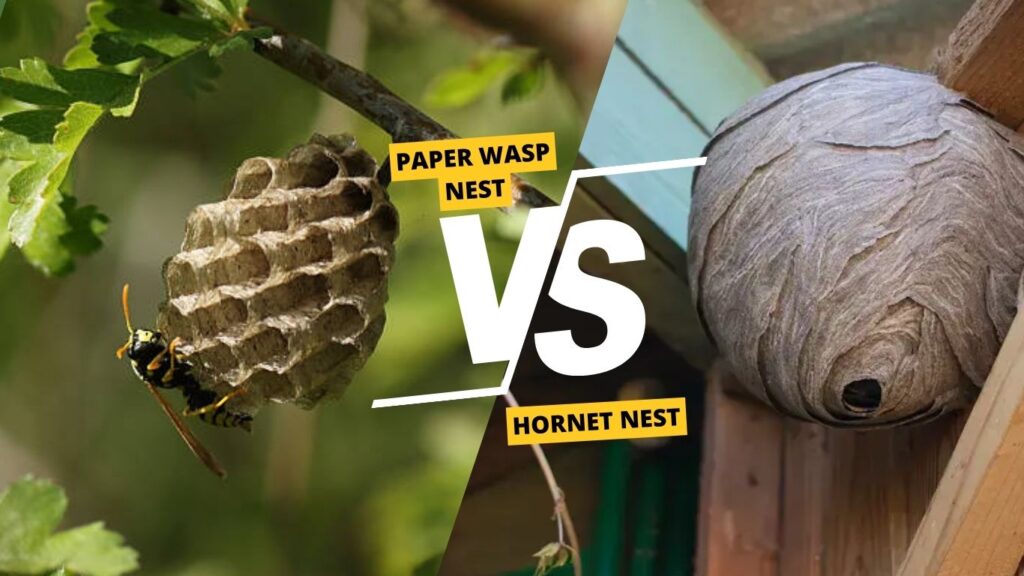
Many people confuse paper wasp nests with hornet nests because both are made from paper-like material. However, several important differences make identification easier.
Key Differences Between Paper Wasps and Hornets
Paper wasp nests remain open and expose their cells, while hornet nests are fully enclosed within a thick outer shell. Hornet nests also tend to be larger and more football-shaped.
The following differences can help with identification:
- Paper wasp nests have exposed cells
- Hornet nests have enclosed outer coverings
- Paper wasps are usually less aggressive
- Hornet colonies grow much larger
Correct identification is important because removal methods and safety risks may vary depending on the species involved.
Paper Wasp Nest vs Yellow Jacket Nest
Paper wasp nests and yellow jacket nests are often confused because both insects belong to the wasp family. However, their nesting behavior, appearance, and aggression levels are very different. Knowing which type of nest is on your property helps determine the safest removal method and the level of danger involved.
How Yellow Jacket Nests Differ
Yellow jackets usually build enclosed nests hidden underground, inside wall voids, or in dense vegetation. Unlike paper wasp nests, their nests do not expose open cells. Yellow jackets are also far more aggressive when defending their colony.
Several characteristics separate yellow jacket nests from paper wasp nests:
- Yellow jacket nests are enclosed and hidden
- Paper wasp nests have open visible cells
- Yellow jackets often nest underground
- Paper wasps prefer hanging aerial nests
Yellow jackets are more likely to swarm and sting repeatedly when disturbed, making them a greater threat near homes and outdoor activity areas.
Are Paper Wasps Dangerous?
Paper wasps are generally less aggressive than hornets or yellow jackets, but they can still sting if they feel threatened. Their behavior usually depends on how close a person gets to the nest and whether the colony senses danger.
When Paper Wasps Become Aggressive
Paper wasps defend their nests when disturbed by sudden movement, loud vibrations, or direct contact. Most stings happen when homeowners accidentally approach nests hidden under roof edges, inside sheds, or near outdoor furniture.
During late summer, colonies become larger and more protective. This increase in worker population often leads to more defensive behavior. Although a single sting is painful, multiple stings can become dangerous, especially for individuals with allergies.
How Many Paper Wasps Live in a Nest?
Most paper wasp colonies remain relatively small compared to hornet colonies. A typical mature nest may contain between 20 and 100 wasps depending on the species and environmental conditions.
The colony begins with a single queen in spring. Worker wasps hatch throughout the season and gradually expand the nest. By late summer, the nest reaches its maximum size before colder weather causes the colony to decline.
How to Get Rid of a Paper Wasp Nest
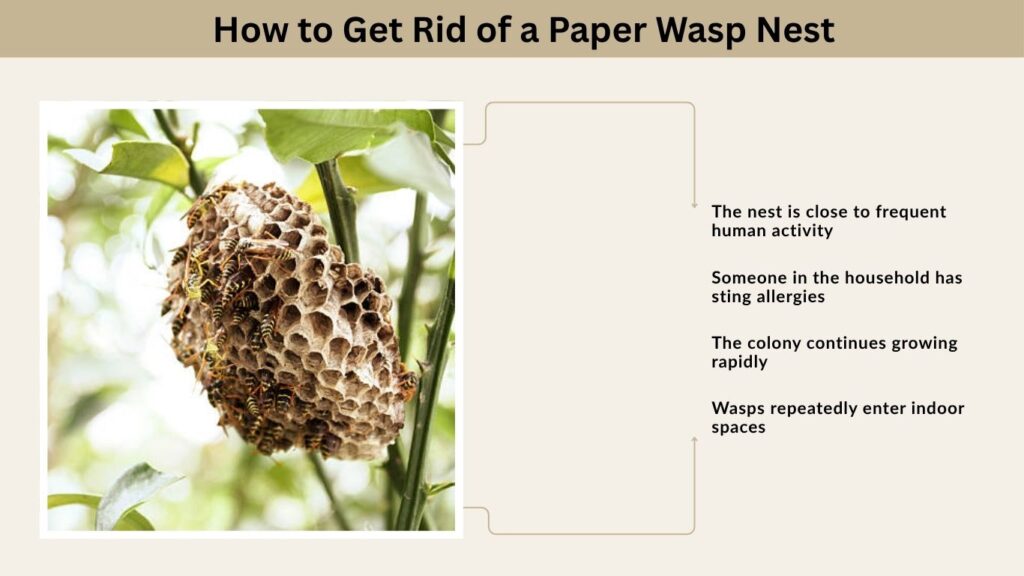
Removing a paper wasp nest requires caution because disturbing the colony may trigger aggressive behavior. Small nests can sometimes be removed safely, but larger nests or hidden colonies may require professional pest control assistance.
Should You Remove a Paper Wasp Nest?
Not every paper wasp nest needs immediate removal. Nests located far from human activity may actually benefit gardens by helping control pests such as caterpillars and flies. However, nests near entryways, patios, windows, or children’s play areas should usually be removed for safety reasons.
You should consider removal if:
- The nest is close to frequent human activity
- Someone in the household has sting allergies
- The colony continues growing rapidly
- Wasps repeatedly enter indoor spaces
Ignoring active nests in busy areas increases the risk of accidental stings.
How to Remove a Paper Wasp Nest Safely
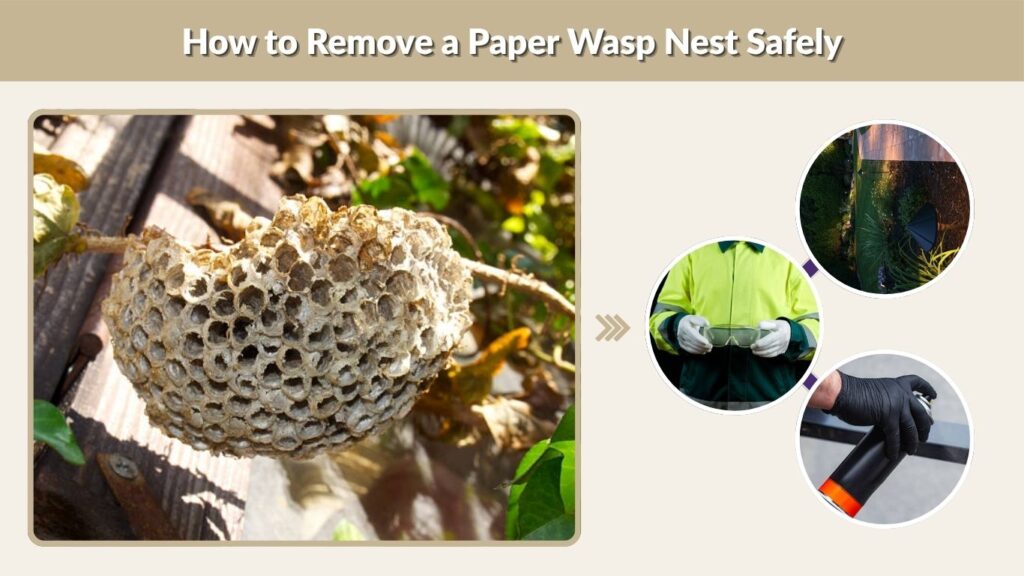
The safest time to remove a paper wasp nest is during evening hours when most wasps are less active. Protective clothing should always be worn to reduce sting risk.
A basic removal process usually includes the following steps:
- Wait until dusk or nighttime
- Wear gloves, long sleeves, and eye protection
- Spray the nest using a wasp insecticide
- Allow time for the colony to die
- Carefully detach and dispose of the nest
After removal, inspect the area regularly to prevent rebuilding activity.
When to Call a Professional
Professional pest control services are recommended for large nests, hard-to-reach colonies, or nests located inside walls and attic spaces. Experts have specialized equipment and protective gear that allow safer treatment of aggressive colonies.
Professional removal may also be necessary when homeowners experience repeated infestations in the same location.
How to Prevent Paper Wasps From Building Nests
Preventing nests early in the season is easier than removing a mature colony later. Paper wasps prefer sheltered areas, so reducing attractive nesting spots can significantly lower infestation risk.
Effective Prevention Methods
Several simple maintenance practices help discourage paper wasps from nesting around homes:
- Seal cracks and small openings around walls
- Inspect roof eaves and porches regularly
- Remove food scraps and sugary residues outdoors
- Keep garbage containers tightly closed
Routine inspections during spring are especially important because queens begin building small starter nests early in the season.
Do Fake Wasp Nests Work?
Some homeowners use fake wasp nests or brown paper bag decoys to discourage nesting. The idea is based on territorial behavior, as paper wasps may avoid areas already occupied by another colony.
While decoys may help in some situations, results are inconsistent. They are usually more effective before nesting season begins rather than after active colonies are established.
What Happens to Paper Wasp Nests in Winter?
Paper wasp colonies do not survive permanently. As temperatures drop, worker wasps and old queens gradually die off. Only newly fertilized queens survive winter by hiding in protected locations such as tree bark, attics, or wood piles.
Do Paper Wasps Reuse Old Nests?
Paper wasps rarely reuse old nests from previous seasons. Instead, surviving queens typically build new nests nearby when spring arrives. Empty nests left hanging during winter are usually inactive and safe to remove.
When Do Paper Wasps Leave the Nest?
Most colonies begin declining during late fall when cold weather reduces food availability. By winter, active wasps are usually gone, leaving only abandoned nest structures behind. This period is often considered the safest time to remove old nests and clean nesting areas.
FAQs
Do paper wasps reuse old nests?
Paper wasps usually do not reuse old nests. Each spring, new queens build fresh nests, although they may return to the same general area if conditions remain favorable.
What does a paper wasp nest look like?
A paper wasp nest has open hexagonal cells and a paper-like texture. Most nests hang upside down from a single stalk under roof eaves, porches, or tree branches.
Are paper wasps more dangerous than yellow jackets?
Paper wasps are generally less aggressive than yellow jackets. However, they can still sting when defending their nests or if they feel threatened by nearby movement.
How fast can paper wasps build a nest?
A queen paper wasp can start building a small nest within a few days during spring. Larger colonies develop gradually over several weeks as worker wasps expand the structure.
Should I remove a paper wasp nest near my home?
Nests located near doors, windows, patios, or walkways should usually be removed to reduce sting risks. Small nests in quiet areas may sometimes be left alone if they do not cause problems.