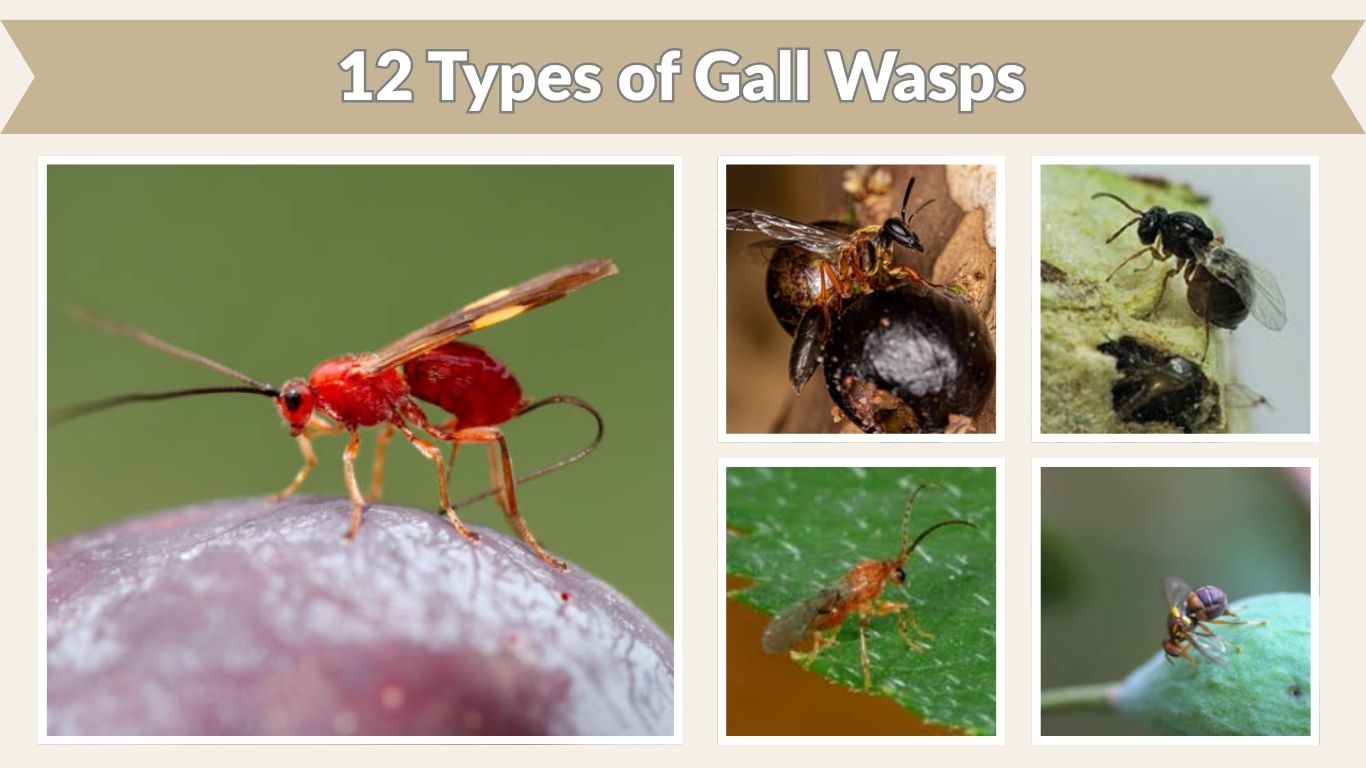
Gall wasps are fascinating insects known for creating unusual growths called galls on trees, shrubs, and other plants. These tiny wasps belong to the Cynipidae family and are commonly associated with oak trees, although some species also affect cherry trees and roots. The strange shapes, colors, and textures of their galls make them easy to notice in forests and gardens. While most gall wasps are harmless to humans and healthy plants, they play an important role in natural ecosystems. Understanding different types of gall wasps helps identify the unique galls they produce.
1. Oak Apple Gall Wasp
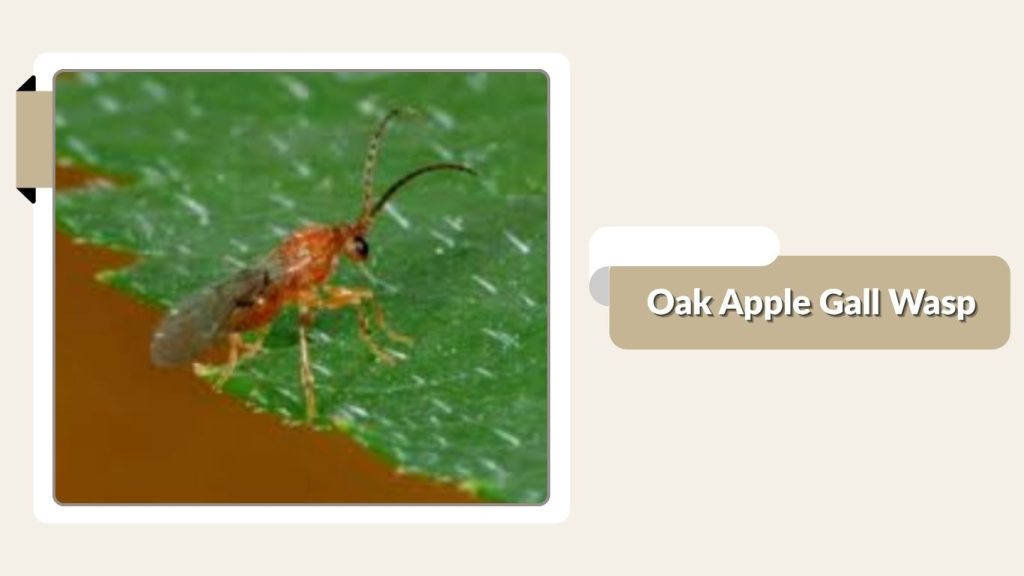
Oak Apple Gall Wasps are tiny insects famous for creating round galls that resemble small apples on oak trees. These galls serve as protective shelters for developing larvae. Commonly found in wooded areas, these wasps play a role in natural ecosystems without causing serious damage to healthy trees. Their unusual gall formations make them one of the most recognized types of gall wasps.
Identification
- Small black or brown wasp
- Usually under 1/4 inch long
- Clear or lightly colored wings
- Creates round apple-like galls on oak trees
- Galls are green when young and brown when mature
Habitat and Distribution
Oak Apple Gall Wasps are mainly found in forests, parks, and woodland habitats with large oak tree populations. They are widely distributed across North America and parts of Europe. These insects are most active during warmer months when oak trees produce fresh leaves and tender plant tissue suitable for egg-laying and gall development.
Behavior and Diet
Adult Oak Apple Gall Wasps spend much of their time locating suitable oak trees for reproduction. Females inject eggs into plant tissue, which later forms protective galls. The larvae feed on nutrient-rich tissue inside the gall while developing. Adult wasps may feed on nectar or plant fluids and are generally harmless to people and animals.
Lifecycle
The lifecycle begins when females lay eggs in young oak tissue during spring. Chemicals produced by the larvae stimulate the tree to create a gall around them. Larvae remain safely inside the gall while feeding and growing. After completing development, adult wasps emerge through tiny holes and begin searching for mates and suitable egg-laying sites.
2. Hedgehog Gall Wasp
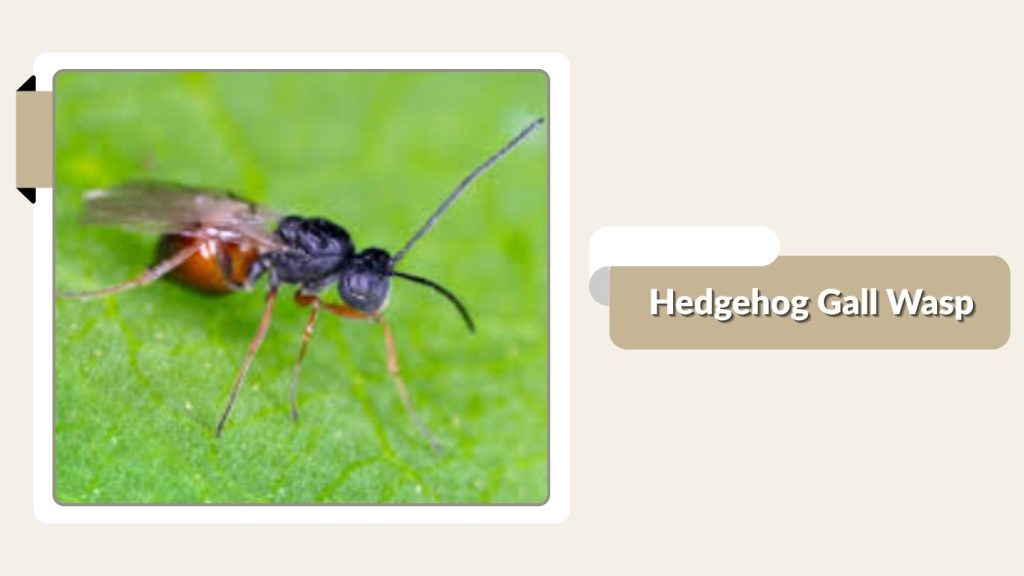
Hedgehog Gall Wasps are known for producing unusual spiky galls on oak trees that resemble tiny hedgehogs. These colorful growths protect developing larvae from predators and environmental conditions. The wasps are small and rarely noticed directly, but their distinctive galls are easy to identify in forests and wooded landscapes. They are considered harmless to humans and are an interesting part of oak tree ecosystems.
Identification
- Tiny black or dark brown wasp
- Body length usually less than 1/4 inch
- Transparent wings with delicate veins
- Produces round galls covered in red or yellow spines
- Galls commonly appear on oak leaves
Habitat and Distribution
Hedgehog Gall Wasps are commonly found in oak forests, woodland edges, parks, and gardens where oak trees grow naturally. They are widely distributed across North America, especially in regions with large oak populations. These wasps thrive during spring and summer when oak leaves are actively developing and suitable for gall formation.
Behavior and Diet
Female Hedgehog Gall Wasps lay eggs inside soft oak leaf tissue, triggering the plant to form protective spiny galls. The larvae remain inside these structures and feed on the nutrient-rich inner tissue while growing. Adult wasps live briefly, feeding lightly on nectar or plant fluids before reproducing and continuing the lifecycle.
Lifecycle
The lifecycle starts when females deposit eggs into young oak leaves during the growing season. Larval activity causes the tree to produce spiny hedgehog-shaped galls around the developing insects. The larvae stay protected within the gall until maturity. Once fully developed, adult wasps emerge through tiny openings and begin mating and egg-laying activities.
3. Bullet Gall Wasp
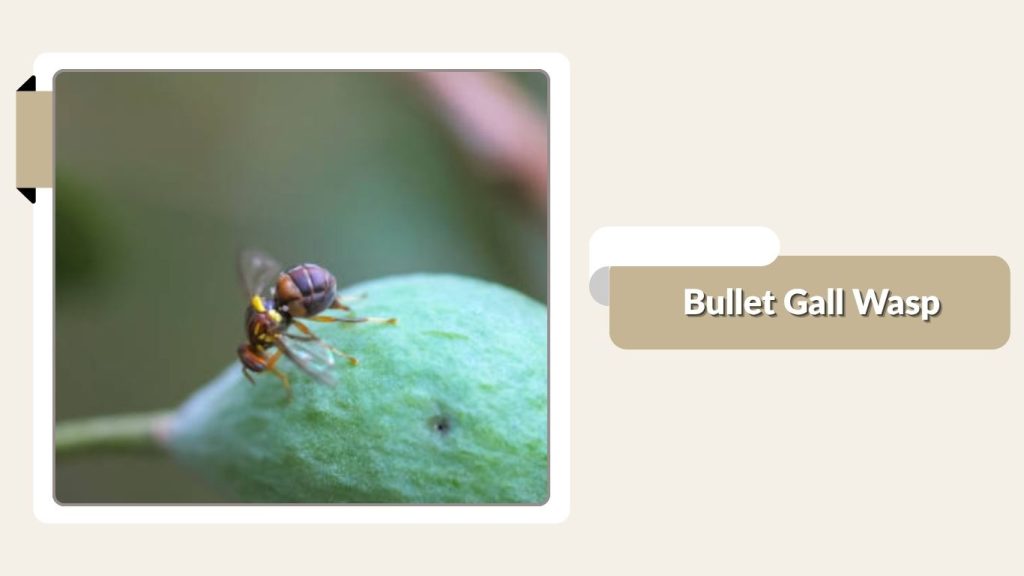
Bullet Gall Wasps are small insects recognized for creating hard, bullet-shaped galls on oak twigs and branches. These woody growths protect the developing larvae from predators and harsh weather conditions. Although the adult wasps are rarely seen, the distinctive galls are easy to notice on oak trees. They are considered harmless to humans and usually do not cause serious harm to healthy trees.
Identification
- Tiny dark brown or black wasp
- Usually smaller than 1/4 inch long
- Clear wings with fine veins
- Produces smooth, round, bullet-like galls
- Galls commonly form on oak twigs and stems
Habitat and Distribution
Bullet Gall Wasps are commonly found in forests, woodlands, parks, and residential areas with oak trees. They are widely distributed across North America and can also occur in some parts of Europe. These insects prefer habitats where mature oak trees provide suitable locations for egg-laying and gall development throughout the warmer seasons.
Behavior and Diet
Female Bullet Gall Wasps lay eggs inside young oak twigs, causing the tree to form protective woody galls around the larvae. The larvae feed safely within these nutrient-rich chambers as they grow. Adult wasps are short-lived and mainly focus on reproduction, occasionally feeding on nectar or plant fluids before laying eggs on suitable oak tissue.
Lifecycle
The lifecycle begins in spring when females deposit eggs into developing oak tissue. Chemicals released by the larvae stimulate the formation of bullet-shaped galls. The larvae remain protected inside while feeding and maturing. Once development is complete, adult wasps emerge through small exit holes and continue the cycle by finding mates and new oak hosts.
4. Wool Sower Gall Wasp
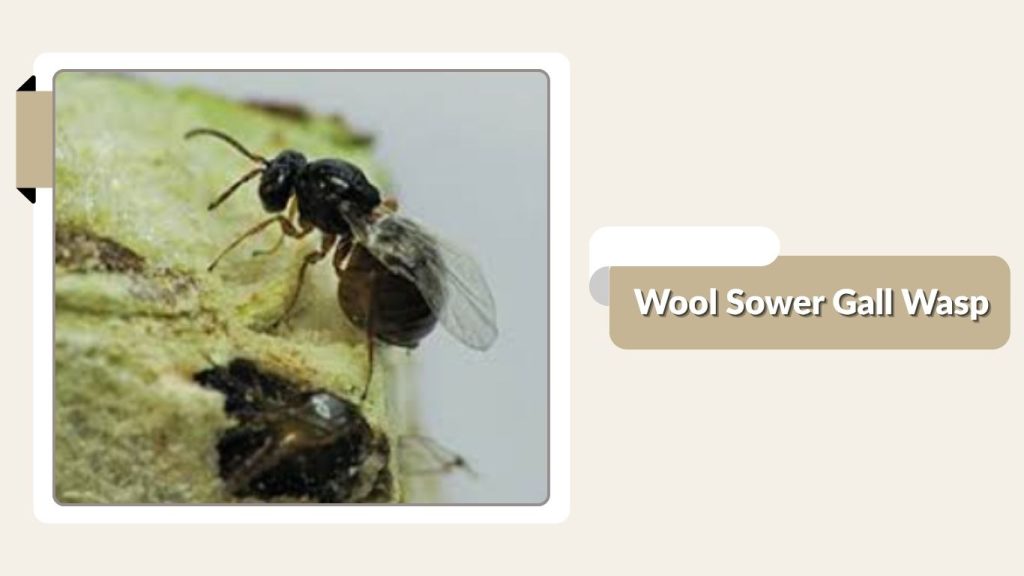
Wool Sower Gall Wasps are unusual insects known for creating fluffy white galls that resemble cotton balls on oak trees. These soft structures contain small chambers where larvae develop safely. The strange appearance of the galls makes them easy to recognize in wooded areas. Although they may look alarming, these wasps are harmless to humans and usually cause little damage to healthy oak trees.
Identification
- Small brown or black wasp
- Body length typically under 1/4 inch
- Transparent wings with fine veins
- Produces white, wool-like galls on oak trees
- Galls contain small seed-like chambers inside
Habitat and Distribution
Wool Sower Gall Wasps are commonly found in forests, woodlands, and parks where oak trees are abundant. They are widely distributed throughout North America, especially in regions with mature white oak species. These insects are most active during spring and early summer when fresh plant tissue is available for gall formation and larval development.
Behavior and Diet
Female Wool Sower Gall Wasps inject eggs into oak buds or leaf tissue, causing the tree to create soft wool-like galls. The larvae feed on nutrient-rich tissue inside protected chambers while developing. Adult wasps live for a short time and mainly focus on reproduction, occasionally feeding on small amounts of nectar or plant fluids.
Lifecycle
The lifecycle begins when females lay eggs in young oak tissue during spring. Larval secretions stimulate the growth of fluffy protective galls around each developing insect. The larvae remain safely enclosed while feeding and maturing. Once fully developed, adult wasps emerge from the gall, mate, and search for suitable oak tissue to repeat the reproductive cycle.
5. Horned Oak Gall Wasp
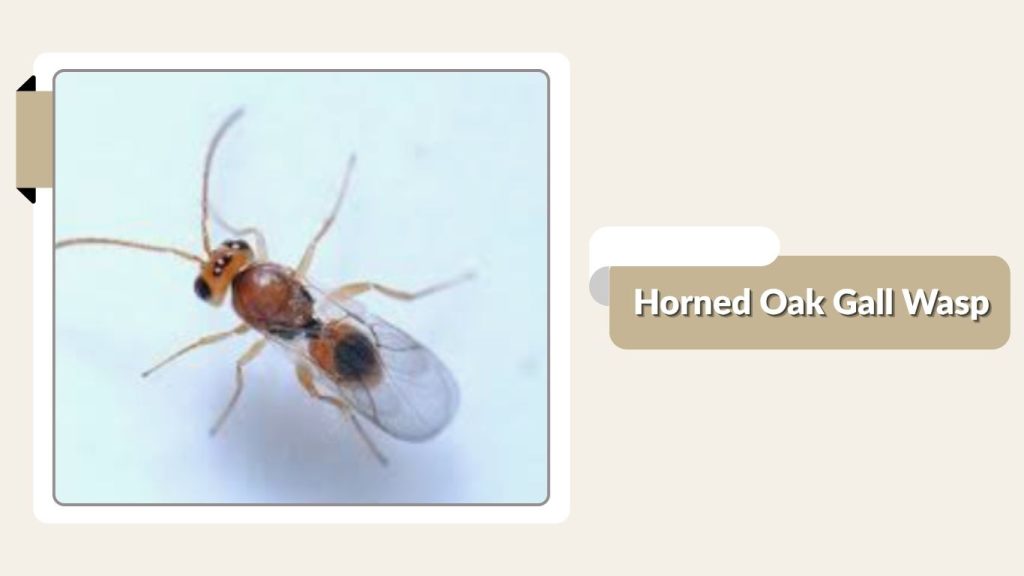
Horned Oak Gall Wasps are small insects famous for producing woody galls with horn-like projections on oak branches and twigs. These hard structures protect the developing larvae as they mature inside the tree tissue. The galls can remain attached for several years and are often highly visible. Although they may weaken heavily infested trees, these wasps are harmless to humans and play a role in forest ecosystems.
Identification
- Tiny brown or black wasp
- Usually less than 1/4 inch in length
- Clear wings with delicate veins
- Produces round woody galls with horn-like spikes
- Galls commonly appear on oak twigs and branches
Habitat and Distribution
Horned Oak Gall Wasps are commonly found in oak forests, woodland areas, parks, and residential landscapes with oak trees. They are widely distributed across eastern North America, especially in areas with pin oaks and other related oak species. These insects prefer warm seasons when fresh branch tissue supports successful egg-laying and gall formation.
Behavior and Diet
Female Horned Oak Gall Wasps deposit eggs into young oak twigs, stimulating the tree to form woody horned galls around the larvae. The larvae feed on nutrient-rich plant tissue while remaining protected inside the gall chambers. Adult wasps are short-lived and primarily focused on mating and reproduction rather than extensive feeding activities.
Lifecycle
The lifecycle starts when females lay eggs in developing oak twigs during spring or early summer. The larvae release chemicals that trigger the growth of horned woody galls. Larvae continue feeding and developing inside the protective structure for months or even years. Mature adults eventually emerge through small openings and begin searching for mates and suitable oak hosts.
6. Jumping Oak Gall Wasp
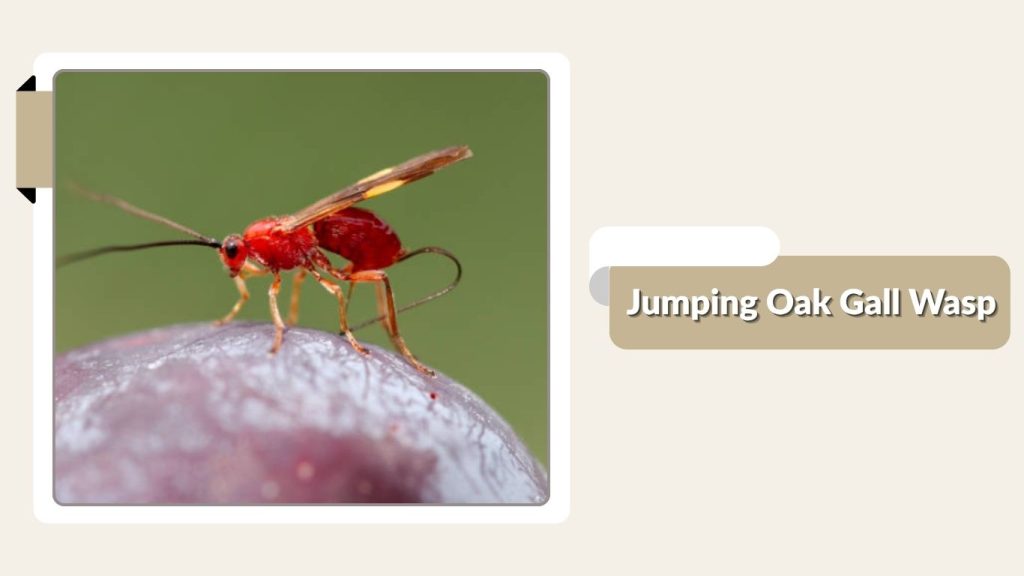
Jumping Oak Gall Wasps are fascinating insects known for creating tiny seed-like galls that can move or “jump” across surfaces. The movement occurs when larvae inside the gall shift position. These unusual galls commonly develop on oak leaves and often fall to the ground during late summer. The wasps are harmless to humans and are mainly valued for their unique and interesting behavior.
Identification
- Very small brown or black wasp
- Usually under 1/8 inch long
- Transparent wings with fine veins
- Produces tiny round galls on oak leaves
- Fallen galls can jump due to larval movement inside
Habitat and Distribution
Jumping Oak Gall Wasps are commonly found in oak woodlands, forests, parks, and residential areas with oak trees. They are widely distributed across North America, especially in regions with live oaks and related species. These insects are most active during warm months when oak leaves are soft enough for egg-laying and gall formation.
Behavior and Diet
Female Jumping Oak Gall Wasps lay eggs inside developing oak leaves, causing the plant to form small protective galls around the larvae. The larvae feed on nutrient-rich tissues inside the gall while remaining protected. The jumping motion helps the gall move into sheltered areas on the ground, improving survival during development and overwintering periods.
Lifecycle
The lifecycle begins when females deposit eggs into young oak leaves during spring. As larvae develop, small galls form around them on the leaf surface. Mature galls eventually detach and fall to the ground, where larval movement causes them to jump. Adult wasps later emerge from the gall, mate, and search for new oak leaves to continue the cycle.
7. Spiny Oak Gall Wasp
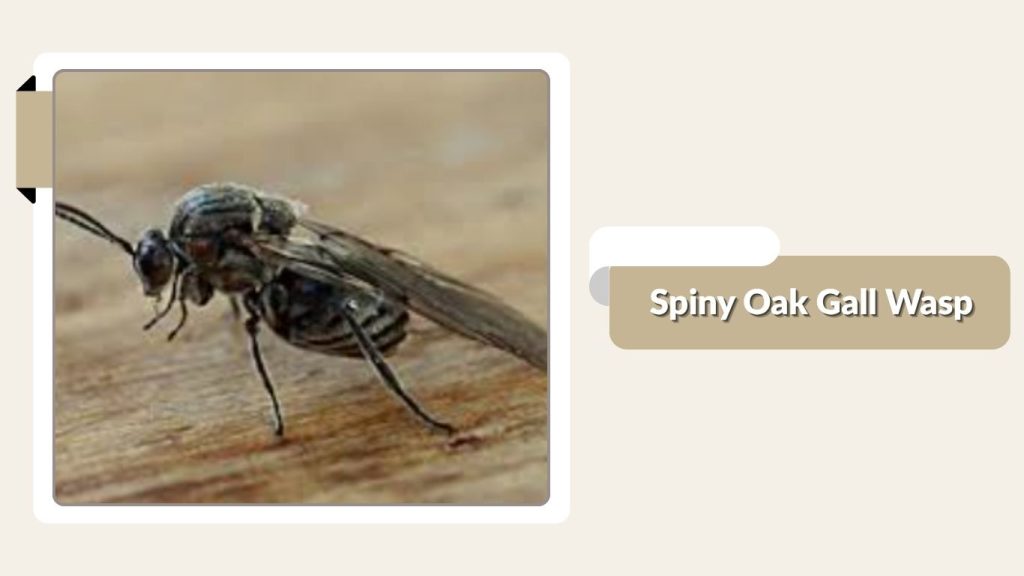
Spiny Oak Gall Wasps are small insects recognized for producing colorful spiky galls on oak leaves. These unusual growths provide protection and nourishment for developing larvae inside. The bright appearance and pointed projections make the galls easy to identify during the growing season. Although large infestations may affect leaf appearance, these wasps are generally harmless to humans and rarely cause severe damage to healthy oak trees.
Identification
- Tiny black or dark brown wasp
- Usually less than 1/4 inch long
- Clear wings with delicate veins
- Produces round galls covered in sharp spines
- Galls may appear red, yellow, green, or orange
Habitat and Distribution
Spiny Oak Gall Wasps are commonly found in oak forests, woodland edges, parks, and residential landscapes containing oak trees. They are widely distributed across North America, especially in areas with red oak species. These insects thrive in warm seasons when fresh oak leaves provide ideal conditions for egg-laying and gall development.
Behavior and Diet
Female Spiny Oak Gall Wasps inject eggs into young oak leaves, causing the plant to develop spiny protective galls around the larvae. The larvae remain inside the gall and feed on nutrient-rich tissues while growing. Adult wasps are short-lived and mainly focused on reproduction, occasionally feeding on small amounts of nectar or plant fluids.
Lifecycle
The lifecycle starts when females lay eggs in developing oak leaves during spring or early summer. Chemicals produced by the larvae trigger the formation of colorful spiny galls. The larvae continue feeding and maturing inside the gall until adulthood. Mature wasps emerge through small openings, mate, and search for suitable oak trees to begin the next generation.
8. Cherry Gall Wasp
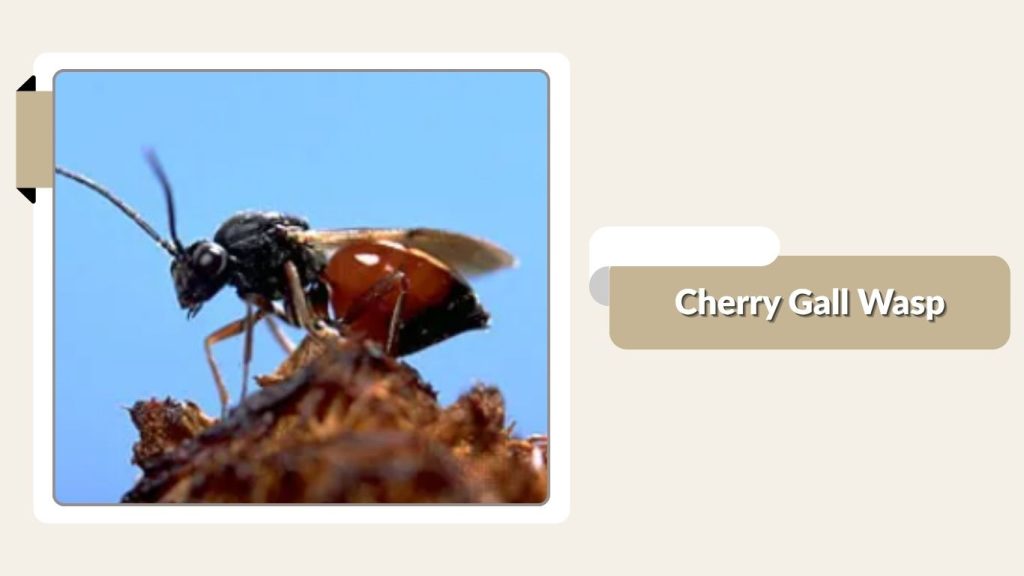
Cherry Gall Wasps are small insects that create swollen galls on cherry trees and related plants. These growths form when females lay eggs in plant tissue, causing the tree to develop protective structures around the larvae. The galls vary in size and shape depending on the species. Although noticeable on branches or leaves, these wasps are generally harmless to humans and rarely threaten healthy cherry trees.
Identification
- Tiny black or brown wasp
- Usually under 1/4 inch in length
- Transparent wings with fine veins
- Produces swollen galls on cherry leaves or stems
- Galls may appear round, lumpy, or irregular in shape
Habitat and Distribution
Cherry Gall Wasps are commonly found in orchards, gardens, forests, and woodland areas where cherry trees naturally grow. They are distributed across parts of North America, Europe, and Asia depending on the species. These insects prefer mild climates and are most active during spring and summer when cherry trees produce fresh plant growth.
Behavior and Diet
Female Cherry Gall Wasps lay eggs inside young cherry tissue, triggering the formation of protective galls around the developing larvae. The larvae feed on nutrient-rich tissue within the gall while remaining sheltered from predators. Adult wasps live briefly and mainly focus on reproduction, occasionally feeding on nectar or plant fluids during their active period.
Lifecycle
The lifecycle begins when females deposit eggs into young cherry leaves or stems during spring. Larval secretions stimulate gall development around each egg. The larvae remain inside the gall while feeding and maturing through several stages. Once development is complete, adult wasps emerge through small openings, mate, and seek suitable cherry tissue for laying the next generation of eggs.
9. Root Gall Wasp
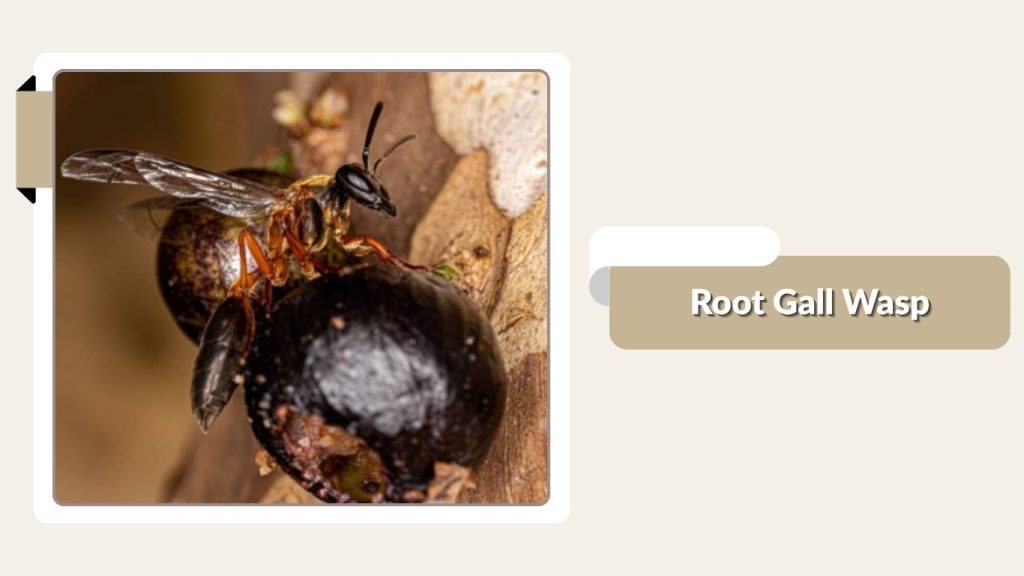
Root Gall Wasps are specialized insects that create galls on the roots of various plants and trees. These underground growths provide shelter and food for developing larvae. Because the galls form below the soil surface, they are rarely noticed unless plants are uprooted or weakened. Most species are harmless in small numbers, although heavy infestations may reduce plant growth and overall health.
Identification
- Small dark brown or black wasp
- Usually less than 1/4 inch long
- Transparent wings with thin veins
- Produces swollen galls on underground roots
- Galls are round, woody, or irregular in shape
Habitat and Distribution
Root Gall Wasps are commonly found in forests, grasslands, gardens, and agricultural areas where suitable host plants grow. They occur in many regions across North America and Europe depending on the species. These insects thrive in soils that support healthy root systems and are most active during warmer seasons with active plant growth.
Behavior and Diet
Female Root Gall Wasps lay eggs inside underground root tissue, causing the plant to develop protective galls around the larvae. The larvae feed on nutrient-rich root tissue while remaining safely enclosed inside the gall. Adult wasps are short-lived and spend most of their active time searching for mates and suitable host plants for reproduction.
Lifecycle
The lifecycle begins when females deposit eggs into young roots beneath the soil surface. Chemicals released by the larvae stimulate the surrounding tissue to form protective galls. The larvae develop and feed inside these structures until maturity. Adult wasps eventually emerge from the gall, mate, and locate healthy plant roots where the next generation can develop.
10. Leaf Gall Wasp
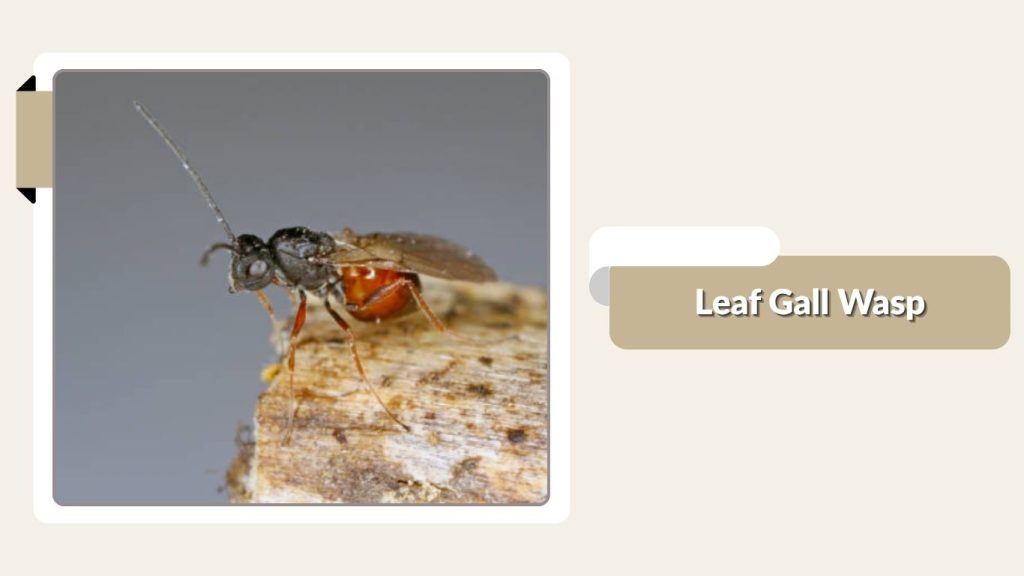
Leaf Gall Wasps are tiny insects that create abnormal growths on plant leaves, especially on oak trees. These galls develop after females lay eggs inside leaf tissue, causing the plant to form protective chambers around the larvae. The galls vary greatly in shape, color, and size depending on the species. Although visually noticeable, these wasps are generally harmless to humans and rarely damage healthy trees.
Identification
- Small black or brown wasp
- Usually under 1/4 inch in length
- Transparent wings with delicate veins
- Produces galls directly on leaves
- Galls may appear round, spiny, flat, or colorful
Habitat and Distribution
Leaf Gall Wasps are commonly found in forests, woodlands, parks, and residential areas where host trees and plants are abundant. They are widely distributed across North America, Europe, and parts of Asia. These insects thrive during spring and summer when fresh leaves provide ideal conditions for egg-laying and gall development.
Behavior and Diet
Female Leaf Gall Wasps inject eggs into soft leaf tissue, stimulating the plant to create protective galls around the larvae. The larvae feed on nutrient-rich tissue inside the gall while remaining protected from predators and weather. Adult wasps are short-lived and mainly focused on reproduction, feeding only occasionally on nectar or plant fluids.
Lifecycle
The lifecycle starts when females lay eggs in developing leaves during the growing season. Chemicals released by the larvae trigger the formation of leaf galls around each developing insect. The larvae continue feeding and maturing within the gall until adulthood. Mature wasps emerge through tiny openings and search for mates and fresh host plants to repeat the cycle.
11. Stem Gall Wasp
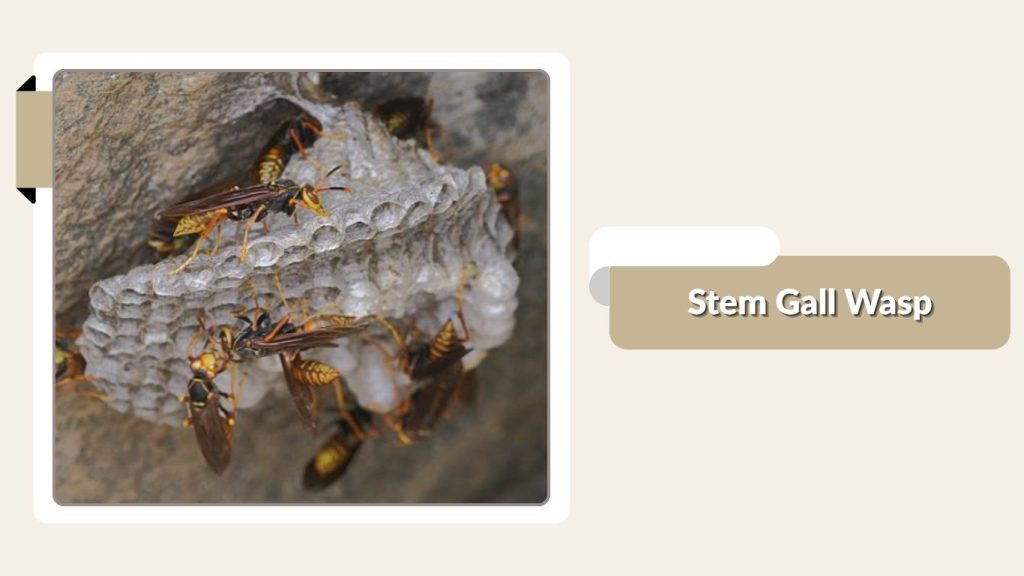
Stem Gall Wasps are insects that create swollen growths on the stems and branches of trees or shrubs. These galls protect developing larvae while providing a steady food source inside plant tissue. The galls can vary from smooth round swellings to rough woody structures depending on the species. Although noticeable on plants, these wasps are usually harmless to humans and rarely cause major damage to healthy vegetation.
Identification
- Tiny brown or black wasp
- Usually less than 1/4 inch long
- Clear wings with delicate veins
- Produces swollen galls on stems or branches
- Galls may appear woody, round, or irregularly shaped
Habitat and Distribution
Stem Gall Wasps are commonly found in forests, shrublands, gardens, and parks where suitable host plants grow. They are distributed across North America, Europe, and other temperate regions. These insects prefer habitats with abundant woody plants and are most active during spring and summer when fresh stem tissue supports gall formation.
Behavior and Diet
Female Stem Gall Wasps lay eggs inside young stems or branches, causing the plant to form protective galls around the larvae. The larvae feed on nutrient-rich plant tissue within the gall while remaining sheltered from predators and environmental threats. Adult wasps are short-lived and primarily focused on mating and reproduction during their active period.
Lifecycle
The lifecycle begins when females deposit eggs into soft stem tissue during the growing season. Chemicals produced by the larvae stimulate the surrounding plant tissue to develop into a gall. The larvae remain inside the gall while feeding and maturing through several stages. Adult wasps eventually emerge, mate, and search for suitable host plants to begin the next generation.
12. Marble Gall Wasp
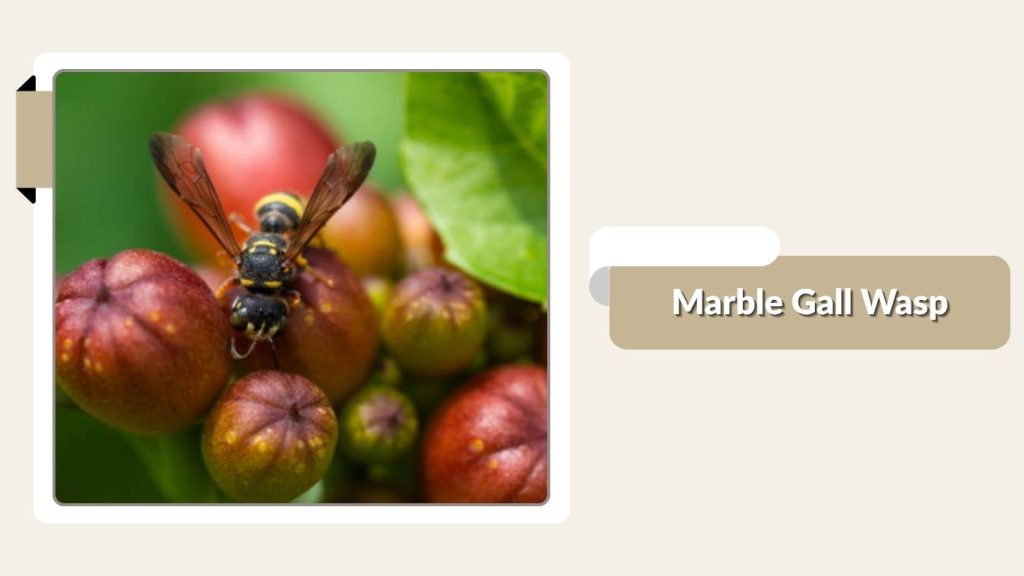
Marble Gall Wasps are known for creating hard, round galls on oak trees that resemble small marbles. These woody structures develop when females lay eggs in plant tissue, providing protection and nourishment for growing larvae. The galls are commonly found attached to twigs and branches and may remain visible for long periods. These wasps are harmless to humans and are an important part of many woodland ecosystems.
Identification
- Small dark brown or black wasp
- Usually under 1/4 inch long
- Transparent wings with fine veins
- Produces hard, round marble-like galls
- Galls commonly form on oak twigs and branches
Habitat and Distribution
Marble Gall Wasps are commonly found in forests, woodlands, parks, and gardens where oak trees are present. They are widely distributed across Europe and parts of North America. These insects thrive in temperate climates and are especially active during spring and summer when oak trees produce fresh tissue suitable for egg-laying and gall development.
Behavior and Diet
Female Marble Gall Wasps inject eggs into oak tissue, causing the tree to form hard protective galls around the larvae. The larvae feed on nutrient-rich plant material inside the gall while remaining protected from predators and harsh environmental conditions. Adult wasps live briefly and mainly focus on mating and reproduction before laying eggs on suitable oak hosts.
Lifecycle
The lifecycle starts when females lay eggs in young oak twigs during spring. Chemicals released by the developing larvae stimulate the growth of round woody galls. The larvae continue feeding and maturing inside the protective chamber for several months. Once fully developed, adult wasps emerge through small holes, mate, and search for new oak tissue to continue the cycle.
FAQs
What are gall wasps?
Gall wasps are tiny insects that belong to the Cynipidae family. They are best known for creating unusual plant growths called galls on trees and shrubs. These galls protect developing larvae and provide them with food while they mature inside the plant tissue.
Are gall wasps harmful to humans?
Gall wasps are generally harmless to humans and pets. They do not sting, bite, or spread diseases. Most species are very small and spend their lives around trees and plants. People usually notice the unusual galls more often than the insects themselves.
Why do gall wasps create galls?
Gall wasps create galls to protect their larvae from predators, weather, and environmental threats. The female wasp lays eggs inside plant tissue, and chemicals released by the larvae stimulate the plant to form a protective structure around them as they grow.
Can gall wasps damage trees?
Most gall wasps cause little or no serious harm to healthy trees. Large infestations may affect the appearance of leaves or branches, but mature trees usually tolerate them well. Severe damage is uncommon and mainly occurs when trees are already stressed or weakened.
How can you identify gall wasps?
Gall wasps are usually identified by the distinctive galls they create on plants. These galls can appear round, spiny, fluffy, woody, or colorful depending on the species. Adult wasps are very small, often dark-colored, and usually less than 1/4 inch long.