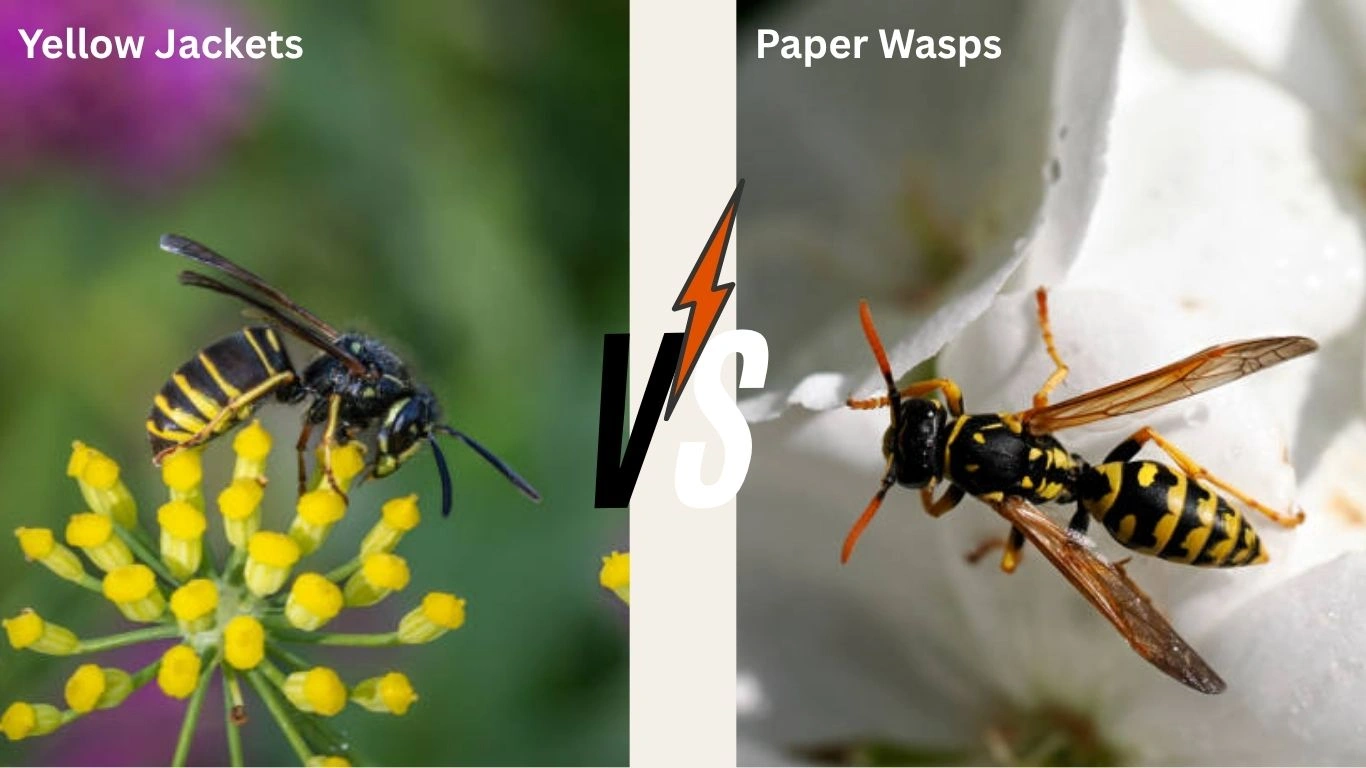
Paper wasps and yellow jackets are often confused because both are stinging insects with similar yellow markings. However, they behave very differently and build completely different nests. Knowing which insect you are dealing with can help you avoid painful stings and safely handle infestations around your home.
This guide explains the major differences between paper wasps and yellow jackets, including appearance, nesting habits, aggression levels, and sting pain. You will also learn how to identify their nests and determine which insect is more dangerous around people and pets.
Paper Wasp vs Yellow Jacket: Quick Comparison
Before looking at each insect in detail, it helps to understand the major differences at a glance. Paper wasps are generally calmer and less aggressive, while yellow jackets are defensive scavengers that can attack in large groups.
| Feature | Paper Wasp | Yellow Jacket |
| Body Shape | Long and slender | Compact and stocky |
| Legs During Flight | Legs hang down | Legs tucked in |
| Aggression Level | Mild to moderate | Highly aggressive |
| Nest Type | Open comb nest | Enclosed papery nest |
| Nest Location | Roof edges, decks | Underground, walls |
| Sting Frequency | Usually one sting | Multiple stings |
| Feeding Habit | Hunts insects | Attracted to human food |
How to Identify a Paper Wasp
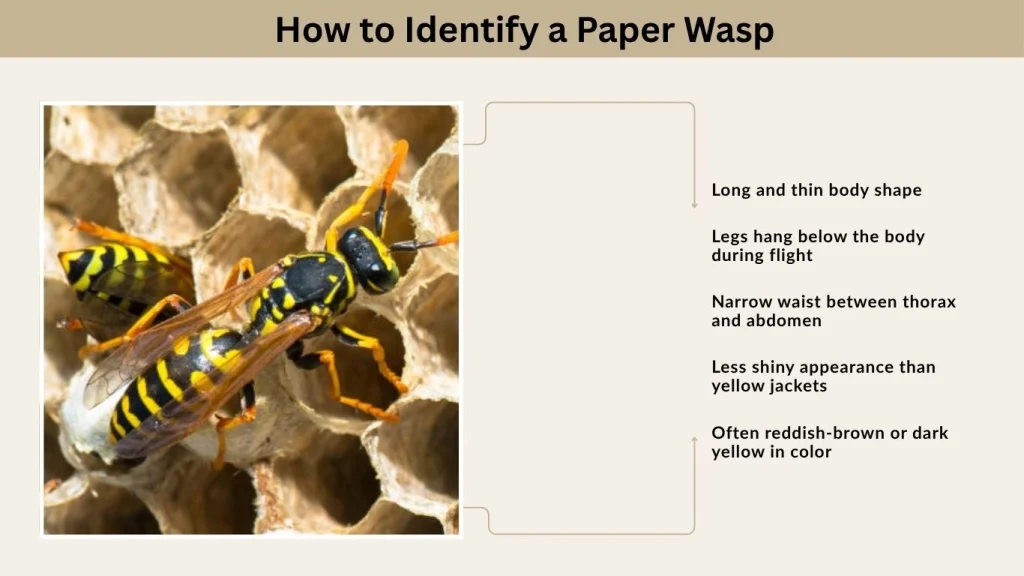
Paper wasps are among the most common wasps found around homes, gardens, porches, and roof overhangs. They are typically less aggressive than yellow jackets and usually sting only when they feel threatened or when their nest is disturbed.
Physical Features of a Paper Wasp
Paper wasps have a slim body with a narrow waist and long dangling legs that are clearly visible while flying. Their coloration can vary depending on the species, but many have brown, reddish, yellow, or orange markings.
Several visual traits make paper wasps easier to identify:
- Long and thin body shape
- Legs hang below the body during flight
- Narrow waist between thorax and abdomen
- Less shiny appearance than yellow jackets
- Often reddish-brown or dark yellow in color
Common Types of Paper Wasps
Different species appear across North America, and some are frequently mistaken for yellow jackets because of their yellow markings.
European Paper Wasp
The European paper wasp has bright yellow and black markings that closely resemble a yellow jacket. However, its body is slimmer, and its legs are more visible during flight.
Red Paper Wasp
Red paper wasps are darker with reddish or rust-colored bodies. They are common in warmer climates and are easier to distinguish from yellow jackets.
Northern Paper Wasp
Northern paper wasps are found in cooler regions and usually build nests under eaves, railings, and wooden structures near homes.
How to Identify a Yellow Jacket
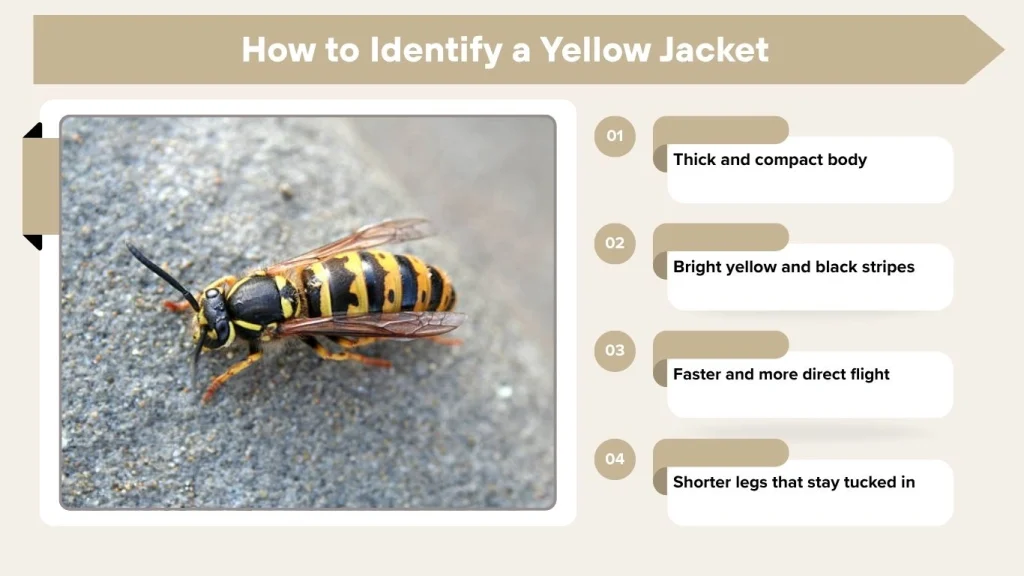
Yellow jackets are much more aggressive than paper wasps and are responsible for many painful sting incidents during summer and fall. They often become especially hostile when humans get close to their nests or food sources.
Unlike paper wasps, yellow jackets are scavengers and frequently gather around garbage cans, outdoor meals, sugary drinks, and pet food. Their aggressive behavior makes them one of the most feared stinging insects around residential areas.
Physical Features of a Yellow Jacket
Yellow jackets have a compact body with bold black-and-yellow striping. Their appearance is shinier and more solid compared to the thin shape of paper wasps.
You can usually identify a yellow jacket by these traits:
- Thick and compact body
- Bright yellow and black stripes
- Faster and more direct flight
- Shorter legs that stay tucked in
- Smooth and shiny appearance
Why Yellow Jackets Are More Aggressive
Yellow jackets protect their colonies aggressively because their nests often contain thousands of workers. Even slight vibrations near a nest can trigger a defensive attack.
Several factors increase yellow jacket aggression:
- Large colony populations
- Underground nest protection
- Competition for food
- Seasonal aggression in late summer
- Strong territorial instincts
Paper Wasp Nest vs Yellow Jacket Nest
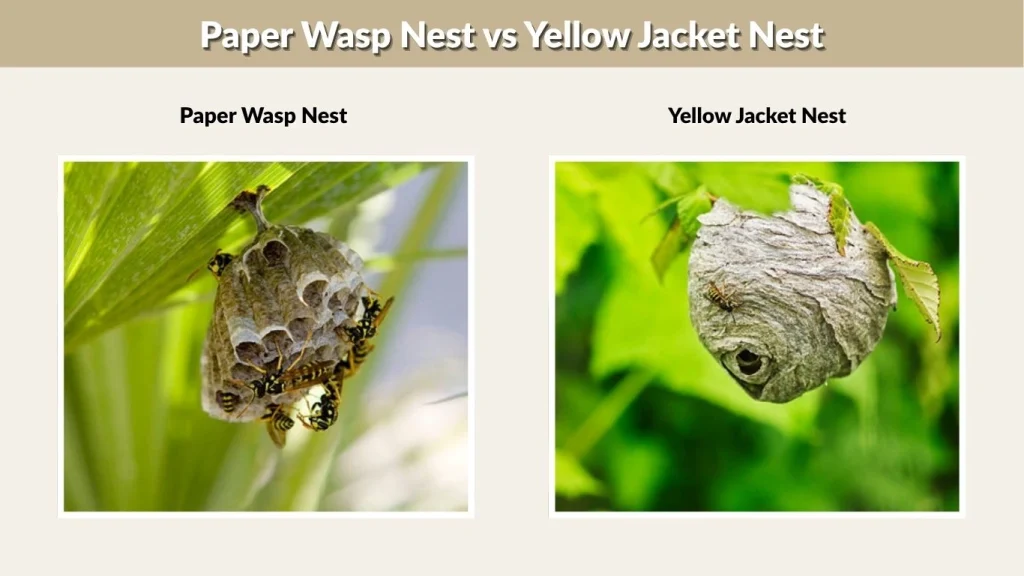
One of the easiest ways to tell these insects apart is by examining the nest. Their nests look completely different and are usually found in different locations around a property.
What Does a Paper Wasp Nest Look Like?
Paper wasp nests have an open structure that resembles an upside-down umbrella. The individual hexagonal cells are fully visible because the nest does not have an outer covering.
These nests are usually small and attached to surfaces by a single stalk. You will commonly find them under roof edges, porch ceilings, attic openings, and deck railings.
What Does a Yellow Jacket Nest Look Like?
Yellow jacket nests are enclosed inside a papery outer shell. Unlike paper wasp nests, the combs inside are hidden from view. Many yellow jacket colonies build nests underground, although some settle inside walls, attics, or siding.
A mature yellow jacket nest can become very large by late summer. Because these nests are hidden, homeowners often discover them only after disturbing the colony accidentally.
Nest Location Differences
The location of the nest often provides the fastest clue about which insect is present.
Common Paper Wasp Nest Locations
- Roof overhangs
- Porch ceilings
- Deck railings
Common Yellow Jacket Nest Locations
- Underground burrows
- Wall cavities
- House siding
Paper Wasp Sting vs Yellow Jacket Sting
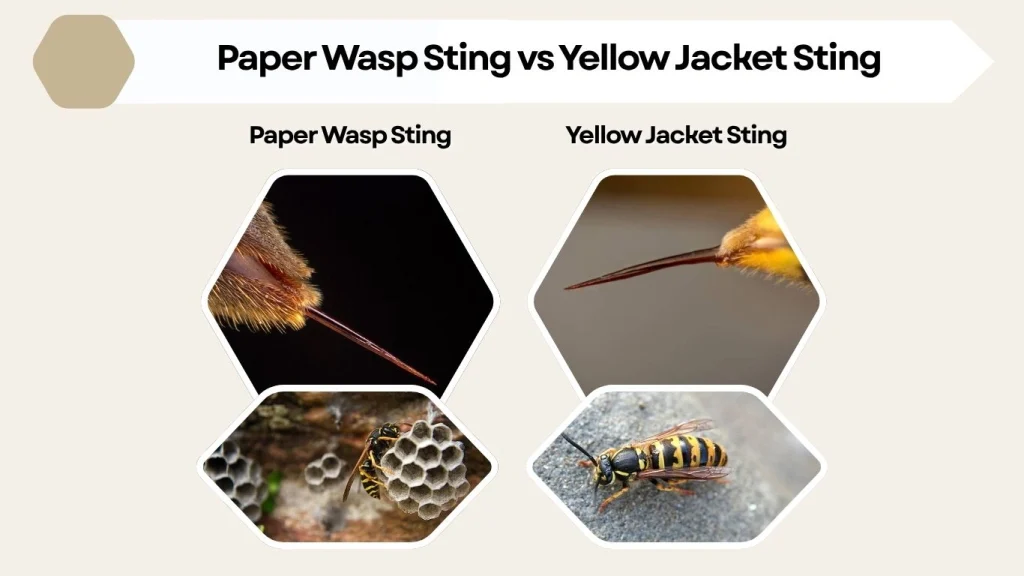
Although both insects can sting, the experience is usually very different. Paper wasps tend to sting only when directly threatened, while yellow jackets can attack repeatedly and in groups.
Which Sting Hurts More?
Yellow jacket stings are often considered more painful because these insects inject venom aggressively and may sting multiple times. Their attacks can feel sudden and intense, especially if a nest is disturbed.
Paper wasp stings are still painful, but they are generally less severe because paper wasps are less aggressive. Most people experience temporary burning, redness, and swelling around the sting area.
Multiple Sting Behavior
One major difference between these insects is how they attack.
Paper Wasp Sting Behavior
Paper wasps usually sting once in self-defense and then move away from danger. They are more likely to avoid confrontation unless their nest is disturbed.
Yellow Jacket Sting Behavior
Yellow jackets can sting repeatedly without losing their stinger. When one yellow jacket attacks, it releases alarm chemicals that attract additional colony members, which can quickly escalate into a swarm attack.
When a Sting Becomes Dangerous
Most stings cause only temporary discomfort, but allergic reactions can become serious and require immediate medical attention.
Watch for symptoms such as:
- Difficulty breathing
- Swelling of the face or throat
- Rapid heartbeat
- Dizziness or fainting
- Severe swelling around the sting
Anyone showing these symptoms should seek emergency care immediately.
European Paper Wasp vs Yellow Jacket
The European paper wasp is one of the most commonly misidentified wasps because its yellow coloring closely resembles a yellow jacket. Despite the similar appearance, there are several noticeable differences once you know what to look for.
Body Shape Differences
European paper wasps have longer bodies and more visible legs than yellow jackets. Their movement also appears slower and more relaxed during flight.
Yellow jackets look thicker and more compact. They move quickly and fly in straight, rapid patterns that appear more aggressive.
Nesting Differences
European paper wasps build open nests with visible cells, just like other paper wasp species. Yellow jackets create enclosed nests that hide the inner combs completely.
The nest structure alone is often enough to identify which insect is present around your property.
Temperament Comparison
European paper wasps are usually calmer around humans and rarely attack unless disturbed. Yellow jackets, however, aggressively defend their colonies and frequently swarm when threatened.
Because of this behavior difference, yellow jackets are generally considered far more dangerous around homes, gardens, and outdoor eating areas.
Paper Wasp vs Yellow Jacket vs Hornet
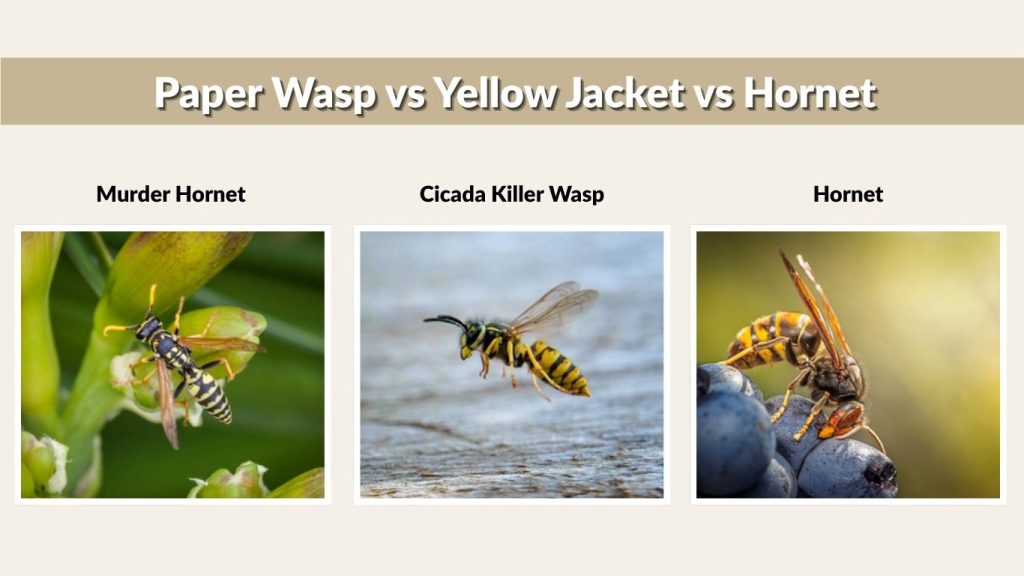
Many people use the terms wasp, yellow jacket, and hornet interchangeably, but these insects are not identical. Hornets are actually a type of wasp, though they are usually larger and more intimidating than either paper wasps or yellow jackets.
How Hornets Differ From Paper Wasps
Hornets have thicker bodies and larger nests than paper wasps. They are also more defensive when their colony is threatened.
Paper wasps are slimmer and tend to build smaller exposed nests under eaves and overhangs.
How Hornets Differ From Yellow Jackets
Yellow jackets are typically smaller and more aggressive around food sources. Hornets are less likely to scavenge human food, but they defend their nests aggressively.
Hornet nests are usually aerial and enclosed in a large papery shell attached to trees, sheds, or buildings.
Which Insect Is Most Dangerous?
The danger level often depends on the situation. A small paper wasp nest may pose little threat, while a large yellow jacket colony near a doorway can become hazardous quickly.
Hornets are intimidating because of their size, but yellow jackets are responsible for more aggressive encounters due to their swarming behavior and attraction to human activity.
Are Paper Wasps or Yellow Jackets More Dangerous?
Yellow jackets are generally considered more dangerous because of their aggressive nature and large colony sizes. They attack quickly, sting repeatedly, and often defend hidden nests aggressively.
Paper wasps are usually less hostile and prefer to avoid conflict. However, they will sting if they feel cornered or if their nest is disturbed accidentally.
Homes with children, pets, or frequent outdoor activity should treat both insects seriously, especially during late summer when colonies are most active.
How to Prevent Paper Wasps and Yellow Jackets
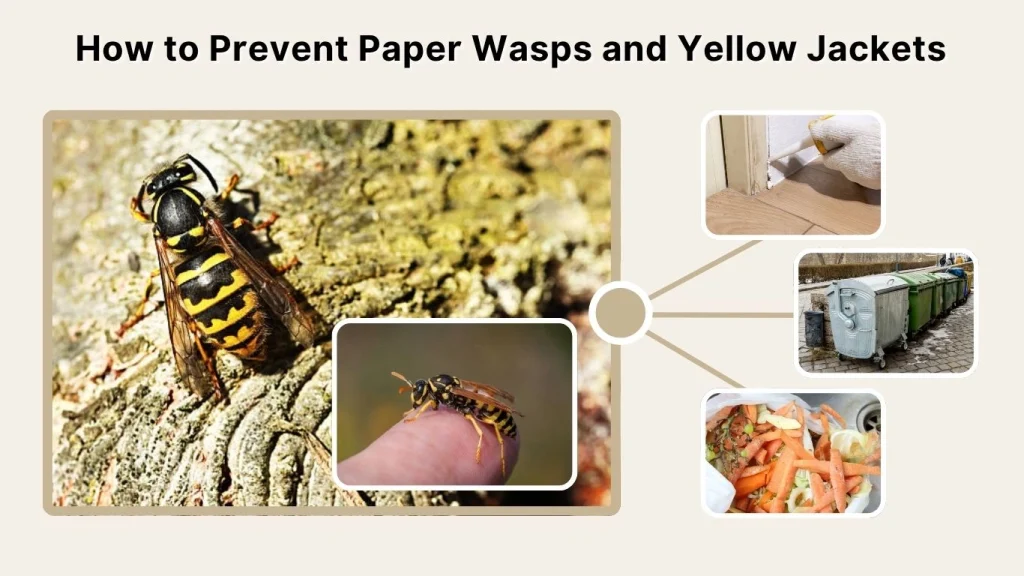
Preventing nests early in the season is the best way to reduce the risk of stings around your property.
Prevention Tips for Homeowners
Regular inspections and cleanup can discourage nesting activity around the home.
Ways to Reduce Wasp Activity
- Seal cracks and siding gaps
- Keep garbage containers tightly closed
- Remove leftover food outdoors
- Inspect roof edges regularly
- Remove abandoned nests during winter
Best Time for Prevention
Spring is the most effective time to prevent colonies because queens are still building small starter nests. Removing nests early is much safer than dealing with large colonies later in summer.
By late summer, yellow jackets become more aggressive as food sources decrease and colony populations grow rapidly.
FAQs
How can you tell the difference between a paper wasp and a yellow jacket?
Paper wasps have slim bodies with long legs that hang during flight, while yellow jackets are shorter and stockier with tucked legs. Their nests are also different because paper wasps build open comb nests, while yellow jackets create enclosed papery nests.
Are yellow jackets more aggressive than paper wasps?
Yes, yellow jackets are significantly more aggressive than paper wasps. They aggressively defend their nests and may sting multiple times, especially when disturbed. Paper wasps are usually calmer and only sting when they feel directly threatened.
What does a paper wasp nest look like?
A paper wasp nest looks like an upside-down umbrella with visible hexagonal cells. The nest is open without an outer covering and is commonly attached under roof edges, porch ceilings, and deck railings.
Can yellow jackets sting more than once?
Yes, yellow jackets can sting repeatedly because they do not lose their stinger after attacking. This makes them more dangerous than bees and often more painful than paper wasps during aggressive swarm attacks.
Should you remove a yellow jacket nest yourself?
Removing a yellow jacket nest yourself can be dangerous, especially if the colony is large or hidden underground or inside walls. Professional pest control is usually the safest option because disturbing the nest may trigger aggressive swarming behavior.