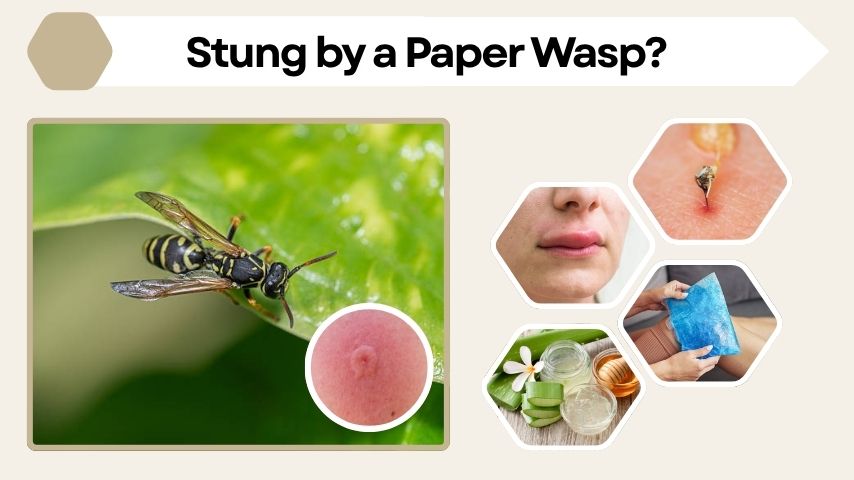
A paper wasp sting can cause sudden pain, redness, swelling, and irritation within seconds. Most stings are mild, but some people may experience stronger allergic reactions that need quick medical attention. Knowing what to do immediately after being stung can reduce pain and help prevent complications like severe swelling or infection.
Paper wasps usually sting when they feel threatened or when someone gets too close to their nest. This guide explains the first-aid steps, home remedies, and warning signs you should watch for after a paper wasp sting.
What Happens When a Paper Wasp Stings You?
Paper wasps inject venom through their stinger, causing pain and inflammation around the affected area. The body reacts quickly by sending blood flow to the sting site, which creates swelling, redness, and warmth. While most reactions improve within a few days, some people may experience stronger symptoms depending on their sensitivity to wasp venom.
How Paper Wasp Venom Works
When a paper wasp stings, venom enters the skin and triggers the immune system. The chemicals in the venom irritate nerves and tissues, causing immediate burning pain. The body then releases histamine, which leads to swelling and itching.
Common Reactions After a Sting
Common Symptoms
- Sharp burning pain
- Redness around the sting
- Mild swelling
- Itching
- Warm skin near the sting area
How Long Symptoms Usually Last
Most mild paper wasp stings improve within a few hours to several days. Swelling may become more noticeable during the first 24 hours before slowly decreasing. People with sensitive skin may experience itching or redness for a longer period.
What Should You Do Immediately After a Paper Wasp Sting?
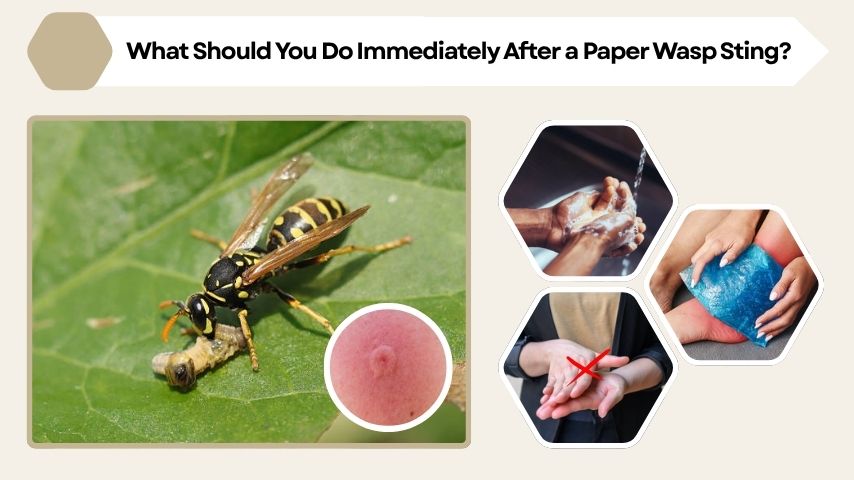
Quick treatment helps reduce discomfort and lowers the chance of severe swelling. The first few minutes after a sting are important because proper cleaning and cooling can help calm the body’s reaction. Staying calm and moving away from the wasp area also prevents additional stings and further irritation.
Move Away From the Wasp Area
Paper wasps can sting more than once, especially if they feel threatened. Leave the area carefully and avoid sudden movements that may attract more wasps. Staying calm reduces the chance of repeated stings.
Wash the Sting Site
Cleaning the skin helps prevent infection and removes dirt or venom residue from the surface. Use mild soap and cool water to gently wash the sting area.
Cleaning Steps
- Wash with soap and water
- Remove dirt gently
- Pat the area dry
- Avoid rubbing the skin
Apply a Cold Compress
A cold compress can reduce swelling and numb the pain caused by the sting. Wrap ice or a cold pack in a cloth before placing it on the skin for short periods.
Elevate the Affected Area
If the sting occurs on the arm, hand, foot, or leg, keeping the area elevated may help reduce swelling. Elevation slows fluid buildup around the sting site and may improve comfort during the first several hours.
Best Home Remedies for Paper Wasp Stings
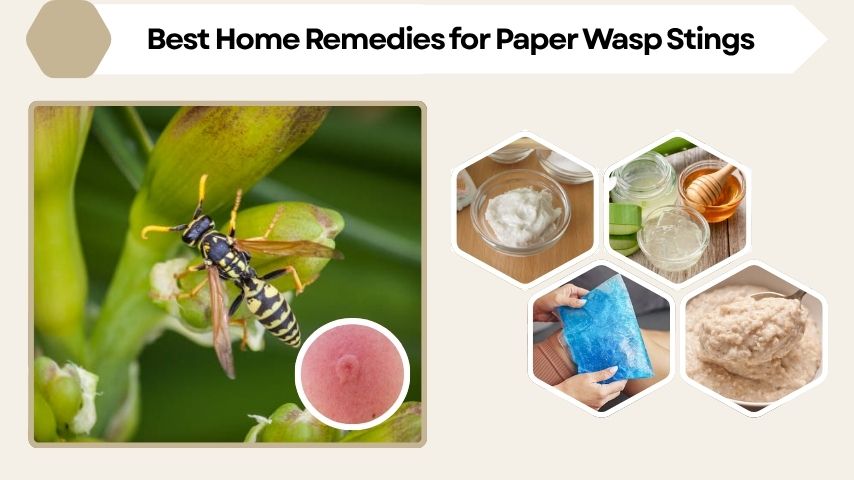
Many simple home remedies may help soothe irritation and reduce swelling after a paper wasp sting. While these treatments cannot remove venom completely, they often provide temporary relief from itching and discomfort. Natural remedies are commonly used alongside cold compresses and over-the-counter medications for mild reactions.
Baking Soda Paste
Baking soda mixed with a small amount of water creates a paste that some people use to calm itching and irritation. Apply it gently to the sting site for a short period before rinsing it away.
Honey and Aloe Vera
Honey and aloe vera are popular soothing remedies because they may cool irritated skin and reduce discomfort. Aloe vera gel especially provides a refreshing feeling that may help with redness and itching.
Ice Packs and Cold Water
Helpful Tips
- Use a cloth around ice
- Apply for 10 to 15 minutes
- Repeat several times daily
- Avoid direct ice on bare skin
Oatmeal and Calamine Lotion
Oatmeal baths and calamine lotion may help calm itchy skin after a sting. These remedies are often used when swelling begins to heal but irritation continues for several days.
Medicines That Help After a Wasp Sting
Over-the-counter medicines can help reduce pain, swelling, and itching caused by paper wasp stings. These treatments are commonly used when home remedies alone do not provide enough relief. Always follow label instructions carefully, especially when giving medications to children or people with allergies.
Antihistamines for Swelling and Itching
Antihistamines help block histamine reactions caused by wasp venom. They are often used to reduce itching, redness, and swelling after a sting.
Pain Relievers
Pain-relief medicines such as ibuprofen or acetaminophen may help decrease soreness and inflammation. These medications are useful when the sting causes discomfort that lasts for several hours.
Anti-Itch Creams
Common Products
- Hydrocortisone cream
- Calamine lotion
- Antihistamine creams
- Cooling gels
Signs of an Allergic Reaction
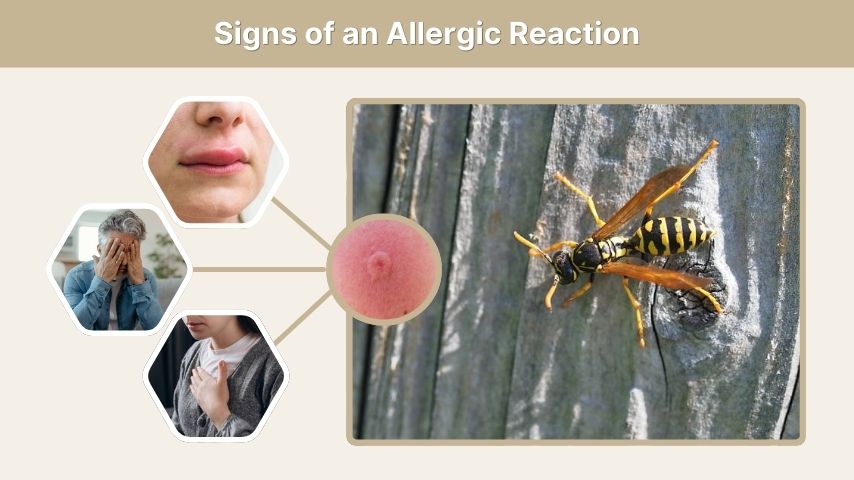
Some people experience stronger reactions to paper wasp venom than others. Mild swelling is common, but severe allergic reactions can become dangerous very quickly. Recognizing warning signs early is important because fast medical treatment may save a life. Anyone with breathing problems, throat swelling, or dizziness after a sting should seek emergency medical help immediately.
Mild Allergic Symptoms
A mild allergic reaction may involve larger swelling than normal around the sting site. The skin can become red, warm, itchy, and uncomfortable for several days after the sting.
Severe Allergic Reaction (Anaphylaxis)
Emergency Symptoms
- Trouble breathing
- Swollen lips or throat
- Rapid heartbeat
- Severe dizziness
- Fainting
- Wheezing
- Tightness in the chest
When to Call Emergency Services
Emergency help is necessary if symptoms spread beyond the sting area or if breathing becomes difficult. Multiple stings at the same time may also increase the risk of serious reactions and require urgent medical attention.
Paper Wasp Sting Swelling and Pain Timeline
The symptoms of a paper wasp sting usually change over several days. Pain often appears immediately, while swelling may continue increasing during the first day. Understanding the normal healing process can help people know what to expect and when symptoms may require medical attention instead of simple home treatment.
First 24 Hours
Pain, redness, and swelling are usually strongest during the first several hours after the sting. The area may feel warm, tender, or itchy while the immune system reacts to the venom.
Days 2 to 3
Swelling often starts to decrease during this period, although itching may continue. Many people notice the sting becomes less painful but more irritating as healing progresses.
When Symptoms May Last Longer
Some reactions continue for more than a week, especially in people with sensitive skin or mild allergies. Large swelling or ongoing redness may need medical evaluation if symptoms worsen instead of improving.
How to Tell if a Sting Is Infected
Most paper wasp stings heal naturally without infection. However, scratching the sting or failing to clean the area properly may allow bacteria to enter the skin. An infected sting usually becomes more painful over time instead of gradually improving. Recognizing infection signs early helps prevent more serious complications and supports faster treatment.
Signs of Infection
Warning Signs
- Pus or drainage
- Fever
- Spreading redness
- Increased warmth
- Severe swelling
- Throbbing pain
Why Infection Happens
Bacteria can enter damaged skin through scratching or poor hygiene. Repeated touching of the sting area may also increase irritation and raise the risk of infection.
When to See a Doctor
A doctor should examine the sting if swelling keeps increasing after several days or if fever, drainage, or severe redness develops. Medical treatment may be needed to control infection and reduce inflammation.
Paper Wasp Sting vs Bee Sting
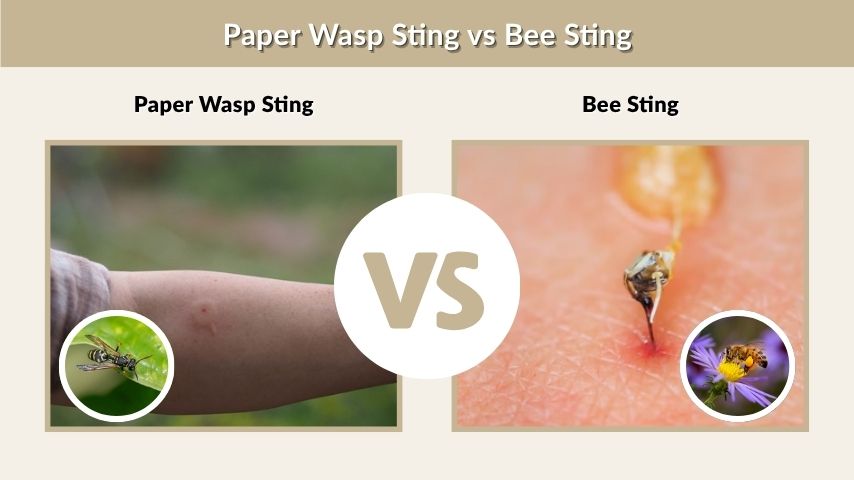
Many people confuse paper wasp stings with bee stings because both cause pain and swelling. However, there are important differences between these insects and the way they sting. Understanding these differences helps people respond correctly and identify what type of insect caused the reaction.
Sting Differences
Bees usually leave their stinger in the skin after stinging, while paper wasps can sting multiple times without losing the stinger. This makes wasps more likely to cause repeated stings during a single encounter.
Pain and Swelling Comparison
Paper wasp stings often feel sharper and more intense at first, while bee stings may create longer-lasting soreness. Both insects can cause swelling, itching, and allergic reactions in sensitive people.
Treatment Similarities
Basic Treatments
- Wash the area
- Apply ice packs
- Use antihistamines
- Avoid scratching
- Monitor for allergies
How to Prevent Paper Wasp Stings
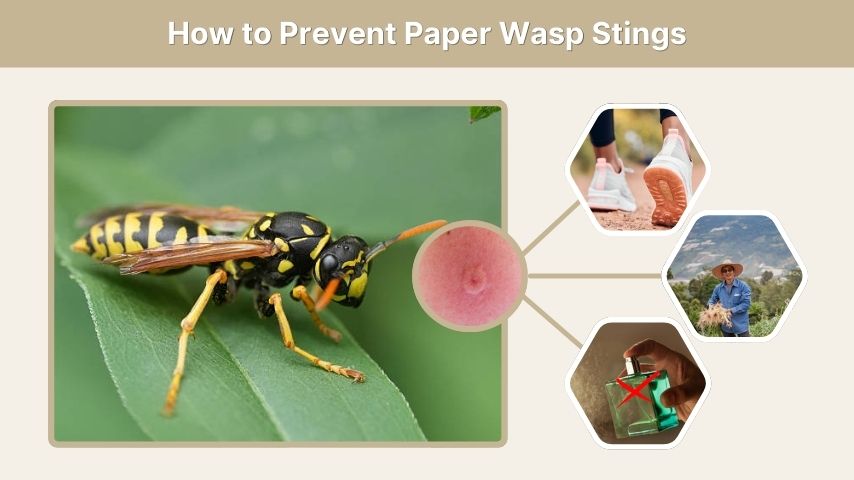
Preventing stings is often easier than treating them afterward. Paper wasps usually become aggressive only when they feel threatened or when someone approaches their nest. Learning safe outdoor habits and avoiding sudden movements near wasps can greatly reduce the risk of painful stings around homes, gardens, and outdoor spaces.
Avoiding Wasp Nests
Paper wasps commonly build nests under roofs, decks, and outdoor furniture. Checking these areas regularly can help people avoid accidental contact with active nests.
Safe Clothing Tips
Protective Clothing
- Wear closed shoes outdoors
- Use long sleeves when gardening
- Avoid bright floral clothing
- Do not wear strong perfumes
Removing Paper Wasp Nests Safely
Large nests should be removed carefully, especially when many wasps are active. Professional pest control services are often the safest option for removing nests near homes or busy outdoor areas.
FAQs
How painful is a paper wasp sting?
A paper wasp sting usually causes sudden sharp pain followed by burning, redness, and swelling. The pain is often strongest during the first few minutes and gradually improves over several hours. Some people may experience itching or tenderness for several days after the sting.
Can paper wasp stings be dangerous?
Most paper wasp stings are mild, but severe allergic reactions can become dangerous. Symptoms like breathing trouble, throat swelling, dizziness, or chest tightness require emergency medical care. Multiple stings at the same time may also increase the risk of serious complications.
What helps paper wasp sting swelling fast?
Cold compresses, antihistamines, and elevating the affected area often help reduce swelling quickly. Washing the sting with soap and water may also calm irritation. Some people use baking soda paste or hydrocortisone cream to reduce itching and discomfort.
Should I remove a stinger from a paper wasp sting?
Paper wasps usually do not leave their stinger behind because they can sting multiple times. If you notice any small debris or visible material in the skin, gently clean the area and avoid digging deeply into the sting site.
When should I go to the hospital after a wasp sting?
You should seek medical help immediately if you experience trouble breathing, severe swelling, fainting, rapid heartbeat, or swelling around the face and throat. A doctor should also examine signs of infection such as fever, pus, or spreading redness.