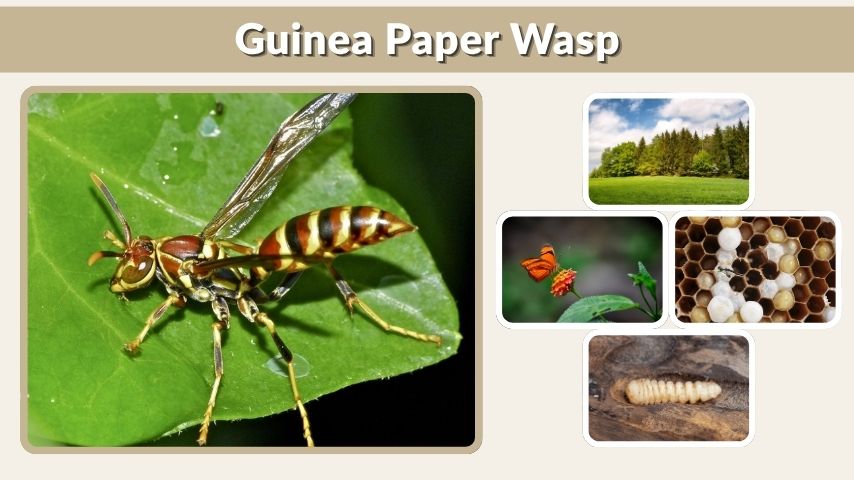
The Guinea Paper Wasp is a social wasp species known for its thin body, long legs, and paper-like nests. These wasps are commonly found in warm tropical regions where they build hanging nests beneath roofs, tree branches, and outdoor structures. Although many people fear wasps because of their stings, Guinea Paper Wasps also play an important ecological role by controlling garden pests and feeding on harmful insects. Learning about their appearance, habitat, nesting behavior, and diet helps people better understand these fascinating insects and their role in nature.
What Is a Guinea Paper Wasp?
The Guinea Paper Wasp is a colony-forming insect that belongs to the paper wasp group. These wasps are famous for building nests made from chewed wood fibers mixed with saliva. Unlike aggressive yellow jackets, paper wasps are usually calmer when left undisturbed. They are active during warm months and spend much of their time searching for insects, building nests, and protecting their colonies.
Scientific Name and Classification
- Family: Vespidae
- Insect group: Social wasp
- Related to paper wasps and hornets
- Common in tropical regions
- Builds exposed paper nests
Why It Is Called a Paper Wasp
The name “paper wasp” comes from the material used to build its nest. The wasp chews wood fibers from fences, branches, and dead plants before mixing them with saliva to create a paper-like substance. This material hardens into lightweight nests containing many open hexagonal cells where larvae develop safely.
Guinea Paper Wasp Identification
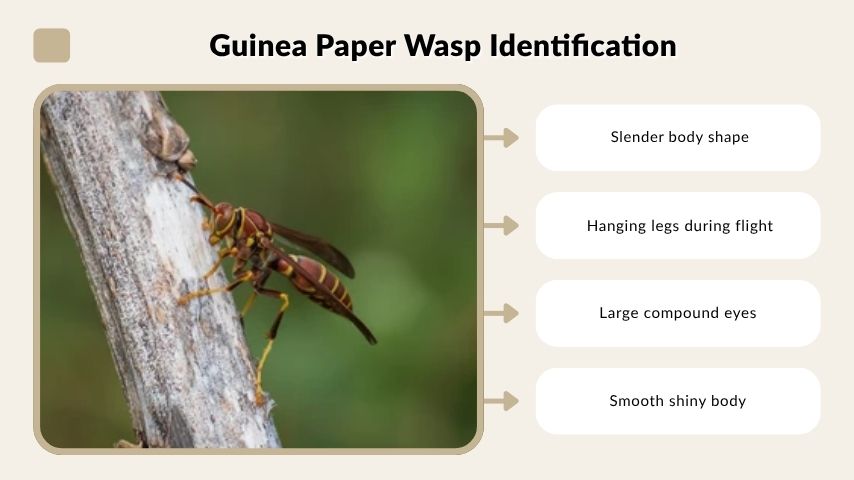
Guinea Paper Wasps have slim bodies and long dangling legs that make them easy to identify during flight. Their narrow waist and folded wings also separate them from bees and yellow jackets. Most individuals display brown, yellow, or dark body patterns that help them blend into natural surroundings while moving through gardens and forest edges.
Size and Body Shape
Adult Guinea Paper Wasps are medium-sized insects with elongated bodies and narrow waists. Their long legs often hang below the body during flight, which is one of the easiest identification features. The body structure helps them move quickly around nests and capture prey efficiently while hunting in vegetation-rich environments.
Color and Markings
- Brown and yellow body coloration
- Dark wing markings
- Thin segmented waist
- Long antennae
- Folded wings at rest
Key Identification Features
- Slender body shape
- Hanging legs during flight
- Open paper nest construction
- Large compound eyes
- Smooth shiny body
- Narrow waist structure
Guinea Paper Wasp Habitat and Distribution
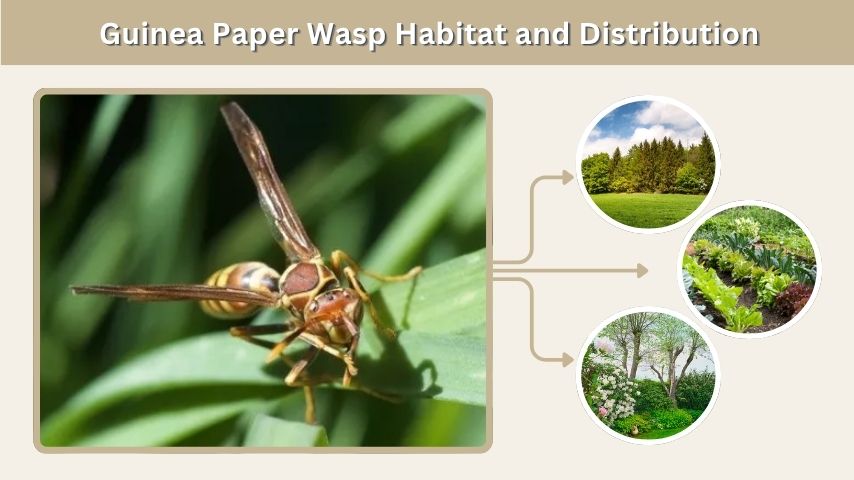
Guinea Paper Wasps thrive in warm environments with access to shelter, water, and insect prey. They commonly live near forests, gardens, farms, and buildings where suitable nesting locations are available. Colonies often appear around human structures because roofs, sheds, and fences provide protection from rain and predators while remaining close to food sources.
Natural Habitat
- Forest edges
- Gardens
- Bushy areas
- Roof spaces
- Tree branches
- Outdoor buildings
Geographic Distribution
Guinea Paper Wasps are mostly found in tropical and subtropical regions, especially across parts of Africa and other warm climates. They adapt well to both urban and rural environments as long as suitable nesting sites and food sources remain available. Warm temperatures support colony growth and increase insect activity needed for feeding larvae.
Seasonal Activity
These wasps become most active during warmer seasons when food is abundant and nesting conditions improve. Colonies expand rapidly during this period as queens lay eggs and workers gather materials for nest construction. Activity often decreases during cooler weather or heavy seasonal changes depending on the local climate.
Guinea Paper Wasp Nest
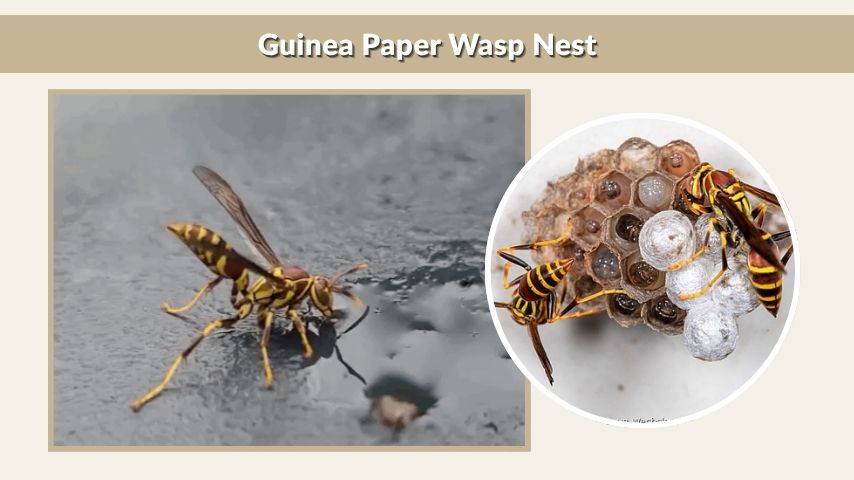
The nest of a Guinea Paper Wasp is one of its most recognizable features. Unlike enclosed wasp nests, paper wasp nests remain open and visible. The structure usually hangs from a thin stalk attached to roofs, branches, or outdoor surfaces. Each nest contains many hexagonal cells where eggs, larvae, and developing young are protected.
What Does the Nest Look Like?
- Gray paper-like texture
- Open comb design
- Visible hexagonal cells
- Hanging umbrella shape
- Usually uncovered from the outside
How Nests Are Built
Worker wasps collect wood fibers by scraping weathered wood from fences, bark, or plants. After chewing the fibers into pulp, they mix the material with saliva and spread it carefully into thin layers. Over time, the nest grows larger as additional cells are added for expanding colony members.
Common Nest Locations
Guinea Paper Wasps often build nests beneath roof eaves, inside sheds, under decks, on tree branches, and around outdoor structures. These protected locations help shield colonies from rain and direct sunlight while providing nearby access to insects and water needed for survival.
What Does the Guinea Paper Wasp Eat?
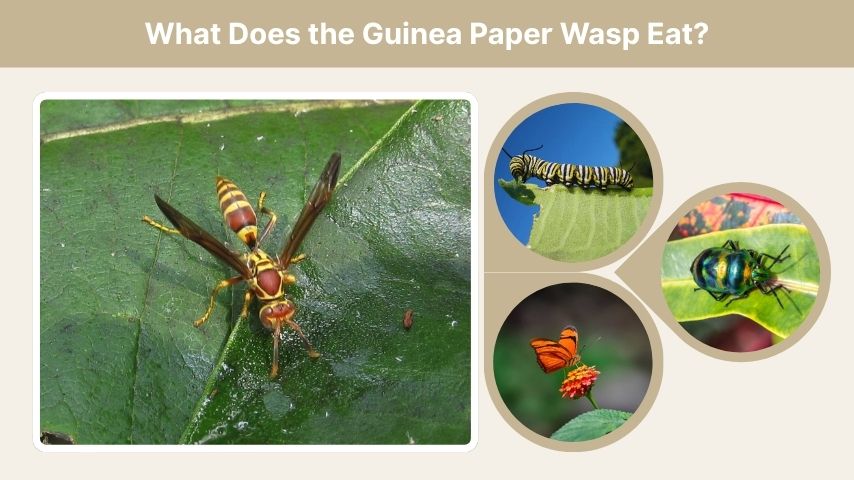
Guinea Paper Wasps are active hunters that feed mainly on insects and sugary liquids. Adult wasps often consume nectar and fruit juices for energy, while larvae receive protein-rich insects captured by worker wasps. Their feeding habits help control populations of harmful garden pests, making them useful insects in many ecosystems and agricultural areas.
Main Diet
- Caterpillars
- Small flies
- Beetles
- Nectar
- Fruit juices
- Soft-bodied insects
- Sugary liquids
Hunting Behavior
Guinea Paper Wasps hunt during the daytime and search plants, leaves, and branches for prey. Worker wasps capture insects using strong jaws and carry them back to the nest. The prey is often chewed into smaller pieces before being fed to developing larvae inside nest cells. Adult wasps mainly consume sweet liquids for quick energy.
Importance in Pest Control
These wasps help reduce populations of harmful insects that damage gardens and crops. Caterpillars, beetles, and soft-bodied pests are common prey items, which makes paper wasps valuable natural pest controllers. Their hunting activity supports ecological balance and reduces the need for chemical pesticides in some environments.
Guinea Paper Wasp Behavior
Guinea Paper Wasps live in organized colonies where each member performs specific tasks. The queen focuses mainly on laying eggs, while worker wasps build nests, gather food, and defend the colony. These insects communicate through body movements and chemical signals that help maintain order within the nest.
Colony Structure
- Queen responsible for reproduction
- Workers build and protect nests
- Larvae remain inside nest cells
- Colonies contain multiple adult wasps
- Social cooperation supports survival
Flight and Communication
These wasps are fast and agile flyers that move efficiently between food sources and nesting areas. Chemical scents help them recognize nestmates and communicate danger. Workers may also use wing movements and body posture to warn intruders approaching the colony.
Defensive Behavior
Guinea Paper Wasps usually avoid conflict unless the nest is threatened. When disturbed, they may become defensive and fly aggressively around intruders. Warning behaviors often include rapid wing movement, raised posture, and repeated circling near the nest area before attacking.
Guinea Paper Wasp Sting
Like many social wasps, Guinea Paper Wasps can sting when defending themselves or protecting their colony. Their sting is painful but usually temporary for most people. However, individuals with allergic reactions may experience more serious symptoms that require medical attention.
Do Guinea Paper Wasps Sting?
- Sting mainly for defense
- Protect nests aggressively
- Can sting multiple times
- More defensive near colonies
- Usually non-aggressive away from nests
Sting Symptoms
Most stings cause immediate pain, redness, swelling, and irritation around the affected area. Mild itching or burning sensations may continue for several hours. In allergic individuals, symptoms can become severe and include breathing difficulty, dizziness, or major swelling requiring emergency treatment.
Treatment and First Aid
The sting area should be cleaned gently with soap and water to reduce infection risk. Applying ice may help reduce swelling and pain. Antihistamines or mild pain relievers are often used for irritation. Medical attention should be sought immediately if severe allergic symptoms appear after a sting.
Guinea Paper Wasp Life Cycle
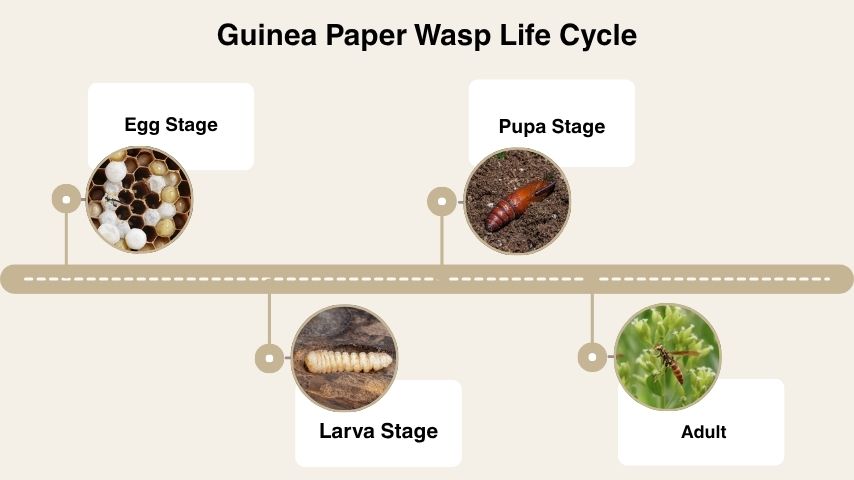
The Guinea Paper Wasp develops through several stages beginning with eggs laid by the queen. Young wasps grow inside the nest cells where worker wasps provide food and protection. Warm temperatures and abundant food help colonies expand rapidly during active seasons.
Egg Stage
- Queen lays eggs inside cells
- Eggs remain protected in nest
- Early development begins quickly
- Workers maintain nest conditions
Larvae and Pupae
After hatching, larvae remain inside the nest cells and are fed by worker wasps. As they grow, they enter the pupal stage where major body changes occur before adulthood. During this stage, the young wasp develops wings, legs, and adult body structures.
Adult Wasp Development
Fully developed adult wasps emerge from the nest cells and begin colony duties shortly afterward. Worker wasps focus on gathering food, nest construction, and colony defense, while queens continue laying eggs to support colony growth throughout the active season.
Guinea Paper Wasp vs Yellow Jacket
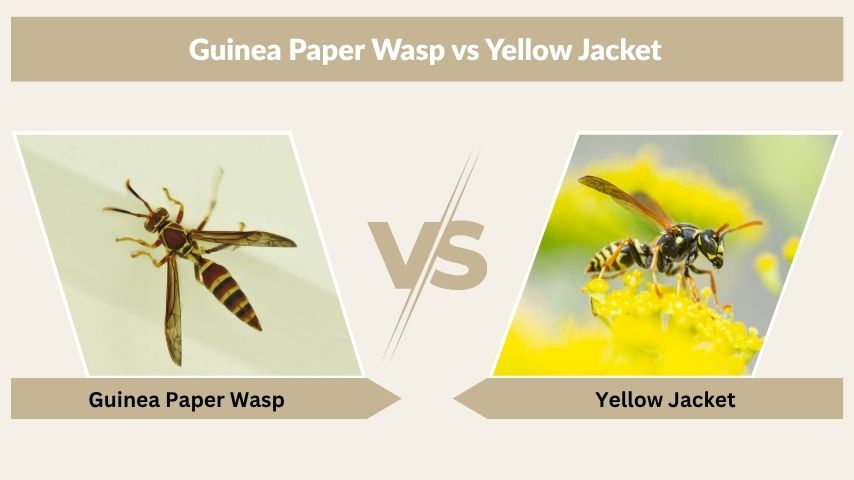
Guinea Paper Wasps and yellow jackets are often confused because both belong to the wasp family and can sting when threatened. However, they differ in appearance, nest structure, and behavior. Paper wasps usually have slimmer bodies and build open hanging nests, while yellow jackets are more compact and aggressive with enclosed nests hidden underground or inside walls.
Appearance Differences
| Feature | Guinea Paper Wasp | Yellow Jacket |
| Body Shape | Slim and elongated | Compact and thick |
| Waist Size | Narrow waist | Less narrow waist |
| Leg Position | Legs hang during flight | Legs tucked close |
| Color Pattern | Brown and yellow | Bright yellow and black |
Behavior Differences
| Feature | Guinea Paper Wasp | Yellow Jacket |
| Aggression Level | Mild unless disturbed | Often highly aggressive |
| Nest Type | Open paper nest | Enclosed hidden nest |
| Feeding Habits | Hunts insects and drinks nectar | Scavenges sugary foods and insects |
| Colony Size | Smaller colonies | Larger colonies |
Are Guinea Paper Wasps Dangerous?
Guinea Paper Wasps are generally not dangerous when left alone and away from their nests. They usually focus on hunting insects and maintaining the colony rather than attacking humans. Problems mainly occur when nests are disturbed accidentally. Their sting can be painful, and allergic individuals may experience serious reactions requiring medical care.
Human Safety
- Usually calm away from nests
- Defensive near colonies
- Sting can cause pain and swelling
- Allergic reactions may occur
- Avoid direct nest disturbance
Safe Removal Tips
If a nest is located near homes or walkways, removal should be handled carefully. Protective clothing helps reduce sting risk, but professional pest control is often the safest option for large or active colonies. Disturbing nests without proper equipment may trigger aggressive defensive behavior from multiple wasps at once.
Interesting Facts About Guinea Paper Wasps
Guinea Paper Wasps are fascinating social insects with highly organized colonies and impressive nest-building abilities. Their role as natural pest controllers makes them important in gardens and ecosystems. Although feared because of their sting, they contribute positively to the environment by reducing insect populations and supporting ecological balance.
Amazing Facts
- Build nests from chewed wood fibers
- Can recognize members of their colony
- Important natural pest controllers
- Long legs hang during flight
- Colonies contain specialized social roles
FAQs
What is a Guinea Paper Wasp?
A Guinea Paper Wasp is a social wasp species known for building paper-like nests from chewed wood fibers. These wasps live in colonies and are commonly found in warm tropical regions near gardens, forests, and outdoor structures.
Are Guinea Paper Wasps aggressive?
Guinea Paper Wasps are usually not aggressive unless their nest is disturbed. They spend most of their time hunting insects and building nests. However, they may sting defensively if they feel threatened or if someone approaches the colony too closely.
What does a Guinea Paper Wasp nest look like?
Their nests have an open comb structure made from gray paper-like material. The nests contain visible hexagonal cells and usually hang beneath roofs, tree branches, sheds, or outdoor structures using a thin attachment stalk.
Do Guinea Paper Wasps sting?
Yes, Guinea Paper Wasps can sting when defending themselves or protecting their nest. Their sting is painful and may cause swelling, redness, and irritation. People with allergies to wasp stings should seek medical attention if severe reactions occur.
Are Guinea Paper Wasps beneficial for gardens?
Yes, Guinea Paper Wasps are beneficial because they hunt caterpillars, beetles, and other harmful insects that damage plants. Their natural pest-control behavior helps support healthier gardens and reduces the need for chemical pesticides.