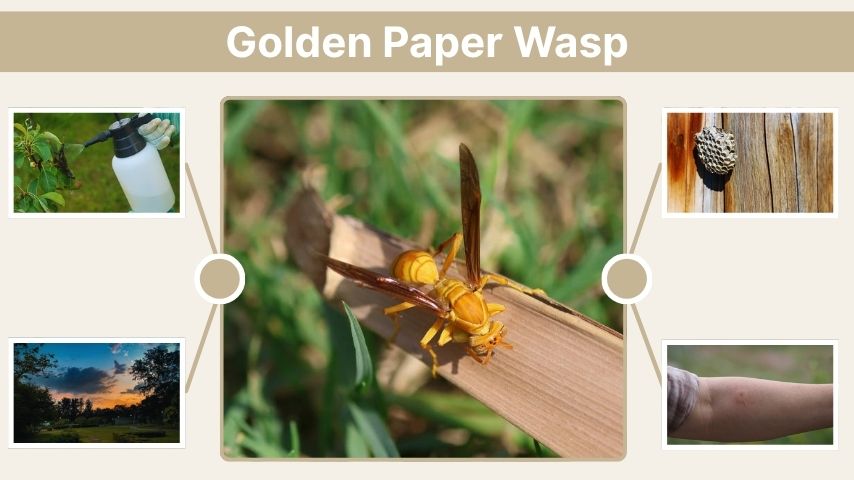
The golden paper wasp is a striking insect known for its bright golden-yellow coloration and unique paper-like nests. Commonly found in warm regions of the United States, especially Arizona, these wasps play an important role in controlling garden pests. While they can sting when threatened, golden paper wasps are generally less aggressive than many other stinging insects. Understanding their appearance, nesting habits, behavior, and ecological benefits can help homeowners coexist safely with these fascinating insects.
What Is a Golden Paper Wasp?
Golden paper wasps belong to a group of social wasps that build nests from chewed wood fibers mixed with saliva. Their slender bodies, long legs, and distinctive yellow coloring make them easy to recognize. Like other paper wasps, they live in colonies led by a queen and contribute to natural pest control by hunting insects that damage plants and crops.
Golden Paper Wasp Scientific Name
Several paper wasp species may be referred to as golden paper wasps depending on the region. In the southwestern United States, brightly colored paper wasps from the genus Polistes are often associated with this common name.
Physical Appearance
Golden paper wasps have several distinctive characteristics that separate them from bees and hornets.
Key identification features include:
- Bright golden-yellow body coloration
- Long, narrow waist
- Slender legs that hang during flight
- Folded wings when resting
- Smooth, shiny body surface
These traits help distinguish them from bulkier wasp species.
How to Identify a Golden Paper Wasp
Unlike yellowjackets, golden paper wasps are generally more slender and less compact. Their long legs are especially noticeable during flight. They also tend to move slowly around nests, making them easier to observe from a safe distance.
Golden Paper Wasps in Arizona and Other Regions
Golden paper wasps are especially common in warm and dry climates. Arizona provides ideal conditions because of its long summers, abundant nesting sites, and available food sources. However, these insects can also be found in other states where suitable habitats exist.
Golden Paper Wasp Arizona Habitat
In Arizona, golden paper wasps frequently nest around homes, patios, garages, and outdoor structures. They prefer locations that provide shelter from direct weather exposure while remaining close to food and water sources.
Golden Paper Wasps in Missouri and Other States
Although sightings are more common in the Southwest, paper wasps can be found throughout many regions of the United States. Local environmental conditions often determine the size and distribution of populations.
Seasonal Activity Patterns
Golden paper wasps follow a predictable seasonal cycle:
- Queens emerge during spring
- Colonies expand throughout summer
- Nest populations peak in late summer
- Colonies decline during fall
- Most workers die before winter
This cycle repeats each year as new queens establish fresh colonies.
Golden Paper Wasp Nest Identification
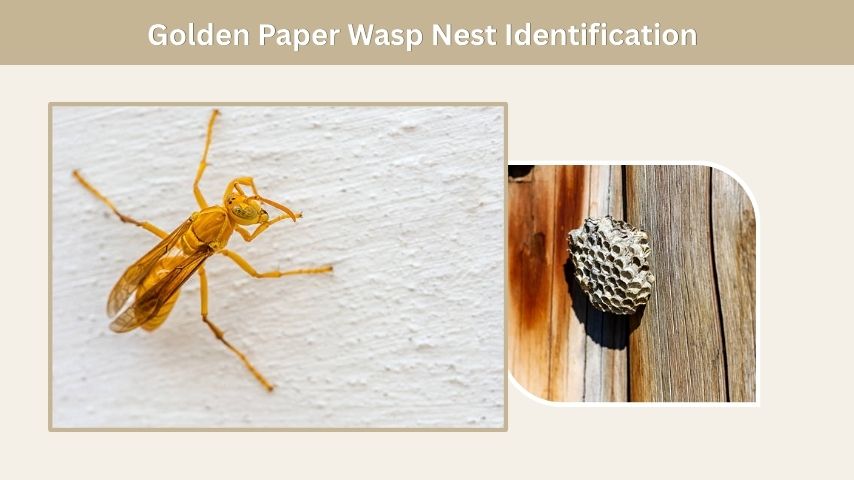
The nest is one of the easiest ways to identify a golden paper wasp colony. Unlike enclosed hornet nests, paper wasp nests remain open and expose individual cells. These structures are built from wood fibers collected from fences, trees, and other weathered surfaces.
What Does a Golden Paper Wasp Nest Look Like?
Golden paper wasp nests resemble small umbrellas hanging upside down. The exposed hexagonal cells remain visible from below, making them easy to recognize. The paper-like material has a gray or brown appearance due to the combination of wood fibers and saliva used during construction.
Where Do They Build Nests?
Golden paper wasps often select protected areas that shield the colony from rain and predators. Common nesting locations include roof overhangs, sheds, decks, porch ceilings, and tree branches. Their preference for human-made structures frequently brings them into close contact with people.
How Paper Wasp Nests Are Constructed
Nest building begins when a queen gathers weathered wood fibers and chews them into a pulp-like material. She then shapes this material into cells that will house developing larvae. As workers emerge, they help expand the nest and care for young members of the colony.
Are Golden Paper Wasps Dangerous?
Many people become concerned when they discover wasps near their homes. While golden paper wasps can sting, they are generally less aggressive than yellowjackets and hornets. Most stings occur when a nest is disturbed or when a wasp feels threatened.
Do Golden Paper Wasps Sting?
Yes, golden paper wasps are capable of stinging. Unlike honeybees, they can sting multiple times because their stingers do not become lodged in the skin. However, they usually prefer to avoid confrontation whenever possible.
Are Golden Paper Wasps Aggressive?
Golden paper wasps are often considered relatively docile when away from their nests. They typically focus on gathering food and caring for the colony. Aggressive behavior is most likely to occur when individuals approach too closely to a nest or attempt to remove it without proper precautions.
When Can They Become Dangerous?
Certain situations increase the likelihood of defensive behavior:
- Accidental nest disturbance
- Lawn equipment vibrations
- Direct physical contact
- Attempts at nest removal
- Threats near developing larvae
Understanding these triggers can help reduce the risk of stings and encourage safer interactions with these beneficial insects.
Golden Paper Wasp Sting Guide
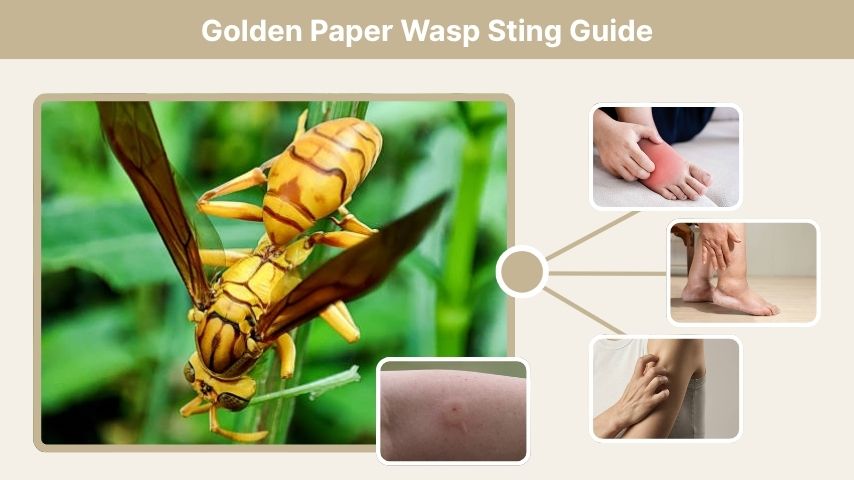
Although golden paper wasps are generally less aggressive than many other stinging insects, they will defend their nests if they perceive a threat. Understanding what happens during a sting and how to respond can help minimize discomfort and reduce the risk of complications.
How Painful Is a Golden Paper Wasp Sting?
A golden paper wasp sting typically causes immediate sharp pain followed by redness and swelling around the affected area. The intensity varies depending on the person’s sensitivity and the location of the sting. Most reactions are mild and improve within a few hours or days.
Common Sting Symptoms
Most people experience temporary symptoms that do not require medical treatment. Common reactions include:
- Sharp burning pain
- Redness around the sting site
- Mild to moderate swelling
- Itching
- Warmth near the affected area
These symptoms usually disappear without long-term effects.
First Aid for a Golden Paper Wasp Sting
Prompt treatment can help reduce discomfort and swelling. Washing the area with soap and water, applying a cold compress, and taking an over-the-counter antihistamine may provide relief. Avoid scratching the sting site, as this can increase irritation and delay healing.
When to Seek Medical Attention
Some individuals may experience severe allergic reactions after a wasp sting. Difficulty breathing, facial swelling, dizziness, or rapid heartbeat require immediate emergency medical care. People with known insect sting allergies should always carry prescribed emergency medication when outdoors.
Golden Paper Wasps Around Pools
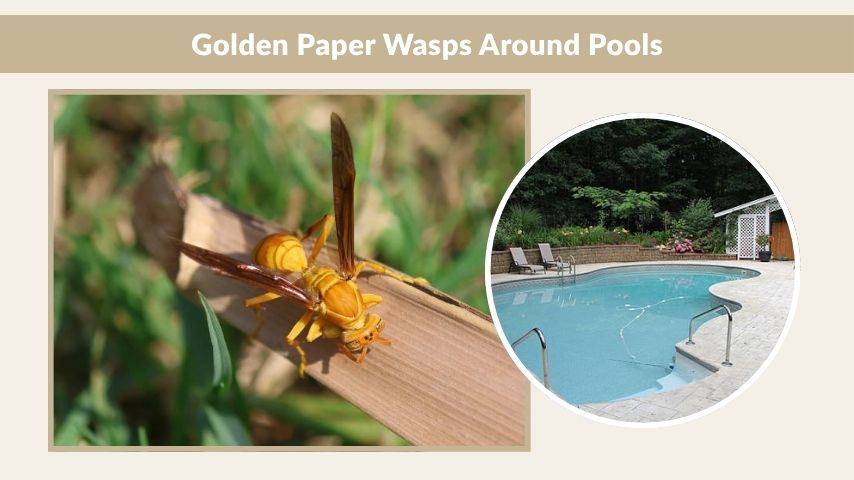
Many homeowners notice golden paper wasps gathering around swimming pools during warm weather. This behavior often causes concern, especially when family members are using the pool. Fortunately, understanding why wasps are attracted to water can help reduce their presence.
Why Are Golden Paper Wasps Attracted to Pools?
Like all living creatures, wasps require water for survival. They use water to regulate nest temperatures, mix building materials, and stay hydrated during hot weather. Swimming pools, fountains, and birdbaths provide convenient water sources.
How to Reduce Wasp Activity Near Pools
Several simple measures can make pools less attractive to wasps:
- Remove standing water when possible
- Repair leaking faucets
- Keep food and sugary drinks covered
- Empty unused containers regularly
- Place alternative water sources away from recreation areas
These steps may encourage wasps to seek water elsewhere.
Preventing Future Visits
Consistent maintenance around pool areas can significantly reduce wasp activity. Regular inspections, prompt nest removal, and proper waste management help minimize conditions that attract these insects.
Benefits of Golden Paper Wasps
Despite their reputation as stinging insects, golden paper wasps provide several valuable ecological benefits. In many situations, they help maintain healthy gardens and natural ecosystems by controlling pest populations.
Natural Pest Control
Golden paper wasps actively hunt insects that damage plants and crops. Caterpillars, flies, and other soft-bodied insects serve as food for developing larvae. This natural predation helps reduce the need for chemical pest control methods.
Pollination Benefits
While searching for nectar, golden paper wasps may transfer pollen between flowers. Although they are not as efficient as bees, they still contribute to pollination and support plant reproduction in many environments.
Why Not Every Nest Needs Removal
Not all paper wasp nests pose a threat. Colonies located away from high-traffic areas often coexist peacefully with humans. In some cases, leaving a nest undisturbed allows homeowners to benefit from the wasps’ pest-control services.
How to Get Rid of Golden Paper Wasps
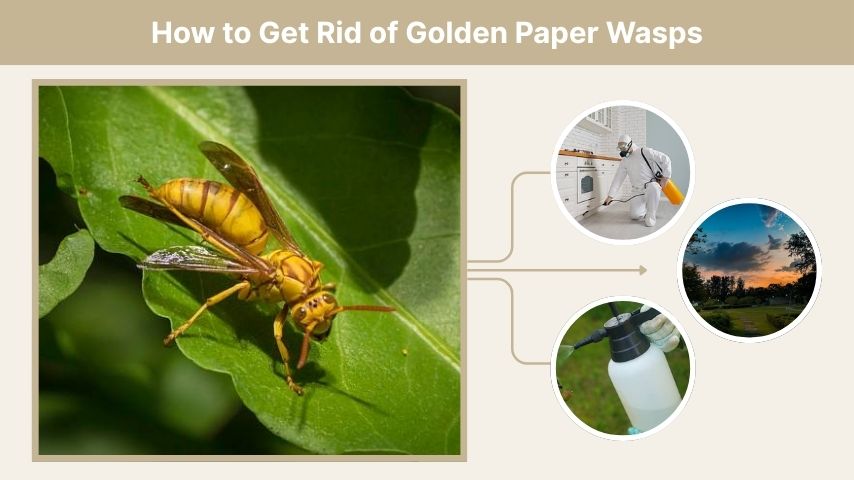
When nests are located near entryways, playgrounds, or frequently used outdoor spaces, removal may become necessary. Safe and careful management is essential because disturbing a colony can trigger defensive behavior.
Safe Nest Removal Methods
If removal is required, consider the following precautions:
- Wear protective clothing
- Remove nests after sunset
- Use approved wasp-control products
- Maintain a safe distance
- Follow manufacturer instructions carefully
These measures help reduce the risk of stings during removal efforts.
Preventing New Nests
Preventive action is often more effective than repeated nest removal. Homeowners can reduce nesting opportunities by:
- Sealing cracks and openings
- Inspecting eaves regularly
- Removing old nests
- Reducing food attractants
- Maintaining outdoor structures
Regular inspections can stop small colonies from becoming larger infestations.
When to Call a Professional
Large nests, difficult-to-reach colonies, or situations involving allergy concerns may require professional pest control services. Experienced technicians have the equipment and expertise needed to remove nests safely.
Interesting Facts About Golden Paper Wasps
Golden paper wasps possess several fascinating characteristics that many people do not realize. Their social behavior, construction skills, and ecological importance make them among the most interesting insects found around homes and gardens.
They Build Paper From Wood
Golden paper wasps create their nests by chewing weathered wood fibers and mixing them with saliva. This process produces the paper-like material that gives paper wasps their name.
They Live in Organized Colonies
Each colony contains a queen and worker wasps that cooperate to build nests, gather food, and care for developing larvae. This teamwork contributes to the colony’s success.
They Help Protect Gardens
By feeding on plant-damaging insects, golden paper wasps provide a natural form of pest management that benefits gardeners and farmers alike.
FAQs
What attracts golden paper wasps to my property?
Golden paper wasps are attracted to locations that provide shelter, food, and water. Roof eaves, porches, sheds, flowering plants, and swimming pools often create ideal conditions for nesting and foraging.
Do golden paper wasps return to the same nest every year?
No, golden paper wasps do not usually reuse old nests. However, new queens may build nests near previous nesting sites if the location offers suitable shelter and resources.
What do golden paper wasps eat?
Adult golden paper wasps feed primarily on nectar and sugary substances, while larvae are fed insects such as caterpillars, flies, and other garden pests collected by worker wasps.
How can I tell the difference between a golden paper wasp and a yellowjacket?
Golden paper wasps have slender bodies, longer legs, and open umbrella-shaped nests. Yellowjackets are stockier, more aggressive, and build enclosed paper nests that hide the internal cells.
Are golden paper wasps beneficial for gardens?
Yes, golden paper wasps are considered beneficial insects because they prey on many common garden pests. Their natural hunting behavior helps reduce caterpillar and insect populations that can damage flowers, vegetables, and ornamental plants.