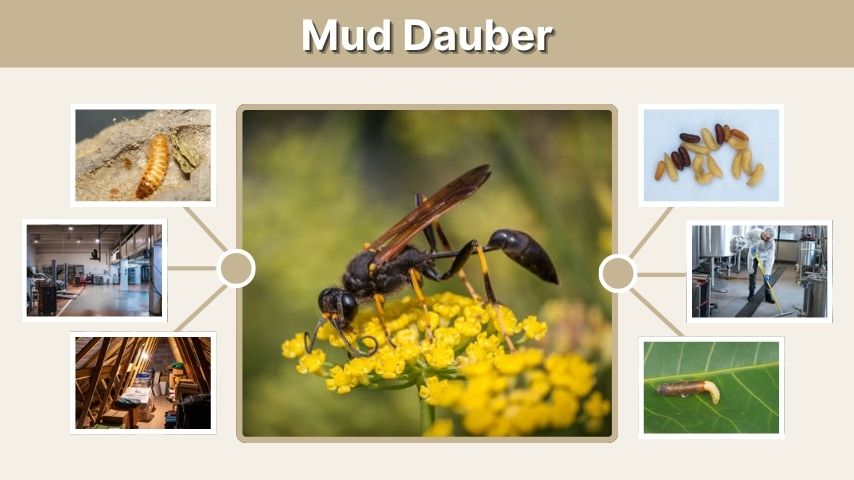
Mud daubers are solitary wasps known for building distinctive mud nests on homes, sheds, garages, and other structures. Unlike many social wasps, these insects are generally non-aggressive and play an important role in controlling spider populations. Their unusual nesting behavior and slender body shape often cause homeowners to wonder whether they are dangerous. Understanding mud dauber identification, nesting habits, sting risks, and removal methods can help you decide whether to leave them alone or safely remove their nests from your property.
What Is a Mud Dauber?
Mud daubers are solitary wasps belonging to several species within the Sphecidae and Crabronidae families. Unlike yellow jackets and paper wasps, they do not live in large colonies. Instead, each female constructs her own nest using mud and provisions it with spiders for her offspring.
These insects are considered beneficial because they help reduce spider populations around homes and gardens. Although their appearance may seem intimidating, mud daubers are usually far less aggressive than most common wasps.
Mud Dauber Characteristics
Several features make mud daubers easy to identify.
- Long, slender body shape.
- Extremely narrow waist.
- Long legs and wings.
- Solitary behavior.
- Mud-built nests.
- Spider-hunting habits.
Why Mud Daubers Are Unique
Mud daubers differ from many other wasps because they build nests from mud rather than paper or wood fibers. Their nests serve as protective chambers where developing larvae feed on paralyzed spiders supplied by the adult female.
What Does a Mud Dauber Look Like?
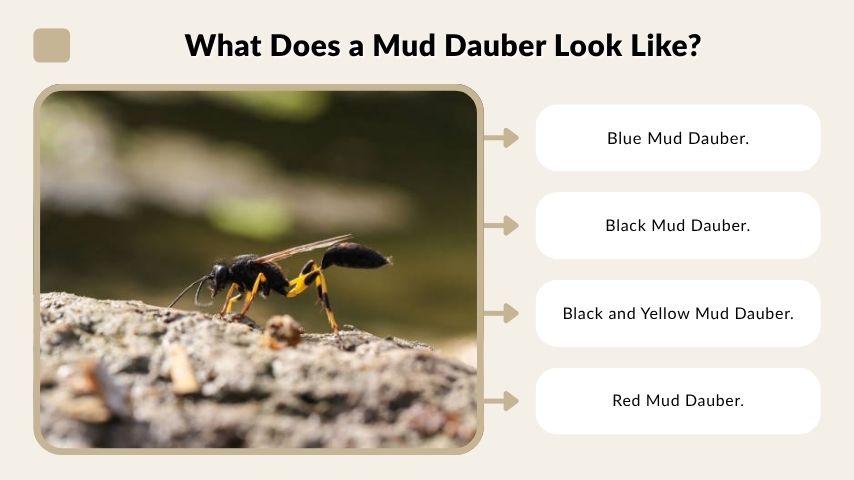
Mud daubers have a distinctive appearance that separates them from more familiar wasp species. Their elongated bodies and narrow waists create a unique silhouette that is often easy to recognize once observed closely. Coloration varies significantly among species, with some displaying metallic blue shades while others exhibit black, yellow, or reddish markings.
Because of their unusual body structure, mud daubers are often mistaken for large flying insects that may be dangerous. However, appearance alone does not accurately reflect their generally peaceful nature.
Mud Dauber Size
Most mud daubers measure between ½ and 1 inch in length. Their bodies are slim and elongated, making them appear larger than they actually are.
Common Mud Dauber Species
Several species are commonly encountered.
- Blue Mud Dauber.
- Black Mud Dauber.
- Black and Yellow Mud Dauber.
- Red Mud Dauber.
- Organ Pipe Mud Dauber.
- Yellow-Legged Mud Dauber.
Blue Mud Dauber
The Blue Mud Dauber is recognized by its metallic blue coloration and glossy appearance. This species often reuses abandoned nests built by other mud daubers and frequently hunts spiders for its developing offspring.
Mud Dauber Habitat and Distribution
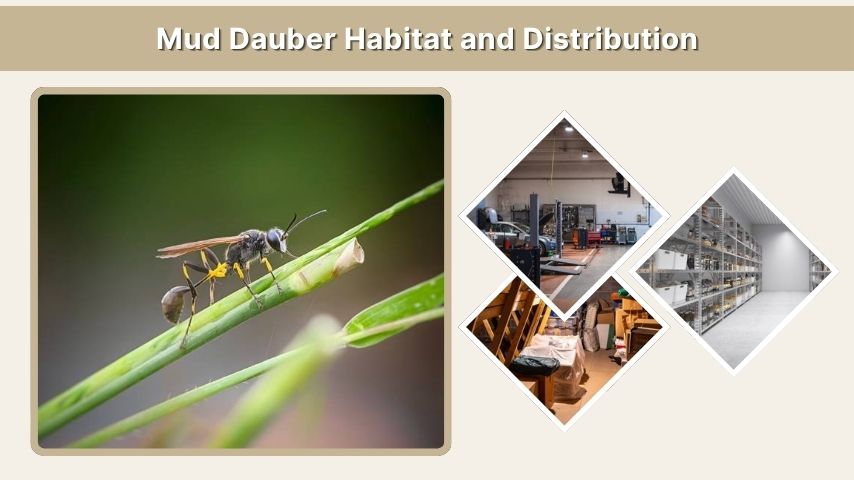
Mud daubers are found throughout many warm and temperate regions worldwide. They prefer environments that provide easy access to mud, water, and prey. Residential areas often attract mud daubers because buildings offer sheltered locations suitable for nest construction.
These wasps frequently build nests under eaves, inside garages, beneath porches, and on exterior walls. Their adaptability allows them to thrive in both urban and rural environments.
Where Do Mud Daubers Live?
Mud daubers are commonly found in:
- North America.
- Central America.
- South America.
- Asia.
- Australia.
- Various tropical and subtropical regions.
Why Mud Daubers Enter Houses
Occasionally, mud daubers enter buildings while searching for nesting sites or prey. Garages, attics, barns, sheds, and storage areas provide protected locations where nests can remain undisturbed for long periods.
Mud Dauber Nest Explained
Mud dauber nests are among the easiest insect nests to identify. Constructed from mud pellets gathered by the female wasp, these structures contain individual chambers designed to protect eggs and developing larvae. Their unusual appearance often causes homeowners to mistake them for termite activity or other pest infestations.
Unlike social wasps that maintain large communal nests, mud daubers build small individual nests that may remain attached to surfaces long after the insects have left.
What Does a Mud Dauber Nest Look Like?
Mud dauber nests vary by species but generally appear as clusters of mud tubes or small mud cells attached to walls, ceilings, beams, and sheltered structures. Organ Pipe Mud Daubers create long cylindrical tubes that resemble small pipes, while other species build compact mud chambers.
Why Are There Spiders in Mud Dauber Nests?
Female mud daubers capture and paralyze spiders before placing them inside nest chambers. These spiders serve as food for developing larvae after the eggs hatch. The spiders remain alive but immobilized, providing a fresh food source throughout larval development.
Common Nest Locations
Mud daubers often choose protected areas for nest construction.
- House siding.
- Garages.
- Attics.
- Sheds.
- Porches.
- Barns.
Mud Dauber Life Cycle
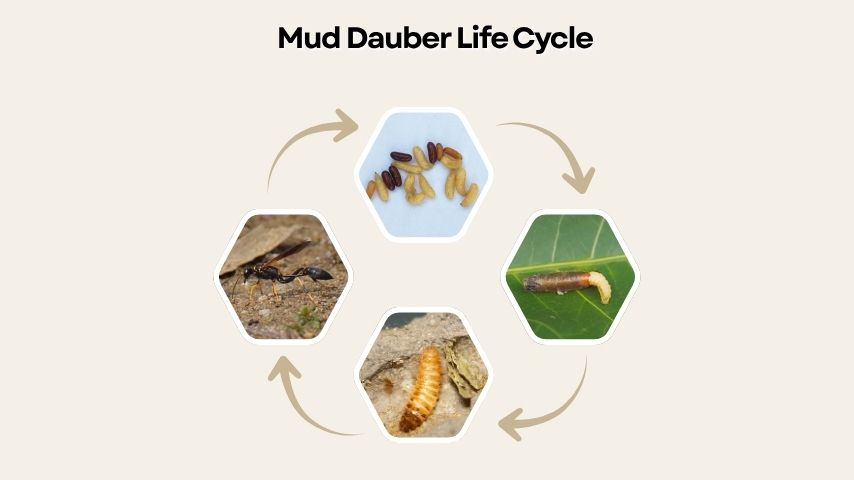
The mud dauber life cycle revolves around nest construction and prey collection. After building a nest chamber, the female gathers spiders and deposits them inside before laying a single egg. Once the chamber is sealed, the developing larva remains protected until adulthood.
Egg Stage
The female lays one egg inside each mud chamber. The egg hatches after a short developmental period, beginning the next stage of the life cycle.
Larval Stage
Mud dauber larvae consume the stored spiders within the chamber. During this stage, they grow rapidly while remaining protected inside the mud nest.
Pupal Stage
After feeding is complete, the larva transforms into a pupa within the sealed chamber. This stage allows the insect to develop into its adult form before emerging from the nest.
Adult Stage
Once development is complete, the adult mud dauber emerges from the nest by chewing through the mud wall. Adult females immediately begin searching for suitable nesting locations and collecting mud for new nests. Their primary activities include mating, hunting spiders, and building nests for the next generation.
Do Mud Daubers Sting?
Many homeowners become concerned when they see mud daubers around their property because they resemble other wasps. Fortunately, mud daubers are among the least aggressive wasp species. They rarely sting humans and generally avoid confrontation whenever possible.
Unlike social wasps that aggressively defend colonies, mud daubers live alone and have little reason to attack people. Most stings occur only when the insect is handled or trapped against the skin.
Do Mud Dauber Wasps Sting?
Yes, mud daubers are capable of stinging. However, females possess stingers while males do not. Even female mud daubers rarely sting because they are naturally non-aggressive and prefer to fly away when disturbed.
Are Mud Daubers Aggressive?
Mud daubers are not considered aggressive insects. They spend most of their time gathering mud, hunting spiders, and maintaining nests. Unlike yellow jackets or hornets, they do not swarm or defend colonies.
What Does a Mud Dauber Sting Feel Like?
A mud dauber sting is usually mild compared to many other wasp stings. Common symptoms include:
- Temporary pain.
- Minor redness.
- Mild swelling.
- Itching around the sting site.
- Short-term discomfort.
Mud Dauber vs Wasp
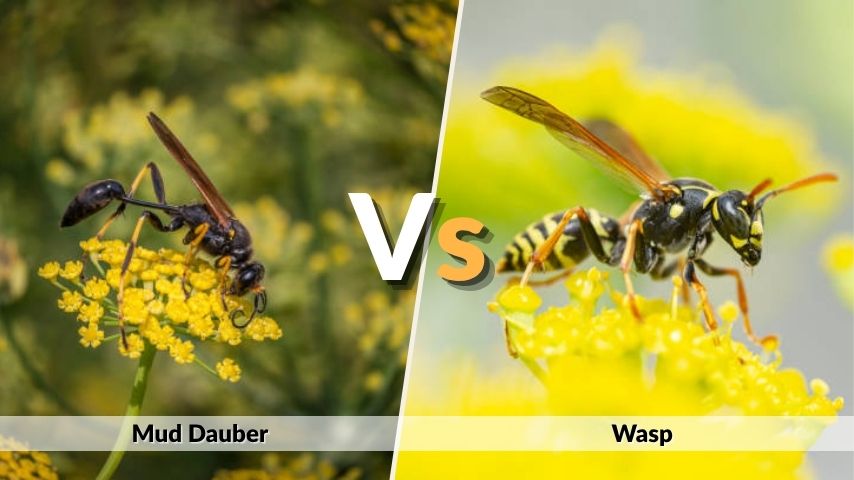
Although mud daubers belong to the wasp family, they differ significantly from the wasps most people encounter. Their behavior, nesting habits, and aggression levels make them unique among stinging insects.
Understanding these differences can help homeowners identify mud daubers correctly and avoid unnecessary concern.
Mud Dauber vs Paper Wasp
Paper wasps build large communal nests and actively defend them. Mud daubers, by contrast, live alone and construct nests from mud rather than paper-like materials.
Key Differences
| Feature | Mud Dauber | Paper Wasp |
| Social Structure | Solitary | Social |
| Nest Material | Mud | Paper |
| Aggression | Very Low | Moderate |
| Primary Food Source | Spiders | Insects |
| Sting Risk | Rare | Common |
Which Is More Dangerous?
Paper wasps and yellow jackets pose a much greater sting risk than mud daubers. Most homeowners can safely observe mud daubers without fear of aggressive behavior.
How to Remove a Mud Dauber Nest
While mud daubers are beneficial insects, some homeowners prefer to remove nests for aesthetic reasons or to prevent accumulation on buildings. Fortunately, old mud dauber nests can often be removed safely and easily.
Best Time for Nest Removal
Nest removal is easiest when the nest is inactive. Old nests that have already been vacated pose little risk because adult wasps have already emerged.
Safe Removal Steps
Follow these steps to remove a mud dauber nest:
- Confirm the nest is inactive.
- Wear gloves and protective clothing.
- Use a scraper or putty knife.
- Gently remove the mud structure.
- Dispose of nest debris.
- Clean the surface afterward.
Should You Remove Every Nest?
Not necessarily. Mud daubers provide natural spider control and generally cause little damage. If the nest is not creating problems, many homeowners choose to leave it alone.
How to Get Rid of Mud Daubers
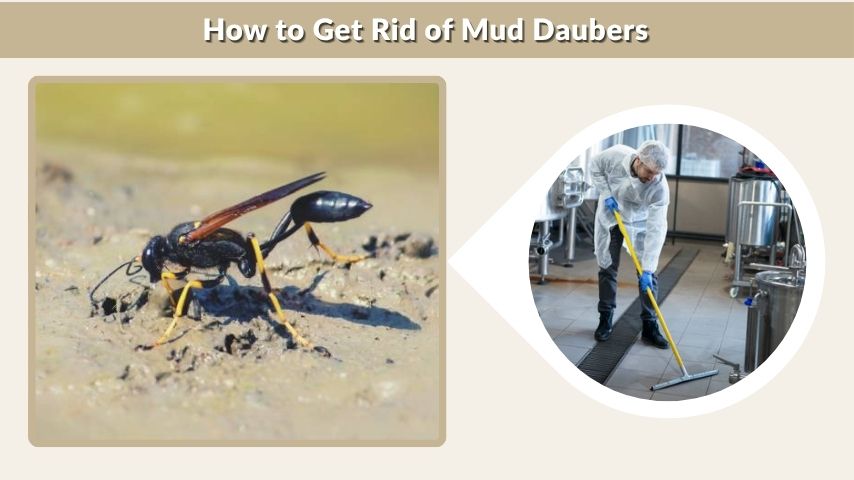
Preventing mud daubers from building new nests is often more effective than repeatedly removing old ones. Reducing attractive nesting locations can significantly discourage future activity.
Mud Dauber Prevention Tips
Several methods can help keep mud daubers away.
- Seal cracks and gaps.
- Keep storage areas clean.
- Remove old nests promptly.
- Limit access to sheltered spaces.
- Install screens where appropriate.
- Reduce spider populations.
Mud Dauber Repellents and Sprays
Commercial wasp sprays may be used when necessary, but chemical treatments are rarely required because mud daubers are generally harmless. Physical prevention methods are usually more effective for long-term control.
Mud Dauber Traps
Traps may help reduce local populations, although they are typically less important than eliminating attractive nesting locations and maintaining clean structures.
Are Mud Daubers Beneficial?
Despite their wasp-like appearance, mud daubers are highly beneficial insects. Their spider-hunting behavior helps reduce populations of various spider species around homes, gardens, and outbuildings.
Many homeowners unknowingly benefit from mud dauber activity because these wasps remove spiders that might otherwise accumulate around structures.
Benefits of Mud Daubers
Mud daubers provide several ecological advantages.
- Natural spider control.
- Reduced pest populations.
- Minimal risk to humans.
- Important role in ecosystems.
- Low aggression compared to other wasps.
Why They Hunt Spiders
Female mud daubers require spiders to feed developing larvae. By hunting and storing spiders within nest chambers, they help regulate local spider populations naturally.
FAQs
Do Mud Daubers Sting Humans?
Yes, female mud daubers can sting, but they rarely do. They are non-aggressive wasps and usually avoid contact with people.
Are Mud Dauber Wasps Dangerous?
No, mud daubers are generally not dangerous. They seldom sting and are considered one of the least aggressive wasp species.
What Do Mud Dauber Nests Look Like?
Mud dauber nests are made of dried mud and often appear as tubes, cylinders, or clusters of mud cells attached to walls, ceilings, garages, and sheds.
Why Are There Spiders Inside Mud Dauber Nests?
Female mud daubers collect and paralyze spiders to provide food for developing larvae inside the nest chambers.
Should I Remove a Mud Dauber Nest?
If the nest is inactive and causing no issues, removal is usually unnecessary. However, nests on buildings can be safely removed for appearance or maintenance purposes.