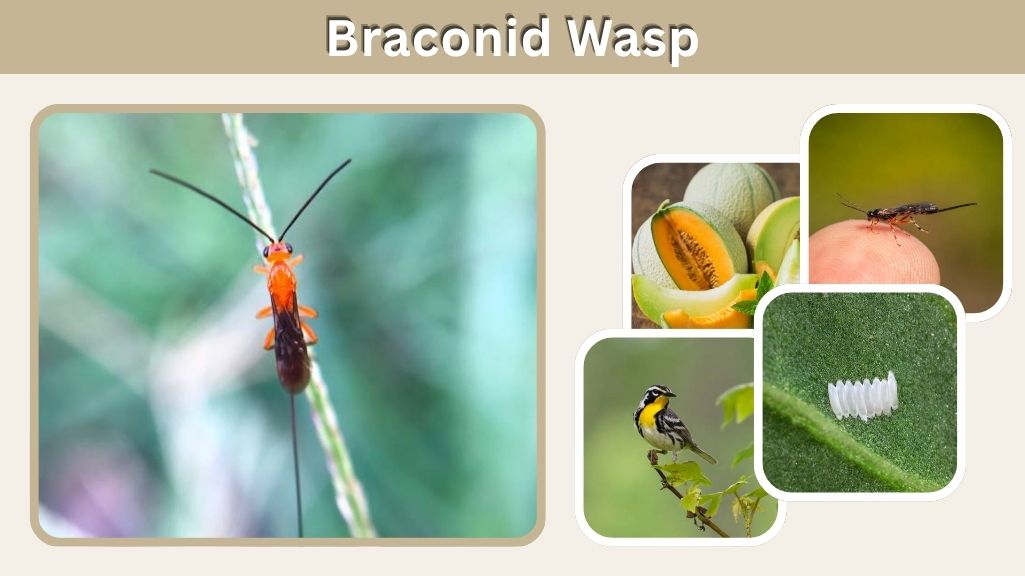
Braconid wasps are small parasitic insects that play an important role in natural pest control. Belonging to the family Braconidae, these wasps are found worldwide and are highly valued in agriculture and gardening because they help reduce populations of harmful insects. Unlike aggressive social wasps, braconid wasps are generally harmless to humans and focus their efforts on parasitizing host insects such as caterpillars, aphids, and beetle larvae. Their fascinating life cycle and beneficial ecological role make them one of nature’s most effective biological control agents.
What Is a Braconid Wasp?
Braconid wasps are parasitoid insects that develop inside or on the bodies of other insects. Their larvae feed on host organisms during development, eventually emerging as adult wasps. With thousands of species identified worldwide, braconid wasps are among the most diverse groups of parasitic wasps and contribute significantly to maintaining ecological balance.
Species Overview
Most braconid wasps are small and slender, measuring only a few millimeters in length. Although they may resemble other wasps, they differ in behavior because they rarely build large nests or live in colonies. Their primary focus is locating suitable hosts for reproduction.
Braconid Wasp Scientific Name
Braconid wasps belong to the family Braconidae within the order Hymenoptera, which also includes bees, ants, and other wasps. Scientists have identified more than 20,000 species worldwide, although many additional species are believed to remain undiscovered.
Braconid Wasp Common Name
The term “braconid wasp” refers to members of the Braconidae family. They are often called parasitoid wasps because their larvae develop by feeding on host insects. This unique lifestyle distinguishes them from many other wasp species.
How to Identify a Braconid Wasp
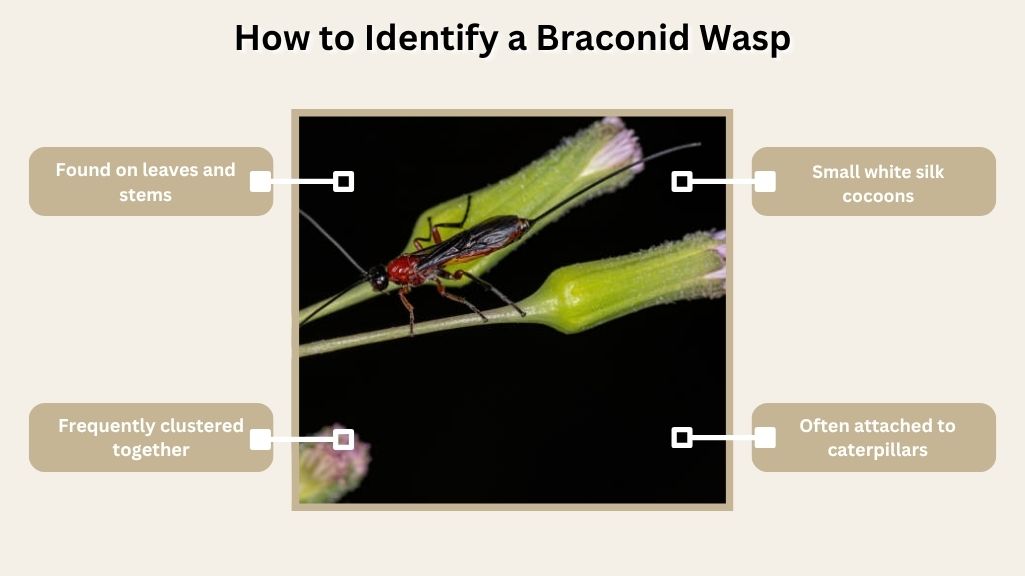
Braconid wasps can be difficult to identify because of their small size and similarity to other wasps. However, several physical features and behavioral characteristics can help distinguish them from more familiar species.
Physical Appearance
Braconid wasps generally have narrow bodies, long antennae, and transparent wings. Their coloration varies depending on the species and may include black, brown, orange, or yellow markings. Most species are much smaller than common paper wasps or hornets.
Braconid Wasp Cocoon
One of the easiest ways to identify braconid wasps is by observing their cocoons on host insects.
Common cocoon characteristics include:
- Small white silk cocoons
- Often attached to caterpillars
- Found on leaves and stems
- Frequently clustered together
These cocoons are a strong indication that braconid larvae have completed development and are preparing to emerge as adults.
Braconid Wasp vs Other Wasps
Unlike social wasps, braconid wasps are solitary insects. They rarely defend territories or nests and are generally not aggressive toward humans. Their smaller size and parasitic behavior help separate them from yellowjackets, paper wasps, and hornets.
Braconid Wasp Habitat
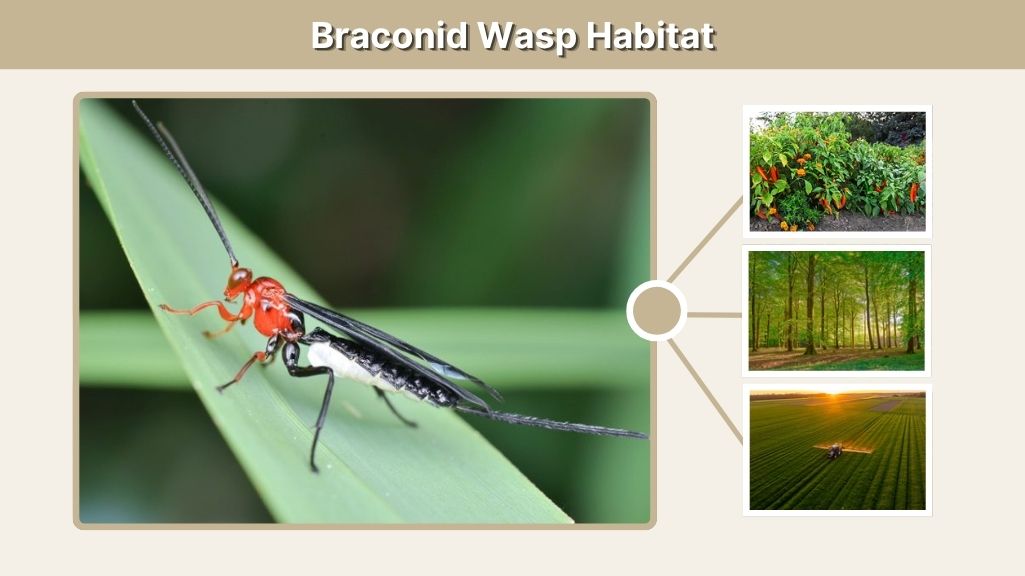
Braconid wasps thrive in environments where host insects are abundant. Their survival depends on finding suitable hosts for reproduction, making habitat quality an important factor in population success.
Where Do Braconid Wasps Live?
Braconid wasps can be found in gardens, forests, agricultural fields, meadows, and natural ecosystems. They are especially common in areas with diverse plant life because these environments support large numbers of potential host insects.
Habitat Requirements
Successful braconid wasp habitats provide access to prey populations, flowering plants, and protected breeding locations. Adults often visit flowers for nectar while searching nearby vegetation for hosts.
Seasonal Activity
Activity levels vary throughout the year. Most species are highly active during spring and summer when host insects are plentiful. Seasonal changes influence reproduction, development, and population size.
Braconid Wasp Life Cycle
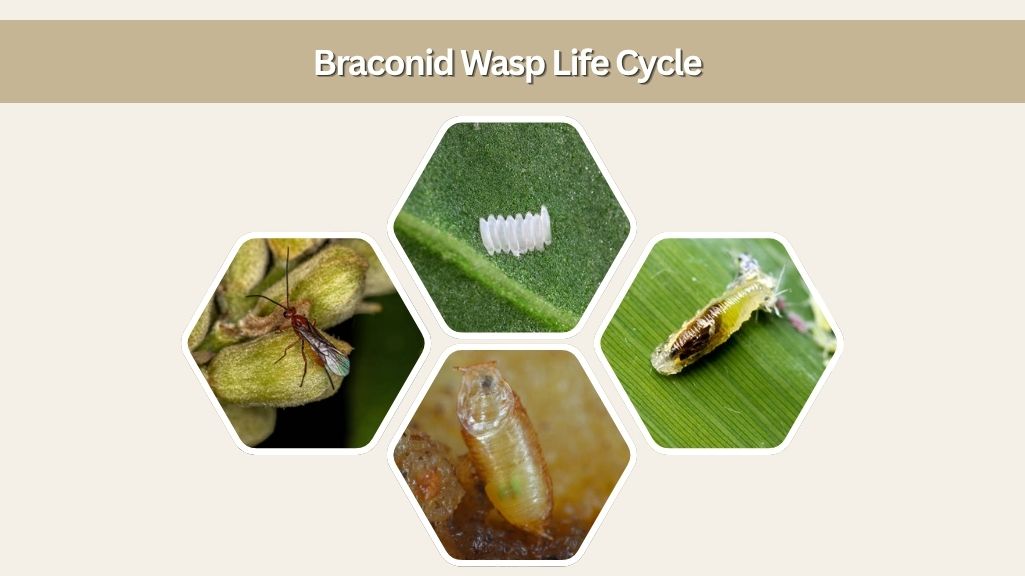
The life cycle of a braconid wasp is one of the most fascinating aspects of its biology. Unlike many insects, these wasps depend on host organisms to complete development. Their complex reproductive strategy helps regulate populations of numerous agricultural pests.
Life Cycle Stages
Braconid wasps undergo complete metamorphosis.
The major stages include:
- Egg
- Larva
- Pupa
- Adult
Each stage is specialized for growth, development, and reproduction.
Braconid Wasp Eggs
Female braconid wasps use a specialized egg-laying structure called an ovipositor to place eggs inside or on a host insect. This process ensures that newly hatched larvae have immediate access to a food source. Host selection is critical because larval survival depends on the quality of the host organism.
Braconid Wasp Larvae
After hatching, larvae begin feeding on the host’s internal tissues while avoiding vital organs during early development. This strategy keeps the host alive long enough to support larval growth. Eventually, the larvae complete development and emerge to spin cocoons outside the host.
Development Timeline
Development speed varies according to species, temperature, and host availability.
Important life cycle facts include:
- Eggs hatch within a few days
- Larval development lasts several weeks
- Pupation occurs inside silk cocoons
- Adults emerge after metamorphosis
These stages allow braconid wasps to produce multiple generations during favorable conditions.
How Braconid Wasps Reproduce
Braconid wasps have evolved highly specialized reproductive behaviors that maximize the survival of their offspring. Their ability to locate hosts and successfully deposit eggs is essential to the continuation of the species. Understanding this process helps explain why these insects are such effective biological control agents in natural and agricultural ecosystems.
Host-Parasite Relationship
The relationship between braconid wasps and their hosts is highly specialized. Females carefully select suitable insects and use chemical cues to identify hosts that will provide enough nutrients for developing larvae.
Egg Deposition Process
Female braconid wasps possess a specialized ovipositor that allows them to place eggs directly inside or on the body of a host insect. This process is highly precise and often occurs within seconds. Once eggs are deposited, the developing larvae remain protected while feeding on the host.
Cocoon Formation
After completing larval development, the young wasps emerge from the host and begin spinning protective silk cocoons. These cocoons provide a safe environment where pupation takes place before adult wasps emerge.
The cocoon stage typically involves:
- Larvae leaving the host insect
- Construction of silk cocoons
- Transformation into pupae
- Emergence of adult wasps
This stage marks the final step before the insects become fully developed adults.
Do Braconid Wasps Sting Humans?
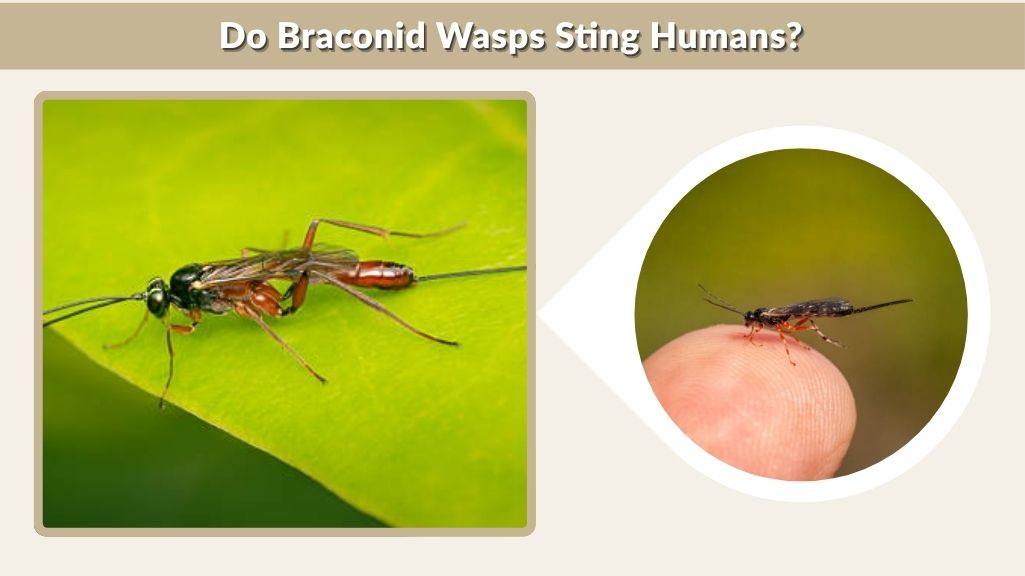
Many people become concerned when they discover braconid wasps in their gardens. However, these insects are very different from aggressive social wasps. Their primary focus is reproduction and host location rather than defense.
Can Braconid Wasps Sting?
Most braconid wasps are not capable of stinging humans in the way that yellowjackets or paper wasps can. The structure often mistaken for a stinger is actually an ovipositor used for laying eggs. Because of their small size and non-aggressive nature, they rarely interact negatively with people.
Braconid Wasp Sting Human
Reports of braconid wasps stinging humans are extremely rare. Even when contact occurs, these insects generally attempt to escape rather than defend themselves. Their behavior makes them one of the safest wasp groups commonly found in gardens.
Are Braconid Wasps Dangerous?
Braconid wasps are not considered dangerous to humans, pets, or most wildlife. They do not build large defensive colonies and rarely show aggressive behavior. For gardeners and farmers, their presence is usually beneficial rather than harmful.
Are Braconid Wasps Good or Bad?
Braconid wasps are widely regarded as beneficial insects because of their ability to naturally control pest populations. Their role in agriculture and home gardening makes them valuable allies for maintaining healthy plants.
Benefits of Braconid Wasps
These parasitoid insects help reduce the number of destructive pests without relying on chemical pesticides.
Major benefits include:
- Natural pest control
- Reduced pesticide dependence
- Protection of crops and gardens
- Improved ecosystem balance
Because of these advantages, many farmers actively encourage braconid wasp populations.
Importance in Agriculture
Braconid wasps are commonly used in biological control programs. By targeting caterpillars, aphids, and other agricultural pests, they help reduce crop damage and support sustainable farming practices.
Ecological Role
In natural ecosystems, braconid wasps help regulate insect populations and contribute to biodiversity. Their interactions with host insects influence food webs and promote ecological stability.
What Do Braconid Wasps Eat?
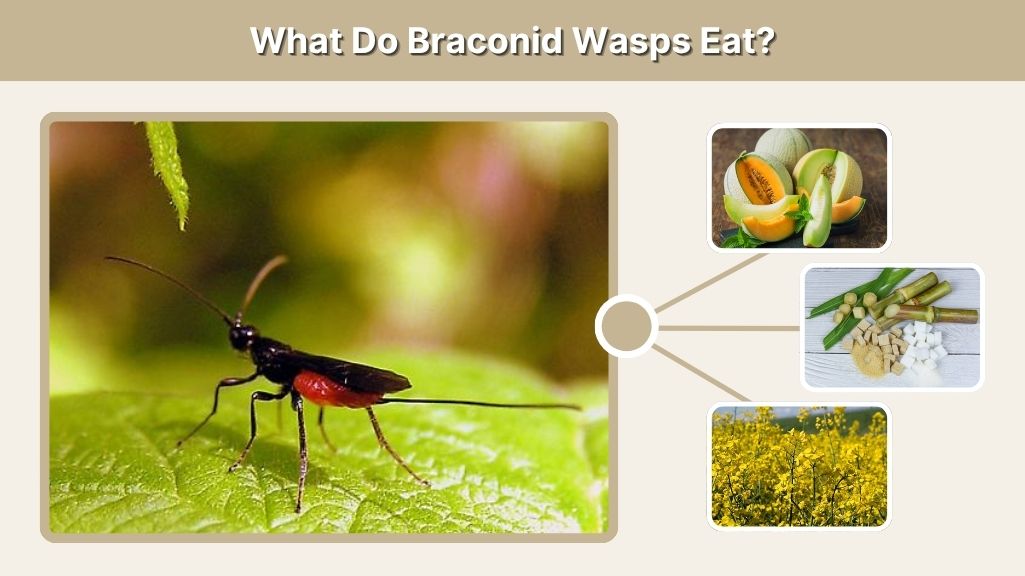
Diet varies depending on the life stage. Adult wasps and larvae obtain nutrients in different ways that support their unique biological requirements.
Adult Diet
Adult braconid wasps primarily consume nectar, honeydew, and plant-derived sugars. Flowering plants provide important energy sources that support flight, reproduction, and host-searching activities.
Larval Feeding Behavior
Unlike adults, larvae feed directly on host insects. They consume tissues gradually while avoiding critical organs during early development. This strategy keeps the host alive until larval growth is nearly complete.
Food Sources in Gardens
Gardens rich in flowering plants often attract braconid wasps because they provide nectar and shelter.
Common food-related resources include:
- Flower nectar
- Honeydew from aphids
- Plant secretions
- Water sources
Plant diversity helps support healthy populations of these beneficial insects.
Braconid Wasp Predators and Threats
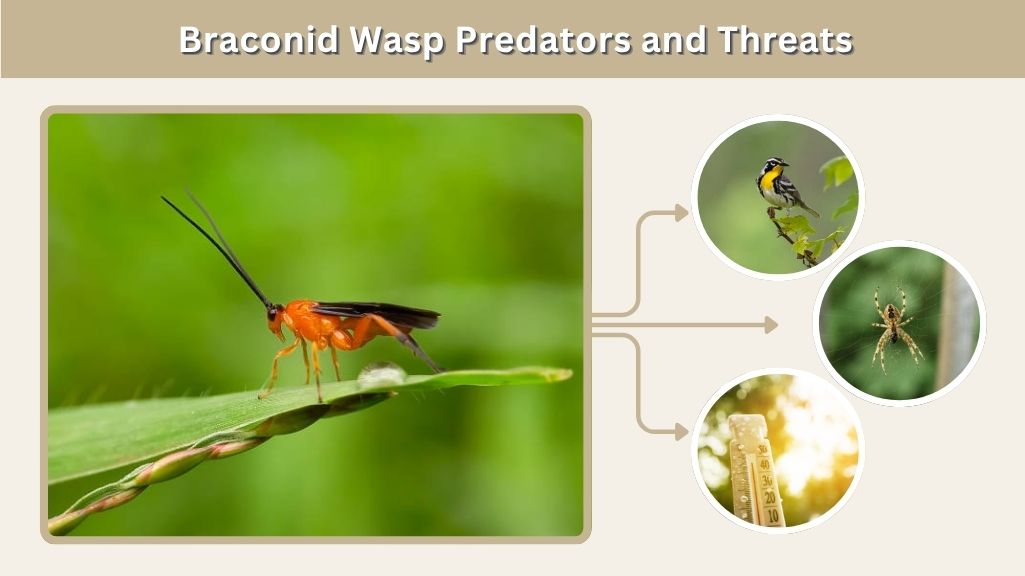
Although braconid wasps are successful parasitoids, they still face numerous environmental challenges. Natural predators and human activities can significantly affect population levels.
Natural Predators
Birds, spiders, predatory insects, and other arthropods may feed on adult braconid wasps. Despite their small size, they remain an important part of many food webs.
Environmental Threats
Habitat destruction, excessive pesticide use, and climate change can reduce braconid wasp populations. These threats may also decrease the availability of host insects needed for reproduction.
Conservation Importance
Protecting beneficial insects such as braconid wasps supports healthier ecosystems and more sustainable agriculture. Reducing unnecessary pesticide use and planting diverse flowering vegetation can help maintain stable populations.
Interesting Facts About Braconid Wasps
Braconid wasps belong to one of the largest wasp families in the world, with more than 20,000 described species. Many scientists believe thousands of additional species remain undiscovered. These insects are found on nearly every continent and are considered among the most effective natural pest-control agents. Some species specialize in only one host insect, demonstrating remarkable evolutionary adaptations and highly specialized ecological relationships.
FAQs
What is the scientific name of a Braconid Wasp?
Braconid wasps belong to the insect family Braconidae, which contains more than 20,000 described species. Individual species have their own scientific names, but all are classified within this large wasp family.
What do Braconid Wasp eggs look like?
Braconid wasp eggs are extremely small and are usually deposited inside or on a host insect. Because of their tiny size, they are rarely visible without magnification.
How long is the Braconid Wasp life cycle?
The complete life cycle can range from a few weeks to several months, depending on the species, host availability, and environmental conditions. Most species progress through egg, larva, pupa, and adult stages.
Why are Braconid Wasp cocoons found on caterpillars?
Braconid larvae develop inside caterpillars and eventually emerge to spin small white silk cocoons on or near the host. This is one of the most recognizable signs of braconid wasp activity in gardens.
How can I attract Braconid Wasps to my garden?
You can attract braconid wasps by planting nectar-rich flowers, reducing pesticide use, maintaining plant diversity, and encouraging habitats that support beneficial insects and pollinators.