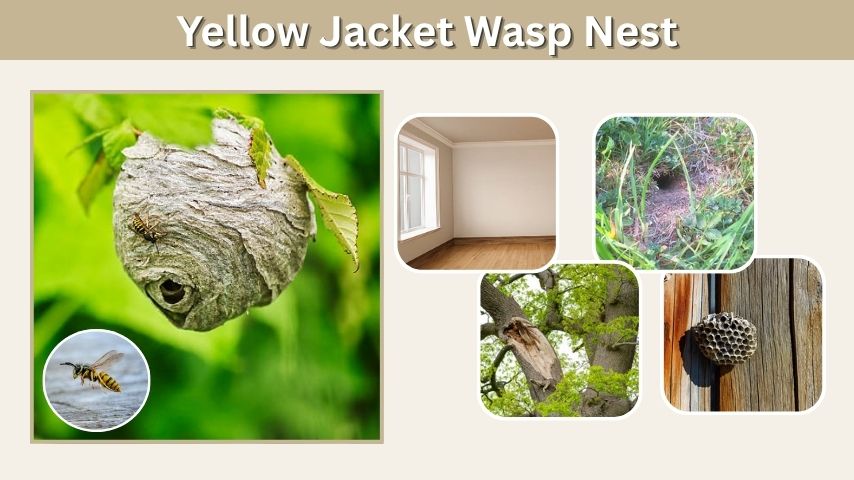
Yellow jacket wasp nests can become a serious concern when they are built near homes, gardens, or outdoor living spaces. Unlike many other wasps, yellow jackets are highly defensive and may sting repeatedly when their nest is disturbed. Learning how to identify a yellow jacket nest, understand where it is located, and recognize the differences between yellow jackets, paper wasps, and hornets is essential for safety. Proper identification also helps homeowners choose the most effective removal and prevention methods.
What Is a Yellow Jacket Wasp Nest?
A yellow jacket nest is a paper-like structure built by social wasps known as yellow jackets. These colonies are highly organized and may contain hundreds or even thousands of workers during peak season. The nest serves as a shelter for the queen, developing larvae, and worker wasps. Because colonies grow rapidly throughout summer, nests can become surprisingly large before homeowners notice them.
How Yellow Jackets Build Nests
Yellow jackets create nests by chewing wood fibers and mixing them with saliva to produce a paper-like material. Workers continuously expand the nest as the colony grows. The result is a durable structure containing multiple layers of comb used for raising young.
Colony Structure
A yellow jacket colony consists of a queen, workers, and developing offspring. The queen is responsible for laying eggs, while worker wasps gather food, defend the nest, and care for larvae. By late summer, some colonies can contain several thousand individuals.
What Does a Yellow Jacket Nest Look Like?
Identifying a yellow jacket nest is important because it helps distinguish these aggressive insects from other stinging pests. Yellow jacket nests vary in size and location depending on the species. Some remain hidden underground, while others develop inside walls, trees, or structures around the home.
Common Identification Features
Several characteristics help identify a yellow jacket nest:
- Gray or tan paper-like exterior.
- Multiple internal comb layers.
- Small entrance holes.
- Constant worker activity around the opening.
- Rapid growth during summer months.
These features can help homeowners determine whether yellow jackets are present.
Nest Color and Texture
Most yellow jacket nests appear gray, brown, or tan because they are made from weathered wood fibers. The outer surface often looks layered and papery. Unlike exposed paper wasp nests, yellow jacket nests are usually enclosed within a protective outer shell.
Nest Size Throughout the Season
A newly established nest may be only a few inches wide in spring. By late summer, some nests can grow larger than a basketball. In favorable climates, exceptionally large colonies may develop into what are sometimes called “super nests.”
Where Do Yellow Jacket Wasps Nest?
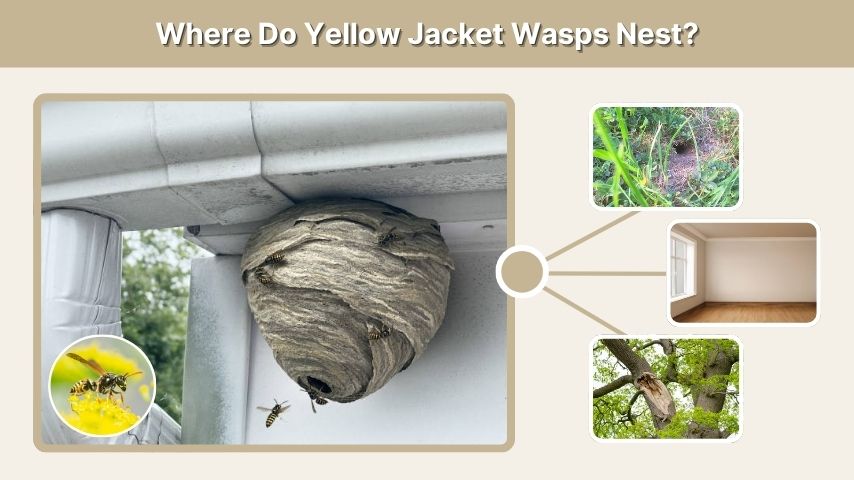
Yellow jackets are highly adaptable and can establish colonies in a variety of locations. Their nesting preferences depend on available shelter, environmental conditions, and species behavior. Understanding where they commonly build nests makes it easier to locate colonies before they become a significant problem.
Common Nesting Locations
Yellow jackets frequently build nests in:
- Underground rodent burrows.
- Wall voids inside buildings.
- Attics and crawl spaces.
- Hollow trees and shrubs.
- Outdoor utility and electrical boxes.
These hidden locations often make nests difficult to detect until worker activity becomes noticeable.
Underground Nests
Many yellow jacket species prefer underground nesting sites. Abandoned rodent tunnels provide excellent protection from predators and weather. Ground nests may appear as small holes with frequent wasp traffic moving in and out.
Wall and House Nests
Yellow jackets sometimes enter homes through small openings and establish colonies inside wall cavities. These nests can remain hidden for months while workers access the outdoors through tiny cracks or vents. Homeowners often notice increased wasp activity before discovering the actual nest location.
Yellow Jacket Ground Nests
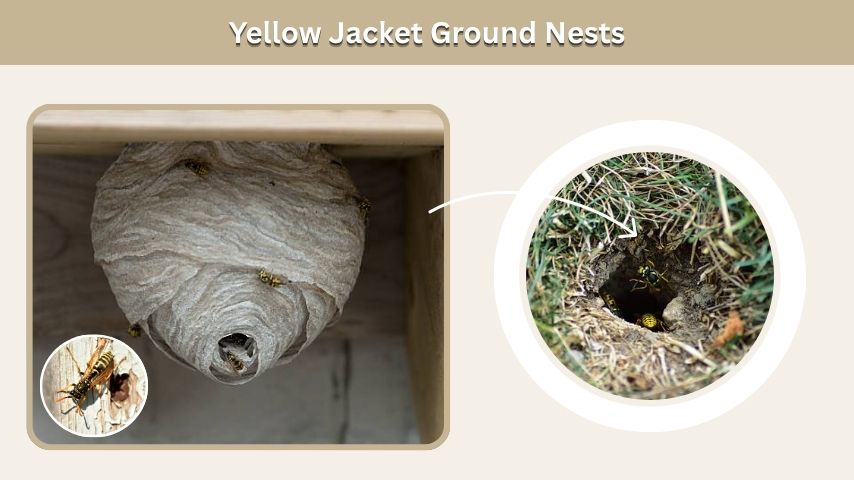
Ground nests are among the most common and potentially dangerous yellow jacket nesting types. Because they are often hidden beneath vegetation or landscaping features, people may accidentally disturb them while mowing, gardening, or walking nearby. Understanding how to identify a ground nest can help prevent painful encounters.
Why Yellow Jackets Prefer Underground Sites
Underground nests provide protection from weather, predators, and temperature fluctuations. Existing burrows reduce construction work and allow colonies to expand quickly. The stable environment also supports larval development and colony growth.
Signs of a Ground Nest
Several warning signs may indicate the presence of a yellow jacket ground nest:
- Continuous wasp traffic near a hole.
- Wasps disappearing into the ground.
- Increased activity during warm afternoons.
- Aggressive behavior when approached.
- Multiple wasps entering and exiting the same location.
Observing these signs from a safe distance can help locate nests without provoking the colony.
Dangers of Ground Nests
Ground nests are particularly hazardous because they are easy to disturb accidentally. When threatened, large numbers of worker wasps may emerge rapidly to defend the colony. This defensive response can result in multiple stings and create serious risks for individuals with insect sting allergies.
How Many Yellow Jackets Live in a Nest?
Yellow jacket colonies grow rapidly throughout the warm months of the year. What begins as a single queen in spring can develop into a large colony containing thousands of workers by late summer. Colony size depends on weather conditions, food availability, and the species involved. Understanding nest populations helps explain why yellow jackets become more noticeable and aggressive as the season progresses.
Early Season Colonies
In spring, the queen starts the nest alone and raises the first generation of workers. During this stage, nests remain relatively small and often go unnoticed by homeowners.
Peak Summer Populations
As worker numbers increase, colony growth accelerates. Mature nests may contain:
- Several hundred worker wasps.
- Thousands of developing larvae.
- New queens and males.
- Multiple comb layers.
- Extensive paper nest structures.
Some nests may contain more than 4,000 to 5,000 yellow jackets by late summer.
Super Nests Explained
In warmer regions, certain colonies survive longer than usual and continue expanding. These exceptionally large colonies are known as super nests and can contain tens of thousands of yellow jackets.
Yellow Jacket Nest vs Paper Wasp Nest
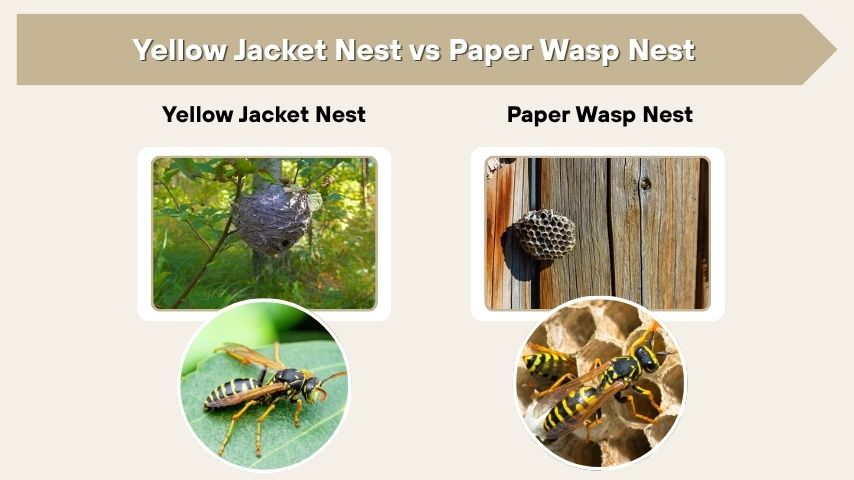
Yellow jackets and paper wasps are often confused because both build paper-like nests. However, their nest structures, locations, and behaviors differ significantly. Correct identification is important because yellow jackets tend to be far more defensive than paper wasps when their nests are disturbed.
Structural Differences
Paper wasp nests are usually open and umbrella-shaped, with exposed comb cells visible from below. Yellow jacket nests, by contrast, are enclosed within a protective paper shell that hides the comb structure inside.
Nest Location Differences
Paper wasps often build exposed nests beneath roof eaves, decks, and porch ceilings. Yellow jackets typically prefer concealed locations such as underground burrows, wall voids, attics, and tree cavities.
Behavior Differences
Yellow jackets aggressively defend their nests and may attack in large numbers if threatened. Paper wasps are generally less aggressive and often ignore nearby human activity unless directly disturbed.
Yellow Jacket vs Hornet vs Wasp Nest
Many homeowners struggle to distinguish between yellow jacket nests, hornet nests, and paper wasp nests. While all are constructed from paper-like material, each has unique characteristics that aid identification. Understanding these differences can help determine the most appropriate management approach.
Yellow Jacket Nest Characteristics
Yellow jacket nests are usually hidden and enclosed. Common features include:
- Located underground or inside structures.
- Fully enclosed paper covering.
- Small entry openings.
- Large worker populations.
- Aggressive colony defense.
Hornet Nest Characteristics
Hornet nests are generally suspended from trees, shrubs, or buildings. They are enclosed like yellow jacket nests but are usually visible above ground and often have a football-shaped appearance.
Paper Wasp Nest Characteristics
Paper wasp nests are open, exposed, and smaller than most yellow jacket or hornet nests. The comb cells are clearly visible, making identification easier.
How to Find a Yellow Jacket Nest
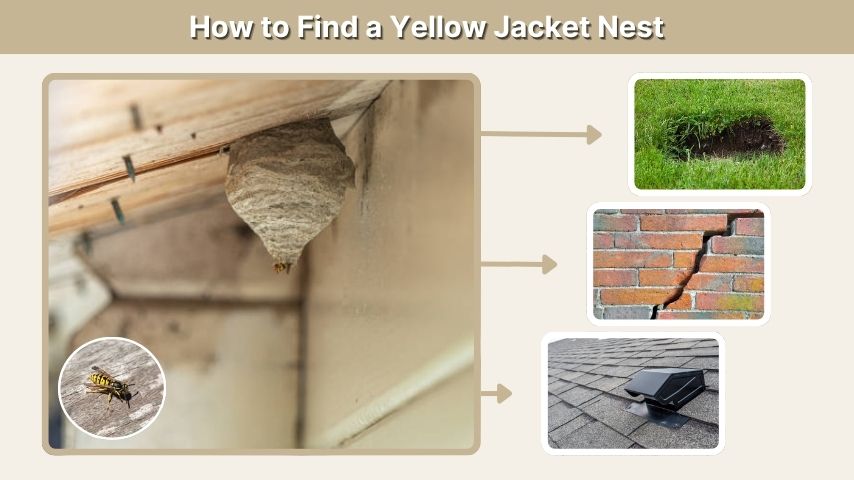
Locating a yellow jacket nest can be challenging because colonies are often hidden underground or inside structures. Careful observation is usually the safest way to identify the nest entrance without provoking the colony.
Tracking Worker Activity
One of the most effective methods is watching individual workers from a safe distance. Repeated flight paths often lead directly to the nest entrance.
Identifying Entry Points
Look for areas where yellow jackets repeatedly enter and exit. Common entry points include:
- Ground holes.
- Foundation cracks.
- Wall gaps.
- Roof vents.
- Utility boxes.
Consistent activity around these locations often indicates an active colony.
Safety Precautions
Never stand directly in the flight path of returning workers. Avoid blocking entrances or disturbing the surrounding area while attempting to locate a nest.
How to Get Rid of a Yellow Jacket Nest
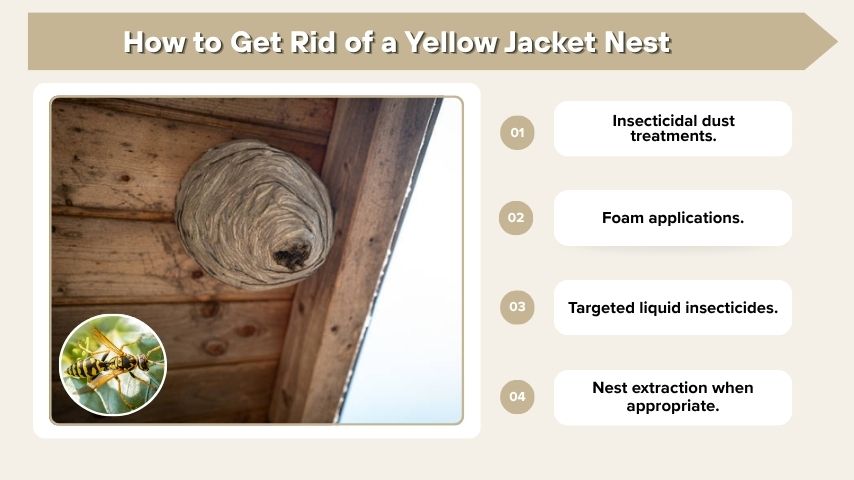
Removing a yellow jacket nest requires caution because colonies respond aggressively to perceived threats. Large nests or colonies located inside structures are often best handled by professional pest control services.
When Removal Is Necessary
Nest removal may be needed when colonies are located near entrances, walkways, children’s play areas, or locations where people frequently gather.
Professional Removal
Professional pest control technicians have specialized equipment and protective gear that reduce the risk of stings. They can also safely treat nests hidden inside walls or underground.
Common Removal Methods
Professionals may use several techniques, including:
- Insecticidal dust treatments.
- Foam applications.
- Targeted liquid insecticides.
- Nest extraction when appropriate.
- Follow-up inspections.
The most suitable method depends on the nest location and colony size.
Do Fake Wasp Nests Deter Yellow Jackets?
Many products claim that imitation wasp nests can discourage yellow jackets from establishing colonies nearby. While these products may influence some territorial wasp species, results are often inconsistent when used against yellow jackets.
How Fake Nests Work
The theory behind fake nests is that some wasps avoid nesting near established colonies. Artificial nests attempt to mimic occupied territory and discourage new nest construction.
Are They Effective?
Scientific evidence supporting fake nest effectiveness remains limited. While some homeowners report success, others notice little or no reduction in yellow jacket activity.
Better Prevention Methods
More reliable prevention strategies include sealing entry points, removing food sources, maintaining clean outdoor areas, and addressing nesting sites before colonies become established.
FAQs
What does a yellow jacket wasp nest look like?
A yellow jacket nest is typically made of gray or tan paper-like material created from chewed wood fibers. Most nests are enclosed within a protective outer shell and may be located underground, inside walls, trees, or other sheltered spaces.
Where do yellow jacket wasps usually build their nests?
Yellow jackets commonly build nests underground in abandoned rodent burrows, inside wall voids, attics, crawl spaces, hollow trees, and utility boxes. Ground nests are among the most frequently encountered nesting sites.
Can you simply block the entrance to a yellow jacket ground nest?
No. Blocking the entrance is generally not recommended because trapped yellow jackets may create new exit routes or enter nearby structures. This can increase the risk of stings and make the infestation more difficult to manage.
Do yellow jackets reuse old nests every year?
No, yellow jackets typically do not reuse old nests. Most colonies die off at the end of the season, and newly mated queens establish fresh nests in spring. However, new nests may occasionally be built near previous nesting locations.
What is the difference between a yellow jacket nest and a hornet nest?
Yellow jacket nests are often hidden underground or inside structures and have small entry holes. Hornet nests are usually suspended above ground in trees, shrubs, or on buildings and are often larger and more visible. Both are enclosed paper nests, but their locations and colony behaviors differ.