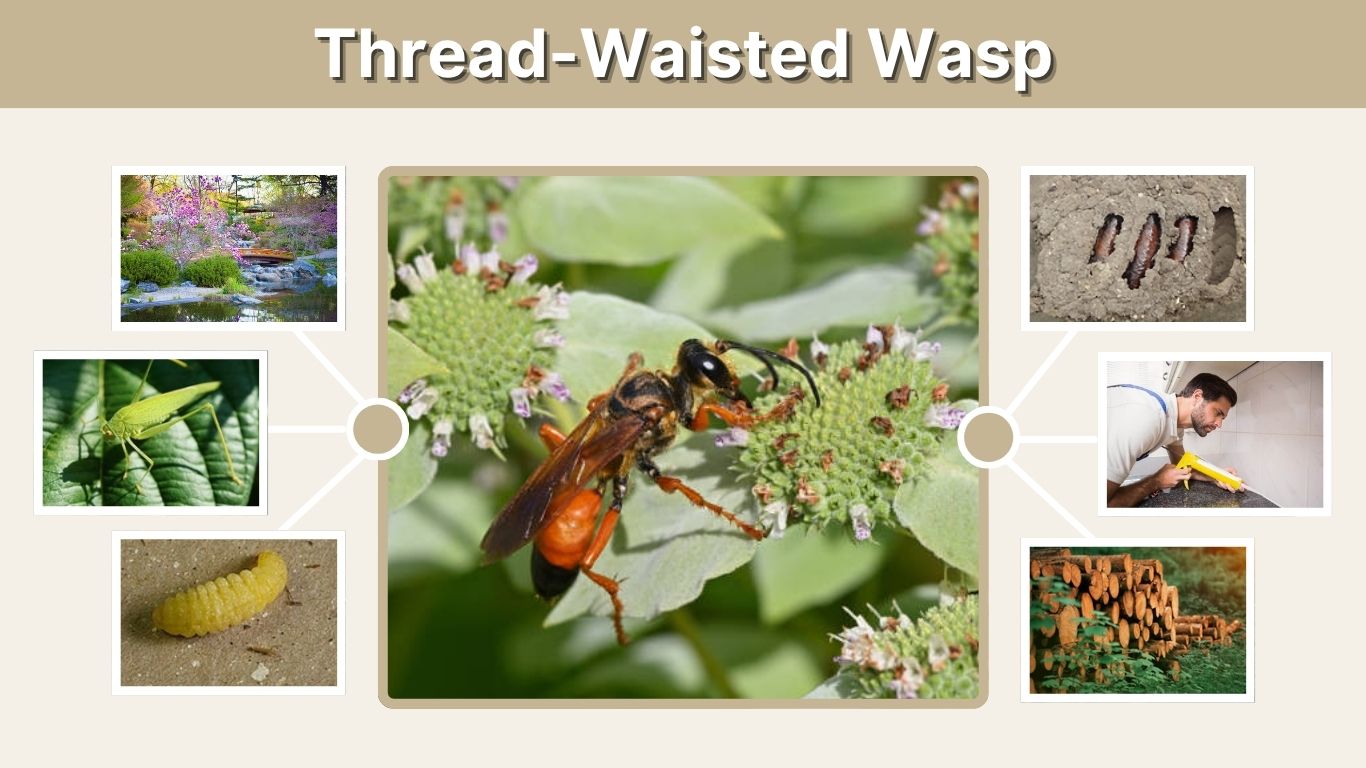
Thread-waisted wasps are fascinating insects known for their extremely narrow waists, slender bodies, and beneficial role in controlling pest populations. Although their appearance may seem intimidating, these solitary wasps are generally non-aggressive and rarely sting humans. Found throughout North America and many other parts of the world, thread-waisted wasps help maintain ecological balance by hunting insects and spiders. This guide explores their identification, habitat, nesting behavior, and sting risks to help you better understand these unique and often misunderstood insects.
What Is a Thread-Waisted Wasp?
Thread-waisted wasps belong to the family Sphecidae, a group of solitary hunting wasps recognized for their unusually thin waist connecting the thorax and abdomen. Unlike social wasps that live in colonies, thread-waisted wasps live independently and focus on building nests and providing food for their offspring.
Scientific Classification
Thread-waisted wasps belong to the following classification:
- Kingdom: Animalia
- Phylum: Arthropoda
- Class: Insecta
- Order: Hymenoptera
- Family: Sphecidae
Why Are They Called Thread-Waisted Wasps?
The name comes from the insect’s distinctive body shape. A long, narrow stalk-like waist connects the abdomen to the thorax, creating an appearance that resembles a thread. This unique feature makes them easy to distinguish from many other wasp species.
How to Identify a Thread-Waisted Wasp
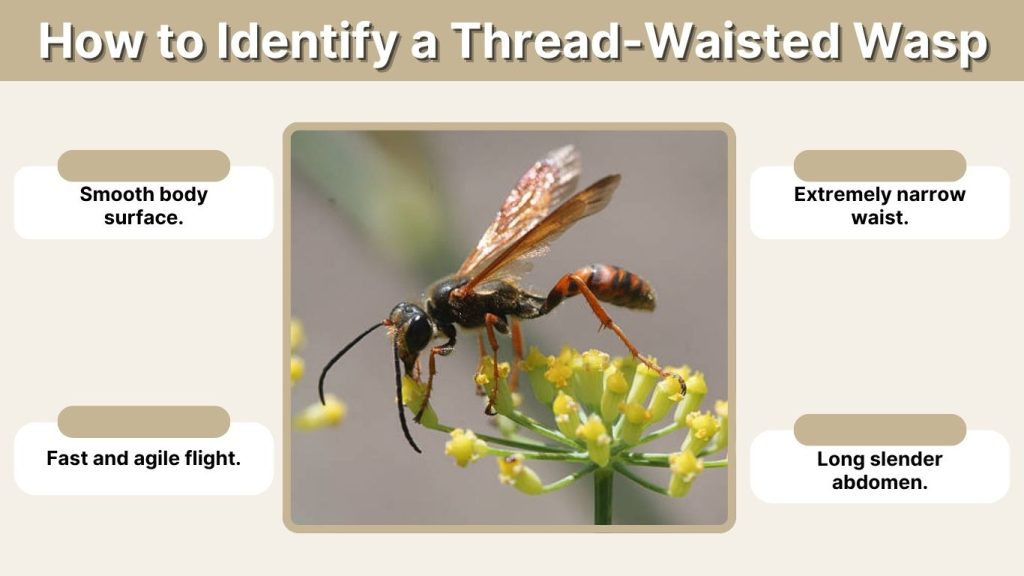
Thread-waisted wasps vary in color and size depending on the species, but they share several physical characteristics. Learning these traits can help homeowners and nature enthusiasts identify them correctly and avoid confusing them with more aggressive wasps.
Physical Characteristics
Most thread-waisted wasps have elongated bodies and long legs. Their body shape appears sleek and streamlined compared to yellowjackets or hornets.
Identification Checklist
Look for these common features:
- Extremely narrow waist
- Long slender abdomen
- Long dangling legs
- Smooth body surface
- Fast and agile flight
These characteristics are present in most thread-waisted wasp species.
Common Color Variations
Different species may display a range of colors. Some are entirely black, while others feature metallic blue wings, golden markings, or reddish-orange body segments. Color alone should not be used for identification because body structure is usually more reliable.
Types of Thread-Waisted Wasps
Several thread-waisted wasp species are commonly observed across North America. Although they share similar body shapes, each species possesses unique markings and habitat preferences.
Common Thread-Waisted Wasp
This species is one of the most widespread and frequently encountered thread-waisted wasps. It is usually black and often found around gardens and open landscapes.
Blue-Winged Black Thread-Waisted Wasp
Known for its dark body and metallic blue wings, this species is a skilled hunter of crickets and other insects. It is commonly seen visiting flowers for nectar.
Gold-Marked Thread-Waisted Wasp
This species displays distinctive golden markings that contrast sharply with its dark body. It is often encountered in wooded habitats and along forest edges.
Species Comparison
| Species | Color | Typical Habitat | Aggression Level |
| Common Thread-Waisted Wasp | Black | Gardens | Low |
| Blue-Winged Black | Black with blue wings | Fields | Low |
| Gold-Marked | Black and gold | Forest edges | Low |
| Red Thread-Waisted Wasp | Red and black | Open areas | Low |
Where Do Thread-Waisted Wasps Live?
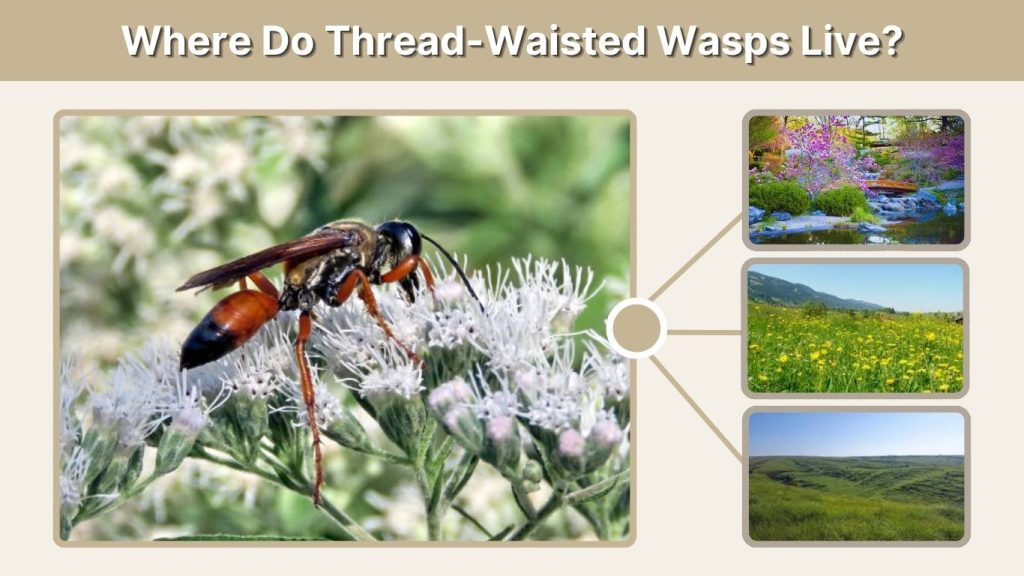
Thread-waisted wasps occur in a wide variety of habitats. They are especially common in warm climates where prey insects are abundant and nesting locations are readily available.
Geographic Distribution
These wasps are found throughout much of North America, including Florida, California, Colorado, Oregon, Washington, Illinois, Michigan, and many other states. Different species occupy different geographic regions, but most prefer warm and sunny environments.
Preferred Habitats
Thread-waisted wasps commonly inhabit:
- Gardens
- Meadows
- Grasslands
- Forest edges
- Desert environments
These areas provide access to nectar sources, nesting sites, and prey species.
Why They Enter Homes
Occasionally, thread-waisted wasps may enter houses through open doors, windows, or vents. In most cases, they are accidental visitors and do not establish nests indoors. They are usually searching for light or attempting to exit after entering unintentionally.
Thread-Waisted Wasp Nesting Behavior
Unlike social wasps that build large communal nests, thread-waisted wasps are solitary insects. Each female constructs and manages her own nest without assistance from other adults.
Nest Construction
Thread-waisted wasps create nests in soil, sand, hollow plant stems, wood cavities, and natural cracks. Some species excavate burrows in the ground, while others utilize existing cavities.
Common Nest Sites
Typical nesting locations include:
- Sandy soil
- Garden beds
- Hollow stems
- Dead wood
- Wall crevices
These protected locations provide safe environments for developing larvae.
How They Provision Their Nests
After building a nest, the female hunts insects or spiders and places them inside the chamber. She then lays an egg on the prey, providing food for the developing larva after it hatches. This behavior ensures the offspring has an immediate food source during its early growth stages.
Do Thread-Waisted Wasps Sting?
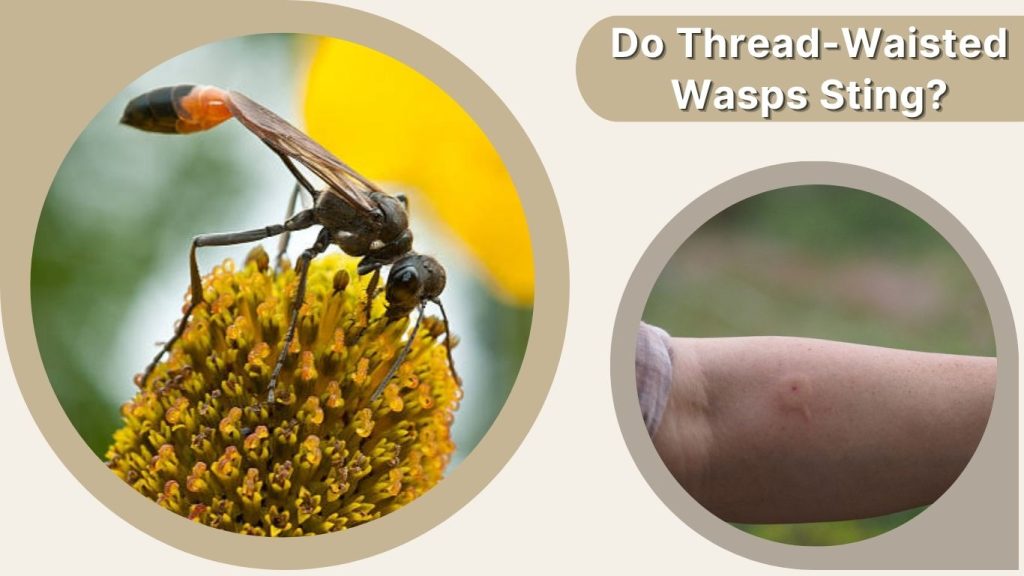
One of the most common concerns people have about thread-waisted wasps is whether they can sting. While these insects are capable of stinging, they are generally non-aggressive and rarely pose a threat to humans. Most encounters end without any defensive behavior because thread-waisted wasps are focused on hunting prey and caring for their nests rather than protecting large colonies.
Can Thread-Waisted Wasps Sting Humans?
Yes, thread-waisted wasps can sting humans. However, stings are uncommon because these insects usually avoid contact with people. They are far less aggressive than yellowjackets, hornets, or paper wasps.
Why They Rarely Sting
Several factors contribute to their peaceful nature:
- Solitary lifestyle
- No large colony to defend
- Prefer fleeing over fighting
- Focus on hunting insects
- Minimal interest in human activity
As a result, accidental stings are relatively rare.
Common Sting Symptoms
When a sting does occur, symptoms are typically mild and short-lived. Most people experience localized discomfort rather than severe reactions.
Common symptoms include:
- Sharp pain
- Redness
- Mild swelling
- Itching
- Temporary tenderness
Individuals with insect sting allergies should seek medical attention if severe symptoms develop.
Are Thread-Waisted Wasps Dangerous?
Although their appearance can seem intimidating, thread-waisted wasps are generally considered beneficial insects. Their behavior differs significantly from many social wasps that aggressively defend nests.
Aggression Level
Thread-waisted wasps are among the least aggressive wasp species commonly encountered by humans. They spend most of their time searching for prey, gathering nectar, or maintaining nests.
Because they do not live in colonies, they lack the defensive instincts associated with social wasps. This greatly reduces the likelihood of negative encounters.
Risks to Humans
For most people, thread-waisted wasps pose little danger. A sting may be painful, but serious complications are uncommon. Problems are generally limited to individuals with allergies to insect venom.
Benefits of Thread-Waisted Wasps
These insects provide several ecological benefits:
- Control pest populations
- Pollinate flowering plants
- Reduce harmful insect numbers
- Support ecosystem balance
- Serve as food for wildlife
Their role as natural pest controllers often makes them welcome visitors in gardens and landscapes.
What Do Thread-Waisted Wasps Eat?
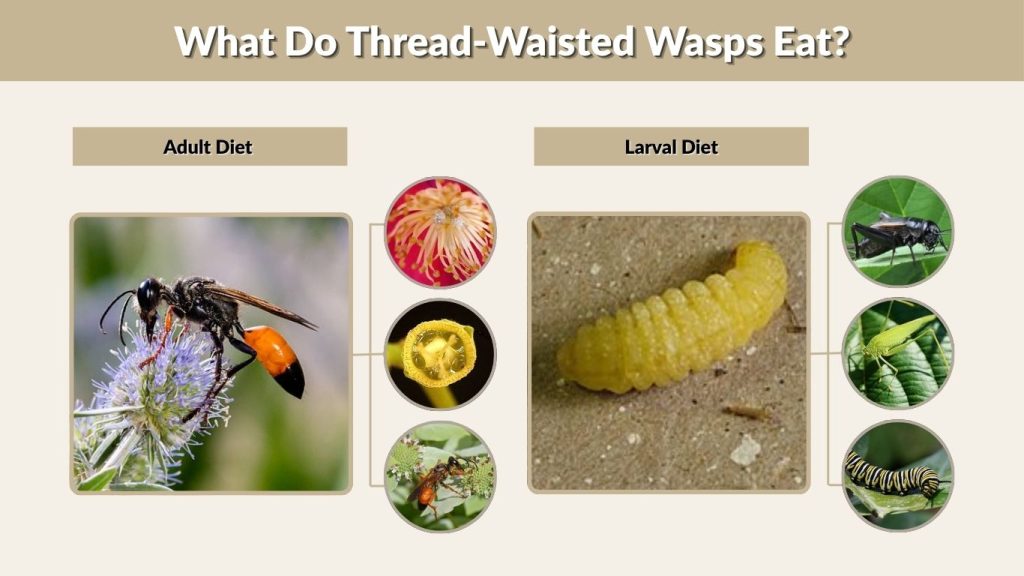
Thread-waisted wasps play an important role in ecosystems because they hunt numerous insect species. Both adults and larvae have specialized feeding habits that contribute to pest control.
Adult Diet
Adult thread-waisted wasps primarily feed on nectar and other sugary substances. Flowers provide an important energy source and frequently attract these insects.
Because they visit flowers regularly, they also contribute to pollination while feeding.
Larval Diet
Unlike adults, larvae consume insects and spiders that their mothers capture and place inside nests. The prey is often paralyzed but remains fresh for developing larvae.
Common Prey Species
Depending on the species, thread-waisted wasps commonly hunt:
- Crickets
- Grasshoppers
- Caterpillars
- Spiders
- Beetle larvae
This hunting behavior helps regulate populations of many garden and agricultural pests.
Thread-Waisted Wasp vs Mud Dauber
Thread-waisted wasps and mud daubers are frequently confused because both have narrow waists and solitary lifestyles. However, several differences can help distinguish them.
Appearance Differences
Thread-waisted wasps typically have a more elongated body and an extremely thin waist. Mud daubers often appear slightly bulkier and may display different color patterns depending on the species.
Nest Differences
Mud daubers are famous for constructing nests from mud. These tube-like structures are often attached to walls, ceilings, and buildings.
Thread-waisted wasps usually nest in soil, natural cavities, or hollow plant stems rather than building large mud nests.
Which Is More Beneficial?
Both insects are beneficial predators that help reduce pest populations. Neither species is considered highly dangerous to humans, and both contribute positively to local ecosystems.
How to Get Rid of Thread-Waisted Wasps
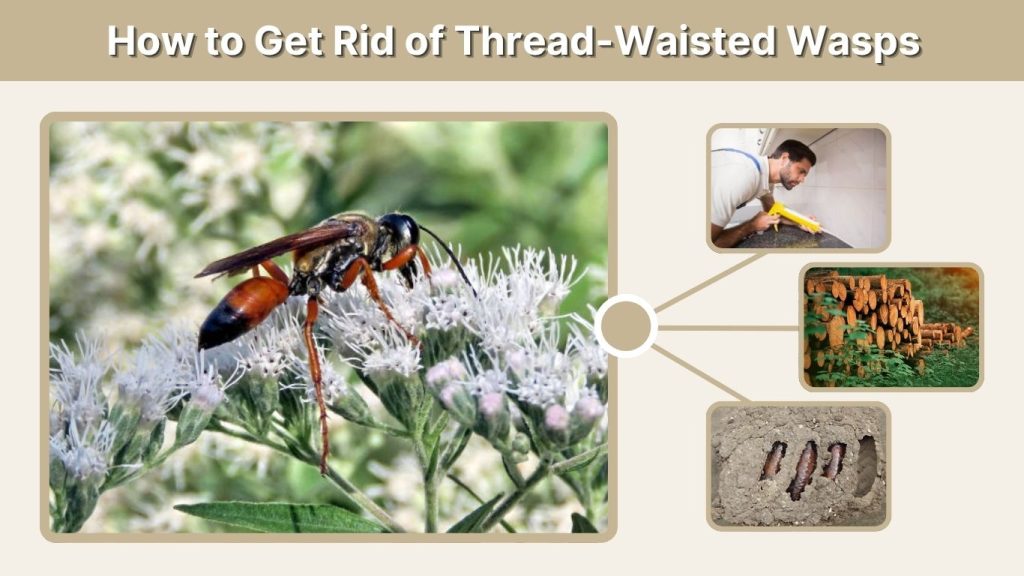
Most experts recommend leaving thread-waisted wasps alone whenever possible because they provide valuable pest-control services. However, some homeowners may prefer to reduce activity around homes and outdoor living spaces.
Prevention Methods
Simple prevention measures can discourage nesting near structures:
- Seal cracks and openings
- Remove unused wood piles
- Limit exposed nesting sites
- Maintain screens on windows
- Reduce insect prey around the property
These actions often prevent future nesting without harming beneficial insects.
When Professional Help Is Needed
Professional pest control may be appropriate if large numbers of wasps repeatedly establish nests in areas where people frequently gather. In most situations, however, relocation or prevention is preferable to extermination.
Interesting Thread-Waisted Wasp Facts
Thread-waisted wasps possess several fascinating characteristics that set them apart from many other insects.
Expert Hunters
Many species specialize in capturing specific prey, demonstrating remarkable hunting precision and efficiency.
Important Pollinators
Adult wasps frequently visit flowers and contribute to pollination while feeding on nectar.
Solitary Lifestyle
Unlike honey bees or yellowjackets, thread-waisted wasps do not form large colonies and rarely interact with one another outside of mating.
FAQs
Are thread-waisted wasps aggressive toward humans?
No. Thread-waisted wasps are generally non-aggressive and prefer to avoid confrontation. They usually sting only when directly threatened or handled.
How painful is a thread-waisted wasp sting?
Most people describe the sting as moderately painful, causing temporary redness, swelling, and discomfort that typically subsides within a few hours or days.
Do thread-waisted wasps build nests in houses?
They rarely nest inside homes. However, they may use wall cracks, attics, garages, or other sheltered cavities if suitable nesting sites are available.
What attracts thread-waisted wasps to a yard?
Flowering plants, abundant insect prey, sandy soil, and suitable nesting locations can attract thread-waisted wasps to gardens and landscapes.
Should I remove a thread-waisted wasp nest?
In most cases, removal is unnecessary because these wasps are beneficial and non-aggressive. If a nest is located in a high-traffic area, relocation or professional assistance may be considered.