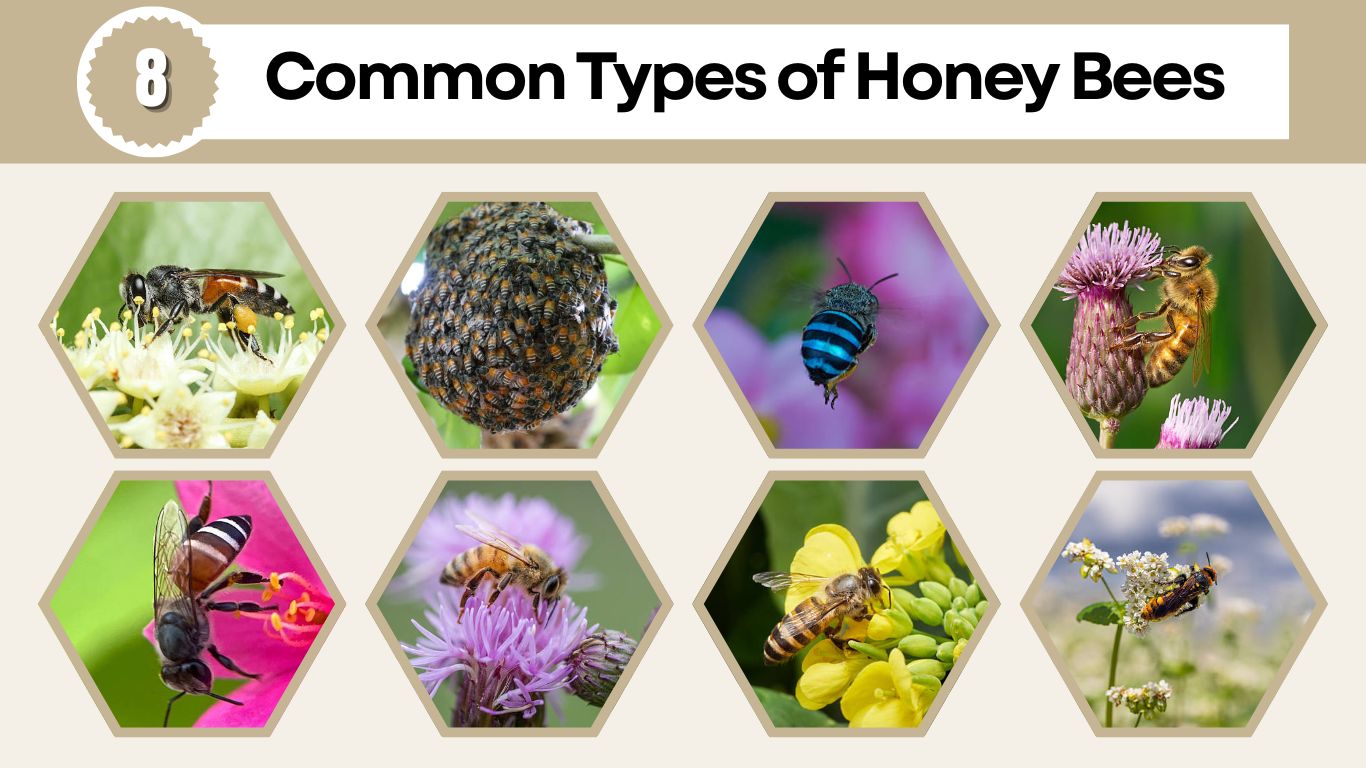
Honey bees are important insects known for making honey, collecting nectar, and pollinating flowers, fruits, and crops. Different types of honey bees vary in size, color, nesting style, and natural range. Some live in managed hives, while others build open combs on trees or nest in hidden cavities. From the widely kept Western Honey Bee to the forest-dwelling Koschevnikov’s Honey Bee, each species has unique features. This guide covers 8 common types of honey bees with simple identification details to help readers recognize them more easily.
1. Western Honey Bee
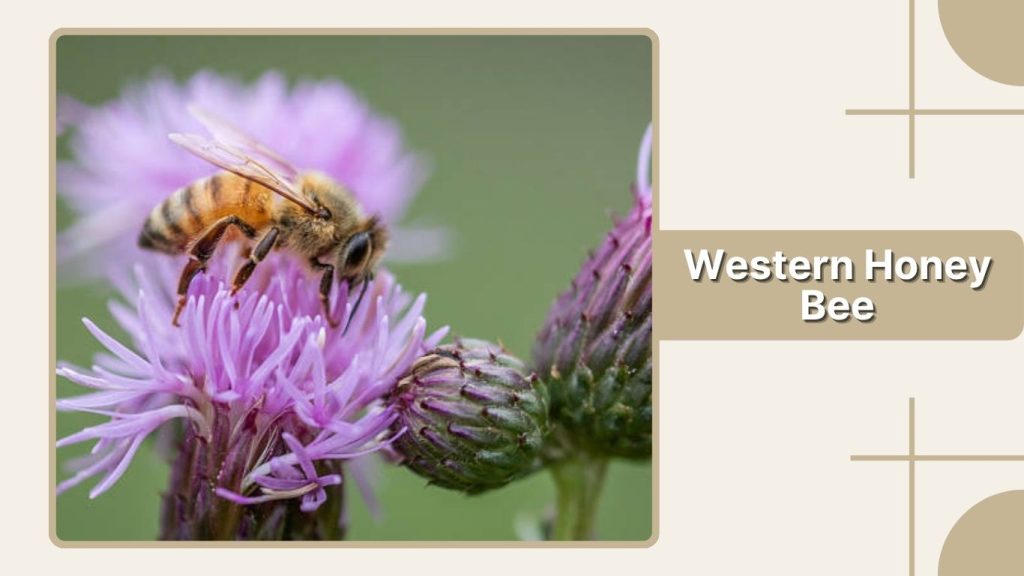
The Western Honey Bee is the most common and widely managed honey bee in the world. Its scientific name is Apis mellifera. This bee is famous for producing honey, pollinating crops, and living in large organized colonies. It is commonly kept by beekeepers and can be found in gardens, farms, orchards, forests, and wildflower areas.
Identification
- Golden-brown body with darker bands
- Hairy body that helps carry pollen
- Clear wings with visible veins
- Medium-sized honey bee
- Long tongue for collecting nectar
- Pollen baskets on hind legs
- Often seen visiting flowers in groups
Habitat
Western Honey Bees live in hives, tree hollows, rock spaces, and managed bee boxes. They prefer areas with many flowering plants because flowers provide nectar and pollen. They are common in farms, gardens, meadows, orchards, and forests.
Diet
The Western Honey Bee mainly feeds on nectar and pollen. Nectar gives energy, while pollen provides protein. Bees also turn nectar into honey, which they store inside the hive as food for the colony.
Behavior
Western Honey Bees live in large colonies with a queen, workers, and drones. Worker bees collect food, care for young bees, protect the hive, and make honey. They communicate by dancing to show other bees where good flowers are located.
2. Eastern Honey Bee
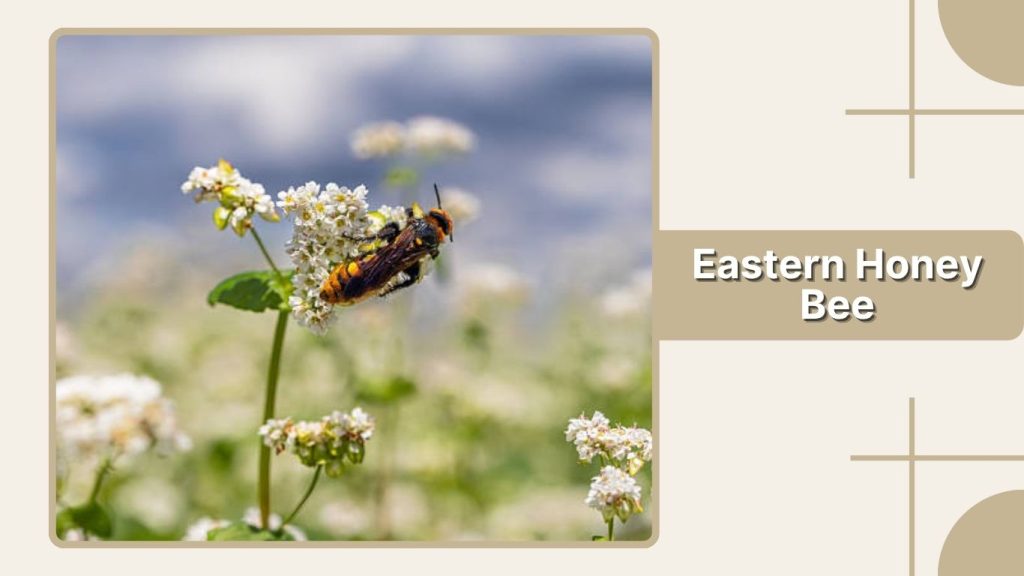
The Eastern Honey Bee is an important honey bee species native to Asia. Its scientific name is Apis cerana. It is smaller than the Western Honey Bee but very active, hardworking, and well adapted to tropical and subtropical regions. This bee is commonly found in forests, farms, gardens, orchards, and village areas. Many beekeepers in Asia keep Eastern Honey Bees because they produce honey and help pollinate fruits, vegetables, and wild plants.
Identification
- Smaller body than the Western Honey Bee
- Brown to dark brown body color
- Clear dark bands across the abdomen
- Hairy body that helps collect pollen
- Clear wings with fine veins
- Pollen baskets on the hind legs
- Often seen flying around flowers in groups
- More slender appearance than some managed honey bees
Habitat
Eastern Honey Bees live in tree hollows, wall cavities, natural holes, and managed bee boxes. They prefer areas with plenty of flowering plants and safe nesting spaces. In many Asian countries, they are found near forests, farms, gardens, and rural houses. They can survive well in warm climates and are often seen in places where crops and wildflowers grow close together.
Diet
The Eastern Honey Bee feeds mainly on nectar and pollen. Nectar provides energy, while pollen gives protein and nutrients for young bees. Worker bees collect nectar from flowers and bring it back to the hive. Inside the colony, nectar is changed into honey and stored for later use, especially when flowers are less available.
Behavior
Eastern Honey Bees live in organized colonies with a queen, worker bees, and drones. Worker bees collect food, clean the hive, care for larvae, guard the nest, and produce honey. They are known for being alert and defensive when their colony is disturbed. They also use movement and scent to communicate food locations to other bees.
3. Giant Honey Bee
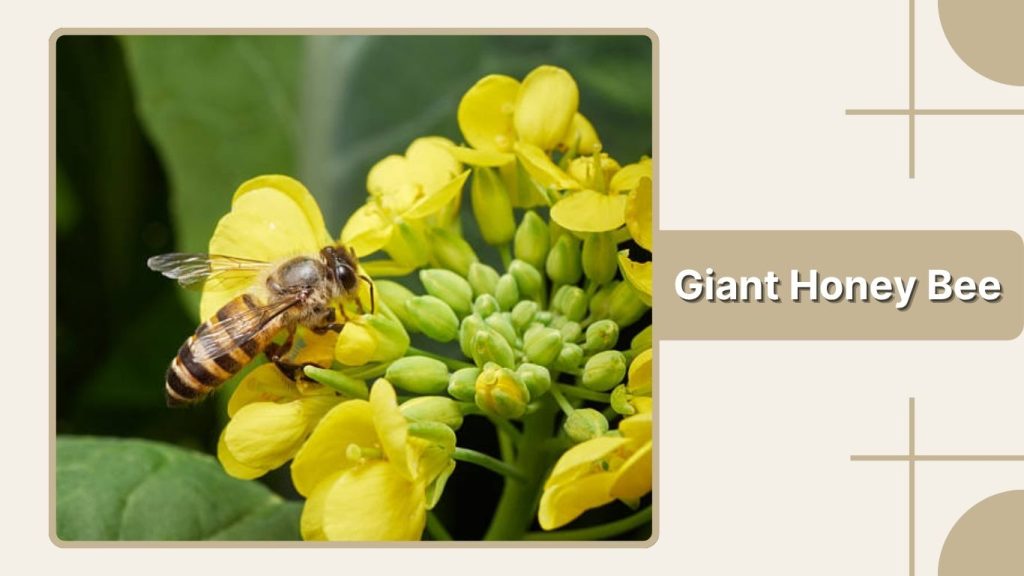
The Giant Honey Bee is a large honey bee species native to South and Southeast Asia. Its scientific name is Apis dorsata. This bee is much bigger than many common honey bees and is well known for building large open nests on tall trees, cliffs, buildings, and other high places. Unlike hive bees, Giant Honey Bees usually make a single exposed comb, which may contain thousands of bees.
Identification
- Large body compared with other honey bees
- Golden-brown to dark brown body color
- Strong dark bands on the abdomen
- Long wings and powerful flight
- Hairy body for carrying pollen
- Often seen in large groups near nests
- Builds huge open combs instead of enclosed hives
Habitat
Giant Honey Bees usually live in forests, tropical woodlands, mangroves, farms, and areas near flowering plants. They often choose high and open nesting places such as tree branches, cliffs, caves, and tall buildings. These locations help protect the colony from many ground predators.
Diet
The Giant Honey Bee feeds on nectar and pollen collected from flowers. Nectar provides energy, while pollen gives protein for developing larvae. Workers collect food from many flowering plants and bring it back to the nest, where nectar is stored as honey.
Behavior
Giant Honey Bees are social insects that live in large colonies with a queen, workers, and drones. They are strong flyers and may travel long distances to find flowers. They can be defensive when their nest is disturbed, so people should avoid touching or approaching their colonies.
4. Dwarf Honey Bee
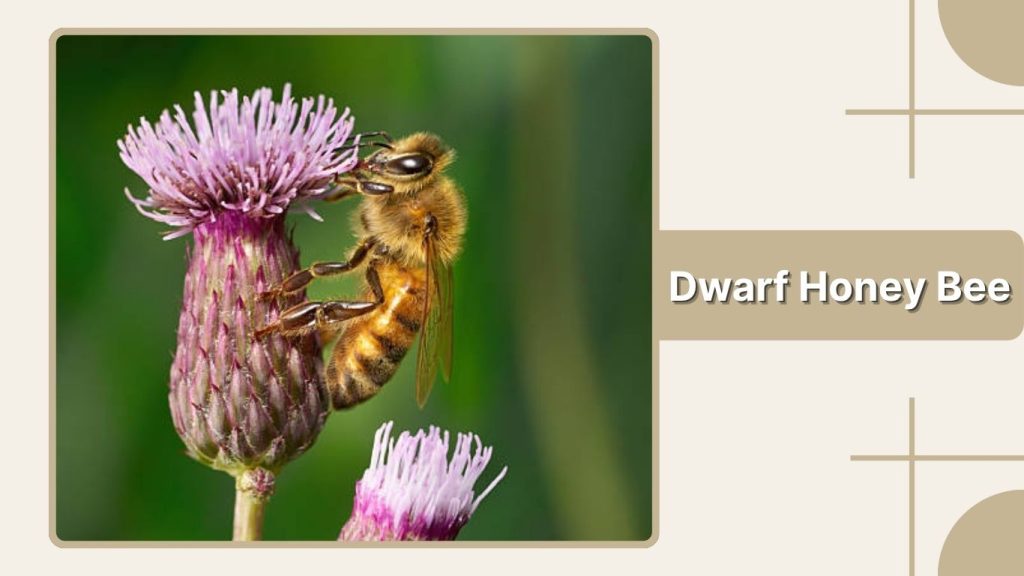
The Dwarf Honey Bee is a small honey bee species found in South and Southeast Asia. Its scientific name is Apis florea. This bee is much smaller than the Western Honey Bee and Giant Honey Bee. It is known for building a single small open comb, usually on tree branches, shrubs, or other exposed places. Dwarf Honey Bees are important pollinators for wild plants, crops, and garden flowers.
Identification
- Very small honey bee body
- Reddish-brown to golden-brown color
- Dark bands on the abdomen
- Clear wings with fine veins
- Slender body shape
- Often seen around small flowering plants
- Builds a single open comb on branches or shrubs
Habitat
Dwarf Honey Bees live in warm regions with many flowering plants. They are commonly found in forests, gardens, farms, orchards, grasslands, and village areas. They often choose low tree branches, bushes, and shrubs for nesting. Their small nests are usually exposed but partly hidden by leaves and twigs.
Diet
The Dwarf Honey Bee feeds on nectar and pollen from flowers. Nectar gives energy for flying and daily activity, while pollen provides protein for young bees. Worker bees collect food and store honey in the comb for the colony.
Behavior
Dwarf Honey Bees live in small colonies with a queen, workers, and drones. They are active during the day and visit many flowers for nectar and pollen. When disturbed, they may leave their nest and move to another place.
5. Black Dwarf Honey Bee
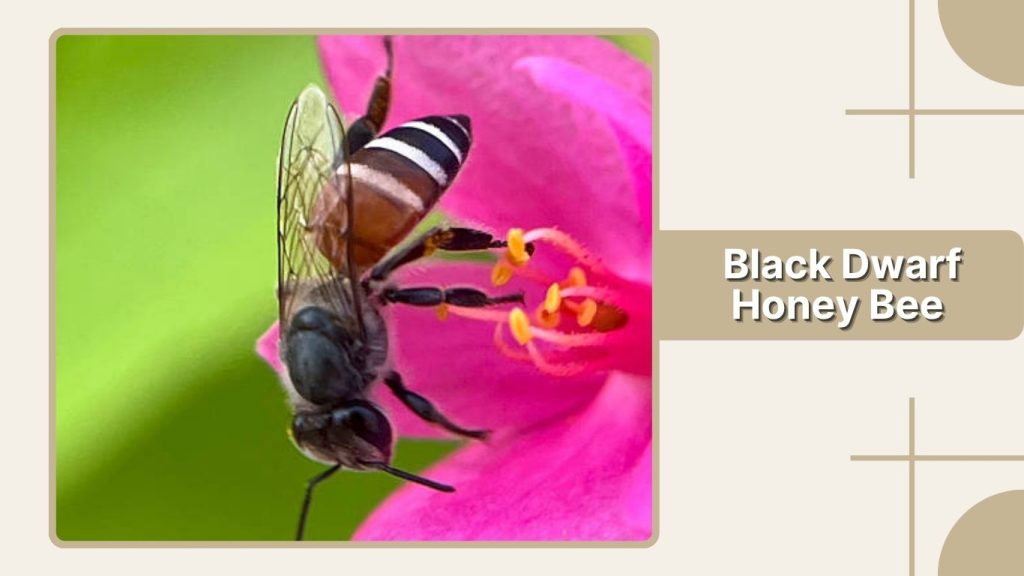
The Black Dwarf Honey Bee is a small honey bee species found in parts of South and Southeast Asia. Its scientific name is Apis andreniformis. It is closely related to the Dwarf Honey Bee but is usually darker in color. This bee builds small, open nests on thin branches, shrubs, or low vegetation. It is an important pollinator for wildflowers, crops, and forest plants.
Identification
- Very small honey bee body
- Dark brown to blackish body color
- Dark bands on the abdomen
- Clear wings with visible veins
- Slender and delicate body shape
- Smaller than many common honey bees
- Builds a single exposed comb on branches or shrubs
Habitat
Black Dwarf Honey Bees live in warm tropical and subtropical areas. They are commonly found in forests, gardens, farms, orchards, and bushy places with many flowers. They often choose hidden branches or shrubs for nesting.
Diet
This bee feeds on nectar and pollen from flowers. Nectar provides energy, while pollen gives protein for young bees. Worker bees collect food and store honey in their small comb.
Behavior
Black Dwarf Honey Bees live in colonies with a queen, workers, and drones. They are active during the day and often visit small flowers. When disturbed, the colony may become alert or abandon the nest and move elsewhere.
6. Philippine Honey Bee
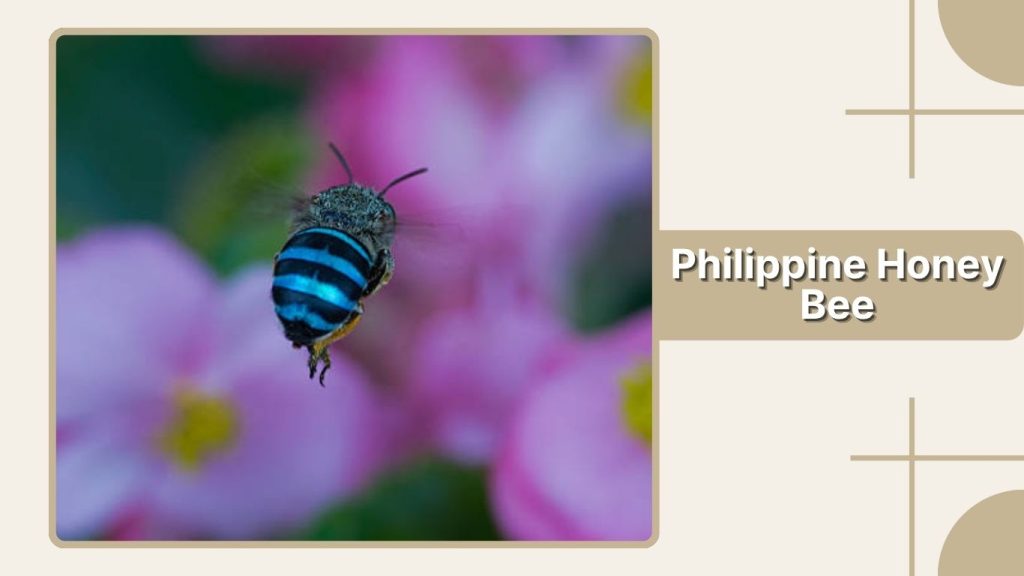
The Philippine Honey Bee is a honey bee species found mainly in the Philippines and nearby island regions. Its scientific name is Apis nigrocincta. This bee is closely related to the Eastern Honey Bee, but it has its own body features and natural range. It plays an important role in pollinating wild plants, fruit trees, crops, and garden flowers.
Identification
- Medium-sized honey bee body
- Yellowish to brown body color
- Dark bands across the abdomen
- Hairy body for carrying pollen
- Clear wings with visible veins
- Pollen baskets on the hind legs
- Similar in shape to the Eastern Honey Bee
Habitat
Philippine Honey Bees live in tropical forests, farms, orchards, gardens, and village areas. They usually choose protected nesting places such as tree hollows, cavities, and other sheltered spaces. Areas with many flowering plants provide the best food sources for their colonies.
Diet
This bee feeds on nectar and pollen from flowers. Nectar gives energy, while pollen provides protein for young bees. Worker bees collect nectar and turn it into honey inside the nest for future use.
Behavior
Philippine Honey Bees live in organized colonies with a queen, workers, and drones. Worker bees collect food, care for larvae, clean the nest, and protect the colony. They are active during the day and visit many flowers while searching for nectar and pollen.
7. Red Dwarf Honey Bee
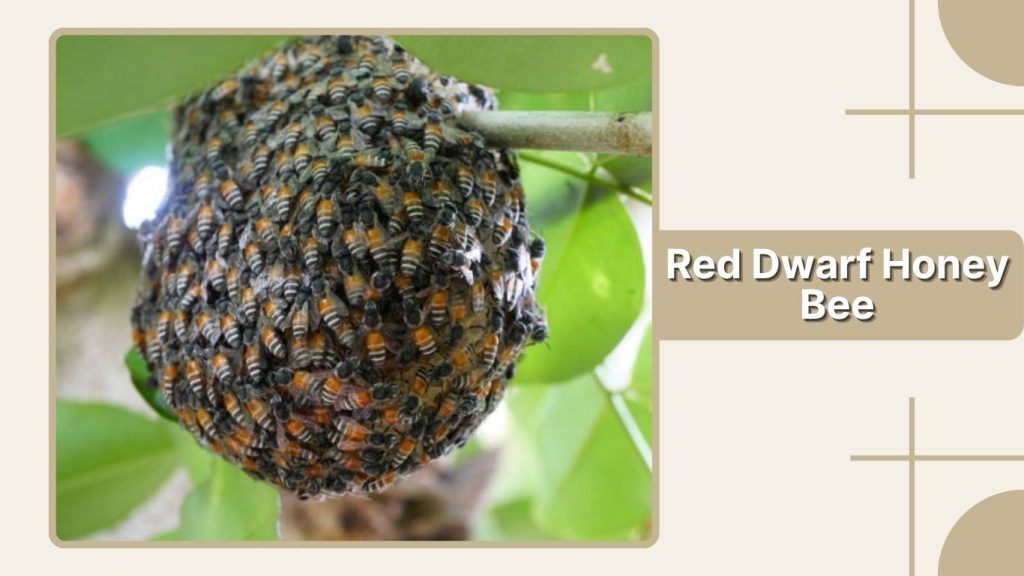
The Red Dwarf Honey Bee is a small honey bee species found in parts of South and Southeast Asia. Its scientific name is Apis florea in many references, though some guides use the common name to describe reddish forms of dwarf honey bees. This bee is known for its small body, reddish-brown color, and single open comb nest. It is an important pollinator for wild plants, crops, fruit trees, and garden flowers.
Identification
- Small honey bee body
- Reddish-brown to golden-red color
- Dark bands on the abdomen
- Clear wings with fine veins
- Slender body shape
- Hairy body for carrying pollen
- Builds one small exposed comb
- Often seen around flowering shrubs and crops
Habitat
Red Dwarf Honey Bees live in warm forests, farms, gardens, orchards, grasslands, and village areas. They usually build their nests on thin tree branches, shrubs, or bushes. Their open comb is often partly hidden by leaves, helping protect the colony from strong sunlight and predators.
Diet
This bee feeds on nectar and pollen from many flowering plants. Nectar gives energy for flying and daily activity, while pollen provides protein for larvae. Worker bees collect nectar and store it as honey inside the comb.
Behavior
Red Dwarf Honey Bees live in small colonies with a queen, workers, and drones. They are active during daylight and visit many flowers for food. When their nest is disturbed, they may show defensive behavior or leave the nest to build in a safer place.
8. Koschevnikov’s Honey Bee
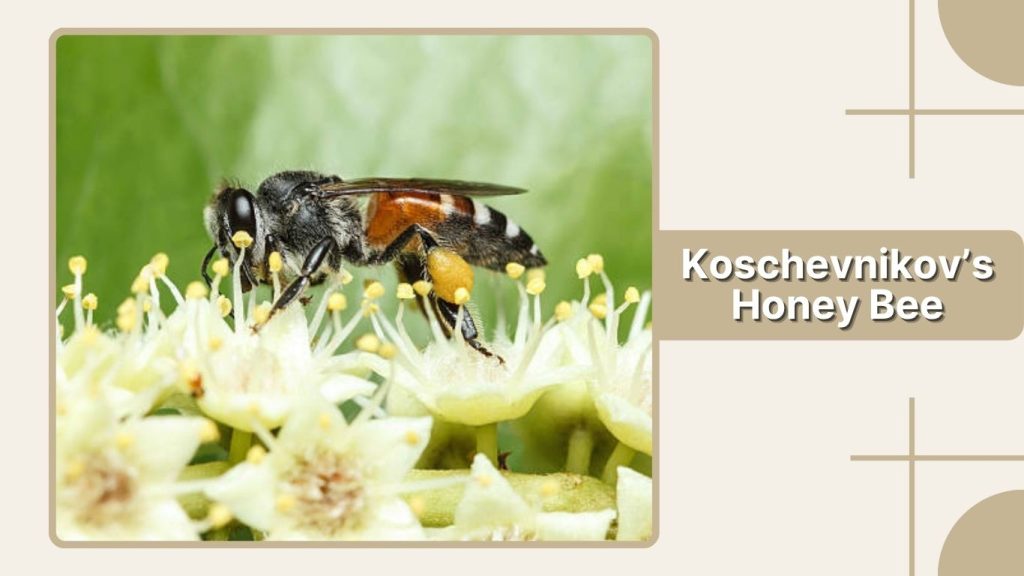
The Koschevnikov’s Honey Bee is a honey bee species found mainly in Southeast Asia, especially in forested tropical regions. Its scientific name is Apis koschevnikovi. It is sometimes called the red bee of Sabah because of its reddish body color. This bee is less commonly known than the Western or Eastern Honey Bee, but it is important for pollinating wild plants and forest flowers.
Identification
- Medium-sized honey bee body
- Reddish-brown to orange-brown color
- Dark bands on the abdomen
- Hairy body for carrying pollen
- Clear wings with visible veins
- Pollen baskets on hind legs
- Similar shape to other cavity-nesting honey bees
Habitat
Koschevnikov’s Honey Bee usually lives in tropical forests, forest edges, and areas with many flowering plants. It often nests in tree cavities or other sheltered spaces. Forest habitats provide flowers, nesting sites, and protection for the colony.
Diet
This bee feeds on nectar and pollen from flowers. Nectar provides energy, while pollen gives protein for larvae. Worker bees collect nectar and store it as honey inside the nest.
Behavior
Koschevnikov’s Honey Bee lives in colonies with a queen, workers, and drones. It is active during the day and visits flowers for food. Like other honey bees, it communicates food sources and helps maintain the colony.
FAQs
What is the most common type of honey bee?
The Western Honey Bee is the most common and widely managed honey bee. It is used by beekeepers around the world for honey production and crop pollination. This species is often seen in gardens, farms, orchards, and wildflower areas.
How can I identify a honey bee?
Honey bees usually have hairy bodies, clear wings, and yellowish-brown or dark bands on the abdomen. They also have pollen baskets on their hind legs. Their body is generally slimmer than a bumblebee and less smooth than a wasp.
Do all honey bees make honey?
Yes, all true honey bees can produce honey, but the amount varies by species. Managed bees like the Western Honey Bee produce larger amounts, while dwarf and wild honey bees usually make smaller honey stores for their own colony.
Where do honey bees usually live?
Honey bees may live in managed hives, tree hollows, wall cavities, rock spaces, or open comb nests. Some species build exposed combs on branches or cliffs, while others prefer protected cavities where the colony is safer.
Are honey bees dangerous?
Honey bees are usually not dangerous when left alone. They may sting if they feel threatened or if their hive is disturbed. It is best to observe them from a safe distance and avoid touching nests or blocking their flight path.