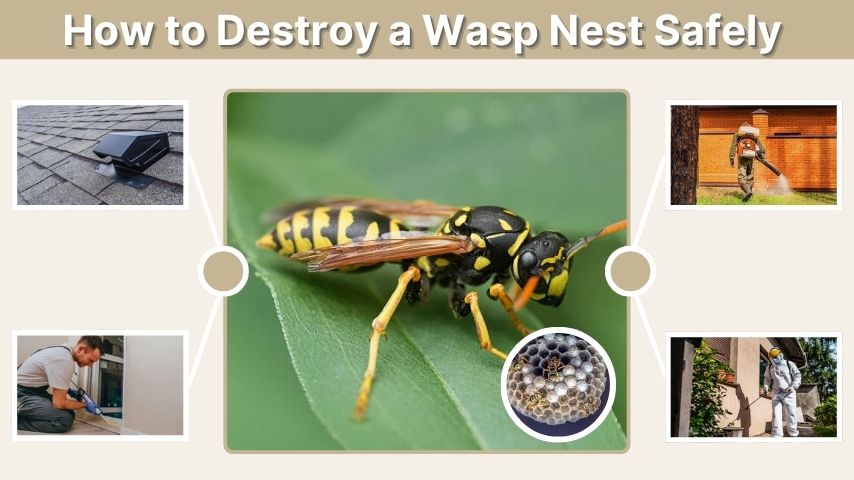
Destroying a wasp nest can be risky, especially if the nest is large, hidden underground, inside a wall, or close to a busy entrance. Wasps may defend their colony aggressively when disturbed, so safety matters more than speed. This guide explains when to remove a nest, the safest timing, what methods to avoid, and when professional pest control is the better choice.
Should You Destroy a Wasp Nest?
Not every wasp nest needs to be destroyed. Wasps help control garden pests and can play a role in pollination. If a small nest is far from people, pets, doors, windows, patios, or children’s play areas, it may be safer to leave it alone until the colony dies naturally.
However, removal may be necessary if the nest is active and located near daily activity. A nest beside a front door, garage, deck, shed, garden path, roofline, wall cavity, or underground lawn area can become a sting hazard.
When Nest Removal Makes Sense
You may need to destroy or remove a wasp nest if:
- Wasps are entering the house.
- The nest is near a door, window, path, or seating area.
- Children or pets play nearby.
- Someone in the home is allergic to stings.
- Wasps are nesting in a wall cavity.
- The nest is underground in a lawn or garden.
- The colony is large or highly defensive.
- Wasps are interfering with outdoor work.
If you are unsure whether the insects are wasps, hornets, yellowjackets, or bees, identify them first. Bees should often be handled differently, and a beekeeper may be able to relocate honey bees.
Best Time to Destroy a Wasp Nest
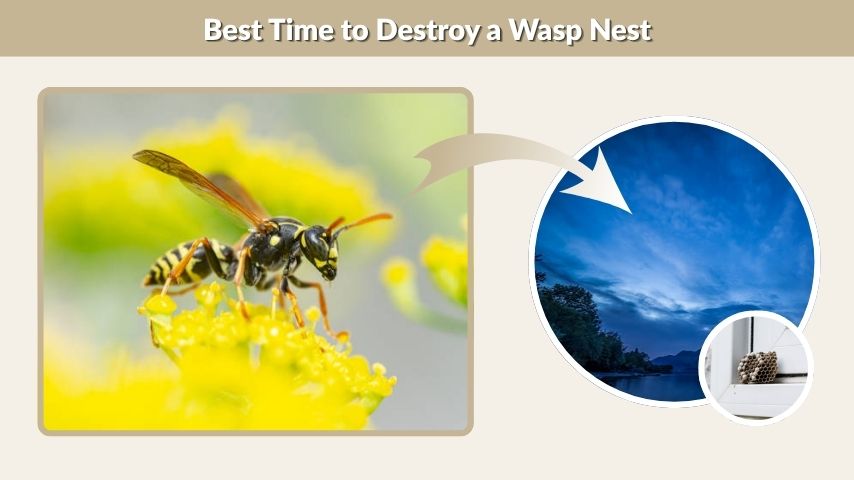
The best time to destroy a wasp nest is usually early morning or evening, when wasps are less active and more likely to be inside the nest. Avoid treating a nest during the middle of the day, when workers are flying in and out frequently.
Cooler weather can also reduce activity. Late fall or winter is often the safest time to remove old inactive nests in temperate climates, because many colonies die out naturally.
Best Time of Day
Early morning and evening are generally safer because:
- Fewer wasps are flying outside.
- The colony is less active.
- More workers are inside the nest.
- Cooler temperatures slow movement.
- There is less chance of disturbing foraging wasps.
Even at the right time, wasps can still sting. Protective clothing and a clear escape route are important.
When Not to Destroy a Nest
Avoid destroying a wasp nest when:
- You are allergic to stings.
- The nest is very large.
- The nest is inside a wall.
- The nest is underground and busy.
- You need a ladder to reach it.
- You cannot see the nest entrance clearly.
- Wasps are already highly agitated.
- Children, pets, or neighbors are nearby.
- It is windy, rainy, or hard to move safely.
If any of these apply, call a pest control professional instead of attempting DIY removal.
How to Destroy a Small Wasp Nest Safely
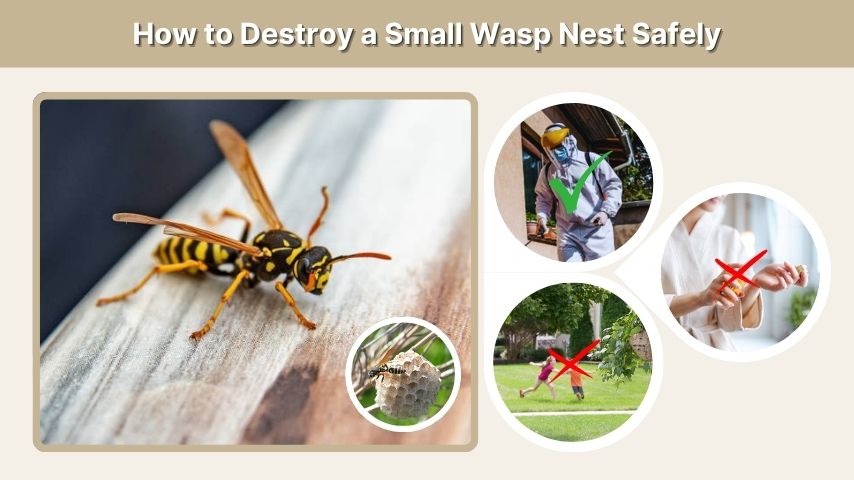
A small, exposed paper wasp nest may be manageable if it is easy to reach from the ground and not heavily active. These nests are often found under eaves, porch ceilings, railings, sheds, or deck edges.
Before doing anything, watch the nest from a safe distance. Confirm where the wasps enter and exit. Plan your escape route and keep people and pets indoors.
Safety Preparation
Before approaching a nest:
- Wear long sleeves, long pants, gloves, socks, and closed shoes.
- Avoid dark clothing, strong scents, perfume, or scented lotions.
- Cover your face and eyes if possible.
- Keep a clear path back indoors.
- Do not stand on a ladder if wasps may swarm.
- Read and follow the label on any wasp nest destroyer spray or foam.
- Keep children and pets away from the area.
- Never attempt removal with bare hands.
For small exposed nests, many homeowners use a labeled wasp and hornet spray with a long spray range. Foam products may help coat exposed nests, while jet sprays may allow more distance. Always follow the product label exactly.
Removing the Nest After Treatment
Do not knock down the nest immediately. Wait until there is no visible wasp activity. This may take a day or longer depending on the product and nest size. Once inactive, wear protection and use a long-handled tool to remove the nest. Seal it in a bag and dispose of it.
Clean the attachment area afterward to reduce scent traces and discourage future nesting.
How to Destroy an Underground Wasp Nest
Underground wasp nests are more dangerous than small exposed paper nests. Yellowjackets often nest in old rodent burrows, soil cavities, lawn edges, garden beds, or under landscape features. These colonies can be defensive and may swarm if the entrance is disturbed.
Why Ground Wasp Nests Are Risky
Underground nests are risky because:
- The colony may be larger than it looks.
- There may be more than one entrance.
- Vibrations from mowing or walking can trigger attacks.
- Wasps can emerge rapidly from the ground.
- The nest chamber may extend deeper than expected.
- Surface sprays may not reach the whole colony.
If the nest is in a lawn, near children, close to pets, or beside a walkway, professional treatment is usually the safest option.
What Not to Do With Ground Nests
Do not pour gasoline, bleach, boiling water, or flammable liquids into a ground nest. Do not light the nest on fire. Do not cover the hole with rocks or soil while the colony is active. These methods can be dangerous, ineffective, and may drive wasps into new openings.
If you use any insecticide product, use only one labeled for ground-nesting wasps and follow all directions. For many homeowners, calling a professional is the safest choice.
How to Destroy a Wasp Nest in a Wall
A wasp nest in a wall cavity is not a good DIY project. Wasps may enter through siding gaps, roofline cracks, vents, utility openings, or damaged trim. The nest itself may be hidden deep inside the structure.
Why Wall Nests Need Caution
Wall nests can become worse if handled incorrectly. Spraying randomly into cracks or sealing the entrance too soon can trap wasps inside the wall and force them into living spaces. It can also leave dead insects, odor, moisture issues, or hidden nest material behind.
Call a professional if you see wasps entering and exiting the same wall gap repeatedly. A technician can identify the species, locate the entry point, apply targeted treatment, and advise whether repairs are needed after the colony is inactive.
Best Way to Destroy Different Wasp Nests
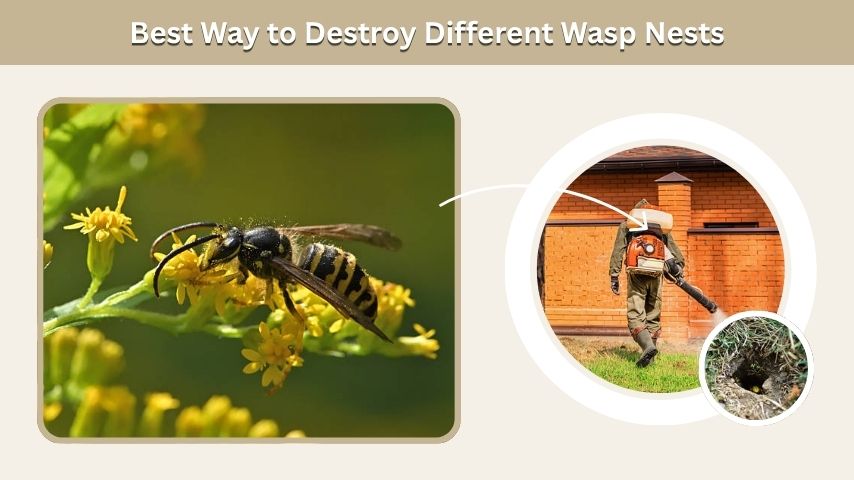
The safest method depends on the nest type, location, and colony size. A small exposed paper wasp nest is very different from a hidden yellowjacket nest in a wall or underground cavity.
| Nest Type | Common Location | Risk Level | Best Approach |
|---|---|---|---|
| Small paper wasp nest | Eaves, porch, railing, shed | Moderate | DIY may be possible if exposed and low |
| Large paper wasp nest | Roofline, tree, high structure | High | Professional removal is safer |
| Underground nest | Lawn, garden, soil hole | High | Professional treatment recommended |
| Wall cavity nest | Siding, roof gap, vent, void | High | Do not seal; call a professional |
| Old inactive nest | Eaves, shed, tree | Low | Remove when no activity remains |
| Mud dauber nest | Walls, porch, garage | Low to moderate | Usually less aggressive; remove when inactive |
Can You Destroy a Wasp Nest Naturally?
Some people look for natural ways to destroy a wasp nest. Natural methods may help prevent nesting, but they are less reliable for active colonies. Soap-and-water methods are sometimes discussed for very small exposed nests, but they require close contact and can be risky.
For active nests near people, a labeled wasp product or professional treatment is usually more reliable. For prevention, natural methods are more useful.
Natural Prevention Options
To make your property less attractive to wasps:
- Keep outdoor food covered.
- Clean sugary spills quickly.
- Seal trash cans tightly.
- Pick up fallen fruit.
- Repair gaps in siding, vents, and rooflines.
- Remove old inactive nests.
- Inspect eaves and sheds in spring.
- Keep compost covered.
- Avoid leaving pet food outdoors.
- Trim dense shrubs near entrances.
Prevention is safest early in the season, before colonies become large.
Methods You Should Avoid
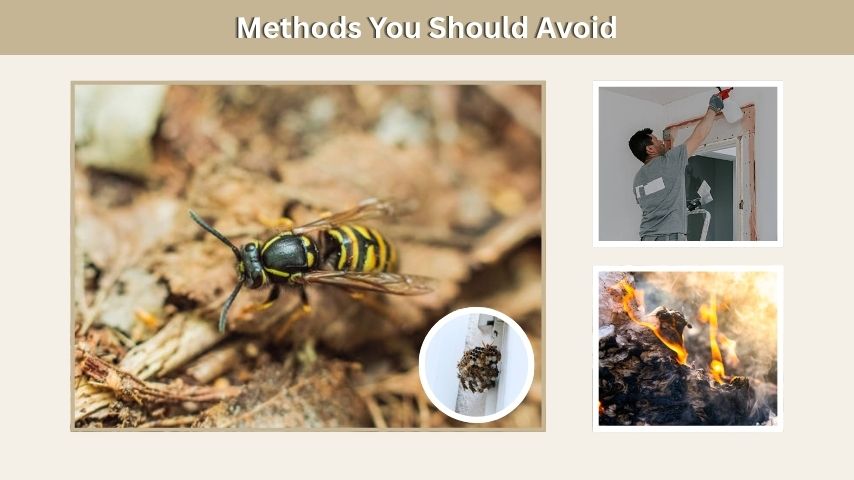
Many viral or DIY methods for destroying wasp nests are unsafe. Some may injure people, damage property, or make the colony more aggressive.
Avoid these methods:
- Pressure washing an active nest
- Hitting the nest with a stick
- Throwing rocks at the nest
- Burning the nest
- Pouring gasoline into a ground nest
- Spraying from a ladder without protection
- Blocking a wall nest entrance
- Vacuuming a nest without proper equipment
- Using fireworks or smoke near structures
- Removing a nest with bare hands
These methods increase the chance of multiple stings and may not eliminate the colony.
How Long Do Wasps Hang Around After a Nest Is Destroyed?
Wasps may remain around the area for hours or even a few days after a nest is destroyed. Foraging workers that were away may return to the old location and become confused when the nest is gone. Some may fly around the site, search nearby surfaces, or attempt to re-enter a treated opening.
Why Wasps Return to a Destroyed Nest
Wasps return because they remember the nest location. Workers that were away collecting food or materials may not know the nest has been destroyed. This is normal and does not always mean treatment failed.
You may still see wasps if:
- Workers were away during treatment.
- The nest was not fully treated.
- There is a hidden secondary entrance.
- The colony is inside a wall or ground cavity.
- Nearby food sources are attracting them.
- Another nest exists nearby.
If heavy activity continues after several days, the nest may still be active or there may be another colony nearby.
Will Wasps Rebuild a Destroyed Nest?
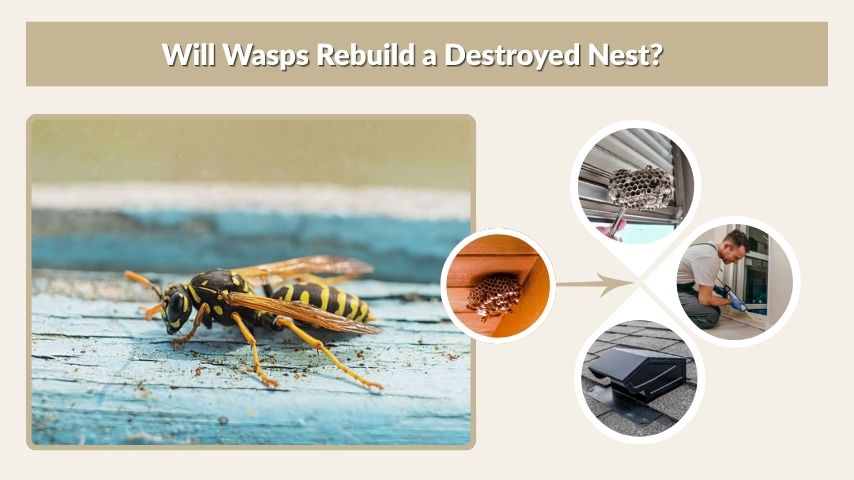
Wasps usually do not rebuild the exact same nest once it is destroyed and inactive. However, they may build new nests nearby if the location remains attractive. Queens choose sheltered places, so eaves, sheds, wall gaps, rooflines, and bushes can be reused as nesting areas in future seasons.
How to Stop Wasps From Coming Back
After the nest is inactive:
- Remove nest material.
- Clean the attachment point.
- Seal cracks and gaps.
- Repair damaged screens and vents.
- Cover attic or soffit openings.
- Keep garbage sealed.
- Reduce outdoor food sources.
- Inspect the same area regularly in spring.
Early inspection is important because small new nests are easier to manage than mature colonies.
Should You Destroy a Wasp Nest in Winter?
In many climates, winter is the safest time to remove an inactive wasp nest. Most workers die when cold weather arrives, and old nests are usually not reused. However, do not assume a nest is inactive if you live in a mild climate or still see wasp activity.
If there are no wasps entering or leaving, the nest can often be removed with basic protection. If you see activity, treat it as active and use caution.
When to Call a Professional
Professional wasp nest removal is recommended when the risk is high. The cost is often worth it when the nest is difficult, hidden, or dangerous.
Call a pro if:
- The nest is underground.
- The nest is inside a wall.
- The nest is high above ground.
- The nest is large.
- Wasps are entering the home.
- Someone has a sting allergy.
- You have already been stung.
- The nest is near children or pets.
- DIY treatment failed.
- You cannot identify the insect.
A professional can also help distinguish wasps from bees, hornets, yellowjackets, and other stinging insects.
FAQs
What is the best way to destroy a wasp nest?
The best method depends on the nest. A small exposed nest may be treated with a labeled wasp spray from a safe distance. Underground, wall, large, or hard-to-reach nests should usually be handled by a professional because the sting risk is much higher.
What time of day should you destroy a wasp nest?
Early morning or evening is usually best because wasps are less active and more likely to be inside the nest. Avoid midday removal, when many workers are flying. Even at the right time, wear protection and keep a clear escape route.
Do wasps come back after you destroy their nest?
Some wasps may return for hours or days because foraging workers remember the old nest location. If activity decreases, this is normal. If many wasps keep entering the same area after several days, the nest may still be active or hidden.
Can you destroy a wasp nest with water?
Using water on an active wasp nest is risky and often ineffective. A hose or pressure washer can anger the colony and cause swarming. Never use boiling water, gasoline, or fire. For active nests, use labeled products or call a professional.
Is it safe to destroy a wasp nest yourself?
It may be safe only for a small, exposed, low nest if you are not allergic and can treat it from a distance. It is not safe for large nests, wall nests, underground nests, high nests, or aggressive colonies. When in doubt, hire a professional.