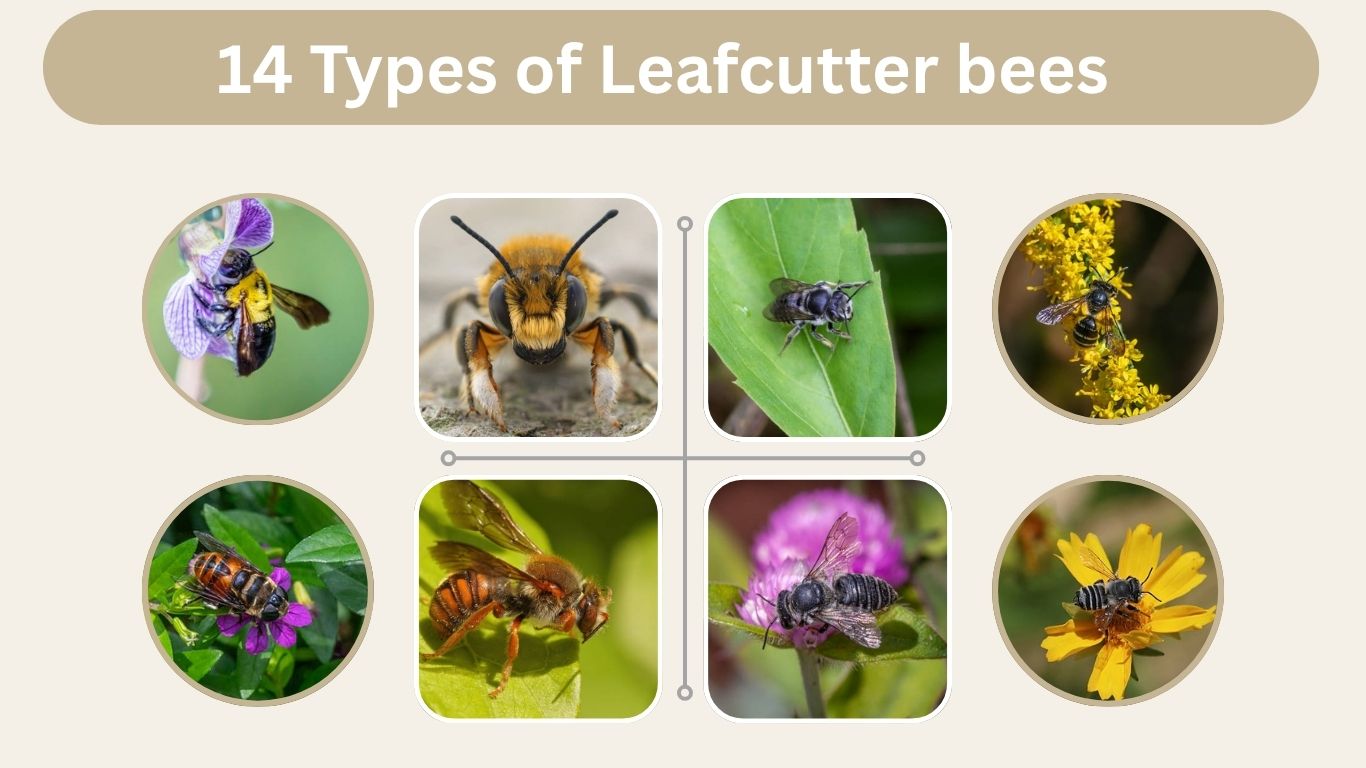
Leafcutter bees are solitary pollinators known for cutting neat pieces from leaves to build their nests. Unlike honeybees, they do not live in large hives, and each female prepares her own nest cells. These bees are important for gardens, wildflowers, and crops because they move pollen efficiently while visiting many different blooms.
1. Alfalfa Leafcutter Bee
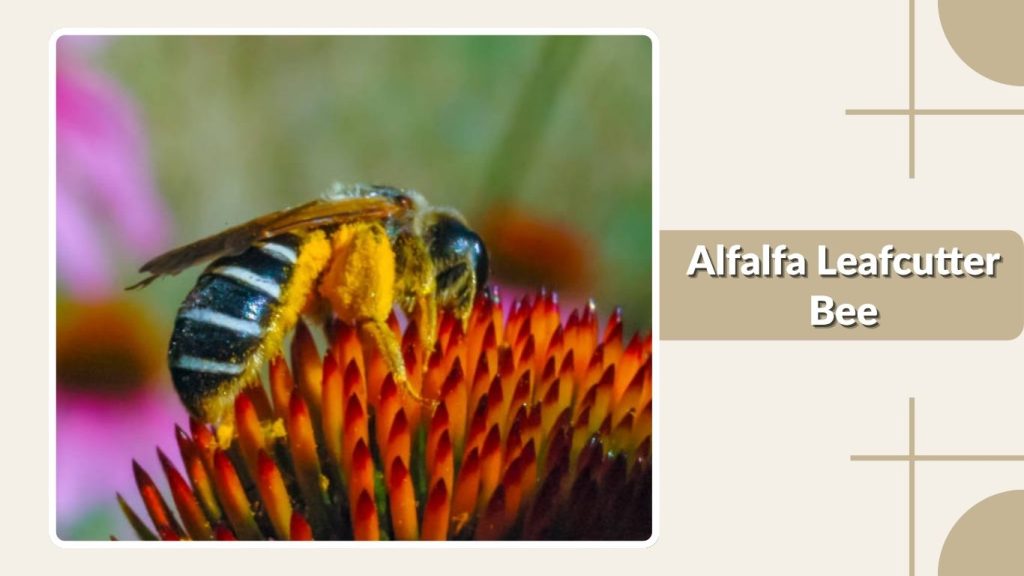
The alfalfa leafcutter bee is one of the most useful leafcutter bees in agriculture. It is well known for pollinating alfalfa crops and other flowering plants, making it valuable for both farms and gardens.
Identification
- Small to medium-sized bee
- Dark body with pale bands on the abdomen
- Carries pollen on the underside of the abdomen
- Rounded body shape
- Cuts neat circular pieces from leaves
- Often seen around flowers and nesting holes
Natural Habitat
Alfalfa leafcutter bees are commonly found in fields, gardens, grasslands, and agricultural areas. They prefer places with plenty of flowering plants and suitable nesting spaces. Unlike honeybees, they do not live in large colonies. Instead, females build individual nests in hollow stems, wood holes, or artificial nesting blocks.
Behavior
This bee is solitary but may nest near other leafcutter bees when good nesting sites are available. Female bees cut small pieces from leaves and use them to line nest cells. Each cell contains pollen, nectar, and one egg. Their calm nature makes them less aggressive than many social bees.
Importance
Alfalfa leafcutter bees are excellent pollinators, especially for alfalfa seed production. They also help pollinate garden flowers, vegetables, and wild plants. Because they are efficient and active pollinators, many farmers use managed nesting systems to support their populations.
2. Silvery Leafcutter Bee
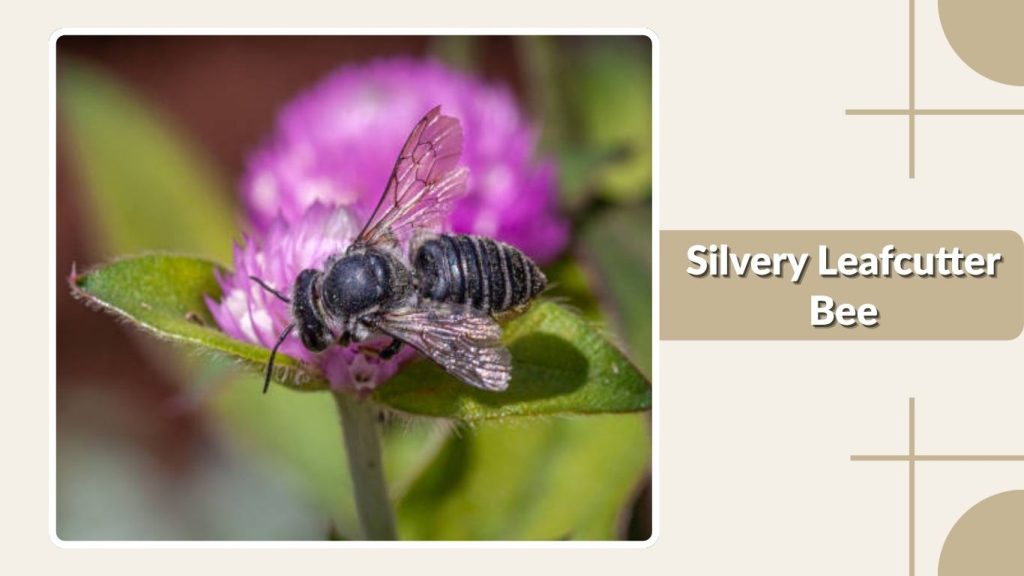
The silvery leafcutter bee is a small solitary bee known for its pale hair and neat leaf-cutting behavior. It is often seen visiting flowers during warm months.
Identification
- Small body with silvery or pale hairs
- Dark abdomen with light hair bands
- Carries pollen under the abdomen
- Rounded head and compact body
- Cuts smooth leaf pieces for nesting
- Usually active in sunny weather
Natural Habitat
Silvery leafcutter bees live in gardens, meadows, woodland edges, and open habitats with flowers. They need both nectar sources and nesting spaces nearby. Females often nest in hollow plant stems, cracks in wood, or small holes in walls and soil banks.
Behavior
This bee is solitary and does not form a hive. The female collects pollen and nectar to feed her young, then seals each nest chamber with pieces of leaf. It usually avoids people and is not aggressive unless handled roughly. Its leaf-cutting is usually minor and does not seriously harm plants.
Importance
Silvery leafcutter bees are helpful pollinators for wildflowers and garden plants. Their flower visits support plant reproduction and biodiversity. They are also useful indicators of a healthy garden because they need flowers, nesting spaces, and pesticide-free surroundings.
3. Patchwork Leafcutter Bee
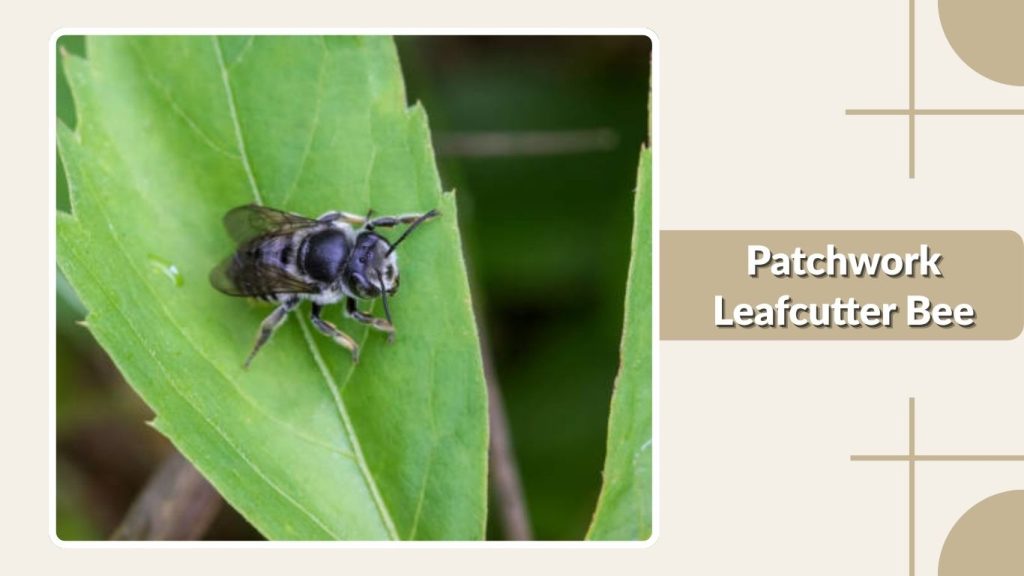
The patchwork leafcutter bee is one of the best-known leafcutter bees in gardens. It gets its name from the way it uses leaf pieces to make neat nest cells.
Identification
- Dark body with pale hair bands
- Broad head and strong jaws
- Orange or reddish pollen brush under abdomen
- Medium-sized body
- Leaves circular cuts on rose and other plants
- Often seen entering small holes with leaf pieces
Natural Habitat
Patchwork leafcutter bees are found in gardens, parks, meadows, and woodland edges. They prefer sunny places with many flowers. Females nest in hollow stems, old beetle holes, wall gaps, or bee hotels. They often choose areas where suitable leaves are available nearby.
Behavior
Female patchwork leafcutter bees cut pieces from leaves and carry them back to the nest. These pieces are used to create protective cells for their eggs. Each cell is filled with pollen and nectar before being sealed. The bee works alone but may nest close to others.
Importance
This species is a valuable garden pollinator. It visits many flowers and helps support fruit, vegetable, and wildflower production. Although it may cut leaves, the damage is usually cosmetic and not harmful to healthy plants.
4. Coast Leafcutter Bee
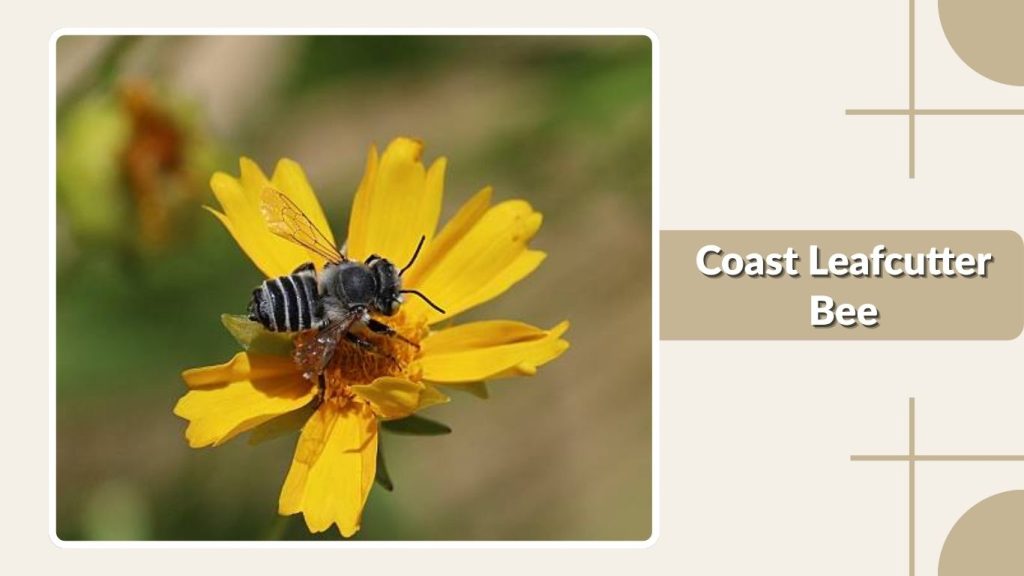
The coast leafcutter bee is a solitary bee often associated with coastal areas, open landscapes, and flower-rich habitats. It plays an important role in pollinating native plants.
Identification
- Compact body with dark coloring
- Pale hair bands on the abdomen
- Strong jaws for cutting leaves
- Pollen carried beneath the abdomen
- Often found near coastal flowers
- Small to medium in size
Natural Habitat
Coast leafcutter bees usually live in sandy, open, or coastal habitats with plenty of flowering plants. They may also appear in gardens and dry grasslands near coastal regions. Like other leafcutter bees, females look for small cavities where they can build nests.
Behavior
This bee is solitary and active during warm, sunny days. Females collect leaf pieces to line nest cells and gather pollen from nearby flowers. They do not defend a colony, so they are usually peaceful around people. Their activity often increases where native flowers are abundant.
Importance
Coast leafcutter bees help pollinate wildflowers, coastal plants, and garden blooms. Their presence supports local ecosystems by helping plants produce seeds. Protecting nesting sites and reducing pesticide use can help this species survive in natural and managed landscapes.
5. Bellflower Resin Bee
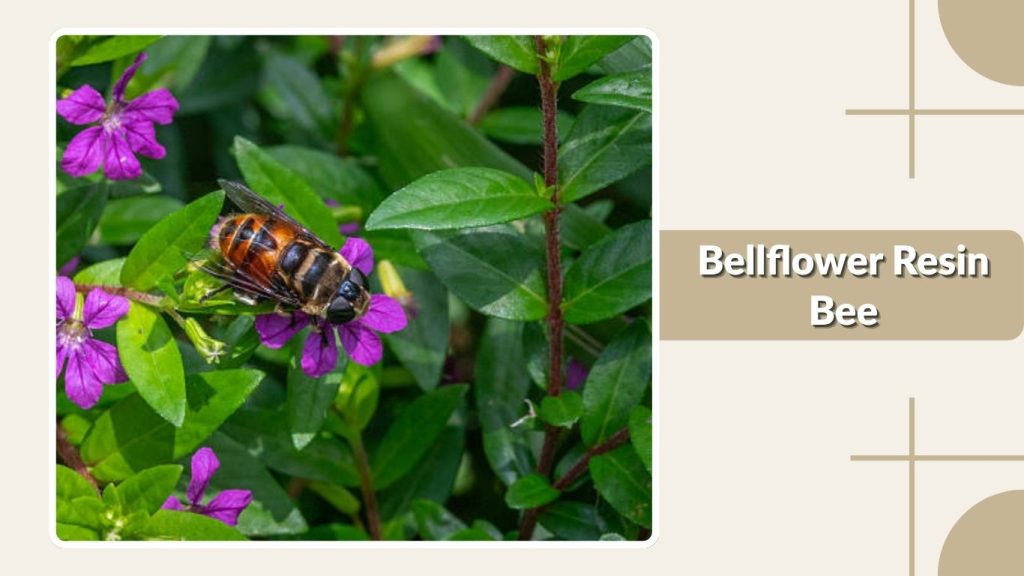
The bellflower resin bee is a solitary bee that is closely linked with bellflowers and similar blooms. Unlike many leafcutter bees, it often uses resin along with plant materials for nest construction.
Identification
- Small to medium-sized dark bee
- Pale hair bands on the abdomen
- Often visits bell-shaped flowers
- Carries pollen under the abdomen
- Strong jaws for handling nesting material
- Compact and active body shape
Natural Habitat
Bellflower resin bees are often found in meadows, gardens, woodland edges, and places where bellflowers grow. They need flowers for nectar and pollen, as well as small holes or cavities for nesting. Old stems, wood holes, and bee hotels can provide useful nesting spaces.
Behavior
This bee is solitary and does not live in a hive. Females collect pollen, nectar, and resin-like material to prepare nest cells. Each cell is built carefully to protect the developing young. They are usually calm and rarely sting unless directly threatened.
Importance
Bellflower resin bees are important pollinators for bellflowers and other flowering plants. By moving pollen from bloom to bloom, they support seed production and plant diversity. Gardeners can attract them by planting native flowers and leaving safe nesting spaces.
6. Giant Resin Bee
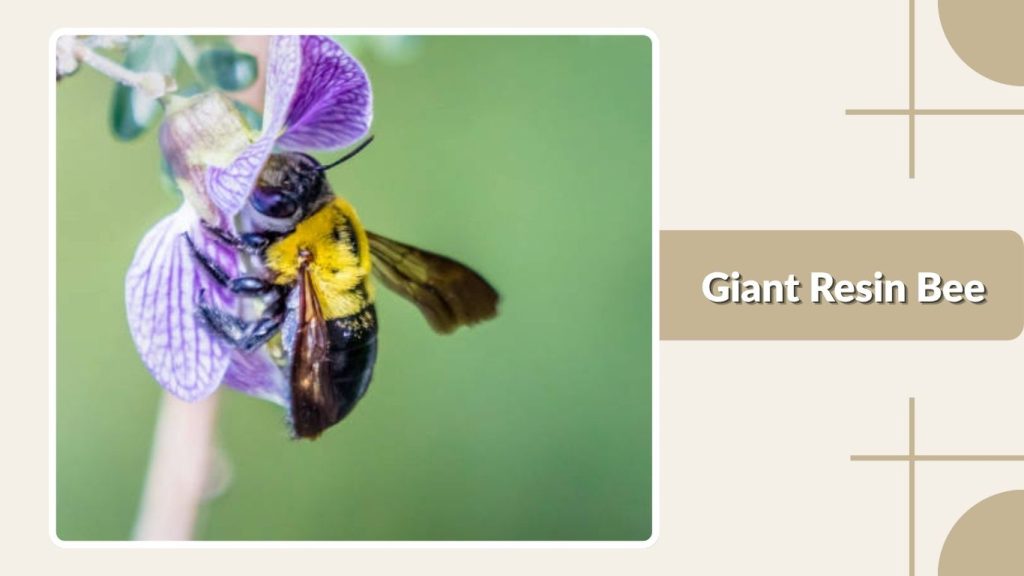
The giant resin bee is a large solitary bee often noticed because of its size and strong flying ability. It is related to leafcutter bees and uses resin to build and seal its nests.
Identification
- Large dark body
- Brownish or smoky wings
- Strong jaws and broad head
- Pale hairs on parts of the body
- Carries pollen beneath the abdomen
- Often nests in existing holes or bee hotels
Natural Habitat
Giant resin bees are commonly found in gardens, parks, forest edges, and urban areas with suitable nesting cavities. They do not usually dig their own holes. Instead, females use existing spaces in wood, stems, or artificial bee houses.
Behavior
This bee is solitary, but several individuals may use the same nesting area. Females collect plant resin and use it to build nest partitions. They may also compete with other cavity-nesting bees for space. Despite their size, they are generally not aggressive toward people.
Importance
Giant resin bees pollinate many flowers while collecting nectar and pollen. However, in some regions, they may compete with native bees for nesting sites. Providing different nest sizes and plenty of flowers can help support a balanced pollinator habitat.
7. Wool Carder Bee
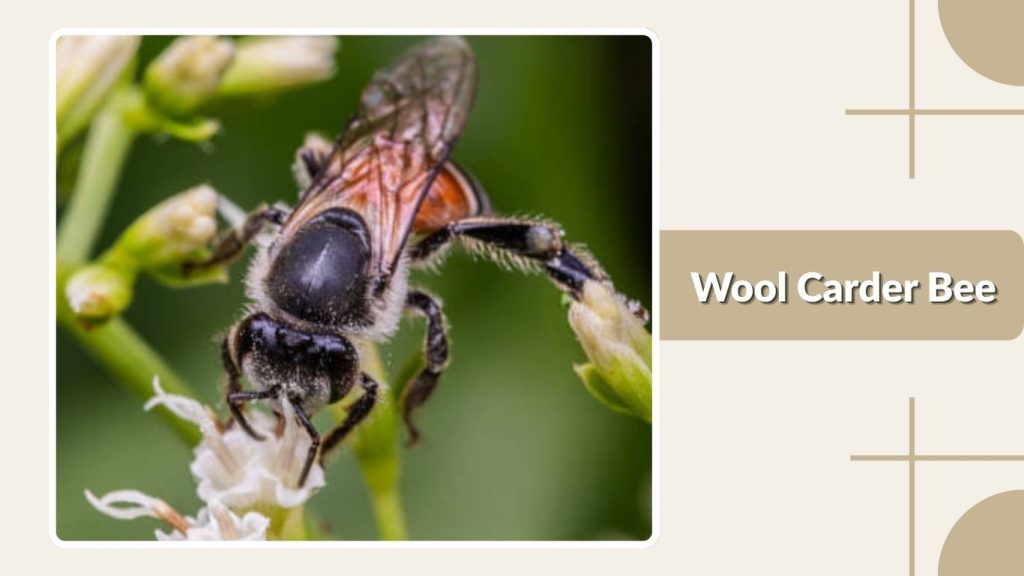
The wool carder bee is a distinctive solitary bee known for collecting soft plant fibers. Instead of cutting leaf pieces, females scrape fuzzy fibers from plants to line their nests.
Identification
- Black body with bright yellow markings
- Stocky shape with a wasp-like appearance
- Females collect plant fibers
- Males may guard flower patches
- Fast, hovering flight
- Often seen around fuzzy-leaved plants
Natural Habitat
Wool carder bees are found in gardens, meadows, parks, and flower-rich areas. They are especially attracted to plants with soft, hairy leaves, such as lamb’s ear. Females nest in hollow stems, wall gaps, wood holes, or other small cavities.
Behavior
Females gather plant fibers and roll them into soft nesting material. Males are known for defending flower patches from other insects, especially when females are nearby. Although they may chase other bees, they are usually not dangerous to humans.
Importance
Wool carder bees help pollinate many garden and wild plants. Their nesting behavior also shows the importance of growing diverse plants, including fuzzy-leaved species. They are interesting bees to observe because of their active behavior and unique fiber-collecting habits.
8. Broad-Handed Leafcutter Bee
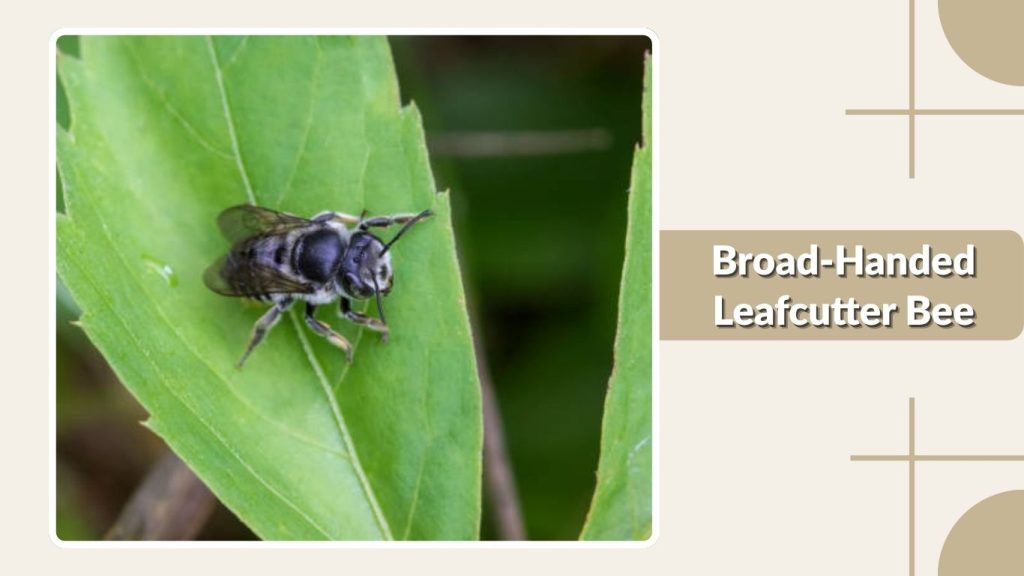
The broad-handed leafcutter bee is a solitary bee known for its wide front legs, especially in males. It is an interesting species often seen around flowers in gardens, meadows, and open habitats.
Identification
- Dark body with pale hair bands
- Males have noticeably broad front legs
- Medium-sized, compact body
- Carries pollen under the abdomen
- Strong jaws for cutting leaves
- Often seen visiting garden flowers
Natural Habitat
Broad-handed leafcutter bees are commonly found in gardens, grasslands, woodland edges, and flower-rich open spaces. They need access to nectar, pollen, and suitable nesting holes. Females may use hollow stems, old insect tunnels, or small cavities in wood and walls for nesting.
Behavior
This bee is solitary and does not form a colony. Females collect leaf pieces to build nest cells for their young. Males often patrol flower patches while searching for females. Like most leafcutter bees, they are generally peaceful and rarely bother people unless handled.
Importance
Broad-handed leafcutter bees help pollinate wildflowers, herbs, and garden plants. Their flower visits support seed production and healthy plant growth. They are also useful insects in natural gardens because they show that the area has flowers, nesting spaces, and a balanced habitat.
9. Flat-Tailed Leafcutter Bee
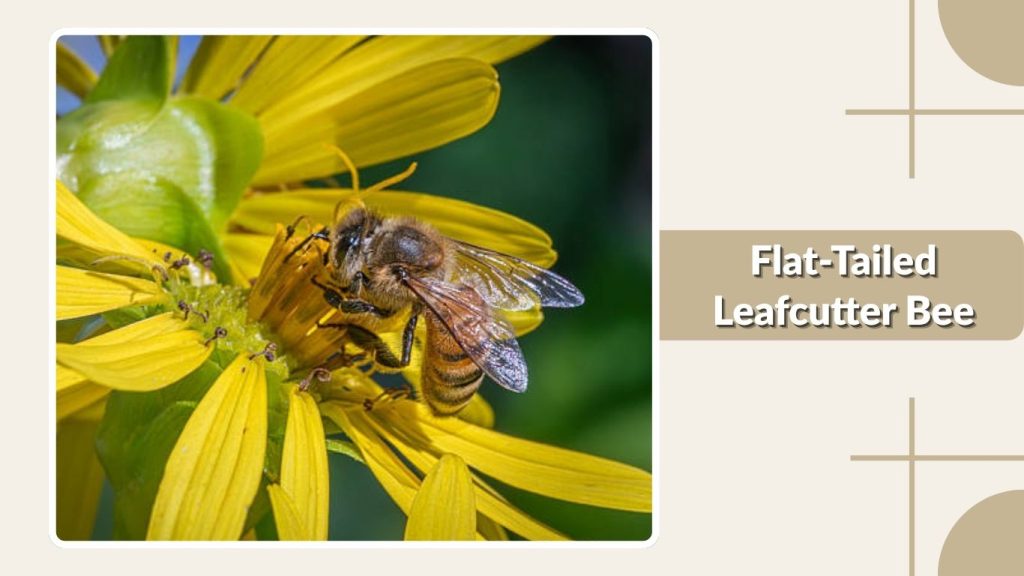
The flat-tailed leafcutter bee is a solitary species recognized by its compact shape and leaf-cutting nesting habits. It is part of the diverse group of bees that use plant materials to protect their developing young.
Identification
- Small to medium-sized body
- Dark coloring with pale hair markings
- Flattened or broad-looking tail end
- Pollen brush beneath the abdomen
- Strong jaws for cutting leaf pieces
- Often active on sunny flowers
Natural Habitat
Flat-tailed leafcutter bees live in open habitats such as meadows, gardens, grasslands, and woodland borders. They prefer areas with many flowering plants and nearby nesting cavities. Small holes in dead wood, hollow stems, or bee hotels can provide useful nesting places.
Behavior
Female flat-tailed leafcutter bees cut neat pieces from leaves and carry them to the nest. These leaf pieces are used to line and seal each brood cell. Inside each cell, the female places pollen and nectar before laying an egg. The bee works alone, although several may nest near one another.
Importance
This bee supports pollination in both wild and garden settings. It visits flowers for nectar and pollen, helping plants reproduce. Its nesting activity may leave small cuts in leaves, but this is usually harmless and does not damage healthy plants in a serious way.
10. Texas Leafcutter Bee
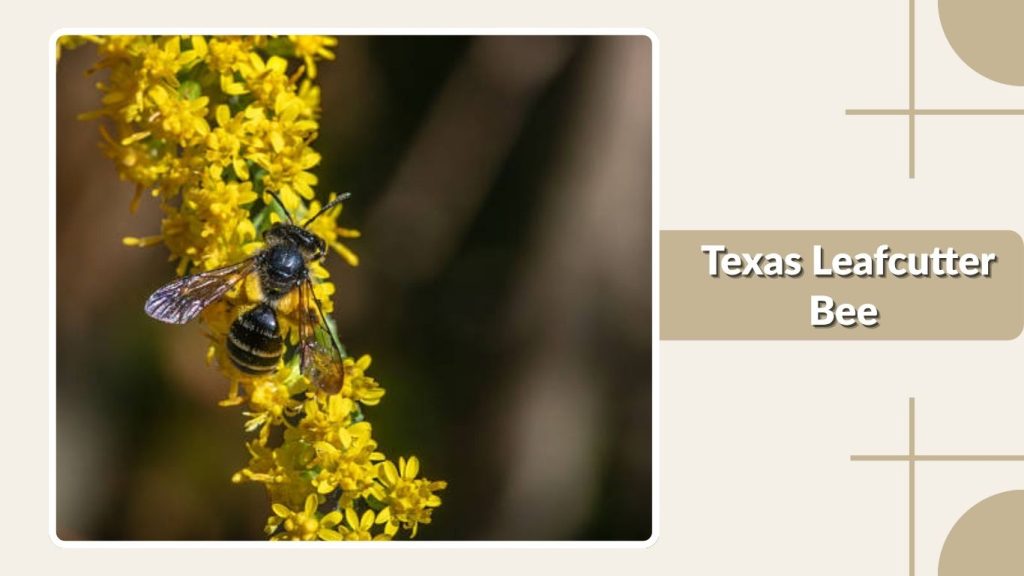
The Texas leafcutter bee is a solitary bee associated with warm regions and flower-rich landscapes. Like other leafcutter bees, it is known for cutting leaf pieces and using them to build protective nest chambers.
Identification
- Compact body with dark coloring
- Pale hairs or bands on the abdomen
- Strong jaws for cutting leaves
- Pollen carried beneath the abdomen
- Quick movement between flowers
- Often found in warm, sunny habitats
Natural Habitat
Texas leafcutter bees are found in gardens, fields, meadows, and dry open areas where flowers are available. They need nesting cavities such as hollow stems, holes in wood, or artificial bee houses. They are most active in warm weather when flowers provide enough nectar and pollen.
Behavior
This bee is solitary, so each female builds and supplies her own nest. She cuts pieces from leaves, carries them to a cavity, and shapes them into cells. Each cell receives food for one larva. Texas leafcutter bees are usually calm and do not defend nests aggressively.
Importance
Texas leafcutter bees are helpful pollinators for native flowers, garden plants, and crops. Their activity supports local ecosystems by helping plants produce seeds and fruit. Gardeners can encourage them by planting diverse flowers and avoiding harmful pesticides.
11. Little Leafcutter Bee
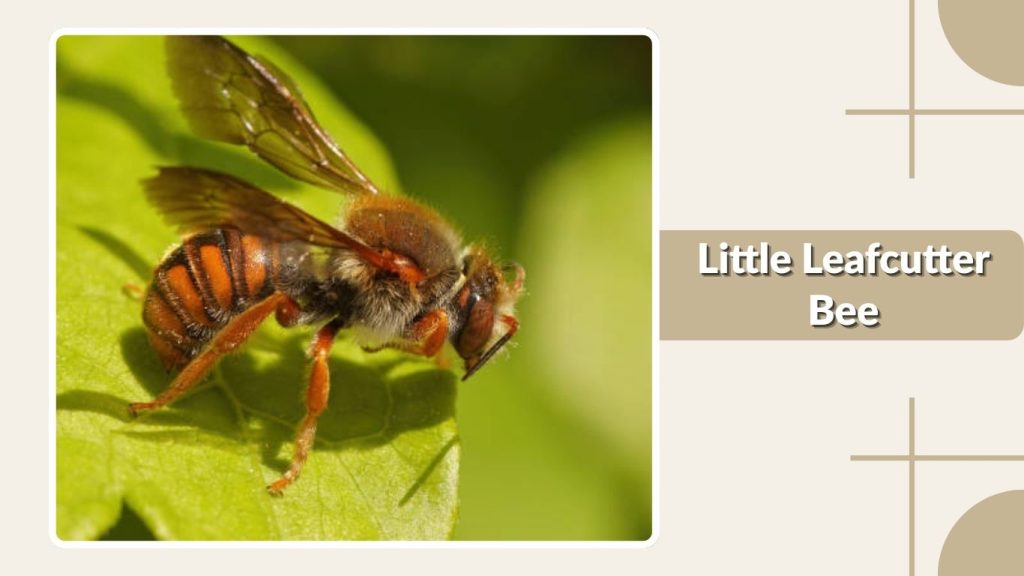
The little leafcutter bee is a small solitary bee with important pollination value. Although it may be easy to overlook because of its size, it plays a useful role in gardens and natural habitats.
Identification
- Small, compact body
- Dark body with light hair bands
- Carries pollen under the abdomen
- Strong jaws for cutting leaves
- Rounded head and short body shape
- Often seen on small flowers
Natural Habitat
Little leafcutter bees live in gardens, meadows, hedgerows, and open areas with plenty of small flowers. They may nest in hollow stems, old insect holes, or narrow cavities in wood and walls. They prefer quiet, sunny places where food and nesting sites are close together.
Behavior
Female little leafcutter bees work alone to build nests. They collect pollen and nectar, then line each nest cell with cut leaf pieces. Because they are small, they often use narrow nesting spaces. They are not aggressive and usually fly away when disturbed.
Importance
Little leafcutter bees help pollinate wildflowers, herbs, and garden plants. Their small size allows them to visit flowers that larger bees may ignore. They are useful members of a healthy pollinator community and benefit from pesticide-free gardens with many blooming plants.
12. Black Leafcutter Bee
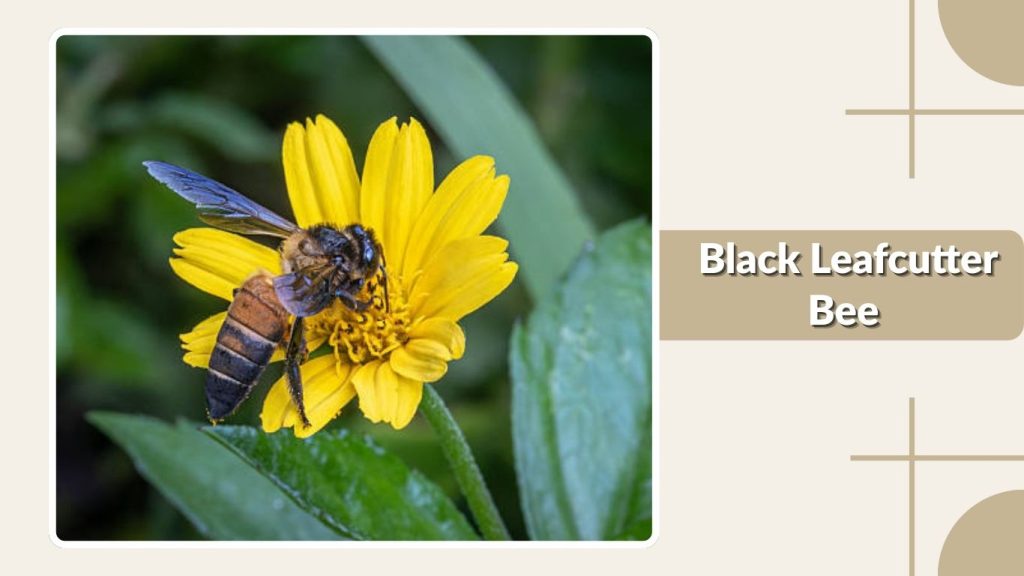
The black leafcutter bee is a dark-colored solitary bee known for its leaf-cutting behavior and flower visits. It is often seen in gardens, meadows, and natural areas during warm months.
Identification
- Mostly black or very dark body
- Pale hairs may appear on the abdomen
- Medium-sized, rounded body
- Pollen brush beneath the abdomen
- Strong jaws for cutting leaves
- Often enters holes with leaf pieces
Natural Habitat
Black leafcutter bees can live in gardens, parks, meadows, forest edges, and open countryside. They need flowering plants for food and small cavities for nesting. Females may use hollow plant stems, dead wood holes, wall cracks, or bee hotels.
Behavior
This bee is solitary and does not live in a hive. The female cuts leaf sections and uses them to build nest cells. She fills each cell with pollen and nectar before laying an egg. Black leafcutter bees are usually calm and do not cause problems for people.
Importance
Black leafcutter bees are valuable pollinators for wild and cultivated plants. They help flowers produce seeds and support garden biodiversity. Their leaf-cutting may leave round marks on leaves, but the damage is normally minor and does not threaten plant health.
13. Willughby’s Leafcutter Bee
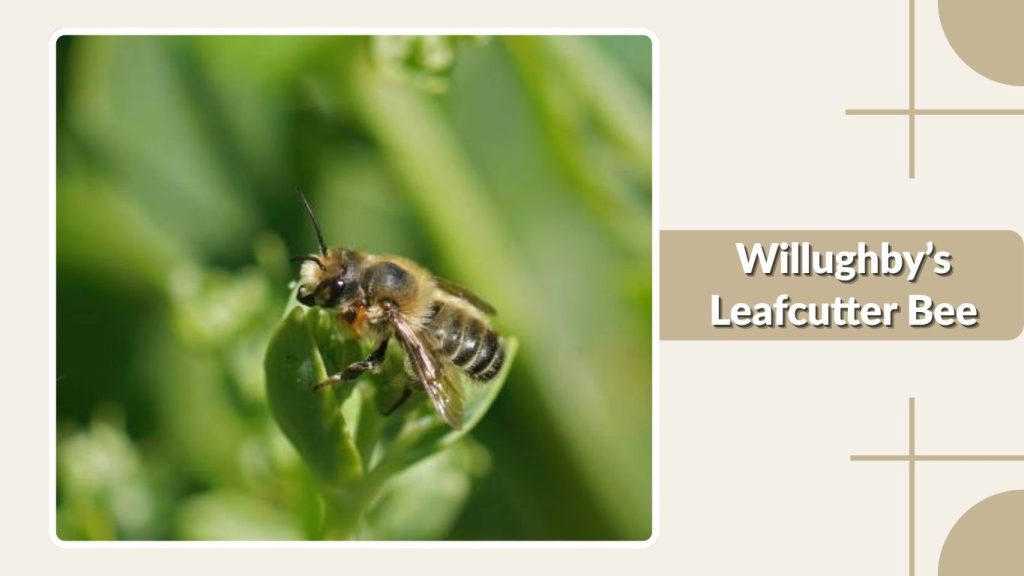
Willughby’s leafcutter bee is a well-known solitary bee in parts of Europe and nearby regions. It is often seen in gardens and wildflower areas where it visits many types of blooms.
Identification
- Medium-sized bee with a dark body
- Pale hair bands on the abdomen
- Female has a pollen brush beneath the abdomen
- Strong jaws used for cutting leaves
- Males may have pale hairs on the face
- Often visits garden and wild flowers
Natural Habitat
Willughby’s leafcutter bee lives in gardens, woodland edges, meadows, hedgerows, and parks. It nests in cavities such as hollow stems, old beetle holes, gaps in wood, and bee hotels. It prefers places where flowers and nesting sites are close together.
Behavior
Females cut round or oval pieces from leaves to line nest cells. They collect pollen and nectar, place food in each cell, and lay one egg inside. Males spend time searching flowers for females. This species is generally peaceful and useful in pollinator-friendly gardens.
Importance
Willughby’s leafcutter bee pollinates many flowers, including garden plants and wildflowers. It helps maintain plant diversity and supports healthy ecosystems. Because it accepts bee hotels, gardeners can often attract it by providing nesting tubes and avoiding pesticides.
14. Orange-Vented Leafcutter Bee
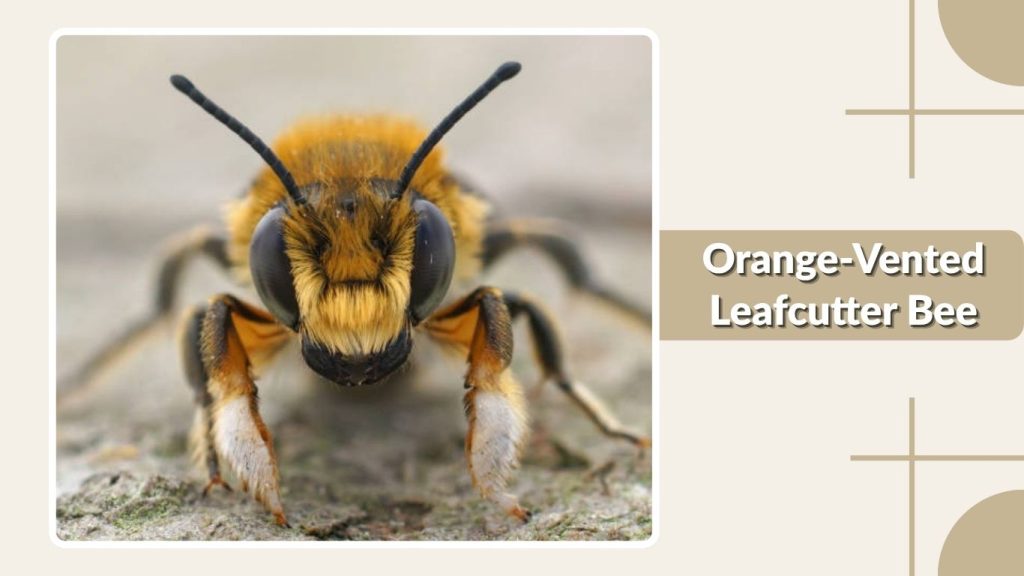
The orange-vented leafcutter bee is a solitary bee named for the orange coloring on the underside or rear part of its abdomen. It is an active flower visitor and a helpful pollinator.
Identification
- Dark body with pale hair bands
- Orange or reddish hairs beneath the abdomen
- Medium-sized, sturdy body
- Strong jaws for cutting leaves
- Carries pollen under the abdomen
- Often seen around sunny flowers
Natural Habitat
Orange-vented leafcutter bees are found in gardens, meadows, woodland edges, and other flower-rich habitats. They need suitable cavities for nesting and nearby plants that provide leaves, pollen, and nectar. Bee hotels, hollow stems, and wood holes may be used as nesting sites.
Behavior
This bee is solitary, with each female creating her own nest. She cuts leaf pieces and uses them to form small protective cells. Each cell is stocked with pollen and nectar before an egg is laid. The orange-vented leafcutter bee is usually non-aggressive and easy to observe on flowers.
Importance
Orange-vented leafcutter bees are useful pollinators for garden and wild plants. Their visits help flowers form seeds and support local biodiversity. By planting native flowers and leaving safe nesting spaces, gardeners can help this bee and many other solitary pollinators thrive.