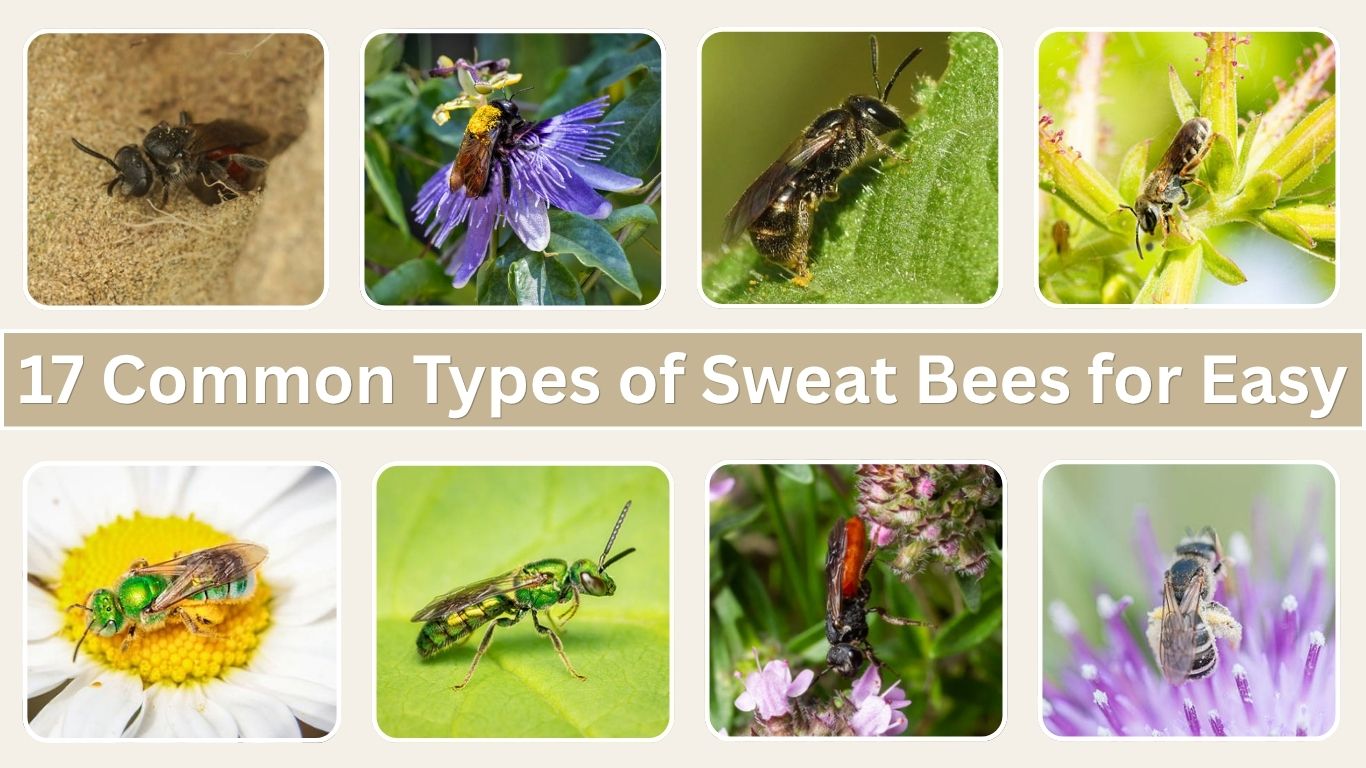
Sweat bees are small pollinating bees known for their varied colors, from metallic green to dark brown or black. Many species visit garden flowers, wildflowers, fields, and meadows while collecting nectar and pollen. Some nest in the ground, while others use wood or host nests, making sweat bees a diverse and useful group of bees.
1. Agapostemon virescens
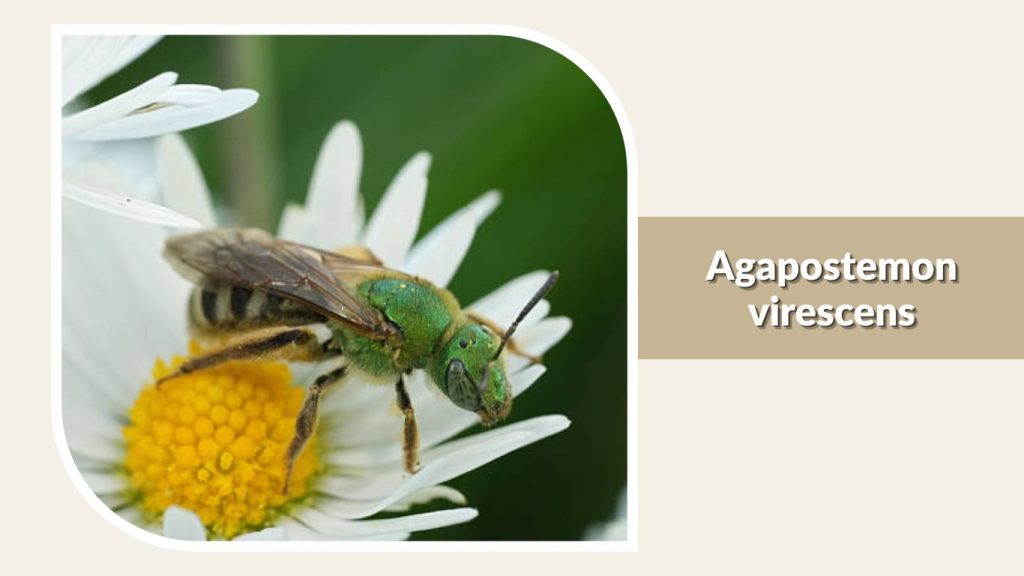
Agapostemon virescens, also called the Bicolored Striped Sweat Bee, is a small native sweat bee found across much of North America. It is known for its shiny metallic green body and striped abdomen. This bee is often seen visiting flowers in gardens, meadows, lawns, and open sunny areas.
Identification
- Metallic green head and thorax
- Striped abdomen with pale bands
- Females often have black-and-white abdominal stripes
- Males may show yellow-and-black striping
- Small, slender bee body
- Clear wings with a delicate appearance
- Often seen collecting pollen on flowers
Habitat
Agapostemon virescens usually lives in open areas with flowers and suitable ground for nesting. It can be found in gardens, meadows, parks, lawns, and field edges. Females nest underground, often in sunny spots with bare or thinly covered soil. Some nests may appear close together in loose groups.
Diet
This sweat bee feeds mainly on nectar and pollen from many types of flowers. It is considered a generalist pollinator, which means it visits different flowering plants rather than depending on only one species. Common garden flowers, wildflowers, sunflowers, and coneflowers may attract it during warm months.
Behavior
Agapostemon virescens is active during the warmer season, often from spring through fall. Females build underground nests and collect pollen to feed their young. Although several females may nest near one another, this bee is generally solitary. It is usually not aggressive and is more interested in flowers than people.
2. Agapostemon texanus
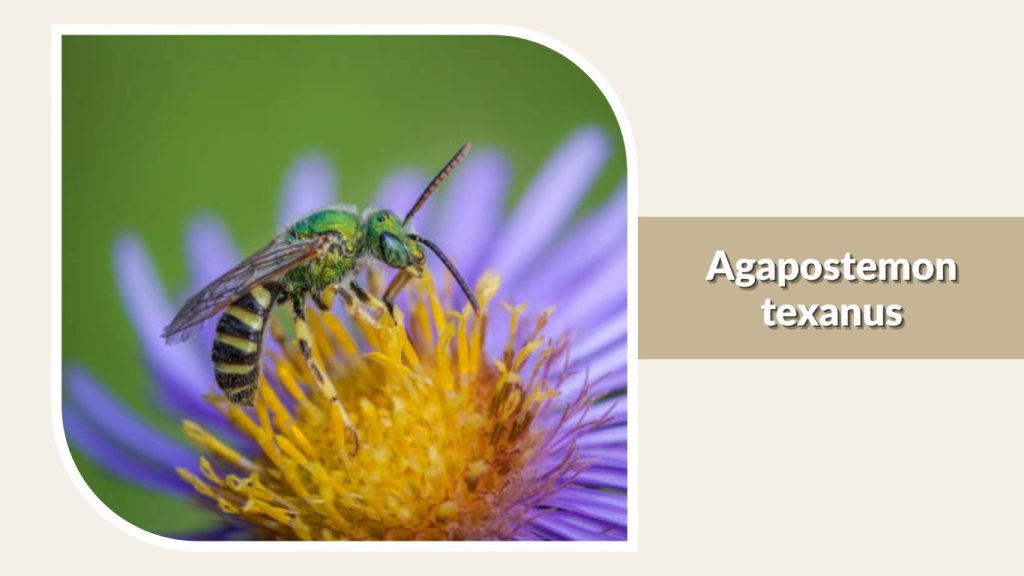
Agapostemon texanus is a bright metallic green sweat bee commonly found in North America. It is known for its shiny green head and thorax, along with a striped abdomen. This bee often visits garden flowers, wildflowers, and open sunny habitats where nectar and pollen are easy to find.
Identification
- Shiny metallic green head and thorax
- Striped abdomen with pale bands
- Slender bee body
- Clear wings with dark veins
- Females usually have a darker striped abdomen
- Males may show yellow-and-black markings
- Often seen resting or feeding on flowers
Habitat
Agapostemon texanus is commonly found in gardens, meadows, prairies, roadsides, and open fields. It prefers sunny places with many blooming plants. Like many sweat bees, it nests in the ground, often in bare or lightly covered soil where females can dig small tunnels.
Diet
This bee feeds on nectar and pollen from a wide variety of flowers. It visits both wild and cultivated plants, making it a helpful pollinator in natural areas and gardens. Its flexible diet allows it to survive in many habitats where flowering plants are available.
Behavior
Agapostemon texanus is active during warm months and is often seen flying from flower to flower. Females collect pollen for their young and build underground nests. It is usually not aggressive and will generally avoid people unless handled or trapped.
3. Augochlora pura
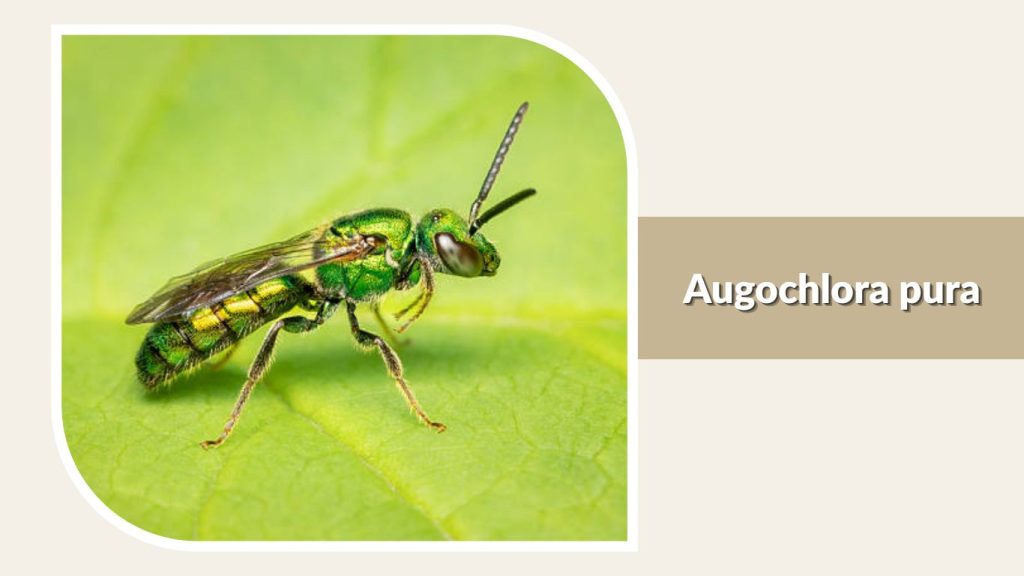
Augochlora pura, also called the Pure Green-Sweat Bee, is a small metallic green bee found in eastern North America. It is admired for its bright green color and delicate body. Unlike many ground-nesting sweat bees, this species often nests in soft, rotting wood.
Identification
- Bright metallic green body
- Small and slender shape
- Smooth shiny head and thorax
- Green or bluish-green abdomen
- Clear wings with fine veins
- Short antennae
- Often seen on woodland flowers
Habitat
Augochlora pura is often found in forests, woodland edges, gardens, and shaded natural areas. It prefers places with flowers and decaying wood. Females may build nests in rotting logs or soft dead wood, which makes this bee different from many other sweat bee species.
Diet
This sweat bee feeds on nectar and pollen from many flowers. It visits wildflowers, woodland blooms, and garden plants. By moving from flower to flower, it helps with pollination and supports plant reproduction in wooded and semi-open habitats.
Behavior
Augochlora pura is active during warmer months and is usually seen flying close to flowers. Females prepare nests in soft wood and collect pollen for their larvae. This bee is generally solitary and gentle, making it unlikely to bother people.
4. Augochlorella aurata
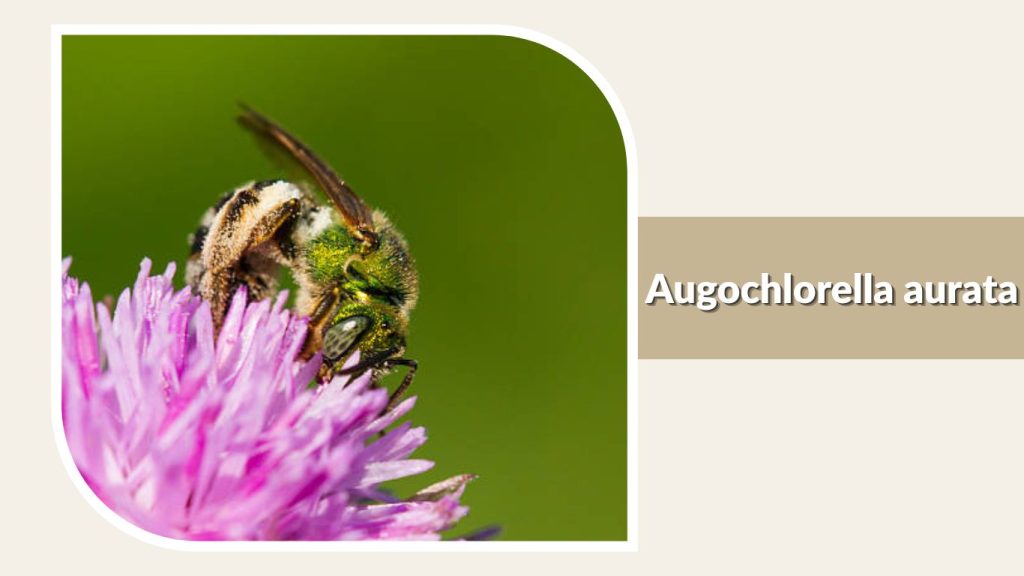
Augochlorella aurata is a tiny metallic green sweat bee found across much of North America. It is one of the common small green bees seen on garden flowers and wildflowers. Its bright color, small size, and active flower-visiting behavior make it easy to notice in sunny areas.
Identification
- Tiny metallic green body
- Shiny green head and thorax
- Green or golden-green abdomen
- Short, slender body shape
- Clear wings
- Small size compared with many bees
- Often seen on small flowers
Habitat
Augochlorella aurata lives in gardens, meadows, lawns, roadsides, prairies, and open fields. It prefers areas with many flowers and suitable nesting soil. Females usually nest underground, often in bare or lightly covered soil where they can dig small nesting tunnels.
Diet
This bee feeds on nectar and pollen from many flowering plants. It often visits small wildflowers, garden blooms, and weedy flowers. Because it visits different plants, it plays an important role as a general pollinator in both natural and human-made habitats.
Behavior
Augochlorella aurata is active in warm weather and may be seen moving quickly among flowers. Females gather pollen and carry it back to underground nests. This bee is usually peaceful and does not sting unless strongly disturbed or handled.
5. Augochloropsis metallica
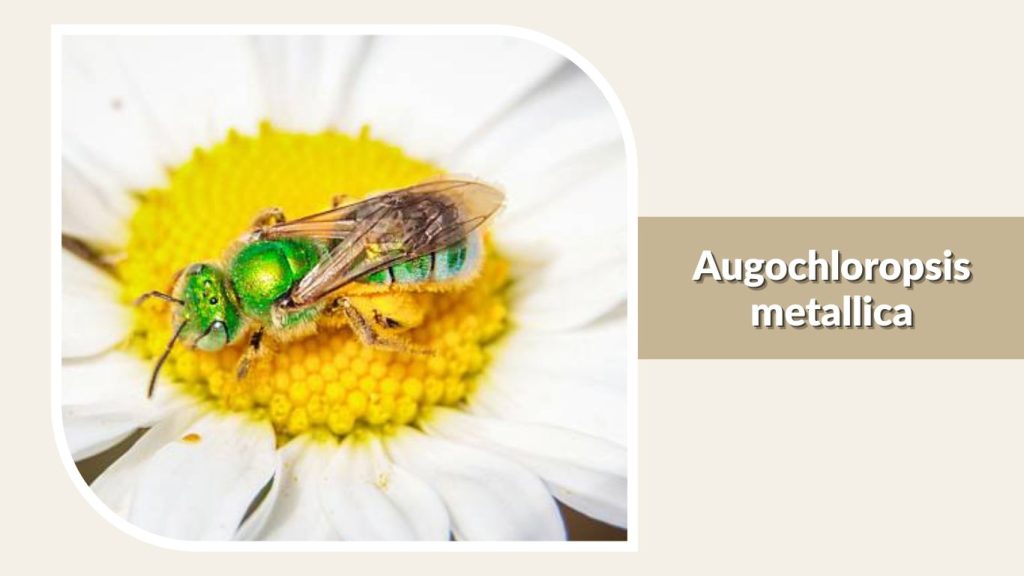
Augochloropsis metallica is a beautiful metallic green sweat bee found in parts of North America. It has a bright shiny body that may look green, blue-green, or golden depending on the light. This bee is often seen feeding on flowers in open sunny habitats.
Identification
- Metallic green or blue-green body
- Shiny head, thorax, and abdomen
- Slender body shape
- Clear wings with dark veins
- Dark legs with fine hairs
- Small to medium sweat bee size
- Often appears bright in sunlight
Habitat
Augochloropsis metallica is usually found in meadows, gardens, fields, prairies, and woodland edges. It prefers sunny areas with many flowering plants. Females nest in the ground, often choosing patches of soil where they can dig protected tunnels for their young.
Diet
This species feeds on nectar and pollen from different flowers. It visits wildflowers, garden plants, and flowering weeds. As it collects pollen, it helps move pollen between flowers, making it a useful pollinator in open landscapes and gardens.
Behavior
Augochloropsis metallica is active during warm months and spends much of its time around flowers. Females collect pollen to feed larvae in underground nests. It is generally solitary, although several bees may nest in the same suitable area.
6. Halictus ligatus
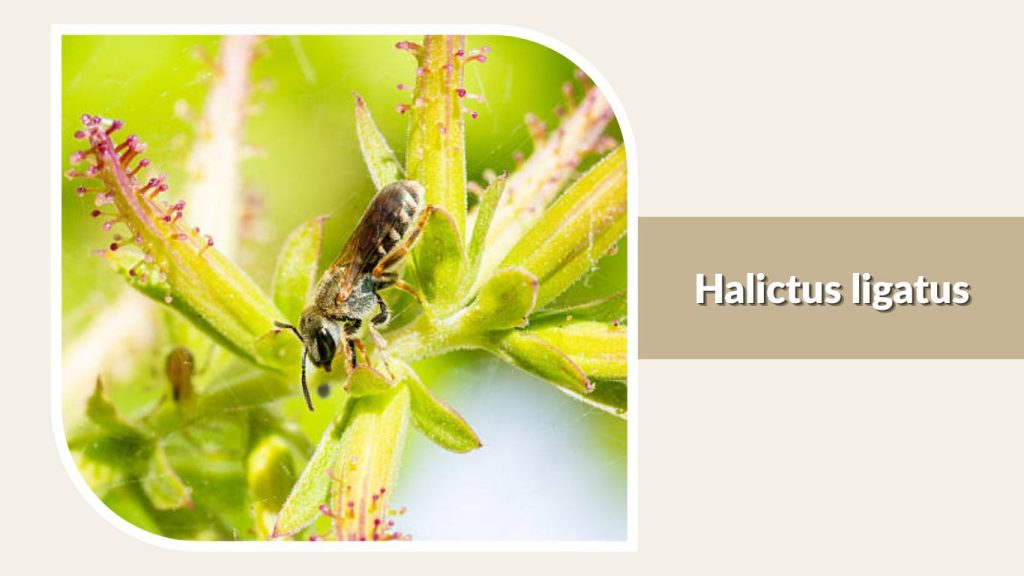
Halictus ligatus is a common sweat bee found across much of North America. It has a small body, striped abdomen, and active flower-visiting habits. Unlike some bright green sweat bees, this species is usually darker, with pale bands that make its abdomen look clearly striped.
Identification
- Small dark-colored sweat bee
- Pale bands across the abdomen
- Brown to black body color
- Fine hairs on body and legs
- Clear wings with visible veins
- Slender bee shape
- Often seen collecting pollen on flowers
Habitat
Halictus ligatus lives in gardens, fields, meadows, lawns, roadsides, and disturbed open areas. It prefers places with flowers and exposed soil for nesting. Females nest underground, and several nests may occur near one another where soil conditions are suitable.
Diet
This sweat bee feeds on nectar and pollen from many different flowering plants. It visits wildflowers, crop flowers, and garden blooms. Because it is flexible in its food choices, it can live in many environments and support pollination in both natural and managed landscapes.
Behavior
Halictus ligatus is active during warm seasons and is often seen flying low over flowers. Females dig ground nests and collect pollen for their young. Some populations may show social behavior, with more than one female sharing nesting duties.
7. Halictus rubicundus
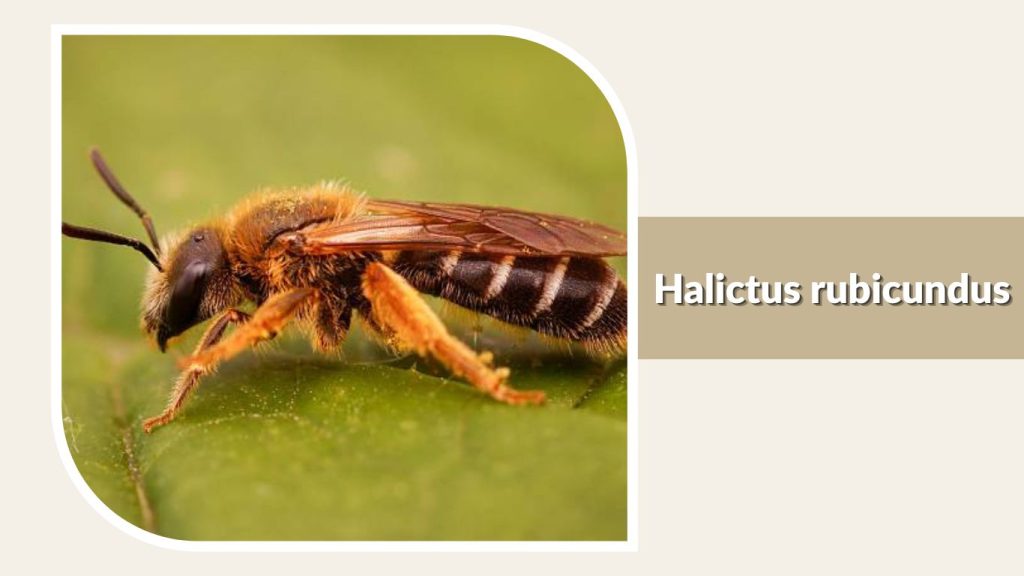
Halictus rubicundus, also called the Orange-legged Furrow Bee, is a common sweat bee found in many parts of North America and Europe. It has a dark body, pale abdominal bands, and noticeable orange-toned legs. This bee often visits flowers in open sunny places.
Identification
- Small to medium-sized sweat bee
- Dark brown or black body
- Pale bands across the abdomen
- Orange or reddish-colored legs
- Fine hairs on the body
- Clear wings with visible veins
- Often seen collecting pollen on flowers
Habitat
Halictus rubicundus lives in meadows, gardens, grasslands, roadsides, open woodlands, and agricultural areas. It prefers sunny habitats with many flowers and suitable ground for nesting. Females usually dig nests in the soil, often in places with light vegetation or bare ground.
Diet
This bee feeds on nectar and pollen from a wide range of flowering plants. It visits wildflowers, garden flowers, and crop plants. Because it uses many flower types, it can survive in different habitats and contributes to pollination in both natural and managed areas.
Behavior
Halictus rubicundus is active during warm months. In some areas, it may live solitarily, while in other places it can show simple social nesting behavior. Females collect pollen for their young and usually avoid people unless disturbed or handled.
8. Halictus confusus
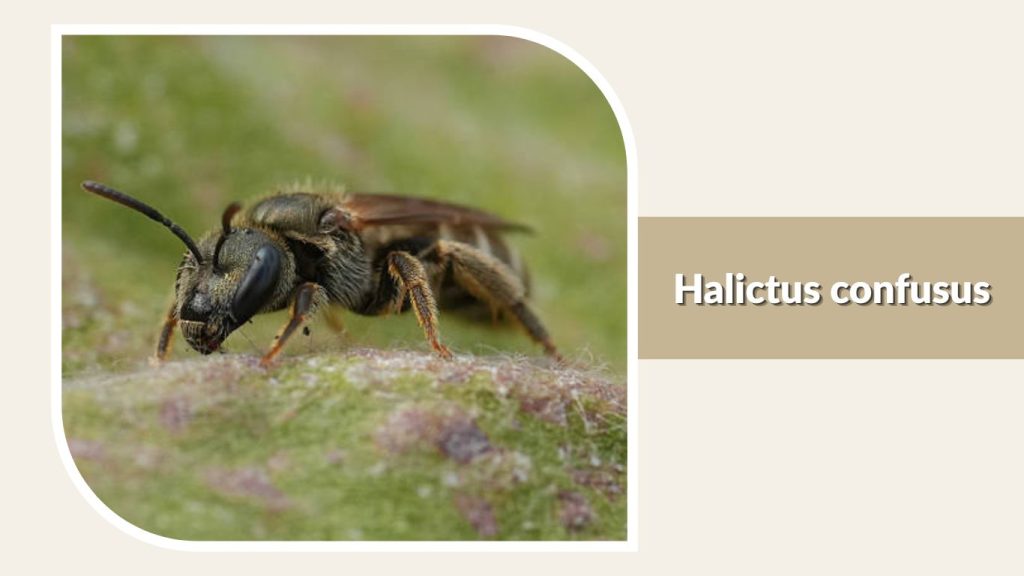
Halictus confusus is a small sweat bee known for its dark body and pale abdominal bands. It is often found visiting flowers in open areas such as fields, gardens, and roadsides. Like many sweat bees, it is important as a pollinator and usually nests in the ground.
Identification
- Small dark-colored sweat bee
- Pale bands across the abdomen
- Slender body shape
- Fine hairs on body and legs
- Clear wings with dark veins
- Brownish to black overall color
- Often seen on small wildflowers
Habitat
Halictus confusus commonly lives in open habitats with plenty of flowers. It may be found in meadows, fields, gardens, lawns, roadsides, and disturbed ground. Females usually nest underground in soil, especially in sunny areas where vegetation is not too thick.
Diet
This species feeds on nectar and pollen from different flowering plants. It is a generalist flower visitor, so it does not depend on only one plant type. By moving between flowers, it helps pollinate wild plants and some garden flowers.
Behavior
Halictus confusus is active during the warmer season and spends much of its time foraging. Females build soil nests and collect pollen for larvae. It is generally not aggressive and will usually fly away when disturbed.
9. Halictus poeyi
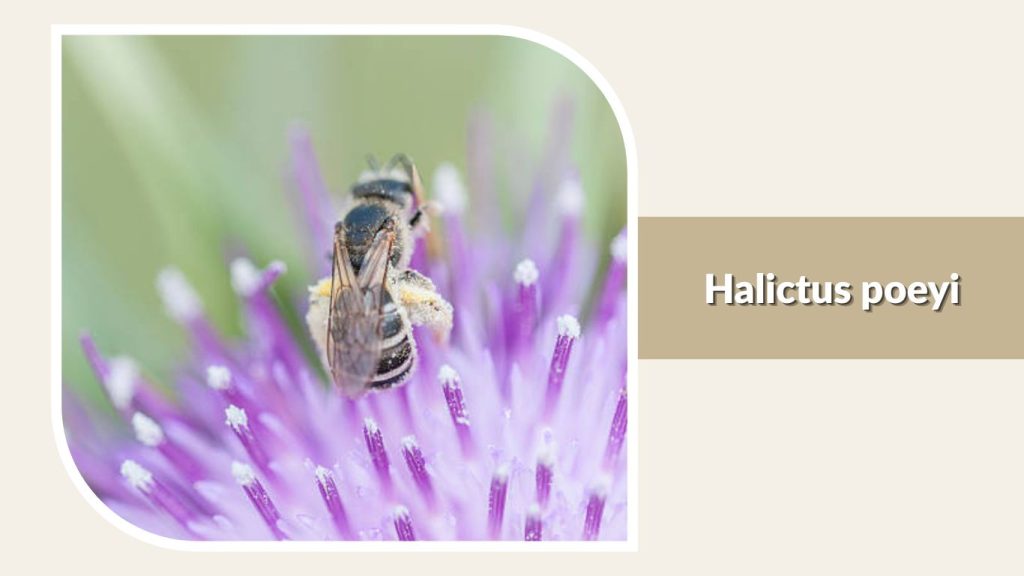
Halictus poeyi is a small sweat bee found in warm regions, including parts of the southeastern United States and the Caribbean. It has a dark body with pale abdominal bands and is often seen visiting flowers in sunny, open habitats.
Identification
- Small sweat bee with a dark body
- Pale bands on the abdomen
- Slender body shape
- Fine body hairs
- Clear wings with visible veins
- Brownish or black overall coloring
- Often found on flowers in warm areas
Habitat
Halictus poeyi is usually found in warm open environments such as gardens, fields, roadsides, lawns, and disturbed areas. It prefers places with flowers and suitable soil for nesting. Females dig underground nests, often in sunny patches of bare or lightly covered ground.
Diet
This bee feeds on nectar and pollen from many flowering plants. It visits wildflowers, weeds, garden plants, and other seasonal blooms. Its flexible feeding habits allow it to survive in different warm habitats where flowers are available.
Behavior
Halictus poeyi is active in warm weather and is often seen moving between flowers. Females collect pollen and carry it back to ground nests for their young. This bee is usually peaceful and does not bother people unless handled.
10. Lasioglossum zephyrum
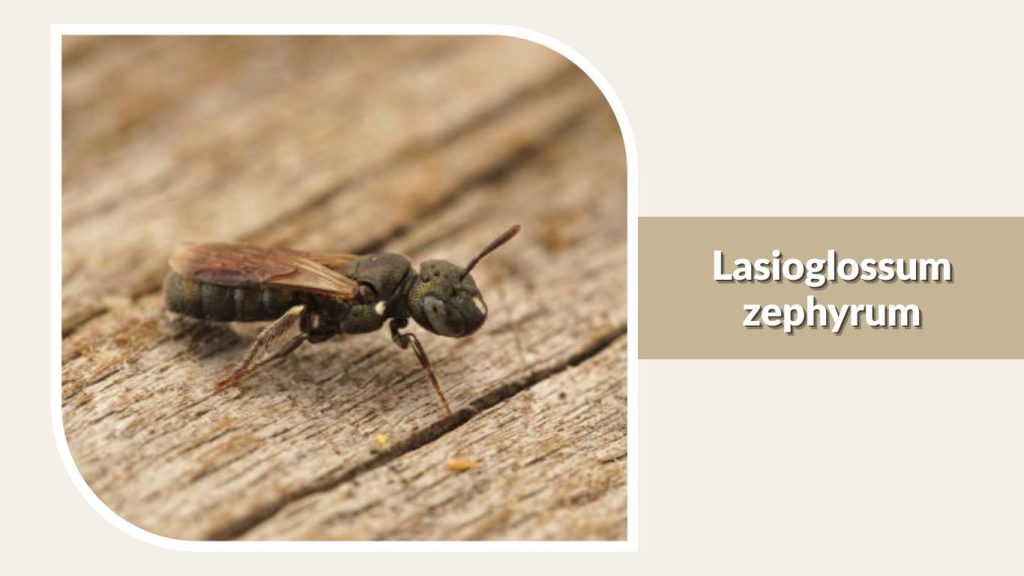
Lasioglossum zephyrum is a small sweat bee known for its flexible social behavior. It is usually dark-colored and may be difficult to tell apart from other Lasioglossum species without close inspection. This bee is an important pollinator of wildflowers and garden plants.
Identification
- Very small sweat bee
- Dark brown or black body
- Slender body shape
- Fine hairs on the body and legs
- Clear wings with delicate veins
- May have faint pale abdominal bands
- Often seen on small flowers
Habitat
Lasioglossum zephyrum lives in open habitats such as meadows, gardens, fields, roadsides, and disturbed areas. It needs flowering plants for food and suitable soil for nesting. Females usually build nests underground, often in sunny or lightly vegetated soil.
Diet
This bee feeds on nectar and pollen from a variety of flowers. It often visits small wildflowers and garden blooms. Because of its small size, it can feed on flowers that larger bees may not use as easily, helping pollinate many low-growing plants.
Behavior
Lasioglossum zephyrum may live solitarily or in small social groups depending on conditions. Females collect pollen for larvae and may share nesting spaces. It is active during warm months and is usually calm around people.
11. Lasioglossum imitatum
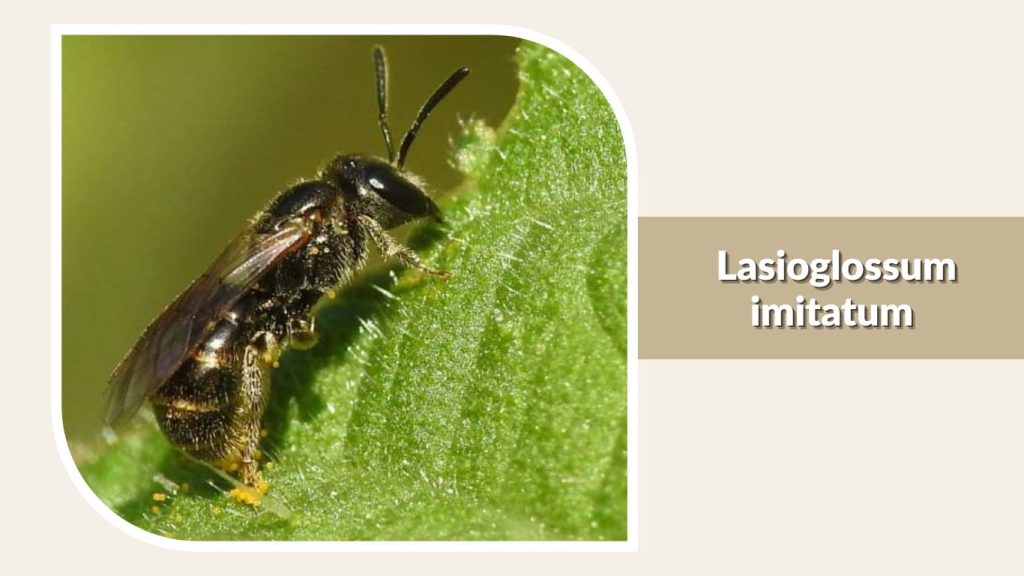
Lasioglossum imitatum is a tiny sweat bee found in North America. It has a dark, slender body and is often seen on small flowers in gardens, fields, and natural areas. Because it looks similar to many other Lasioglossum bees, identification often requires close observation.
Identification
- Tiny dark-colored sweat bee
- Slender black or brown body
- Fine hairs on the legs and thorax
- Clear wings with small veins
- Sometimes shows faint abdominal banding
- Small head and narrow body
- Often seen visiting tiny flowers
Habitat
Lasioglossum imitatum lives in open places with flowering plants and nesting soil. It may occur in gardens, meadows, lawns, fields, roadsides, and woodland edges. Females usually nest underground, often in small tunnels built in bare or lightly covered soil.
Diet
This species feeds on nectar and pollen from many types of flowers. It often visits small blooms that provide easy access to pollen and nectar. Its feeding activity helps pollinate wild plants, garden flowers, and flowering weeds.
Behavior
Lasioglossum imitatum is active in warm seasons and spends much of its time foraging. Females collect pollen for their young and return it to underground nests. This bee is generally gentle and unlikely to sting unless trapped or handled.
12. Lasioglossum leucozonium
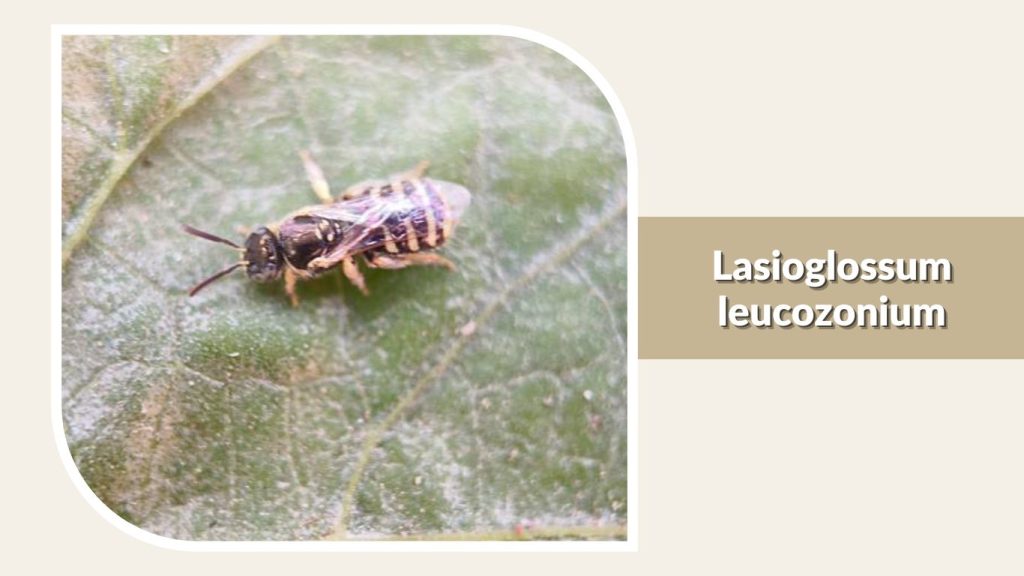
Lasioglossum leucozonium is a small sweat bee known for its dark body and pale abdominal bands. It is found in parts of North America and Europe and is often seen visiting flowers in open sunny habitats. This bee is useful as a pollinator in gardens, fields, and natural areas.
Identification
- Small dark-colored sweat bee
- Pale bands across the abdomen
- Slender body shape
- Brownish-black head and thorax
- Clear wings with fine veins
- Fine hairs on legs and body
- Often seen feeding on small flowers
Habitat
Lasioglossum leucozonium usually lives in open areas with many flowering plants. It may be found in meadows, gardens, roadsides, fields, grasslands, and disturbed ground. Females nest underground, often in sunny soil patches where vegetation is thin enough for digging.
Diet
This bee feeds on nectar and pollen from a variety of flowers. It visits wildflowers, garden flowers, and flowering weeds. Its flexible feeding habit helps it survive in different environments and makes it an important pollinator for many small blooming plants.
Behavior
Lasioglossum leucozonium is active during warm months and spends much of its time foraging. Females dig soil nests and collect pollen for their young. It is generally calm around people and usually flies away when disturbed rather than acting aggressively.
13. Lasioglossum coriaceum
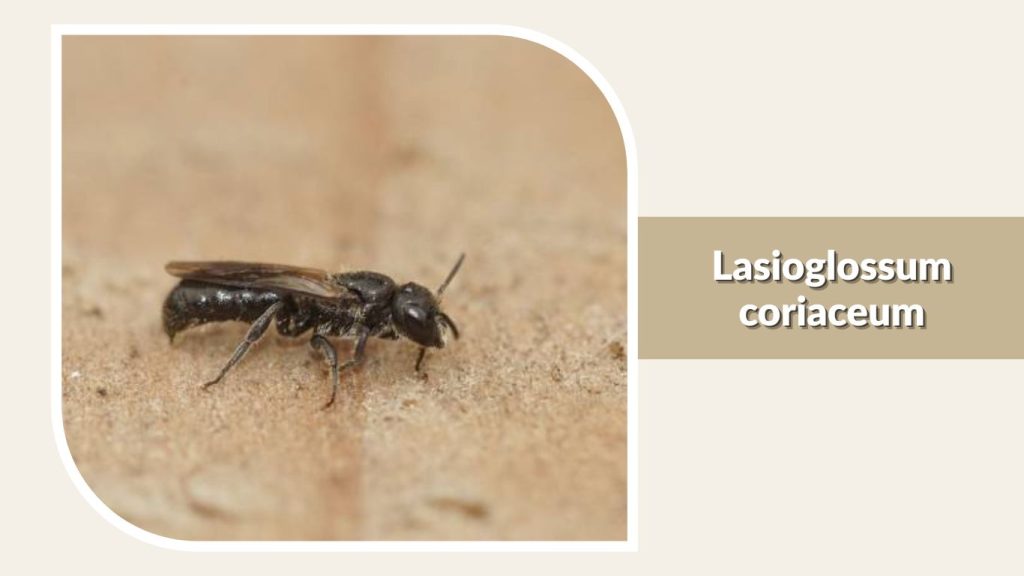
Lasioglossum coriaceum is a small sweat bee with a dark, slender body and delicate wings. Like many Lasioglossum species, it can be difficult to identify without close inspection. It is often found on flowers in gardens, fields, and other open habitats where it gathers pollen and nectar.
Identification
- Tiny to small sweat bee
- Dark brown or black body
- Slender body shape
- Fine hairs on the thorax and legs
- Clear wings with visible veins
- May show faint abdominal bands
- Often seen on small wildflowers
Habitat
Lasioglossum coriaceum is usually found in open places with flowers and suitable nesting soil. It may live in meadows, roadsides, gardens, field edges, lawns, and disturbed habitats. Females generally nest in the ground, using small tunnels in bare or lightly covered soil.
Diet
This species feeds on nectar and pollen from different flowering plants. It often visits small blooms that match its small body size. While feeding, it helps move pollen between flowers and supports pollination in both natural and human-made landscapes.
Behavior
Lasioglossum coriaceum is active in warm weather and is usually seen flying close to flowers. Females collect pollen to feed developing larvae in underground nests. This bee is not aggressive and is unlikely to sting unless pressed, trapped, or handled.
14. Sphecodes heraclei
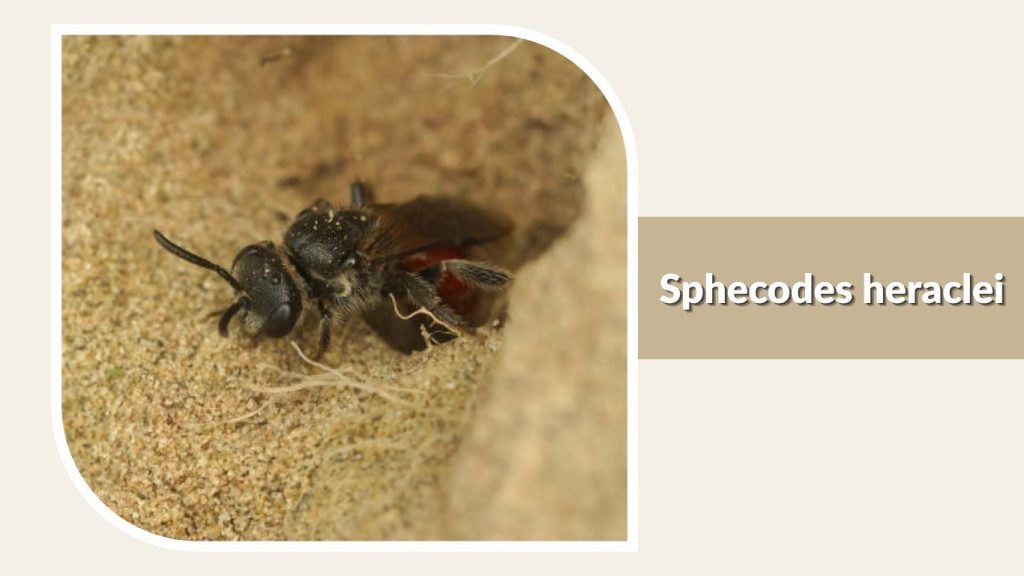
Sphecodes heraclei is a small sweat bee with a dark head and thorax and a reddish abdomen. Unlike many pollen-collecting sweat bees, Sphecodes bees are often cleptoparasitic, meaning they use the nests of other bees. This gives them a different lifestyle from many common garden sweat bees.
Identification
- Small bee with a dark head and thorax
- Reddish or partly red abdomen
- Shiny body surface
- Sparse body hair compared with pollen collectors
- Clear wings with visible veins
- Slender body shape
- Often lacks heavy pollen-carrying hairs
Habitat
Sphecodes heraclei may be found in places where its host bees live. These areas often include meadows, gardens, roadsides, sandy ground, field edges, and open habitats with flowers. Because it depends on other bees’ nests, suitable nesting areas for host species are important for its survival.
Diet
Adult Sphecodes heraclei bees feed on nectar from flowers. However, females do not collect pollen in the usual way for their young. Instead, they enter the nests of host bees and lay eggs where pollen has already been stored by another bee.
Behavior
This bee is usually active during warm months. Females search for host nests rather than building full nests of their own. Their larvae develop using food prepared by the host bee. Adults are generally quiet and are more likely to avoid people than sting.
15. Sphecodes confertus
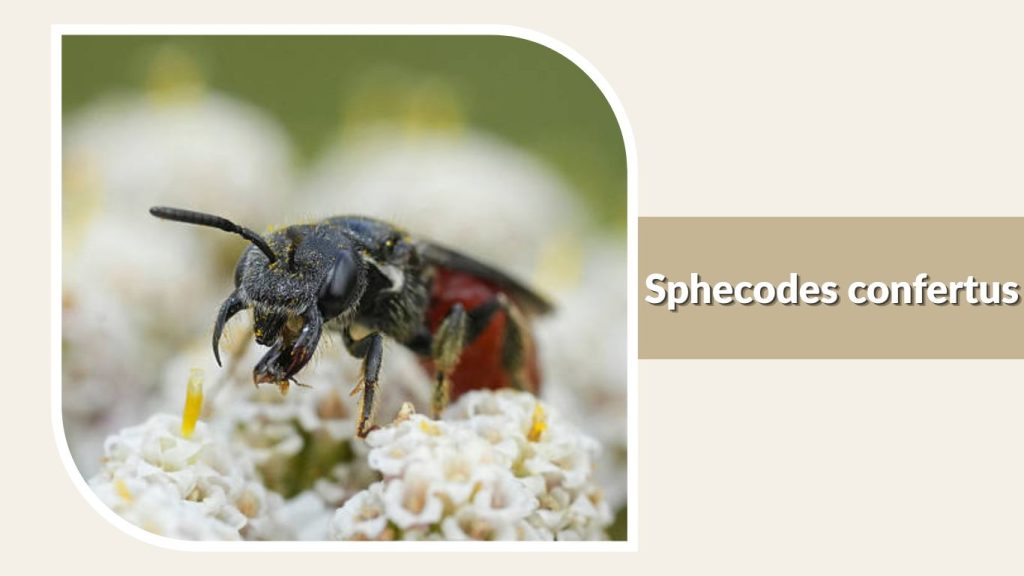
Sphecodes confertus is a small sweat bee with a shiny body and a reddish abdomen. It belongs to a group often called blood bees because many have red abdominal coloring. This bee has a parasitic nesting habit and is usually found where suitable host bees are present.
Identification
- Small shiny sweat bee
- Dark head and thorax
- Red or reddish abdomen
- Sparse body hairs
- Clear wings with dark veins
- Slender body shape
- Little or no visible pollen load
Habitat
Sphecodes confertus can occur in open habitats such as fields, gardens, meadows, roadsides, and sandy or disturbed areas. It is usually associated with places where ground-nesting host bees are active. Flower availability is also important because adult bees need nectar for energy.
Diet
Adult Sphecodes confertus bees drink nectar from flowers. Females do not gather pollen to build food stores for their larvae. Instead, they use the nests of other bees, where the host has already placed pollen and nectar for its own young.
Behavior
Sphecodes confertus is active in warm seasons and may be seen flying low over soil while searching for host nests. Its parasitic lifestyle means it does not need the same pollen-carrying hairs as many other sweat bees. It is generally not aggressive toward people.
16. Nomia melanderi
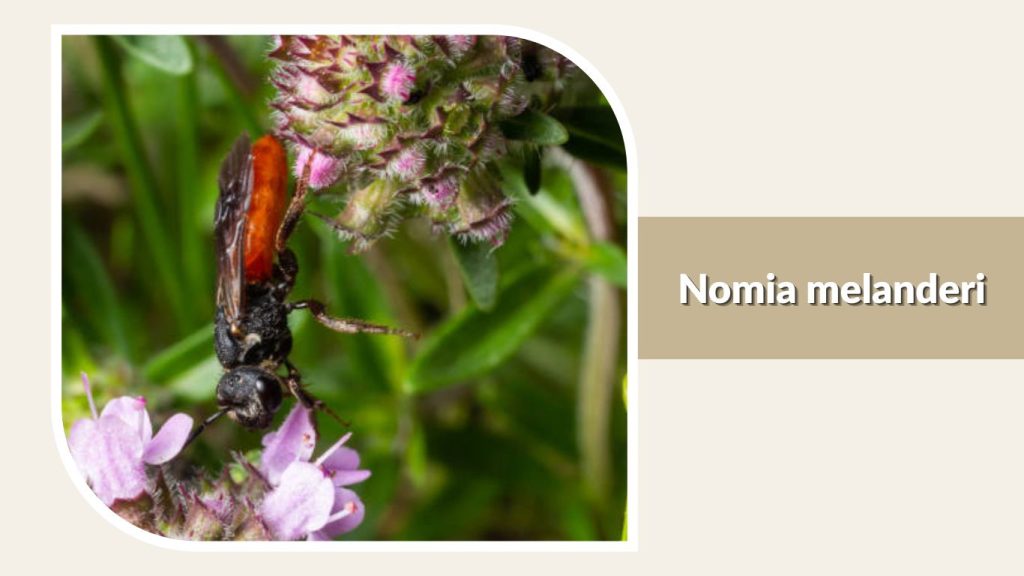
Nomia melanderi, commonly called the Alkali Bee, is a ground-nesting sweat bee native to western North America. It is well known as an important pollinator of alfalfa. This bee has a dark body with pale bands and often nests in salty or alkaline soil areas.
Identification
- Medium-sized sweat bee
- Dark body with pale abdominal bands
- Light-colored bands may look pearly
- Stronger body than many tiny sweat bees
- Clear wings with visible veins
- Hairy legs for carrying pollen
- Often found near alfalfa fields
Habitat
Nomia melanderi usually lives in open western habitats, especially areas with alkaline or salty soils. It may nest in bare, moist, or lightly crusted ground. Large nesting groups can occur where soil conditions are right. Agricultural areas with alfalfa may support many of these bees.
Diet
This bee feeds on nectar and pollen from flowers, with alfalfa being especially important in agricultural settings. It also visits other flowering plants when available. Its pollination work is valuable because it helps improve seed production in alfalfa fields.
Behavior
Nomia melanderi is active during warm weather and nests underground. Females dig tunnels and collect pollen for their larvae. Although many nests may occur close together, each female usually manages her own nest. This bee is generally not aggressive unless disturbed directly.
17. Dieunomia heteropoda
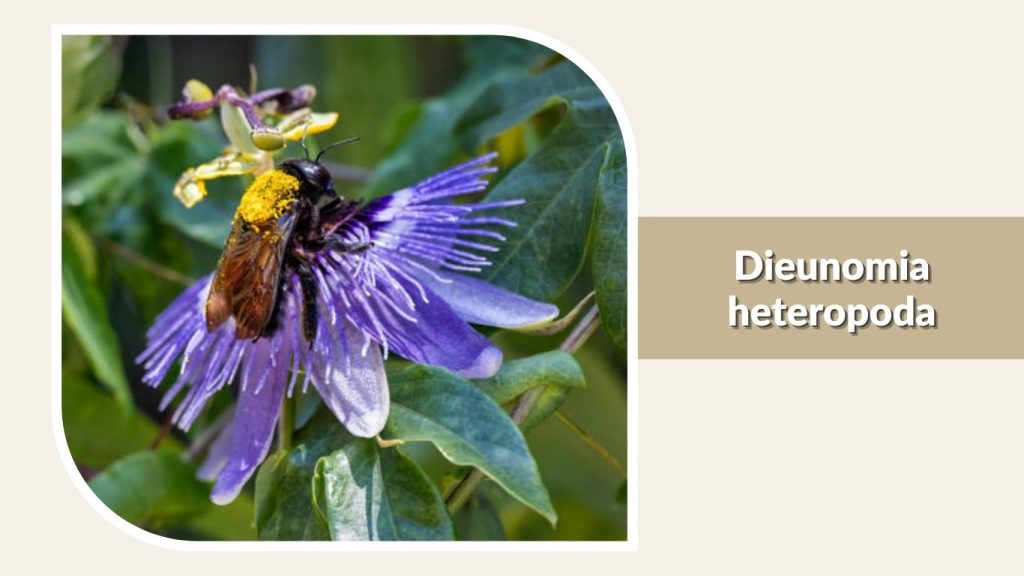
Dieunomia heteropoda, often called the Giant Sweat Bee, is one of the larger sweat bees in North America. It has a strong body, long legs, and noticeable pollen-carrying hairs. This species is often seen on large flowers, especially sunflowers and related plants.
Identification
- Large sweat bee compared with most species
- Dark body with pale hair bands
- Long legs, especially in males
- Hairy body and legs
- Clear wings with strong veins
- Robust body shape
- Often seen on sunflowers and similar blooms
Habitat
Dieunomia heteropoda is usually found in open sunny habitats such as prairies, fields, roadsides, gardens, and areas with abundant flowering plants. It is especially associated with places where sunflowers or related wildflowers grow. Females nest in the ground, often in suitable open soil.
Diet
This bee feeds on nectar and pollen. It is strongly attracted to sunflowers and other members of the aster family. While visiting flowers, it collects pollen on its hairy legs and body, helping pollinate plants as it moves from bloom to bloom.
Behavior
Dieunomia heteropoda is active during warm months, especially when large summer flowers are blooming. Females prepare underground nests and bring pollen back for their young. Despite its larger size, it is usually not aggressive and spends most of its time foraging.