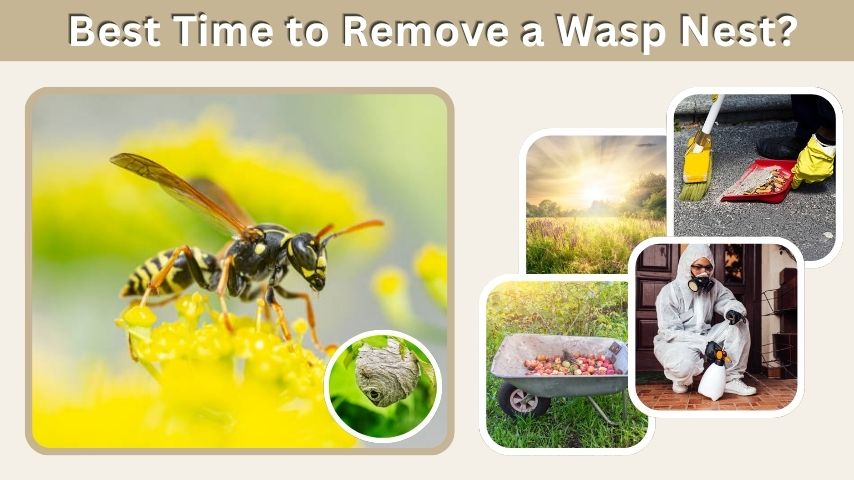
Wasps can become a serious problem when they build nests near homes, gardens, sheds, rooflines, or outdoor living areas. Removing a wasp nest at the wrong time can increase the risk of stings and make the colony more aggressive. The best time to remove a wasp nest depends on the season, time of day, nest location, and level of activity.
The Best Time of Year to Remove a Wasp Nest
The best time of year to remove a wasp nest is usually early spring, when the colony is still small and less active. During this time, a queen wasp may be starting a new nest, but there are usually fewer worker wasps present. A smaller nest is easier and safer to handle than a fully developed summer colony.
Early Spring Is Ideal
In early spring, queen wasps come out of hibernation and begin searching for places to build nests. These nests often start as small paper-like structures under eaves, in sheds, inside wall gaps, or around roof edges.
Removing a nest at this stage can prevent a much larger infestation later in the season. A spring nest may only contain the queen and a small number of developing wasps. Because the colony has not fully grown yet, the chance of aggressive swarming is lower.
Homeowners should still be careful. Even a small nest can be dangerous if disturbed without proper protection.
Summer Removal Can Be Riskier
By summer, wasp colonies are usually larger and more active. A nest that started small in spring may now contain hundreds or even thousands of wasps. At this stage, wasps are busy feeding larvae, protecting the nest, and searching for food.
Summer nest removal is more dangerous because:
- More wasps are present.
- Wasps are highly protective of the colony.
- Nest entrances are busier.
- Disturbing the nest can trigger a swarm response.
If the nest is in a high-traffic area, such as near a doorway, patio, garage, or play area, removal may still be necessary. However, professional pest control is often the safest choice during summer.
Fall Colonies Become More Aggressive
Wasps often become more aggressive in late summer and fall. Food sources begin to change, and wasps may search more actively for sugary foods, garbage, and outdoor meals. At the same time, the colony is reaching the end of its life cycle.
Although many wasps die off when cold weather arrives, nests near living spaces can still pose a risk before winter. If wasps are entering the home, gathering near doors, or nesting inside walls, waiting may not be safe.
The Best Time of Day to Remove a Wasp Nest
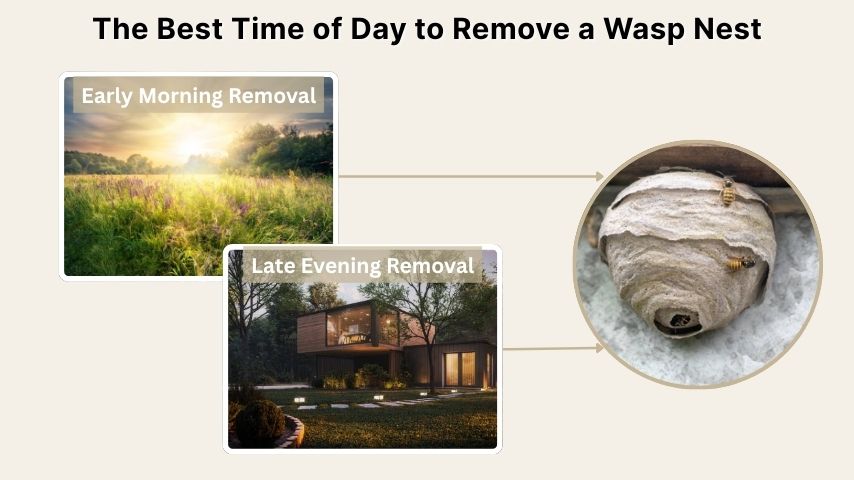
The best time of day to remove a wasp nest is usually early morning or late evening. Wasps are less active during cooler, darker parts of the day, and more of the colony is likely to be inside the nest.
Early Morning Removal
Early morning can be a good time because temperatures are cooler and wasps are less energetic. Many wasps will still be inside the nest before they begin daily foraging.
This timing makes it easier to treat or remove the nest with fewer wasps flying around. However, visibility may be lower, so it is important to clearly identify the nest entrance before taking any action.
Late Evening Removal
Late evening is another common time for wasp nest removal. After sunset, most worker wasps return to the nest. Their activity slows down as temperatures drop, making them less likely to fly aggressively.
This is often the preferred time for treating an active nest. Still, it is important to avoid using bright lights directly on the nest, as light can attract or disturb wasps. A dim flashlight with a red filter may help if visibility is needed.
Avoid Midday Removal
Midday is usually the worst time to remove a wasp nest. Wasps are most active during the warmest and brightest parts of the day. Many workers may be flying in and out of the nest, making it harder to control the colony.
Trying to remove a nest at midday can increase the risk of:
- Multiple wasps escaping.
- Defensive swarming.
- Stings to people or pets nearby.
- Wasps returning to rebuild or relocate.
If a nest must be handled during the day, it is best to contact a professional.
Best and Worst Times for Wasp Nest Removal
The right timing can make a big difference in safety. The table below shows the most common removal times and how safe they usually are.
| Timing | Risk Level | Why It Matters |
|---|---|---|
| Early spring | Low to moderate | Nests are smaller and colonies are less developed. |
| Early morning | Moderate | Wasps are cooler, slower, and often inside the nest. |
| Late evening | Moderate | Most wasps have returned and activity is lower. |
| Midday | High | Wasps are active, alert, and more likely to defend the nest. |
| Late summer or fall | High | Colonies are larger and wasps may be more aggressive. |
| Winter | Low, if inactive | Many nests are abandoned, but hidden indoor nests may still need care. |
Signs It Is Time to Remove a Wasp Nest
Not every wasp sighting means there is a serious problem. Wasps may simply be passing through the area looking for food. However, repeated activity in the same location often suggests a nearby nest.
Common Warning Signs
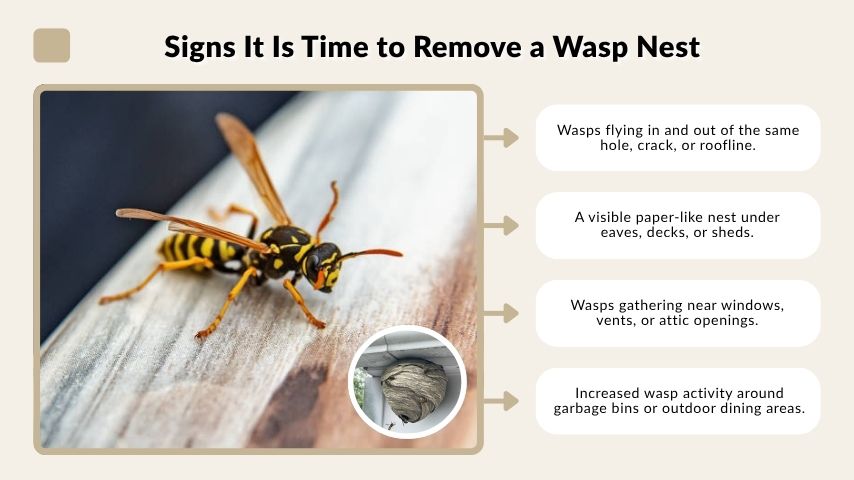
You may need to remove a wasp nest if you notice:
- Wasps flying in and out of the same hole, crack, or roofline.
- A visible paper-like nest under eaves, decks, or sheds.
- Wasps gathering near windows, vents, or attic openings.
- Increased wasp activity around garbage bins or outdoor dining areas.
- Wasps appearing inside the home repeatedly.
- Pets or children being threatened near the nest area.
A nest near a rarely used corner of the property may not require immediate action. But a nest near people, pets, or entry points should be handled quickly.
When You Should Not Remove a Wasp Nest Yourself
DIY wasp nest removal can be risky, especially if the nest is large, hidden, or difficult to reach. Wasps can sting multiple times, and some people may have severe allergic reactions.
Call a Professional If the Nest Is Dangerous
Professional removal is the safer option if:
- The nest is inside a wall, attic, chimney, or roof void.
- The nest is large or heavily active.
- Wasps are entering the home.
- The nest is high above the ground.
- Someone nearby is allergic to wasp stings.
- The nest is close to children, elderly people, or pets.
- You are unsure whether the insects are wasps, hornets, or bees.
Hidden nests can be especially difficult. Spraying into a wall opening may cause wasps to move deeper inside the structure or enter living spaces. In these cases, professional pest control can identify the nest location and choose the safest treatment method.
Should You Wait Until Winter?
In many climates, wasp colonies die off naturally during cold weather. By winter, old outdoor nests are often abandoned. If the nest is far from people and no longer active, waiting until winter may be reasonable.
However, waiting is not always the best choice. If the nest is close to a doorway, porch, mailbox, garage, or children’s play area, it may create a safety risk long before winter arrives. Indoor or wall nests should also be inspected because they may cause ongoing problems.
Winter Nest Removal
Winter can be a safer time to remove an abandoned nest because there are usually no active wasps inside. Old nests are generally not reused by most wasp species, but removing them can help you inspect the area and seal entry points.
After removing an inactive nest, check for gaps, cracks, vents, or openings that may attract new queens in spring.
Safety Tips for Removing a Wasp Nest
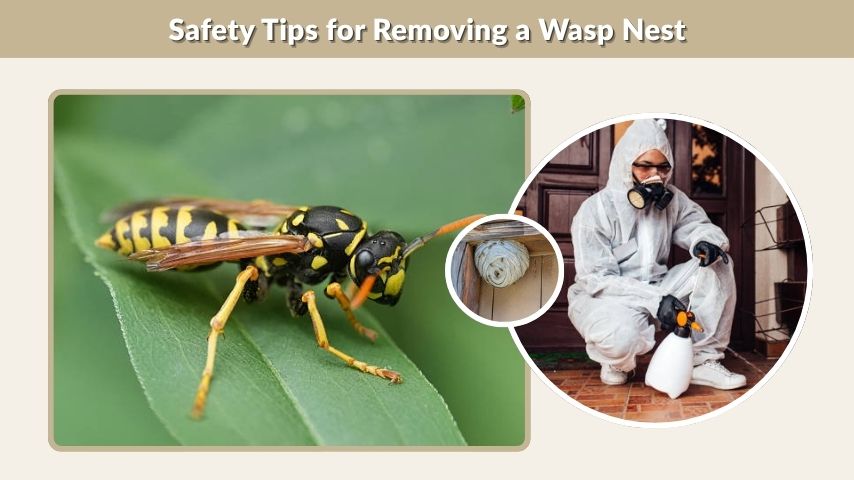
If the nest is small, visible, easy to access, and you are confident it is safe to handle, timing is only one part of the process. Proper safety steps are still important.
Basic Safety Precautions
Before attempting removal:
- Wear long sleeves, long pants, gloves, closed shoes, and face protection.
- Keep children and pets indoors.
- Plan an escape route before approaching the nest.
- Avoid standing directly under the nest.
- Do not shake, hit, or knock down an active nest.
- Do not use fire or water to destroy the nest.
- Avoid removal if you are allergic to stings.
The safest approach is to treat the nest when wasps are inactive and remove it only after there is no visible activity. If wasps remain active after treatment, do not keep disturbing the nest.
Why Timing Matters So Much
Wasps are defensive insects. They usually sting when they feel their nest is threatened. When a nest is disturbed at the wrong time, guard wasps may release alarm signals that cause others to attack.
Timing matters because it affects:
- How many wasps are inside the nest.
- How active and aggressive the colony is.
- How easy it is to reach the nest safely.
- Whether the nest is still growing.
- The chance of wasps returning or escaping.
Removing a nest early in the season and during low-activity hours greatly reduces the risk. Waiting too long can allow the colony to grow larger and more defensive.
How to Prevent Wasp Nests in the Future
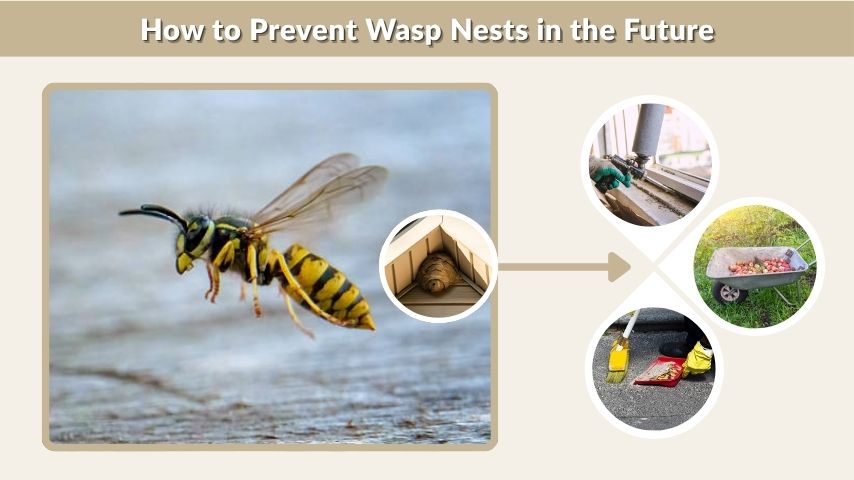
Prevention is easiest before wasps establish a colony. In spring, queen wasps look for protected places to build. Reducing nesting spots can lower the chance of future problems.
Prevention Tips
To help prevent wasp nests:
- Seal cracks around siding, rooflines, vents, and windows.
- Repair damaged screens and soffits.
- Keep garbage bins tightly closed.
- Remove fallen fruit from yards.
- Clean up sugary spills outdoors.
- Inspect sheds, decks, and eaves in early spring.
- Remove small starter nests before they grow.
Regular inspections are especially helpful in spring. A small nest found early is much easier to manage than a large nest discovered in late summer.
FAQs
What month is best to remove a wasp nest?
Early spring is usually the best time to remove a wasp nest because the colony is still small. Depending on your climate, this may be around March, April, or May. Removing the nest early can prevent it from growing into a larger and more dangerous summer colony.
Is it better to remove a wasp nest at night or during the day?
It is usually better to remove a wasp nest in the evening or early morning, when wasps are less active. Midday removal is more dangerous because wasps are alert, flying, and more likely to defend the nest aggressively if disturbed.
Will wasps leave the nest in winter?
In many areas, most worker wasps die when cold weather arrives, and the old nest becomes inactive. However, this depends on the climate and nest location. Nests inside warm structures may need closer inspection, especially if wasps continue appearing indoors.
Can I remove a small wasp nest myself?
A small, visible nest may be manageable if it is easy to reach and there are only a few wasps. However, you should still use caution and protective clothing. If the nest is large, hidden, high, or near people, professional removal is safer.
Do wasps return after a nest is removed?
Wasps may return temporarily if they were away from the nest during removal. They usually leave once the nest is gone, but new queens may build in the same area later. Sealing entry points and removing food sources can help prevent future nests.