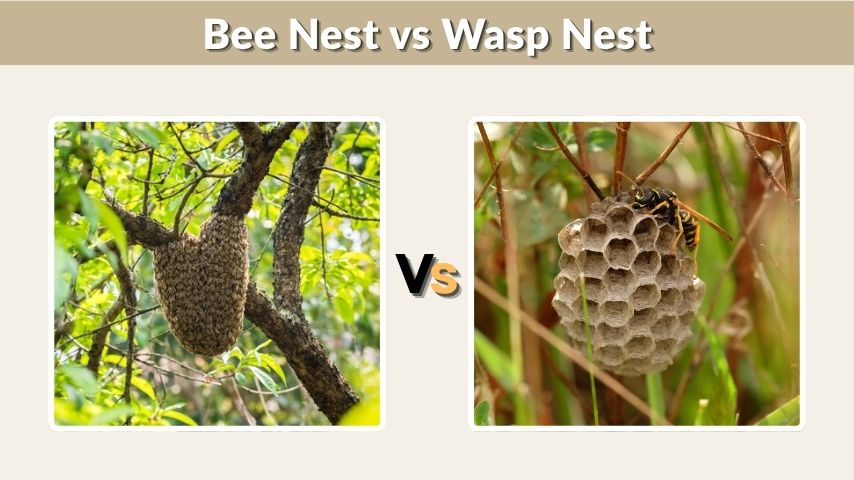
A bee nest vs wasp nest can look similar at first, especially when flying insects are moving in and out quickly. However, the structure, material, location, and insect behavior are usually different. Correct identification matters because bees are important pollinators, while some wasps can become defensive near nests. This guide explains how to tell them apart safely before taking action.
Bee Nest vs Wasp Nest: Quick Comparison
Bee nests and wasp nests are built for different colony needs. Bees usually use wax, while many wasps build papery nests from chewed wood fibers. Bees are often rounder and hairier, while wasps tend to be smoother, slimmer, and more sharply marked.
| Feature | Bee Nest | Wasp Nest |
| Main material | Wax, comb, natural cavities, soil, or plant fibers depending on bee type | Paper-like material made from chewed wood fibers |
| Common shape | Honeycomb, cavity nest, ground tunnel, or small tube | Umbrella-shaped, round, oval, enclosed, or hidden in voids |
| Common location | Tree cavities, wall voids, ground, hollow stems, bee boxes | Eaves, shrubs, trees, attics, wall voids, ground holes |
| Insect behavior | Often focused on flowers and hive activity | Often more defensive near the nest |
| Removal approach | Often best handled by a beekeeper if honey bees are present | May require pest control if active and near people |
| Ecological role | Major pollinators | Pest control, pollination, and scavenging roles |
A nest alone may not always identify the insect perfectly. You should also look at body shape, flight behavior, and where the nest is built.
What a Bee Nest Looks Like
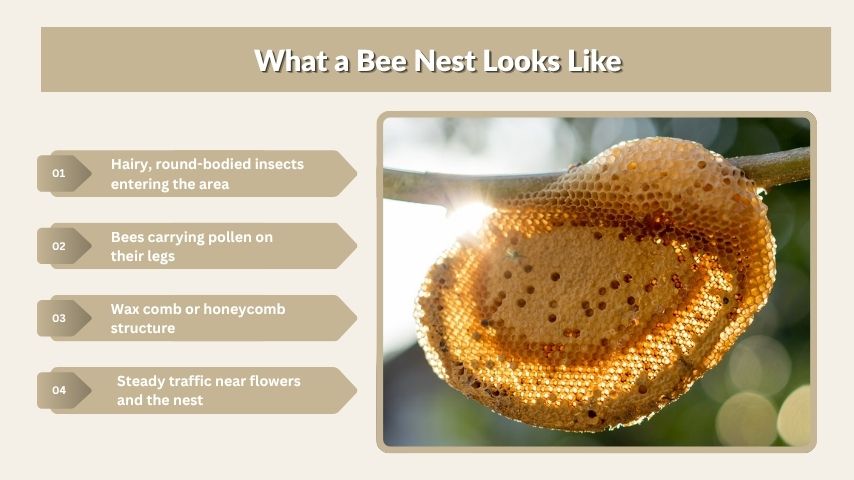
A bee nest can vary depending on the bee species. Honey bees build wax combs with hexagonal cells. These combs may be inside tree hollows, wall voids, managed hive boxes, or other protected cavities. If exposed, honeycomb looks like layers of wax cells, often golden, white, or yellowish.
Bumble bees build smaller nests, often in abandoned rodent holes, grass clumps, compost piles, sheds, or under decks. Their nests can look messy compared with honey bee combs. Solitary bees, such as mason bees or mining bees, may nest in small holes, soil tunnels, hollow stems, or cracks.
Common Bee Nest Signs
You may be looking at a bee nest if you notice:
- Hairy, round-bodied insects entering the area
- Bees carrying pollen on their legs
- Wax comb or honeycomb structure
- Steady traffic near flowers and the nest
- A nest inside a tree cavity, wall void, or hive box
- Ground holes with bees flying calmly in and out
- Small tube-like nests in wood, stems, or masonry gaps
Honey bee nests can become large if left undisturbed. Bumble bee nests are usually smaller and often seasonal. Many solitary bee nests are harmless and may not need removal.
What a Wasp Nest Looks Like
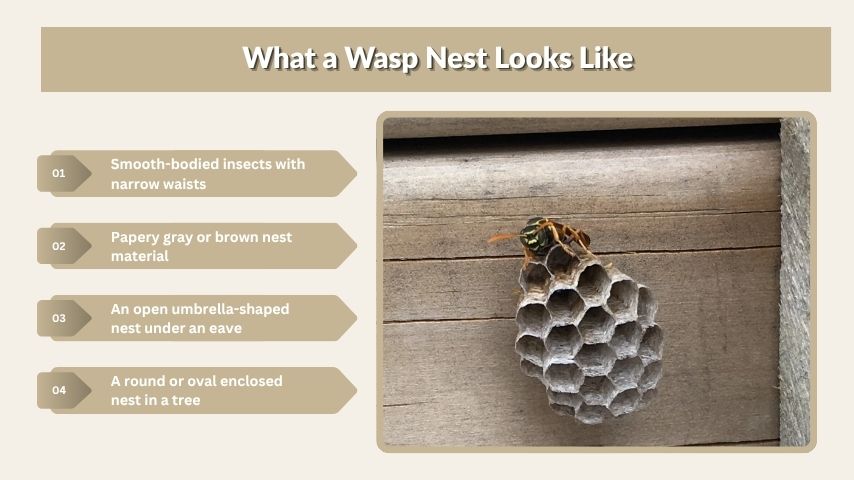
A wasp nest is often made from a paper-like material. Wasps scrape wood fibers from fences, decks, logs, or plant stems, mix the fibers with saliva, and form a papery nest. This is one of the biggest differences between a bee hive and a wasp nest.
Paper wasps often build open, umbrella-shaped nests under eaves, porch ceilings, deck railings, and outdoor furniture. You may see visible hexagonal cells facing downward. Yellowjackets may build nests underground, inside wall voids, or in enclosed spaces. Bald-faced hornets build large, enclosed, football-shaped paper nests in trees, shrubs, or on buildings.
Common Wasp Nest Signs
You may be looking at a wasp nest if you notice:
- Smooth-bodied insects with narrow waists
- Papery gray or brown nest material
- An open umbrella-shaped nest under an eave
- A round or oval enclosed nest in a tree
- Insects entering a ground hole repeatedly
- Strong defensive behavior near the nest
- More activity around trash, meat, sugary drinks, or fallen fruit
Wasp nests can grow quickly during warm months. Small early-season nests are easier to manage than large late-season colonies.
Bee Hive vs Wasp Nest: Material and Structure
The material of the nest is one of the easiest clues. Bees often use wax or natural cavities. Wasps usually create paper-like structures. However, some bees nest in soil, and some wasps also nest underground, so material and location should be considered together.
| Nest Type | Material | Structure | Typical Builder |
| Honey bee hive | Beeswax | Layered honeycomb cells | Honey bees |
| Bumble bee nest | Wax pots, plant material, existing cavities | Irregular cluster | Bumble bees |
| Mason bee nest | Mud partitions in holes | Small sealed chambers | Mason bees |
| Mining bee nest | Soil tunnels | Ground entrance holes | Mining bees |
| Paper wasp nest | Papery wood fiber | Open umbrella comb | Paper wasps |
| Yellowjacket nest | Papery wood fiber | Enclosed or hidden comb | Yellowjackets |
| Hornet nest | Papery wood fiber | Large enclosed oval nest | Hornets or hornet-like wasps |
If the structure looks like gray paper, it is probably a wasp or hornet nest. If it looks like wax comb, it is more likely a honey bee hive.
Bee vs Wasp vs Hornet Nest
People often compare bee, wasp, and hornet nests together because all three can appear around homes. Hornets are actually a type of wasp, but their nests are often larger and more enclosed than paper wasp nests.
| Insect Group | Nest Appearance | Common Location | Safety Concern |
| Bees | Wax comb, ground holes, small tubes, or hidden cavities | Trees, walls, soil, bee boxes, hollow stems | Important pollinators; avoid unnecessary killing |
| Paper wasps | Open umbrella-shaped paper comb | Eaves, decks, porch ceilings, shrubs | Can sting if nest is disturbed |
| Yellowjackets | Hidden paper nest, often underground or in walls | Ground holes, wall voids, attics | Often defensive near nest |
| Hornets | Large enclosed paper nest | Trees, shrubs, high building areas | Can be very defensive around nest |
For homeowners, the most important safety rule is simple: do not shake, spray, hit, burn, or block an active nest without knowing what it is.
Where Bees and Wasps Build Nests
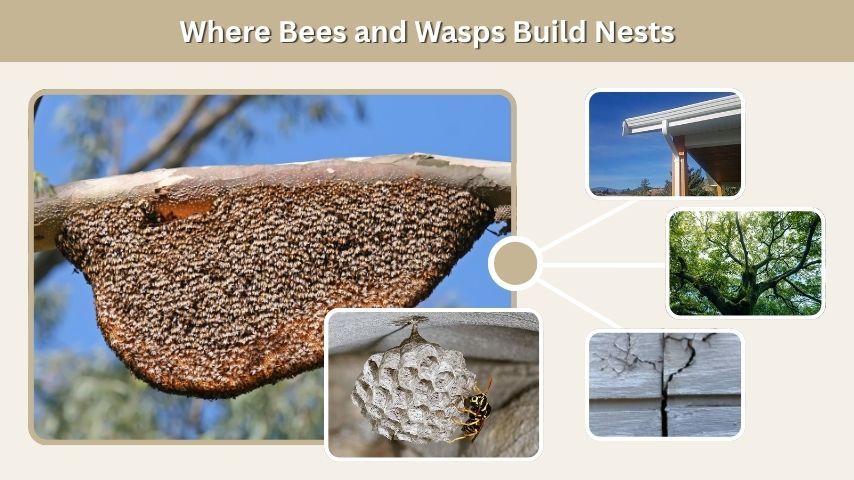
Location is another strong identification clue. Bees and wasps choose nesting sites based on protection, temperature, food access, and colony needs.
Bees may prefer sheltered cavities or natural spaces. Honey bees often choose hollow trees, wall voids, or hive boxes. Bumble bees may use old rodent burrows, thick grass, compost piles, or gaps under structures. Solitary bees may use small holes in wood, soil, or plant stems.
Wasps often choose protected places where their paper nests can hang or stay hidden. Paper wasps like rooflines and eaves. Yellowjackets may choose underground burrows, wall voids, attics, or gaps in siding. Hornet-like wasps may build large enclosed nests in trees or shrubs.
Common Nest Locations Around Homes
Check these areas carefully from a distance:
- Roof eaves and soffits
- Porch ceilings and deck rails
- Tree branches and shrubs
- Ground holes in lawns or garden beds
- Wall cracks and siding gaps
- Attics, sheds, and garages
- Fence posts and hollow stems
- Compost piles or old rodent burrows
Never put your face close to a hole or nest entrance. Observe from a safe distance and look for repeated insect traffic.
Behavior Differences Near the Nest
Bee and wasp behavior can also help with identification. Bees are usually focused on pollen, nectar, and colony work. Many bees are not aggressive unless stepped on, trapped, or directly threatened. Honey bees may defend their hive, but they are usually less interested in human food than yellowjackets.
Wasps can be more interested in protein, sweets, trash, and outdoor meals. Yellowjackets in particular may become a problem around picnics, garbage cans, fallen fruit, and sugary drinks. They can also be highly defensive when their nest is disturbed.
Paper wasps may look intimidating but often leave people alone if the nest is not disturbed. However, any wasp nest near doors, play areas, patios, or walkways can become a safety concern.
Ground Nesting Bees vs Ground Nesting Wasps
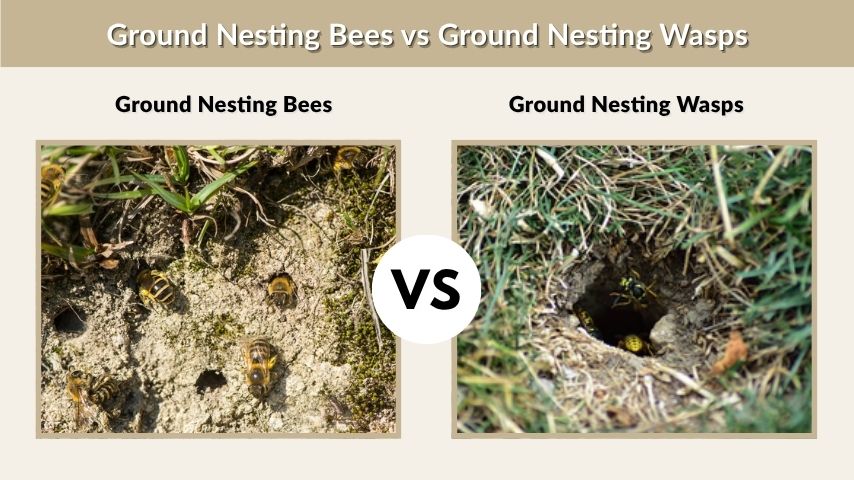
Ground nests are especially confusing because both bees and wasps can use soil openings. Mining bees, sweat bees, and some bumble bees may nest in the ground. Yellowjackets and some other wasps may also use abandoned burrows or soil cavities.
Ground-nesting bees often appear around sunny, dry soil patches. Many are solitary and not highly aggressive. You may see several small holes spread over an area.
Ground-nesting wasps, especially yellowjackets, may have a single busy entrance with many insects flying in and out. They may become defensive if the ground is stepped on, mowed, or disturbed.
How to Tell Ground Nests Apart
Look for these clues from a safe distance:
- Many small scattered holes may suggest solitary bees
- One busy entrance may suggest yellowjackets
- Bees may carry pollen on their legs
- Wasps often have smooth bodies and narrow waists
- Yellowjackets may fly faster and more directly
- Defensive swarming suggests wasps, not solitary bees
If the nest is in a high-traffic area, avoid mowing or digging nearby until it is identified.
Old Bee Nest vs Old Wasp Nest
An old bee nest and an old wasp nest may look different after the insects leave. Honey bee comb can leave wax, honey, and odor inside walls or cavities. If honey bee comb is left inside a building, it may attract ants, roaches, rodents, or other pests. Melting honey can also stain walls.
Old wasp nests are usually papery and dry. Many social wasp colonies do not reuse the same nest the next year, although a protected structure may attract new nest building nearby. An inactive paper nest can often be removed after confirming there is no activity.
Do not assume a nest is empty just because you do not see insects for a few minutes. Watch at different times of day before deciding it is inactive.
Should You Remove a Bee Nest or Wasp Nest?
The right action depends on the insect, location, colony size, and risk to people. A nest far from people may not need removal. Bees and wasps both have ecological value, and many nests are seasonal.
Honey bees should not be treated like ordinary pests if relocation is possible. A local beekeeper may be able to remove or relocate a honey bee colony. Bumble bees and solitary bees are also valuable pollinators and often disappear naturally after the season.
Wasp nests may need removal if they are close to doors, patios, schools, pets, children, or allergic individuals. Hidden nests in walls or ground holes can be risky because people may disturb them accidentally.
Safety Tips Before Taking Action
Identification should come before removal. Treating the wrong nest can harm pollinators, fail to solve the problem, or increase sting risk.
Follow these safety tips:
- Observe the nest from a distance
- Do not block the entrance hole
- Do not spray unknown nests indoors
- Avoid loud vibration near ground nests
- Keep children and pets away from active nests
- Do not use fire, gasoline, or boiling water
- Contact a beekeeper for honey bee colonies
- Call pest control for large or aggressive wasp nests
People with known sting allergies should not approach any active bee, wasp, or hornet nest.
When to Call a Professional
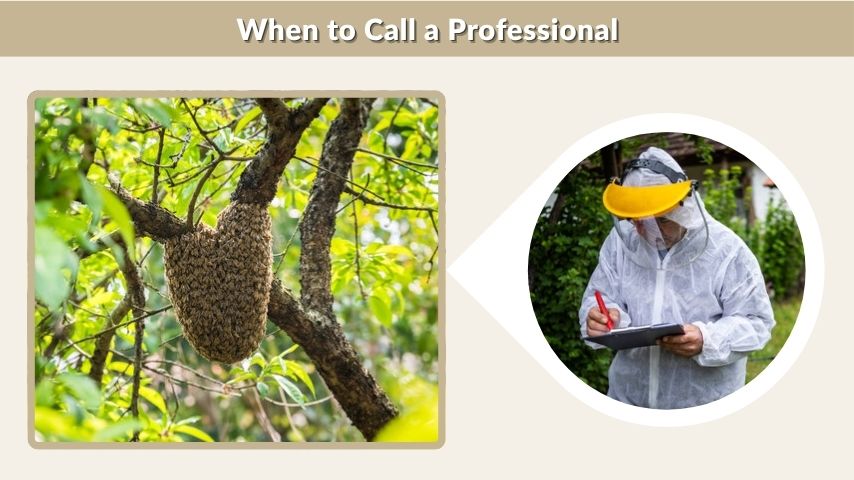
Professional help is best when the nest is large, hidden, high, inside a wall, underground, or close to daily activity. It is also wise to call a professional if you cannot identify the insect confidently.
A beekeeper may be the best first call for honey bees. Pest control may be more appropriate for yellowjackets, hornets, or aggressive wasp nests. In some cases, both identification and removal advice are needed before taking action.
You should get help quickly if insects are entering living areas, nesting near children, or creating risk for someone with a sting allergy.
FAQs
How can I tell a bee nest from a wasp nest?
A bee nest is often made from wax, soil tunnels, or natural cavities, while many wasp nests look gray, brown, and papery. Bees are usually hairier and rounder, while wasps are smoother with narrow waists. Watch the nest entrance from a safe distance to compare structure, material, and insect behavior.
Is a bee hive the same as a wasp nest?
No, a bee hive and a wasp nest are not the same. A honey bee hive is usually made from wax comb, while a wasp nest is often made from chewed wood fibers that create a paper-like structure. The insects also behave differently and may require different removal methods.
What does a wasp nest look like compared with a bee nest?
A wasp nest often looks like gray or brown paper. It may be umbrella-shaped, round, oval, enclosed, or hidden underground. A bee nest may show wax honeycomb, small soil holes, or cavity activity. Honey bee comb usually looks waxy, while wasp nest material usually looks dry and papery.
Are ground nests bees or wasps?
Ground nests can belong to either bees or wasps. Mining bees and some bumble bees nest in the soil, but yellowjackets can also build underground nests. Several small scattered holes often suggest solitary bees, while one busy entrance with defensive insects may suggest a wasp or yellowjacket nest.
Should I remove a bee nest or wasp nest myself?
Small, inactive nests may sometimes be removed carefully, but active nests require caution. Honey bee colonies should be handled by a beekeeper when possible. Large wasp, hornet, ground, or wall nests are safer for professionals to manage, especially near doors, children, pets, or people with sting allergies.