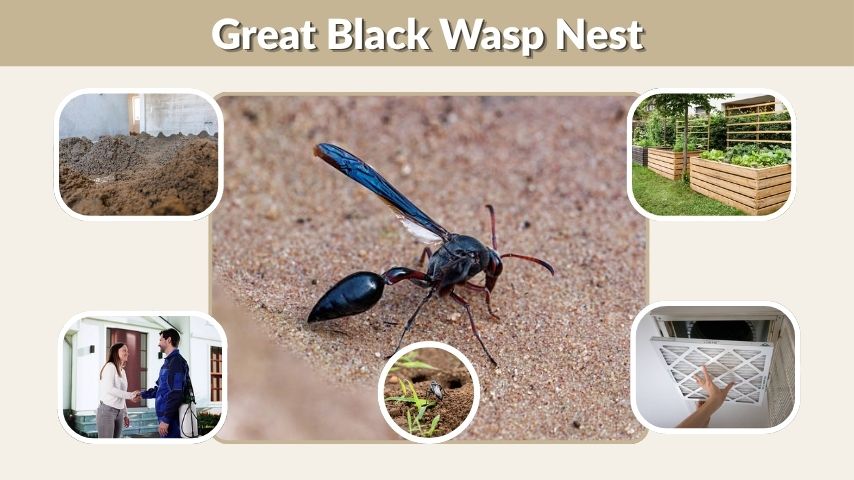
A great black wasp nest can be easy to miss because it does not look like the paper nests made by hornets or yellowjackets. The great black wasp is a solitary digger wasp, so its nest is usually a small underground burrow in sunny, loose soil. Although the wasp may look intimidating, it is usually not aggressive and is often helpful in gardens.
What Is a Great Black Wasp?
The great black wasp, also called the great black digger wasp, is a large black wasp found in many parts of North America. Its scientific name is Sphex pensylvanicus. It has a shiny black body, dark smoky wings, long antennae, and a narrow waist.
Many homeowners notice this insect because of its size and all-black color. It may look threatening, but it is very different from social wasps that defend large colonies. A great black wasp usually lives and nests alone. The female digs a nest, hunts prey for her young, and then leaves the next generation to develop underground.
Quick Facts About the Great Black Wasp Nest
| Feature | Details |
| Nest type | Underground burrow |
| Nest builder | Female great black wasp |
| Colony size | Solitary, not a large colony |
| Common location | Sunny soil, gardens, lawns, paths, bare patches |
| Nest material | Soil, not paper or leaves |
| Main purpose | Holds eggs and paralyzed prey for larvae |
| Risk level | Usually low if left undisturbed |
What Does a Great Black Wasp Nest Look Like?
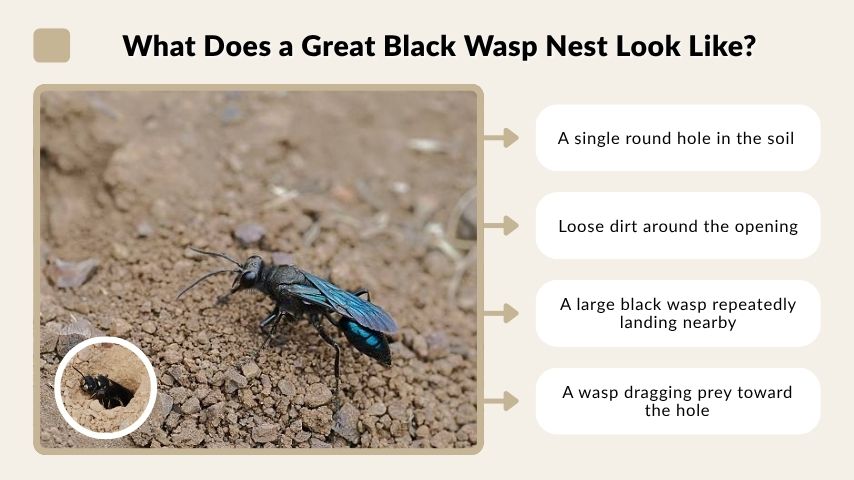
A great black wasp nest usually looks like a small hole in the ground. Around the entrance, you may see loose soil, tiny piles of dirt, or disturbed sandy material. Unlike a hornet nest, it does not hang from a tree, wall, attic beam, or roof edge.
The entrance may be about the width of a pencil or slightly larger. It can appear in dry soil, open garden beds, along walkways, near flower patches, or in lawns with bare areas. Sometimes the nest is hard to identify unless you see the wasp entering or leaving the hole.
Common Signs of a Great Black Wasp Nest
You may be looking at a great black wasp nest if you notice:
- A single round hole in the soil
- Loose dirt around the opening
- A large black wasp repeatedly landing nearby
- A wasp dragging prey toward the hole
- Nesting activity in sunny, open ground
- No paper nest, comb, or hanging structure
- Little to no aggressive swarming behavior
Great black wasp nest pictures often show a dark wasp near a small ground opening. However, pictures can be misleading because many ground-nesting insects make similar holes. Identification is easier when you observe behavior from a safe distance.
Great Black Wasp Nest in Ground
A great black wasp nest in ground is the normal nesting style for this species. The female digs a tunnel and creates small chambers inside it. These chambers are used for eggs and food for the developing larvae.
The female wasp hunts insects such as katydids and related prey. She stings and paralyzes the prey, then brings it back to the underground nest. After placing prey in a chamber, she lays an egg. When the larva hatches, it has a fresh food supply.
This behavior may sound alarming, but it is part of the wasp’s natural life cycle. It also helps control some plant-feeding insects in gardens and natural areas.
Why They Nest Underground
Great black wasps nest underground because soil gives their young protection. A burrow protects eggs and larvae from weather, many predators, and direct sunlight. It also provides a hidden place to store prey.
Ground nesting offers several benefits:
- Protection from rain and heat
- A safe chamber for larvae
- Easy access to open hunting areas
- Less need for building materials
- A hidden location away from many predators
Because they are solitary, great black wasps do not need a large colony nest. A single female can create and manage her own burrow.
Where Do Great Black Wasps Nest?
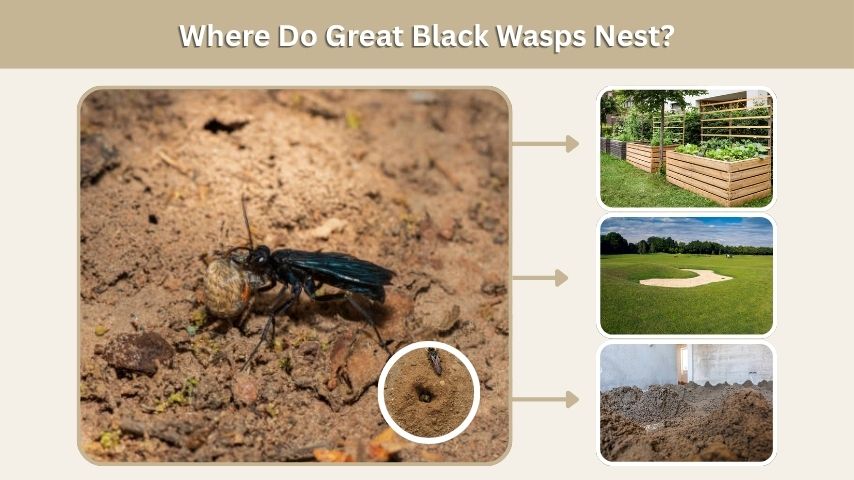
Great black wasps usually nest in places with loose, well-drained soil. They prefer areas where digging is possible and where flowers and prey are nearby. Gardens are common locations because they provide nectar for adults and insects for the larvae.
You may find nests in:
- Garden beds
- Bare patches of lawn
- Sandy or loose soil
- Edges of paths or driveways
- Meadows and prairie gardens
- Around native flower plantings
- Open soil near vegetable gardens
They are often seen around flowers because adult great black wasps feed on nectar. Seeing one on flowers does not always mean there is a nest nearby. The nest may be several yards away from the feeding area.
Great Black Wasp Nest Above Ground
A true great black wasp nest is not usually above ground. If you see a paper nest hanging from a roof, tree branch, porch, shed, or wall, it probably belongs to another wasp species. Paper wasps, hornets, and yellowjackets are more likely to build visible nests above ground or in cavities.
Great black wasps may fly around houses, sheds, or barns, but that does not mean they are building a paper nest there. They may be searching for prey, resting, or entering a gap that leads to soil or sheltered ground.
If You See a Nest on a Wall or Roof
If the nest is made of gray paper or has visible comb cells, it is probably not a great black wasp nest. In that case, treat it as a different wasp problem. Social wasps can be more defensive, especially when their colony is mature.
Do not poke, spray, or knock down an unidentified wasp nest without knowing what species you are dealing with. If the nest is near people, pets, or doors, it is safer to contact a pest control professional.
Great Black Wasp Nest in House
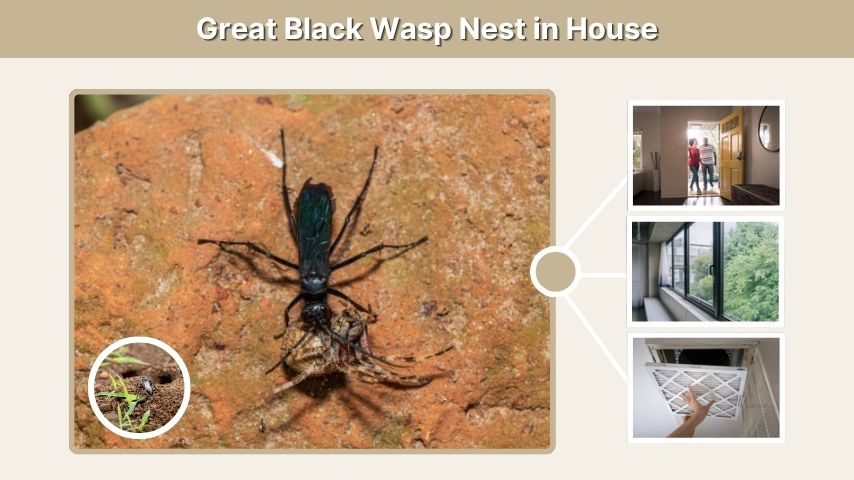
A great black wasp nest in house is not common in the same way that some social wasps nest in wall voids or attics. Great black wasps are digger wasps, so they need soil to make their burrows. If you see one inside a house, it may have entered by accident through an open door, window, vent, or gap.
However, they may nest close to houses if the surrounding soil is suitable. You might find a burrow near a foundation, beside a porch, next to a patio, or in a sunny garden bed close to the home.
Why Great Black Wasps Enter Homes
A great black wasp may enter a house because:
- A door or window was left open
- It followed light indoors
- It was chasing prey
- It got trapped in a porch or garage
- There are gaps around screens or vents
If one is inside, remain calm. Open a window or door and let it leave. Avoid swatting it with your hands because a frightened female can sting if handled or squeezed.
Do Great Black Wasps Use Leaves to Make Their Nest?
Great black wasps do not use leaves to make a nest in the way leafcutter bees do. They also do not chew wood into paper like paper wasps or hornets. Their nest is a soil burrow.
They may be seen around plants because they feed on nectar and hunt insects, but leaves are not their main nest-building material. If you see leaf pieces being carried into a hole, you may be watching a different insect, such as a leafcutter bee.
Great Black Wasp Nest Size
The visible part of a great black wasp nest is usually small. From above, you may only see a single hole with a little loose soil around it. The underground tunnel and chambers can be larger than the entrance suggests, but it is still not a colony nest with hundreds or thousands of wasps.
A typical nest may include:
- One main entrance
- A tunnel below the surface
- Several small brood chambers
- Paralyzed prey stored for larvae
- One female doing most of the work
Because the nest is underground, most of it cannot be seen. This is why people searching for “great black wasp nest pictures” may mostly find images of entrance holes rather than full nests.
Great Black Wasp Nesting Habits
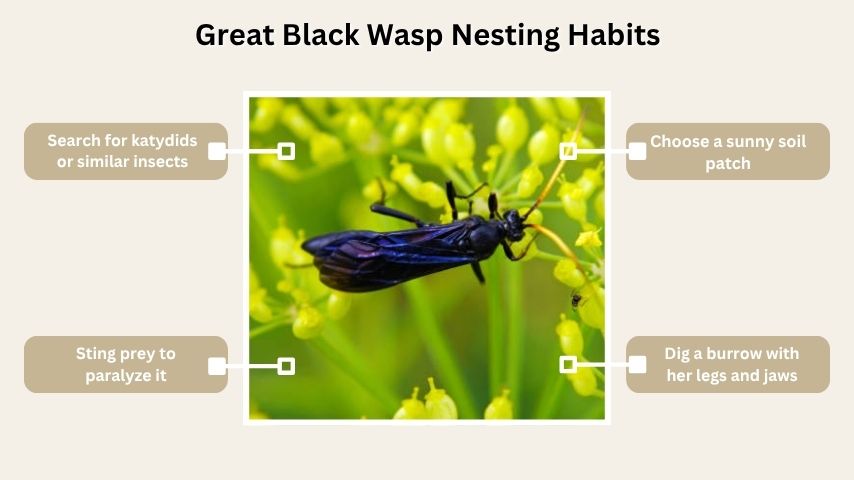
Great black wasp nesting habits are very different from yellowjackets. The female works alone. She digs, hunts, provisions the nest, lays eggs, and seals chambers. There is no large worker force defending the nest.
Adults are often active in warm months, especially when flowers are blooming and prey insects are available. You may notice them flying low over soil, visiting flowers, or moving quickly around garden beds.
Typical Nesting Behavior
A nesting female may:
- Choose a sunny soil patch
- Dig a burrow with her legs and jaws
- Search for katydids or similar insects
- Sting prey to paralyze it
- Drag or carry prey to the nest
- Lay an egg in a chamber
- Close or cover parts of the nest
This process is fascinating but can be unsettling if it happens near a walkway or play area.
Is a Great Black Wasp Nest Dangerous?
A great black wasp nest is usually not dangerous if left alone. Great black wasps are solitary and do not defend a large colony. They are not likely to chase people the way some social wasps might when a nest is disturbed.
That said, female great black wasps can sting. A sting may happen if the wasp is stepped on, grabbed, trapped in clothing, or directly threatened. People with serious insect sting allergies should be especially cautious around any wasp.
When to Be Careful
Use extra care if the nest is:
- Near a doorway
- Beside a child’s play area
- In a heavily used path
- Close to pets
- In a garden bed you work in daily
- Near someone with a known sting allergy
In low-traffic areas, the best option is often to leave the nest alone until the nesting cycle ends.
Great Black Wasp Nzest Removal
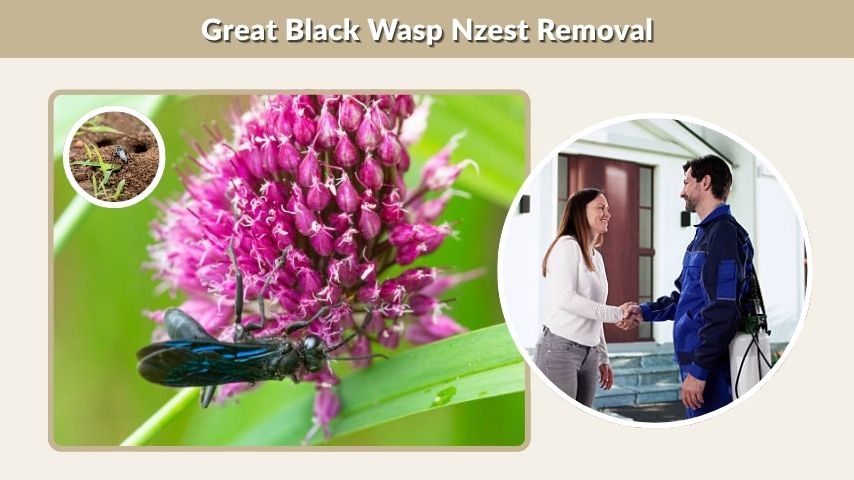
Great black wasp nest removal is not always necessary. Since these wasps are beneficial and usually non-aggressive, many nests can be left in place. They help pollinate flowers and reduce populations of some insects by hunting prey for their larvae.
If the nest is in a high-risk location, avoid handling it yourself. A professional can confirm the species and decide the safest approach. This matters because many people confuse solitary ground wasps with yellowjackets, and yellowjackets can be much more defensive.
How to Get Rid of a Great Black Wasp Nest Safely
If you want to discourage nesting without harming beneficial insects, focus on prevention and habitat changes after the wasps are gone.
Helpful steps include:
- Avoid leaving bare soil in high-traffic areas
- Add mulch to garden beds where nesting is unwanted
- Keep lawns healthy and filled in
- Seal gaps around doors, windows, and vents
- Avoid disturbing active burrows
- Contact a professional if the nest is close to people
Do not pour gasoline, bleach, or harsh chemicals into a ground nest. These methods are unsafe, can damage soil, and may create more risk than the wasp itself.
How to Find a Great Black Wasp Nest
To find a great black wasp nest, watch the wasp’s flight path from a safe distance. A female may return to the same spot repeatedly. She may land on the ground and disappear into a small hole.
The best time to observe is during warm daylight hours when wasps are active. Stand back and avoid blocking the wasp’s path. Look for disturbed soil, small holes, and repeated landings in the same area.
Identification Tips
To confirm a possible nest, look for:
- One large black wasp, not a swarm
- Activity around a ground hole
- Loose soil at the entrance
- A sunny, open soil location
- Prey being carried or dragged
- No paper nest structure
If many wasps are entering and leaving the same hole, be cautious. That may indicate yellowjackets or another social wasp rather than a great black wasp.
Great Black Wasp Nest Facts
The nest of a great black wasp is a hidden nursery rather than a colony home. The adult female does not raise larvae by feeding them daily. Instead, she prepares the chamber with prey and lets the larva develop with the food she provides.
Important nest facts include:
- The nest is usually underground
- It is made by one female
- It does not look like a paper wasp nest
- It contains eggs, larvae, and stored prey
- It is usually active only for a limited time
- The wasp is beneficial in gardens
- It is unlikely to attack unless handled or disturbed
Understanding these facts can make the nest seem less frightening. In many cases, the best response is simple observation.
FAQs
What does a great black wasp nest look like?
A great black wasp nest usually looks like a small hole in the ground with loose soil around it. It does not look like a hanging paper nest. You may only identify it clearly if you see a large black wasp repeatedly entering or leaving the same burrow.
Where do great black wasps nest?
Great black wasps usually nest in sunny areas with loose, well-drained soil. Common places include garden beds, bare lawn patches, sandy paths, meadow edges, and soil near flowers. They are solitary digger wasps, so each female usually creates her own underground burrow.
Do great black wasps nest in houses?
Great black wasps do not normally build nests inside houses because they need soil for their burrows. If one appears indoors, it likely entered by accident. However, they may nest near a house foundation, porch, patio, or garden if the soil is suitable.
Should I remove a great black wasp nest?
You may not need to remove a great black wasp nest if it is in a low-traffic area. These wasps are beneficial and usually not aggressive. Removal may be needed if the nest is near doors, play areas, pets, or someone with a serious sting allergy.
How do I get rid of a great black wasp nest?
The safest approach is to avoid disturbing the nest and call a professional if it is in a risky location. For prevention, cover bare soil with mulch, maintain dense grass, and seal gaps around the home. Never pour gasoline, bleach, or unsafe chemicals into a nest.