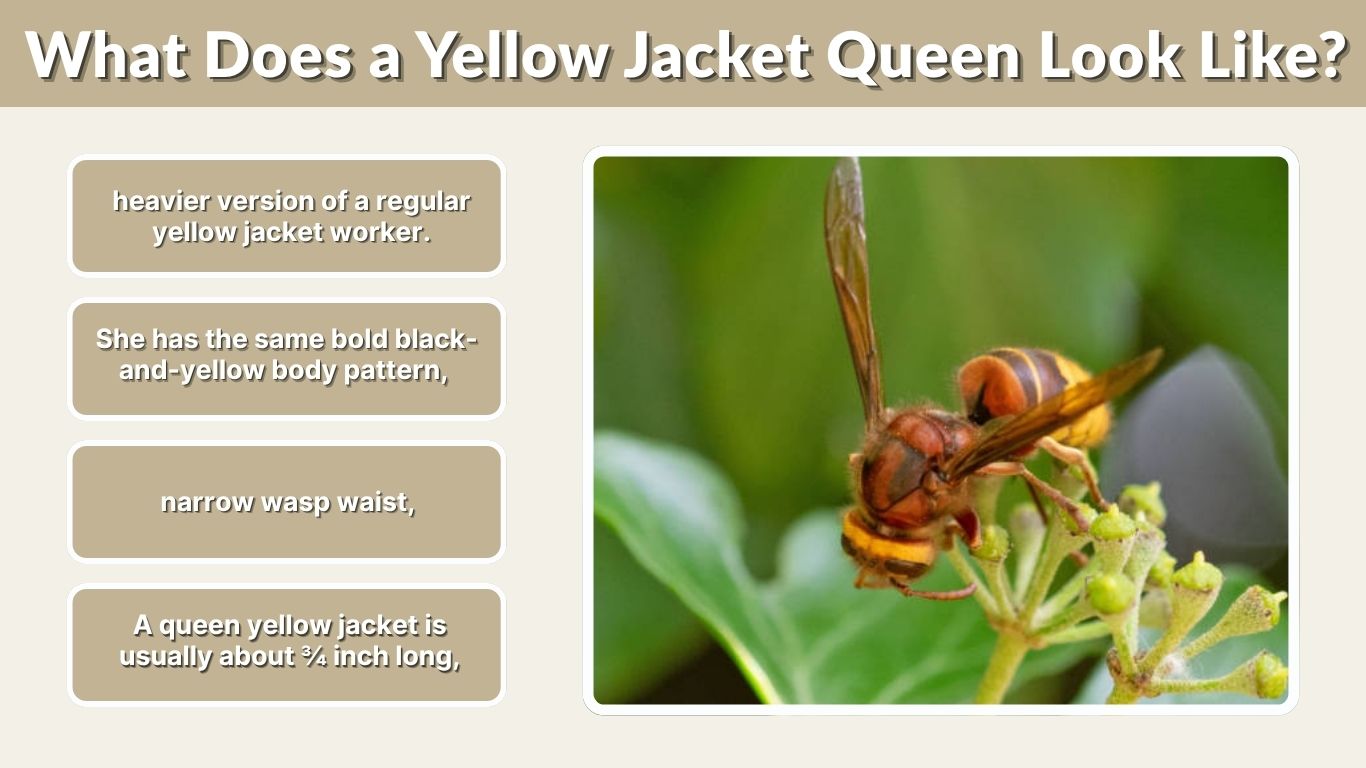
A yellow jacket queen looks like a larger, heavier version of a regular yellow jacket worker. She has the same bold black-and-yellow body pattern, narrow wasp waist, clear wings, and smooth shiny body. The biggest clue is her size. A queen yellow jacket is usually about ¾ inch long, while workers are often closer to ½ inch long. Queens are most often noticed in spring when they fly alone looking for a place to start a new nest.
Yellow Jacket Queen Appearance
A yellow jacket queen has the classic yellow jacket look: a black body with bright yellow markings. Her abdomen usually has yellow bands or patterns across a dark background. Her body is smooth and glossy, not fuzzy like a honey bee. She also has clear wings, long antennae, strong legs, and a narrow waist between the thorax and abdomen.
The queen’s overall shape is wasp-like. She is not round and hairy like a bee. Her body is more streamlined, which helps separate her from honey bees and bumble bees. Yellow jackets are often described as slender, less hairy wasps with yellow and black markings.
Main Identification Features
You can identify a yellow jacket queen by looking for these features:
- Larger body than most worker yellow jackets
- Black and yellow striped or patterned abdomen
- Smooth, shiny body with very little hair
- Narrow waist between the middle body and abdomen
- Clear wings folded over the back when resting
- Long antennae and strong legs
- Seen alone in spring or early summer
- Often searching around soil holes, wall gaps, wood piles, sheds, or protected spaces
A queen can look very similar to a worker, so size and season are important clues. If you see one large yellow jacket flying alone in early spring, it may be a queen searching for a nesting site.
Yellow Jacket Queen Size
Yellow jacket queen size is one of the easiest ways to tell her apart from workers. Many worker yellow jackets are about ½ inch long. Queens are usually larger, often around ¾ inch long. Penn State Extension notes that eastern yellowjacket workers are about 12 mm long, while queens can be up to 18 mm.
However, size can vary by species. Some yellow jacket queens are only slightly larger than workers, while others look much bigger. A queen may also appear heavier because her abdomen is fuller. This is especially noticeable in spring when she is preparing to build a nest and lay eggs.
Queen Size vs Worker Size
| Feature | Yellow Jacket Queen | Yellow Jacket Worker |
|---|---|---|
| Average size | About ¾ inch | About ½ inch |
| Body shape | Larger and heavier | Smaller and slimmer |
| Role | Lays eggs and starts colony | Builds, feeds, defends |
| Season seen | Often alone in spring | Common in summer and fall |
| Sting ability | Yes | Yes |
The queen is usually the largest female in the colony. But if you are looking at a busy nest in late summer, the yellow jackets flying in and out are almost always workers, not the queen.
What Color Is a Yellow Jacket Queen?
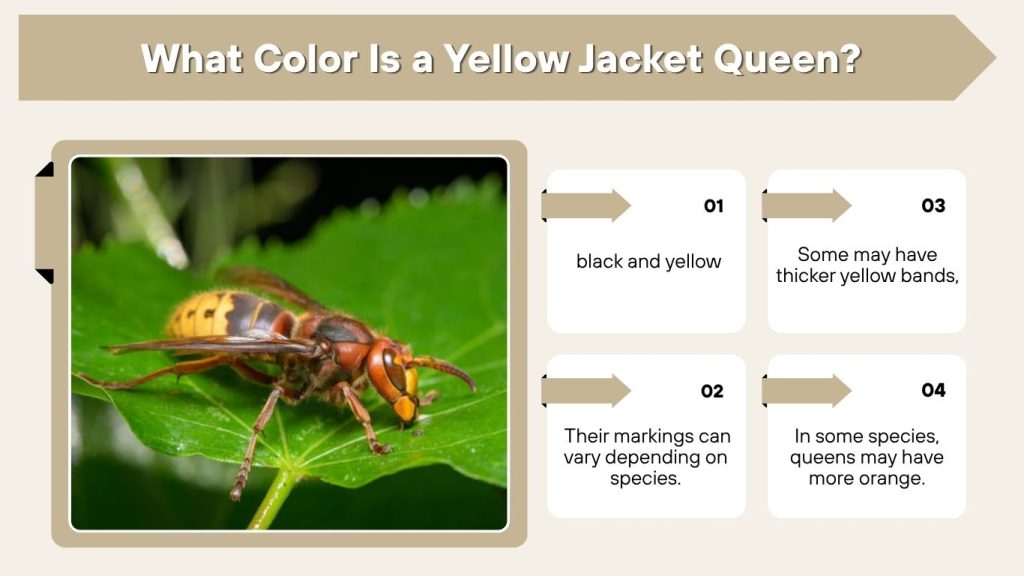
Most yellow jacket queens are black and yellow, just like workers. Their markings can vary depending on species. Some may have thicker yellow bands, black spots, or different facial patterns. In some species, queens may have more orange-brown or reddish tones. Cornell notes that some yellowjacket queens can be a striking orange-brown color with black markings, depending on the species.
For most common yellow jackets, though, the queen is not a completely different color. She usually looks like a larger version of the workers. This is why people often miss queens unless they notice the larger size or see one flying alone in spring.
What Does a Queen Yellow Jacket Look Like in Spring?
In spring, a queen yellow jacket may be seen flying by herself. This is one of the best times to identify her because workers are not yet active in large numbers. The queen comes out of her winter shelter, feeds, and searches for a nest site.
She may fly low over the ground, inspect holes, crawl near cracks, or enter gaps in buildings. She may also check old rodent burrows, tree stumps, sheds, attics, or wall spaces. Yellow jacket colonies are started each spring by a single fertilized queen, and the colony grows after the first workers hatch.
A spring queen often looks larger and slower than summer workers. She may seem more focused on exploring than aggressively defending anything. At this stage, she does not yet have a large colony behind her.
What Does a Yellow Jacket Queen Look Like in the Nest?
Inside the nest, the queen is usually harder to see. Once the first workers mature, they take over most outdoor jobs. They gather food, expand the nest, feed larvae, and defend the colony. The queen usually remains inside and lays eggs.
Because of this, most yellow jackets seen around food, trash cans, picnic areas, gardens, and nest entrances are workers. The queen is usually hidden deep inside the nest. If a nest is disturbed, workers are the ones most likely to rush out and sting.
Yellow Jacket Queen vs Worker
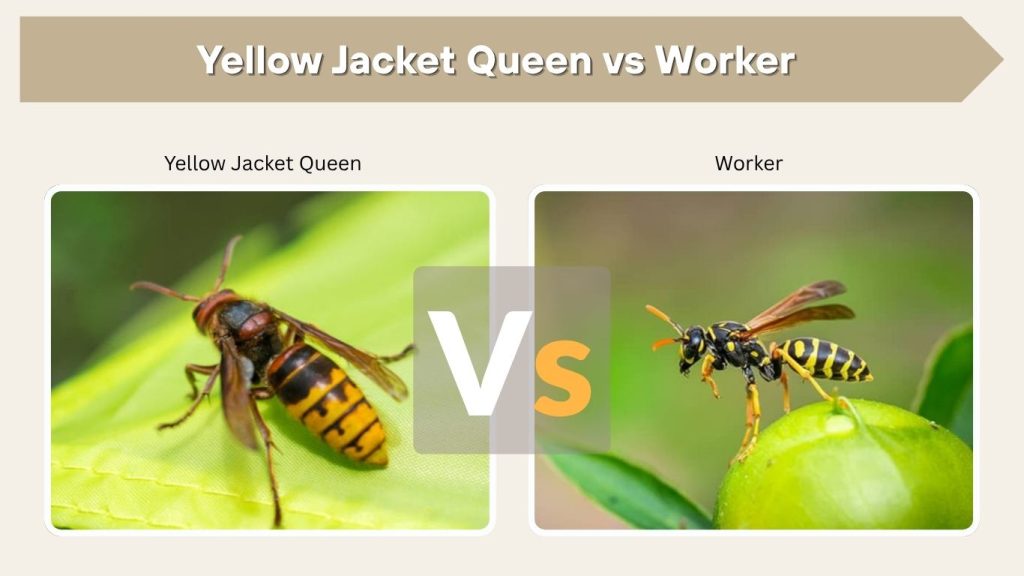
A queen yellow jacket and a worker look similar because both are female yellow jackets. Both have black-and-yellow markings, narrow waists, clear wings, and stingers. The main difference is that the queen is larger and reproductive.
Workers are usually sterile females. Their job is to support the colony. They build the paper nest, collect insects and sugary foods, feed young larvae, and defend the nest. The queen’s job is to lay eggs.
Key Differences
A queen yellow jacket is usually larger, heavier, and more likely to be seen alone in spring. A worker yellow jacket is smaller and more likely to be seen in groups during summer and fall. Workers are also the yellow jackets most people encounter near outdoor food, garbage, fruit, and sugary drinks.
If you see a single large yellow jacket in March, April, or May, it may be a queen. If you see many yellow jackets moving in and out of the same hole or wall gap in late summer, those are probably workers from an established colony.
Yellow Jacket Queen vs Drone
A yellow jacket queen is female, while a drone is male. The queen can sting and lay eggs. A drone cannot sting and does not build the nest or feed larvae. His main purpose is mating with new queens later in the season.
Male yellow jackets usually appear later in the year when the colony begins producing reproductive members. After mating, drones die, while fertilized new queens search for protected places to spend the winter. Extension sources explain that yellow jacket and paper wasp colonies are annual, and queens are the members that survive winter.
| Feature | Queen Yellow Jacket | Drone Yellow Jacket |
|---|---|---|
| Sex | Female | Male |
| Sting | Yes | No |
| Main role | Lays eggs | Mates with queens |
| Season | Spring through fall | Mostly late season |
| Winter survival | New queens overwinter | Drones die |
Is a Yellow Jacket Queen a Bee?
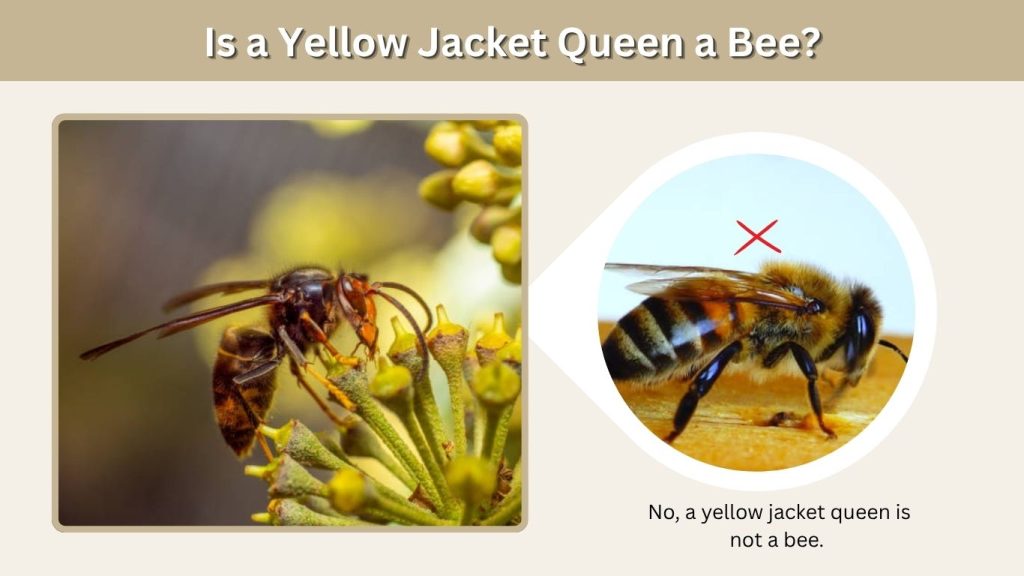
No, a yellow jacket queen is not a bee. Many people search for “yellow jacket queen bee,” but yellow jackets are wasps, not bees. They belong to a different group of insects and have different habits.
Honey bees are usually hairier, rounder, and more focused on collecting pollen and nectar. Yellow jackets are smoother, shinier, and more predatory. They feed on insects, meat, sugary foods, and other available food sources. A yellow jacket queen may look slightly bee-like from a distance, but up close she has the sleek body shape of a wasp.
Common Look-Alikes
A yellow jacket queen can be confused with several other insects. Knowing the differences can help with identification.
Paper Wasp
Paper wasps are often slimmer with longer legs that hang down in flight. Their nests are usually open-comb paper nests under eaves, branches, or sheltered areas. Yellow jackets are usually more compact and often nest underground or inside cavities.
Honey Bee
Honey bees are fuzzier and more golden-brown. They have pollen baskets on their legs and are less shiny than yellow jackets. Yellow jackets have brighter black-and-yellow contrast and a smoother body.
Hornet
Hornets are usually larger than yellow jackets. Some hornets have black-and-white or brownish markings rather than the typical yellow jacket pattern. A bald-faced hornet, for example, is mostly black and white, not yellow and black.
Do Queen Yellow Jackets Sting?
Yes, queen yellow jackets can sting. A queen is female, and female yellow jackets have stingers. However, most stings come from workers because they are the ones defending the nest and foraging outside.
A single spring queen is usually not aggressive unless handled, trapped, or threatened. But an active yellow jacket colony can be dangerous because many workers may sting repeatedly when the nest is disturbed.
Where You Might See a Yellow Jacket Queen
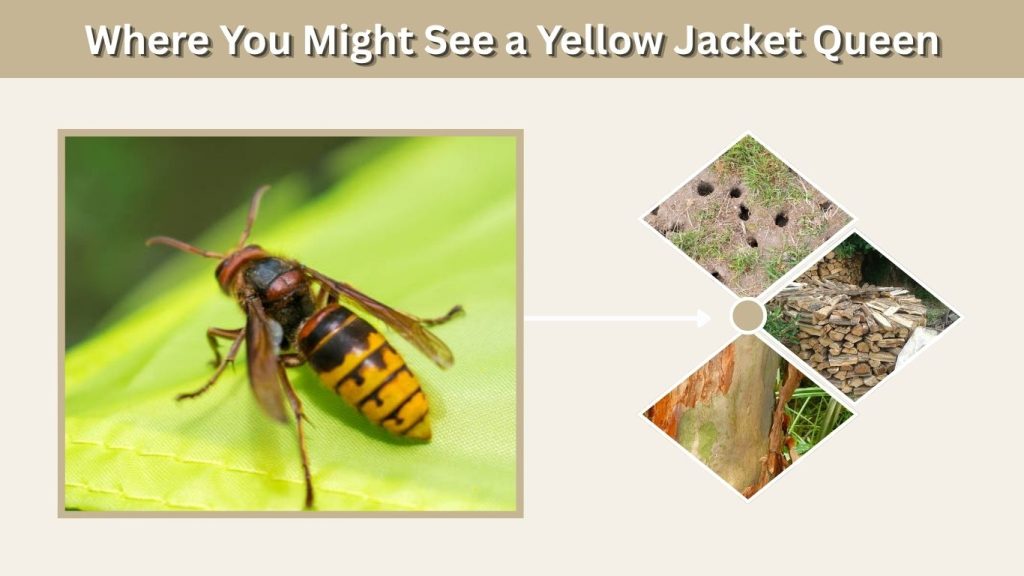
You are most likely to see a queen yellow jacket in early spring or fall. In spring, she is looking for a nest site. In fall, new queens leave the nest, mate, and search for overwintering shelter.
Common places to find queens include:
- Near ground holes
- Around wood piles
- Under loose bark
- Near sheds or garages
- Around attic vents
- Inside wall gaps
- Near rotting logs or stumps
- In protected corners of buildings
If you see one large yellow jacket indoors during spring, it may be a queen that accidentally entered while searching for shelter or a nesting space. One queen indoors does not always mean there is a nest, but repeated sightings should be checked carefully.
FAQs
What does a yellow jacket queen look like?
A yellow jacket queen looks like a large yellow jacket wasp. She has a black-and-yellow body, clear wings, narrow waist, long antennae, and smooth shiny skin. She usually looks bigger and heavier than worker yellow jackets.
How big is a yellow jacket queen?
A yellow jacket queen is often around ¾ inch long. Workers are usually closer to ½ inch long. Some species vary in size, but queens are generally larger than workers and may look heavier in the abdomen.
How do I know if a yellow jacket is a queen?
A yellow jacket may be a queen if it is larger than normal and seen alone in spring. Queens often fly near soil holes, cracks, sheds, logs, or protected areas while searching for a nest site.
Is a yellow jacket queen bigger than a worker?
Yes, in many yellow jacket species, the queen is bigger than the worker. Workers are usually smaller and more common in summer and fall, while queens are most noticeable in spring before the colony grows.
Can a yellow jacket queen sting?
Yes, a yellow jacket queen can sting. However, workers cause most yellow jacket stings because they defend the nest. A queen is less likely to sting unless she is handled, trapped, or directly threatened.