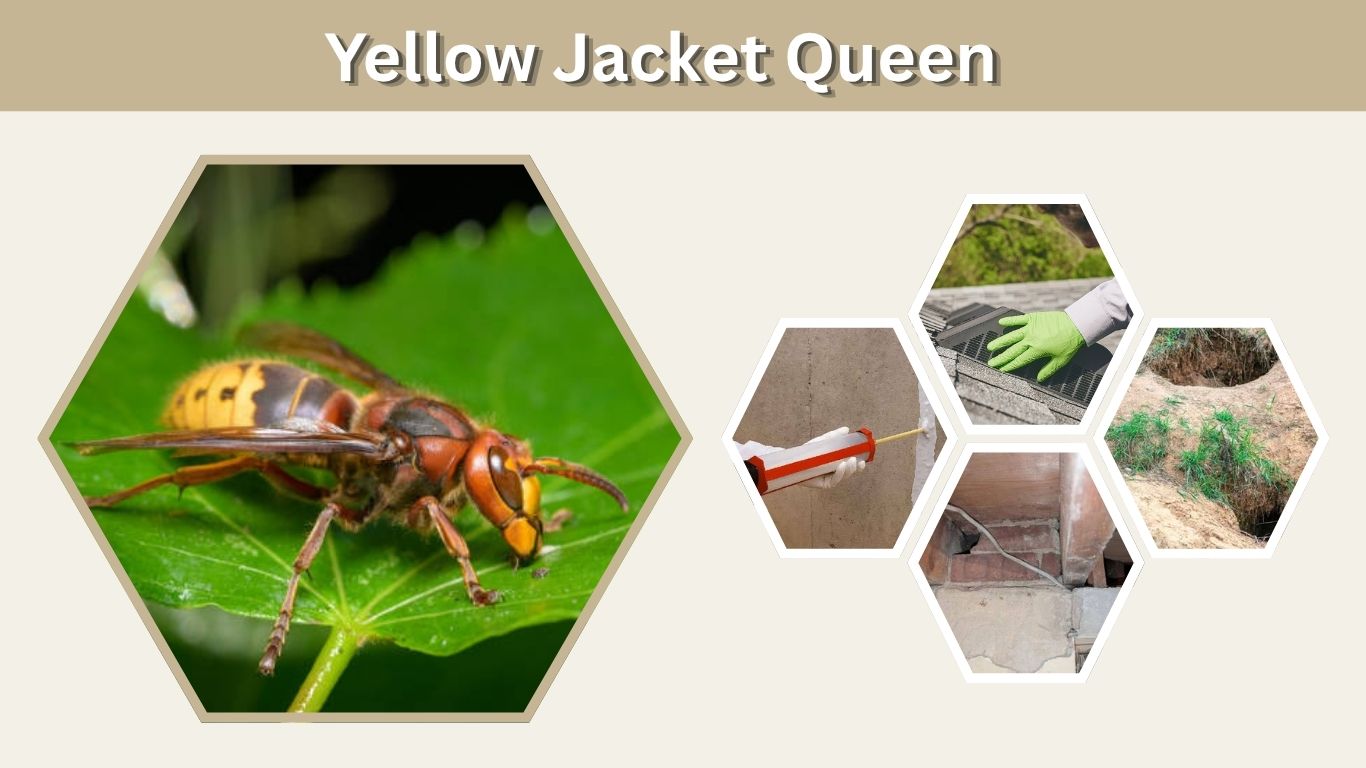
A yellow jacket queen is the most important member of a yellow jacket colony. She starts the nest, lays eggs, and produces the workers that build the colony through spring and summer. Many people search for yellow jacket queen identification because queens look similar to workers but are usually larger and appear at different times of the year. Understanding what a queen yellow jacket looks like can also help you know whether you are seeing a single spring queen or an active nest nearby.
Do Yellow Jackets Have a Queen?
Yes, yellow jackets have a queen. Yellow jackets are social wasps, and their colonies usually include one reproductive queen, many female workers, and later in the season, males called drones. The queen is the egg-laying female that begins the colony after surviving winter.
Most yellow jacket colonies are annual. This means the colony starts fresh each year. The old workers and males usually die when cold weather arrives, while fertilized new queens overwinter in protected places and start new nests in spring. University extension sources explain that yellow jacket queens overwinter under bark, leaf litter, firewood, and other sheltered areas before emerging in spring to build a new nest.
What Does a Yellow Jacket Queen Look Like?
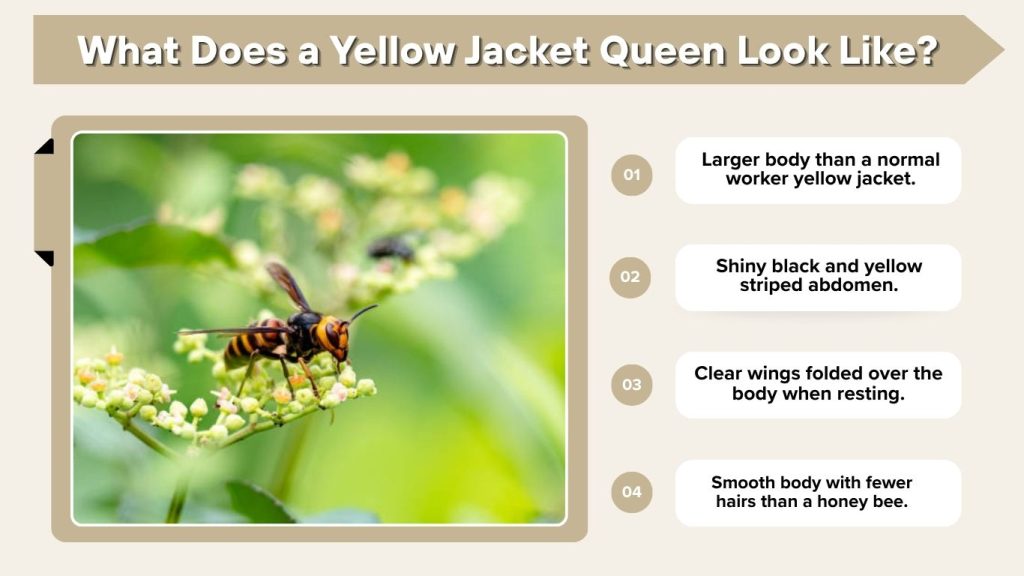
A yellow jacket queen looks like a large yellow jacket wasp. She has a black and yellow body, narrow waist, clear wings, long antennae, and a smooth, shiny body. At first glance, she may look like a worker, but her larger size and season of appearance can help with identification.
Yellow Jacket Queen Identification
Look for these signs when trying to identify a queen yellow jacket:
- Larger body than a normal worker yellow jacket
- Shiny black and yellow striped abdomen
- Clear wings folded over the body when resting
- Smooth body with fewer hairs than a honey bee
- Seen alone in early spring or early summer
- Often flying near soil holes, wall gaps, sheds, logs, or other possible nest sites
- More likely to be seen before large numbers of workers appear
Workers are often confused with honey bees, but yellow jackets have hard, shiny, mostly hairless bodies, while honey bees are hairier and have pollen baskets on their hind legs. Ohio State University notes that workers are usually about ½ inch long, while queens are visibly larger, around ¾ inch long.
Yellow Jacket Queen Size
The average yellow jacket queen size is about ¾ inch long, although exact size can vary by species. Workers are usually smaller, often around ½ inch long. This makes size one of the easiest clues for yellow jacket queen identification.
However, size alone is not always perfect. Some large workers may look queen-like, and different yellow jacket species can vary slightly in body length and markings. The best way to identify a queen is to consider both size and timing. A large yellow jacket seen alone in spring is more likely to be a queen than a large yellow jacket seen around a busy nest in late summer.
Yellow Jacket Queen vs Worker
The difference between a yellow jacket queen and a worker is mostly based on size, role, and season. Both are female, and both can sting. The queen’s main job is reproduction, while workers build the nest, feed larvae, defend the colony, and collect food.
| Feature | Yellow Jacket Queen | Yellow Jacket Worker |
|---|---|---|
| Size | Larger, often about ¾ inch | Smaller, often about ½ inch |
| Role | Starts nest and lays eggs | Builds, feeds, forages, defends |
| Season seen | Spring, early summer, and inside nest later | Mainly summer and fall |
| Sting ability | Yes, can sting | Yes, can sting repeatedly |
| Reproduction | Fertile egg-laying female | Usually non-reproductive female |
How to Tell If a Yellow Jacket Is a Queen
A yellow jacket may be a queen if it is larger than normal and appears alone in spring. Early in the season, a queen may be searching for a nest site, feeding herself, or starting a small paper nest. After the first workers develop, the queen usually stays inside the nest and focuses on laying eggs.
If you see many yellow jackets flying in and out of a hole, wall void, or ground cavity, you are probably seeing workers rather than the queen. In an active colony, the queen is usually hidden inside the nest.
Yellow Jacket Queen vs Drone
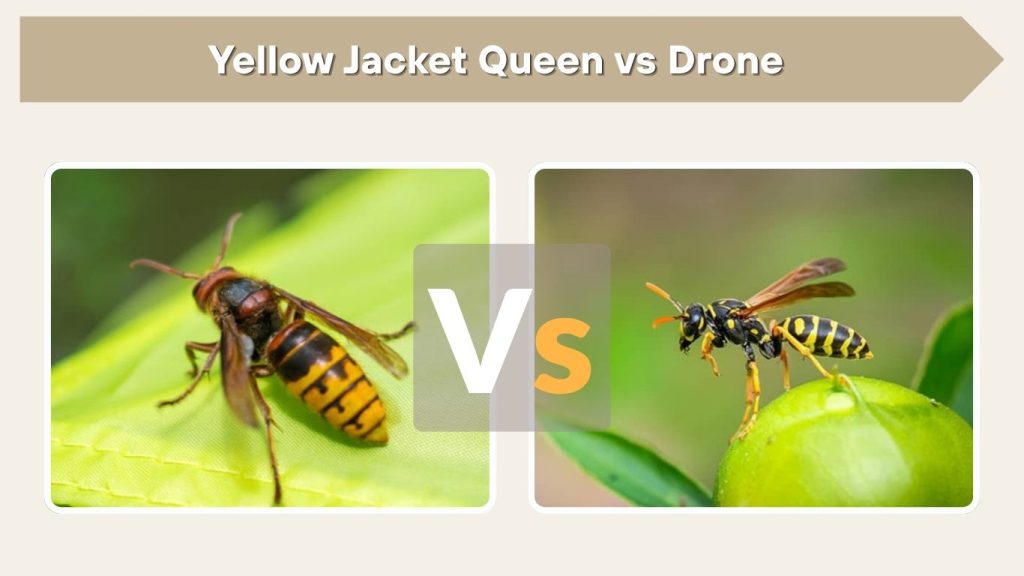
A yellow jacket queen and a drone are very different. The queen is a fertile female that lays eggs and can sting. A drone is a male yellow jacket whose main purpose is mating. Drones do not have stingers because a stinger is a modified egg-laying structure found in female wasps.
| Feature | Queen Yellow Jacket | Drone Yellow Jacket |
|---|---|---|
| Sex | Female | Male |
| Main role | Lays eggs and starts colonies | Mates with new queens |
| Sting | Yes | No |
| Season | Overwinters and starts nest in spring | Usually appears later in season |
| Lifespan role | Colony founder | Reproductive male |
Drones are usually produced later in the year when the colony begins making reproductive yellow jackets. New queens and males leave the nest to mate. After mating, males die, and fertilized females search for protected places to overwinter.
Yellow Jacket Queen Life Cycle
The yellow jacket queen life cycle begins when a fertilized queen survives winter. She hides in a protected place, such as under bark, in leaf litter, in logs, or sometimes in human-made structures. When warm weather returns, she becomes active and searches for a nest site.
Spring: The Queen Starts the Nest
In spring, the queen builds a small paper nest. She chews wood fibers and mixes them with saliva to create paper-like nest material. Then she lays the first eggs. At this stage, the queen does everything by herself. She builds, lays eggs, hunts, feeds larvae, and protects the early nest.
Oregon State University Extension explains that an overwintered queen selects a nest site, builds a small nest, lays eggs, and raises the first generation of workers. Once those workers mature, they take over foraging and nest expansion.
Summer: Workers Take Over
By summer, the first workers begin helping. They collect insects, meat, sugar, nectar, and other food sources. They also enlarge the nest and care for new larvae. The queen stays mostly inside the nest and continues laying eggs.
As the colony grows, yellow jackets become more noticeable around yards, gardens, trash cans, picnic areas, and outdoor food. This is why many people notice yellow jackets more often in late summer and fall.
Fall: New Queens and Drones Appear
Later in the season, the colony produces new queens and males. These reproductive yellow jackets leave the nest and mate. The old queen, workers, and drones usually die as temperatures drop. Fertilized new queens survive by finding sheltered overwintering sites.
How Long Do Queen Yellow Jackets Live?
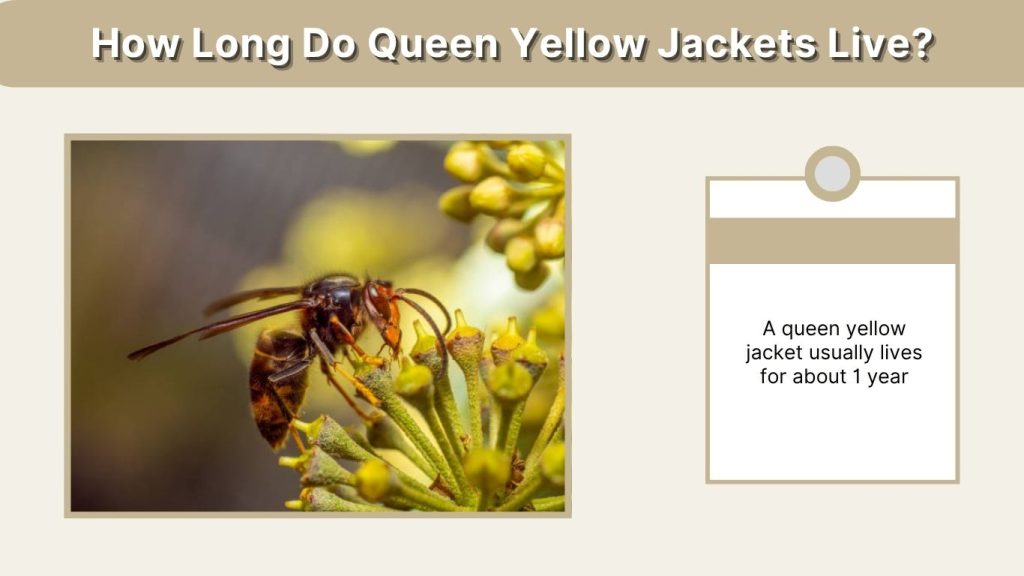
A queen yellow jacket usually lives for about one year. She may hatch in late summer or fall, mate, overwinter, and then start a new colony the following spring. After spending spring and summer laying eggs, the old queen usually dies when the colony declines in fall or winter.
Workers live much shorter lives. Their role is seasonal, and most die before winter. New fertilized queens are the only colony members that commonly survive into the next year.
Do Queen Yellow Jackets Sting?
Yes, queen yellow jackets can sting. Like workers, queens are female wasps and have stingers. However, people are less likely to be stung by a queen because queens are not usually flying around food or aggressively defending the outside of the nest once workers are active.
Workers are responsible for most yellow jacket stings. They defend the nest and can sting more than once. Yellow jackets can become especially defensive when their nest is disturbed by mowing, digging, trimming, or walking near the entrance.
Are Queen Yellow Jackets Aggressive?
A queen yellow jacket is not usually aggressive when she is alone in spring. Her focus is finding a nest site and starting a colony. However, she may sting if handled, trapped, or threatened.
A mature yellow jacket colony is much more dangerous than a single queen. Workers defend the nest in groups, and many stings can happen quickly if the nest is disturbed.
What Happens If You Kill a Yellow Jacket Queen?
What happens depends on the season. If you kill a yellow jacket queen in early spring before she has raised workers, the colony may never develop. This is why spring queen trapping is sometimes used as a prevention method.
If you kill the queen after the colony is already large, the result may be different. Workers may continue to survive for a while, but the colony will eventually decline because no new eggs are being laid. However, trying to kill a queen inside an active nest is risky because the workers will defend the nest.
In most cases, it is safer to avoid disturbing an active yellow jacket nest. If the nest is near a home, walkway, children, pets, or people with sting allergies, professional pest control may be the safest option.
Where Do Yellow Jacket Queens Build Nests?
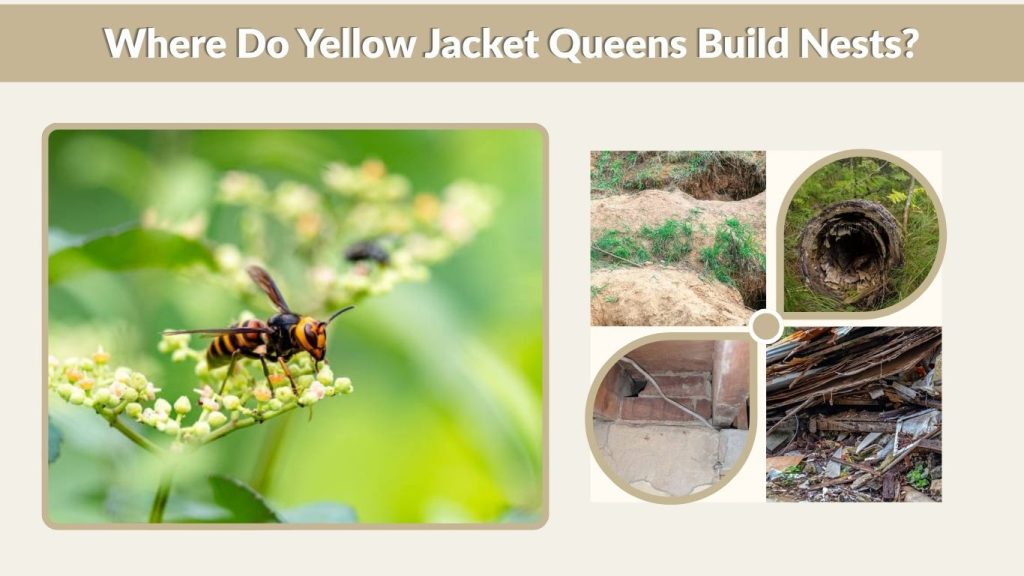
Yellow jacket queens choose different nest sites depending on the species. Many yellow jackets build underground nests, often in old rodent burrows or soil cavities. Others may nest in wall voids, attics, sheds, tree holes, or aerial locations.
Common yellow jacket queen nest sites include:
- Underground holes
- Abandoned rodent burrows
- Wall gaps and building voids
- Tree stumps or hollow logs
- Sheds, barns, or garages
- Dense shrubs or protected outdoor spaces
- Spaces under bark, boards, or debris
Illinois Extension notes that yellow jacket nests are commonly built underground and sometimes in building walls. It also states that colonies are annual and do not reuse the same nest the next year.
Southern, Eastern, Western, and German Yellow Jacket Queens
Different yellow jacket species can have different markings and nesting habits. Common search terms include southern yellow jacket queen, eastern yellow jacket queen, western yellow jacket queen, and German yellow jacket queen. These are different yellow jacket species or groups, but their queens share the same basic role: surviving winter, starting a nest, and producing workers.
The southern yellow jacket is especially interesting because queens may sometimes take over young spring nests of other yellow jacket species. University of Maryland Extension notes that southern yellowjacket queens can kill the original queen of another young nest and lay their own eggs there.
Yellow Jacket Queen in House
A queen yellow jacket may enter a house while searching for a sheltered overwintering place or a spring nesting site. One queen inside the house does not always mean there is a full nest. However, repeated sightings of yellow jackets indoors may suggest a nest in a wall void, attic, or nearby structure.
If you see one large yellow jacket in early spring, it may be a queen that accidentally entered. If you see many yellow jackets indoors or near the same wall gap, window, vent, or ceiling area, inspect carefully from a safe distance and consider professional help.
How to Prevent Yellow Jacket Queens From Nesting
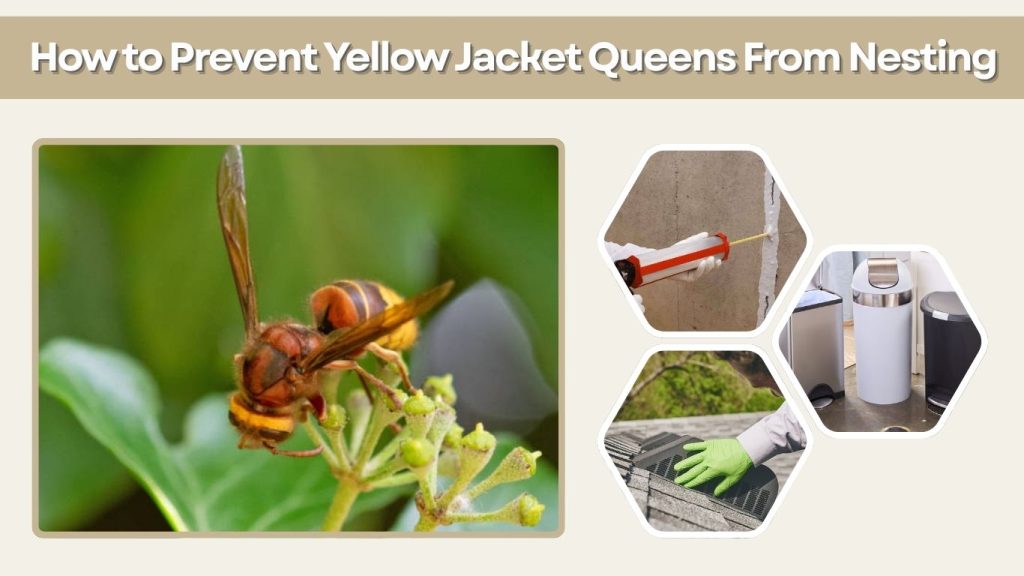
Spring prevention is easier than dealing with a large colony in late summer. The goal is to reduce nesting opportunities before queens settle.
Helpful prevention steps include:
- Seal cracks in siding, walls, sheds, and foundations
- Cover attic vents and openings with proper screening
- Fill unused rodent holes in the yard
- Keep trash cans sealed
- Remove fallen fruit from the ground
- Avoid leaving meat, sugary drinks, and pet food outside
- Check sheds, garages, and wall openings in spring
- Use caution around early-season yellow jacket activity
Iowa State University Extension recommends scouting your property in early spring for nest sites and queen “nest-hunting” flights, as well as filling rodent burrows and sealing gaps around buildings.
FAQs
What does a yellow jacket queen look like?
A yellow jacket queen looks like a larger version of a worker yellow jacket. She has black and yellow markings, clear wings, long antennae, and a shiny body. Queens are usually easier to notice in spring when they fly alone while searching for nest sites.
How big is a queen yellow jacket?
A queen yellow jacket is usually about ¾ inch long, while a worker is often about ½ inch long. Size varies slightly by species, but queens are generally visibly larger than workers, especially in early spring.
Do queen yellow jackets leave the nest?
A queen leaves her overwintering site in spring to find a nest location and start a colony. After the first workers mature, she usually stays inside the nest and focuses on laying eggs while workers forage and defend the colony.
Can a queen yellow jacket sting?
Yes, a queen yellow jacket can sting because she is a female wasp. However, most yellow jacket stings come from workers, especially when people disturb an active nest. Queens are less often encountered after the colony becomes established.
How many queen yellow jackets are in a nest?
Most yellow jacket nests have one main queen, especially in typical annual colonies. However, some species and unusual colony situations may involve more than one queen. In general, the queen is the main reproductive female responsible for laying eggs.