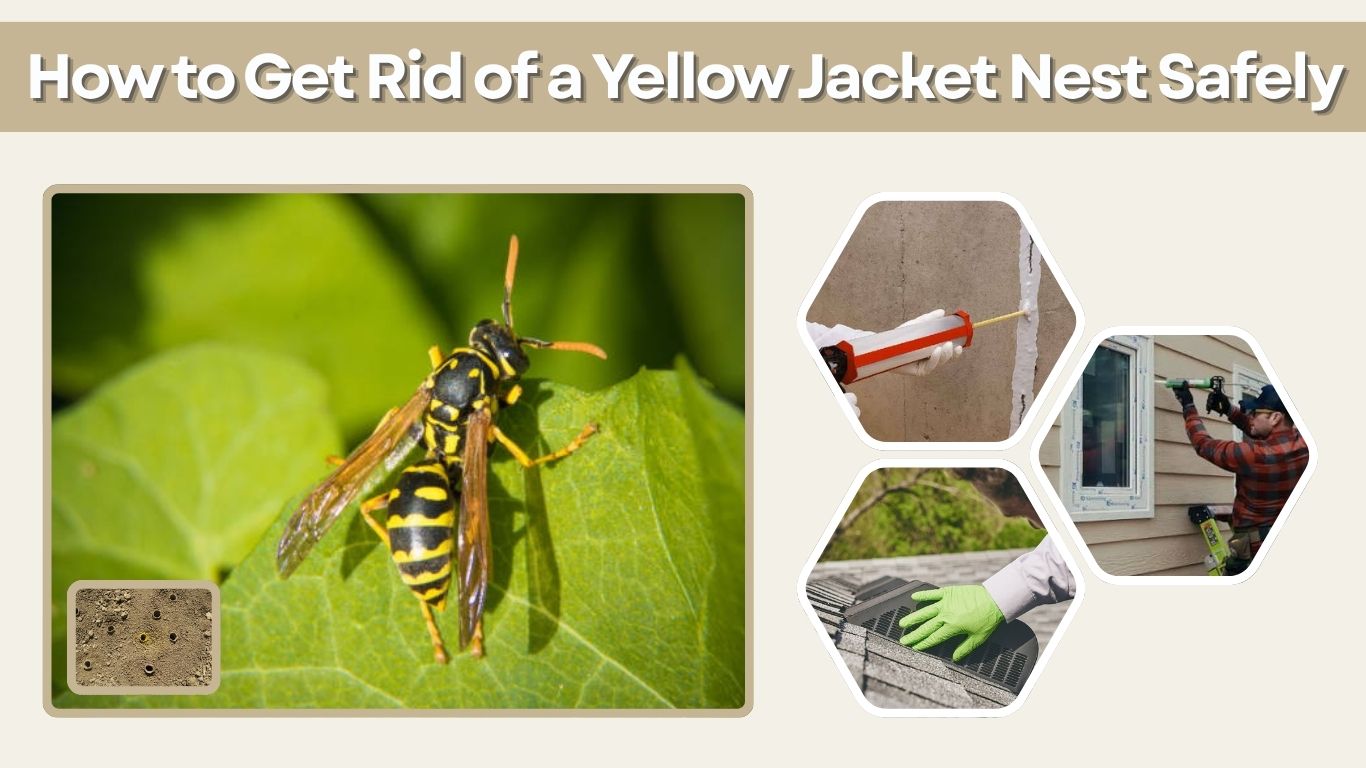
Yellow jacket nests can become dangerous when they are close to your home, yard, deck, attic, siding, or walkway. These wasps are defensive around their nest and may sting more than once. The best way to get rid of a yellow jacket nest depends on where the nest is located, how large it is, and whether people or pets are at risk. This guide explains safe removal options, what not to do, and when to call a professional.
First, Make Sure It Is a Yellow Jacket Nest
Before trying to remove anything, identify the nest correctly. Yellow jackets are often mistaken for bees, paper wasps, or hornets, but their nesting behavior is different.
Signs of a Yellow Jacket Nest
- Fast wasp traffic in and out of one hole or gap
- Yellow-and-black wasps flying low near the ground
- Buzzing from a wall, siding, attic, or soffit
- Wasps appearing around food, trash, or sweet drinks
- A hidden nest rather than an open hanging comb
Yellow jackets often nest underground or inside protected spaces, so you may not see the full nest. Oregon State University notes that yellow jackets can nest in the ground, making them hard to spot.
How to Get Rid of Yellow Jacket Nest in Ground
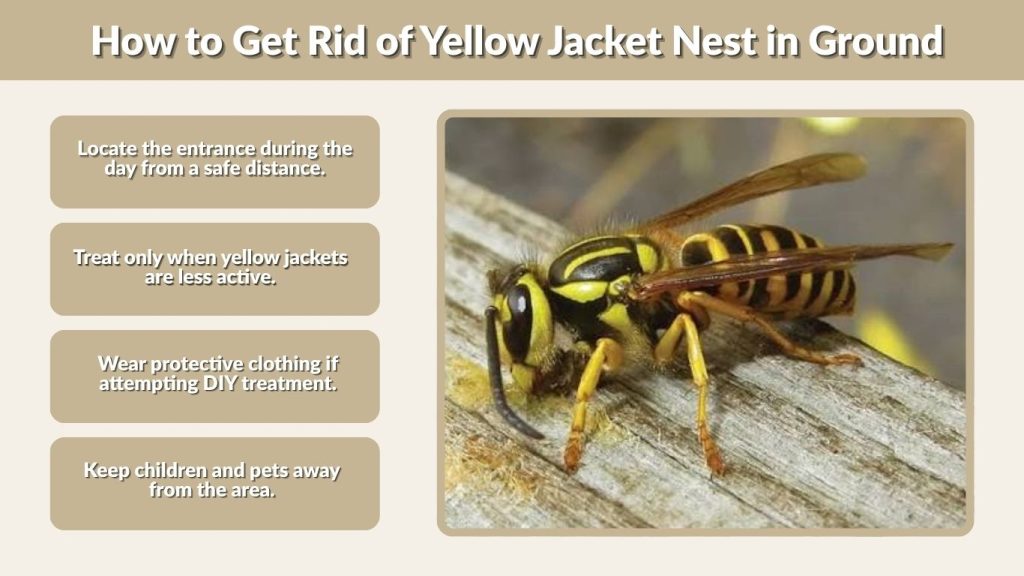
Ground nests are one of the most common yellow jacket problems. The entrance may look like a small hole, but the colony can be much larger underground.
Best Approach for Ground Nests
For a ground yellow jacket nest, a dust product labeled for wasps, hornets, or yellow jackets is often more effective than a liquid spray. The University of Minnesota Extension explains that insecticide dust can be placed in and around the nest entrance at night, while liquid pesticide may not reach the nest inside the burrow.
Safety Tips
- Locate the entrance during the day from a safe distance
- Treat only when yellow jackets are less active
- Wear protective clothing if attempting DIY treatment
- Keep children and pets away from the area
- Do not mow, dig, or step near the entrance
If the nest is large, close to a walkway, or near children or pets, professional removal is the safer choice.
How to Get Rid of an Underground Yellow Jacket Nest
An underground yellow jacket nest is similar to a ground nest, but it may be deeper or hidden inside an old rodent burrow, root gap, or soil cavity.
| Nest Type | Common Sign | Best Action |
| Small ground nest | One active hole in soil | Labeled dust or professional treatment |
| Large underground nest | Heavy wasp traffic | Call a pest control professional |
| Nest near lawn area | Wasps appear while mowing | Avoid mowing and treat carefully |
| Nest near children or pets | Wasps close to activity area | Professional removal recommended |
Avoid pouring water, gasoline, bleach, or other household chemicals into the nest. These methods can be dangerous, ineffective, and may violate pesticide safety rules.
How to Get Rid of Yellow Jacket Nest in Wall
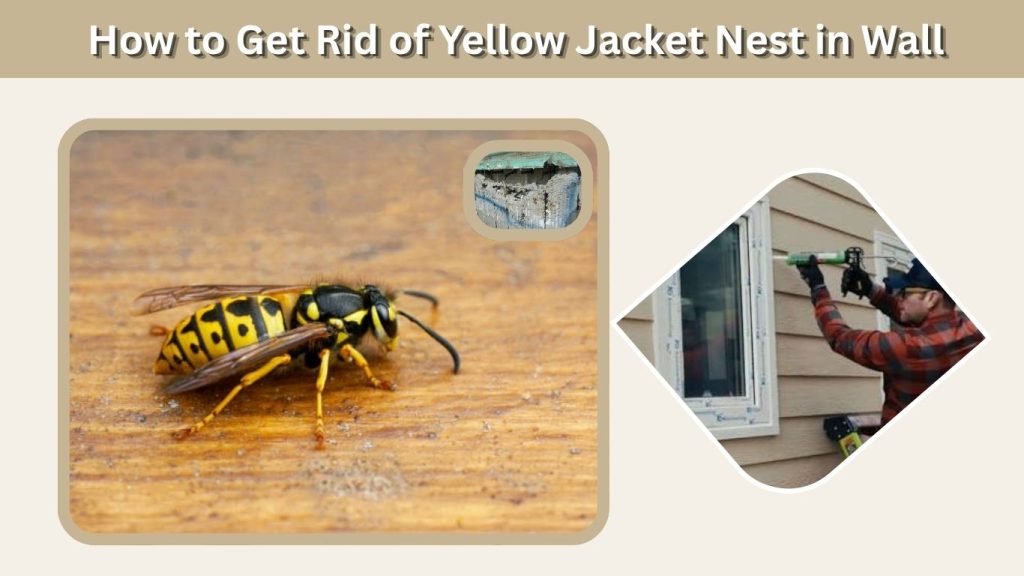
A yellow jacket nest inside a wall is more difficult and risky than an outdoor ground nest. You may see wasps entering through siding, cracks, vents, window trim, or holes around pipes.
Do Not Seal the Entrance
Do not block the entrance while the colony is active. Penn State Extension warns that plugging a yellow jacket entrance may cause the insects to chew through interior wall coverings and enter the living space.
Best Solution for Wall Nests
For nests inside walls, siding, ceilings, or soffits, call a licensed pest control professional. The nest may be hard to reach, and spraying the outside may not kill the colony. A professional can locate the nest and treat it without forcing yellow jackets deeper into the home.
How to Get Rid of Yellow Jacket Nest in Siding, Soffit, or Attic
Yellow jackets may build nests behind siding, under eaves, inside soffits, or in attic spaces. These nests are often hidden, so the visible entrance is not always close to the nest itself.
What You Should Do
- Watch where the yellow jackets enter and exit
- Keep windows and nearby doors closed
- Avoid banging on walls or siding
- Do not spray randomly into cracks
- Call a professional if the nest is inside the structure
Treating hidden structural nests incorrectly can make yellow jackets spread into other spaces. This is especially risky if you already see wasps indoors.
Best Time to Get Rid of a Yellow Jacket Nest
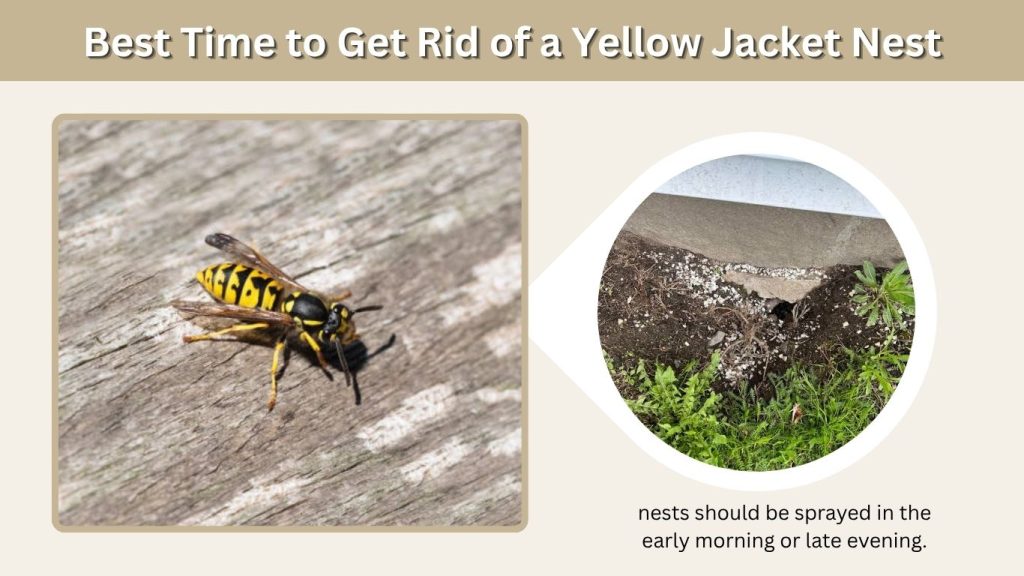
Timing matters. Yellow jackets are most active during warm daylight hours. Treatment is usually safer when more workers are inside the nest and activity is lower.
Best Time to Treat
Early morning or evening is usually better than midday. Oregon State’s Solve Pest Problems guidance says nests should be sprayed in the early morning or late evening when yellow jackets are less active.
Even then, DIY treatment is not safe for everyone. Avoid treating the nest yourself if you are allergic to stings, cannot move quickly, or cannot clearly see the entrance.
Can You Get Rid of a Yellow Jacket Nest Naturally?
Natural methods may help reduce yellow jacket activity, but they usually do not remove an active nest quickly. This is important because many people search for how to get rid of yellow jacket nests naturally.
Natural Prevention Methods
- Seal trash cans tightly
- Remove fallen fruit from the yard
- Keep outdoor food covered
- Clean sugary spills quickly
- Fill abandoned holes after the nest is inactive
- Repair gaps in siding, soffits, and vents
Traps may reduce some foraging yellow jackets, but they may not eliminate a hidden nest. If the colony is active near people, natural prevention alone may not be enough.
What Not to Do When Removing Yellow Jackets
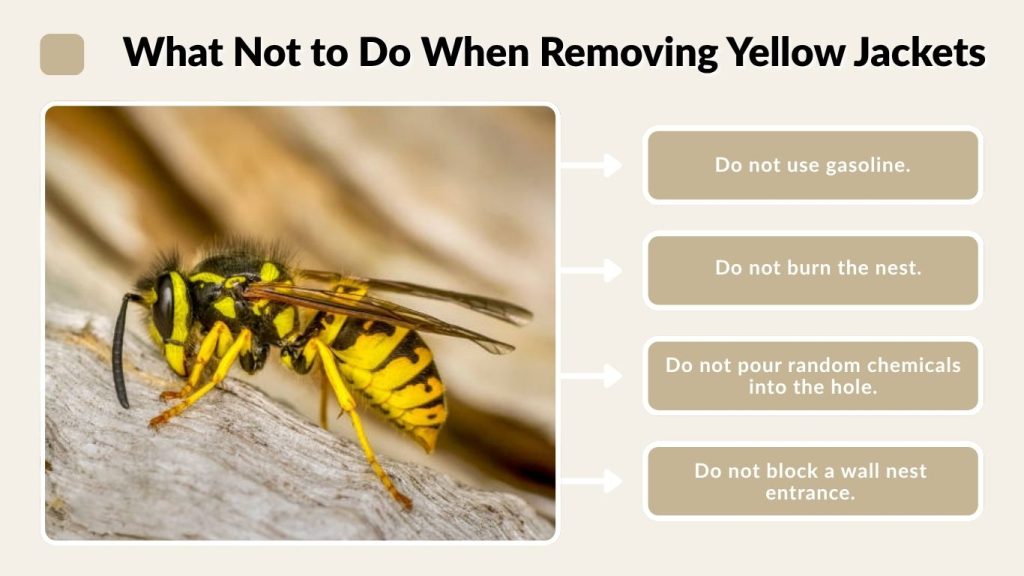
Some popular home remedies are unsafe and should be avoided.
Avoid These Methods
- Do not use gasoline
- Do not burn the nest
- Do not pour random chemicals into the hole
- Do not block a wall nest entrance
- Do not spray the nest during peak activity
- Do not stand close to the entrance
Oregon State warns against using gasoline, lighter fluid, or fire for yellow jacket control. These methods are dangerous and should not be used.
When to Call a Professional
Professional yellow jacket nest removal is the safest option in many situations. It may cost more than DIY treatment, but it reduces the risk of stings and property problems.
Call a Pro If
- The nest is inside a wall, attic, siding, soffit, or ceiling
- The nest is large or hidden
- You are allergic to wasp stings
- Yellow jackets are entering your home
- The nest is near children, pets, or a busy walkway
- You cannot find the exact entrance
- DIY treatment has already failed
A professional can identify the nest type, choose the right treatment, and reduce the chance of yellow jackets spreading into the house.
FAQs
How do I get rid of a yellow jacket nest in the ground?
The safest method is to locate the entrance during the day, avoid disturbing it, and treat during low activity hours with a product labeled for ground-nesting yellow jackets. For large or risky nests, call a pest control professional.
Can I get rid of a yellow jacket nest without spraying?
You may reduce activity with traps and prevention, but active nests usually need direct treatment or professional removal. Without treating the colony, yellow jackets may continue using the nest until the season ends.
How do I get rid of a yellow jacket nest in a wall?
Do not seal the entrance or spray randomly. Yellow jackets trapped inside a wall may move into the house. Wall nests are best handled by a licensed pest control professional.
Is gasoline good for killing a yellow jacket nest?
No. Gasoline is dangerous, flammable, and unsafe for pest control. It can contaminate soil, create fire risk, and may not solve the nest problem. Use labeled pest products or hire a professional.
What is the safest way to get rid of a large yellow jacket nest?
The safest way is professional removal, especially if the nest is underground, inside a structure, or near people. Large nests can contain many defensive wasps, so DIY treatment increases the risk of multiple stings.