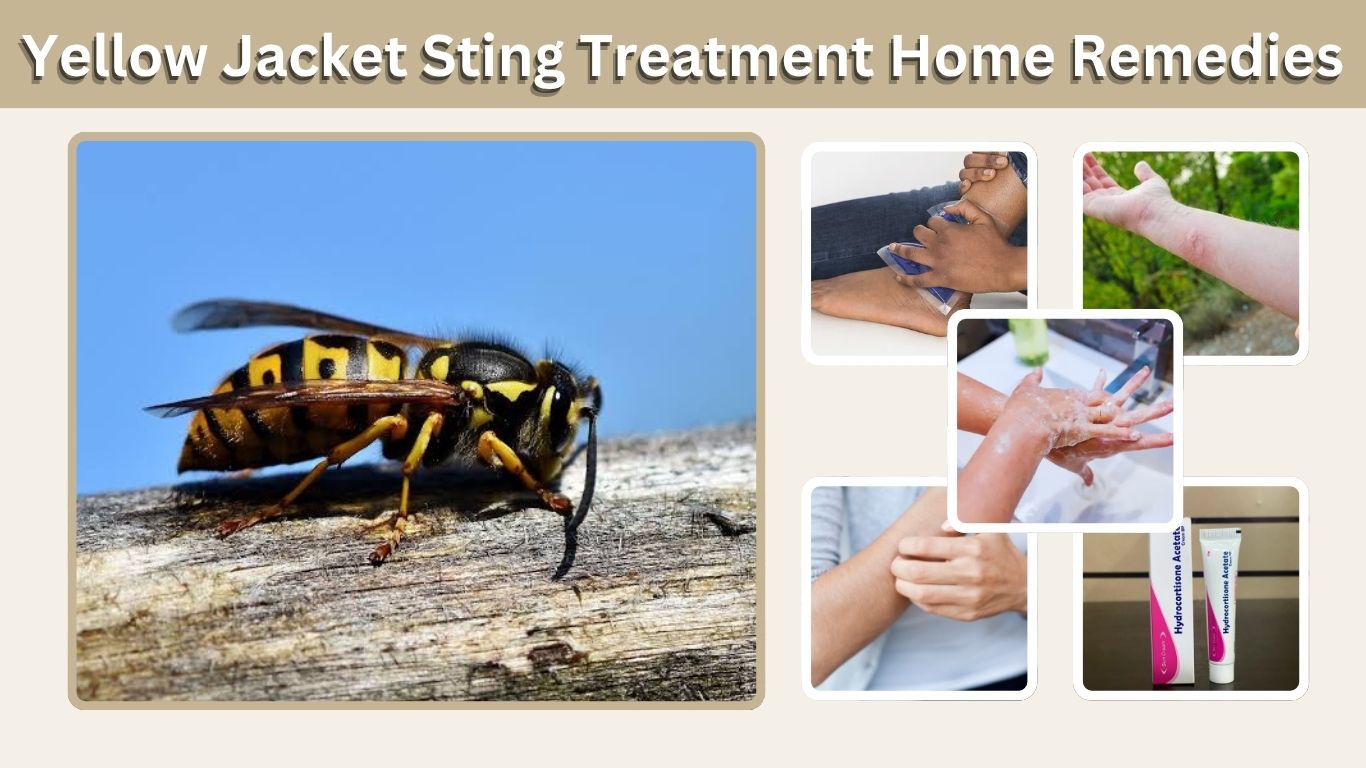
A yellow jacket sting usually causes sudden burning pain, redness, itching, and swelling around the affected area. Mild reactions can often be treated at home with washing, a cold compress, elevation, and appropriate over-the-counter medicine. However, yellow jackets can sting repeatedly, and some people develop a dangerous allergic reaction. Knowing the difference between a normal local reaction and an emergency is therefore essential before trying any yellow jacket sting home remedy.
What to Do Immediately After a Yellow Jacket Sting
Move away from the area first. Yellow jackets may defend their nest aggressively and can sting more than once because their smooth stingers usually do not remain embedded in the skin. If you see a stinger, the insect may have been a honey bee rather than a yellow jacket, but it should still be removed promptly.
Follow these first-aid steps:
- Move to a safe place to prevent additional stings.
- Check the skin for a stinger. If one is visible, remove it without delaying.
- Wash the area gently with soap and water.
- Remove rings, watches, or tight clothing before swelling increases.
- Apply a wrapped ice pack or cold cloth for 10–20 minutes.
- Elevate the affected arm or leg when possible.
- Avoid scratching, which can damage the skin and increase infection risk.
Best Yellow Jacket Sting Home Remedies
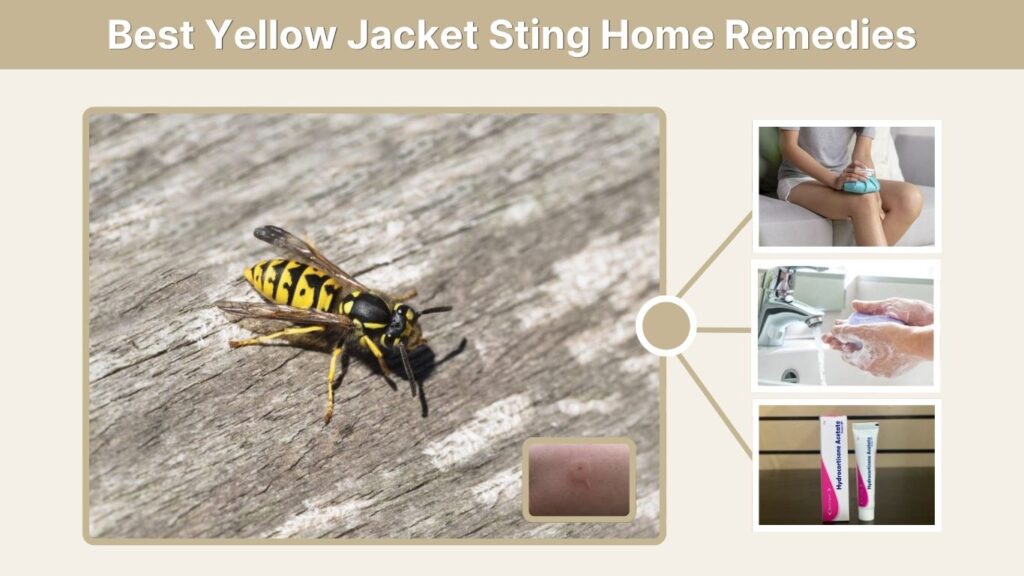
The most dependable home treatments are simple measures that cool the skin, reduce swelling, and protect the sting site. Most mild reactions do not require complicated mixtures or harsh household ingredients.
| Treatment | How it may help | How to use it |
| Cold compress | Reduces pain and swelling | Apply through a cloth for 10–20 minutes |
| Soap and water | Cleans the puncture site | Wash gently without scrubbing |
| Elevation | May limit swelling in a limb | Raise the hand, arm, foot, or leg |
| Hydrocortisone cream | Reduces itching and inflammation | Use according to the product label |
| Calamine lotion | Temporarily soothes itching | Apply a thin layer as directed |
| Oral antihistamine | May reduce itching or swelling | Ask a pharmacist and follow the label |
| Pain reliever | Helps control soreness | Use only as directed and when suitable |
Cold packs, hydrocortisone, oral antihistamines, and nonprescription pain medicines are commonly recommended for minor insect-sting symptoms. Children, pregnant or breastfeeding people, and anyone with medical conditions or other medications should ask a pharmacist or clinician before using a new medicine.
Cold Compress for Pain and Swelling
A cold compress is one of the safest yellow jacket sting treatments. Wrap ice or a frozen pack in a clean towel rather than placing it directly on the skin. Apply it for approximately 10–20 minutes, remove it to let the skin rest, and repeat as needed.
If the sting is on a hand, remove rings immediately. Swelling can make jewelry difficult to remove later.
Hydrocortisone or Calamine for Itching
A thin layer of over-the-counter hydrocortisone cream may reduce local itching and inflammation. Calamine lotion can also soothe irritated skin. Follow package instructions, and do not apply products to broken or infected skin unless a healthcare professional advises it.
Antihistamines and Pain Medicine
An oral antihistamine may help when itching or swelling is uncomfortable. Some antihistamines cause drowsiness, so check the warning label and avoid driving when affected.
Acetaminophen—called paracetamol in many countries—or ibuprofen may help control pain when these medicines are normally safe for you. Always follow the label rather than taking an extra dose for faster relief.
Does Baking Soda Help a Yellow Jacket Sting?
Medical guidance differs on baking soda paste. Mayo Clinic includes it as a possible topical option, while current NHS guidance advises people not to use bicarbonate of soda as a sting remedy. Considering this disagreement and the limited need for it, washing the area, applying a cold compress, and using an approved anti-itch product are more dependable choices.
Avoid applying vinegar, lemon juice, toothpaste, bleach, essential oils, or undiluted household chemicals. These substances do not remove venom and may irritate or injure the skin. NHS self-care guidance specifically advises against vinegar and bicarbonate remedies.
What Not to Do After a Yellow Jacket Sting
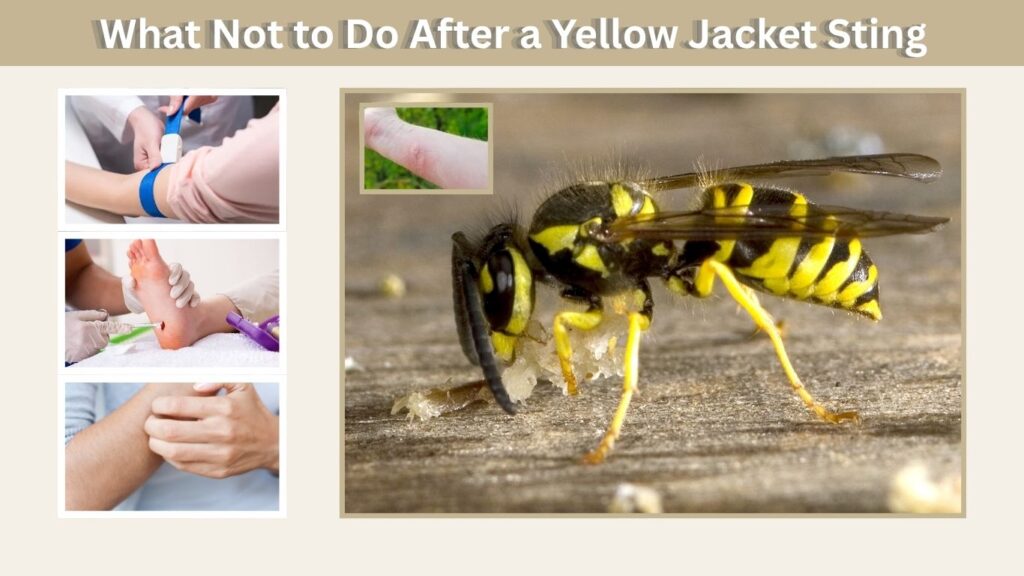
Several common reactions can make the injury worse:
- Do not squeeze, cut, or puncture the sting site.
- Do not apply ice directly to bare skin.
- Do not tie a tourniquet around the affected limb.
- Do not scratch or repeatedly rub the area.
- Do not use veterinary insect treatments or unapproved chemicals.
- Do not approach the nest to identify or destroy it immediately after being stung.
Antibiotics are not routinely needed for a fresh sting. Increasing warmth, worsening redness, pus, fever, or steadily increasing pain may indicate infection and should be assessed by a pharmacist or healthcare professional.
How Long Does a Yellow Jacket Sting Last?
Pain is often strongest immediately after the sting and then gradually improves. A mild local reaction generally settles within several hours or a few days. A larger local reaction may produce substantial swelling and itching that lasts as long as a week.
Swelling close to the sting does not always mean anaphylaxis. However, swelling in areas away from the sting, widespread hives, breathing problems, dizziness, or stomach symptoms can indicate a more serious allergic response.
When to Get Medical Help
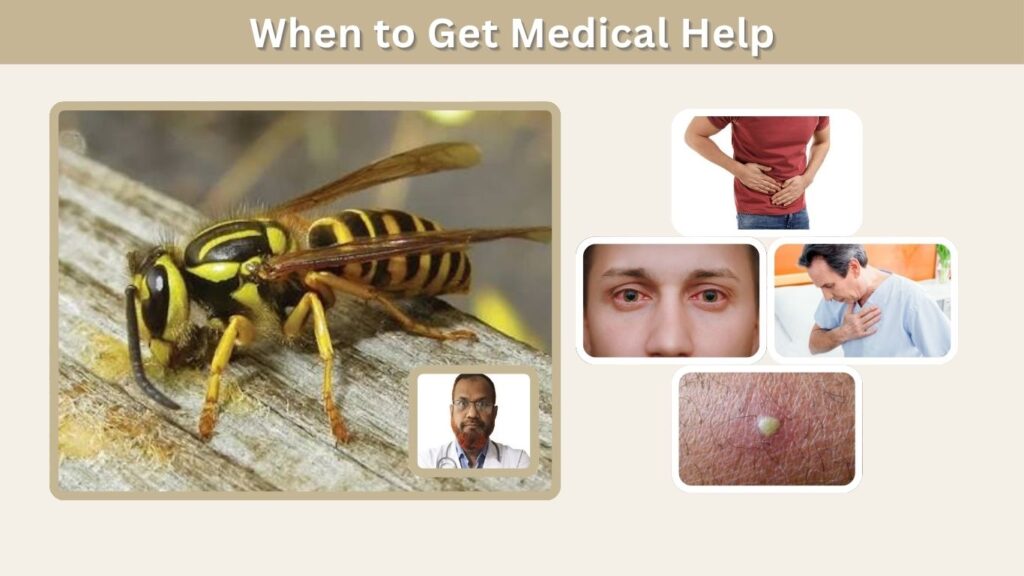
Seek prompt medical advice when:
- The sting is inside the mouth or throat or close to an eye.
- You were stung several times.
- Swelling continues to expand or symptoms are worsening.
- You develop vomiting, abdominal pain, dizziness, fever, or swollen glands.
- The area becomes hot, very painful, or produces pus.
- You previously had a serious reaction to an insect sting.
Signs of a Medical Emergency
Call your local emergency number immediately for:
- Trouble breathing, wheezing, or gasping
- Tightness in the throat or difficulty swallowing
- Sudden swelling of the lips, tongue, mouth, face, or throat
- Fainting, severe dizziness, confusion, or extreme weakness
- Pale, blue, or grey lips or skin
- Widespread hives accompanied by breathing, circulation, or digestive symptoms
A person with a prescribed epinephrine auto-injector should use it according to their emergency plan and still obtain emergency medical care. Antihistamines do not replace epinephrine during anaphylaxis.
FAQs
What is the fastest way to soothe a yellow jacket sting?
Wash the skin with soap and water, remove tight jewelry, and apply a wrapped cold pack for 10–20 minutes. Elevating the area may reduce swelling. Hydrocortisone, an antihistamine, or a suitable pain reliever may provide additional relief.
Do yellow jackets leave a stinger behind?
Yellow jackets usually do not leave their stinger in the skin. Their stingers allow them to sting repeatedly without injuring themselves. Nevertheless, examine the site because the insect may have been misidentified, particularly if a stinger is visible.
Is swelling the day after a yellow jacket sting normal?
Some swelling, redness, tenderness, and itching can continue or increase during the first day. Large local swelling may last several days. Seek medical advice when swelling becomes extreme, involves the face or throat, or occurs with breathing problems, dizziness, or vomiting.
Can I use toothpaste on a yellow jacket sting?
Toothpaste is not a recommended treatment. Its fragrances and other ingredients may irritate the skin. Clean the area and use a cold compress, calamine, or properly labeled hydrocortisone instead.
When should I worry about a yellow jacket sting?
Treat it as an emergency if there is difficulty breathing, throat tightness, facial or tongue swelling, fainting, confusion, or bluish or unusually pale skin. Multiple stings and stings near the eye, mouth, or throat also require prompt medical advice.