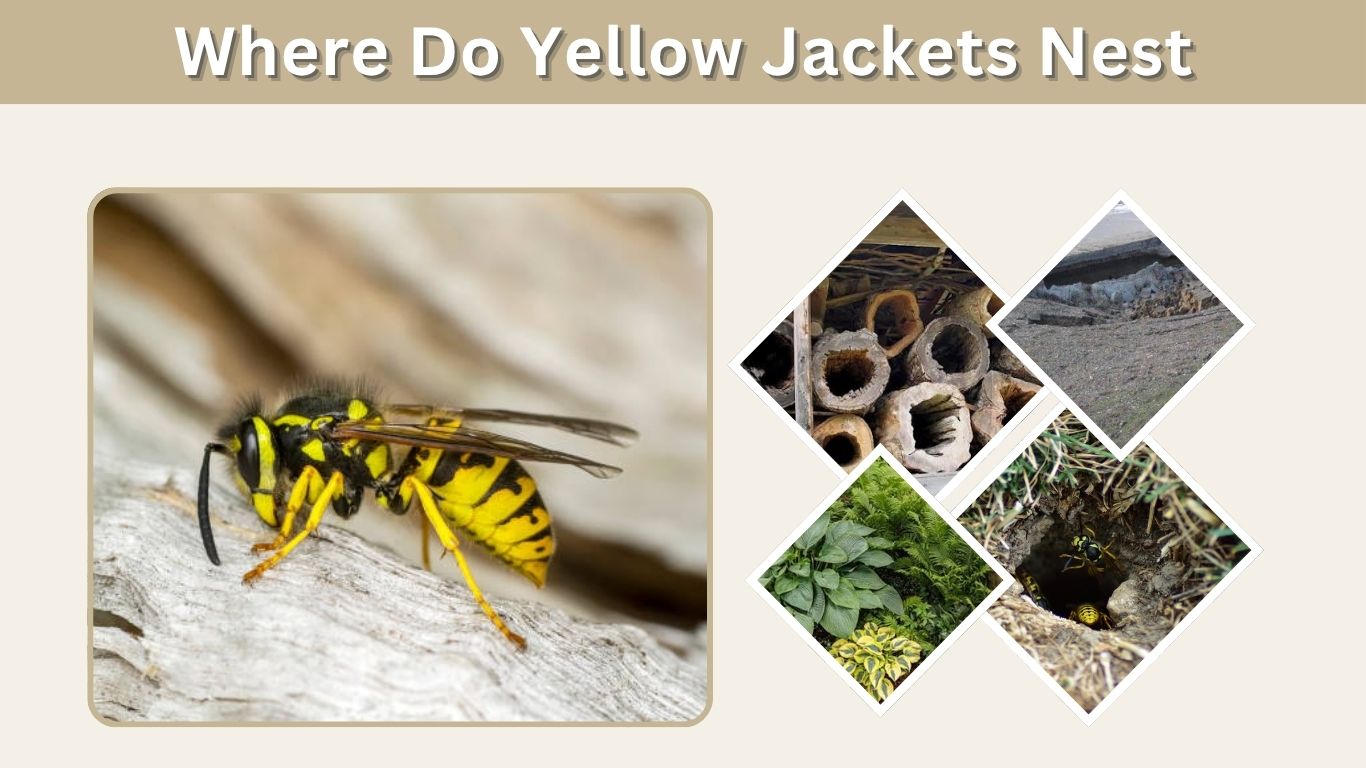
Yellow jackets nest in hidden, protected places. Many species build nests underground, but they can also nest in wall voids, attics, hollow trees, eaves, fences, and other sheltered areas around homes. The easiest sign is not always the nest itself, but repeated yellow jacket traffic going in and out of one small opening.
Where Do Yellow Jackets Usually Nest?
Yellow jackets usually choose places that are covered, dry, and protected from weather and predators. Some nests are visible above ground, but many are hidden inside soil cavities, building gaps, or natural hollow spaces.
Common Yellow Jacket Nesting Sites
- Underground holes
- Old rodent burrows
- Gaps under shrubs
- Landscape timbers
- Wall voids
- Attics and crawl spaces
- Hollow trees or logs
- Eaves and roof edges
- Fences and sheds
- Foundation cracks
Texas A&M’s IPM guidance notes that yellow jacket nests may be found in the ground, masonry or wall voids, eaves, fences, and trees.
Where Do Yellow Jackets Nest in the Ground?
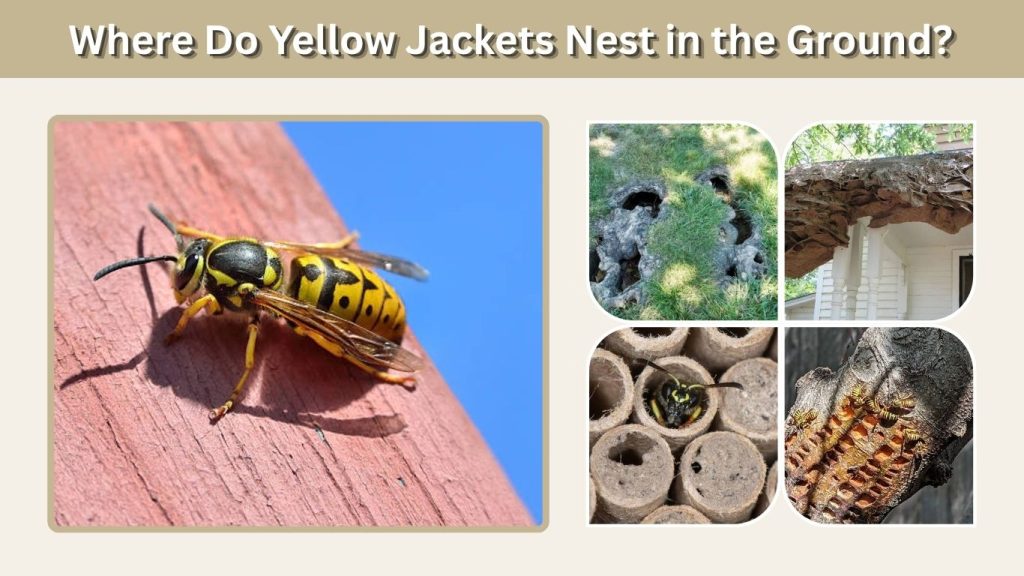
Ground nests are very common. Yellow jackets often use old animal burrows, soil holes, spaces under roots, or protected cavities under shrubs. From outside, the nest may look like a small hole with many wasps flying in and out.
Ground Nest Signs
| Sign | What It Means |
| Wasps flying low over grass | They may be finding the entrance |
| Many wasps entering one hole | Likely active nest |
| Hole near shrubs or roots | Common protected nesting site |
| Sudden stings while mowing | Nest may have been disturbed |
| Buzzing from soil | Colony may be underground |
Do not poke, dig, flood, or cover the hole. A disturbed yellow jacket nest can release many defensive wasps.
Where Do Yellow Jackets Nest in a House?
Yellow jackets may nest inside houses when they find access through cracks, vents, soffits, siding gaps, roof edges, or foundation openings. The nest itself may be hidden inside a wall void, attic, crawl space, or ceiling space.
House Nest Locations
- Behind siding
- Inside wall voids
- Under roof eaves
- Around soffits
- In attic spaces
- Inside crawl spaces
- Near vents
- Around porch roofs
- In foundation gaps
University of Maryland Extension describes some social wasp nests as being located in concealed places such as wall voids, attics, hollow trees, barns, and outbuildings.
Where Do Yellow Jackets Build Their Nests Outside?
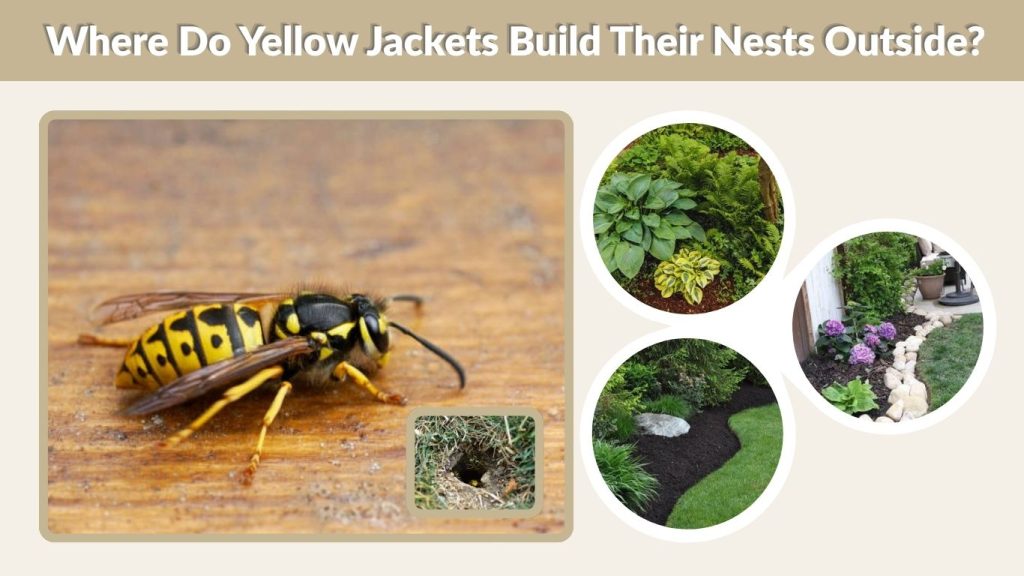
Outside, yellow jackets look for protected places close to food sources. Yards with old burrows, thick shrubs, hollow logs, open trash, fallen fruit, or building gaps may attract them.
Outdoor Nesting Spots
- Under bushes
- In mulch beds
- Under patios
- Beside walkways
- Near compost areas
- In hollow logs
- Around garden borders
- Under decks
- In sheds
- In tree cavities
Yellow jackets are often noticed more in late summer and fall because colonies are larger and workers are more active around food, garbage, and sugary drinks.
Where Do Yellow Jackets Nest in Winter?
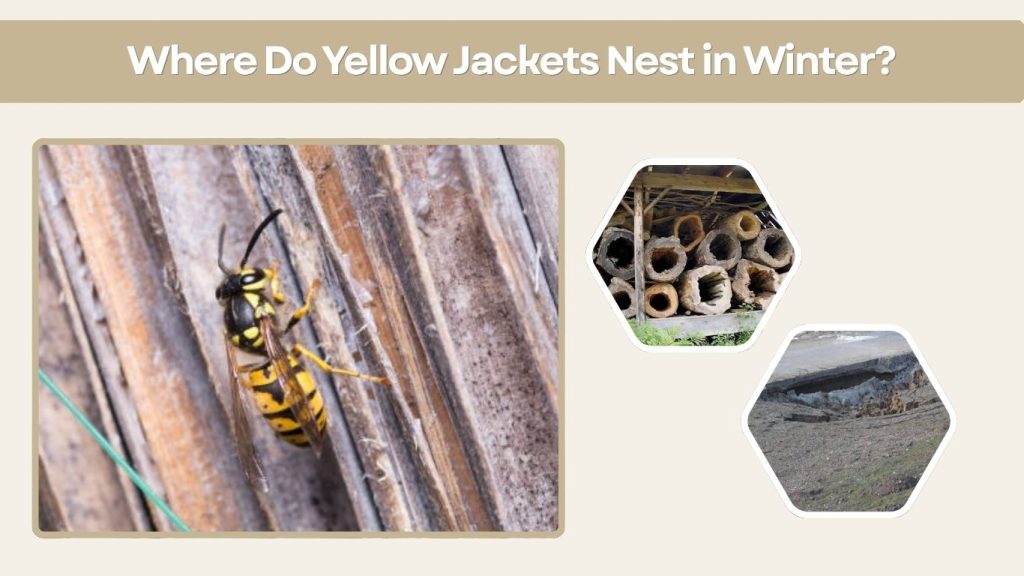
In most cold climates, the old colony dies when winter arrives. The old nest is usually not reused the next year. Fertilized queens survive winter by hiding in protected places such as leaf litter, bark, hollow logs, soil cavities, or man-made structures. In spring, a queen starts a new nest.
This means a winter nest with no activity may be empty, but a warm building or mild climate can make yellow jacket behavior less predictable. If you still see active wasps, treat the site as active.
Where Do Yellow Jackets Go If You Destroy Their Nest?
If a yellow jacket nest is destroyed, surviving workers may scatter and become defensive for a while. Some may return to the old nest site, while others may fly around nearby. If the queen and brood are gone, the colony usually cannot continue normally.
Do not try to destroy a nest without proper knowledge, especially near a home entrance, wall, or children’s play area. Yellow jackets can sting repeatedly and may attack in groups when the nest is disturbed.
Do Yellow Jackets Reuse Old Nests?
Most yellow jacket nests are annual. In many areas, the old nest is abandoned after the season, and a new queen starts a new nest elsewhere the next spring. However, a good nesting area may attract new queens again if holes, gaps, or sheltered cavities remain available.
Yellow Jacket Nest vs Other Wasp Nests
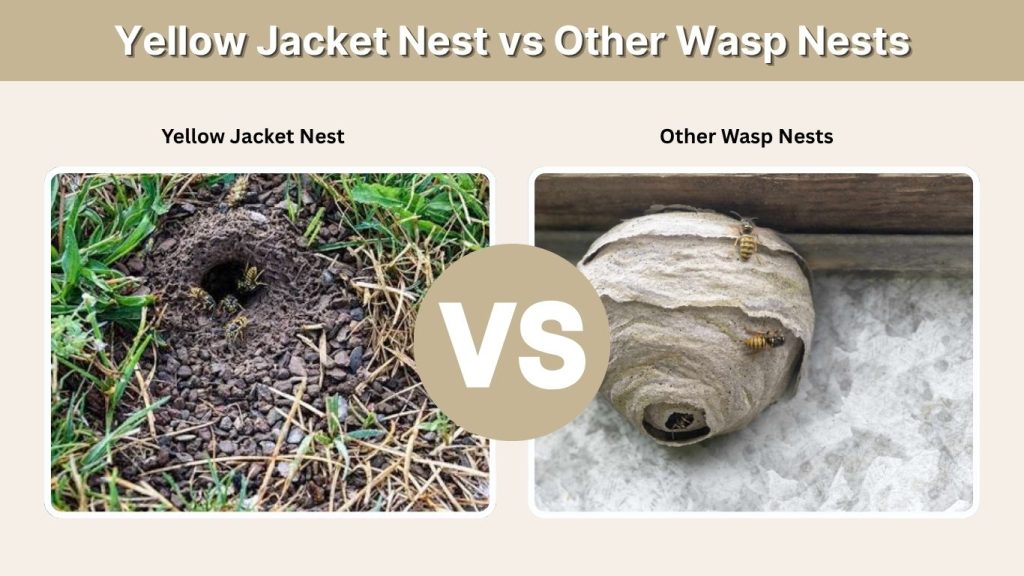
Yellow jacket nests are often hidden, while paper wasp nests are usually open and umbrella-shaped. This difference helps homeowners identify what they are seeing.
| Nest Type | Common Location | Appearance |
| Yellow jacket | Ground, wall voids, eaves, hollow spaces | Hidden or enclosed paper nest |
| Paper wasp | Porch ceilings, eaves, branches | Open comb cells |
| Bald-faced hornet | Trees, shrubs, buildings | Large gray enclosed paper nest |
Yellow jacket nests are made from a paper-like material created with chewed wood fiber and saliva, with layers of brood cells inside.
How to Find a Yellow Jacket Nest Safely
Finding the nest usually means watching flight paths from a safe distance. Yellow jackets often fly in a direct route between food sources and the nest entrance.
Safe Identification Tips
- Watch from far away
- Look for repeated traffic to one hole
- Check ground holes near shrubs
- Watch siding, soffits, and eaves
- Avoid mowing near active traffic
- Do not block an entrance hole
- Keep children and pets away
If the nest is in a wall, near a doorway, or in a high-traffic area, contact a pest control professional.
FAQs
Where do yellow jackets nest most often?
Yellow jackets most often nest in hidden places such as underground holes, old rodent burrows, wall voids, eaves, hollow trees, sheds, and protected yard spaces. Many nests are hard to see because only the entrance is visible.
Where do yellow jackets nest in the ground?
They often nest in old animal burrows, soil cavities, root gaps, and protected holes under shrubs or landscape timbers. The entrance may look like a small dark hole with many yellow jackets flying in and out.
Where do yellow jackets nest in a house?
In houses, yellow jackets may nest behind siding, in wall voids, attics, soffits, vents, crawl spaces, roof edges, and foundation gaps. You may notice wasps repeatedly entering a crack or hearing buzzing inside a wall.
Where do yellow jackets nest in winter?
The old nest usually dies out in cold climates. Fertilized queens survive winter in protected places such as bark, leaf litter, hollow logs, soil cavities, or man-made structures, then start new nests in spring.
Do yellow jackets return to the same nest?
Most yellow jackets do not reuse the same old nest the next year. However, a good nesting location can attract a new queen if the area still has holes, gaps, or protected spaces suitable for nesting.