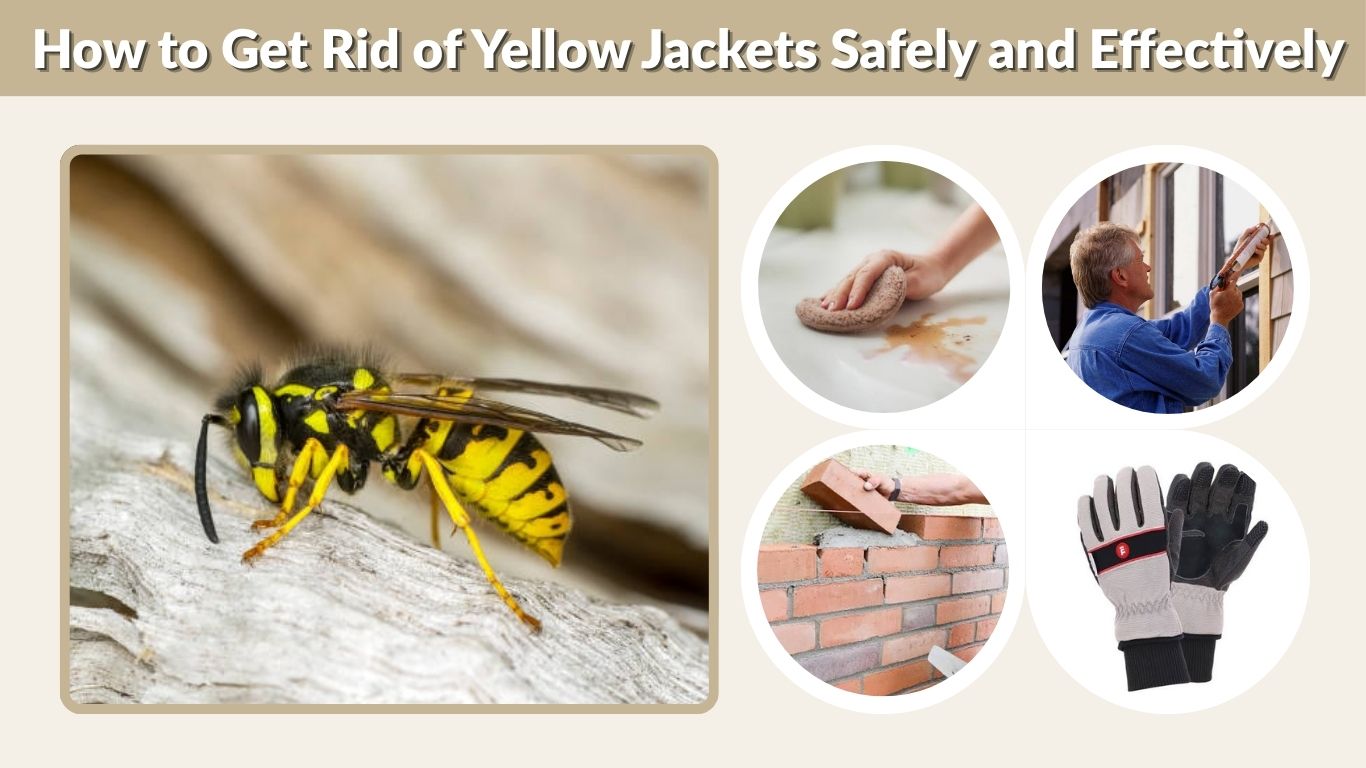
Yellow jackets can become a serious problem when they build nests near lawns, entrances, siding, wall cavities, or outdoor gathering areas. Unlike many bees, these social wasps aggressively defend their colonies and can sting repeatedly. The safest removal method depends on where the nest is located, how large it is, and whether anyone nearby has a sting allergy. This guide explains how to identify the problem, reduce yellow jacket activity, and remove different types of nests without creating unnecessary risks.
Identify Yellow Jackets Before Taking Action
Correct identification is important because bees, paper wasps, hornets, and yellow jackets require different management methods. Yellow jackets are compact, smooth-bodied wasps with distinct yellow-and-black or white-and-black markings. Unlike fuzzy honeybees, they have little visible body hair.
They commonly fly rapidly in and out of a single opening. Yellow jackets may nest underground in abandoned animal burrows or inside hollow logs, landscape timbers, attics, siding, soffits, and wall voids.
Signs of an Active Nest
Look for these common signs:
- Numerous wasps following the same flight path
- Activity around a hole in the lawn or garden
- Wasps entering gaps beneath siding or roof edges
- Scratching or buzzing sounds inside a wall
- Increasing numbers of yellow jackets around food and garbage
Observe the area from a safe distance. Do not strike the nest, block its opening, or place your face near a suspected entrance.
How to Get Rid of a Yellow Jacket Nest
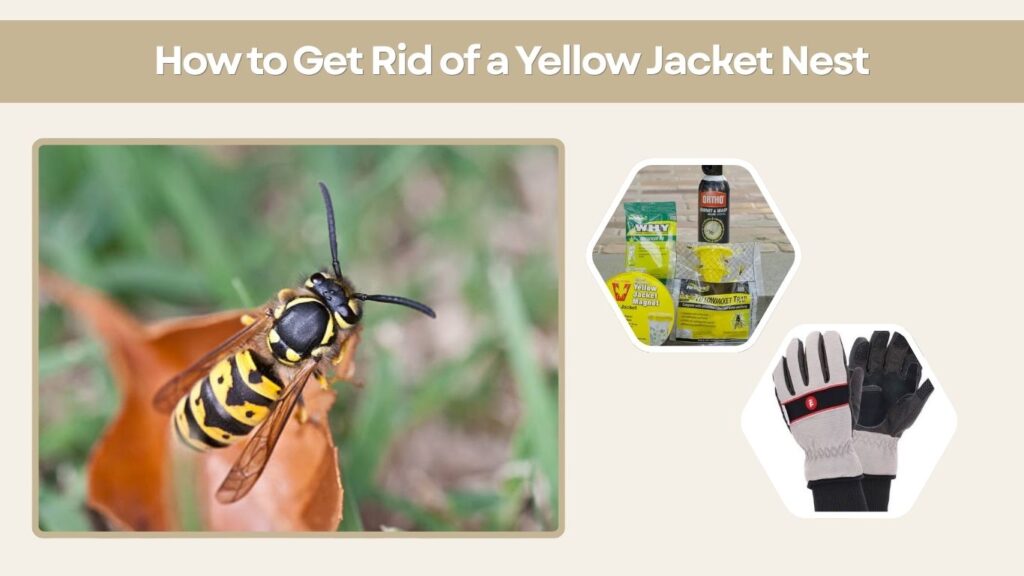
A nest located far from people may not require immediate removal. Yellow jackets prey on other insects and can provide some natural pest control. However, treatment may be necessary when a colony is near a doorway, walkway, play area, pet enclosure, or frequently used part of the yard.
Choose the Safest Treatment Time
Yellow jackets are generally less active during the late evening or very early morning, when more workers are inside the colony. Nevertheless, nest treatment always carries a risk of multiple stings.
Keep children and pets indoors, plan an unobstructed escape route, and never attempt treatment while standing on a ladder. People with known insect-sting allergies should not approach or treat a nest.
Use an Appropriate Labeled Product
For do-it-yourself treatment, use only a product specifically labeled for yellow jackets and for the nest location involved. Follow every direction regarding application, protective clothing, reentry, pets, food, water, and environmental precautions.
Do not improvise with gasoline, diesel fuel, fire, bleach, or other household chemicals. These methods can cause fires, contaminate soil, create toxic fumes, and still fail to eliminate the colony.
How to Get Rid of Yellow Jackets in the Ground
Ground nests are among the most common and dangerous colonies because they may be disturbed accidentally by mowing, gardening, or walking nearby.
Locate the Main Entrance
Watch from a considerable distance until you identify the opening workers consistently use. There may be secondary openings, so inspect the surrounding area without walking directly over it.
Mark the location during daylight using an object placed several feet away. Do not insert a stick, pour water into the hole, or cover it while wasps are active.
Treat the Nest Entrance
Apply a pesticide labeled for ground-nesting yellow jackets exactly as directed. Depending on the label, the formulation may be an insecticidal dust, foam, or liquid delivered into the nest entrance.
Dust formulations are often used because workers can carry the material deeper into the colony. Penn State Extension recommends directing labeled insecticidal dust into the entrance rather than merely treating the surrounding surface.
Check the nest from a safe distance the following day. Do not seal the hole until activity has completely stopped. Sealing an active entrance may cause the wasps to create another exit.
How to Get Rid of Yellow Jackets in a Wall or Siding
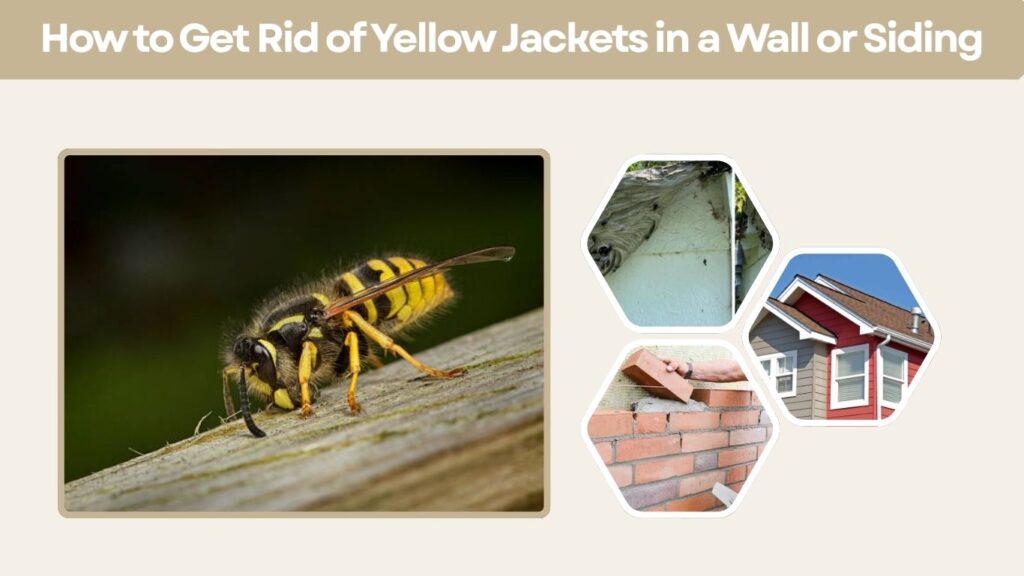
A nest inside a wall, soffit, attic, or behind siding is more complicated than an exposed or underground nest. The visible opening may be far from the actual colony.
Do Not Seal the Opening Immediately
Caulking an active entrance can trap the colony inside the structure. The yellow jackets may then chew through drywall or find openings that lead into living spaces.
Spraying only the exterior opening may also fail to reach the colony and can make the wasps more defensive.
Contact a Pest-Control Professional
Professional treatment is strongly recommended for nests located:
- Inside wall voids
- Behind siding or brickwork
- In soffits, eaves, or roof spaces
- Near electrical wiring
- High above the ground
- Inside an occupied building
A licensed professional can identify the nest cavity, select the proper formulation, treat it without unnecessarily opening the wall, and advise when the entrance can be sealed.
How to Get Rid of Yellow Jackets in the House
Individual yellow jackets occasionally enter through open doors, windows, vents, fireplaces, or gaps around utility lines. A few indoor wasps do not always mean that a nest is inside the home.
Close doors leading to other rooms, keep people and pets away, and allow the insect to leave through an open exterior window when practical. Avoid swatting it near your face.
Repeated indoor appearances—especially from the same room—may indicate a colony in a wall, ceiling, attic, or chimney. Yellow jackets can nest within buildings, and workers may enter occupied rooms when a structural nest is present.
Natural Ways to Reduce Yellow Jackets
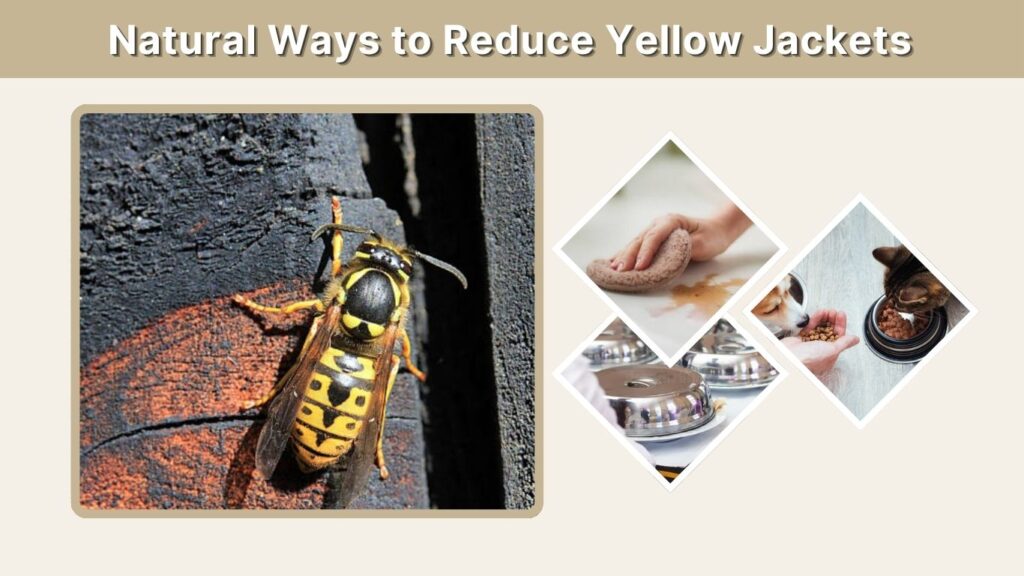
Natural methods can reduce foraging activity, but they rarely eliminate a large established colony.
Remove Food Sources
Yellow jackets are attracted to meat, sugary drinks, ripe fruit, pet food, and garbage. Reduce attractants by:
- Keeping outdoor trash cans tightly closed
- Cleaning food spills immediately
- Covering drinks and serving dishes
- Picking up fallen fruit
- Feeding pets indoors
- Rinsing recycling containers
- Repairing leaking outdoor faucets
Use Yellow Jacket Traps Carefully
Commercial traps may reduce the number of foraging workers, particularly around patios and eating areas. Place traps away from doors, tables, play areas, and other places people gather.
Traps do not normally eliminate an established nest because the queen and developing brood remain protected inside. They should be viewed as a population-reduction tool rather than a guaranteed nest-removal method.
Use Soapy Water Only in Limited Situations
Soap-and-water mixtures may kill individual wasps or sometimes affect small, accessible nests, but results depend heavily on nest size and structure. They are not a reliable choice for large underground colonies or nests inside buildings.
Never stand directly over a nest while pouring liquid into it.
How to Prevent Yellow Jackets From Returning
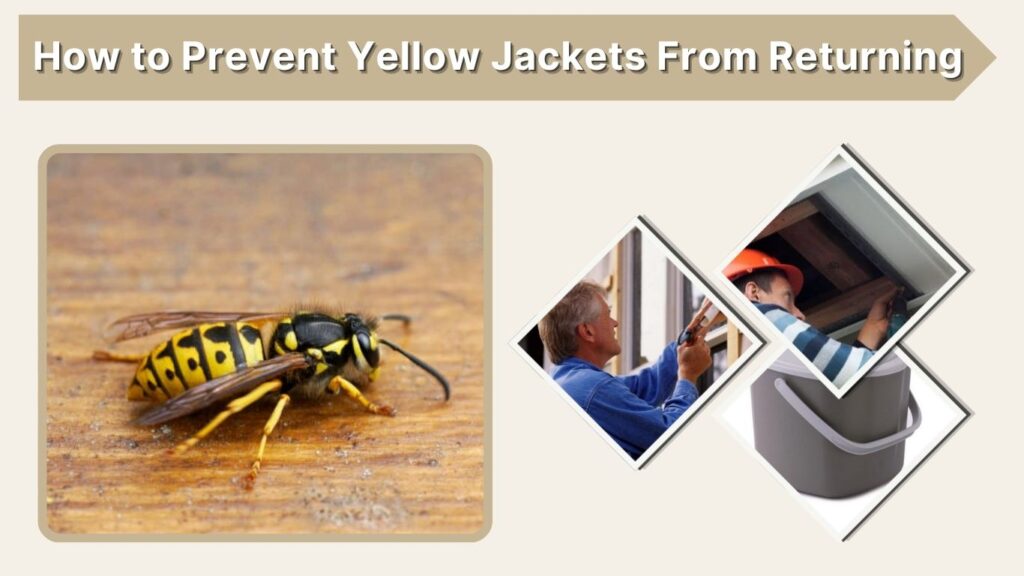
Once the colony is inactive and removal is complete, close possible nesting sites before another queen uses them.
Preventive Measures
- Seal cracks around siding, windows, vents, and utility pipes.
- Repair damaged soffits, fascia boards, and window screens.
- Cover suitable vents with insect-resistant screening.
- Fill abandoned animal burrows after confirming they are empty.
- Keep trash and compost containers covered.
- Inspect sheds, attics, rooflines, and decks during spring.
- Remove small early-season nests before colonies become large.
Do not permanently seal a structural entrance until you are certain that all activity has ended.
When to Call a Professional
Professional removal is the safest option when the nest is large, difficult to reach, hidden in a structure, or located near vulnerable people.
Seek expert assistance when:
- Anyone nearby has a severe sting allergy.
- The nest is inside a wall, attic, chimney, or roof.
- Yellow jackets are entering living spaces.
- Multiple nest entrances are present.
- The colony remains active after treatment.
- Removal requires climbing or opening part of the building.
- The nest is near a school, business, or busy public space.
Move away calmly if the colony becomes agitated. Do not wave your arms or attempt to fight the wasps. Enter a closed building or vehicle as quickly as possible.
FAQs
What is the fastest way to get rid of yellow jackets?
The fastest safe option is professional nest treatment, particularly for a large colony or one hidden inside a structure. For an accessible ground nest, use a product specifically labeled for yellow jackets and follow its instructions precisely. Removing food sources alone will not destroy an established colony.
Can I plug a yellow jacket hole in the ground?
Do not plug the entrance while the colony is active. Trapped workers may dig another exit and become highly defensive. Treat the nest first, monitor it from a safe distance, and fill the opening only after no yellow jacket activity has been observed.
Will vinegar get rid of yellow jackets?
Vinegar may discourage individual foragers in limited situations, but it does not reliably eliminate a colony. It cannot reach the queen and brood inside a deep underground or structural nest. Sanitation, traps, labeled treatment, or professional removal provides more dependable control.
Do yellow jacket nests die during winter?
In many temperate areas, workers and the old queen die after freezing weather, while newly produced queens overwinter elsewhere. However, nests may survive longer in warm climates or protected structures. A dangerous nest near people should not automatically be left untreated while waiting for winter.
How much does it cost to get rid of yellow jackets?
The price varies according to location, nest size, accessibility, treatment method, and whether structural work is necessary. An exposed ground nest generally costs less to treat than a colony hidden inside a wall or roof. Obtain a written estimate from a licensed local pest-control company.