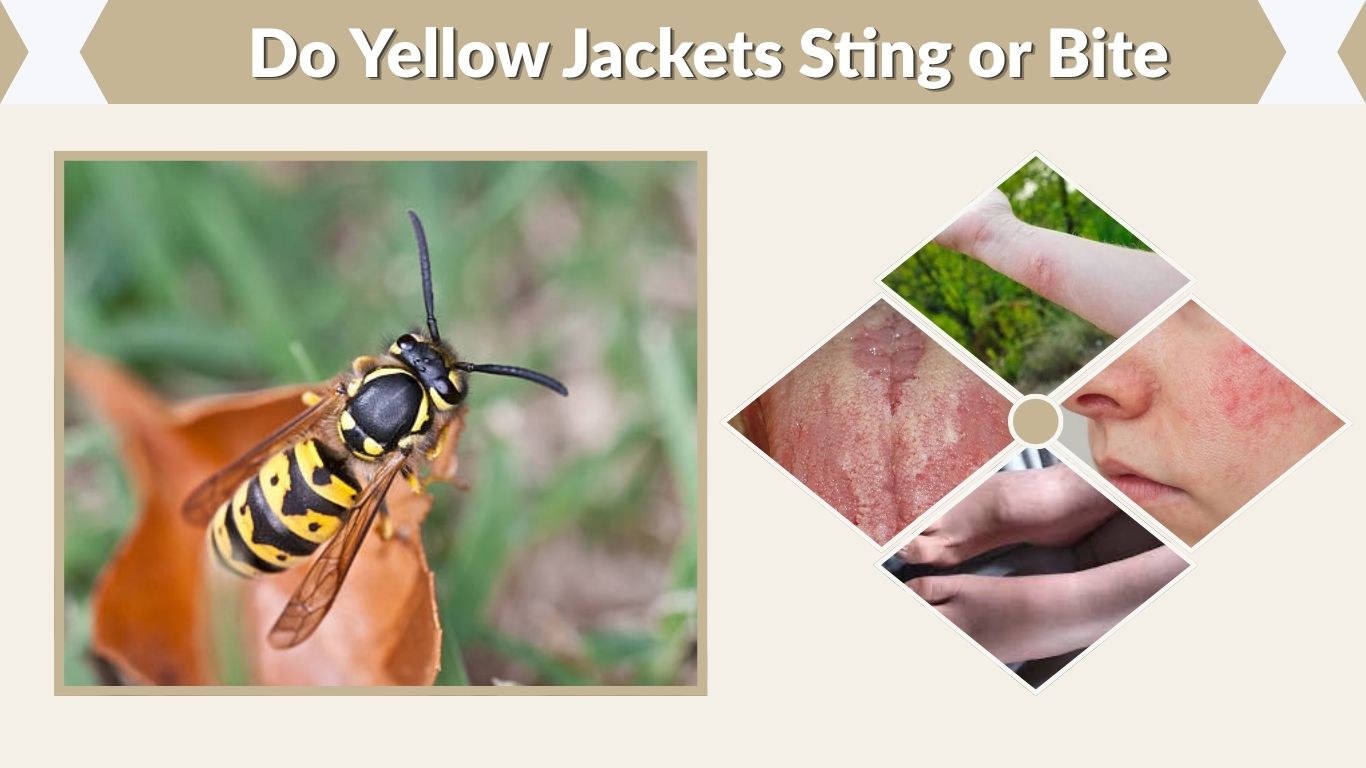
Yellow jackets primarily sting, but they can also use their strong jaws to bite or grip. For humans, the painful injury usually comes from the venomous sting rather than the bite. Unlike honeybees, yellow jackets can withdraw their smooth stingers and attack repeatedly. They are especially defensive near their nests, food sources, and trapped spaces. Understanding how and why they attack can help you avoid painful encounters and recognize when a sting requires medical attention.
Do Yellow Jackets Sting or Bite?
Yellow jackets can technically do both, but stinging is their main defense against humans. They have powerful mandibles, or jaws, which they normally use to capture prey, process food, and build their nests.
A yellow jacket may bite when fighting, feeding, or trying to hold onto something. During an attack, it may grip the skin or clothing with its jaws while positioning its abdomen to sting. However, most pain, swelling, and allergic reactions associated with yellow jackets are caused by venom delivered through the stinger.
Social wasps use their jaws to capture prey but rely on their stingers when defending themselves, their food, or their colony from a perceived threat.
Do Yellow Jackets Sting Humans?
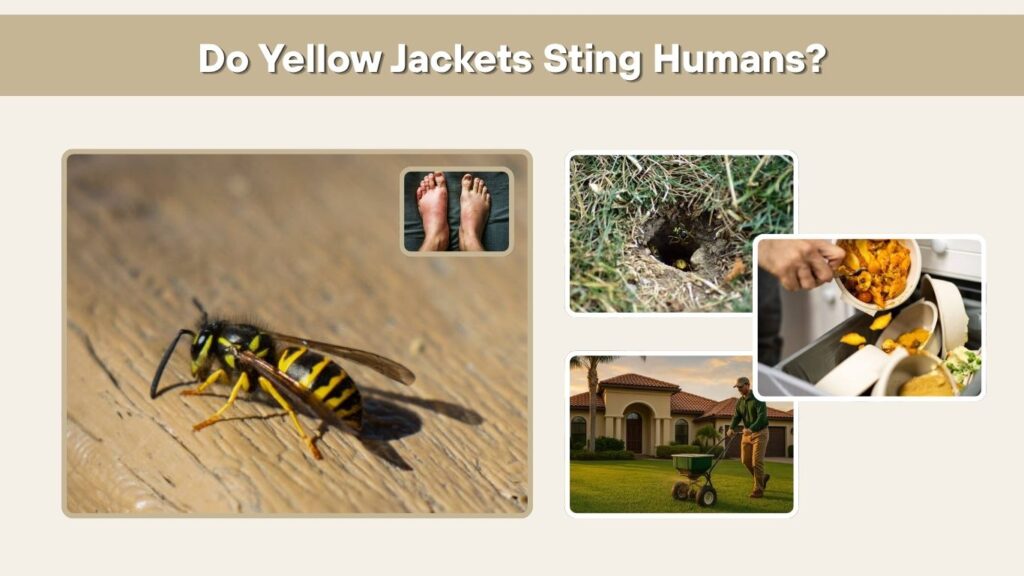
Female yellow jackets, including workers and queens, possess stingers and can sting humans. Males do not have functional stingers.
Yellow jacket workers usually sting when they believe they or their colony are threatened. Common situations include:
- Stepping near an underground nest
- Mowing over a hidden colony
- Swatting at a foraging yellow jacket
- Disturbing a nest in a wall or tree
- Trapping one against the skin
- Moving food or garbage they are feeding on
- Blocking a nest entrance
Yellow jackets are often more defensive near their nests than when they are simply searching for food.
Can Yellow Jackets Sting More Than Once?
Yes. A yellow jacket can sting several times during the same encounter. Its stinger does not normally remain embedded in human skin, allowing the insect to withdraw it and strike again.
This differs from a worker honeybee, whose barbed stinger often becomes lodged in the skin. Yellow jackets, paper wasps, and bumblebees can generally pull out their stingers without seriously injuring themselves.
Repeated stings make yellow jackets particularly dangerous when:
- A person disturbs a large nest
- Several workers attack simultaneously
- The victim cannot quickly leave the area
- The victim is a small child
- The person has a venom allergy
- Stings occur around the mouth or throat
Do Yellow Jackets Bite Humans?
A yellow jacket has strong jaws and is physically capable of pinching or biting human skin. However, biting people is less significant than stinging.
Their mandibles are primarily used to:
- Capture caterpillars, flies, and other prey
- Tear meat into manageable pieces
- Chew wood fibers for nest construction
- Feed developing larvae
- Defend themselves at close range
A bite might feel like a small pinch, but it does not inject venom. A sting usually causes a sharper, more intense burning pain because venom enters the skin.
Why Do Yellow Jackets Sting?
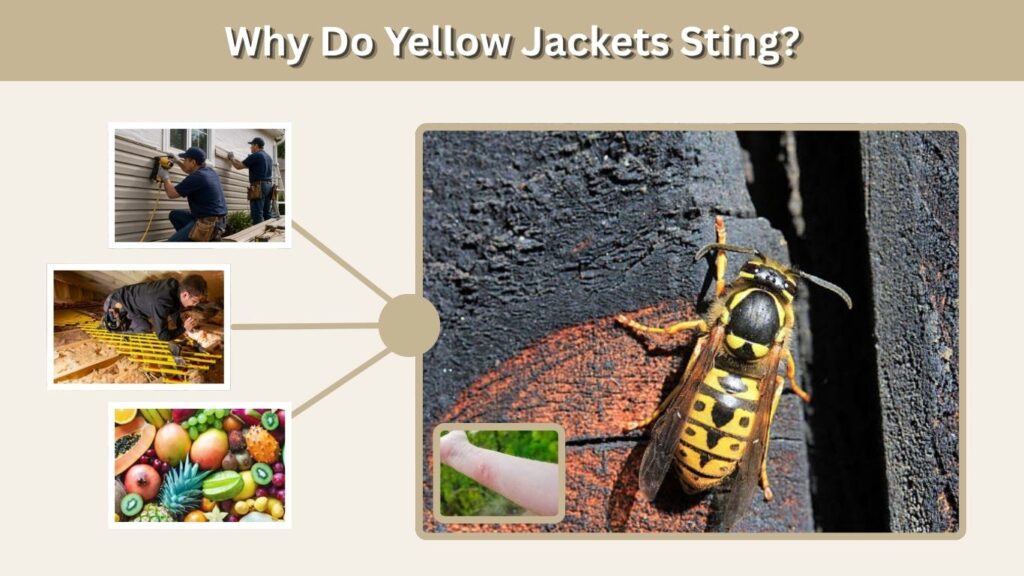
Yellow jackets generally do not search for people simply to attack them. Most stings occur when the insect perceives danger.
Nest Defense
Yellow jackets live in social colonies containing a queen, workers, and developing young. Workers aggressively protect the nest entrance and may respond to vibration or sudden movement nearby.
Underground colonies are frequently disturbed by lawnmowers, trimmers, pets, and foot traffic. Structural nests may be disturbed when someone repairs siding, works near an attic, or seals an active entrance.
Some yellow jacket species are especially defensive and may deliver repeated stings when their colonies are threatened.
Protection of Food
Yellow jackets are attracted to meat, ripe fruit, sugary drinks, garbage, and outdoor meals. They may become defensive when someone tries to brush them away from food.
Accidental Contact
A yellow jacket may sting when trapped inside clothing, stepped on with bare feet, or pressed between the body and another surface.
Do Yellow Jackets Sting for No Reason?
It may appear that a yellow jacket attacked without a reason, but the insect probably detected a threat that the person did not notice.
For example, someone may unknowingly walk close to a hidden ground nest. A yellow jacket may also become trapped in loose clothing or react to rapid swatting movements.
Late in the season, encounters can become more common as colonies grow and workers search around garbage cans, picnics, fruit trees, and sugary beverages. Still, most attacks result from defensive behavior rather than deliberate hunting of humans.
What Does a Yellow Jacket Sting Feel Like?
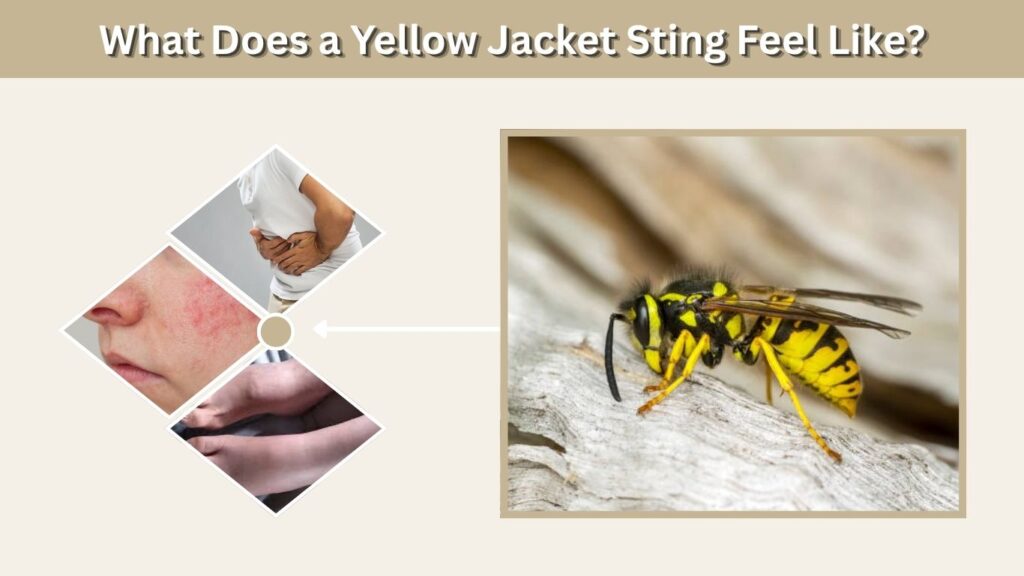
A yellow jacket sting commonly causes immediate sharp or burning pain. A raised red area may then develop around the sting site.
Common localized symptoms include:
- Pain or burning
- Redness
- Mild to moderate swelling
- Itching
- Warmth or tenderness
These symptoms often improve gradually, although swelling may increase during the first day. Yellow jacket stings commonly produce pain, redness, swelling, and itching.
A large local reaction can cause swelling that extends well beyond the original sting site. Although uncomfortable, this is different from a systemic allergic reaction affecting breathing, circulation, or multiple parts of the body.
What to Do After a Yellow Jacket Sting
Move away from the area immediately because additional yellow jackets may be nearby. Enter a building or vehicle rather than stopping close to the nest.
Basic First Aid
For a mild reaction:
- Wash the affected area with soap and water.
- Check for a stinger, although yellow jackets usually do not leave one behind.
- Apply a cold pack wrapped in cloth for 10–20 minutes.
- Elevate the affected arm or leg when practical.
- Avoid scratching the area.
- Consider an appropriate nonprescription pain reliever or antihistamine according to its label and your healthcare provider’s advice.
Do not apply gasoline, bleach, soil, or other potentially harmful substances to the sting.
When Is a Yellow Jacket Sting an Emergency?
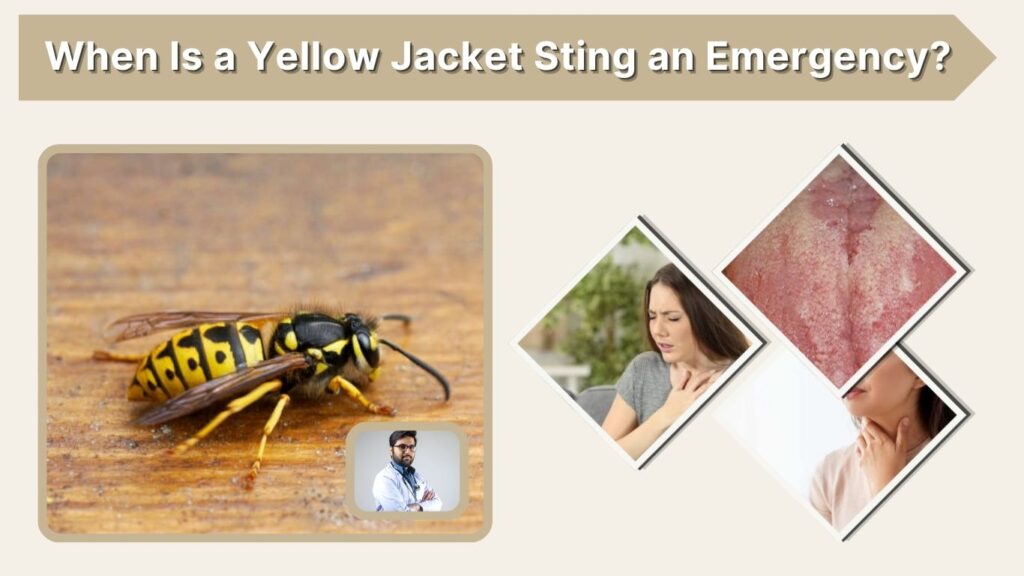
A severe allergic reaction called anaphylaxis can develop after a yellow jacket sting. It is potentially life-threatening and requires immediate emergency treatment.
Seek emergency help immediately for:
- Difficulty breathing or wheezing
- Swelling of the tongue, lips, or throat
- Trouble swallowing
- Widespread hives or itching
- Dizziness, confusion, or fainting
- A weak or rapid pulse
- Vomiting or severe stomach cramps
- Pale or bluish skin
- Numerous stings
- A sting inside the mouth or throat
A person with a prescribed epinephrine auto-injector should use it as directed and still obtain emergency medical care. Do not wait to see whether serious symptoms disappear on their own.
How to Avoid Yellow Jacket Stings
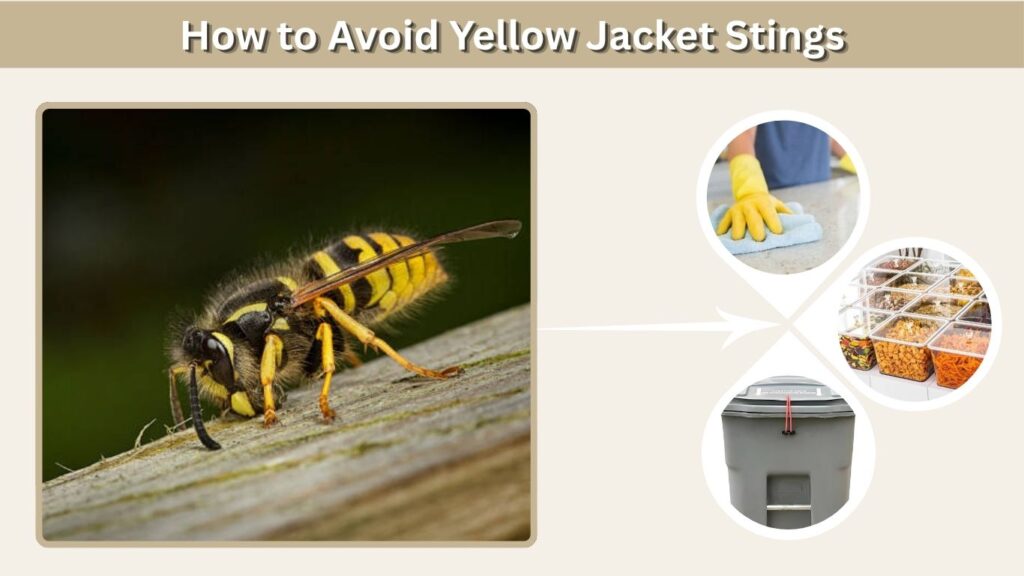
The best protection is to reduce attractants and avoid disturbing nests.
Around Food and Garbage
- Keep outdoor drinks covered.
- Check cans and straws before drinking.
- Clean food spills promptly.
- Store meat and sweets in sealed containers.
- Keep garbage cans closed.
- Remove fallen fruit from the ground.
- Feed pets indoors when possible.
Around a Nest
Never strike, dig into, burn, flood, or block an active nest. Keep children and pets away and mark the area from a safe distance.
Professional removal is the safest choice when a nest is:
- Inside a wall, attic, or soffit
- Near a doorway or play area
- Large or highly active
- Difficult to reach safely
- Close to someone with a sting allergy
If a Yellow Jacket Approaches
Remain calm and move away slowly. Do not crush or swat at it. If several yellow jackets begin attacking, cover your face and run directly into a closed building or vehicle.
Yellow Jacket Bite vs. Sting
| Feature | Yellow jacket bite | Yellow jacket sting |
| Body part used | Mandibles or jaws | Stinger |
| Venom injected | No | Yes |
| Typical sensation | Pinching or gripping | Sharp, burning pain |
| Main purpose | Feeding, cutting, gripping | Defense |
| Can happen repeatedly | Yes | Yes |
| Allergy risk | Very low | Potentially serious |
For most people asking whether yellow jackets bite or sting, the practical answer is that yellow jackets mainly sting humans, and their stings cause the greatest medical concern.
FAQs
Do yellow jackets bite or sting you?
Yellow jackets primarily sting people, but they can also pinch or grip with their jaws. The sting injects venom and causes most of the pain, redness, swelling, and allergy risk. Their bite usually plays a supporting role during feeding or close-range defense.
Can a yellow jacket bite and sting at the same time?
A yellow jacket may use its jaws to grip skin or clothing while positioning itself to sting. This can make the attack feel like both a bite and a sting. However, the sharp burning pain and swelling generally result from venom injected by the stinger.
Do yellow jackets leave their stingers in you?
Yellow jackets usually do not leave their stingers behind. Their stingers can normally be withdrawn, allowing them to sting repeatedly. Still, check the skin after an attack because a stinger or other debris may occasionally remain at the site.
Will yellow jackets sting if you stand still?
Standing still may prevent a lone foraging yellow jacket from feeling threatened, but it does not guarantee safety near a nest. If workers are defending their colony, move away calmly. During an active attack, run into a closed building or vehicle.
Are yellow jacket stings dangerous?
Most stings cause temporary pain, redness, itching, and swelling. They can become dangerous when someone has a venom allergy, receives many stings, or is stung in the mouth or throat. Breathing difficulty, throat swelling, dizziness, or widespread hives require emergency care.