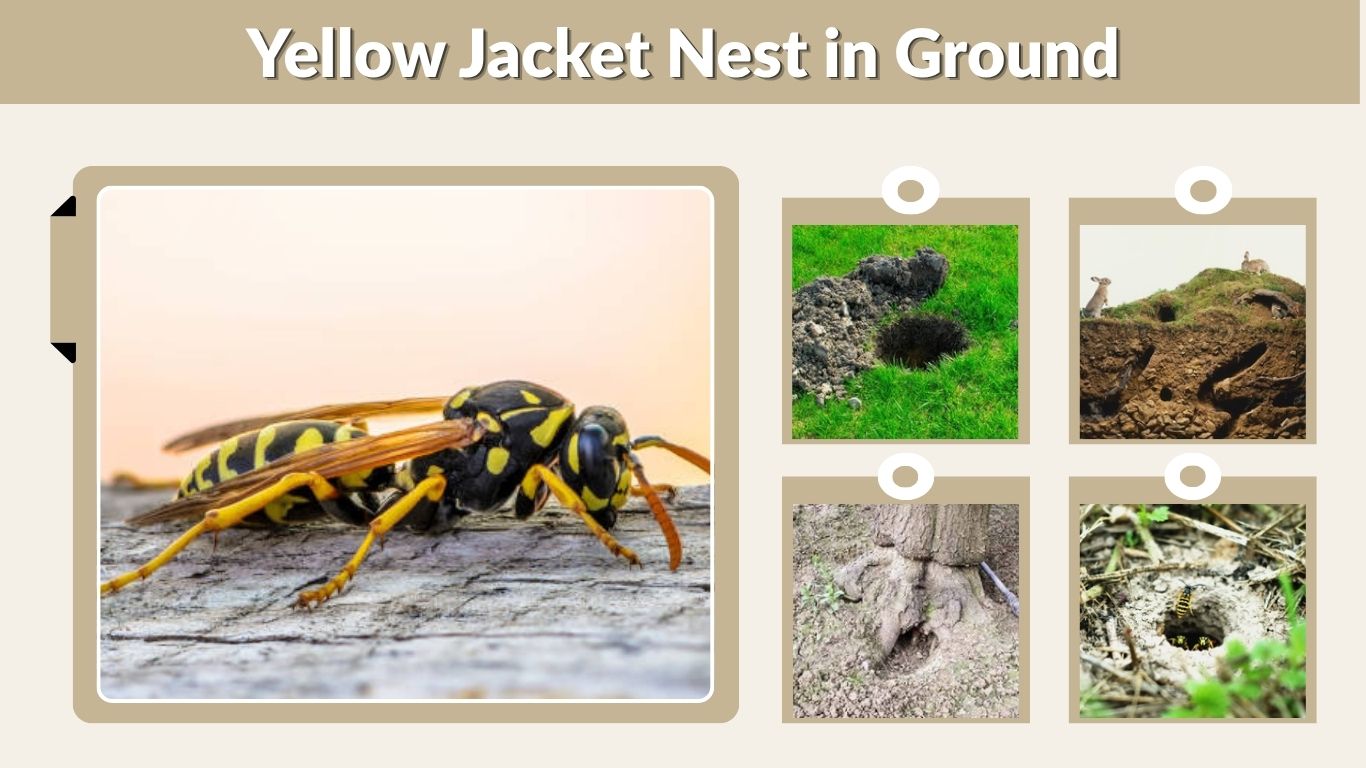
A yellow jacket nest in the ground can be difficult to notice until someone walks nearby, operates a lawn mower, or accidentally disturbs its entrance. These social wasps often occupy abandoned animal burrows and enlarge the underground cavity as their colony grows. Although yellow jackets help control caterpillars, flies, and other insects, a ground nest near a walkway, play area, garden, or building entrance can create a serious sting risk. Learning how to identify, locate, and safely manage an underground nest can help you avoid sudden encounters and choose the right removal method.
Do Yellow Jackets Nest in the Ground?
Several yellow jacket species commonly build their nests below ground. However, not every yellow jacket colony is underground. Depending on the species, nests may also occur inside wall voids, tree cavities, woodpiles, dense vegetation, sheds, or other protected spaces.
Why They Choose Underground Cavities
Yellow jackets usually take advantage of existing underground spaces rather than excavating an entirely new hole. Abandoned burrows made by mice, chipmunks, moles, or other small animals provide shelter from rain, wind, predators, and sudden temperature changes. Workers can expand the cavity as the paper nest becomes larger.
Do All Yellow Jackets Build Ground Nests?
No. Ground nesting is common among several Vespula species, but other yellow jackets use structures or aboveground cavities. This is why wasps entering a crack in siding, a roof opening, or a gap around utility pipes should not automatically be assumed to have an underground nest.
What Does a Yellow Jacket Nest in the Ground Look Like?
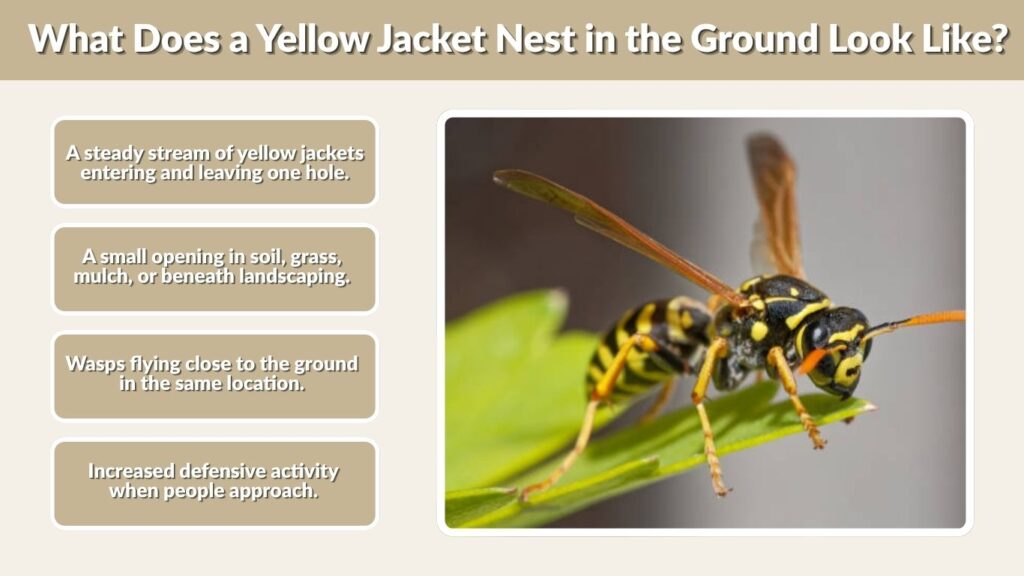
The paper nest is normally hidden inside the cavity, so homeowners rarely see the actual structure. What they usually notice is a small entrance and repeated wasp activity around it.
Signs of an Underground Nest
- A steady stream of yellow jackets entering and leaving one hole
- A small opening in soil, grass, mulch, or beneath landscaping
- Wasps flying close to the ground in the same location
- Increased defensive activity when people approach
- A hole near tree roots, rocks, retaining walls, or old rodent burrows
- Yellow jackets appearing when grass is cut or vegetation is disturbed
The clearest sign is organized two-way traffic. An occasional wasp resting on the soil does not necessarily indicate a nest.
Yellow Jacket Ground Nest vs. Solitary Wasp Hole
Yellow jackets live in colonies and may have hundreds or thousands of workers later in the season. Solitary ground-nesting wasps generally maintain individual burrows and are usually less defensive. Numerous wasps repeatedly using one entrance are more likely to indicate a social yellow jacket colony.
| Feature | Yellow jacket ground nest | Solitary wasp burrow |
| Social structure | Large colony | One female or a small number |
| Entrance activity | Continuous traffic | Occasional activity |
| Defensive behavior | Strong near the nest | Usually limited |
| Nest structure | Enclosed paper combs in a cavity | Individual underground cells |
| Risk near busy areas | High | Usually lower |
How Deep Is a Yellow Jacket Nest in the Ground?
There is no standard depth for every colony. The nest’s position depends largely on the shape and size of the cavity the queen selected. An entrance may lead sideways through a tunnel before reaching the paper nest, so the colony may not be located directly beneath the visible hole.
Underground Nest Structure
Workers create enclosed paper layers from chewed wood fibers. Inside are horizontal combs containing cells for eggs and developing larvae. The workers continue enlarging the nest and cavity throughout summer as the population increases.
Because the internal tunnels can be irregular, digging into the ground is dangerous. A shovel may break into the colony unexpectedly, releasing many defensive workers at once.
How Many Yellow Jackets Live in a Ground Nest?
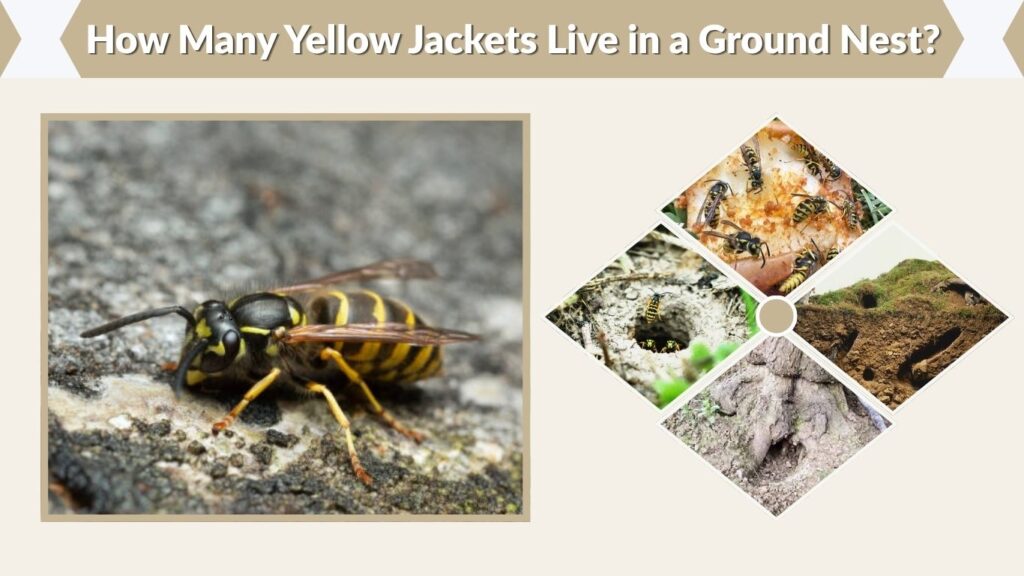
A nest begins with one fertilized queen in spring. She builds the first cells, lays eggs, and raises the first workers. Once those workers mature, they collect food, care for larvae, protect the entrance, and expand the nest.
Colony Growth During the Year
Colonies are relatively small in spring but expand rapidly through summer. By late summer or early fall, established nests may contain hundreds or thousands of individuals. Colony size varies by species, climate, food availability, and the length of the warm season.
Most colonies in colder regions die after freezing weather. Newly produced, fertilized queens leave to overwinter elsewhere and establish separate nests the following spring. The old underground nest is generally not reused, although another queen may select the same favorable cavity or area.
How to Find a Yellow Jacket Nest in the Ground
Locating the entrance requires observation rather than disturbance. Do not probe holes, place objects over entrances, or strike the soil to test whether a colony is present.
Observe Flight Activity from a Distance
Watch the suspected area from a protected location during daylight, when workers are actively foraging. Look for multiple yellow jackets following similar flight paths and disappearing into one spot. Binoculars or a phone camera with zoom can help you observe without moving close to the entrance.
Mark the General Location Safely
After identifying the area, keep children, visitors, and pets away. Mark it from a distance using a visible object placed well away from the actual entrance. Do not insert a stake beside the hole, because ground vibration can trigger defensive behavior.
Avoid Lawn and Garden Equipment
Lawn mowers, string trimmers, hedge cutters, and digging tools produce vibration and noise. Yellow jackets may interpret these disturbances as an attack. Stop yard work and create a temporary exclusion zone until the nest has been assessed.
Should Every Ground Nest Be Removed?
Removal is not always necessary. Yellow jackets prey on many insects and can be beneficial when their nests are far from regular human activity. A nest in an isolated section of a large property may be left undisturbed until cold weather ends the colony naturally.
When Removal Is Usually Appropriate
Professional removal should be considered when a nest is located near:
- A doorway, sidewalk, patio, or driveway
- A children’s play area
- A frequently maintained lawn
- Outdoor seating or food-service areas
- Pet runs or livestock enclosures
- A household containing someone with a known sting allergy
- A wall, foundation, utility line, or difficult structural cavity
How to Get Rid of a Yellow Jacket Nest in the Ground
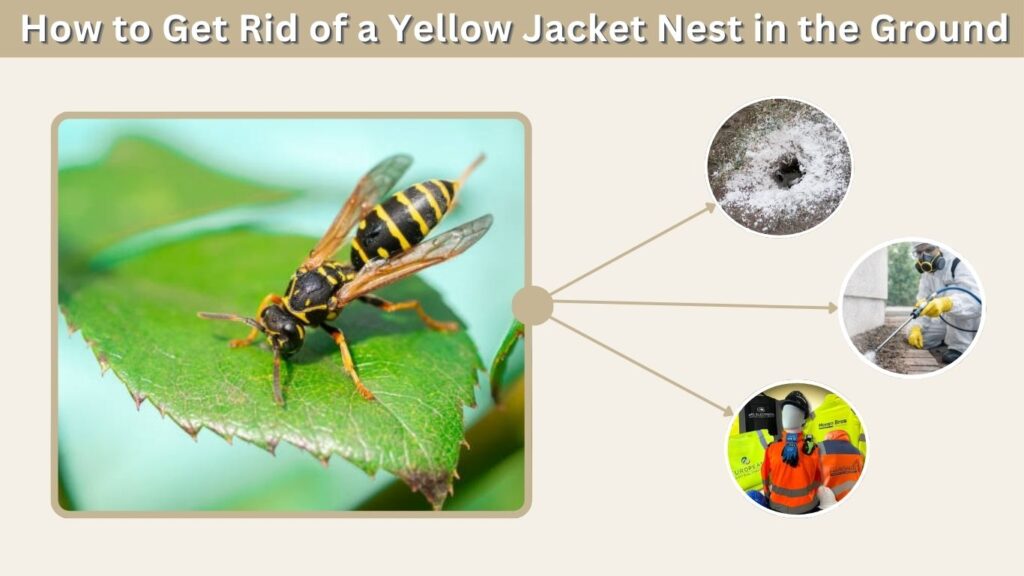
The safest solution is to contact a licensed pest-control professional. Ground nests can have hidden secondary openings, irregular tunnels, and large populations. Professionals have protective clothing, suitable application equipment, and experience identifying the species and nest location.
Professional Treatment
A technician can determine whether the insects are yellow jackets, identify how they are entering the cavity, and select a product legally labeled for that use. Professional help is particularly important for large colonies, nests near buildings, uncertain entrances, recurring activity, or properties where safe escape is difficult.
Using a Labeled Yellow Jacket Product
Homeowners who choose a pesticide must use only a product whose label specifically permits treatment of yellow jackets and their nesting location. The label determines where, how, and under what conditions the product can legally and safely be applied.
University Extension guidance commonly recommends treatment during late evening or early morning, when activity is lower and more workers are inside. Protective clothing is still necessary, and the person applying the product must have a clear retreat route.
Never assume the nest is inactive immediately after treatment. Observe the entrance from a safe distance the following day. Continued traffic indicates that the colony remains active and may require professional attention.
Dangerous Methods to Avoid
Several popular online remedies create greater risks than the nest itself. They may cause fire, contamination, uncontrolled attacks, or damage to surrounding soil and structures.
Never Pour Gasoline into the Nest
Gasoline must never be poured into an underground yellow jacket hole. It creates a serious fire and vapor hazard, contaminates soil, damages vegetation, and may affect nearby groundwater. Texas A&M’s yellow jacket management guidance specifically warns against this practice.
Do Not Burn the Nest
Lighting fuel, paper, or other materials at the entrance can start an underground or surface fire. Flames may spread through dry grass, roots, mulch, sheds, fences, or nearby structures. Fire also does not guarantee that the entire colony will be reached.
Do Not Flood It with Water
Pouring water into the entrance may not reach the nest because tunnels can extend sideways or contain multiple chambers. The disturbance can force defensive workers out while leaving much of the colony alive.
Do Not Cover or Plug an Active Entrance
Blocking the visible hole does not necessarily trap the colony. Yellow jackets may dig another exit, emerge somewhere unexpected, or become trapped inside a wall or structure. Sealing should occur only after the colony is confirmed inactive.
Do Not Dig Up the Nest
Digging places the person directly above the colony and creates intense vibration. Breaking the paper envelope may release large numbers of workers. Nest excavation should be left to trained professionals with full protective equipment.
Best Time to Treat a Ground Nest
Late evening or early morning is generally safer than the middle of a warm day because fewer yellow jackets are flying outside the nest. However, reduced activity does not mean the colony cannot defend itself.
Season also matters. Spring colonies are small, while late-summer nests may be at peak population. Early detection can make management easier, but an active nest near people should not be ignored simply because the season is almost over.
How to Prevent Yellow Jackets from Nesting in the Ground
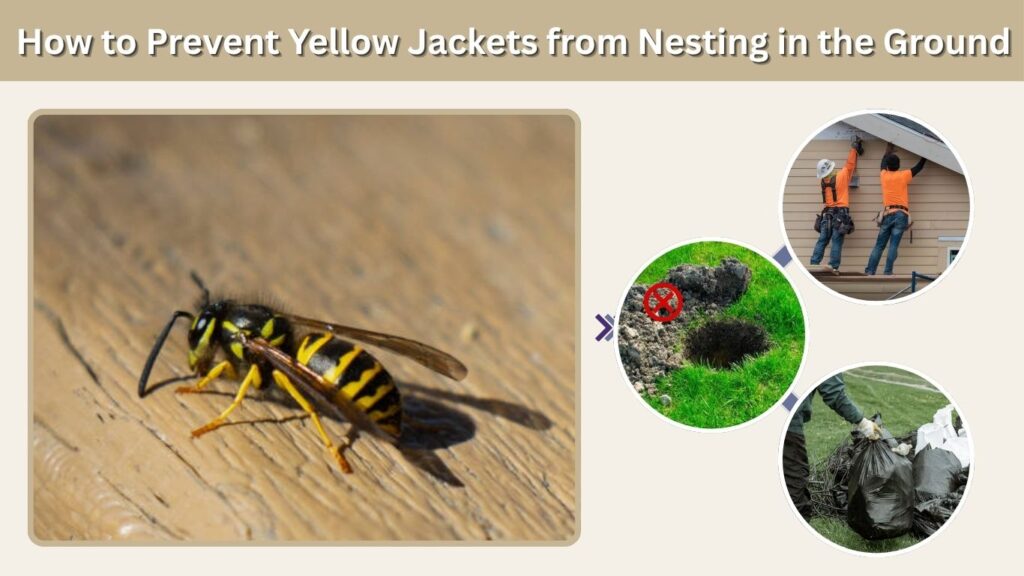
Complete prevention is difficult because queens can use small, concealed cavities. Regular property maintenance can nevertheless make nesting and foraging less attractive.
Reduce Nesting Opportunities
Fill abandoned rodent holes when they are clearly unoccupied. Repair gaps around foundations, siding, sheds, utility lines, and retaining walls. Remove unused materials, dense debris, overturned containers, and neglected woodpiles where queens may find protected cavities.
Remove Food Attractants
Keep outdoor trash containers tightly closed and rinse away food residue. Collect fallen fruit, clean spills, cover sweet drinks, store pet food indoors, and clean grills after use. Reducing accessible food will not eliminate an established colony, but it can reduce yellow jacket activity around living areas.
Inspect the Yard in Spring
A queen starting a nest in spring manages a much smaller colony than the one present later in summer. Periodically watch old burrows, landscape edges, sheds, and foundation gaps for repeated wasp traffic. Do not handle or disturb a suspected nest during inspection.
FAQs
Can yellow jackets make nests in lawns?
Yes. They frequently use abandoned rodent holes and other existing cavities beneath lawns. The entrance may appear as a small opening surrounded by grass, loose soil, roots, or mulch.
Are yellow jacket nests always underground?
No. Depending on the species, nests may be underground, in wall voids, inside trees, beneath decks, in woodpiles, or in other enclosed locations.
How long do yellow jackets stay in a ground nest?
In temperate climates, a colony usually lasts from spring until freezing weather. Most members die in fall or early winter, while newly fertilized queens leave and overwinter elsewhere.
Can I mow over a yellow jacket nest?
No. Noise and vibration from a mower can provoke a rapid defensive response. Stop mowing, move away calmly, and keep others out of the area until the nest is managed.
Will a yellow jacket ground nest return next year?
The old colony generally does not survive winter or reuse the nest. However, a new queen may choose the same area if suitable cavities and food sources remain available.